The Mediterranean Roots of California’s Chocolate Story
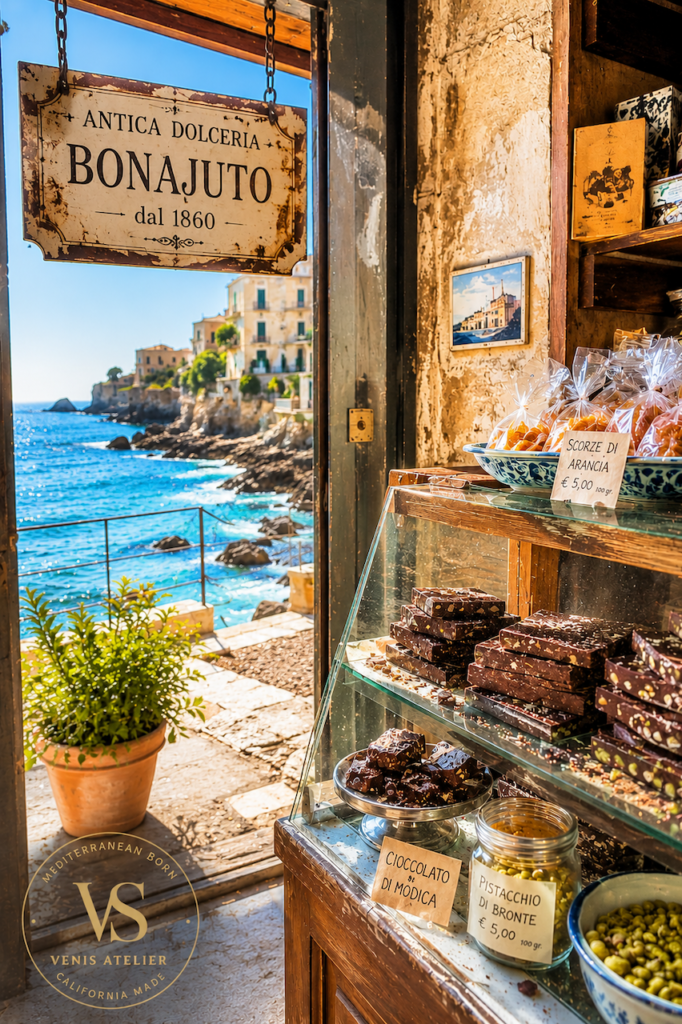
There are some things you should never do on an empty stomach. One of them is walking into a chocolate shop in Sicily. The smell reaches you before the doorway does. Dark chocolate, toasted pistachios, orange zest, cinnamon, vanilla. Somewhere nearby, espresso is being poured, and outside, blood oranges are glowing in the afternoon sun as though they know they’re about to become dessert. Shopping quickly becomes impossible.
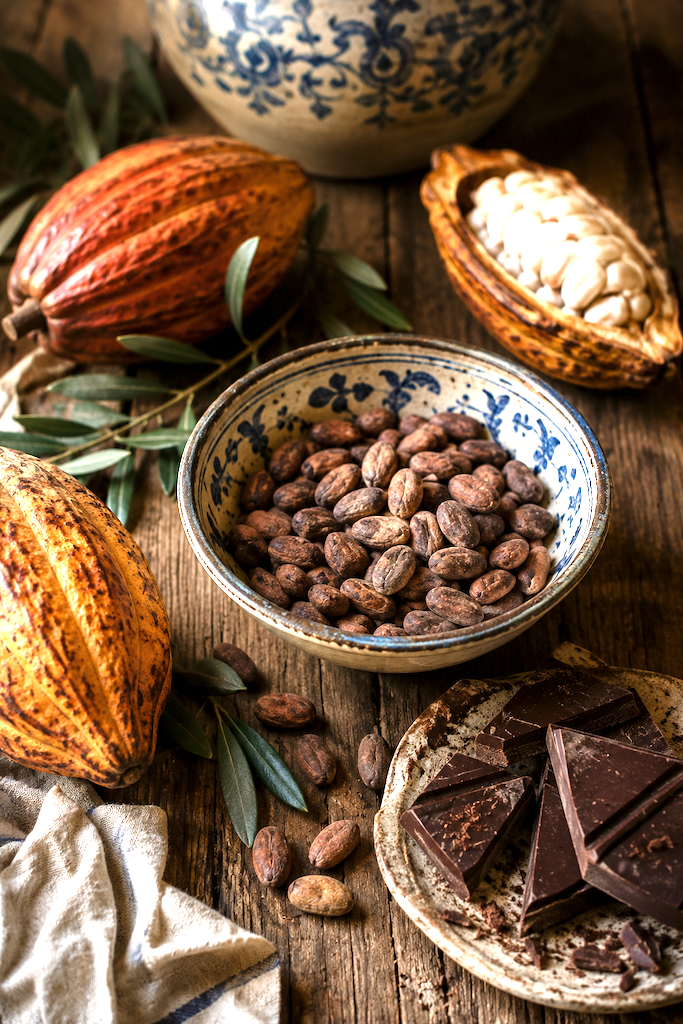
Chocolate has been part of Mediterranean life for centuries, but nowhere tells the story quite like Sicily. In the hill town of Modica, chocolate is still made using a centuries-old technique that leaves it slightly grainy, intensely rich, and wonderfully unlike the silky bars found in most supermarkets. Instead of hiding behind sugar, it celebrates bold Mediterranean flavours—pistachios, citrus peel, almonds, sea salt, cinnamon, and the occasional chilli for people who enjoy a little suspense with their dessert.
What makes Modica especially interesting is that its chocolate refuses the texture we have been trained to expect. Rather than becoming perfectly smooth and glossy, the sugar remains perceptible, giving each bite a crystalline quality that feels almost startling the first time you taste it. It is less polished, more textural and somehow more direct. Modern chocolate making spent enormous effort learning how to make chocolate silky; Modica preserved a tradition that politely declined the upgrade. The result is not nostalgia disguised as confectionery. It is a reminder that there has never been only one correct way for chocolate to behave.
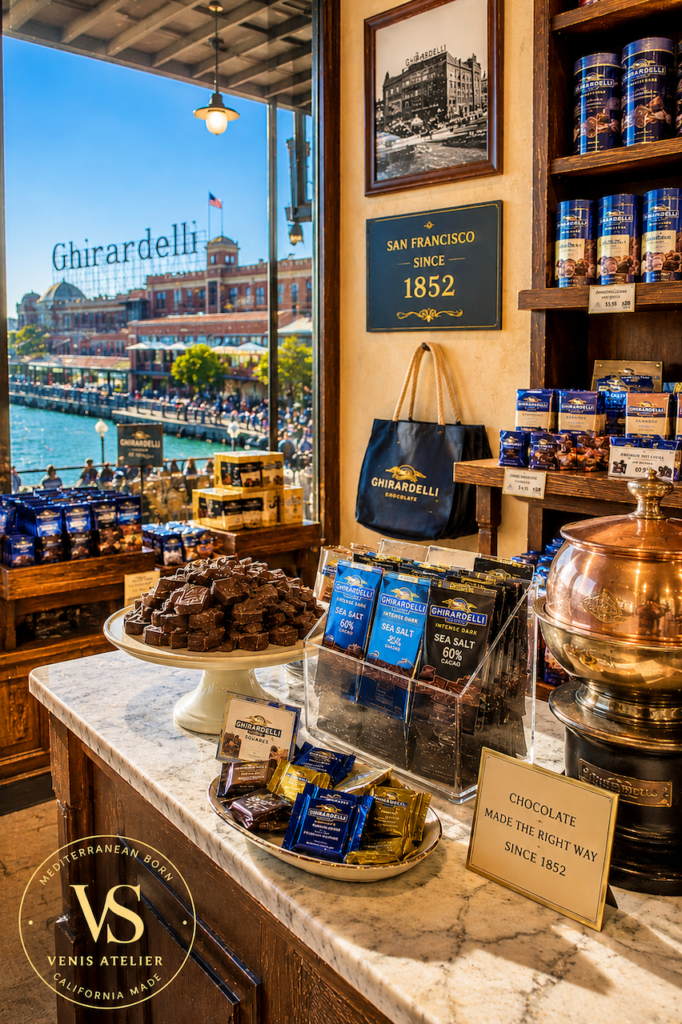
Then the story crosses an ocean. In 1817, a boy named Domenico Ghirardelli was born in the Italian coastal town of Rapallo. Like countless Europeans chasing opportunity, he eventually sailed west, arriving in California during the Gold Rush. He didn’t discover gold, but he did create something that proved far more enduring: the chocolate company that still bears his name.
California may have struck gold. It also struck chocolate. Today, millions of visitors know Ghirardelli through its historic waterfront square in San Francisco, where chocolate sundaes are served with sweeping views of the bay. Few stop to think that one of California’s most iconic chocolate traditions began beside another coastline, thousands of miles away on the Mediterranean.
Ghirardelli’s California story is interesting because here chocolate became part of a young, rapidly changing city shaped by immigration, commerce and the Gold Rush. The Mediterranean connection was not carried west as a perfectly preserved recipe; it arrived through a person who adapted his skills to an entirely different place. That distinction matters. Food traditions rarely cross oceans untouched. They meet new ingredients, customers, habits and ambitions, then become something local enough that a few generations later everyone assumes they were always there.
That’s the thing about the Mediterranean. It has always been exceptionally good at exporting ideas. Olive oil. Citrus. Ceramics. Architecture. Wine. Fashion. And, apparently, excellent chocolate makers.
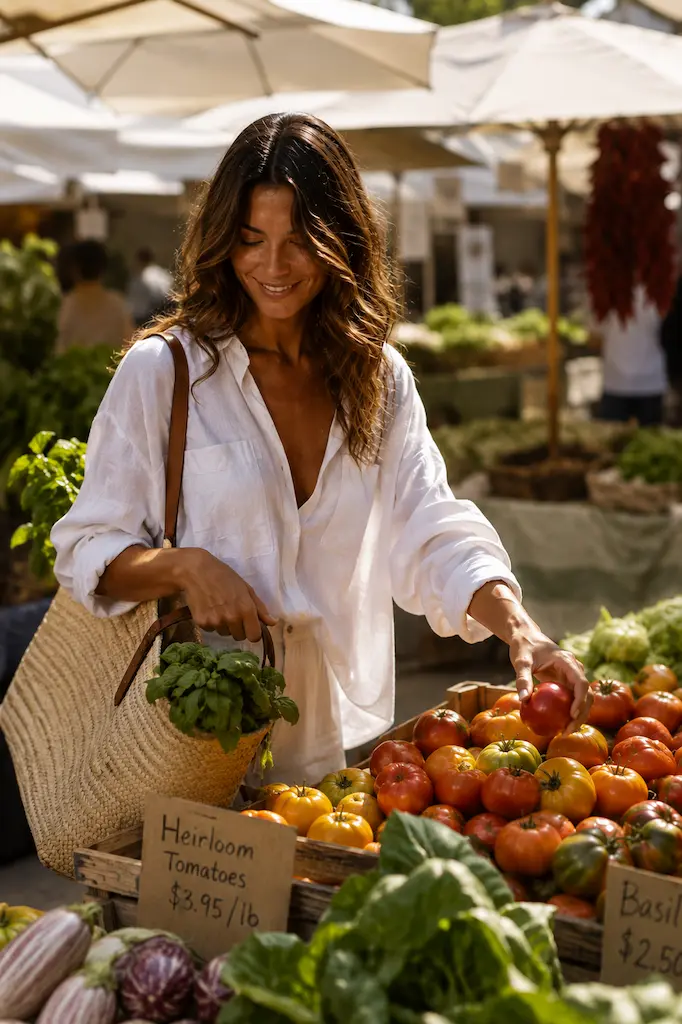
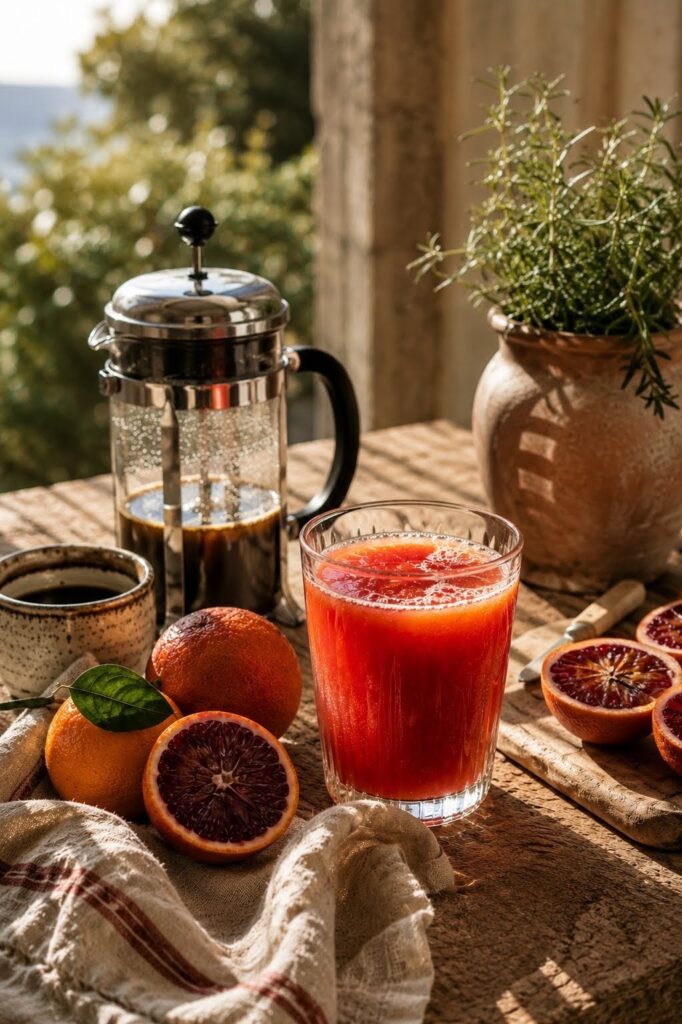
The flavors hardly changed during the journey. Sicily still pairs chocolate with pistachios and orange peel. California happily adopted both. Walk through farmers markets on either coast and you’ll find the same ingredients filling baskets—bright citrus, fragrant almonds, pistachios, sea salt, honey, and enough chocolate to justify buying “just one more little piece.”
That’s why the connection feels so natural. Chocolate isn’t simply a sweet treat on either shore. It’s something shared after dinner, wrapped as a thoughtful gift, slipped into a picnic basket, or enjoyed with coffee while conversations stretch comfortably longer than anyone planned.
For Caliterranean living, this may be one of the sweetest reminders that California didn’t invent everything it loves. Sometimes the best ideas simply arrived by sea, settled along another coast, and quietly made themselves at home.
If this article has left you craving dark chocolate with pistachios and orange, don’t worry. Some stories are best finished where they began. If you’re ever in San Francisco, take a little time to explore Ghirardelli’s history for yourself. You may leave with a deeper appreciation of the brand—and perhaps a piece of chocolate tucked into your bag.
CONTINUE EXPLORING
Inspired by this story? Continue your journey with Coffee and Small Delights Around the World →