Nine Places Where the Pacific Slips Out of Sight
California has a peculiar habit of hiding some of its best coves and lagoons. Drive the coast and the Pacific appears to be impossible to miss: enormous, blue, theatrical, forever throwing itself against the edge of the continent. But leave Highway 1, follow a trail through cypress or redwoods, descend a bluff, or simply look between two rocky headlands, and another California appears. The ocean becomes smaller. Quieter. Sometimes greener. Sometimes it even feels faintly Mediterranean. It collects inside coves barely large enough for a strip of sand. It slips through rock passages, curls beneath arches and sometimes works its way inland until ocean becomes lagoon. These are not necessarily California’s most famous beaches. That is precisely the point. They are places where the coastline seems to have folded itself inward.
So let’s follow Highway 1 and look for the California coast that hides just beyond the obvious one.
Morning in Mendocino
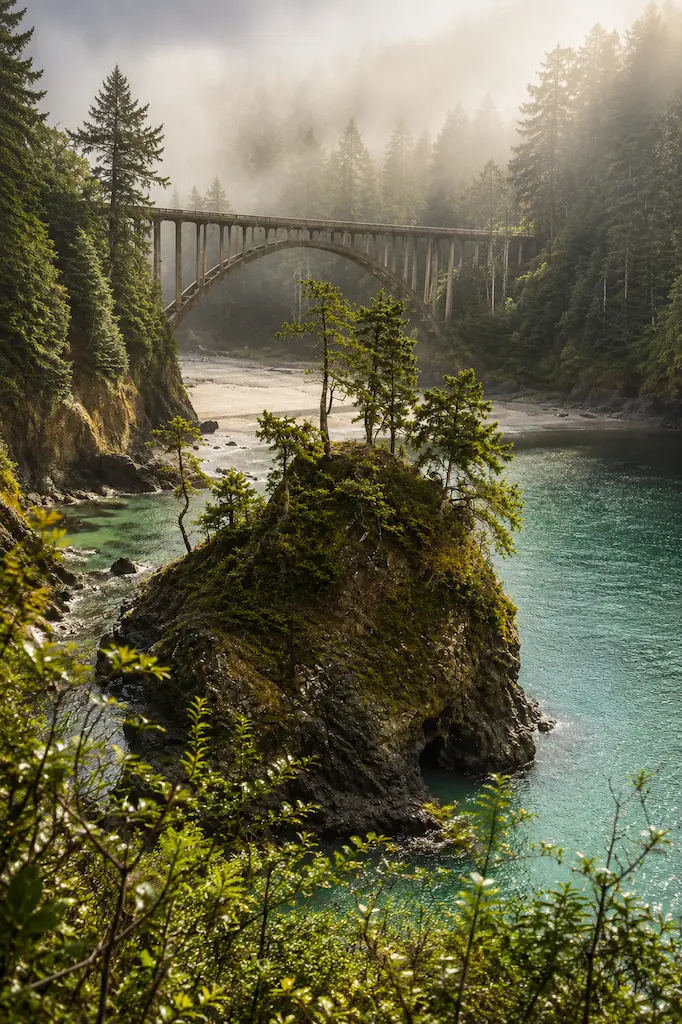
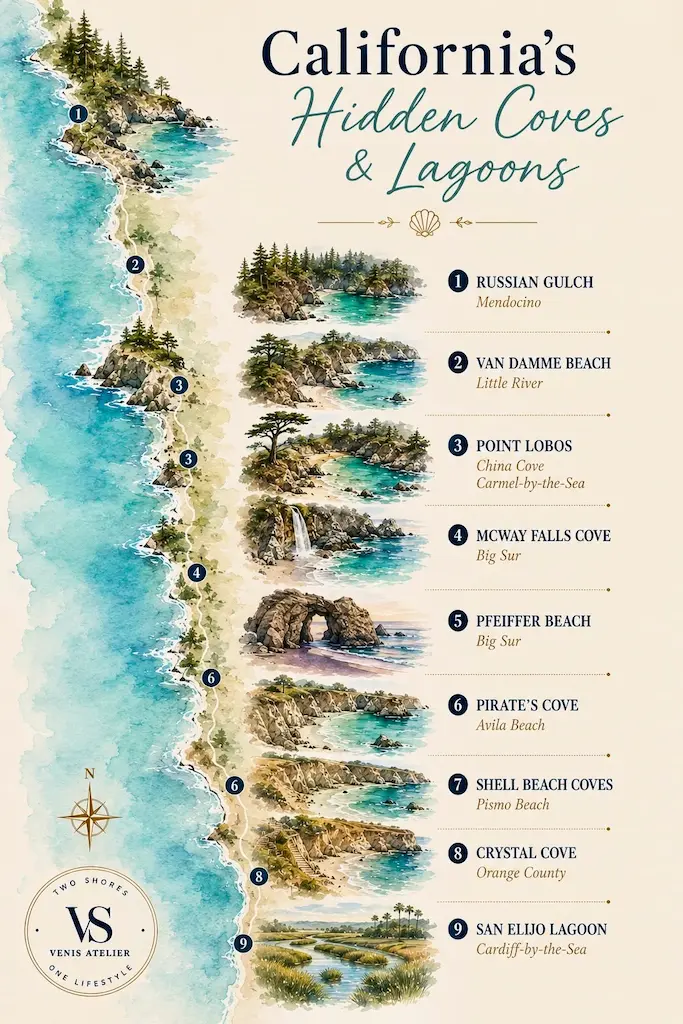
The day begins in fog. At Russian Gulch, just north of Mendocino, the coast smells less like suntan lotion and more like wet earth, salt and forest. Redwoods and ferns grow inland; rocky headlands meet a sheltered cove at the mouth of Russian Gulch Creek. Offshore are rock islands, caves and small inlets, while inland a waterfall drops through a canyon of moss and green. Even river otters sometimes appear around the creek. This is California before it becomes golden. The colors are spruce, slate, foam and the startling turquoise that occasionally appears when northern light finds shallow water.
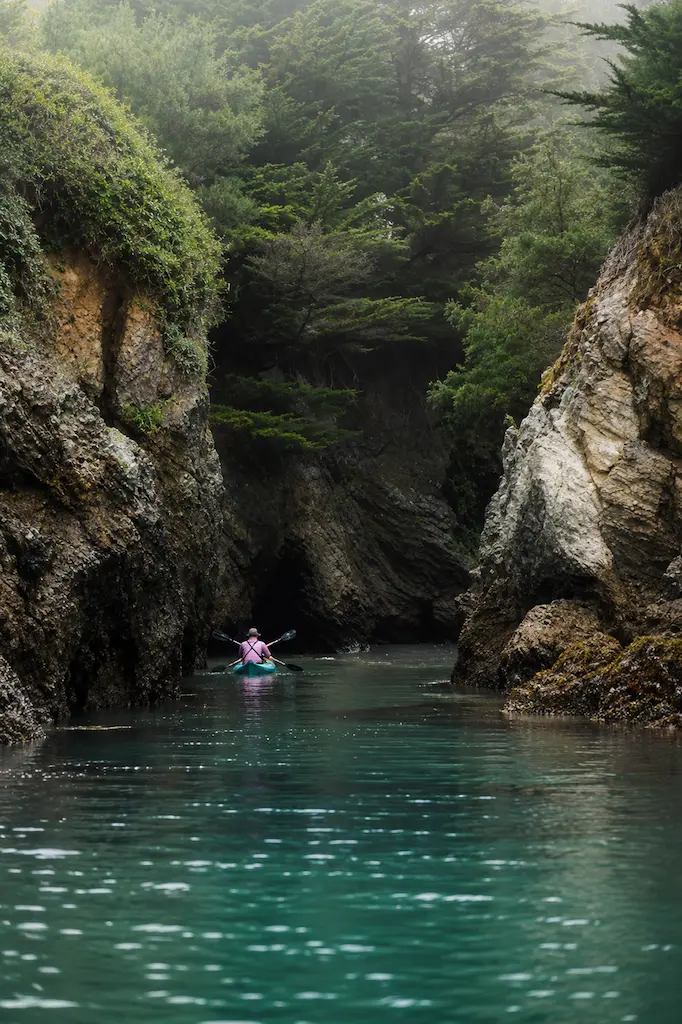
A few miles south, Van Damme offers another version of the same secret. Little River Beach sits inside a protected cove bordered by rocks and underwater rock gardens. There is even a tunnel along its northern side, a favorite route for kayakers. Across Highway 1, the landscape changes almost absurdly quickly: fern canyon, forest and a strange pygmy forest where mature cypress and pine can remain remarkably small.
California is very good at these contradictions. A tiny forest beside an enormous ocean. A beach beside redwoods. A road that seems to divide two completely different climates. And somehow they belong together.
Where the Water Turns Green
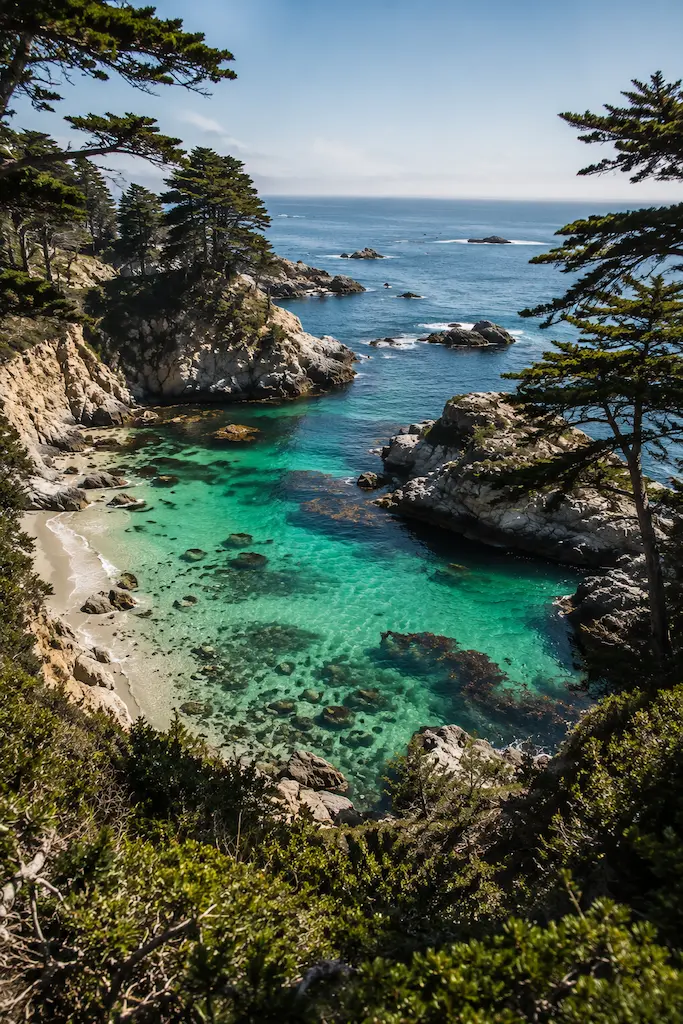
Farther south, the morning fog begins to lift. At Point Lobos, near Carmel, the Pacific stops behaving like the Pacific. China Cove appears below the trail almost improbably green—a tiny pocket of pale sand enclosed by sculpted rock and Monterey cypress. Point Lobos itself is a landscape of headlands, coves and meadows, with extraordinarily rich marine habitat offshore. Stand above China Cove and for a moment California looks suspiciously Mediterranean. Not because the landscape is identical. It isn’t. The trees give it away. But there is something familiar in the scale: water held between rocks, a beach discovered from above, the sense that the sea has briefly become a room. Perhaps that is why coves affect us differently from open beaches. An open ocean asks us to look toward the horizon. A cove asks us to look around.
Big Sur Does Not Believe in Subtlety
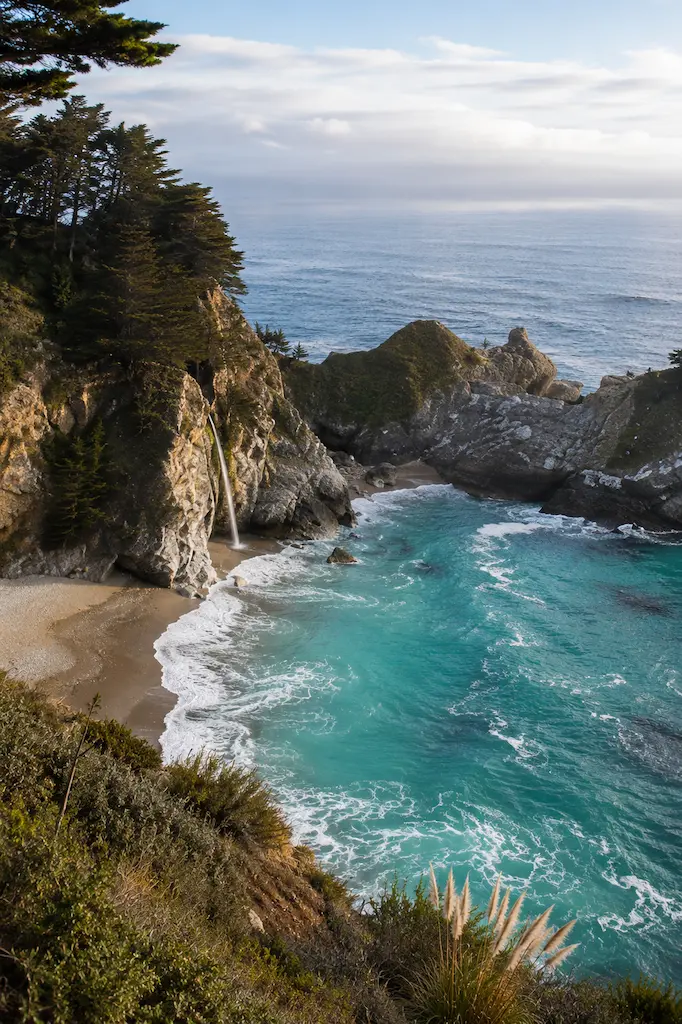
By midday the coast has become vertical. Big Sur rises out of the Pacific in cliffs, redwoods and improbable pieces of road, and then comes McWay Cove, where an approximately 80-foot waterfall drops from the cliffs toward a small beach below. The beach itself is protected from public access; this is one of those rare places where the appropriate thing to do is simply look. There is something rather refreshing about a beautiful place that refuses to become a beach club. No umbrella. No chair reservation. No strategically positioned glass of something photogenic. Just rock, water and gravity.
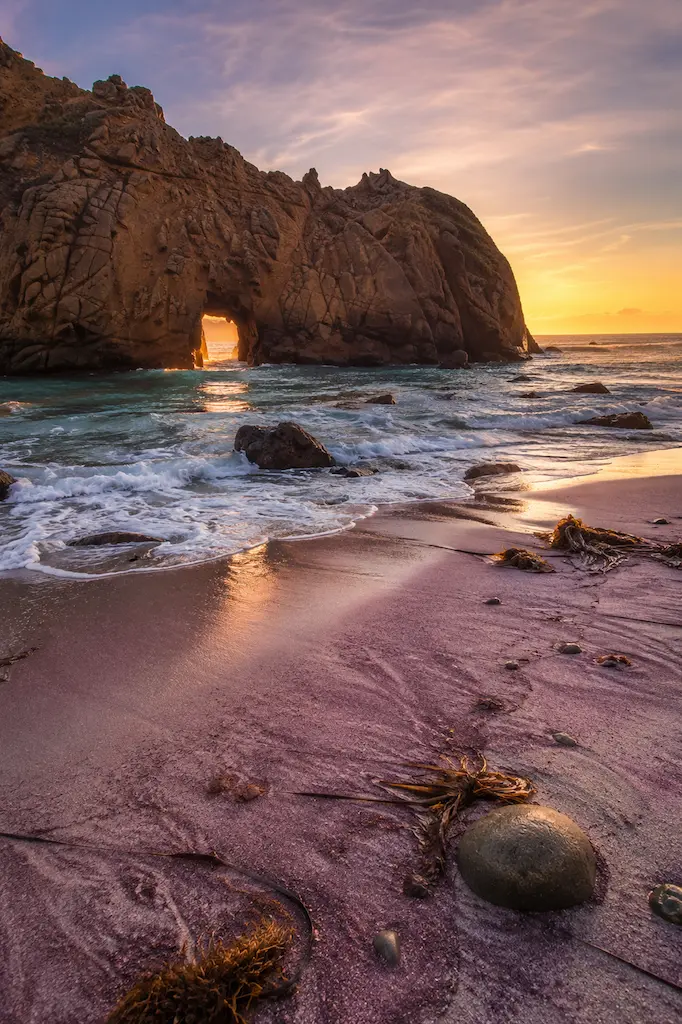
Nearby, Pfeiffer Beach changes the palette again. Instead of a neat turquoise inlet, there are dramatic offshore formations, the famous Keyhole Arch and stretches of sand that can take on violet and purple tones from mineral deposits. By now you begin to understand that “California blue” is not really a color. It is a collection of them.
Mendocino gives us steel blue. Point Lobos turns emerald. Big Sur produces deep Pacific cobalt. In shallow coves the water becomes turquoise; under fog it turns silver. The coast keeps changing its mind.
Afternoon Finds the Smaller Beaches
South of Big Sur, the cliffs relax. Around Avila Beach and Shell Beach, the coastline breaks into smaller pockets, caves and sandstone edges. Pirate’s Cove sits tucked into the San Luis Obispo coast, while the Shell Beach coves turn a seemingly ordinary stretch of shoreline into a sequence of small discoveries. Here the experience changes again. The smell is warmer now: dry grasses, sun-warmed earth and salt. The sound of the water becomes sharper when waves enter narrow rock formations. Sandstone holds the afternoon sun differently from Mendocino’s darker rock.
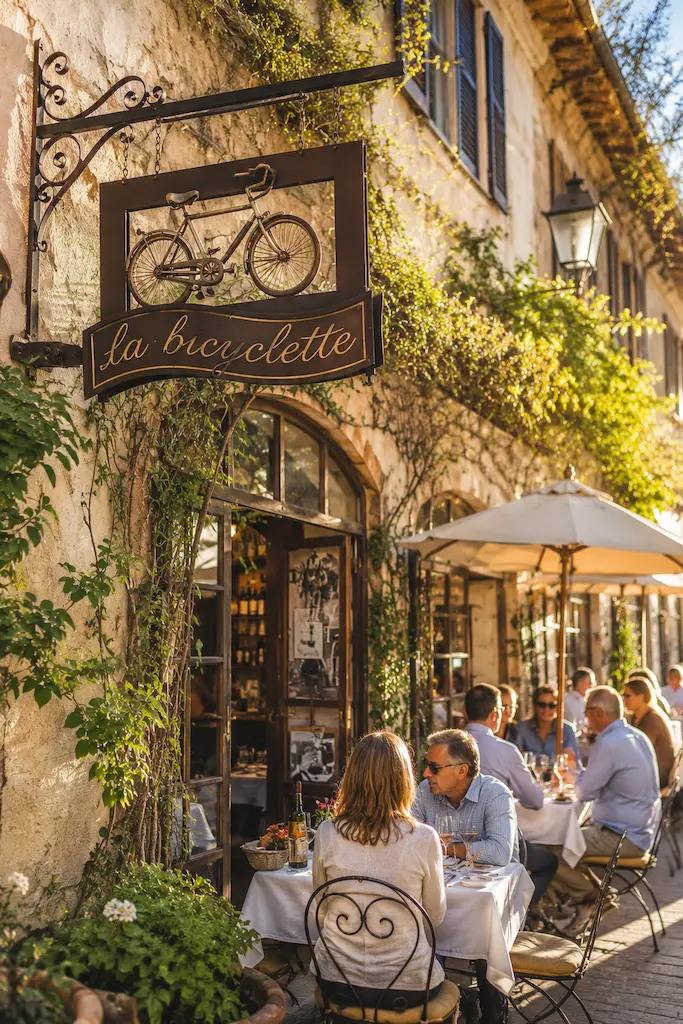
This is the pleasure of following California north to south—or south to north. It isn’t one coast repeated for hundreds of miles. It is several coastlines pretending to be one. And sometime in the afternoon, all that salt air inevitably makes lunch seem like a matter of some urgency. The California coast is particularly good at food that doesn’t need much explanation: strawberries from nearby fields, citrus, vegetables, bread, something grilled, perhaps a picnic assembled from a small market and eaten with sand inconveniently finding its way into everything.
The Mediterranean may have perfected the long seaside lunch. California perfected eating one while still wearing a sweatshirt.
The Coast Turns Golden
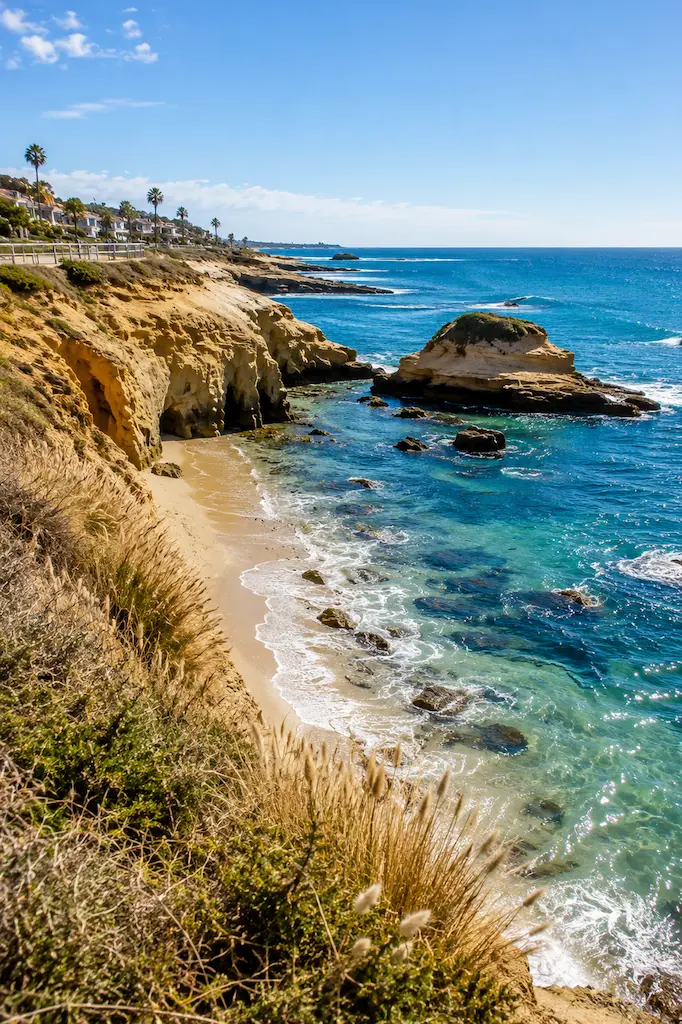
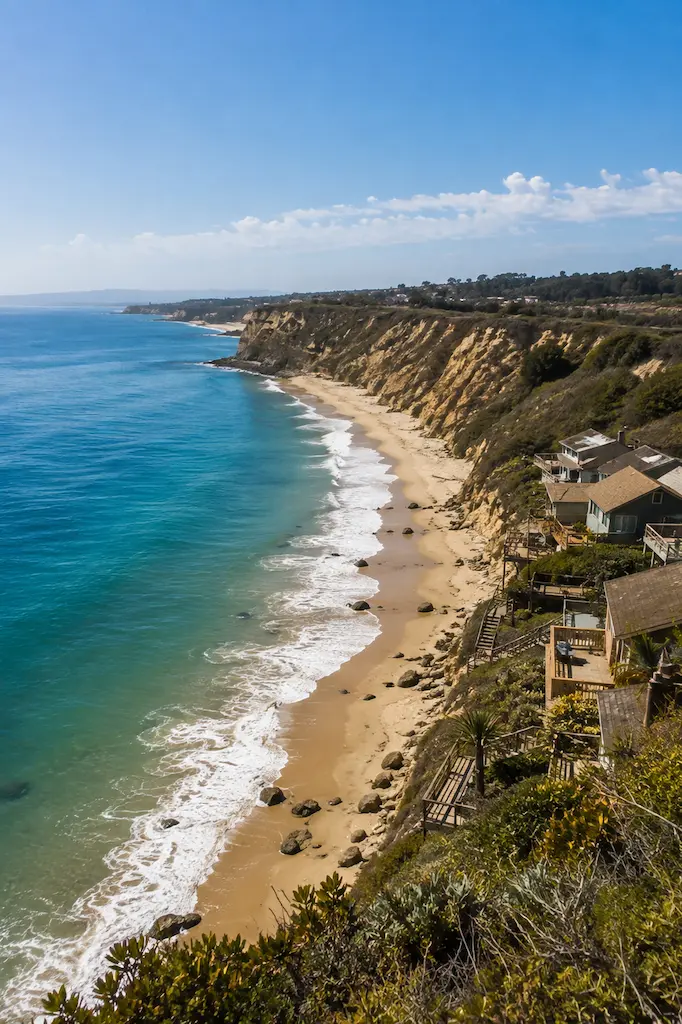
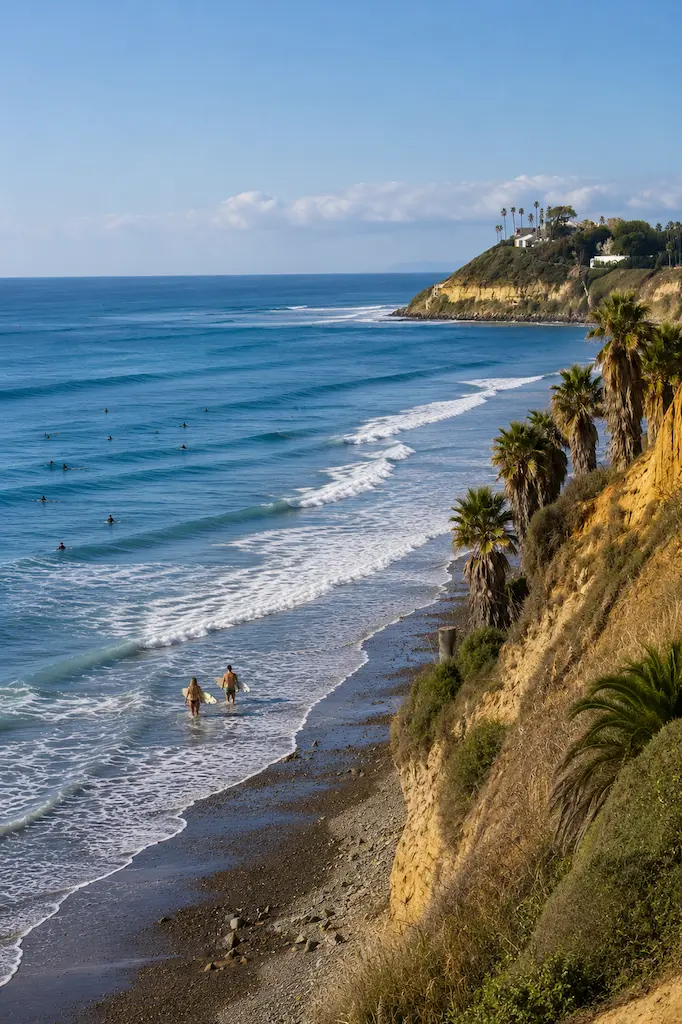
By the time you reach Orange County, the light has changed. It matches the name. At Crystal Cove, the landscape is warmer—golden bluffs, sandy coves, rocky reefs and tide pools. Yet what makes it interesting is what didn’t happen here. Despite the dense Southern California development surrounding it, Crystal Cove remains one of Orange County’s largest stretches of natural seashore and open space, with 3.2 miles of beach and 2,400 acres of backcountry. And tucked along that shoreline is another kind of California memory: 46 rustic seaside cottages dating from the 1930s and ’40s, preserved as part of the Crystal Cove Historic District.
They are wonderfully un-grand. Wood, porches, salt air, windows facing the Pacific. Before “coastal living” became an aesthetic category with its own cushions, paint colors and rather alarming number of decorative shells, it was simply this: somewhere modest to sleep near the water.
And Then the Ocean Becomes a Lagoon
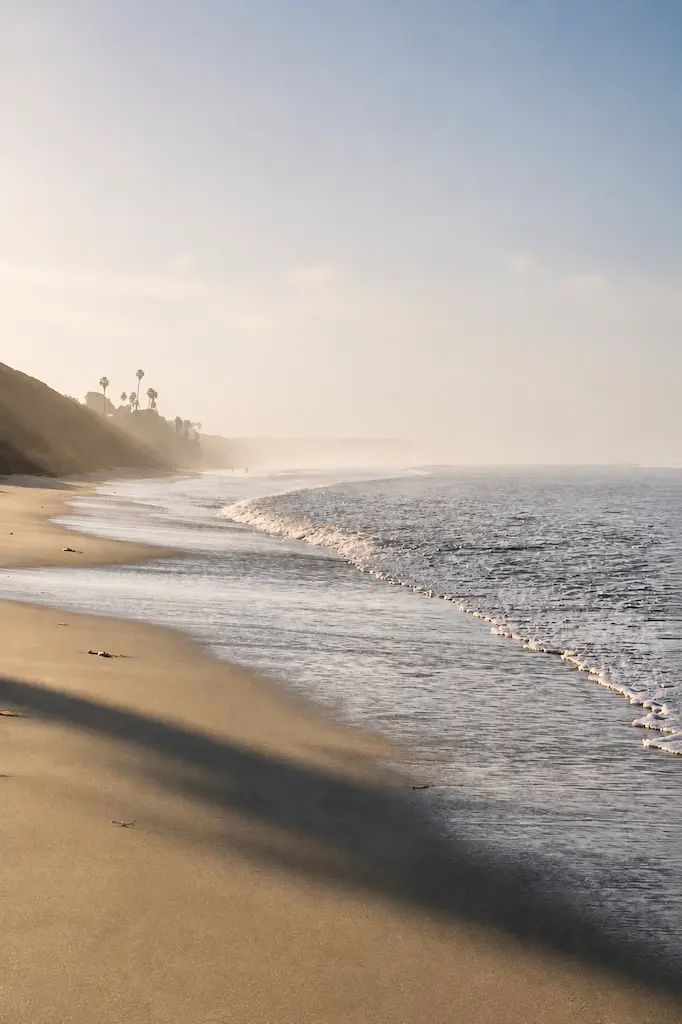
Our last stop doesn’t really look like a beach at all. At San Elijo Lagoon in Cardiff-by-the-Sea (part of the city of Encinitas), the Pacific turns inward. Escondido and La Orilla creeks meet the ocean here, creating a 979-acre ecological reserve of shallow estuary and coastal wetland. Twice each day, the tide moves salt water through the landscape; when it retreats, mudflats emerge and birds arrive to feed. The soundtrack changes from surf to wings. Water winds between grasses instead of crashing against cliffs. The colors soften to sage, gold and reflected blue. Eelgrass grows beneath the surface, and the lagoon’s restored tidal circulation has helped the habitat recover.
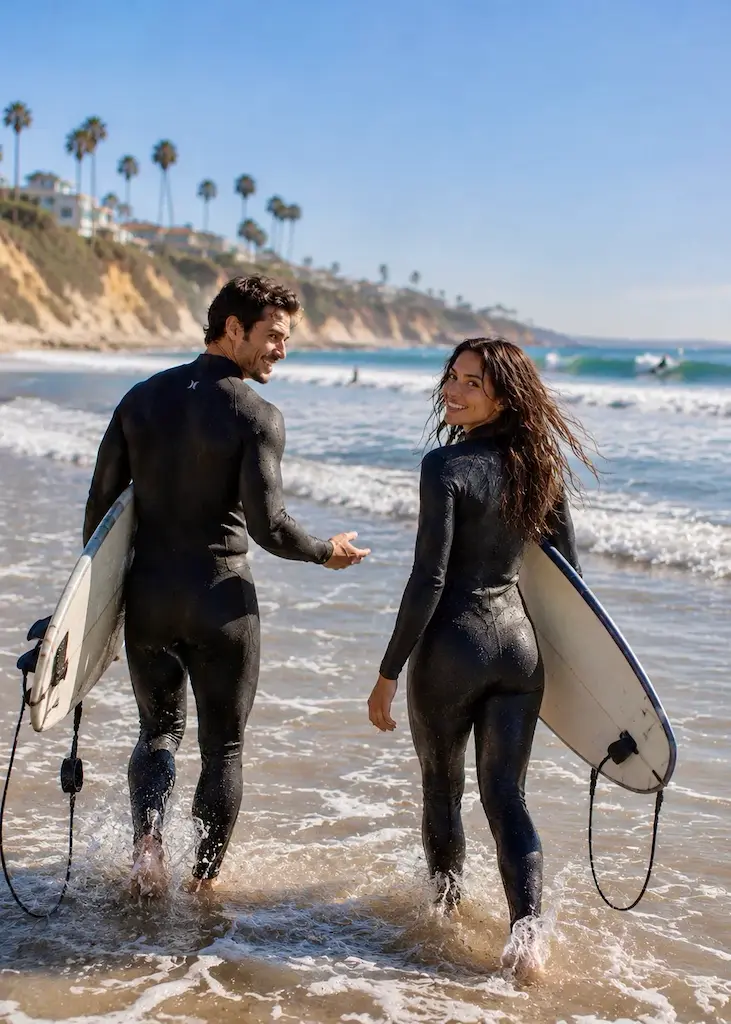
And just beyond it is Cardiff-by-the-Sea, where VeniS Atelier’s staff begins the day with morning walks along the beach. The Pacific is still there, of course. You can hear it. But the lagoon reminds us that a coastline isn’t simply the line where land stops and ocean begins. It is a much more interesting negotiation between the two. Perhaps that is what connects all nine of these places.
Russian Gulch hides water beneath forested headlands. Van Damme protects it behind rock. Point Lobos turns it emerald. McWay keeps its little beach beyond reach. Pfeiffer sends the sea through an arch. Avila and Shell Beach divide the shoreline into pockets. Crystal Cove preserves a fragment of older Southern California. San Elijo allows the Pacific to wander inland. None makes the ocean larger. They make it more intimate. And after hundreds of miles of California coastline, that may be the memory that stays: not the great blue horizon we expected to find, but the small piece of water we almost missed.
ESCAPE NOTES
Don’t Miss
China Cove at Point Lobos for its almost unreal green water; Russian Gulch for the meeting of forest and sea; McWay Falls for pure coastal drama; and San Elijo Lagoon for seeing what happens when the Pacific moves inland.
Taste
Let the food change with the coast: Mendocino produce and bakery stops in the north; a simple picnic around Big Sur; Central Coast strawberries and farmers’ market finds around San Luis Obispo County; and something fresh and citrusy when you reach San Diego County.
Sweet Stop
Make this less about finding one famous dessert and more about California produce at its sweetest—berries on the Central Coast or something made with local citrus farther south.
Shop
Skip generic coastal souvenirs. Look for California-made ceramics, woven goods, small-batch pantry products, botanical pieces and work by local artists—objects that carry the landscape home without having to print “California” across it.
A Note Before Going
Coastal conditions, trail access and park closures can change, particularly around Big Sur. In August 2026, California State Parks reported temporary Big Sur closures related to the Timber Fire, and McWay Falls beach itself is permanently closed to public access. Check official park conditions before setting out.
CONTINUE EXPLORING
Inspired by this story? The story continues. Here is your next read The Beach Shack as the Riviera’s Best Table →