The California Town That Chose Beauty Over Hurry
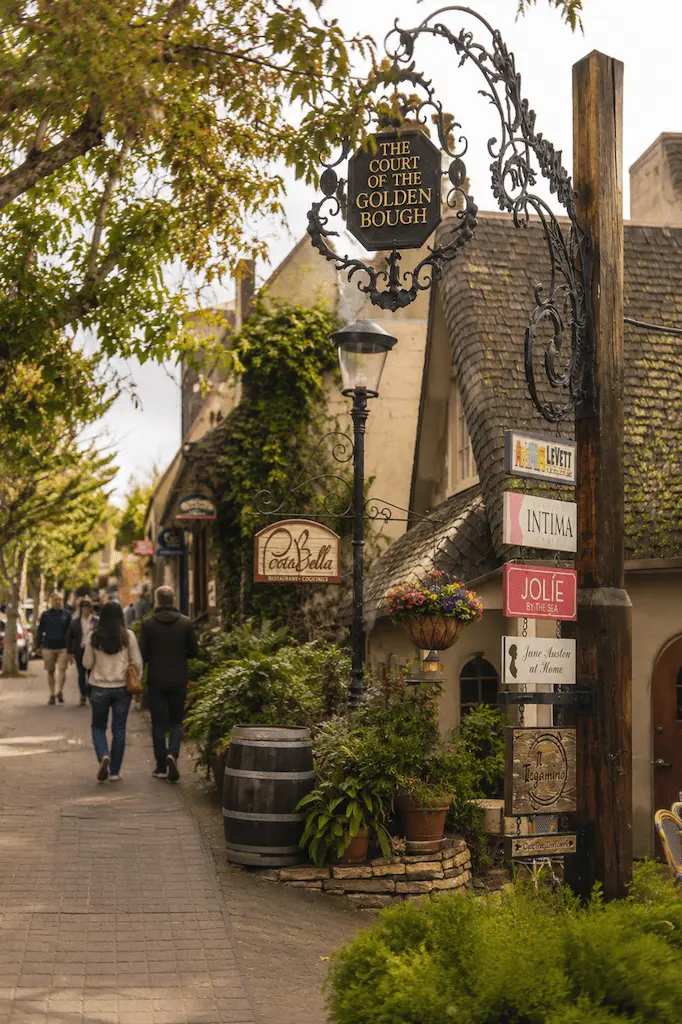
The first thing you notice in Carmel-by-the-Sea isn’t a landmark. It’s the pace. People leave the bakery carrying warm bread instead of takeaway bags. Dogs lead their owners toward the beach rather than back to the car. Outside cafés, conversations continue long after the coffee cups have emptied. Somewhere beyond the cottages, you can hear the Pacific before you see it.
Carmel does not feel like a town designed to move people through it. It feels like one designed to make them slow down. That feeling isn’t accidental.
More than a century ago, Carmel became an artists’ colony, attracting painters, writers, architects and musicians drawn by the remarkable coastal light and the freedom to create. Unlike many California towns that gradually gave way to larger developments and familiar storefronts, Carmel chose another path. It protected its cottages, encouraged independent businesses, and allowed art to become part of everyday life rather than something confined to a museum.
Creative people continued to find their way here. Salvador Dalí spent time on the Monterey Peninsula and became connected with the local art community. Actors, writers and filmmakers followed, drawn not by Hollywood glamour but by its absence. Clint Eastwood eventually made Carmel his home and later served as mayor, while Doris Day became one of the village’s strongest preservation advocates. They were not escaping California. They were searching for a quieter version of it.
The best way to understand Carmel is not by following an itinerary. It is by wandering.
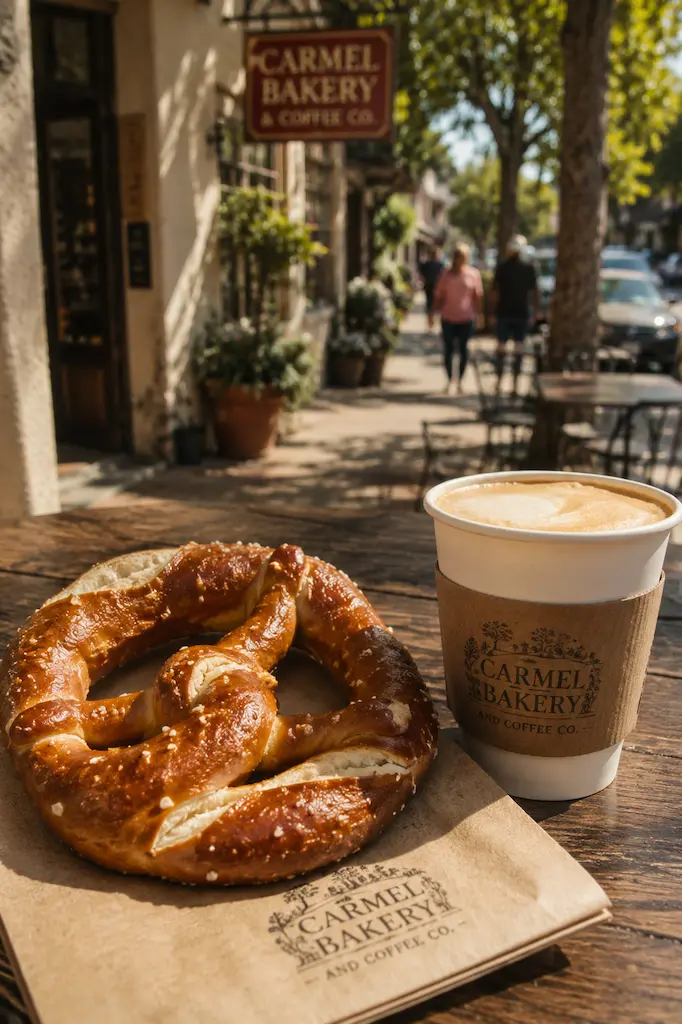
Begin the morning at Carmel Bakery while the ovens are still warm. The smell of freshly baked bread fills the street, and a soft pretzel and coffee are all you need before heading toward the beach.
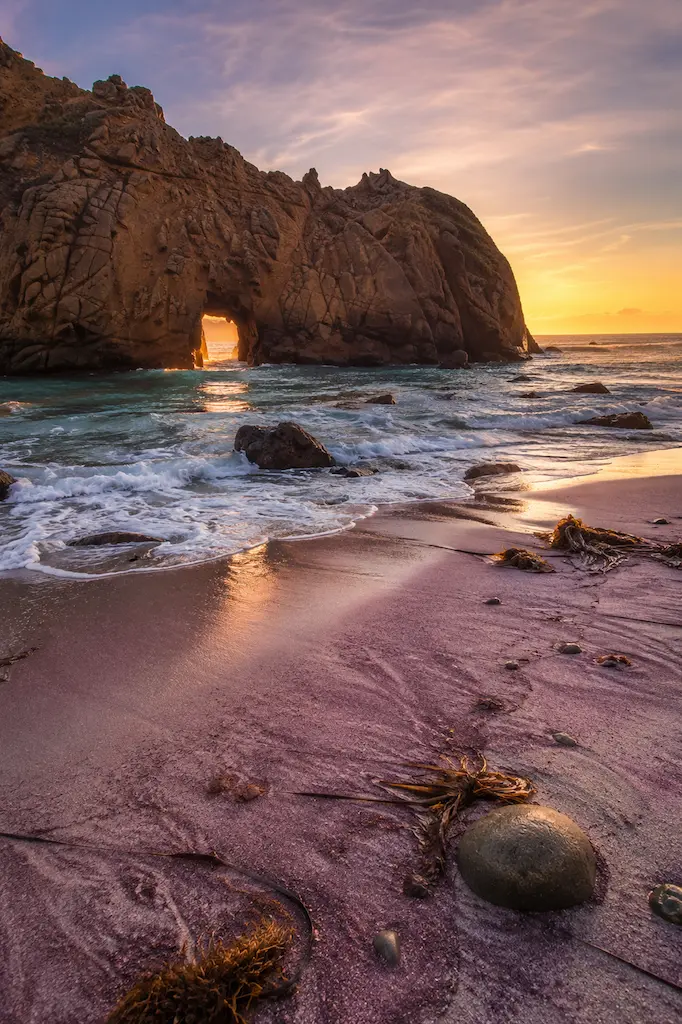
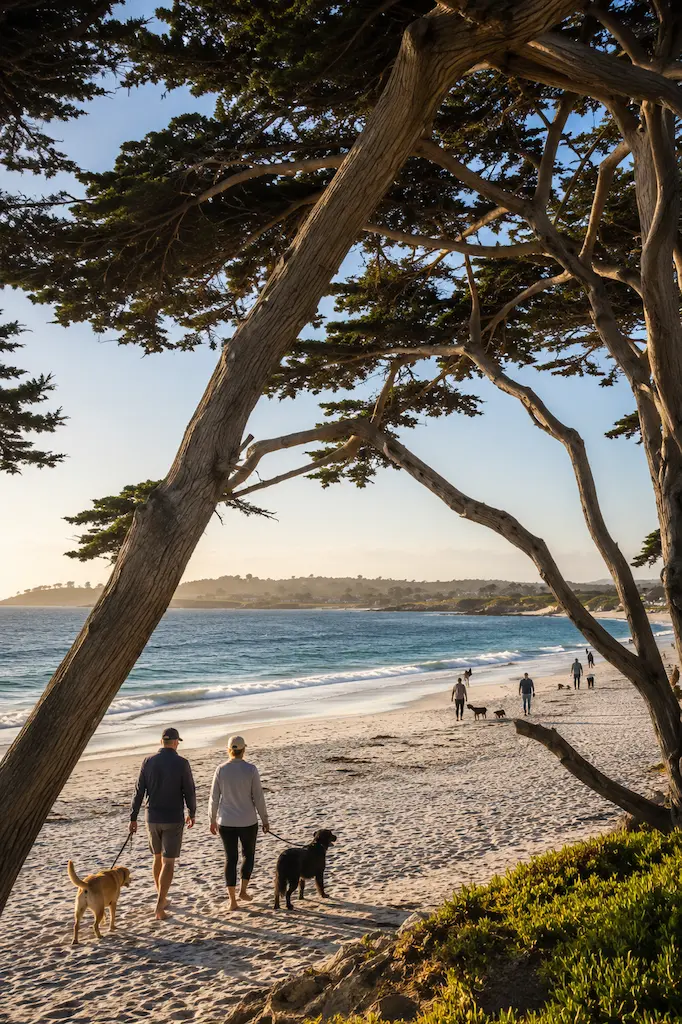
The Pacific announces itself gradually. The air becomes cooler, the scent of salt replaces that of fresh bread, and soon the white sand of Carmel Beach stretches ahead. Locals walk their dogs along the shoreline, waves roll onto the beach with steady rhythm, and the morning unfolds without urgency.
Return to the village without deciding exactly where you are going. A gallery window catches your attention. An open courtyard leads to another. Old wooden floors creak beneath your feet as you step inside a small exhibition. Around the corner, the aroma of espresso drifts from a café terrace. A bookstore invites you to browse without checking the time. Carmel has a remarkable ability to reward curiosity more than careful planning.
Just beyond the village, another landscape tells a different part of California’s story. Pebble Beach is known throughout the world for golf, yet its greatest attraction has always been the coastline itself. Monterey cypress trees stand against the wind, waves crash below rugged cliffs, and every fairway seems to borrow its view from the Pacific. Even visitors with no interest in the game find themselves stopping to admire the scenery. It is a place where recreation never competes with nature because nature remains the main event.
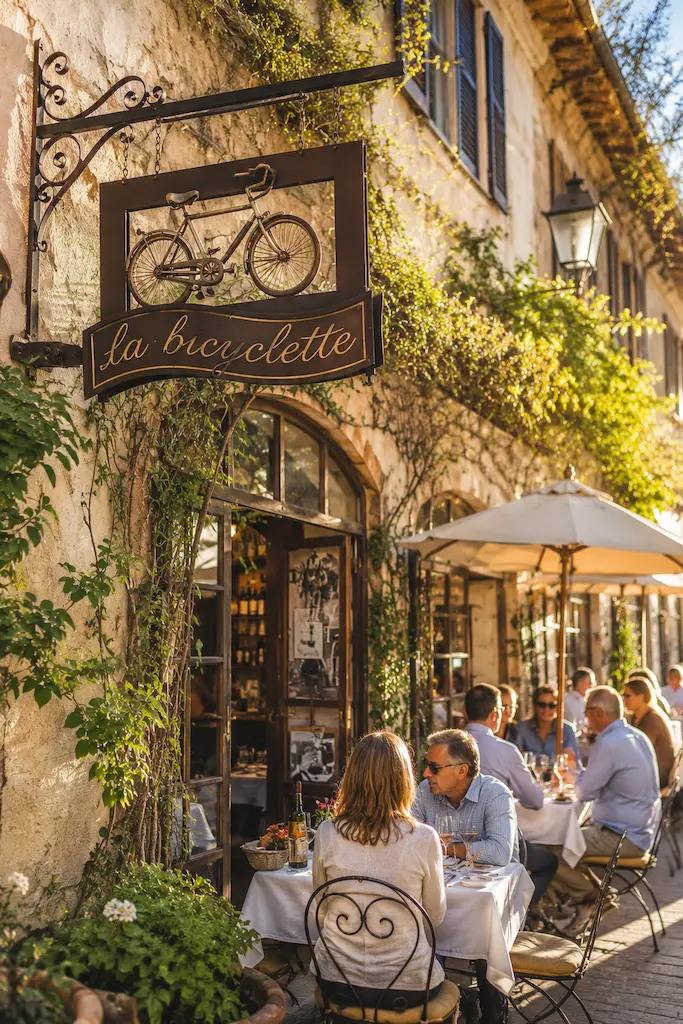
As evening settles over the village, the pace slows once again. La Bicyclette captures Carmel’s character as naturally as any gallery or cottage. Seasonal ingredients, wood-fired cooking, thoughtful wines and an atmosphere free from pretension reflect the same philosophy found throughout the village: quality is something to be experienced, not announced.
Perhaps that is Carmel’s greatest lesson. Beauty is rarely created by adding more. More attractions. More traffic. More noise. Sometimes it is created by protecting what already exists.
That may be why people leave Carmel remembering surprisingly ordinary things: the smell of warm bread in the morning, the sound of waves beyond the dunes, the quiet conversation outside a café, the galleries discovered by accident rather than intention.
Some places are best explored with a map. Carmel-by-the-Sea is best explored with curiosity.
A Day, the VeniS Way
Morning
Carmel Bakery
Begin with a warm pretzel or freshly baked pastry and a cup of coffee while Ocean Avenue is still waking up. The scent of bread lingers outside the bakery, and the village feels like it belongs to the locals. Note: Take your coffee to go. The walk to the beach is part of breakfast.
Late Morning
Carmel Beach
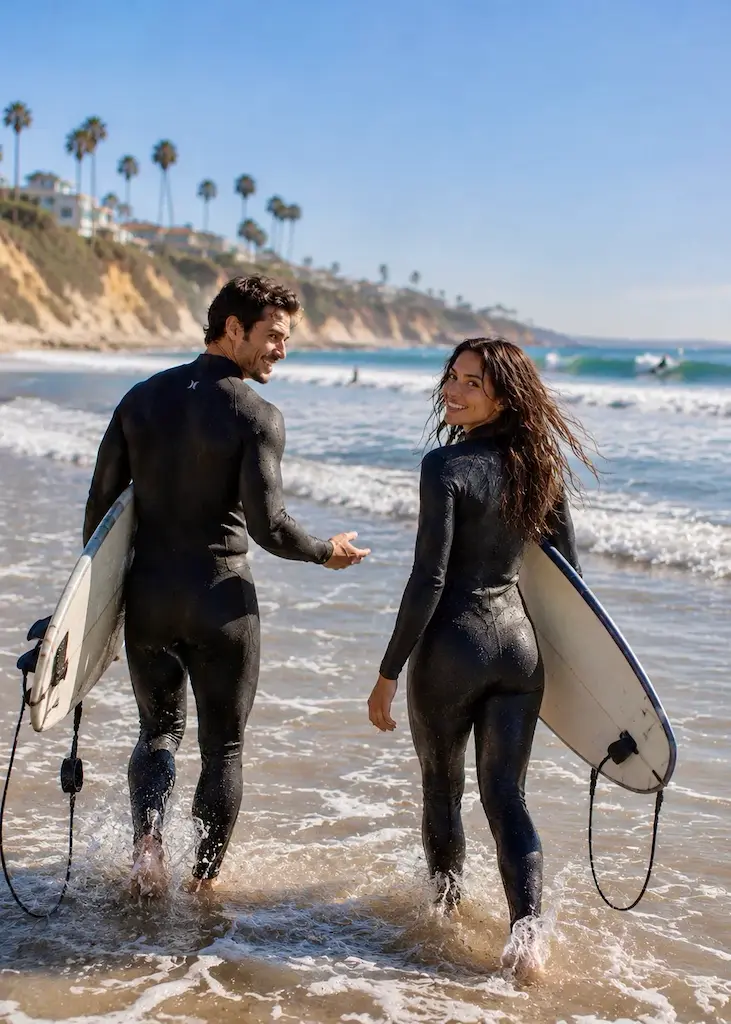
Leave your shoes in your hand and walk the shoreline. Watch dogs racing across the sand, listen to the Pacific, and take in one of California’s most beautiful urban beaches. Note: Don’t be surprised if there are more dogs than surfers. Carmel is one of California’s most dog-friendly coastal towns.
Midday
Ocean Avenue & Hidden Courtyards
Skip the map. Wander through galleries, quiet passageways, independent boutiques, and flower-filled courtyards. Carmel rewards curiosity more than planning.
Afternoon
Pebble Beach & 17-Mile Drive
Follow the coastline where Monterey cypress trees meet dramatic cliffs. Whether you stop for the views or simply enjoy the drive, this is one of California’s iconic landscapes. Note: Even if you don’t play golf, stop anyway. The coastline is the real attraction.
Evening
La Bicyclette
Finish the day with wood-fired cooking, seasonal ingredients, and a glass of California wine. There is no better place to experience Carmel’s relaxed approach to dining. Note: Reservations are worth making, but lingering over dinner is even more important.
CONTINUE EXPLORING
Inspired by this story? Continue your journey with Encinitas: California’s Closest Thing to Utopia →