Portugal’s Striped Village Is More Than a Pretty Façade
NOTE: Costa Nova is not, strictly speaking, Mediterranean. It faces the Atlantic, on Portugal’s western edge, far from the sea that usually anchors these pages. But coastlines have never been especially respectful of editorial borders. With its maritime traditions, sun-faded colors and life arranged around water, Costa Nova feels close enough in spirit—and far too irresistible to leave off the map.
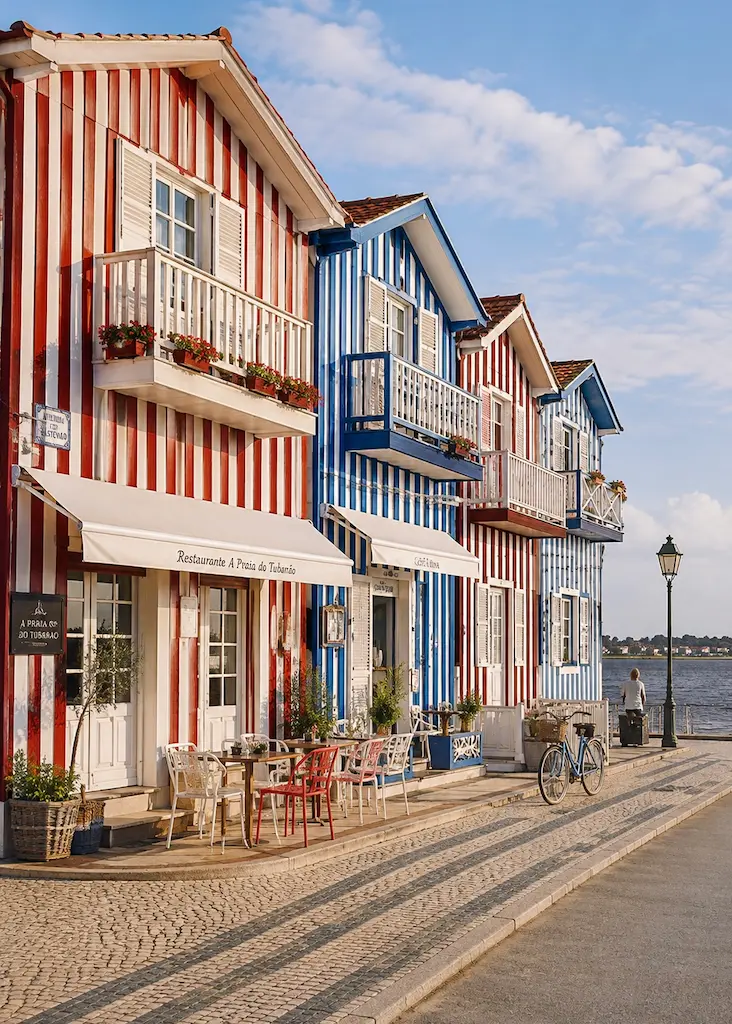
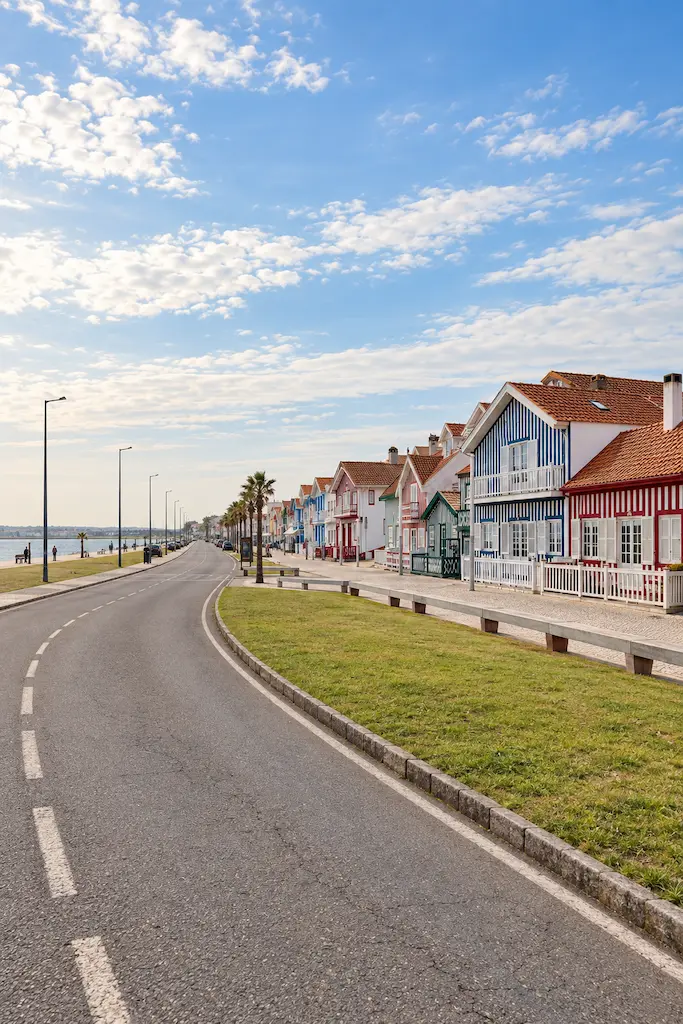
There are towns and islands that seem to have chosen a particular color palette. Costa Nova, in Portugal, appears to have been greedy and chosen the entire paint box. Along the Ria de Aveiro, houses stand in improbable combinations of red and white, blue and white, green and white, yellow and white, their stripes running vertically down timber façades as though someone once decided a fishing village could use a little more optimism—and, rather wonderfully, nobody talked them out of it.
Arrive early, before the striped houses become the morning’s selfie backdrop and summer visitors fill the waterfront, and Costa Nova feels less like the cheerful postcard it has become. It is a narrow settlement caught between two very different bodies of water: the open Atlantic on one side and the sheltered lagoon waters of the Ria de Aveiro on the other. The village lives between them, and much of its character comes from that contrast.
Morning: When the Stripes Wake Up
Morning begins along Avenida José Estevão, the waterfront road beside the ria where many of Costa Nova’s famous striped houses stand. Café tables appear on pavements, bicycles pass, windows open, and the smell of coffee drifts from one doorway while something sweet escapes from another. Across the road, the water is still calm, and this is when the palheiros begin to make sense as more than a row of photogenic façades.
Today they are Costa Nova’s signature, photographed so often that it would be easy to imagine they had always existed to brighten holiday albums. They had considerably more practical beginnings. The wooden buildings were originally used by fishing families for shelter and storage, part of a working coastline rather than a decorative one. Many were later adapted into summer houses as Costa Nova developed into a seaside retreat during the nineteenth century. Portuguese politician José Estevão, who helped popularize Costa Nova as a bathing destination, even had a palheiro here of his own, painted in blue and brown stripes.
That history makes the houses more interesting because they were useful before they were charming. Over time, fishing shelters became summer homes, paint became personality, and rows of simple wooden buildings acquired the theatrical appearance that now defines Costa Nova. Walk along the avenue and no two seem quite alike. Red gives way to blue, then green; shutters interrupt the stripes, flowers sit beside doors, and some façades look freshly painted while others show their age. You photograph one, then another, and eventually realize Costa Nova has persuaded you to take seventeen photographs of wooden siding. This is apparently what stripes can do.
Lunch Should Taste Like Where You Are
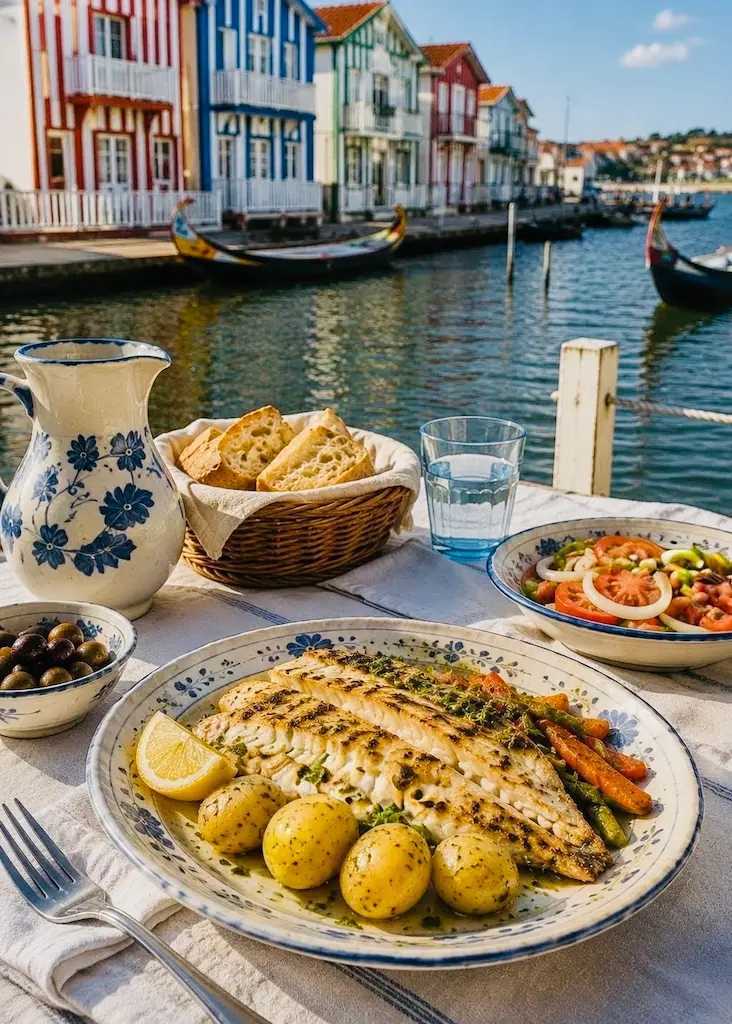
By lunchtime, the sea has been present all morning, so eating something from it seems only reasonable. The Aveiro coast has a long fishing tradition, and the food still reflects it: grilled fish, shellfish, caldeirada and eels appear throughout the region. This is not a lunch that requires architectural plating or a dining room chasing a Michelin star. Fresh fish, potatoes, vegetables, bread and a table near the water understand the assignment perfectly well.
Then there are ovos moles, Aveiro’s famous sweet made from egg yolks and sugar, traditionally enclosed in thin wafer shells often shaped around maritime motifs. They are very sweet, distinctly old-fashioned and precisely the sort of thing that makes more sense on holiday than it might at home.
Afternoon: Crossing to the Atlantic
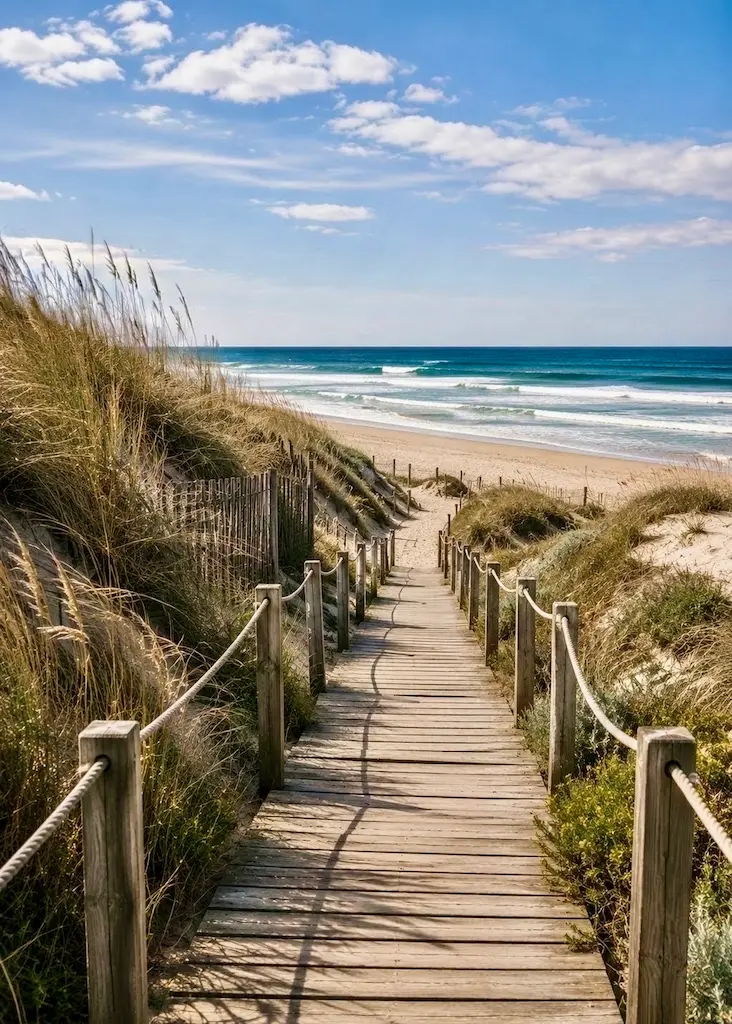
One of Costa Nova’s pleasures is how quickly the landscape changes. From the calm ria, walk across the narrow village toward the dunes and the Atlantic suddenly takes over. The protected water disappears behind you, and ahead is a wide sandy beach, wooden boardwalks, grasses bending in the wind and a considerably less polite ocean. The contrast explains Costa Nova better than any postcard can: the ria gave fishermen sheltered water and a working route inland, while the Atlantic gave the village its beach, weather and horizon. You can move between the two on foot in minutes.
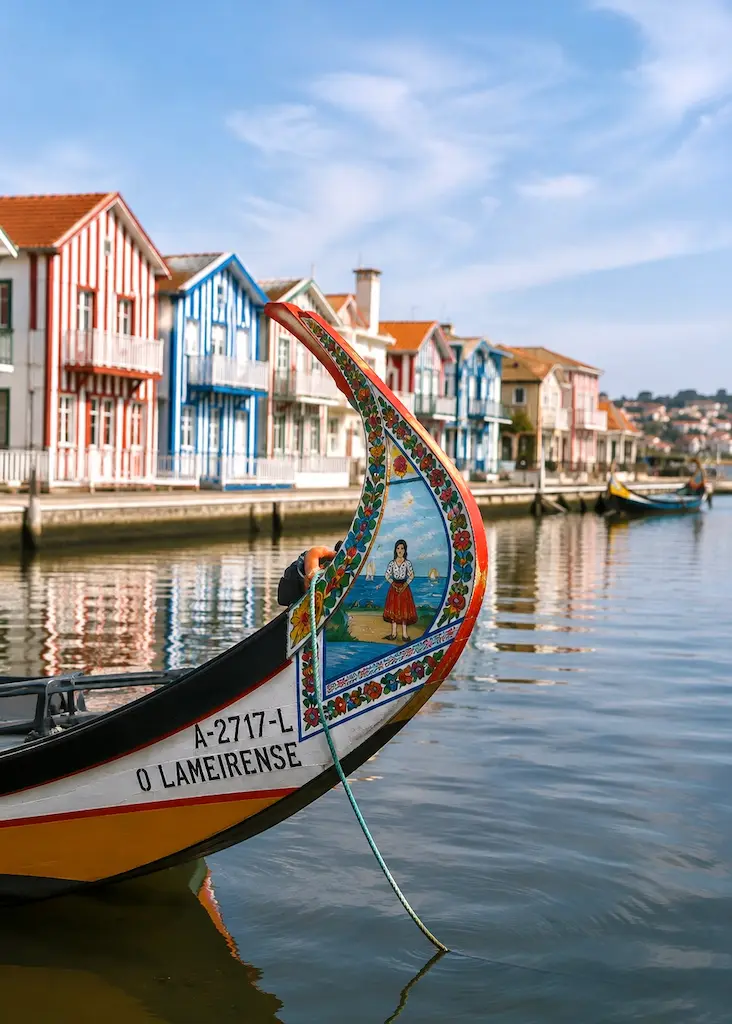
Back on the ria side, another piece of Aveiro’s visual identity appears: the moliceiro. These long, slender boats with brightly painted, curved bows were traditionally used to collect aquatic plants from the lagoon. Today they are most often seen carrying visitors through nearby Aveiro’s canals, but visually they belong to the same world as Costa Nova’s palheiros. Between the striped houses and painted boats, this corner of Portugal seems to have developed a healthy resistance to beige.
There is another local indulgence worth saving room for: tripa de Aveiro, a warm, soft, crepe-like sweet usually folded around a filling. It is best eaten while walking, preferably before you become too concerned with dignity. Napkins are advisable. Elegance is optional.
The Hours When Nothing Happens
This is where Costa Nova becomes most enjoyable. Sit beside the ria for a while, walk the wooden paths through the dunes, or follow the beach simply because it continues. Look at the older palheiros as closely as the freshly painted ones and notice how ordinary life keeps moving around the famous façades. There is no grand monument demanding your attention, and that helps.
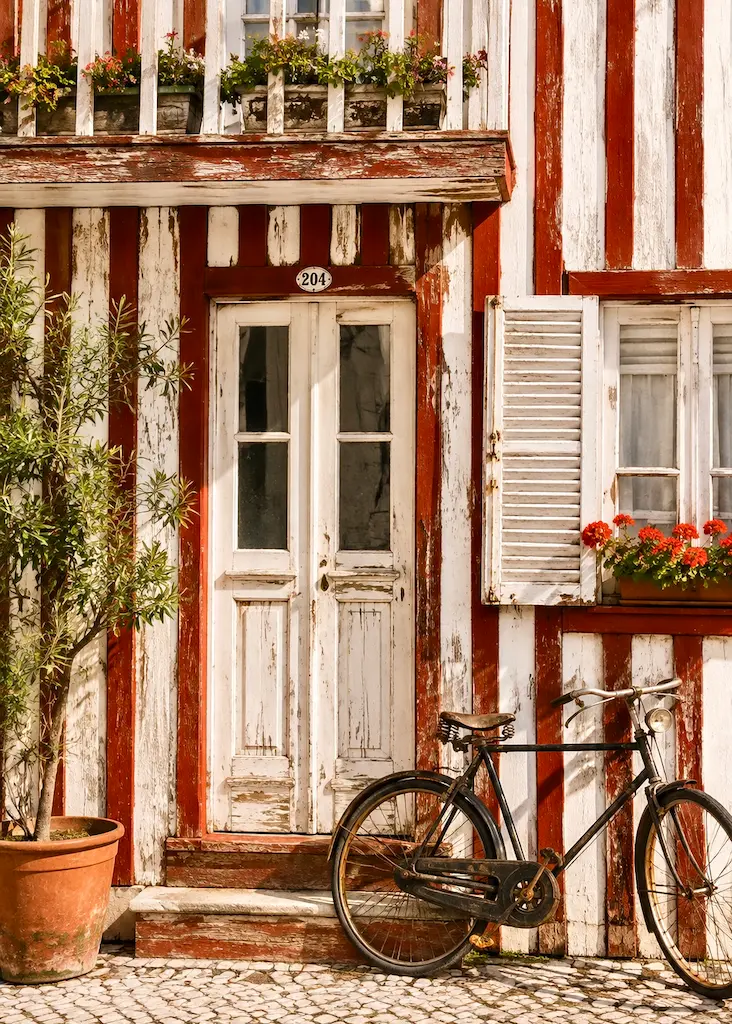
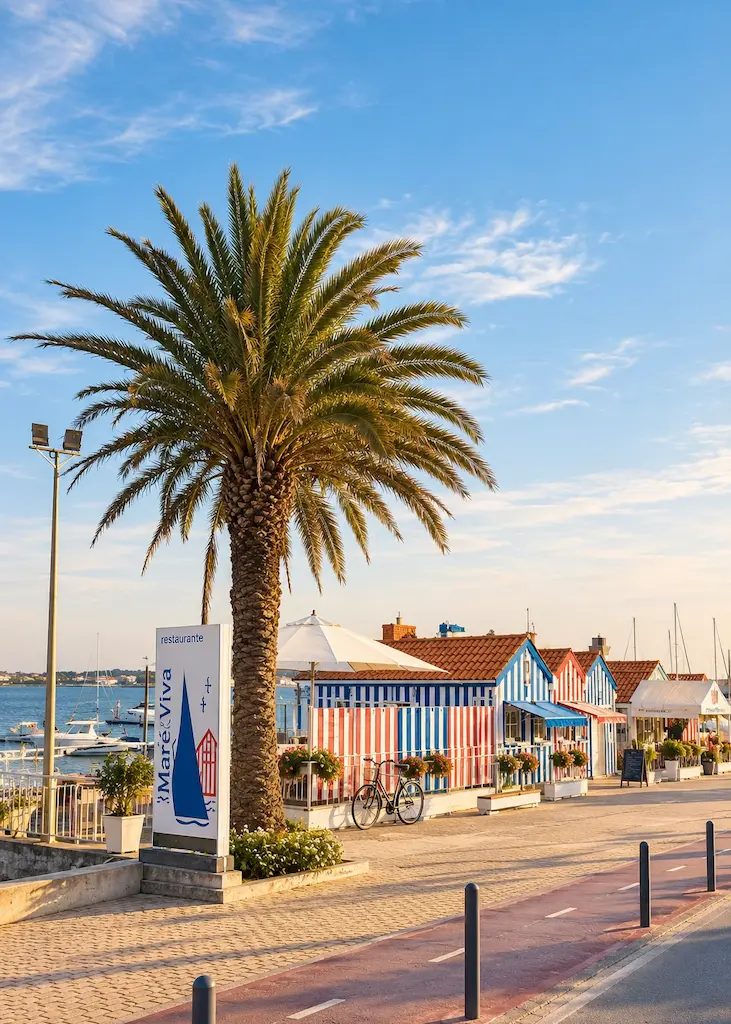
The village is small enough to revisit the same street without intending to. A café you passed in the morning looks different in the afternoon, someone has opened a shutter, a bicycle has appeared against a wall, towels hang outside after the beach. Costa Nova is particularly good for photography, but the best images are not necessarily the perfectly aligned rows of striped façades. Look closer and the details become more interesting: weathered timber, a red shutter, a moliceiro reflected in the ria, sand gathered at the edge of a boardwalk, or a striped wall appearing behind an ordinary bicycle. Once the houses stop being the only subject, the village becomes much more than its postcard.
Evening
By late afternoon, the waterfront becomes busier again. People return from the Atlantic carrying towels and beach bags, restaurant terraces fill, and the breeze coming across the ria becomes cooler while the sound of the ocean remains somewhere beyond the dunes. This is when Costa Nova begins to feel less like somewhere to photograph and more like somewhere to stay.
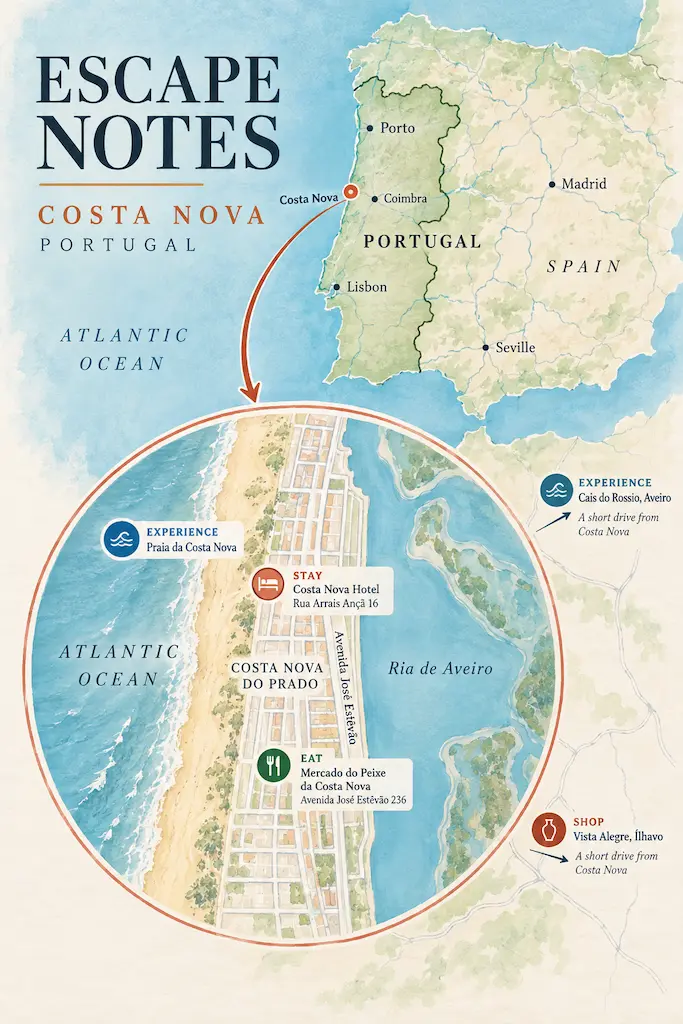
It is easily visited from nearby Aveiro, and many people do exactly that: arrive, walk Avenida José Estevão, photograph the palheiros and continue with their day. Staying longer changes the experience. Within Costa Nova itself, the Costa Nova Hotel offers a straightforward base, while Aveiro is another good option if you want to combine the coast with canals, Art Nouveau architecture and moliceiro boats. Nearby Ílhavo adds another layer, especially for anyone interested in the region’s maritime history and ceramic traditions.
Together, Costa Nova, Aveiro and Ílhavo tell a larger coastal story of fishing, salt, boats, ceramics and communities shaped by water and weather. But Costa Nova is the part you remember in stripes. Not simply because the houses are colorful, but because their color grew out of something ordinary: storage buildings became shelters, shelters became summer houses, and practical wooden architecture slowly became the visual identity of an entire village.
You arrive for the red, blue, green and yellow façades, but you leave remembering the quieter things around them: coffee beside the ria, wind across the dunes, grilled fish at lunch, a painted boat moving through calm water and the Atlantic waiting just a few streets away. That may be Costa Nova’s real trick. The stripes get your attention, but the place keeps it.
What Makes This Place Special
A narrow Portuguese coastal village sitting between the Atlantic Ocean and the sheltered Ria de Aveiro, best known for its historic striped palheiros. For local destination information, visit the official Visit Ílhavo tourism site.
Don’t Miss
Walk Avenida José Estevão in the morning, then cross the village through the dunes to the Atlantic beach. Pair Costa Nova with nearby Aveiro to see the traditional moliceiro boats in their best-known setting. If you want to experience the canals from the water, Discover Aveiro offers traditional moliceiro trips.
Taste
Fresh grilled fish and the seafood traditions of the Aveiro coast.
Sweet Stop
Try ovos moles from Aveiro and a freshly made tripa de Aveiro.
Shop
Look for Portuguese ceramics and objects connected to the region’s fishing and maritime traditions rather than generic striped souvenirs. Nearby Ílhavo is particularly interesting for ceramics. And if Portugal isn’t on the calendar just yet, Portuguese tableware brand COSTA NOVA offers a rather lovely way to bring a little of the coast home—the striped Vila collection feels especially appropriate.
Stay
Stay in Costa Nova if you want the village early and late in the day. Costa Nova Hotel is a small local base within the village, while Aveiro makes a good alternative if you prefer canals, architecture and a larger choice of restaurants.
Best Experienced
Without trying to collect every attraction. Walk the waterfront, cross to the Atlantic, eat something local and leave enough time for Costa Nova to become more than a row of striped houses.
Coastal ESCAPES — Travel through the senses, one shoreline at a time.
CONTINUE EXPLORING
Inspired by this story? The story continues. Here is your next read SPAIN | Cadaqués: Where the Mediterranean Paints in Blue →