Beyond Beaches, Hollywood, and the Stereotypes
FROM THE EDITOR: At VeniS Atelier, we believe the California lifestyle is more than a collection of trends. It is a cultural philosophy shaped by light, landscape, architecture, creativity, and everyday rituals. This cornerstone essay explores how that idea evolved—and why it continues to inspire people around the world.
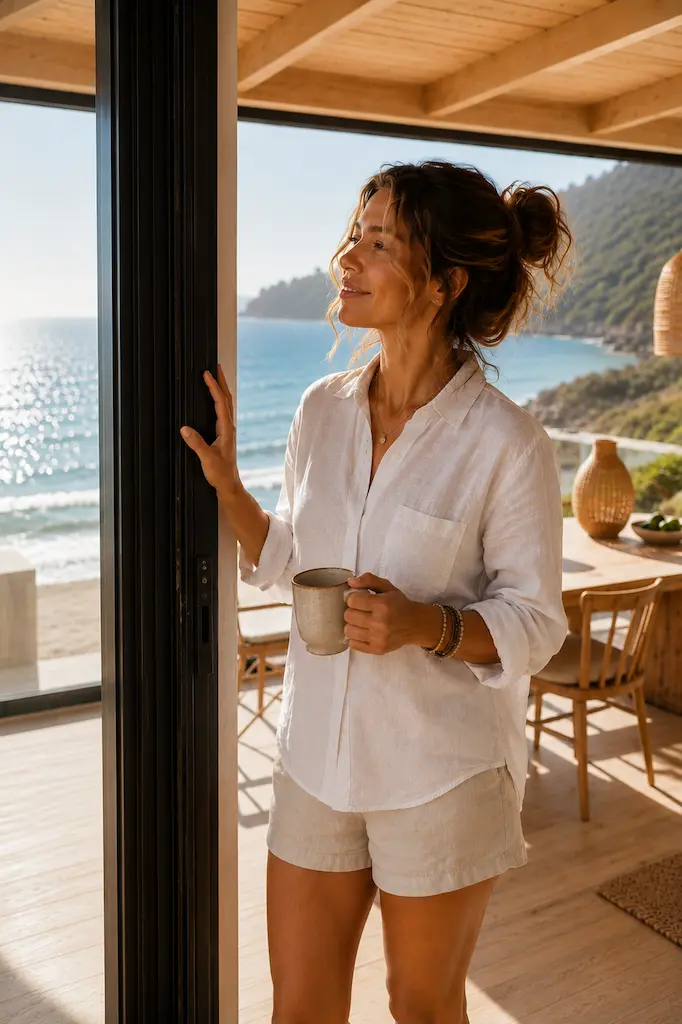

If California were a person, it would probably arrive twenty minutes late carrying excellent coffee, apologize with complete sincerity, and somehow make everyone feel that the delay had been part of the experience all along.
For more than a century, California has been one of the world’s most recognizable places. Millions have visited it, millions more have imagined it, and countless others have spent surprising amounts of money trying to recreate it somewhere else. Yet ask ten people to describe the California lifestyle and you’ll likely receive ten different answers. Surfing. Hollywood. Yoga. The Getty. Silicon Valley. Avocado toast. Hiking. Palm trees. Good weather.
None of those answers are wrong. They are simply incomplete. The California lifestyle isn’t a collection of activities any more than Italian life can be explained by pasta or Japanese culture by sushi. Those are expressions of something deeper. California’s greatest export has never been a film, a technology company, or even a fashion trend. It has been a way of imagining everyday life.
Somewhere along the way, California proposed a rather radical idea: perhaps success isn’t measured by what fills your garage, but by what fills your afternoon. Beverly Hills—and a few other neighbourhoods—may not have received the memo, but you get the point. If there is one place where that philosophy still feels remarkably intact, it might be Encinitas, where surfboards leaning against front porches often seem to matter more than luxury cars parked in the driveway. Although California has always been remarkably good at marketing itself as a dream, that version tells only part of the story.
This is, after all, a state of extraordinary contrasts. Nearly forty million people call it home. It stretches from ancient redwood forests to deserts that seem borrowed from another planet, from fertile valleys producing almonds, oranges, olive oil, and wine to some of the world’s largest metropolitan regions. No single description could ever capture every Californian corner.
Yet cultures are rarely remembered because everyone lives exactly the same way. They are remembered because they contribute an idea. California’s contribution may be one of the most influential of the last century: the belief that everyday life deserves as much attention as extraordinary occasions.
For decades, the world believed California’s defining symbol was Hollywood. Before that, it was the Gold Rush. Later it became Silicon Valley. Each era projected a different version of California, each louder than the last. Yet while the headlines changed, something much quieter was happening in neighbourhoods, coastal towns, farmers markets, hiking trails, kitchens, surf breaks, and back gardens.
California was slowly redefining what people aspired to. Not everyone came searching for fame. Many came searching for better weather, creative opportunity, healthier habits, or simply the feeling that life could be lived differently. Somewhere along the way, a morning walk, an outdoor lunch, and finishing work in time to watch the sunset became symbols of success in their own right.
That may be California’s greatest achievement. It didn’t simply sell a destination. It sold a different relationship with everyday life. For much of modern history, success was designed to be seen through bigger houses, formal dining rooms, and luxury cars parked prominently in the driveway. California quietly suggested another possibility. What if the true measure of a good life wasn’t what your neighbours saw, but what you experienced between breakfast and bedtime?
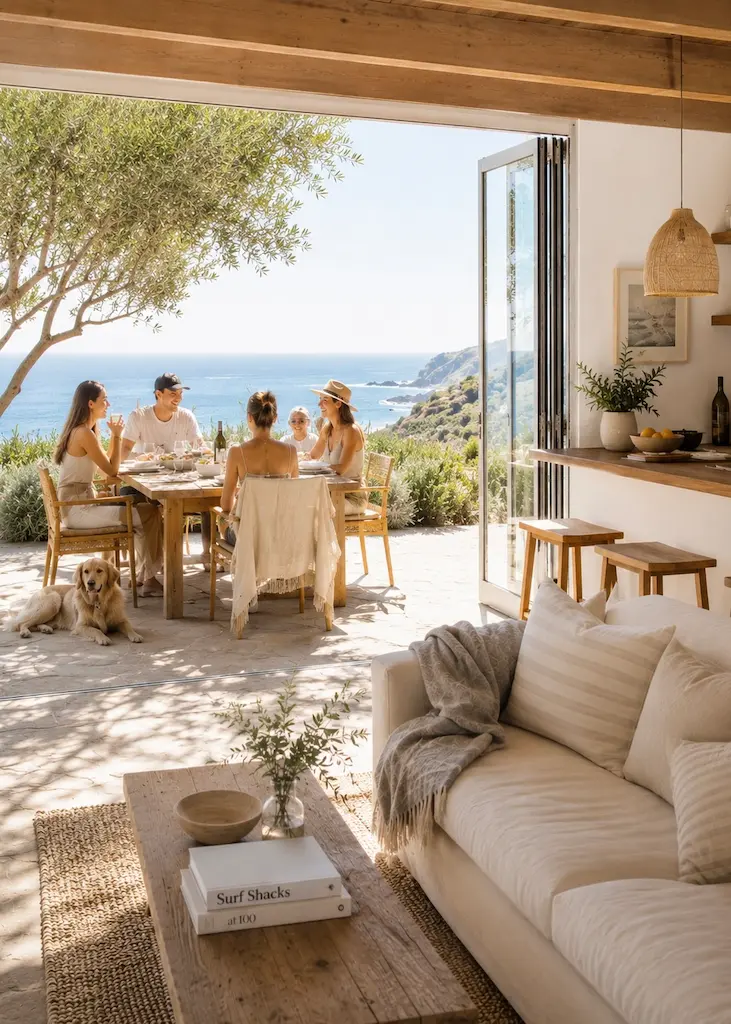

The most desirable room in many California homes is the patio where coffee somehow tastes better because the doors are open. It isn’t unusual to find homes where the boundary between indoors and outdoors almost disappears. Glass walls slide away. Kitchens extend onto terraces. Courtyards become dining rooms. The weather isn’t treated as something to observe through a window but as another room of the house.
This explains why California architecture feels so different from many parts of the world. It isn’t simply designed around shelter. It is designed around light. Light determines where breakfast happens, shapes living rooms, influences colours and materials, dictates the size of windows, and quietly reminds people to spend more time outdoors than indoors. Californians often speak about sunshine the way others speak about public transport. It isn’t remarkable because it’s luxurious. It’s remarkable because it quietly shapes everyday decisions.
The same philosophy extends beyond architecture. A local farmers market isn’t merely somewhere to buy vegetables. It’s where neighbours meet, musicians perform, children discover peaches they suddenly insist are their favourite fruit, and conversations stretch just long enough to make everyone slightly late. Nobody seems especially concerned.
California has always had a curious talent for making ordinary errands feel pleasantly unhurried. That isn’t to suggest Californians are somehow less busy than everyone else. Anyone who has experienced Los Angeles traffic would struggle to maintain that argument with a straight face. Rather, California developed a remarkable ability to elevate ordinary rituals. Buying bread becomes a Saturday morning tradition. Walking the dog becomes an excuse to greet familiar faces. Coffee becomes less about caffeine and more about sitting outside for ten uninterrupted minutes.

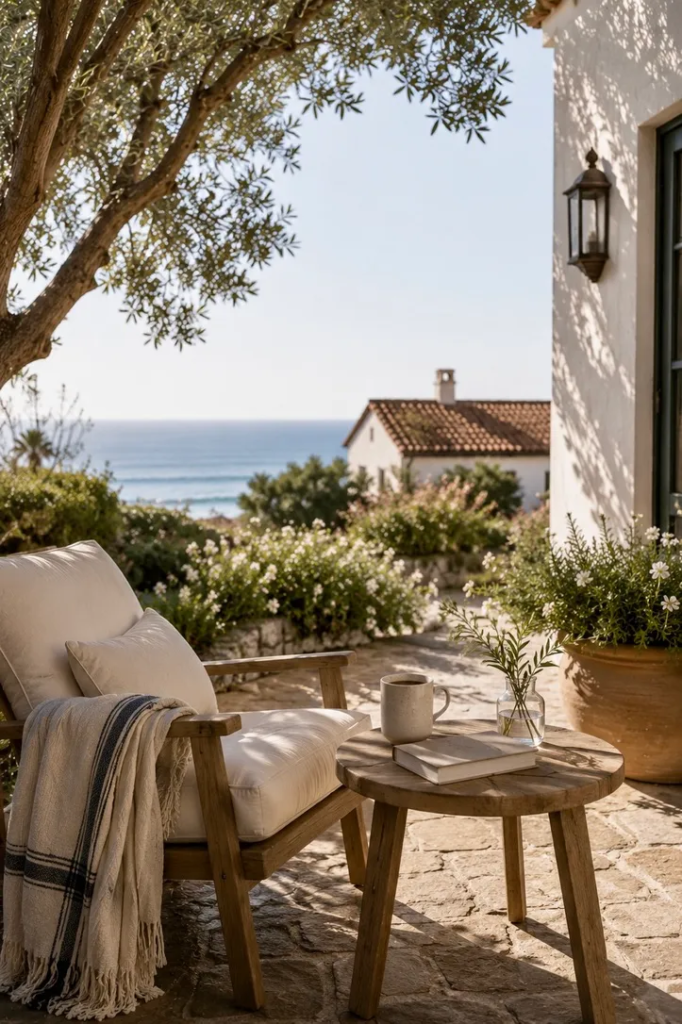
The world often describes California as healthy, but that word hardly tells the full story. Health here was never intended to mean perfection. Long before wellness became an industry, California had embraced the simple idea that feeling well should be woven into daily life rather than reserved for holidays or doctor’s appointments. Surfing before work. Walking instead of driving when possible. Weekend hikes. Fresh citrus from the garden. Seasonal produce from nearby farms. These habits became part of the culture because they fit naturally into the landscape.
Of course, California has also exported its fair share of wellness fads, miracle diets, green powders, and trends that disappeared almost as quickly as they arrived. Like every influential culture, it has occasionally confused appearance with wellbeing. Yet beneath the marketing remains a quieter philosophy that has proved remarkably durable: take care of your body not because perfection is expected, but because life is more enjoyable when you feel well enough to participate in it.
Perhaps nowhere has California been more influential than in redefining luxury. For centuries, luxury often meant formality. California gently questioned that assumption. Why shouldn’t expensive restaurants feel relaxed? Why shouldn’t beautiful homes encourage people to walk barefoot? Why shouldn’t a linen shirt be considered elegant enough for dinner? Why shouldn’t the best seat in the house be outside? California didn’t reject luxury. It simply made it comfortable.
That casual confidence eventually travelled far beyond the Pacific Coast. Today, hotels in Europe advertise California-inspired interiors. Architects around the world speak of indoor-outdoor living. Designers pursue natural materials, soft colours, and relaxed spaces that feel collected rather than decorated. Even fashion embraced the idea that confidence might look better in linen than in a necktie.


Ironically, many of the ideas we now associate with California weren’t born there at all. Outdoor dining, local markets, courtyard homes, seasonal cooking, and evenings spent lingering outside have shaped Mediterranean cultures for centuries. California didn’t invent them. It gathered influences from Indigenous communities, Spanish and Mexican traditions, waves of immigration, and its own extraordinary geography, blending them into something unmistakably Californian. Like every great culture, its genius has never been originality alone. It has been its remarkable ability to recognize a good idea, adapt it, and make it feel entirely its own.
May be that is the real California lifestyle. Not a destination, a postcode, or a checklist of trends, but a way of seeing everyday life. It quietly reminds us that light matters, time matters, good company matters, and that an ordinary Tuesday deserves as much care as a long-awaited holiday. The world still dreams about California not because it promises a perfect life, but because it suggests that a better one may begin with the ordinary moments we so often overlook. It’s a philosophy that extends far beyond California’s coastline. At VeniS Atelier, we call it Caliterranean™ Living.
CONTINUE EXPLORING
Inspired by this story? Continue your journey with What Is Caliterranean™ Living? →