The Surfer’s Strange Education in Waiting


Surfing is more than the act of riding a wave. It is a practice of attention shaped by water, weather, patience and uncertainty. Once a surfer leaves the shore, ordinary distractions disappear. There are no notifications in the lineup, no schedules to reorganize and no possibility of controlling what comes next. There is only the ocean—and the need to be fully awake inside it.
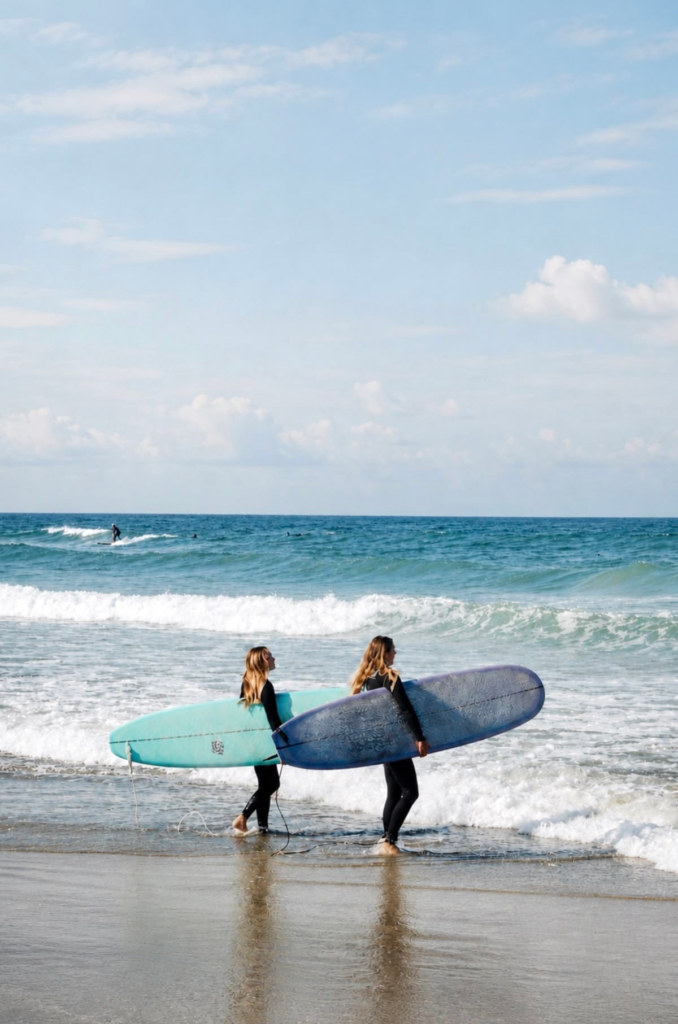
A surfer walks toward the water carrying very little: a board, perhaps a wetsuit, and whatever thoughts followed them from land. Feet sink into the cool sand. The first rush of water reaches the ankles. Then, almost without ceremony, the modern world begins to loosen its grip.
From the beach, surfing appears to be about waves. It looks athletic, cinematic and occasionally suspiciously effortless. The ocean keeps the difficult parts discreetly out of view: the paddling, the waiting, the missed waves and the humbling realization that water has absolutely no interest in our plans.
Yet those who return to the sea understand that surfing offers something deeper than speed or spectacle. It creates one of the few remaining places where attention cannot be divided.
Leaving the Noise on Shore
Out in the lineup, a phone is useless. So is impatience. There are no headlines to refresh, messages to answer or small digital alarms insisting that something somewhere requires immediate attention. The ocean reduces life to a simpler set of questions. Where is the swell coming from? Is the tide changing? How far has the current carried you? Is the next wave yours—or does it belong to the person sitting farther inside?
This is not exactly silence. The sea is rarely quiet. Water moves against the board. Wind passes across the surface. Waves break in the distance. Gulls make their opinions known. But it is a different kind of soundscape. Nothing is demanding a reply.
The mind begins to settle because it has been given a single place to rest. Attention moves outward: toward the horizon, the light, the temperature of the water and the subtle lifting of the ocean beneath the board. The endless internal commentary of daily life becomes less interesting when a wall of water is approaching.

The Discipline of Waiting
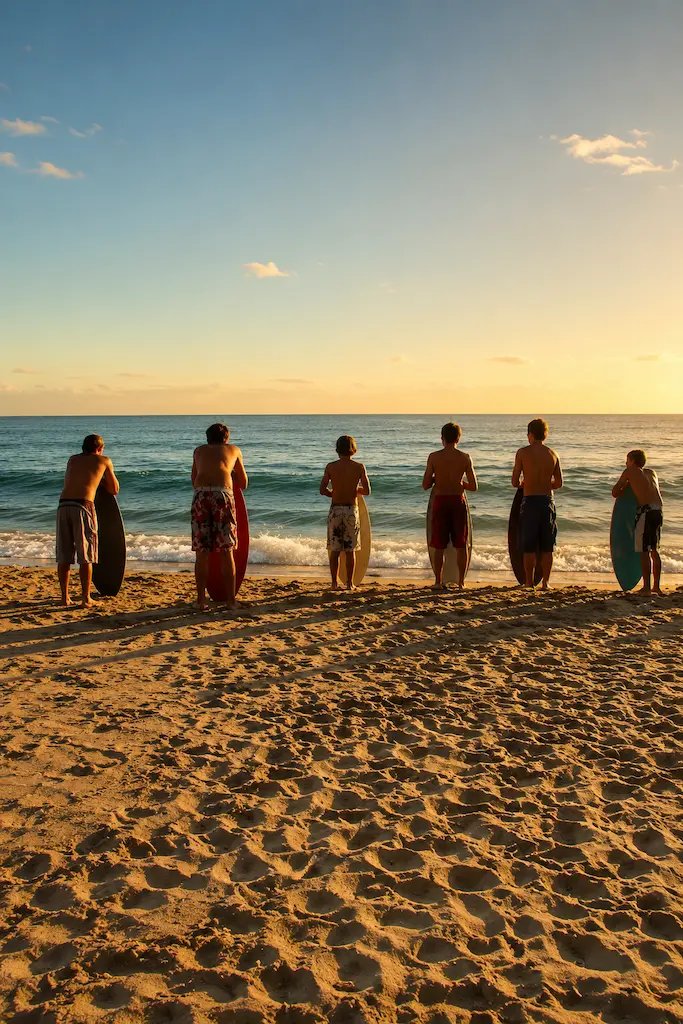
Surfing is often described as exciting, but much of it is spent waiting. That may be its most useful lesson. The surfer cannot command the sea to produce a wave at a convenient moment. A good wave may arrive immediately, or the ocean may spend twenty minutes appearing deeply unmotivated. The only option is to observe, adjust and wait without knowing exactly when the moment will come.
Modern life does not train us particularly well for this. We are encouraged to accelerate everything: communication, entertainment, shopping, work and even rest. Waiting is treated as wasted time, an irritating gap between one useful activity and another.
The ocean disagrees. In the lineup, waiting is not empty. It is the experience itself. The surfer watches sets form on the horizon, notices the direction of the wind and begins to recognize patterns that cannot be seen from shore. Patience becomes active rather than passive. It is not about doing nothing. It is about paying close enough attention to know when to move.
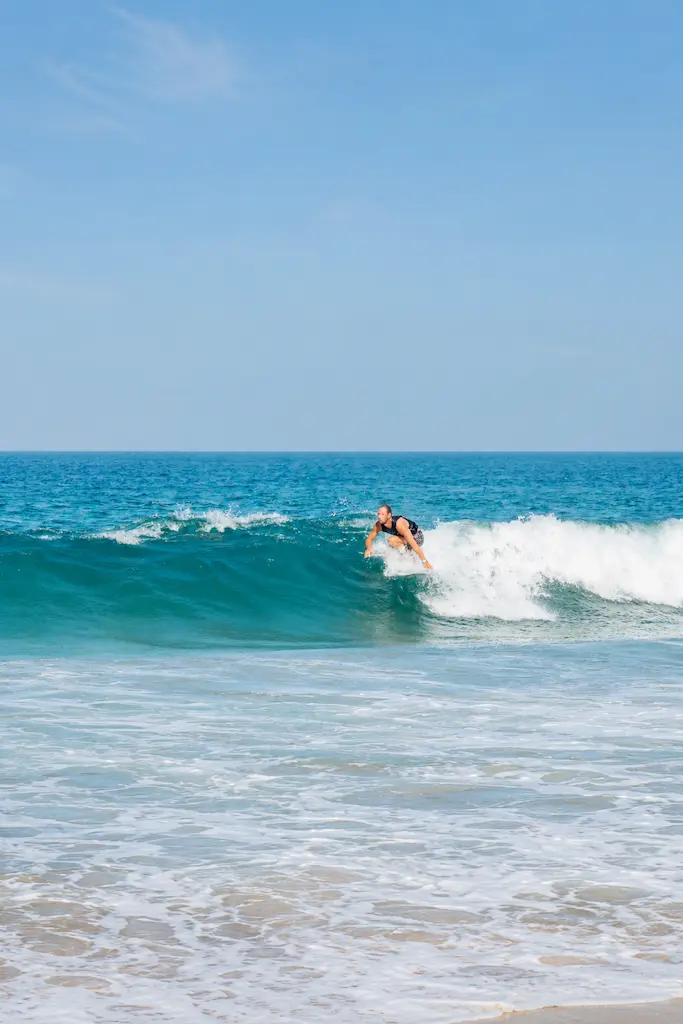
Then the swell rises. The surfer turns, paddles and commits. Hesitation has its own consequences. For a few seconds, thought and movement become inseparable. There is no room for yesterday’s conversation or tomorrow’s list. The body responds to the water in real time.
This complete absorption is sometimes described as flow: the state in which awareness becomes so focused that everything unnecessary falls away. Surfers may not use the term while they are in it. They are usually too busy trying not to fall off. But the feeling is unmistakable.
A Different Measure of Time
Ocean time does not behave like clock time. A short surf can feel expansive because it contains no multitasking. An hour spent fully attentive may feel longer, richer and more memorable than an entire afternoon divided between screens, errands and unfinished thoughts.
That is why surfers often emerge from the water looking changed—not dramatically, but noticeably. The problems waiting on shore have not disappeared. Emails remain unsent. Laundry continues its quiet campaign for attention. Yet the mind has been rearranged.
The sea creates distance without requiring escape. It does not solve everything, but it changes the scale of things. A worry that felt enormous on land may seem more manageable after sitting beneath an open horizon. Perspective arrives not because we demanded it, but because we stopped chasing it.
The Lesson Belongs to Everyone
Not everyone surfs, and thankfully the ocean does not require us all to begin buying boards. The surfer’s mind is not limited to surfing. It can be found in any experience that asks for complete presence: a morning swim, a long walk beside the water, sailing, floating in a lake or sitting on the sand without photographing the sunset before actually seeing it. These moments create their own version of ocean time. The senses return. Breathing becomes steadier. Thoughts become less crowded. Life briefly stops feeling like something to manage and begins to feel like something to inhabit.
That may be the deeper appeal of coastal living. It is not only proximity to beautiful water. It is the possibility of living according to a different rhythm—one shaped less by urgency and more by observation, repetition and ritual.
The surfer enters the sea to catch a wave, but often returns carrying something less visible: calm, clarity and a renewed sense of proportion. Because sometimes the greatest luxury is not having more time. It is being fully present inside the time we already have.
CONTINUE EXPLORING
Inspired by this story? Continue your journey with The Luxury of Looking Like a Surfer →