
How California Turns the Foods Surfers Bring Home Into a Lifestyle

There is a particular kind of California breakfast that makes very little geographical sense. A suspiciously purple bowl filled with fruit from the Amazon, a burrito so large it may not fit in your mouth, and tortillas piled with grilled fish and lime. What joins these dishes is not a cuisine, exactly, but a person: the California surfer, who has spent decades crossing borders in search of waves and returning home attached to whatever was served afterward.
Why are surfers such effective food smugglers? Because their way of traveling creates repeated contact with local food, their communities spread habits quickly, and California is unusually good at turning those borrowed habits into a coastal lifestyle. Surfers do not simply pass through a place, eat one memorable meal and go home. They return to the same beaches, the same cafés and the same food stands until eating becomes part of the rhythm of the trip.
That is why this story belongs on the California shore. Around the Mediterranean, we are accustomed to foods whose identity remains visibly tied to place—an island, a fishing town, an olive-growing region, a family recipe stubbornly refusing modernization. California’s coastal food culture works differently. It collects. The surf town became a place where tastes from distant coasts could arrive, lose their passports and eventually begin behaving like locals.

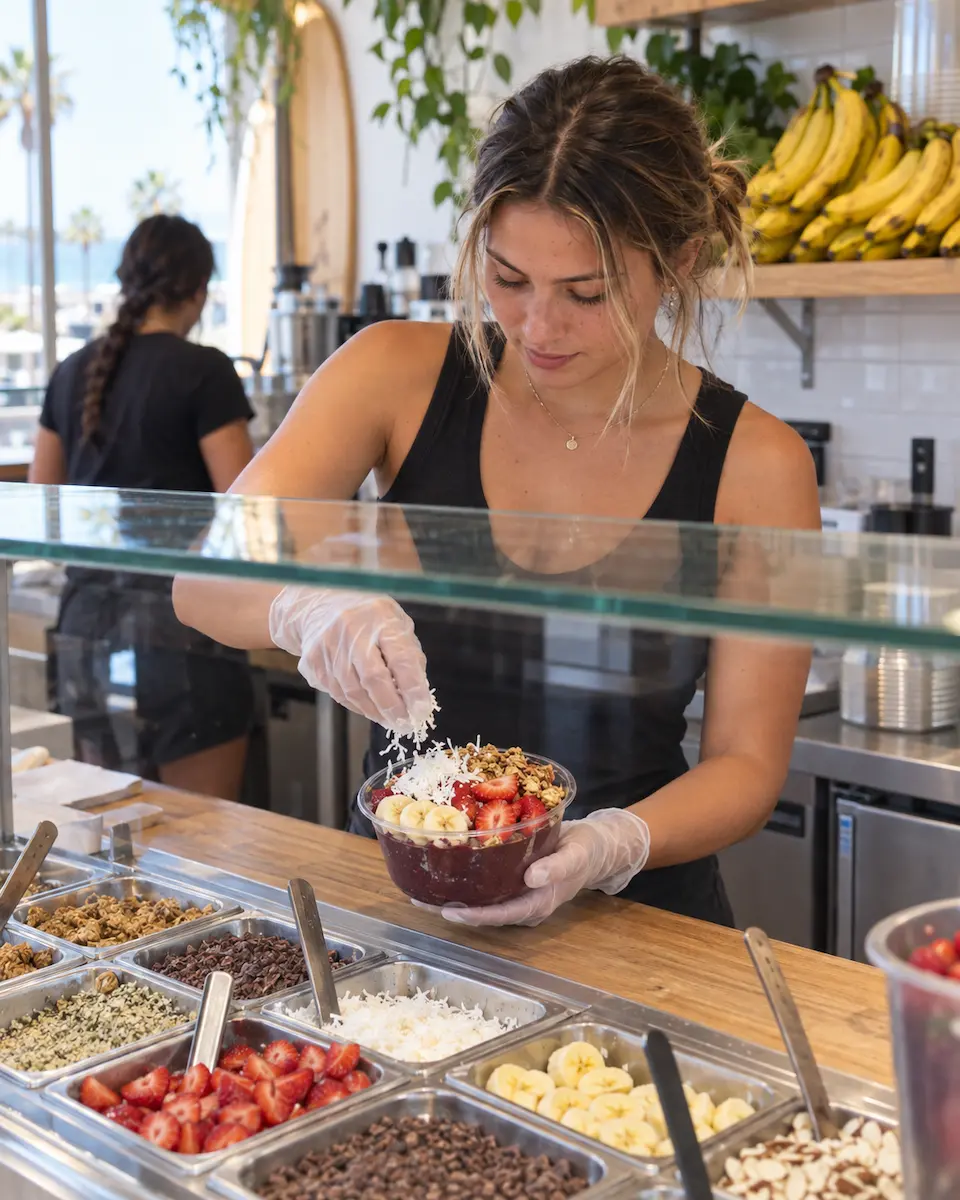
Açaí may be the perfect example because its American story begins, almost absurdly, with someone going surfing. In 1999, Ryan Black traveled to Brazil, where local surfers introduced him to frozen açaí served with banana and granola; he returned to Southern California obsessed enough to help found SAMBAZON the following year. The company’s own history still traces its beginning directly to that surf trip, making this one of those rare corporate origin stories in which breakfast genuinely appears to have altered the business plan.
California did not invent açaí, and it is important not to rewrite Brazil out of the story simply because Southern California became very good at selling purple things in bowls. What California did was translate it into a language it already understood: juice bars, health food, beach mornings, exercise, casual cafés and something you could eat while still looking suspiciously virtuous. The remarkable part is not that a Brazilian food reached California; foods migrate constantly. It is how quickly açaí stopped feeling imported and began looking as native to a San Diego surf town as a wetsuit drying over a balcony.
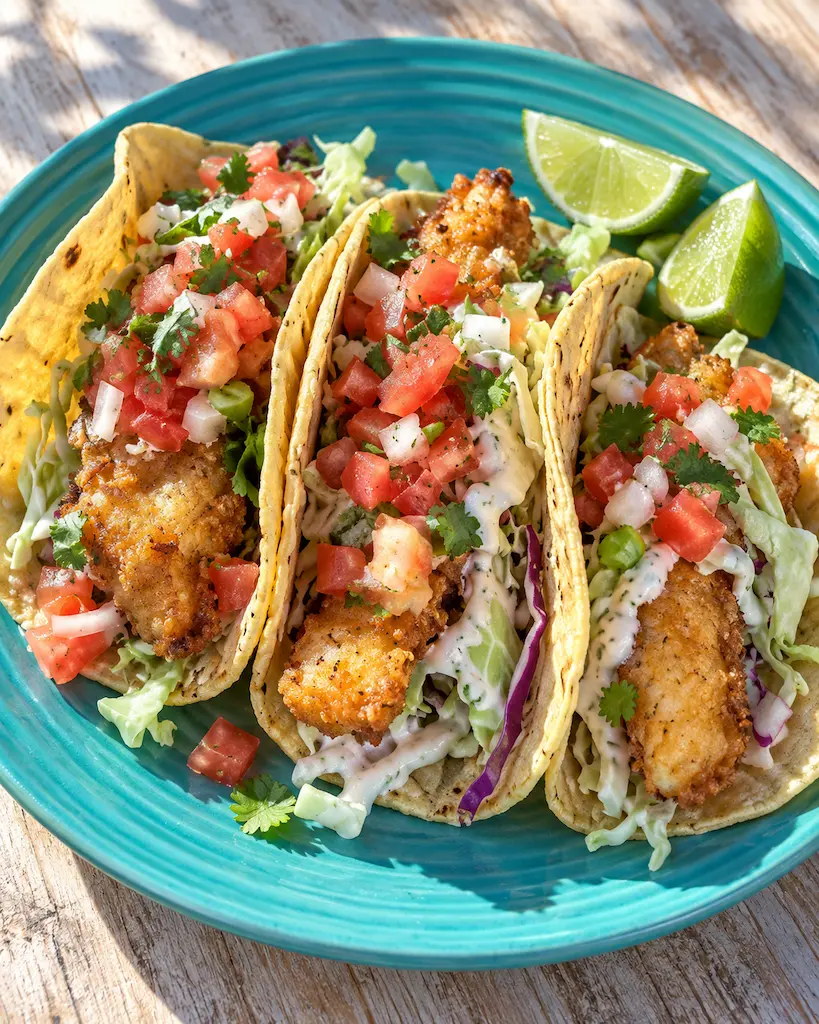
Açaí may be the morning choice before the surf, but fish tacos are what come next. They traveled north along an even more literal surf route. California tourism histories openly credit surfers hunting waves around Ensenada and San Felipe with discovering Baja’s fish tacos and bringing an appetite for them back across the border. In Orange County, brothers Wing Lam, Ed Lee and Mingo Lee had spent years surfing Baja and eating fish tacos afterward; in 1988 they opened Wahoo’s in Costa Mesa and deliberately adapted what they had eaten south of the border for Southern California.
And this is where California stops being merely the receiving coast and starts becoming the editor. Wahoo’s grilled its fish instead of reproducing the fried Baja version exactly, then folded in influences from the brothers’ Brazilian upbringing and Chinese restaurant background. By 1991, the Los Angeles Times reported that around 60 percent of the restaurant’s customers were surfers; a few years later, Wing Lam was deliberately courting surfers as the people most likely to recognize the food, approve of it and tell everyone else. California had taken a Baja surf-trip memory, adjusted it, mixed it with several other cultures and turned it into something unmistakably Southern Californian.
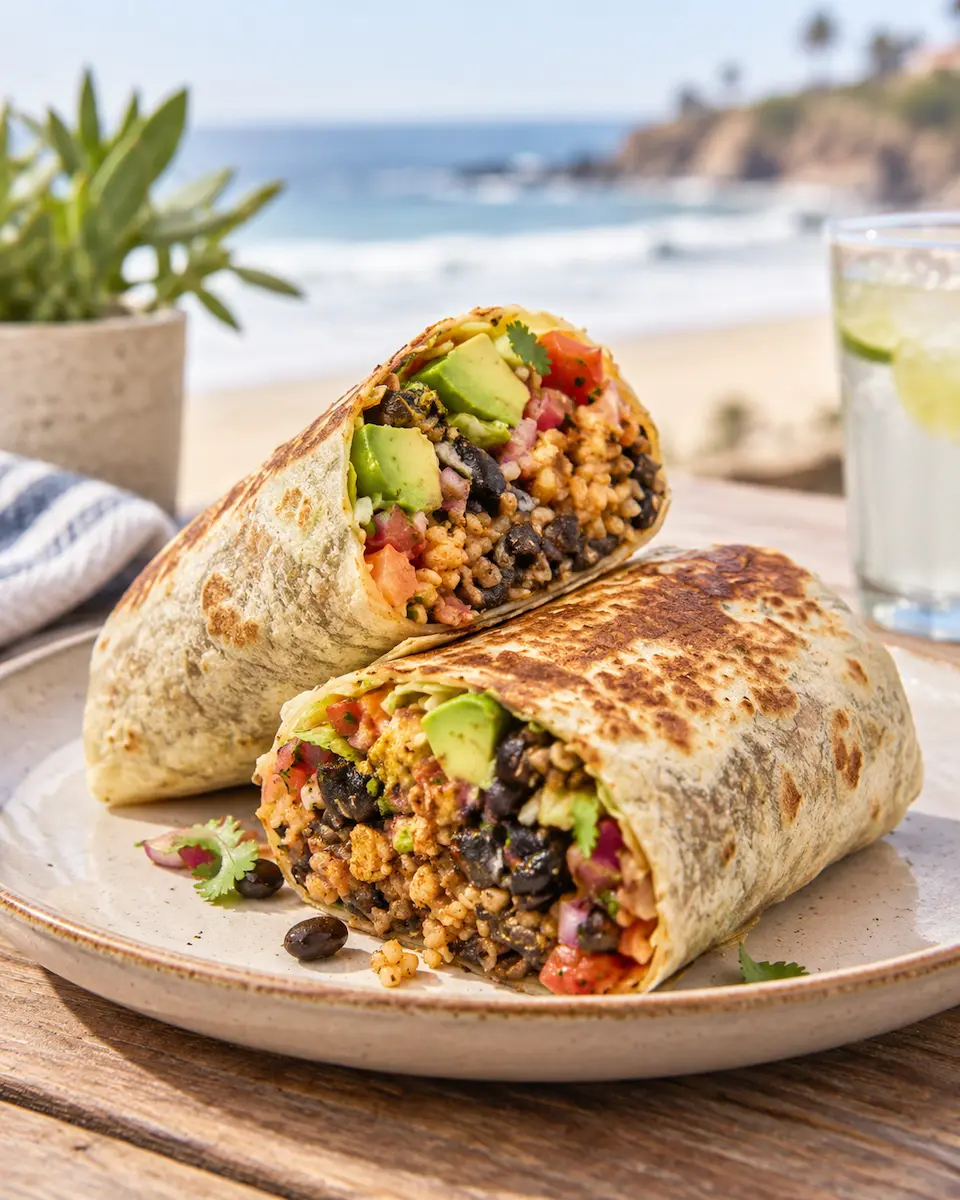
Then there is the burrito, which complicates our smuggling theory beautifully because surfers did not need to bring it home. It was already waiting for them—for breakfast, lunch or dinner. San Diego claims the California burrito as a local creation dating to the 1980s, while the breakfast burrito became exactly the sort of portable, filling food suited to a morning arranged around tides rather than table reservations.
That makes the burrito important for a different reason. It reveals that California did not merely accumulate foreign surf foods; it built a surf-eating system around them. Açaí could arrive from Brazil, fish tacos from Baja, and both could slide comfortably beside the burrito, while smoothies and coffee had already taken up permanent residence in the coastal morning. Nobody convened a committee and decided that this needed to constitute a cuisine. California simply kept adding things until, somehow, it did.
The surfer was unusually good at making this happen because surf travel encourages repetition rather than tourism in the conventional sense. You return to the same beach, the same food stand, the same inexpensive place after the water; eating becomes part of the rhythm of a destination rather than an attraction scheduled between two museums. Wing Lam has described Mexico and Hawaiʻi as the two defining surf-trip destinations of his generation, each remembered partly through its “local grub.” That phrase may explain California surf food better than anything more sophisticated ever could.
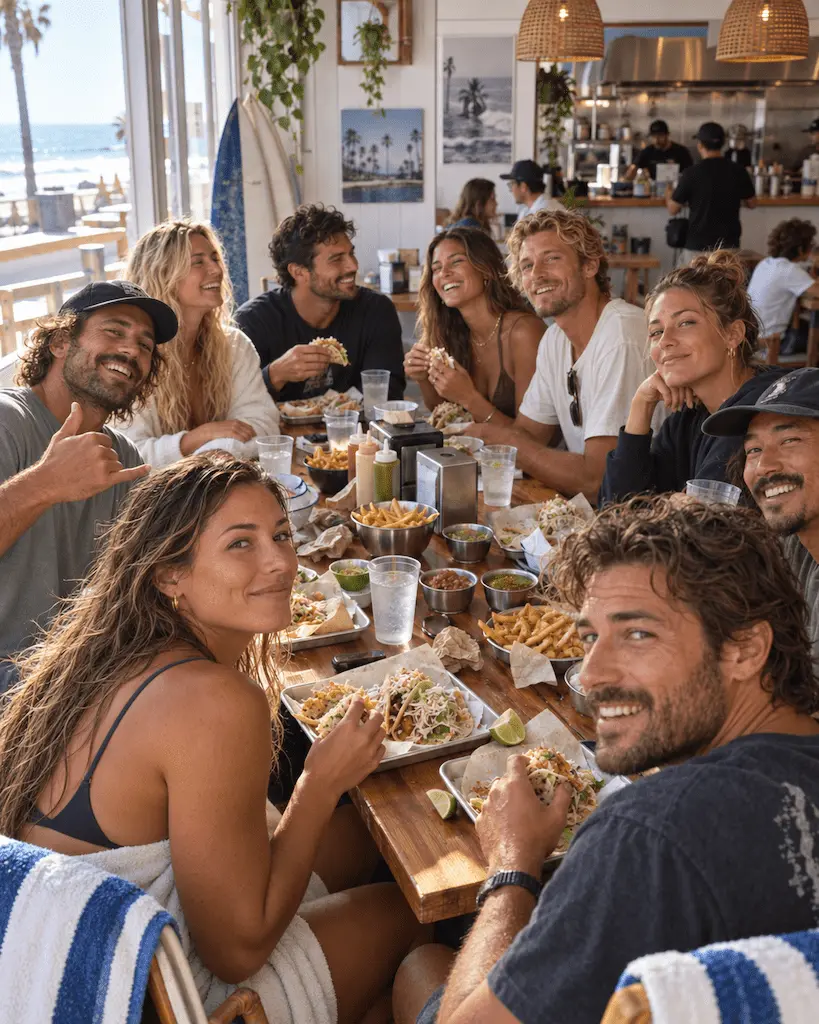
Look at almost any California surf-town restaurant menu and chances are you will find at least one of the three. Brazilian açaí, Baja fish tacos and the Southern California burrito coexist without anyone feeling the need to explain the introductions. They are not united by geography, ancestry or culinary technique. They are united by movement—foods attached to waves, road trips, mornings near the Pacific and people who tend to return from another coast wanting yesterday’s lunch again.
That is the sharpest contrast with the Mediterranean coastal world. Around the Mediterranean, food often remains intensely attached to place; California shows us what happens when coastal life becomes intensely attached to movement between places. One coast protects the recipe because it belongs there. The other borrows the idea, lightens it, wraps it, puts it in a bowl, eats it barefoot and eventually forgets that it ever came from somewhere else.
California did not invent all of these foods, but its peculiar genius was deciding they belonged together. Surfers supplied the routes, appetite supplied the motive, and the coast supplied the setting until a Brazilian fruit, a Baja taco and a Southern California burrito began speaking the same culinary language. It may be the only cuisine whose unofficial immigration policy is simply: good after a surf? Come in.
CONTINUE EXPLORING
Inspired by this story? Continue your journey with The Many Ways of Sharing Food →