From a Venetian family bakery to Marseille’s upside-down baguette superstition, San Francisco’s surviving sourdough, and the California bakery we call our own.
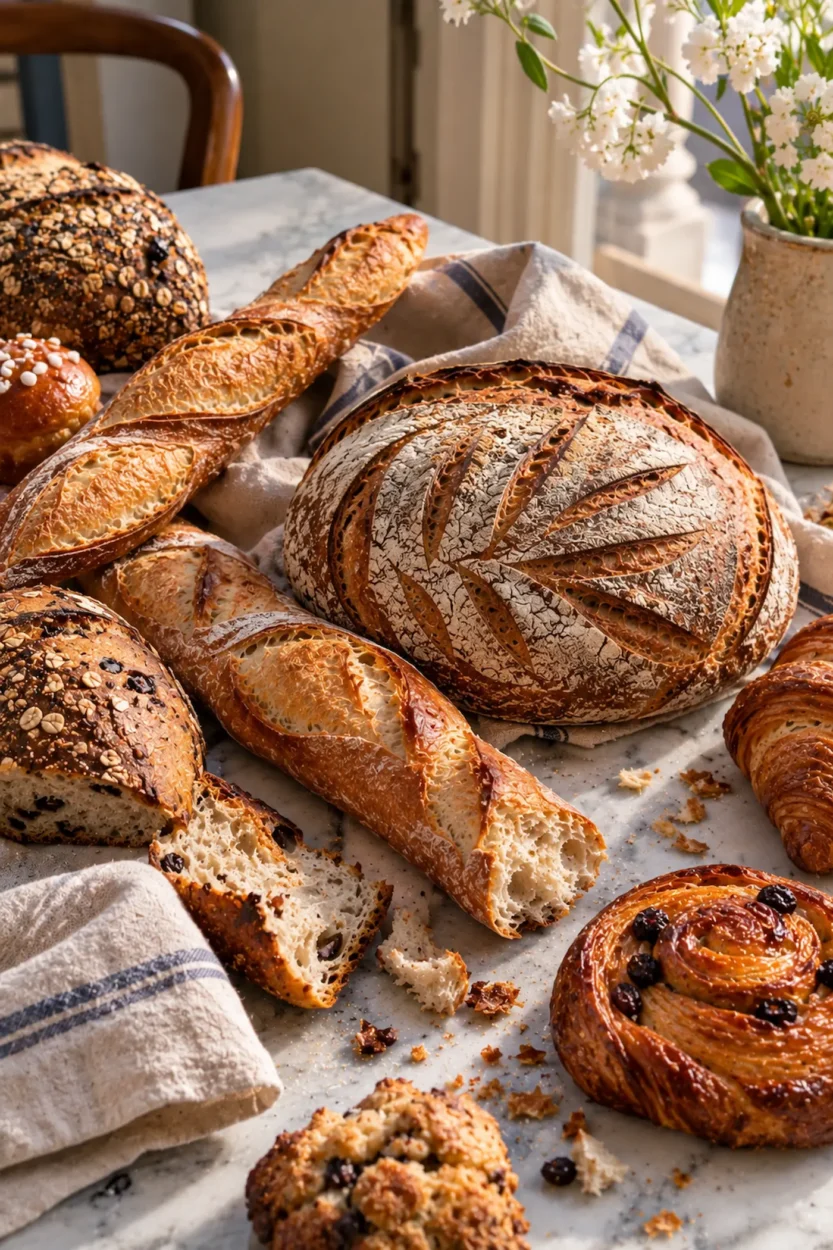
Some people inherit jewelry. Others inherit recipes, family businesses, or an irrational fear of putting bread upside down on the dinner table. Bread, it turns out, carries considerably more cultural baggage than its four basic ingredients would suggest.
Across the Mediterranean, a bakery can be part of a neighborhood for generations, while California has made old-world breadmaking feel entirely contemporary. Somewhere between the family oven and the sourdough starter, a simple loaf becomes something more revealing: a little history of how people live. And occasionally, how superstitious they are.
Venice: The City That Needs Its Daily Bread
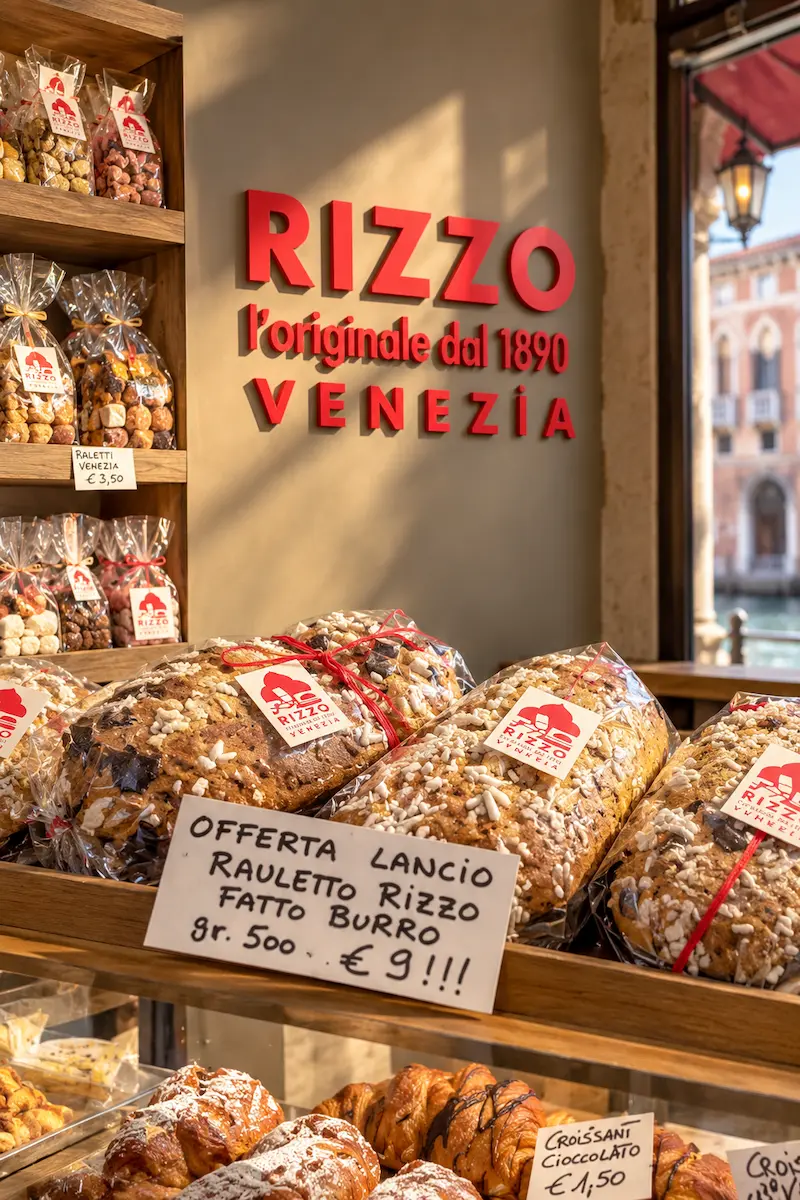
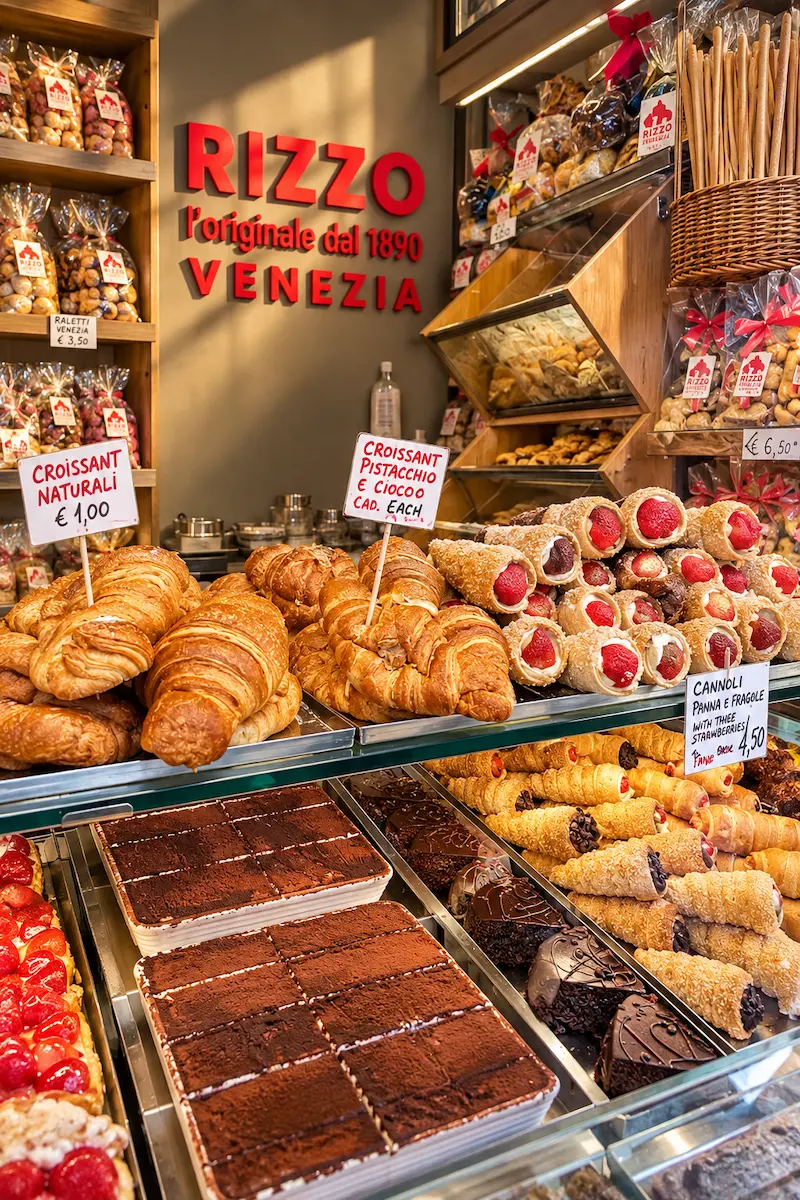
Venice is exceptionally good at preserving the past. Its palaces, churches and paintings attract millions of admirers, but there’s another kind of heritage that rarely makes the postcards: the neighborhood bakery where someone stops for breakfast on the way to work.
The Rizzo family’s baking history began in 1890, with an oven in Dorsoduro. Five generations later, the business continues to produce bread, pastries and Venetian specialties, with a repertoire reportedly exceeding 70 varieties. It has even supported the restoration of historic Venetian wellheads, a rather wonderful way for a bakery to help preserve the city around it.
But perhaps its greatest contribution is less photogenic. In a place where everyday life increasingly competes with tourism, a functioning bakery reminds us that Venice isn’t merely a beautiful destination. It’s somebody’s hometown, and somebody still needs bread for dinner.
Marseille: Never Turn Your Bread Upside Down
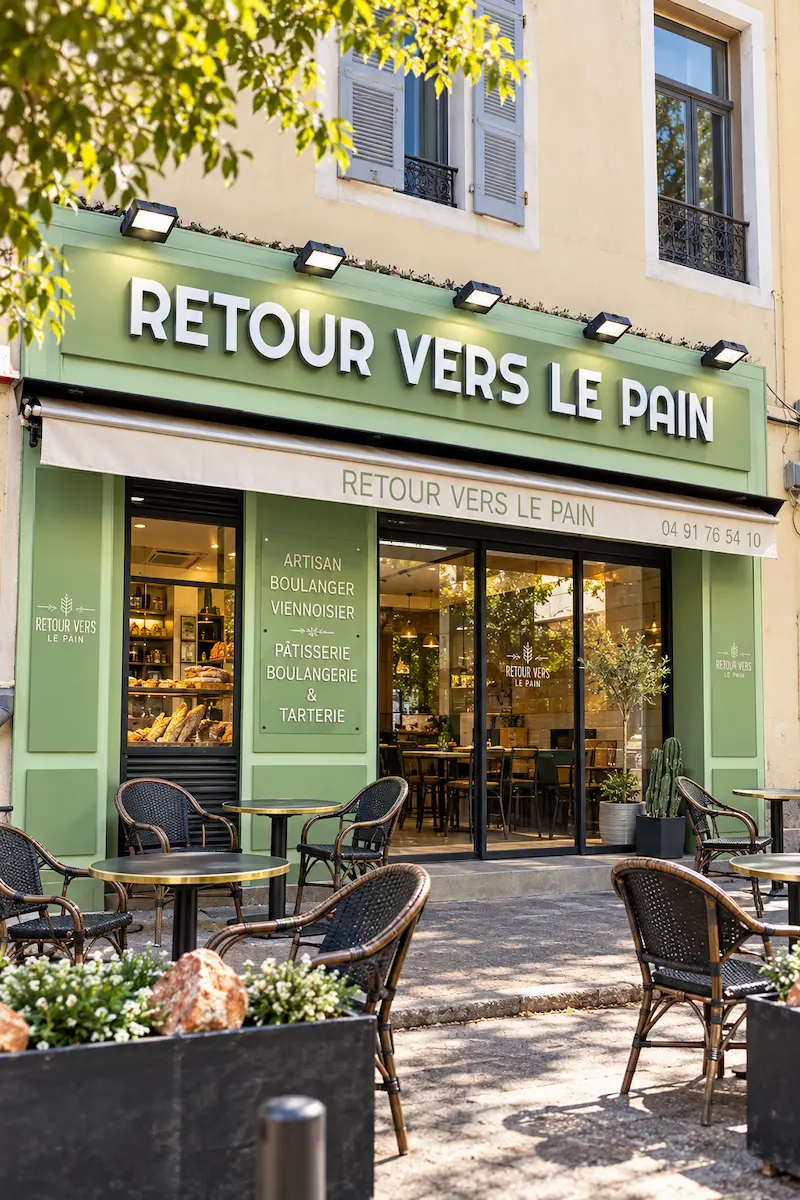
Travel west along the Mediterranean to Marseille, where bread has its own set of expectations. At Retour vers le pain, the commitment to traditional baking begins with regional flour, liquid sourdough and the patience required to let dough develop its character. The baguette may be a French national symbol, but its flavor begins with something decidedly local: wheat, milling and the hands that work the dough.
Then there’s the matter of how you place it on the table. In France, putting bread upside down is traditionally considered unlucky. One popular explanation claims that medieval bakers reserved upside-down loaves for executioners, marking bread intended for men with a particularly unpopular profession. The story is folklore rather than firmly established history, but the superstition has proved remarkably durable.
On ne pose pas le pain sur le dos! Don’t put bread on its back.
For a country that has elevated bread making to an art, apparently even a baguette deserves a little respect for its posture.
San Francisco: The Dough That Survived
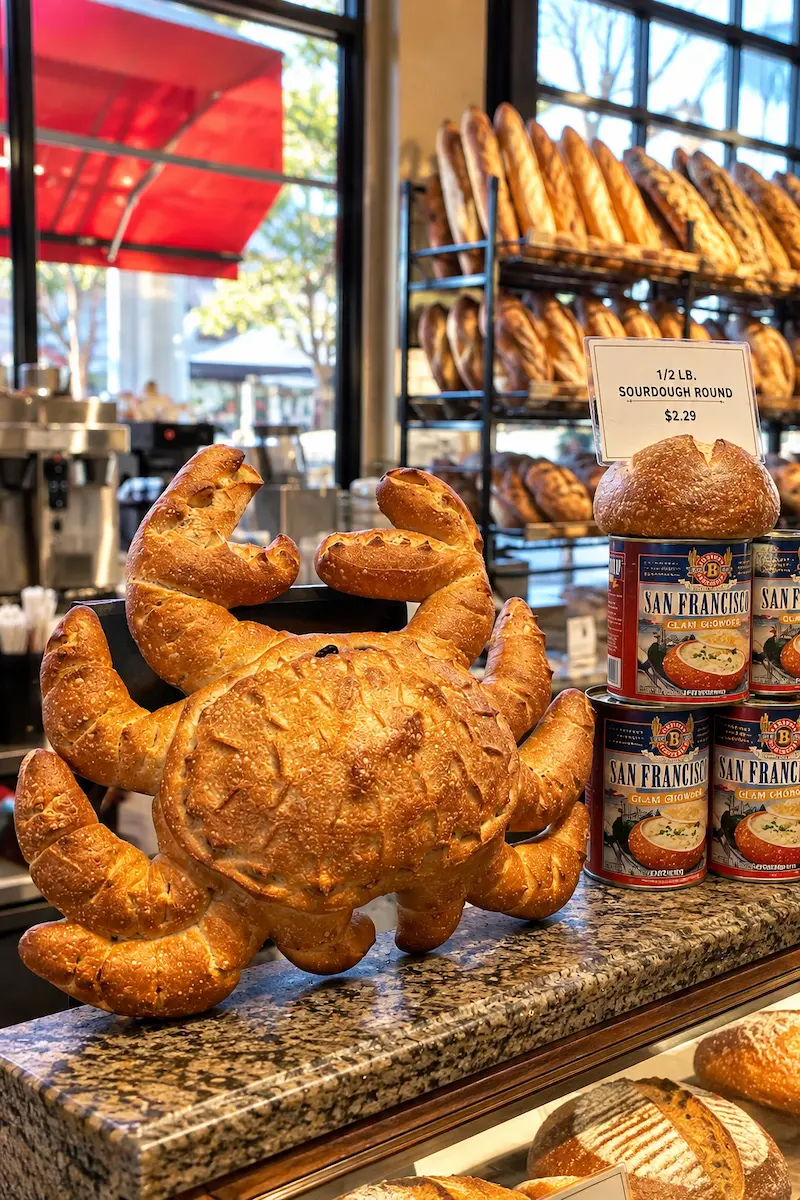
Across the ocean, San Francisco developed a bread tradition of its own, rooted in the European baking knowledge that arrived during the Gold Rush. Boudin Bakery dates its sourdough heritage to 1849, when the city was filling with fortune seekers and a dependable loaf was considerably more useful than another rumor about gold.
The bakery’s most remarkable possession wasn’t an antique oven or a handwritten recipe. It was its sourdough starter, a living culture maintained through generations of baking.
According to Boudin family lore, Louise Boudin saved the mother dough in a bucket during the devastating earthquake of 1906. The story has all the ingredients of a California legend: catastrophe, determination and someone deciding that, whatever else happened, tomorrow’s bread was worth rescuing.
The bakery also recounts an earlier delivery custom in which customers left nails in their front doors so loaves could be hung outside. Today, we receive notifications telling us precisely where our food is. San Francisco once apparently trusted a nail.
Boudin now sells sourdough shaped like crabs, among other creations, but the more interesting achievement is continuity. A starter isn’t a frozen collection of identical microbes from 1849; it’s a living culture that changes as it’s fed and maintained. What survives is the practice, the knowledge and the determination to keep baking.
Encinitas: The Artisan Bread We Actually Bring Home
Our final stop is North County San Diego, and this time we aren’t visiting a bakery through its history. We’re visiting one through our own shopping routine.
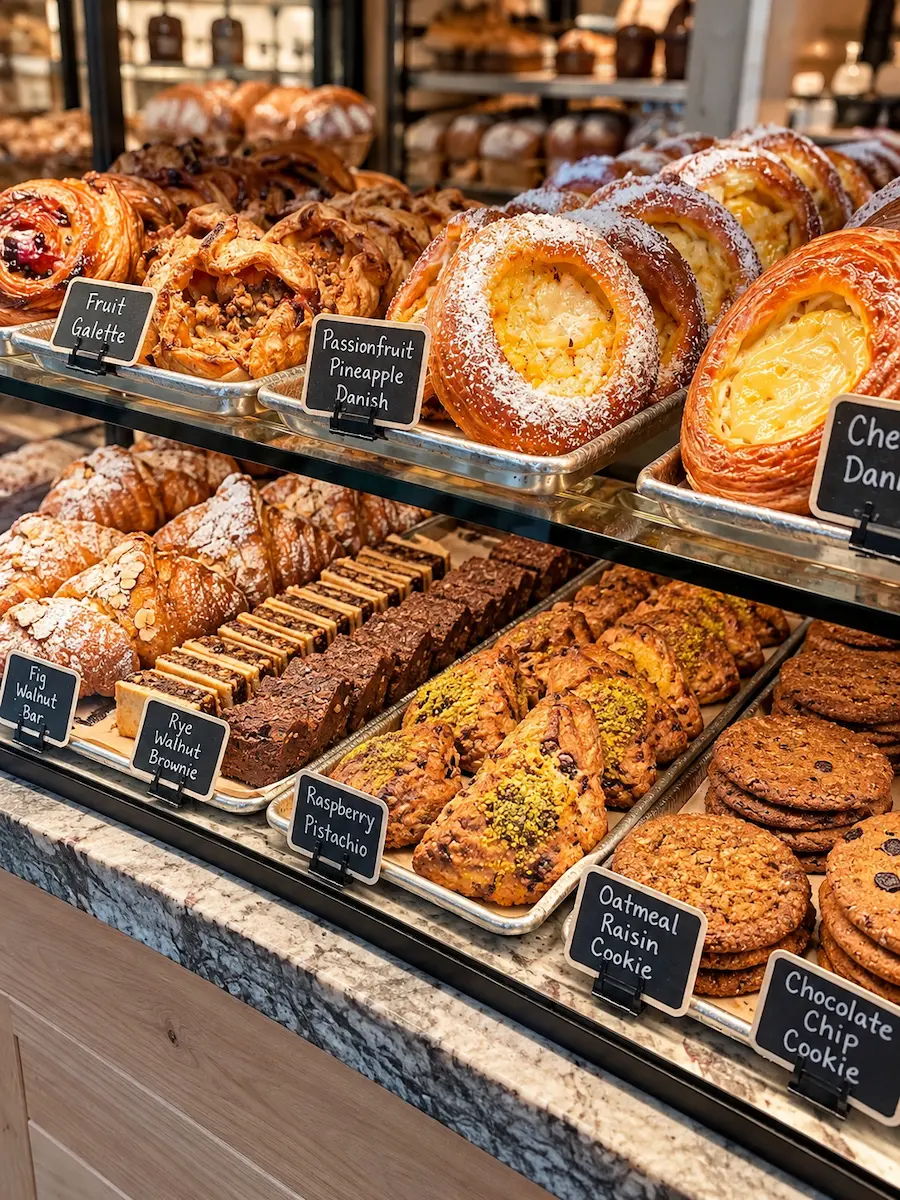
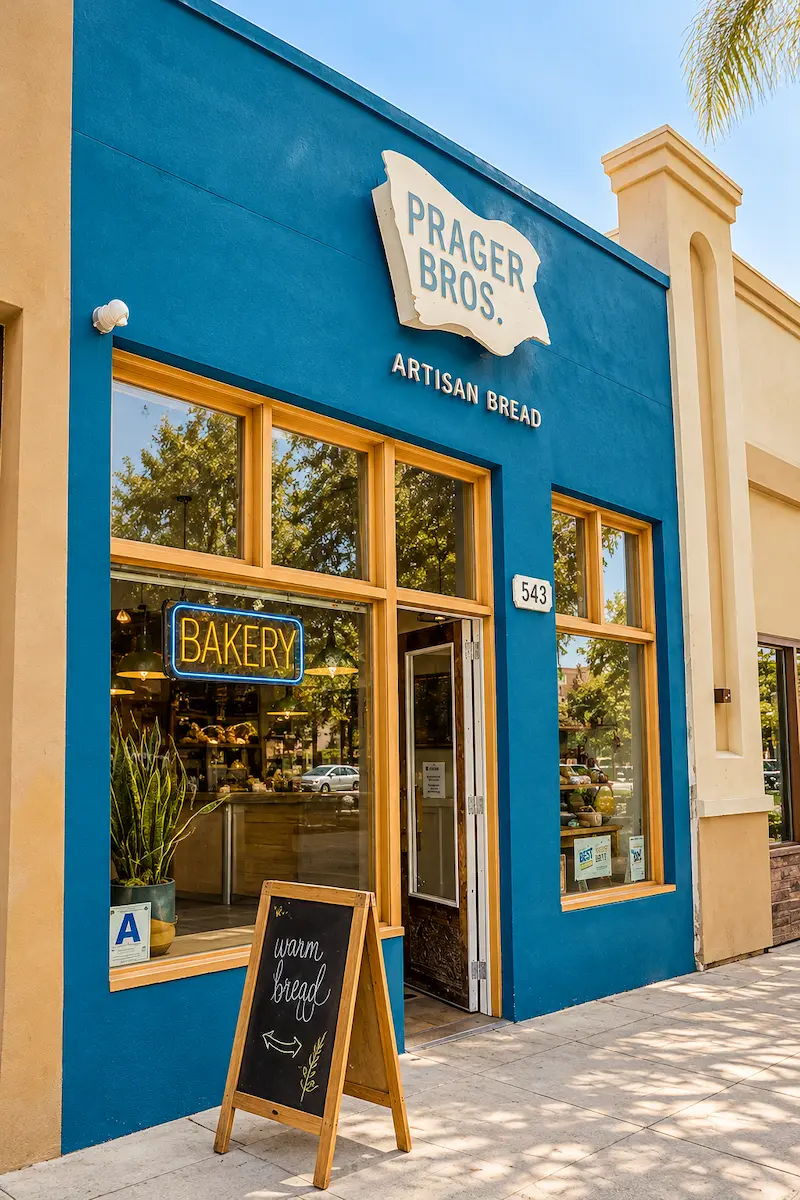
Prager Brothers Artisan Breads was founded by two brothers whose backgrounds weren’t exactly conventional bakery training: Clinton studied music, while Louie studied plant biology. Perhaps that’s an ideal combination for bread, which demands both an understanding of living fermentation and the instinct to know when something is just right.
Their approach draws on traditional European techniques, with natural leavening, whole grains and time doing much of the work. Yet it feels thoroughly Californian: thoughtful ingredients, an appreciation for craftsmanship and no particular need to follow a centuries-old rulebook simply because it’s old.
We buy their bread regularly. Not to conduct an investigation into fermentation, or to make a statement about artisanal food culture, but because we enjoy it and because having a good bakery nearby makes an ordinary day a little better.
And that’s a privilege worth recognizing. Not every town has an independently owned, family-run bakery, and not everyone can make freshly baked bread part of their routine. When you do have one nearby, you’re fortunate to enjoy something that generations of Mediterranean communities have understood: a bakery is more than somewhere to buy a loaf.
Perhaps that’s what connects Venice, Marseille, San Francisco and our little corner of coastal California. The grains change, the recipes evolve, and the stories grow increasingly improbable, but the pleasure of bringing home good bread remains wonderfully familiar.
The finest bread tradition isn’t necessarily the one with the longest history. It’s the one you get to enjoy on an ordinary Tuesday.
And yes, we put ours right-side up on the table. Just in case.
CONTINUE EXPLORING
Inspired by this story? Continue your journey with Two Bites. Two Hours. The Art of Mediterranean Baklava →