The Little Treats That Complete Coffee

Some traditions are so familiar we stop noticing them. Order a coffee almost anywhere in the world and, more often than not, something small arrives beside it. A colorful cube of Turkish delight. A delicate macaron. A buttery almond biscuit. A flaky custard tart. A warm cookie fresh from the oven. These little treats are rarely the reason we ordered coffee, yet somehow they complete the experience. Across cultures, they all perform the same quiet task: they invite us to slow down. Join us on a journey across two shores, where every cup has found its perfect companion.
Turkey: Turkish Coffee & Lokum
Coffee in Turkey is never simply poured and rushed to the table. It is prepared slowly in a cezve, served in delicate porcelain cups, and traditionally accompanied by lokum, the jewel-like confection known in the West as Turkish delight. Soft, fragrant, and dusted with powdered sugar, lokum provides a gentle sweetness before—or after—the rich bitterness of Turkish coffee. Before chocolate became Europe’s favorite indulgence, the Ottoman Empire had already perfected one of the world’s most elegant sweets.
Lokum traces its roots to the Ottoman Empire. Early forms of the confection appeared as far back as the fifteenth century, although the soft, delicate version we recognize today took shape in the late eighteenth century, when refined sugar and starch replaced older ingredients such as honey, grape molasses, and flour. Its name comes from the Ottoman phrase rahat-ul hulküm, meaning “comfort of the throat.” Over time, the name was shortened simply to lokum. One of the confectioners most closely associated with its rise was Hacı Bekir, who opened his sweet shop in Istanbul in 1777. His refined creations became favorites at the Ottoman court and helped transform lokum into a symbol of generosity and celebration.
Traditional flavors include rose, lemon, bergamot, and mastic, while premium varieties are filled with pistachios, hazelnuts, or walnuts. Each cube is lightly dusted with powdered sugar to prevent sticking, giving lokum its instantly recognizable jewel-like appearance. Served beside Turkish coffee, it prepares the palate for the coffee’s rich bitterness—or offers a gentle finish afterward. More importantly, it transforms a simple cup into an act of hospitality.
France: French Press & Macaron
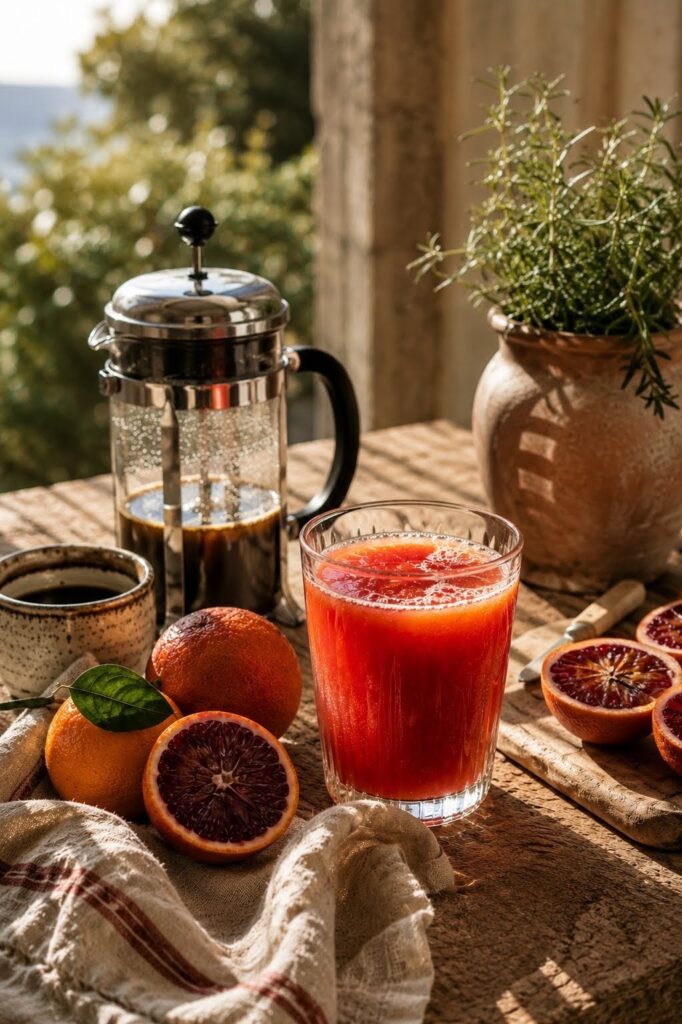
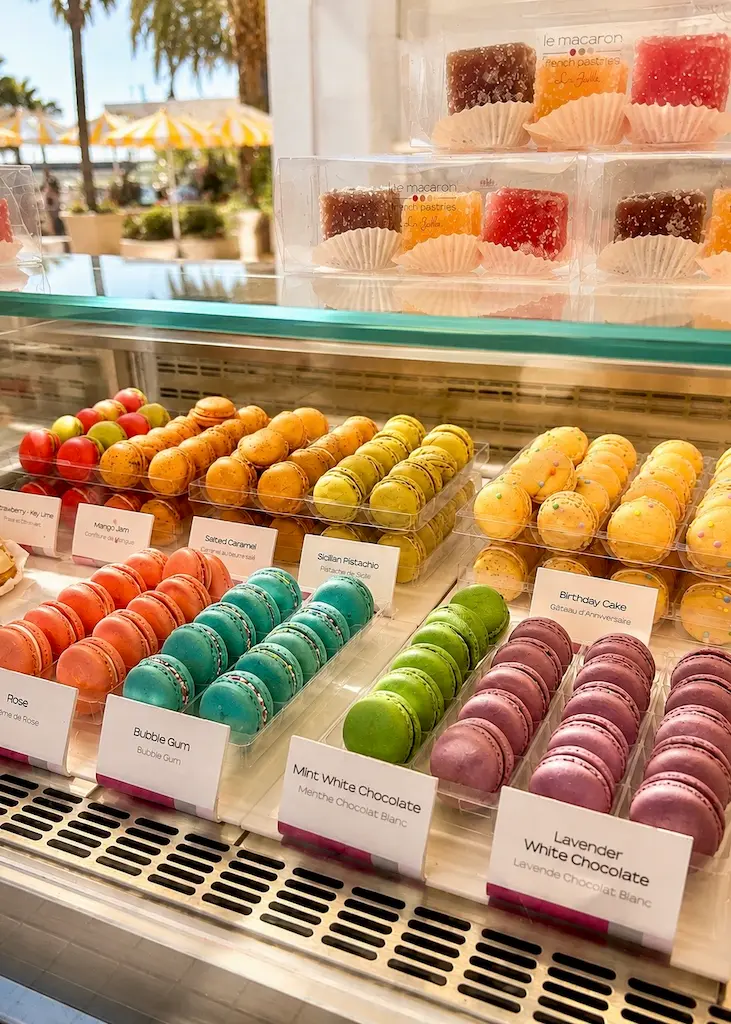
French coffee culture is less about ceremony and more about elegance. A leisurely French press enjoyed at home—or a café crème at a neighborhood café—is often accompanied by a single macaron, a tiny pastry that reflects France’s appreciation for craftsmanship. Its crisp shell gives way to a delicate, creamy filling, proving that refinement often comes in the smallest package.
Although the macaron has become one of France’s most recognizable pastries and a symbol of Parisian elegance, its story begins in Italy. The earliest macarons were simple almond cookies made from ground almonds, sugar, and egg whites. The name comes from the Italian word maccarone, meaning “fine paste.” In 1533, Catherine de’ Medici brought Italian cooks and pastry chefs with her when she married the future King Henry II of France. Among the recipes they introduced was the humble almond biscuit that would eventually evolve into the macaron. At the time, it looked nothing like today’s version.
The modern macaron—with two delicate shells sandwiched around a creamy filling—is a much more recent invention. In the early twentieth century, the famous Parisian pastry house Ladurée popularized the now-iconic version filled with buttercream, ganache, or fruit preserves. Today, flavors range from pistachio and raspberry to salted caramel, lavender, rose, chocolate, and coffee. Made from little more than almond flour, egg whites, and sugar, the macaron proves that elegance doesn’t require complexity. Like a well-made French press, it rewards patience, craftsmanship, and attention to detail.
Italy: Espresso & Amaretti
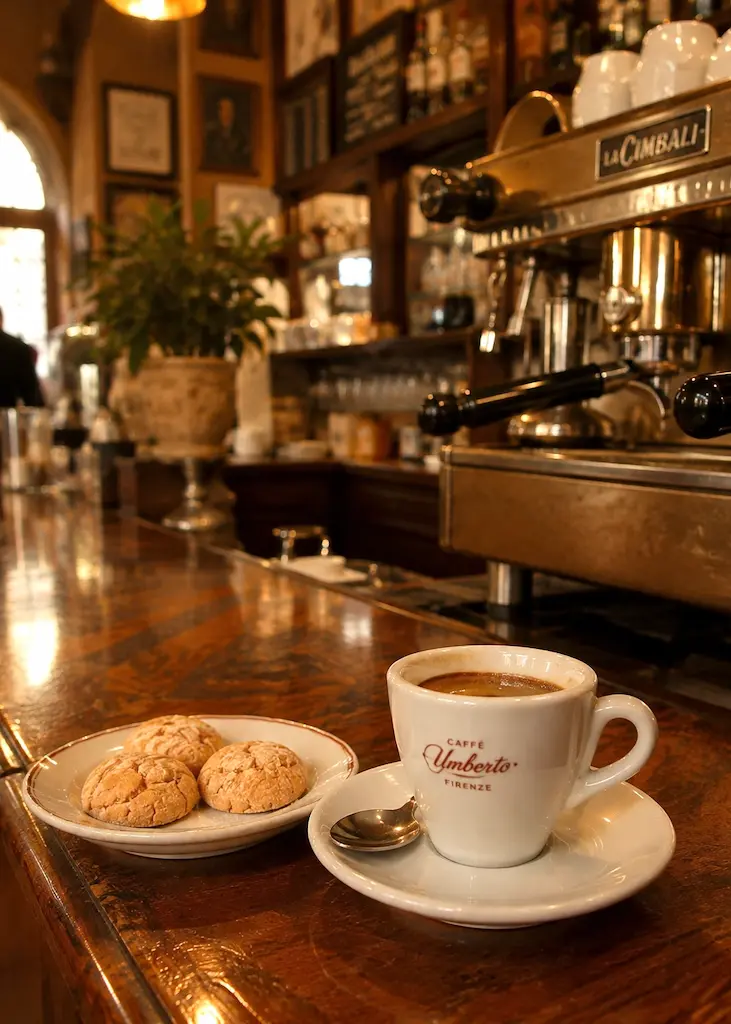
Italy perfected the art of doing a great deal in very little time. An espresso is often enjoyed standing at the bar, lasting only a few minutes, yet those few minutes become an important pause in the day. Walk into almost any café in Italy and you’ll notice something familiar beside the espresso machine: a small basket of crisp almond biscuits. Their sweetness softens the intensity of the espresso without overwhelming it. Their name comes from the Italian word amaro, meaning “bitter,” a reference to the distinctive flavor of bitter almonds that gives the biscuits their unmistakable aroma.
The origins of amaretti are wrapped in legend. One of the best-known stories comes from the late fifteenth century, when a local innkeeper in Saronno created a simple almond biscuit as a gift for Bernardino Luini, a student of Leonardo da Vinci. Using little more than apricot kernels, sugar, and whipped egg whites, they baked a humble cookie that would become one of Italy’s best-loved treats.
Whether the legend is entirely true or not, amaretti embrace simplicity. Traditional recipes contain only a handful of ingredients: almonds or apricot kernels, egg whites, and sugar. Over time, Italy developed two distinct styles: Amaretti di Saronno, which are light and crisp, and amaretti morbidi, which are softer and almost melt in the mouth. One sip, one bite, another sip—it becomes a rhythm as familiar in Italy as the morning espresso itself.
Portugal: Bica & Pastel de Nata
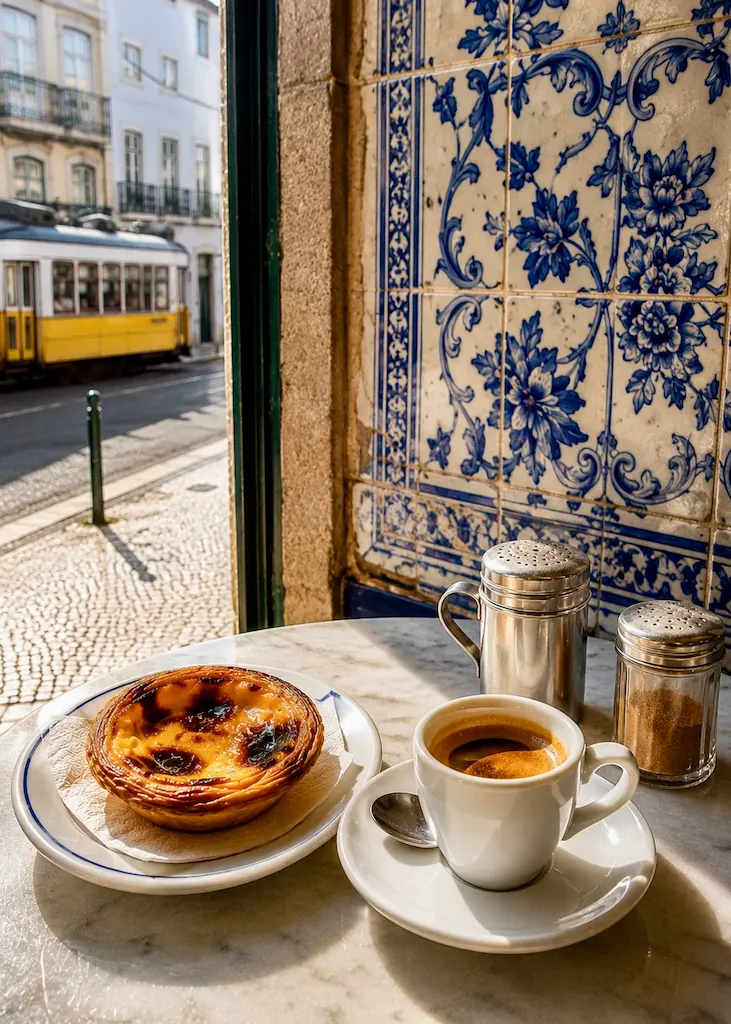
Walk into almost any Lisbon café and you’ll find the same irresistible pairing. A bica—Portugal’s bold espresso—is served alongside a still-warm pastel de nata, its caramelized custard tucked inside impossibly flaky pastry. Strong coffee, creamy filling, crisp pastry. Unlike macarons or amaretti, pastéis de nata were never created to impress royalty—they were born in a monastery.
In the early nineteenth century, monks at Lisbon’s Jerónimos Monastery used large quantities of egg whites to starch their habits and clarify wine, leaving them with an abundance of egg yolks. Rather than waste them, they transformed the yolks into rich custards, giving birth to one of Portugal’s most iconic desserts. When religious orders were dissolved in 1834, the monastery sold the secret recipe to a nearby sugar refinery. In 1837, the owners opened Pastéis de Belém, where the original recipe is still baked today.
Only pastries made at Pastéis de Belém can officially carry that name. Everywhere else in Portugal, they are known as pastéis de nata. Fresh from the oven, each tart is a masterpiece of contrasts: impossibly flaky pastry surrounding silky custard with a beautifully caramelized top. Many Portuguese dust them with cinnamon, while others prefer them exactly as they come. Either way, no pastry completes a Portuguese coffee quite like a pastel de nata.
Greece: Greek Coffee & Kourabiedes
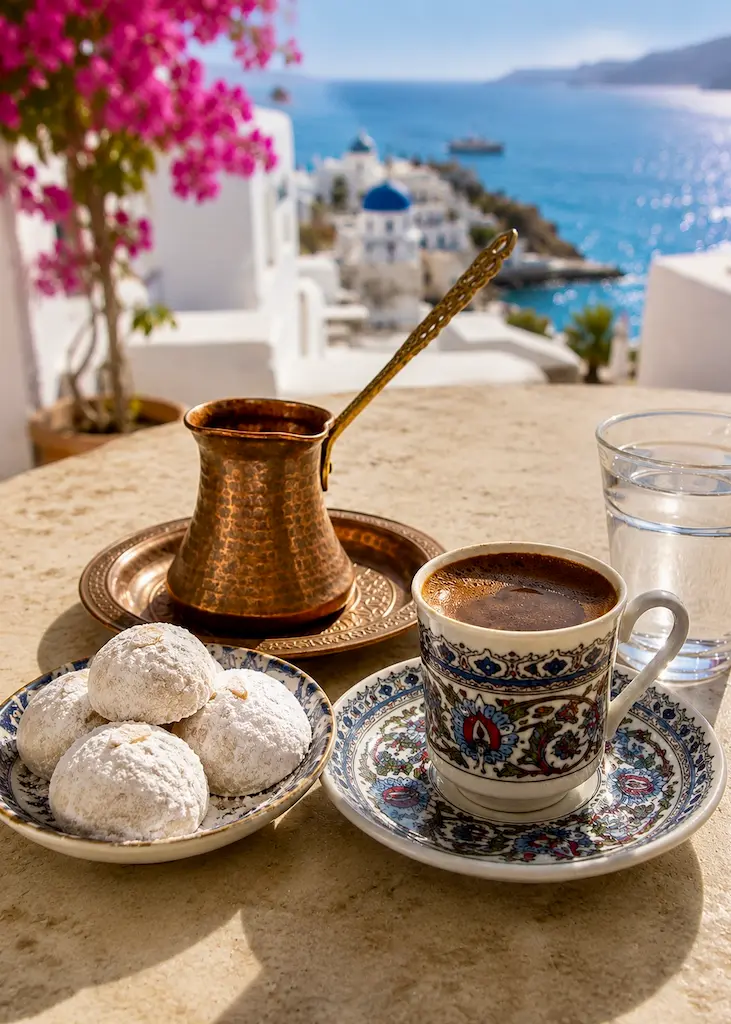
Greek coffee is brewed slowly, served unfiltered, and meant to be enjoyed without hurry. A small glass of cold water almost always accompanies the cup, and often so do kourabiedes. These beloved buttery almond biscuits are generously coated in a snowy blanket of powdered sugar. With every bite they crumble delicately, releasing the aroma of toasted almonds and fresh butter.
Their story stretches back centuries, reflecting the culinary influences that flowed through the eastern Mediterranean and the Ottoman world. While similar butter cookies can be found across neighboring countries, Greece embraced them as part of its own baking tradition, especially during Christmas, weddings, baptisms, and family celebrations.
Made from little more than butter, flour, almonds, and powdered sugar, kourabiedes represent the Greek belief that the finest hospitality doesn’t require extravagance, only care. Served with a cup of slowly brewed Greek coffee, they create a beautiful contrast. The coffee is rich, earthy, and slightly bitter; the cookie is light, buttery, and delicately sweet. Together they celebrate exactly what Greek cafés have always valued: conversation without hurry.
California: Craft Coffee & a Warm Chocolate Chip Cookie
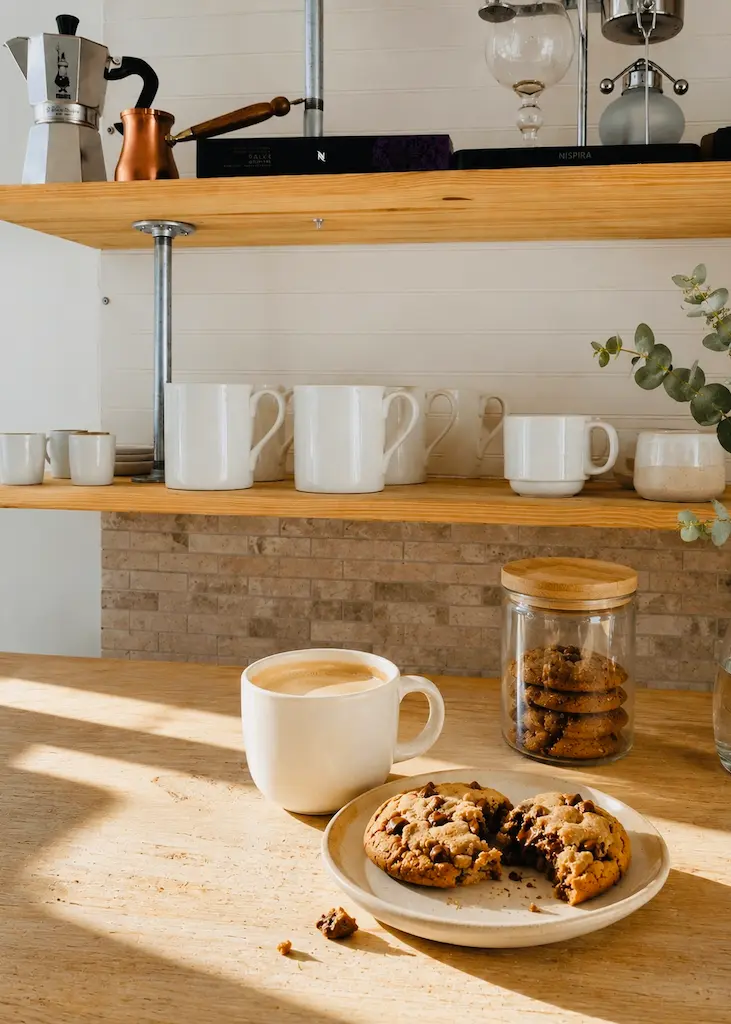
California gave the world a different kind of coffee culture. Independent cafés, neighborhood roasters, outdoor patios, surfers stopping after dawn sessions, and friends catching up over handcrafted coffee. The little companion here is often a warm chocolate chip cookie. Fresh from the oven, with melted chocolate and crisp edges, it captures California’s relaxed approach to hospitality. Less formal than Europe’s pastries, perhaps, but no less comforting.
Unlike Europe’s elegant pastries, the chocolate chip cookie doesn’t try to be refined. It’s generous, comforting, and meant to be enjoyed with both hands. Crisp around the edges, soft in the center, with pockets of melted chocolate, it feels perfectly at home beside a handcrafted cappuccino or pour-over.
Its story begins in 1938 at the Toll House Inn in Massachusetts, where Ruth Wakefield accidentally created what would become America’s favorite cookie. She expected pieces of chocolate to melt completely into the dough. Instead, they held their shape, creating little bursts of chocolate in every bite.
The recipe quickly spread across the country, and by the second half of the twentieth century, the cookie had become a fixture in American bakeries and cafés. California made it its own. As specialty coffee flourished from Berkeley to Santa Monica, neighborhood cafés embraced freshly baked cookies alongside artisan-roasted beans. The pairing reflected the state’s relaxed approach to hospitality—less formal than Europe’s pastry traditions, but equally inviting.
Today, whether you’re watching surfers paddle out at sunrise, taking a break after the farmers’ market, or catching up with friends on a sunny patio, a warm chocolate chip cookie often accompanies the cup. That’s why it feels so perfectly Californian. Not because it was invented here, but because it captures the spirit of California itself—simple, generous, and best enjoyed slowly.
The names may change, but the gesture remains remarkably familiar. Across continents and centuries, people have instinctively placed something sweet beside a cup of coffee—not because it was necessary, but because it transformed a simple drink into a small daily ritual. Whether it’s a cube of lokum in Turkey a colorful macaron in France a crisp amaretti in Italy, a warm pastel de nata in Portugal, a buttery kourabiedes in Greece, or a chocolate chip cookie on a sunny California patio, each tells the same story in its own language. They remind us that hospitality isn’t measured by extravagance, but by thoughtful details and simple pleasures shared around the table. That’s why coffee is so rarely served alone. Across two shores and countless cultures, the sweetest tradition has never been the pastry itself—it’s the invitation to pause, savor the moment, and enjoy good company before returning to the day.
CONTINUE EXPLORING
Inspired by this story? The story continues. Here is your next read: The sesame ring Taste of a Mediterranean Morning →