The Greatest Labor Into Smallest Pastries
The Two-Bite Paradox
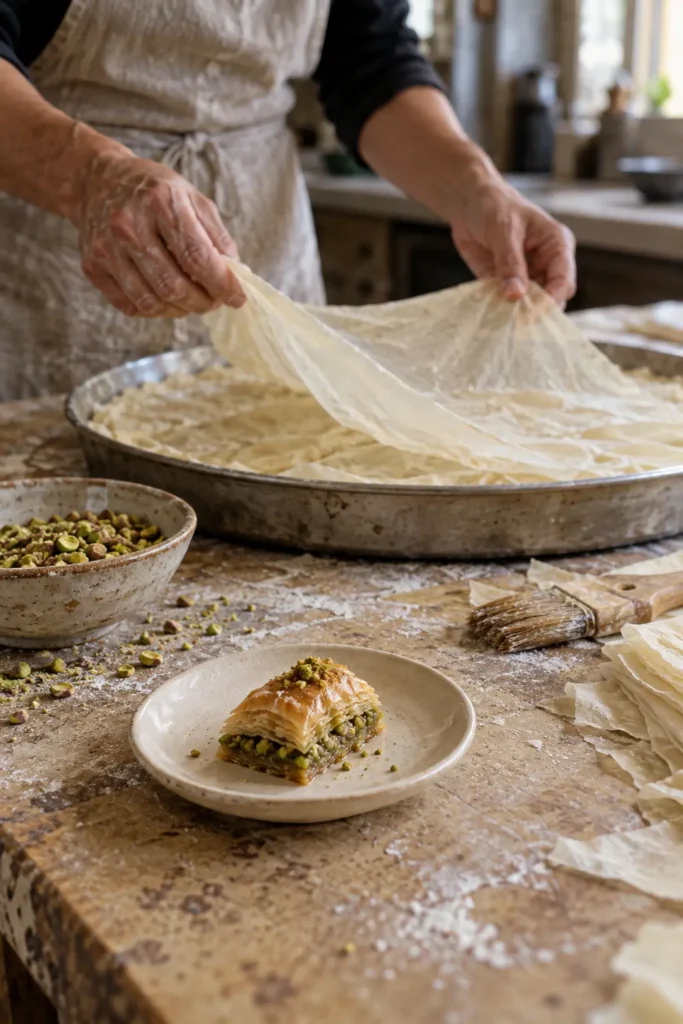
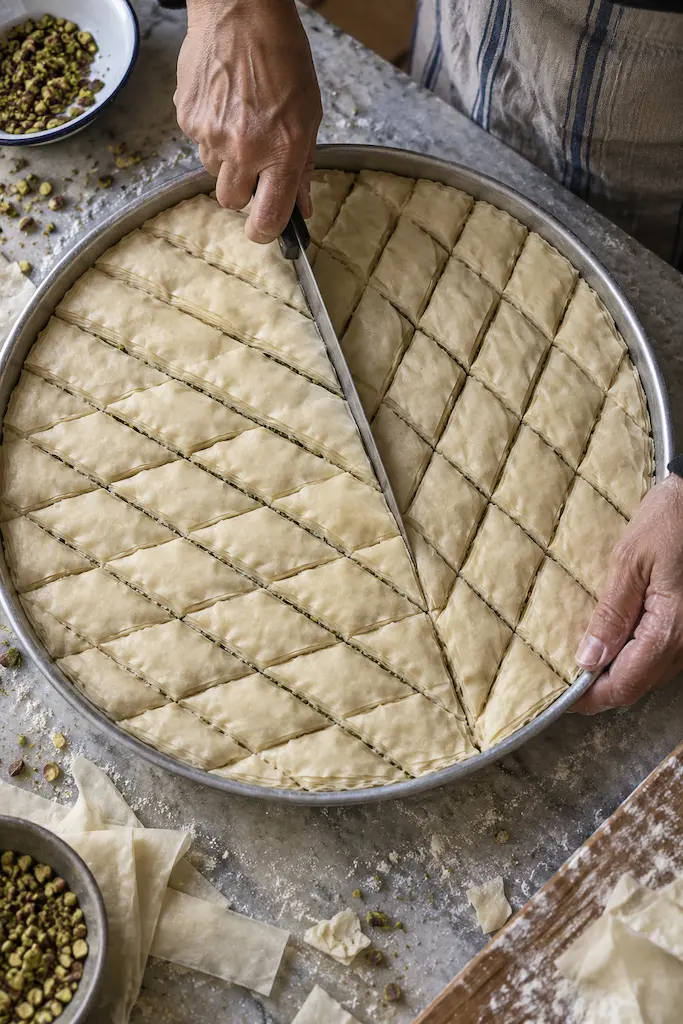
There is something hypnotic about watching baklava being made. Dough is rolled until the table can practically see through it, then lifted without tearing and laid down one impossible sheet at a time. Nuts are scattered, edges aligned and diamonds measured with the concentration of a surveyor settling a border dispute. After all that work, the finished pastry is lifted between two fingers and disappears in two bites.
This is the delicious absurdity of baklava: the time spent making it and the time spent enjoying it are completely out of proportion. “Two hours” is not a stopwatch measurement for every tray, but the paradox remains—long preparation, remarkably short pleasure. Modern life usually tries to shorten the work and lengthen the experience. Baklava does the opposite, devoting extraordinary effort to making something vanish beautifully.
The internet has already spent quite enough time deciding whether baklava belongs to Greece, Türkiye or anyone else seeking legal custody of the pistachios. Its history crosses cultures and borders, which is precisely why so many places recognize it as their own. The more intriguing question is why generations continued making a sweet that demands so much and lasts so little. Difficulty, in this case, was never an unfortunate side effect.
Baklava’s complexity is part of what it communicates. Thin layers demonstrate skill, precious nuts signal generosity, and the repetition of small gestures turns ordinary ingredients into something ceremonial. The finished piece may be tiny, but it quietly announces that somebody considered the guest, celebration or tradition worth the trouble. A small pastry is not necessarily a modest dessert; it can be compressed extravagance.
The Luxury Hidden Inside
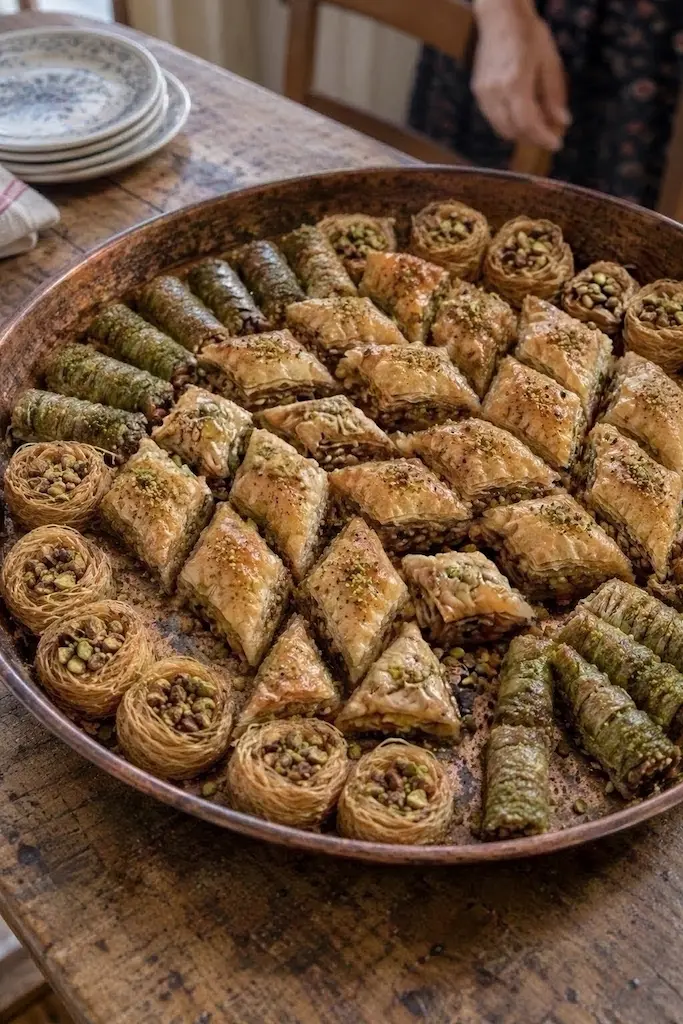
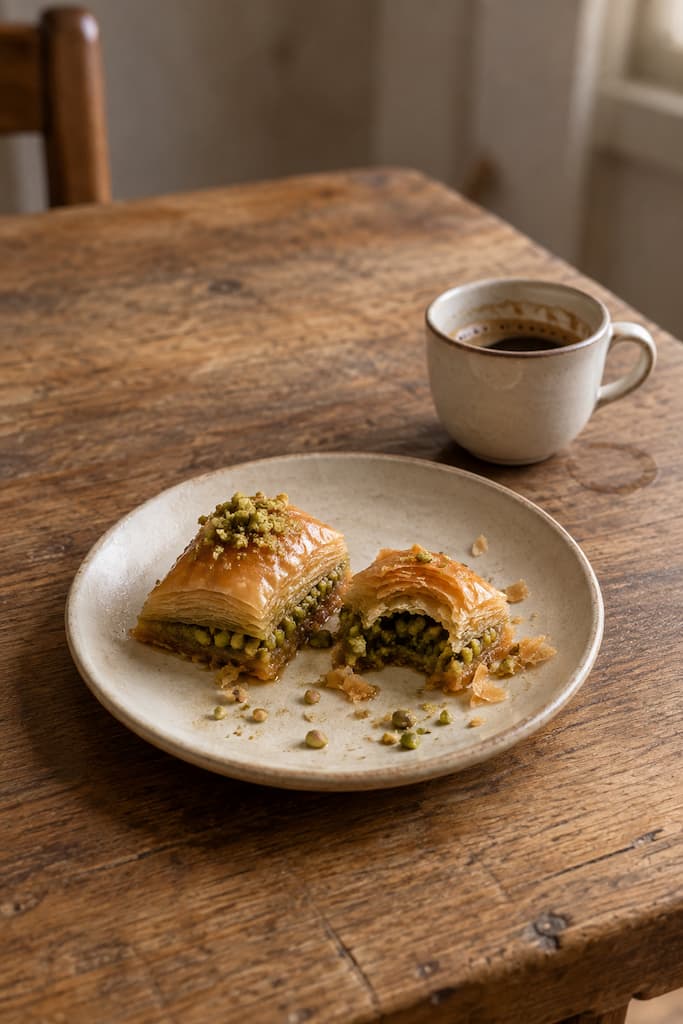
Most of baklava’s value has disappeared by the time it reaches the table. We can see the golden surface, bright pistachios and shine of syrup, but not the practiced touch that kept the dough intact or the judgment that prevented crisp layers from becoming sweet upholstery. Hours of attention have been reduced to one neat diamond pretending it was no trouble at all. That performance of effortlessness may be its most sophisticated ingredient.
This is why handmade baklava belongs to more than the world of recipes. Its knowledge has traditionally moved from experienced makers to apprentices and through families whose instructions often include phrases such as “until it feels right,” which is not especially helpful unless one has spent years learning what right feels like. A written recipe can record quantities and temperatures. It cannot easily explain the exact resistance of dough beneath the hand.
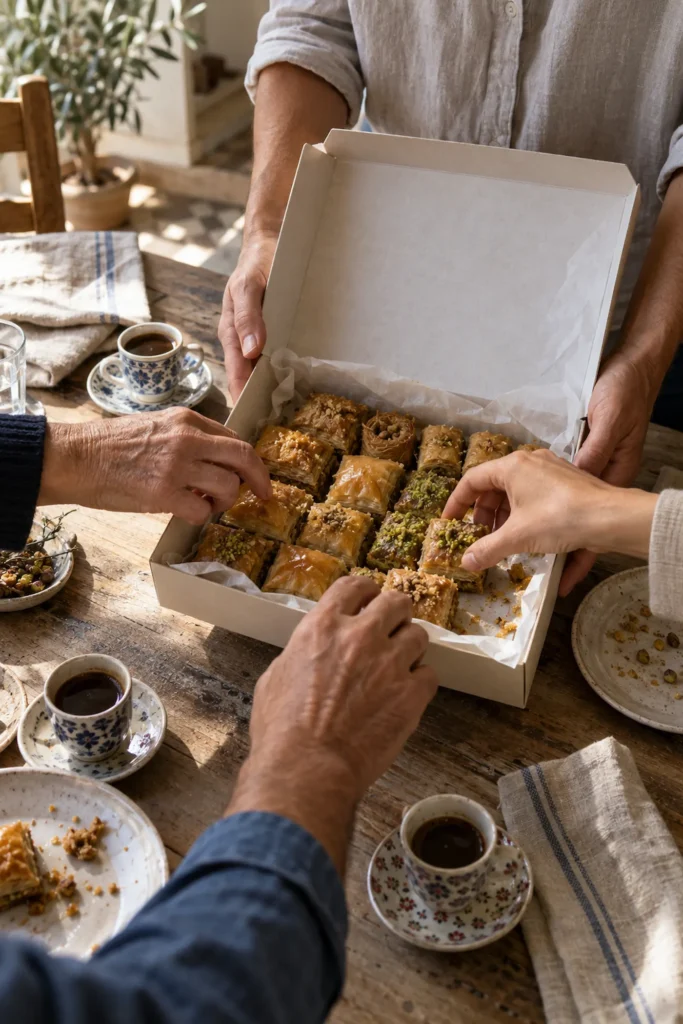
The labor also helps explain baklava’s cultural importance. It appears when ordinary sweetness is not quite enough—during holidays, weddings, family visits and celebrations across the Mediterranean, Balkans and Middle East. It travels in boxes, arrives on trays and sits beside coffee while conversations continue long after the first piece has disappeared. Baklava does not merely conclude a meal; it marks the significance of people gathering around it.
Its smallness is essential to that role. A large cake makes one grand statement, then requires a knife and someone willing to distribute unequal slices while pretending not to notice. Baklava arrives already divided, each piece complete, allowing generosity to multiply rather than be portioned. The restrained guest takes one, while the guest committed to serious cultural research takes four.
A tray of baklava is therefore not a collection of miniature desserts so much as a pattern of individual offerings. Every diamond contains the same layers, care and finish, whether it goes to the first guest or the last. The scale invites sharing without making the sweet feel casual. It is democratic pastry, although the person reaching for the final pistachio piece may briefly challenge the system.
California Made It Bigger
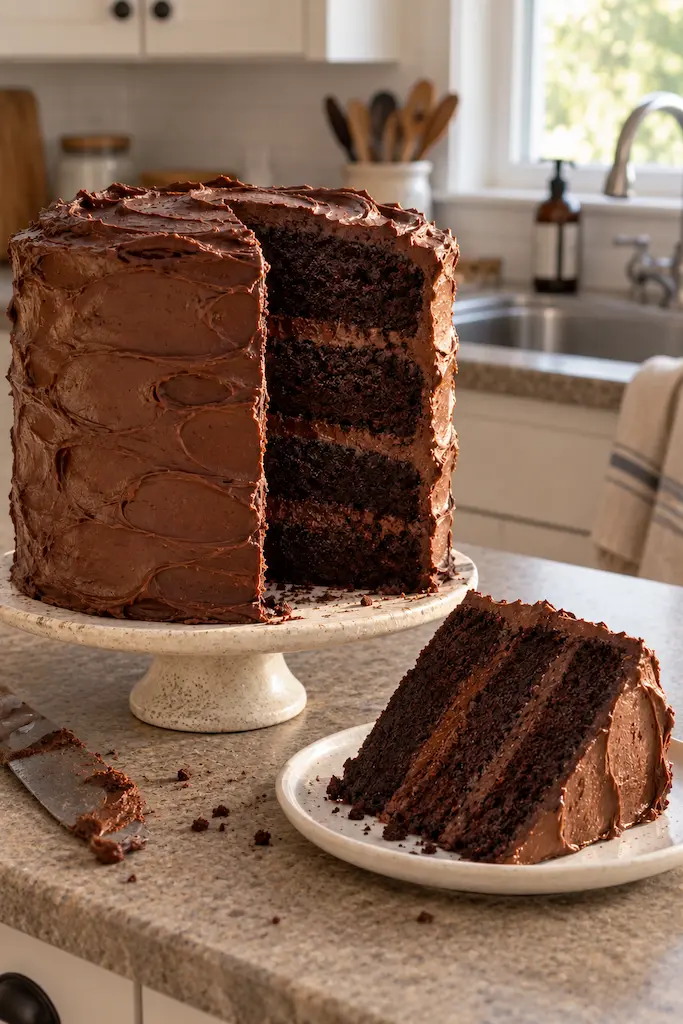
California often expresses dessert pleasure more visibly. A chocolate cake grows taller, a cookie expands toward the edge of its box, and one scoop becomes three because optimism is part of the local diet. California certainly understands craftsmanship, and its bakeries contain traditions brought from nearly everywhere. But its most recognizable language of abundance can usually be read from across the room: the dessert is bigger than expected.
Baklava communicates abundance in the opposite direction. Instead of enlarging the object, it multiplies the work hidden inside it—another sheet, another careful lift, another brushing, another layer. California may offer more dessert; baklava offers more labor per square inch. One puts the spectacle on the plate, while the other folds it away where only texture can reveal it.
This is why a small handmade pastry can feel more extravagant than a much larger dessert manufactured in less time. Size tells us how much food we are receiving, but craftsmanship tells us how much attention has been spent on it. One impresses through quantity; the other carries the knowledge that somebody performed a wildly inefficient sequence of tasks for our pleasure. Efficiency is useful, but it has never been especially romantic.
Even in California, where baklava now lives in Greek, Turkish, Armenian, Assyrian, Arab and Balkan bakeries and homes, it retains that meaning. Recipes travel because people do, carrying techniques, preferences and family arguments with them. Making baklava by hand becomes a way of keeping a place present, even when that place is thousands of miles away. The pastry may sit beside cold brew and impeccable branding, but its layers still remember another table.
The fork finally breaks the surface with a faint crack. The upper layers scatter, the lower ones hold the syrup, and pistachio appears along the edge in a vivid green line. Moments later, the pastry is gone, leaving no monument and no proof of how much work it required. California might have added another scoop and considerably more plate, but baklava makes its point in two bites.
That is its final extravagance: someone devoted hours to something that would not last long enough to admire. The pleasure is brief, but the skill, generosity and memory folded inside it have survived for generations. Baklava does not resist disappearance; it makes disappearance worth the trouble.
TASTE THE STORY
Güllüoğlu Baklava: The Güllü family traces its baklava-making tradition through six generations, with pastries still presented as the work of practiced hands rather than modern shortcuts. Its online shop offers traditional pistachio baklava and other Gaziantep specialties for international delivery. Explore Güllüoğlu →
CONTINUE EXPLORING
Inspired by this story? The story continues. Here is your next read The Little Treats That Complete Coffee →