A Journey Through California and the Mediterranean
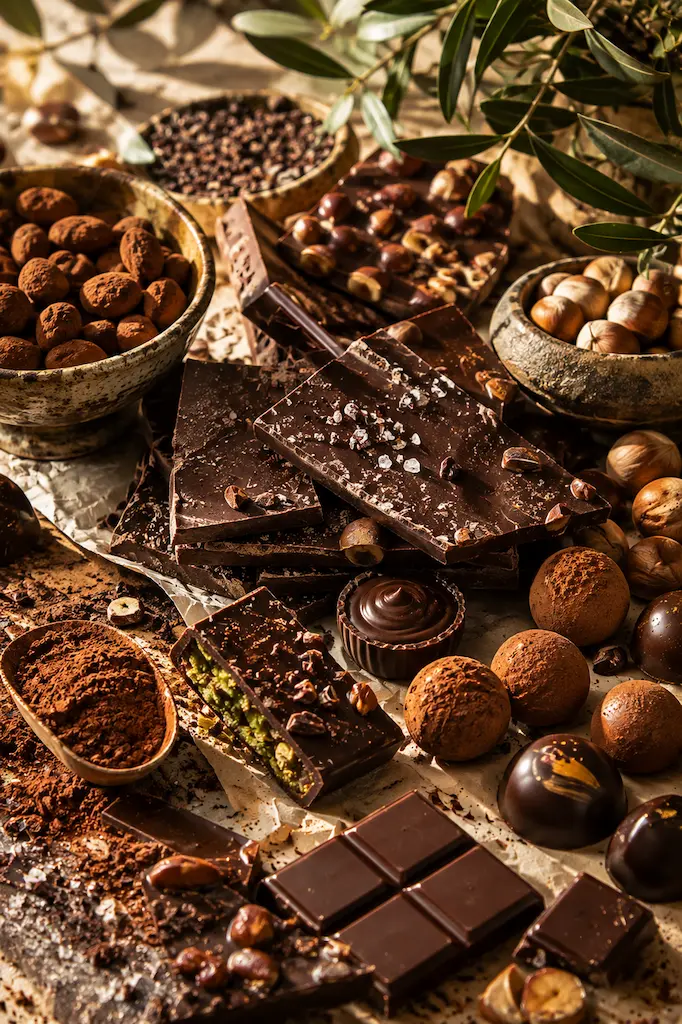
There are many perfectly great ways to travel between California and the Mediterranean. You can follow the coastline, chase the sun, visit vineyards or organize an entire holiday around hotels with suspiciously beautiful swimming pools and sandy beaches. Or you can follow the chocolate. A much better route if you happen to be a chocoholic.
Chocolate may begin thousands of miles from either shore, with cacao grown in tropical climates, but what happens once those beans arrive tells us something about a place. California turned chocolate into Gold Rush enterprise, old-fashioned candy counters and, eventually, meticulous bean-to-bar craft. France made it a profession. Sicily stubbornly refused to make it smooth. Piedmont introduced it to the hazelnut. Turkey brings us pistachios. Apparently, chocolate travels very well. So pack lightly. This particular journey requires room for sweet souvenirs.
Stop One: San Francisco — Ghirardelli
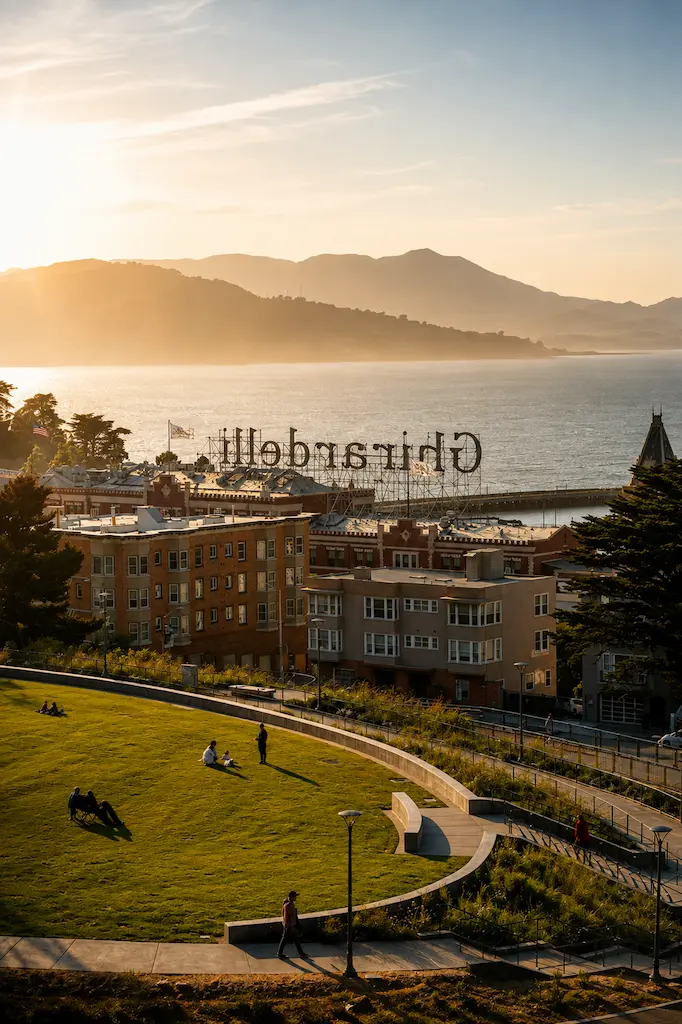
We begin somewhere wonderfully obvious: Ghirardelli Square. Long before the enormous illuminated sign became part of the San Francisco waterfront, there was Domenico Ghirardelli, born in Rapallo, Italy, in 1817. He learned the confectionery trade, traveled through South America and eventually arrived in California during the Gold Rush. After opening a store in Stockton, Ghirardelli established his confectionery business in San Francisco in 1852. It is difficult to imagine a more appropriate beginning for a Caliterranean chocolate journey: an Italian confectioner arrives in California, builds a chocolate company and eventually lends his name to one of San Francisco’s most recognizable landmarks. Two shores. One chocolate bar. The company later moved into the waterfront complex we now know as Ghirardelli Square. Today, you can walk along the bay, admire the view and order something involving enough chocolate to make lunch seem unnecessary. A little touristy? Certainly. Are we skipping it? Absolutely not. But don’t leave San Francisco yet.
Stop Two: San Francisco — Dandelion Chocolate
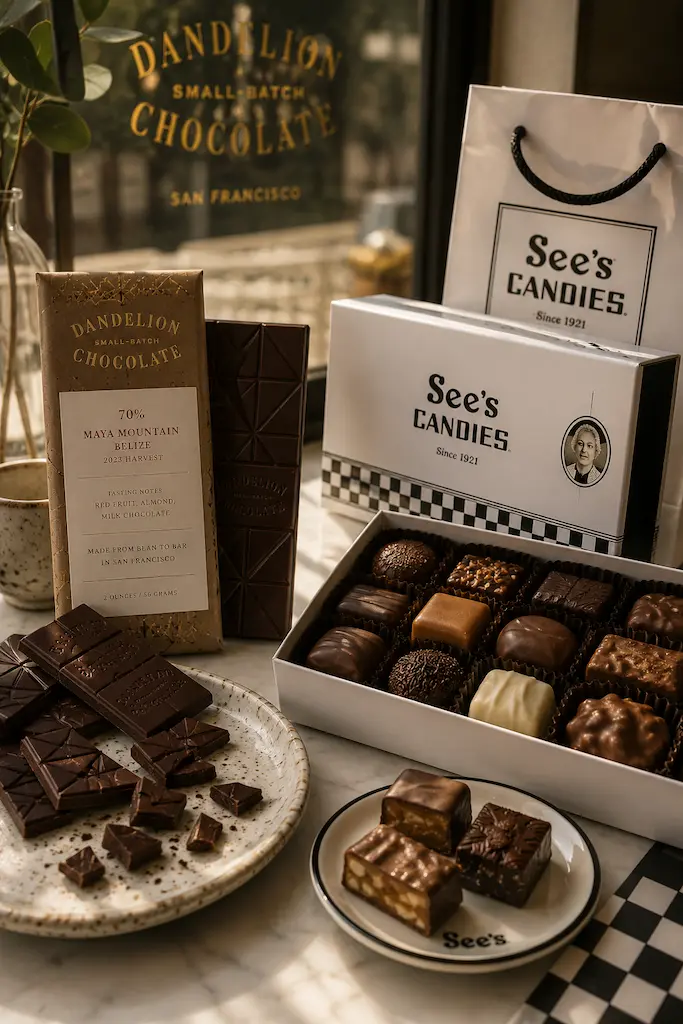
A short journey across the city takes us from California chocolate history to its modern obsession with knowing precisely where everything came from. Welcome to Dandelion Chocolate. Dandelion is part of the modern American bean-to-bar movement, making chocolate from carefully sourced cacao and sugar while paying close attention to individual cacao origins. The idea sounds almost absurdly simple until you taste two bars side by side. Chocolate made from cacao grown in one region can taste noticeably different from chocolate grown somewhere else: fruity, floral, nutty or earthy. Suddenly chocolate starts behaving suspiciously like wine. Same city. Same ingredient. Completely different philosophy. Ghirardelli tells us what chocolate became in nineteenth-century California. Dandelion tells us what California wants to know about chocolate now: who grew it, where it came from and what it tastes like before somebody adds caramel, pretzels and twelve other distractions. We approve. Now we can head south.
Stop Three: Los Angeles — See’s Candies
Los Angeles gives us yet another version of California chocolate culture. See’s Candies opened its first shop in Los Angeles in 1921, built around the recipes of Mary See, whose portrait still watches over boxes of chocolates more than a century later. The company’s black-and-white shops, checkerboard floors and neatly packed boxes became a familiar California institution. See’s isn’t bean-to-bar chocolate and isn’t pretending to be. That is precisely why it belongs here. Chocolate isn’t only about cacao percentages and tasting notes. Sometimes it is about rituals: the box somebody brings at Christmas, choosing chocolates individually from behind a counter and knowing exactly which piece you are looking for before the lid comes off. And then there is the inevitable piece nobody seems to want. Every box has one. Our three California stops have now given us three completely different chocolate stories: immigrant entrepreneurship, modern craft and old-fashioned confectionery tradition. Time to cross the Atlantic.
Stop Four: Bayonne, France — Where Chocolate Became a Tradition
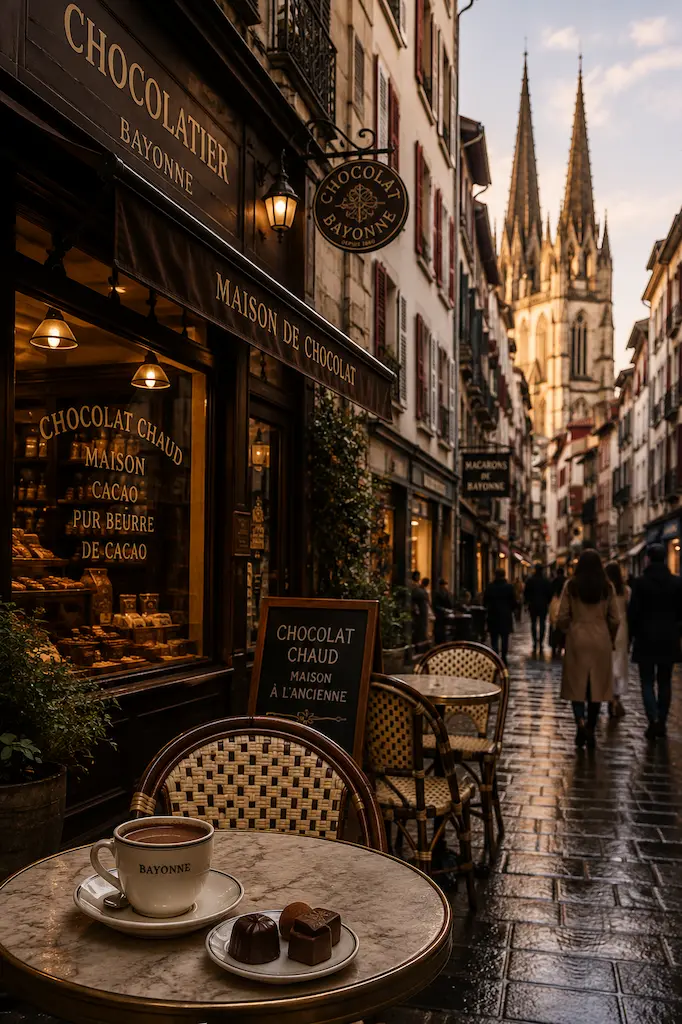
We land in France. Naturally, you may be thinking Paris. We are not going to Paris. Try to remain calm. Although Paris has plenty of magnificent chocolate—and we would never turn down a pain au chocolat in the interests of research—our Chocolate Route takes us southwest to Bayonne. The Basque city has one of France’s most fascinating chocolate histories. Chocolate-making knowledge developed there through Jewish communities of Spanish and Portuguese origin who settled around Saint-Esprit after fleeing persecution on the Iberian Peninsula. By the seventeenth century, chocolate had begun establishing itself in the city, and over generations Bayonne became an important center of French chocolate-making. That is why we are here. This isn’t a stop chosen because a famous chocolate company happens to operate a shop nearby. Chocolate actually belongs to the history of the city. Walk through Bayonne and suddenly chocolate becomes a way of reading the place: migration, trade, craftsmanship and taste folded together over centuries. Have another piece. We have traveling to do. And we may require a boat.
Stop Five: Modica, Sicily — Chocolate That Refused to Become Smooth
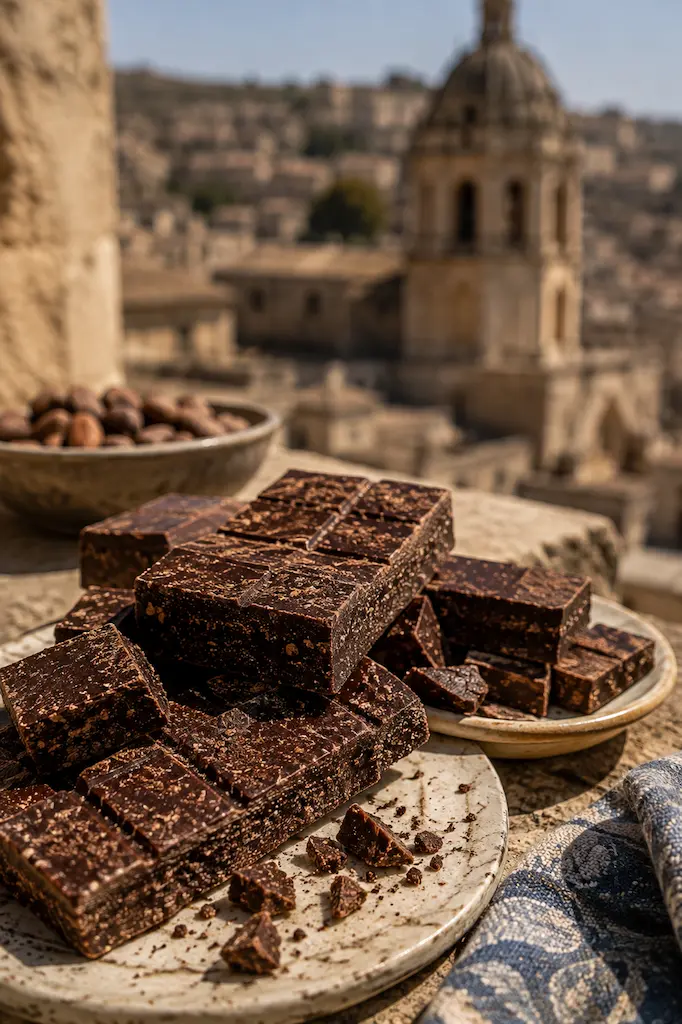
We arrive in Sicily, where chocolate changes character completely. Modica is famous for a chocolate tradition so closely associated with the town that Cioccolato di Modica has protected geographical status in the European Union. And Modica chocolate is different. If you expect the silky, glossy texture of an ordinary chocolate bar, your first bite may cause a brief moment of confusion. Traditional Modica processing leaves tiny sugar crystals perceptible in the chocolate, creating its famously grainy texture. No, nobody forgot to finish making it. That is the point. Travel becomes interesting when familiar things stop behaving the way you expect them to. And in Modica, chocolate decides it doesn’t particularly care what you thought chocolate was supposed to feel like. The result belongs as much to the place as to the recipe. Taste it while wandering among Modica’s baroque buildings and suddenly the chocolate makes sense. At this point, we are no longer merely eating chocolate. We are traveling through it.
Stop Six: Alba, Italy — Ferrero
Eventually, our Chocolate Route leaves the coast and heads north. There had better be a good reason. There is: Ferrero. Alba sits among the hills of Piedmont, a region already dangerously accomplished when it comes to food. Wine. White truffles. Hazelnuts. Frankly, it was showing off before chocolate even arrived.
The Ferrero story began here in 1946, when brothers Pietro and Giovanni Ferrero worked from the family’s small pastry shop. Pietro, nicknamed “the scientist” for his constant experimenting, began combining cocoa with the hazelnuts that grew abundantly in Piedmont. His early creations laid the foundation for the company his son Michele would transform into a global confectionery empire. Nutella arrived in 1964, followed by Kinder, Tic Tac and, eventually, those little gold-wrapped Ferrero Rocher chocolates.
And if you are now imagining a Willy Wonka-style tour of the Ferrero factory in Alba, don’t start planning it just yet. Back in San Francisco, one Italian, Ghirardelli practically invites you in, gives you a waterfront square and happily lets you order something covered in chocolate. This Italian takes a rather different approach: you may come to Alba, you may smell the chocolate, but apparently that is quite enough hospitality for one day. Ferrero has historically guarded its production methods with almost comical determination. The company has generally kept the factory closed to public tours, restricted access even for journalists and developed some of its own manufacturing machinery in-house.
Well, some chocolate secrets are meant to remain secret. What began in a small Piedmontese pastry shop is now one of the world’s largest confectionery businesses, with brands sold in more than 170 countries. Yet behind Nutella, Kinder and Ferrero Rocher there is still Alba: hazelnut country, a family business and an extraordinarily successful idea born from using what grew nearby. And this would be an excellent place to end our Chocolate Route, except we have one more stop. Chocolate has been making headlines lately, and pistachios are involved.
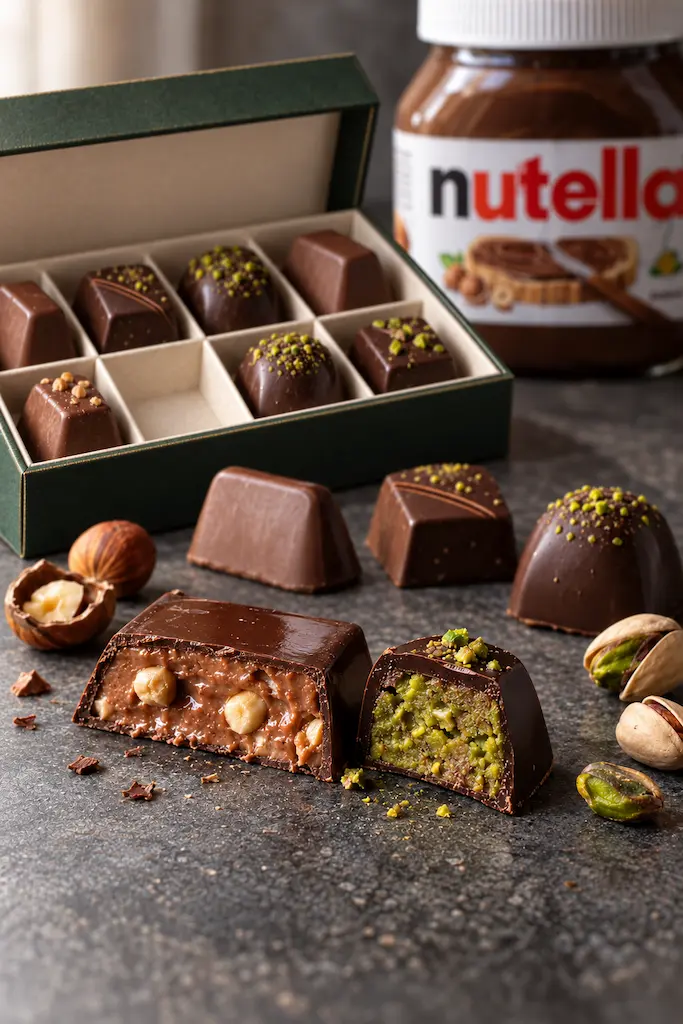
One More Stop: Gaziantep, Turkey — The Pistachio Moment
We turn east toward Gaziantep, a city whose relationship with pistachios began long before anyone thought of stuffing pistachio cream into a chocolate bar and filming the cross-section for social media. Gaziantep is famous for the Antep pistachio and for a food culture in which pistachios appear generously in sweets, particularly the city’s celebrated baklava. Then came Dubai chocolate. The original viral creation came from Dubai: a thick chocolate bar filled with pistachio cream, tahini and crisp kataifi. Social media did what social media does, and suddenly everybody appeared to be breaking open enormous pistachio-filled chocolate bars in front of a camera.
The chocolate is from Dubai, but the story behind those flavors is much bigger. Pistachios, tahini and fine strands of pastry belong to culinary traditions stretching across Turkey and the wider eastern Mediterranean and Middle East. Gaziantep gives us a way to look beyond the trend and toward the much older food culture that makes those flavors compelling in the first place. Which is considerably more interesting than pretending chocolate was invented by TikTok. Our final stop therefore isn’t really about Dubai chocolate at all. It is about how old ingredients keep finding new lives. Chocolate arrived from another part of the world centuries ago. Mediterranean cultures adopted it, changed it, combined it with what grew locally and made it their own. Now pistachios are having their moment. Give them five minutes. Hazelnuts will probably be back.
Taste the Place
That may be the most interesting thing about traveling through food. We tend to think we need museums, monuments and guidebooks to understand somewhere. Sometimes we do. But places also explain themselves through what people grow, make, eat, give as gifts and stubbornly refuse to change.
Ghirardelli tells us about immigration, ambition and Gold Rush California. Dandelion reflects the modern California fascination with provenance and craft. See’s turns confectionery into ritual. Bayonne tells a story of migration and generations of chocolate-making. Modica preserves a chocolate tradition that refuses to behave like everybody else’s. Alba shows what can happen when necessity meets a landscape full of hazelnuts. And Gaziantep reminds us that today’s food obsession may have roots considerably older than today’s algorithm.
Seven stops. Seven very different relationships with chocolate. We began beside San Francisco Bay with an Italian immigrant, traveled through California candy counters and modern chocolate workshops, crossed the Atlantic, ignored Paris—bravely—continued through France and Sicily, followed hazelnuts into Piedmont and finally chased pistachios east toward Turkey. All because of chocolate. Perhaps the best way to cross two shores isn’t always to follow a map. Sometimes, you follow your appetite. Just remember to leave room in the suitcase for chocolate bars.
CONTINUE EXPLORING
Inspired by this story? The story continues. Here is your next read California’s Sweetest Mediterranean Import →