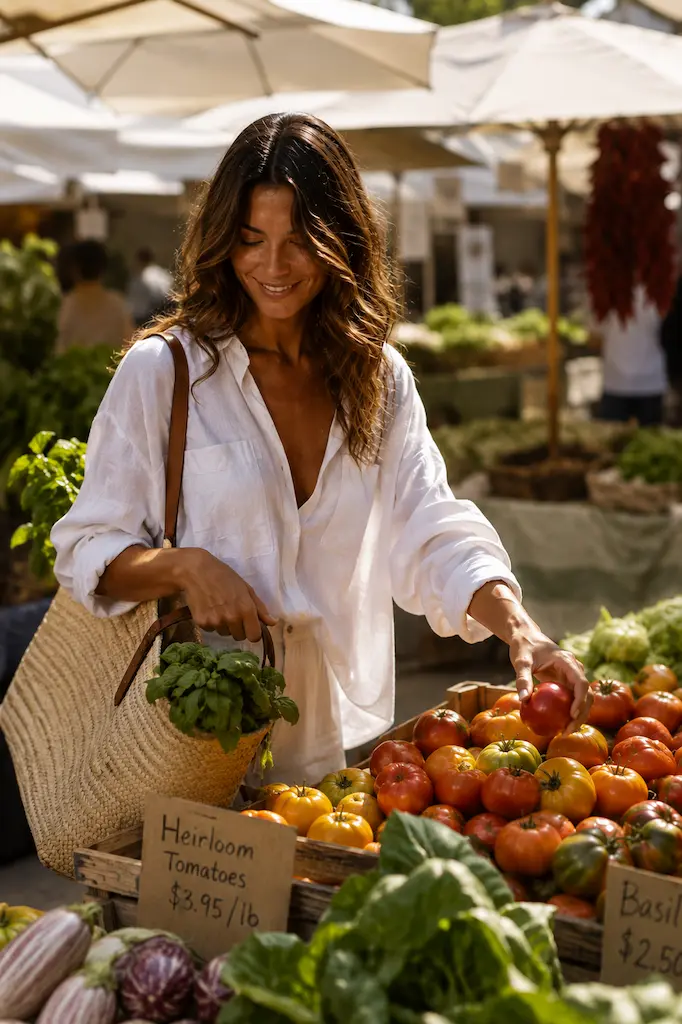
From California Bagels to Greece's Koulouri
Many coastal cultures seem to have looked at a lump of dough and arrived at exactly the same conclusion: put a hole in the middle, then give it a name. Bagel. Koulouri. Taralli. Rosca. Different ingredients, different languages, different centuries — yet remarkably similar breads. The Greeks did it. Southern Italians did it. Spain and Portugal found their own versions. California, despite arriving fashionably late to the tradition, embraced it with equal enthusiasm. Coincidence? Probably not.
This is not quite the story of one recipe traveling neatly from country to country. The histories of these breads sometimes touch, but they do not form one convenient culinary family tree. A koulouri is not a Greek bagel. A tarallo is not a miniature rosca. What they share is something more interesting: the same piece of edible design, rediscovered in different places for different reasons.
Removing the middle changes more than the appearance of bread. A ring exposes more dough to the heat, increases the crust, and makes even a substantial piece easier to handle. Certain ring breads could be stacked, tied together, or threaded onto poles for transport and sale. Before packaging, takeaway counters, and breakfasts engineered to be consumed inside moving vehicles, bakers had already made bread portable.
Not every bread ring was designed for a hurried morning. Some accompanied workers into the street; others appeared beside wine or emerged only for religious feasts. The shape remained constant while the ritual around it changed. The hole, apparently, was the easy part. Deciding what to do with the bread afterward became a matter of culture.
The Breakfast That Walks With You
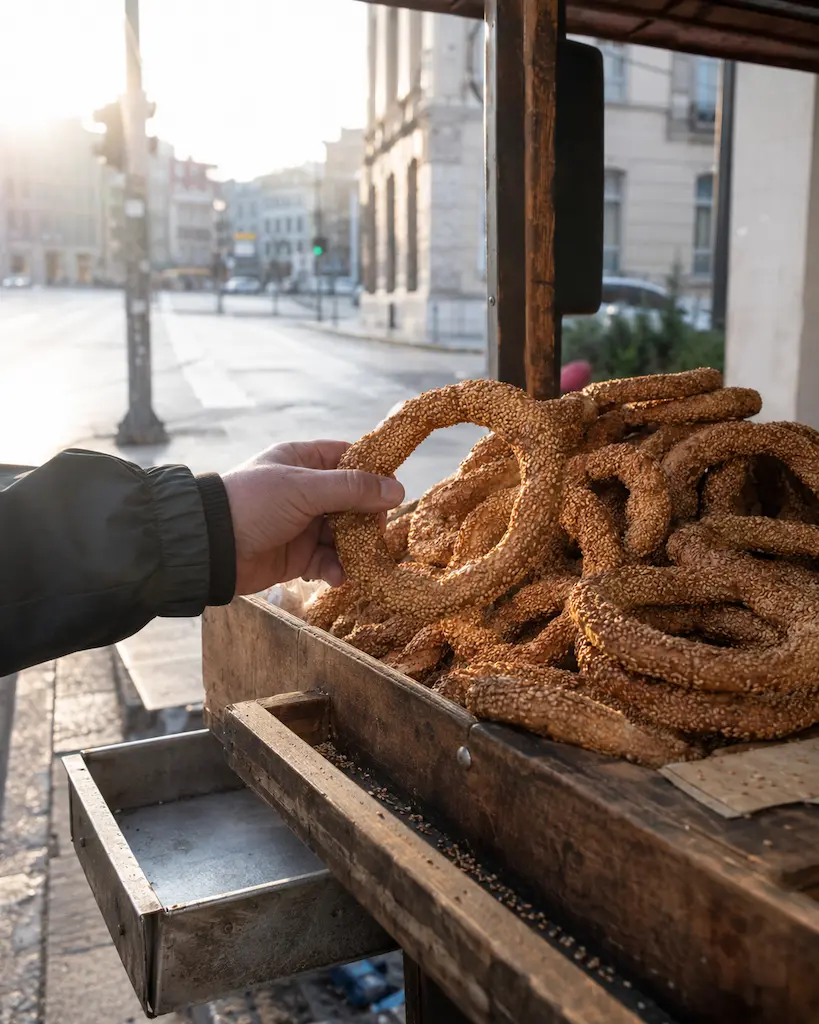
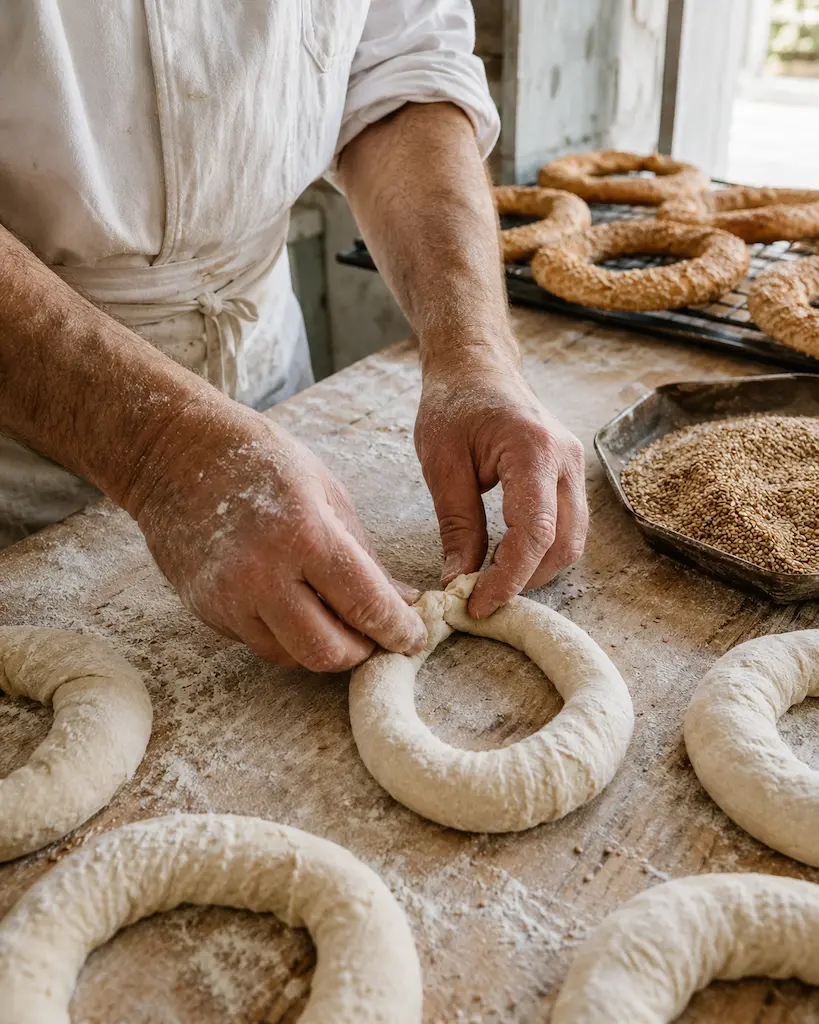
If portable breakfast needed a capital, Thessaloniki could make a persuasive claim. Its koulouri is slender, deeply bronzed, and covered almost completely in sesame seeds. The crust crackles; the interior retains just enough softness to make another bite inevitable. Its aroma reaches the pavement before the bakery itself comes into view.
The bread is closely associated with Thessaloniki, although its history stretches east toward Byzantine Constantinople and the broader bread traditions of the former Ottoman world. Its Turkish relative, simit, still appears in great stacks on street carts in Istanbul. These are related traditions shaped by centuries of exchange, migration, and changing borders—not identical breads competing for ownership of the same breakfast.
A koulouri asks very little of the person eating it. There is no plate, knife, filling, or strategic decision about which side to bite first. You buy it from a bakery or street seller, continue toward work, and spend the remainder of the morning discovering sesame seeds in highly improbable places.
That ordinariness is part of its importance. The koulouri is not preserved behind glass or revived for tourists twice a year. It remains woven into the working morning: bakeries filling before sunrise, paper bags passing over counters, commuters carrying bread and coffee through the city. History is often easiest to preserve when nobody declares it historical.
The Ring That Refused to Be Breakfast
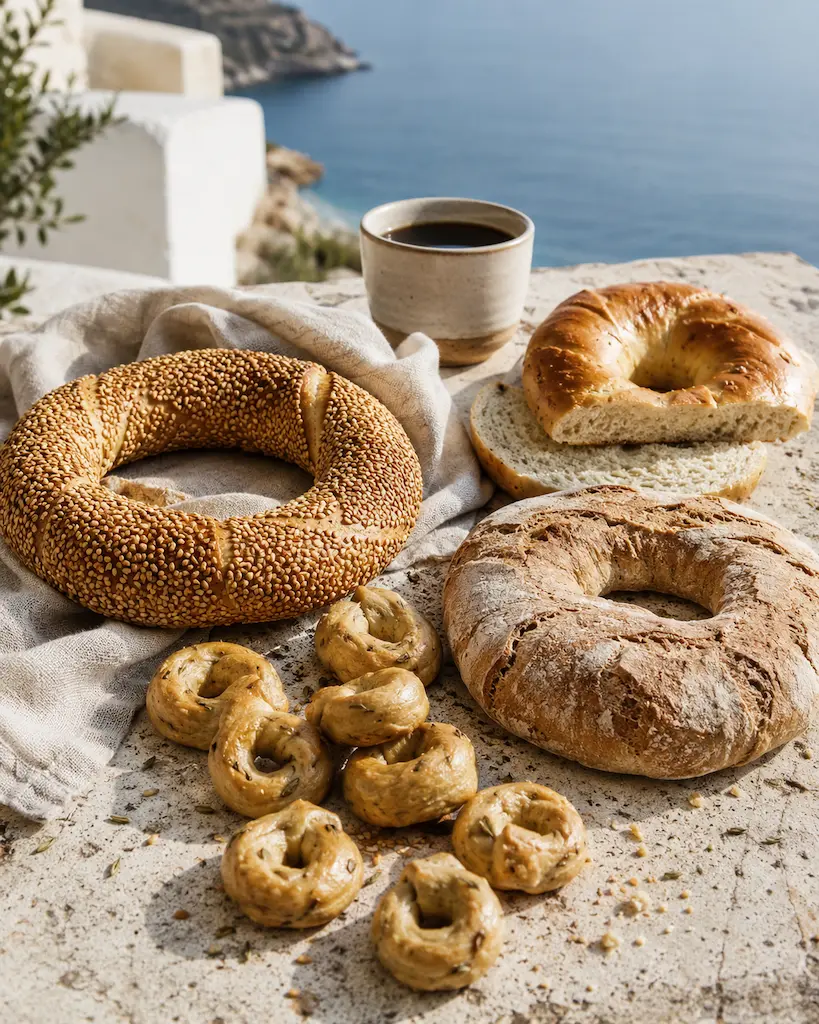
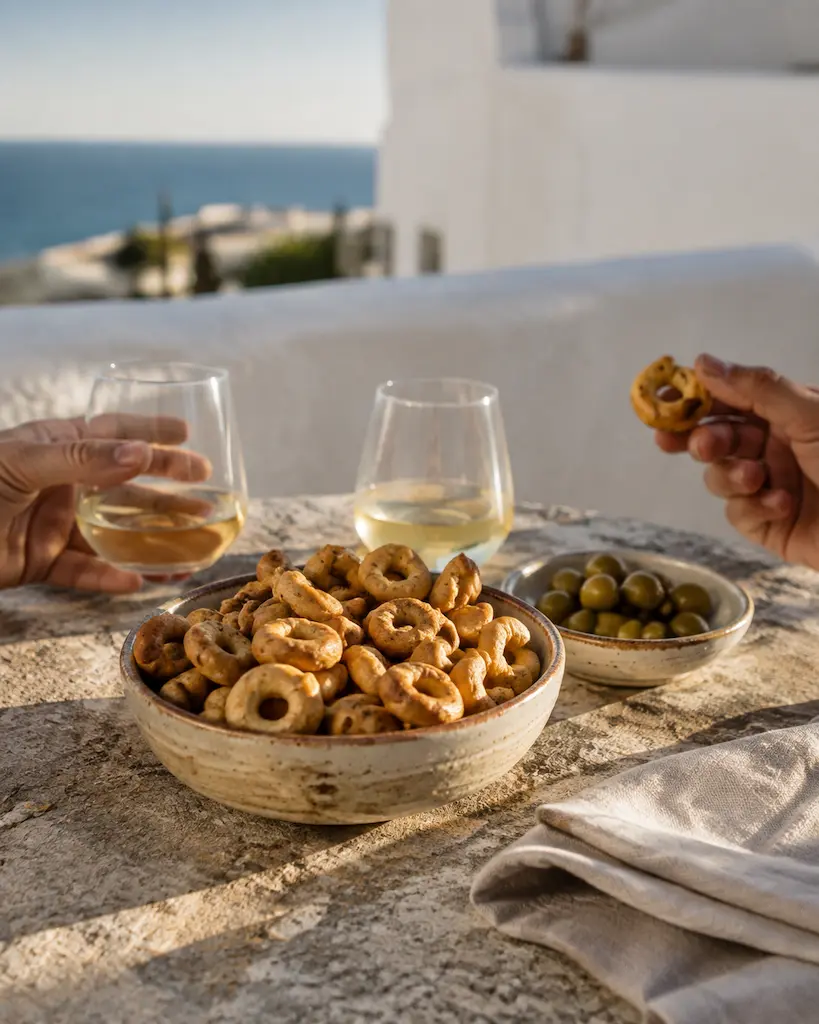
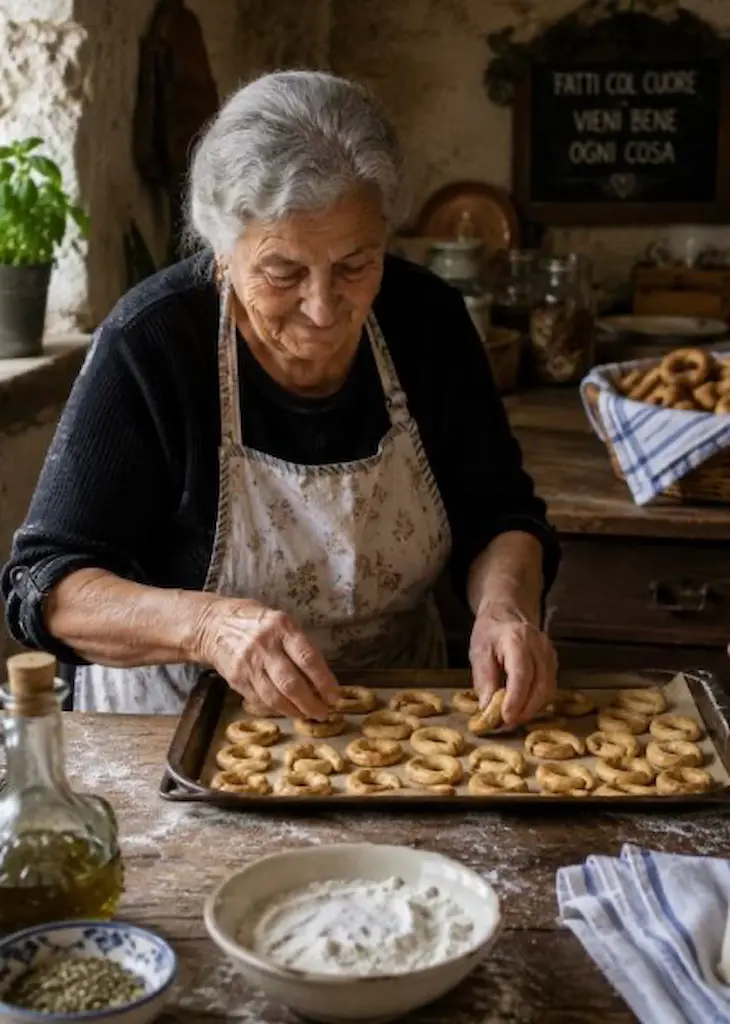
Southern Italy examined the bread ring and gave it an entirely different social life. In Puglia, taralli are small, crisp, and built for the table rather than the commute. Their dough commonly includes olive oil and white wine; many are briefly boiled before baking, helping produce their characteristic polished crust and clean snap.
Fennel seed is the classic companion, although pepper, chili, onion, and other regional variations have accumulated around the basic recipe. The result sits somewhere between bread and cracker but behaves more like a social device. Place a bowl of taralli on a table and people who were preparing to leave will suddenly remember another story.
They belong naturally to the hour of aperitivo: beside olives, almonds, white wine, or a bitter orange drink, while afternoon quietly abandons its schedule. Their size is essential. A large bread announces hunger; a tarallo barely admits that eating is taking place. One becomes five with very little administrative delay.
The tarallo also reveals what the ring shape can do beyond portability. It creates more crisp edge, makes the bread easy to portion, and turns a few modest ingredients into something made for passing from hand to hand. Greece carried its ring through the city. Puglia put dozens in a bowl and persuaded everyone to stay.
When the Ring Dresses for a Celebration
Across Spain and Portugal, circular breads and cakes frequently left everyday life and entered the calendar. Roscas, roscones, regueifas, and crown-shaped festive breads appear in different regions under different names, sometimes sweet, sometimes savory, and often connected to holidays, pilgrimages, weddings, or village celebrations.
There is no single Iberian rosca. The word describes a shape as much as a fixed recipe. One version may be enriched with eggs and scented with citrus or anise; another may resemble a simple ring-shaped loaf. Spain’s roscón de Reyes belongs to Epiphany, while Portugal’s northern regueifa has associations with festivals and communal occasions. Portugal’s bolo-rei, although also crown-shaped, followed its own later route through French influence before becoming a Christmas fixture.
This is where the bread ring stops being merely efficient and becomes symbolic. A circle has no obvious beginning or end, making it an accommodating shape for ideas about continuity, return, luck, and community. It also makes practical sense at a gathering: place it at the center of a table and everyone approaches it from an equal distance.
Recipes move, of course, and traditions borrow shamelessly. They always have. But regional breads rarely remain exact copies of whatever first inspired them. A village changes the flour, another adds orange blossom, a family refuses to remove the anise because a great-aunt once declared it essential. Eventually, preference becomes custom and custom begins introducing itself as history.
The Bagel Travels West
The bagel did not begin on the coast. Its documented history belongs to the Jewish communities of Eastern Europe, with an early written reference appearing in seventeenth-century Kraków. Jewish immigrants later carried it to the United States, where New York transformed it from an immigrant bread into an American institution.
Traditional bagels were smaller and denser than many contemporary versions. The dough was formed into rings, briefly boiled, and then baked, producing the glossy, resilient crust and chewy interior that distinguish a bagel from an ordinary circular roll. They were also once delivered in bundles strung together—proof that the practical advantage of the hole was not confined to Mediterranean streets.
By the time the bagel reached California, its history was already long. California did what California often does: respected the basic idea, then opened the refrigerator.
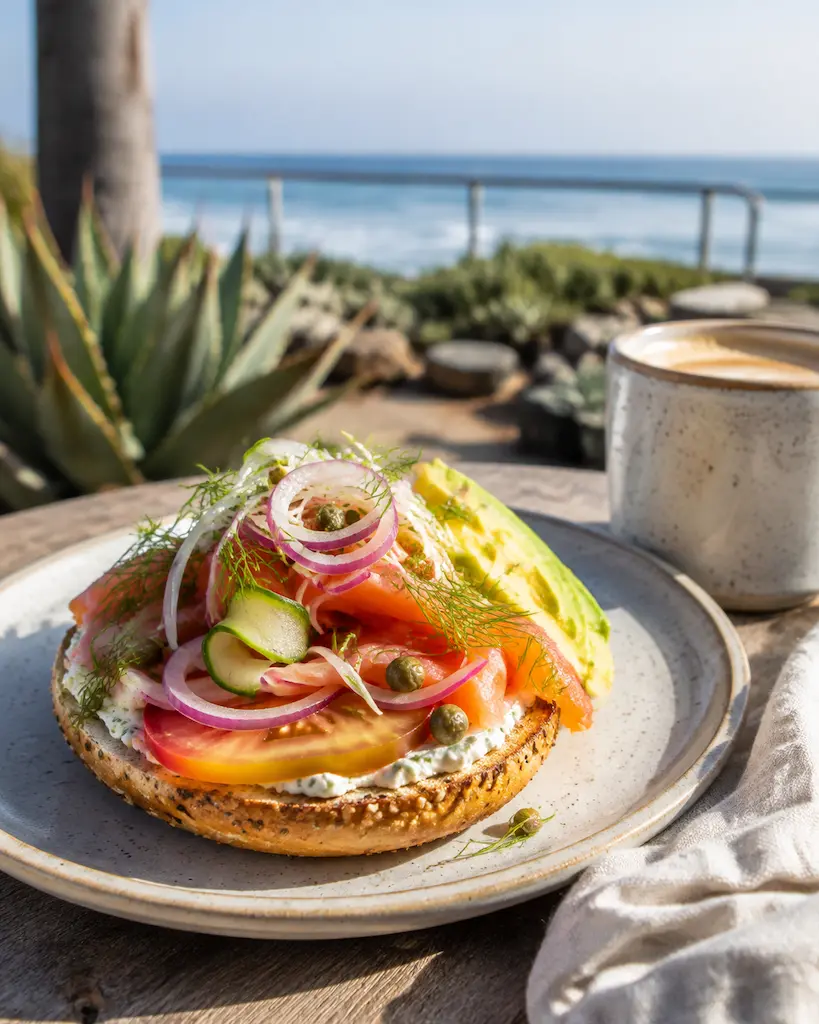
Cream cheese and smoked salmon remained, but they acquired capers, cucumber, paper-thin red onion, heirloom tomato, sprouts, dill, and avocado. The bagel became less austere, more botanical, and suspiciously close to a farmers’ market wearing a bread ring. What began as compact sustenance could now require both hands and a certain amount of architectural confidence.
Yet the California ritual still resembles the older ones. On weekend mornings, people queue outside neighborhood bakeries, carry warm paper bags toward the beach, and eat outdoors with coffee nearby. The ingredients have changed; the choreography has not. Bread is purchased, carried into the day, and eaten somewhere between one destination and the next.
The Intelligence of the Hole
It would be satisfying to discover that every bread ring descended from one ingenious baker who removed the center and changed breakfast forever. Food history is rarely so cooperative. Trade, empire, religion, migration, and simple practicality all contributed to these traditions. Some influenced one another. Others may have arrived at the same answer independently.
What matters is not that the breads share one origin, but that the shape proved useful enough to keep reappearing. The ring could be carried, stacked, tied, divided, displayed, or eaten while walking. It could become a commuter’s breakfast in Thessaloniki, an aperitivo companion in Puglia, a festive crown in Iberia, or a weekend production involving avocado beside the Pacific.
The recipes tell us where people lived. The shape tells us how they lived: in streets and markets, on journeys, around crowded tables, and increasingly close to the water. Food did not need to be formal to carry history. Sometimes it only needed to survive the walk home.
Fresh coffee may stop a person in the street. Warm bread almost certainly will. Put a hole through the middle, and apparently it can travel just about anywhere.
CONTINUE EXPLORING
Inspired by this story? Continue your journey with Blood Oranges: From Mediterranean Groves to California Orchards →