Pass the Drinks and Food Plate. It’s Happy Hour Somewhere in the World.
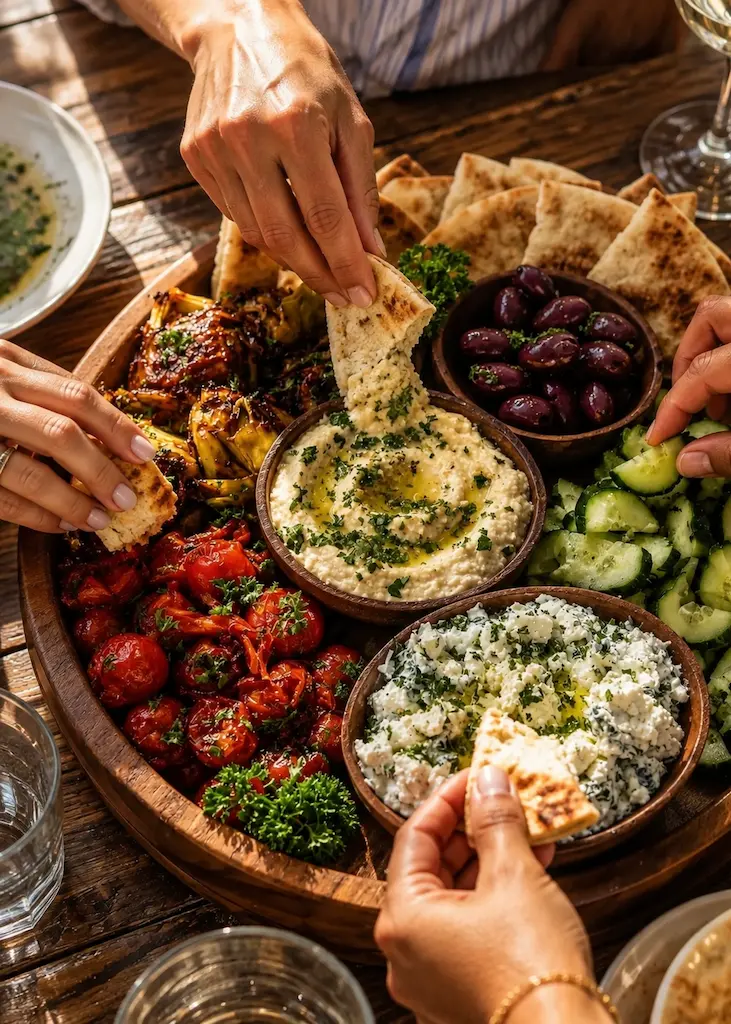
The art of sharing food begins with a small surrender of ownership. Bread is torn by hand, plates start migrating across the table, and the person who said they weren’t hungry somehow eats half the potatoes. Nobody quite remembers who ordered what, which is usually a sign that dinner is going very well.
The names change as we travel—tapas, cicchetti, aperitivo, apéro, mezze, happy hour—but the pleasure is familiar. A drink appears, something salty follows, then something creamy, crunchy, briny or warm. What was supposed to be a little something before dinner begins showing dangerous signs of becoming dinner.
It feels modern. It isn’t. Across the Mediterranean, cultures have spent centuries developing their own versions of the same irresistible idea: put a few things on the table, pour something to drink, and give people a reason to stay longer than they planned.
Spain: Tapas and the Art of One More
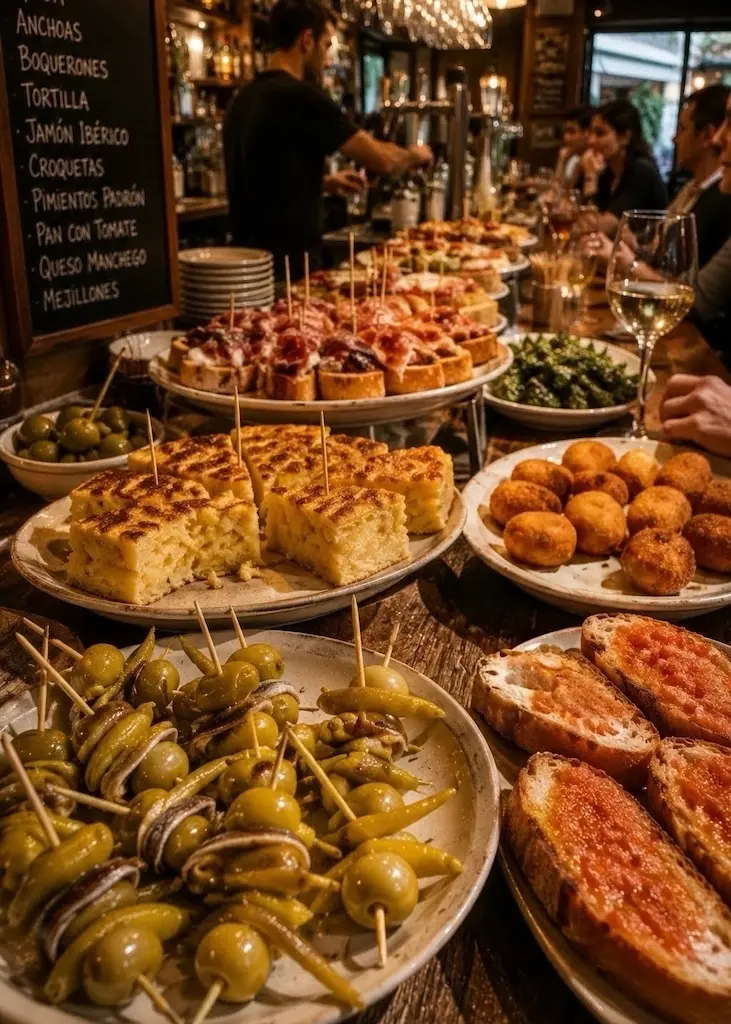
Spain takes the shared plate and makes staying in one place entirely optional. Tapas might begin with glossy olives and salted Marcona almonds, followed by a gilda—anchovy, olive and pickled pepper skewered into one salty, sharp, briny bite. Then perhaps pan con tomate, bread rubbed with ripe tomato and olive oil; garlicky mushrooms; croquetas; or a thick wedge of tortilla española. Even the origin of tapas refuses to behave neatly. The beloved story says a small piece of food once covered—or tapa, from tapar, “to cover”—a glass of wine to keep out dust or flies. Various versions give credit to various Spanish kings, which is usually a good indication that history has become more entertaining than reliable. What is certain is that the custom of accompanying drinks with small portions developed into something far more interesting than a snack. Tapas can mean one bite with one drink, several plates that accidentally become dinner, or an evening spent moving from bar to bar. This is the genius of ir de tapas: you don’t necessarily order everything, settle in and stay there. You eat something delicious, drink something, talk, move on and begin again somewhere else.
Venice: Cicchetti, an Ombra and Another Bacaro
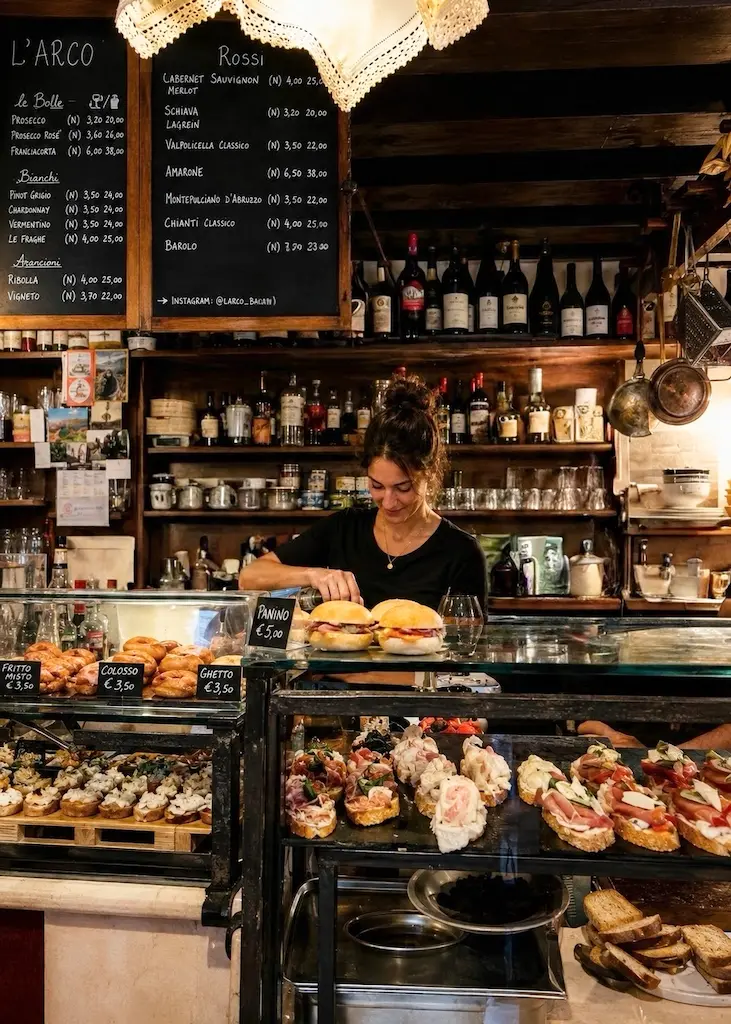
Venice has cicchetti, and they make almost suspiciously good sense in a city built for wandering. Step into a bacaro, one of Venice’s traditional little wine bars, and the counter might be crowded with crostini topped with creamy baccalà mantecato, artichokes, mushrooms, beans, grilled vegetables, cheeses, marinated seafood or whatever looks particularly good that day.
Beside them comes an ombra, the Venetian term for a small glass of wine. The charming explanation often repeated is that wine sellers once moved their stands through the shadow—ombra—of the Campanile in Piazza San Marco to keep the wine cool. Whether every detail of the story survives historical scrutiny matters less than the delightful fact that Venetians still ask for “a shadow” when they want a glass of wine.
Cicchetti are not trying to become a formal dinner. Have one or two, drink your ombra, then wander to another bacaro. Perhaps order something fried there. Perhaps another crostino. Perhaps another shadow. Venice has effectively constructed a snack culture around the principle that the next delicious thing is probably waiting across a bridge. This would be a problem if Venice didn’t have so many bridges.
Italy: Aperitivo and the Dinner Before Dinner
Elsewhere in Italy, the shared ritual slows down and acquires a name derived from the Latin aperire: to open. Aperitivo is meant to open the appetite before dinner, traditionally with something bitter or sparkling in the glass and enough little things to eat to awaken rather than satisfy hunger. At least, that is the theory. The table begins with olives glossy with olive oil and herbs, taralli that disappear almost unconsciously, squares of focaccia, marinated artichokes, grilled peppers and zucchini, cheese and little sandwiches. In northern Italy, the modern aperitivo tradition became entwined with drinks such as vermouth and later spritzes and other bittersweet combinations designed to sharpen the appetite. Salt makes you thirsty, bitterness wakes the palate and another olive seems harmless enough. Then another plate arrives. Aperitivo’s great achievement may be convincing perfectly intelligent adults that focaccia, cheese, olives, vegetables and several other little dishes somehow do not count as a meal. Dinner is still coming, everyone assures one another. Italy has turned this technicality into an art form.
Southern France: L’Apéro, Because Dinner Can Wait
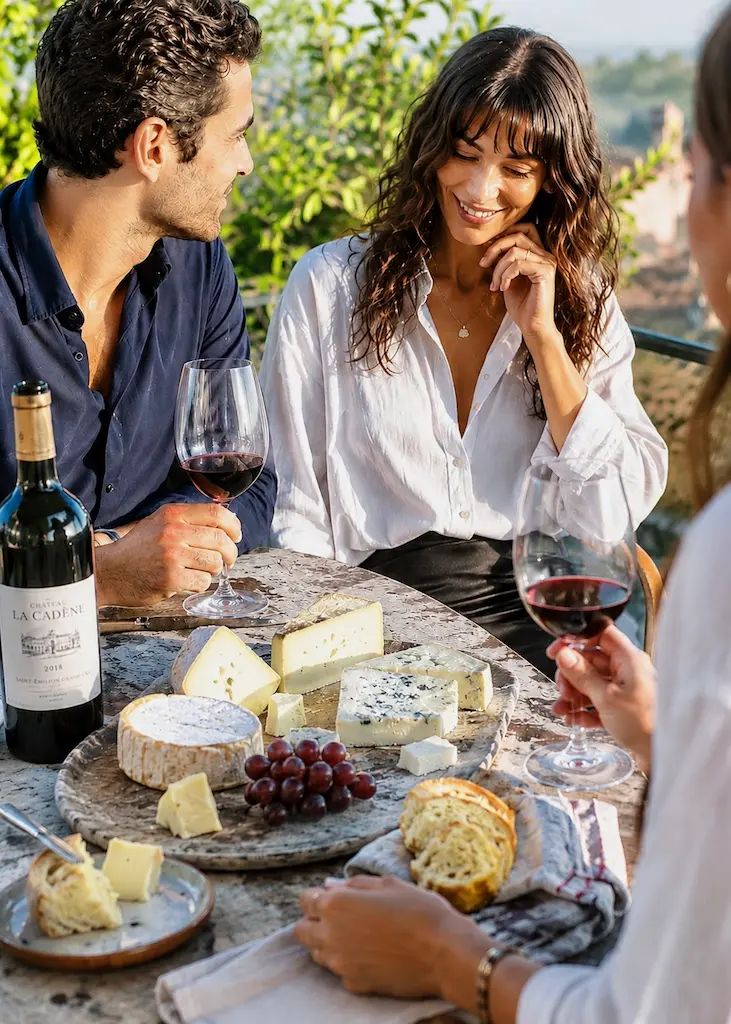
Cross into southern France and the moment becomes l’apéro, less a specific menu than a wonderfully protected piece of the day. Work has finished. Dinner has not begun. There is therefore only one sensible thing to do: eat and drink while waiting to eat and drink. In Provence, that might mean green and black olives, almonds—olives appear again, which by now should surprise absolutely no one; if the Mediterranean plate has a recurring guest star, the olive deserves top billing—tapenade spread generously over crusty bread, radishes with butter and sea salt, ripe tomatoes in summer, goat cheese or another local cheese, and perhaps a slice of pissaladière, the Niçoise onion tart traditionally punctuated with olives and anchovies. A glass of rosé, pastis or wine sits nearby, depending on where you are and what sort of afternoon has preceded it.
The flavors are wonderfully unapologetic. And then there is wine and cheese, a marriage so successful that the French have sensibly declined to improve upon it. The French response to waiting for dinner was apparently to create a smaller dinner before it, then insist that everyone relax because the real meal hasn’t started yet.
The Eastern Mediterranean Plate: Mezze Takes Over the Table
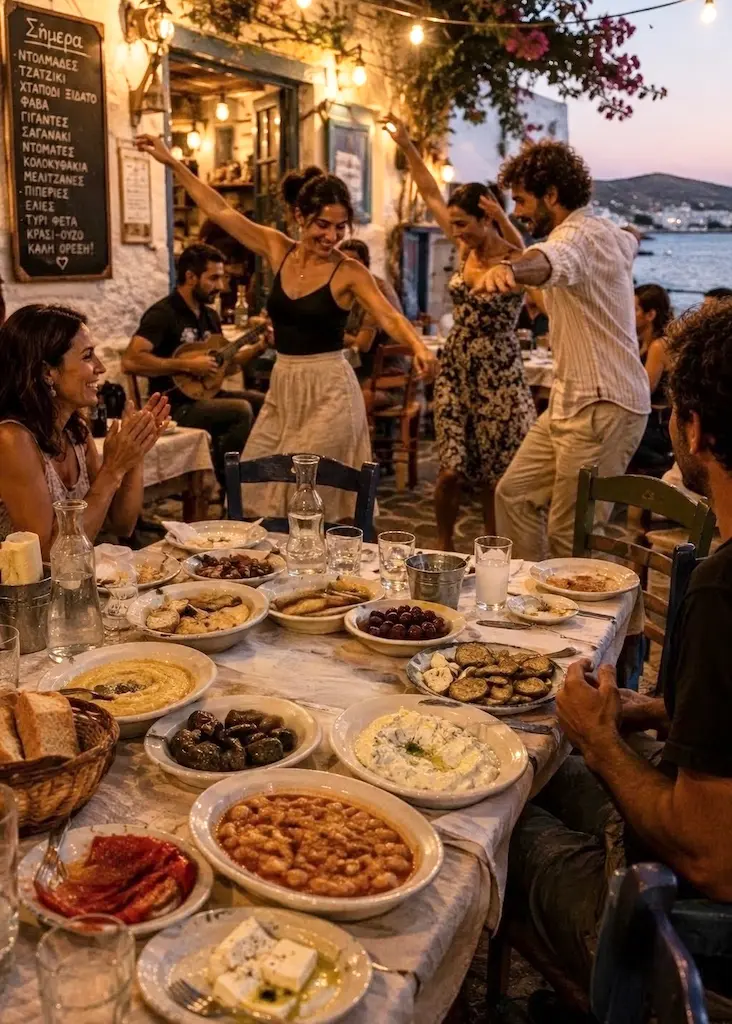
Travel east and the little plate stops being quite so little. Mezze is not one cuisine—Greek, Turkish, and neighboring eastern Mediterranean traditions have distinct dishes, histories and customs—but the tables often share an irresistible visual language: bowls, plates, breads, herbs and vegetables multiplying until the table itself becomes theoretical.
Warm bread is torn beside hummus. There may be smoky eggplant, labneh or thick yogurt scattered with herbs, stuffed vine leaves, roasted peppers, tomatoes and cucumbers, olives, beans and cheeses. A Greek table might add tzatziki, silky yellow fava, gigantes in tomato or fried zucchini; elsewhere muhammara brings roasted pepper and walnuts, while baba ghanoush delivers eggplant transformed by smoke, lemon and tahini. The pleasure is in contrast. Something cool after something charred. Something creamy against something crisp. Lemon cutting through olive oil. Herbs waking up yogurt. Bread performing the important structural work of transporting all of it to your mouth. And unlike the orderly progression of courses, mezze allows appetite to wander. A little hummus, half a stuffed vine leaf, another piece of bread, an olive, back to the eggplant, something you cannot quite identify but now require more of.
By now a pattern has emerged. Tapas encourages you to wander through a city. Cicchetti practically insists upon it. Aperitivo makes you question whether dinner is still necessary. Mezze covers the table so thoroughly that leaving becomes physically inconvenient. Surely we have exhausted humanity’s possible methods of eating before eating? Not quite. We haven’t reached sunny California.
California: Happy Hour Gets a Time Slot
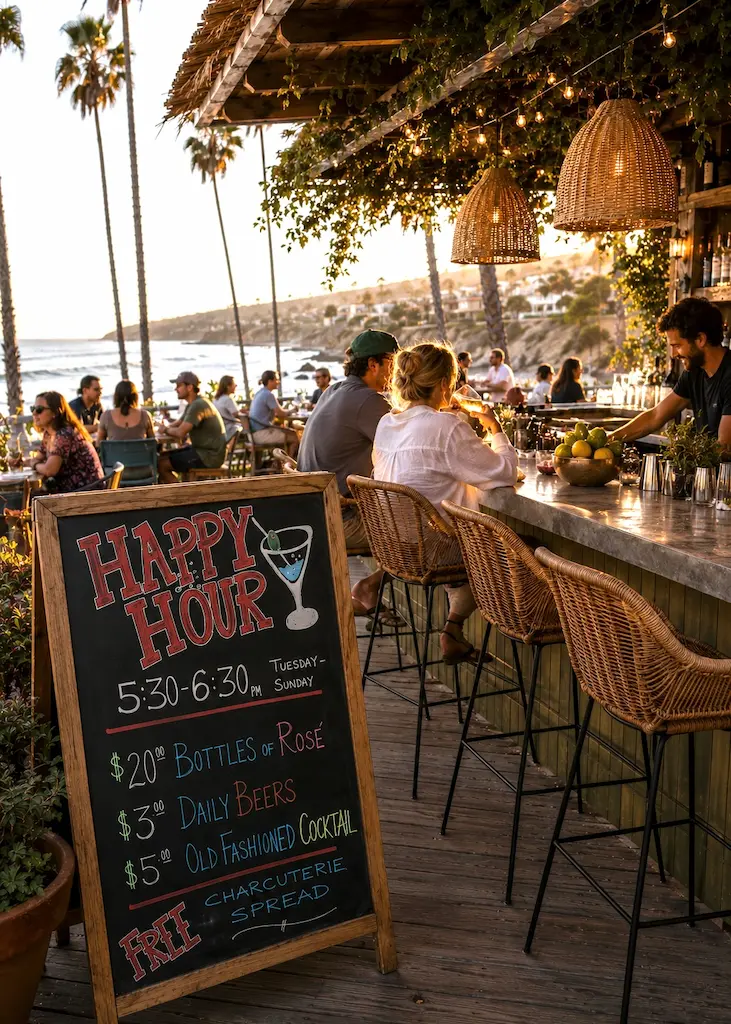
Eventually this ancient human instinct of gathering around food met American cocktail culture, generations of immigration, extraordinary produce, coastal weather and California’s peculiar ability to make almost anything appear healthier provided it happens outdoors. Welcome to happy hour. As though several thousand years of drinking with snacks had somehow not been happy enough, America added discounted prices.
Happy hour has its own American history and isn’t simply Mediterranean aperitivo with better marketing, but California proved unusually receptive to the idea. Italian, Spanish, Greek, French, Middle Eastern and other food traditions were already part of the state’s culinary landscape. Add local wine, citrus, avocados, artichokes, tomatoes, year-round vegetables, patios and a general suspicion that formal dining might be trying a little too hard, and the shared table practically arranged itself.
So somewhere between four and six—or three and seven, because apparently hour is now more of a philosophical concept—the plates begin arriving. Citrus-marinated olives. Warm flatbread beside white-bean dip. Grilled artichokes with lemon. Roasted cauliflower. Local cheese. Conservas and seafood. Oysters near the coast. A little pizza blistered from the oven. Eventually avocado appears, because California presumably has contractual obligations. You intended to have one drink and something small. The people beside you received the artichoke dip and now you need one too. Another round seems perfectly sensible because half the food has only just appeared. At some point somebody asks whether anyone still wants dinner.
And perhaps that is what traveling through all these tables reveals. The Greeks didn’t hand Spain a recipe for tapas, Cleopatra did not invent aperitivo, and Venice certainly did not send California instructions for happy hour. What survived wasn’t one menu. It was a particularly good idea: put something delicious between people and give them a reason to stay.
Several thousand years later, we changed the food, traded the reclining couch for the bar stool and moved the whole operation onto terraces and patios. California added a discount and gave it an official time slot. Different coast, different plate, same excellent reluctance to go home.
This is the Caliterranean™ way of life. It’s happy hour somewhere in the world. Pass the plate.
CONTINUE EXPLORING
Inspired by this story? The story continues. Here is your next read Coffee and Small Delights Around the World →