The Forgotten Story Growing Among the Ruins of Ancient Rome
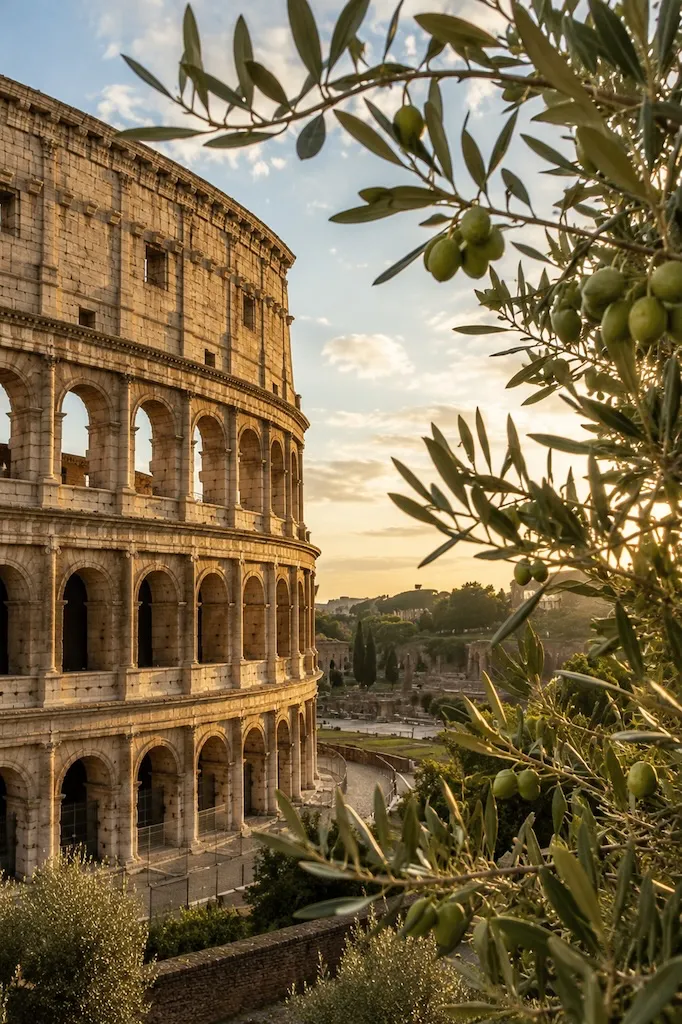
Most people leave the Colosseum talking about gladiators. Some imagine roaring crowds. Others picture Russell Crowe striding into the arena. History, after all, has done an excellent job of turning the amphitheater into the world’s most famous stage. But there is another story quietly growing around the Colosseum. Quite literally.
Look beyond the ancient stones and you’ll discover olive trees. Not one or two, but 189 of them. Suddenly, the Colosseum begins to look less like a monument frozen in time and more like part of a living landscape. The greatest surprise isn’t hidden inside the arena at all. It’s growing just outside its walls.
To modern visitors, olive oil belongs in the kitchen. To the Romans, it belonged almost everywhere. It flavored food, fueled lamps after sunset, softened skin, and became part of daily rituals from morning until night. It was one of the Empire’s most valuable commodities—not because it was luxurious, but because it was useful. Even the gladiators likely knew its value. Olive oil was part of their body care routine before training and combat, helping keep their skin conditioned after hours of practice. Gladiators may have looked fierce, but they were also surprisingly well moisturized. It’s one of the few details Russell Crowe chose not to dramatize.
Today, the archaeological park surrounding the Colosseum, the Roman Forum, and the Palatine Hill is home to these 189 olive trees. Some have stood near the Arch of Titus for generations, while younger trees continue a tradition stretching back to antiquity. Ancient Roman writers, including Pliny the Elder in his Naturalis Historia, described three plants that symbolized Roman civilization itself: the fig tree, the vine, and the olive.
The olive was never merely decoration. It represented peace, prosperity, nourishment, and one of the Mediterranean’s greatest everyday luxuries. Olive oil was one of the Empire’s most valuable commodities — not because it was luxurious, but because it was useful. As noted in a recent Euronews report, olive oil accompanied the development of Roman civilization throughout the Empire.
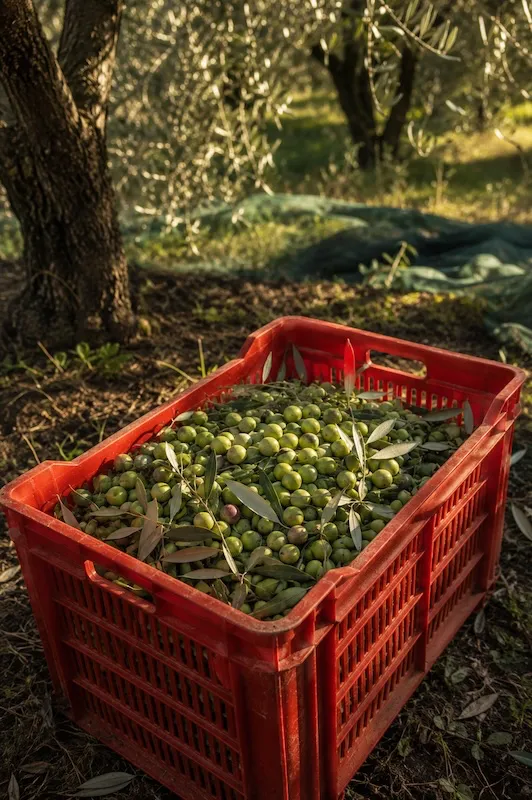
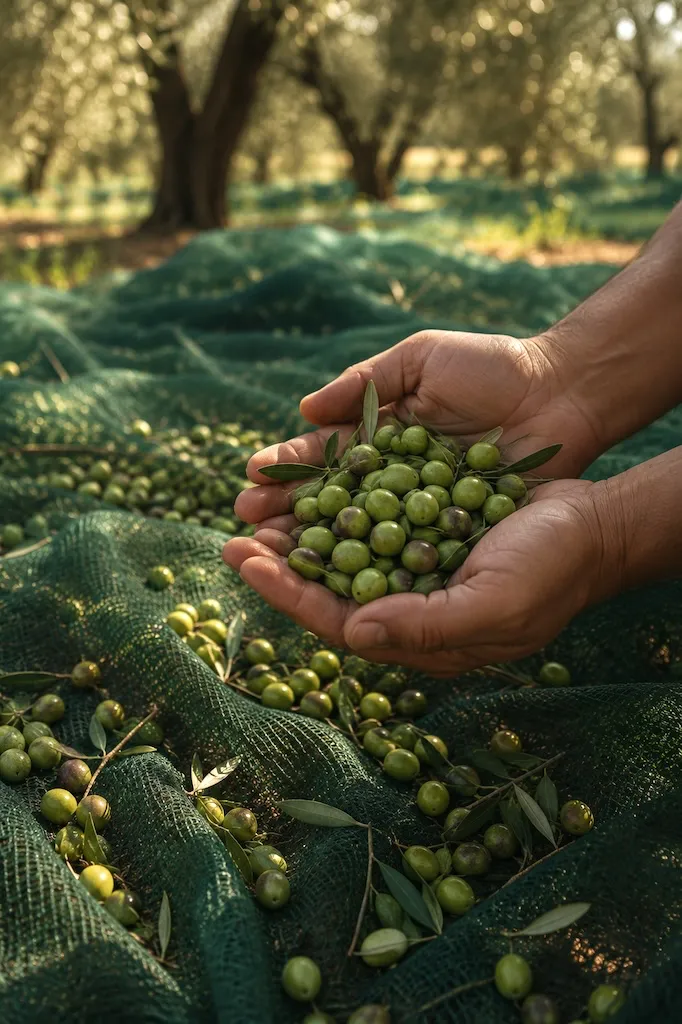
Each autumn, something remarkable happens inside one of the world’s most famous archaeological sites. Workers harvest the olives growing among the ruins, and the fruit is pressed into extra virgin olive oil. The oil, known as Palatinum, is produced from the trees surrounding the Colosseum and the Roman Forum, reconnecting modern Rome with one of its oldest traditions.
It is a beautiful reminder that the Roman Empire wasn’t built on marble alone. It was also built on farms, vineyards, bakeries, markets, and olive groves—the ordinary places that allowed an extraordinary civilization to exist.
The Mediterranean has always understood something we occasionally forget. Great civilizations are sustained by ordinary things. Fresh bread. Olive oil. Wine. The shade of an old tree on a warm afternoon. History remembers emperors. Everyday life remembers lunch.
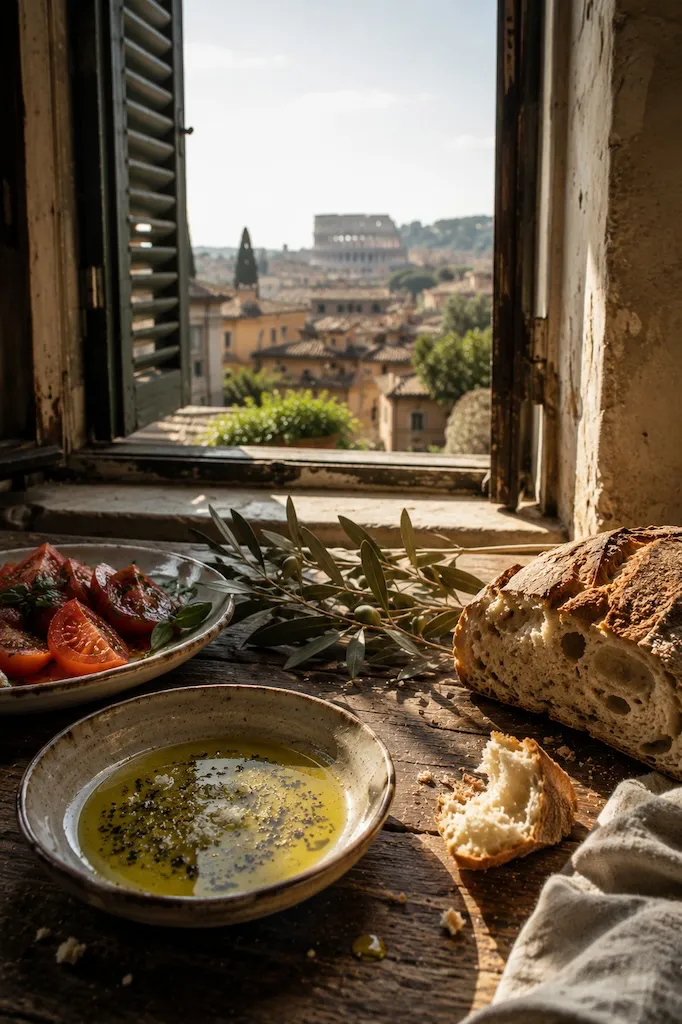
Perhaps that is why olive oil continues to occupy such an important place in Italian life. It is not treated as a luxury reserved for special occasions. It appears at breakfast with toasted bread, over tomatoes at lunch, drizzled across grilled vegetables, and finished over pasta before dinner. It is less a condiment than a daily companion—so ordinary that it is easy to forget it has been part of this landscape for thousands of years.
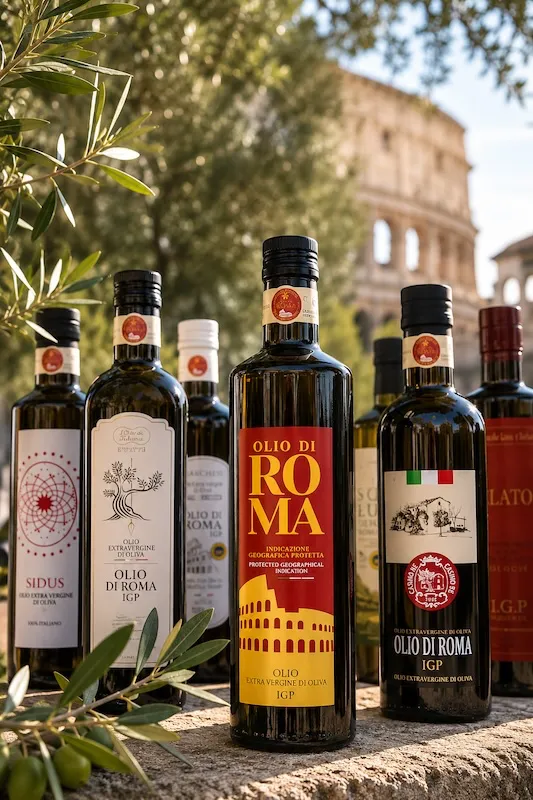
The story does not end with the harvest. Behind the project is the Olio di Roma PGI Consortium, a non-profit organization established to protect, promote, and preserve the quality of extra virgin olive oil produced across the provinces of Viterbo, Rieti, Rome, Frosinone, and Latina. Rather than representing a single estate, the consortium brings together growers and producers who share a common goal: safeguarding one of the region’s oldest agricultural traditions while ensuring that every bottle carrying the Olio di Roma PGI designation meets strict standards of origin and quality.
That commitment is gradually becoming part of the city’s cultural identity. Bottles are now appearing in museum bookshops across Rome, with plans to expand into other historic sites such as the Ara Pacis and Palazzo Braschi. It is an unusual souvenir, perhaps, but also a fitting one. Few products tell Rome’s story quite so naturally.
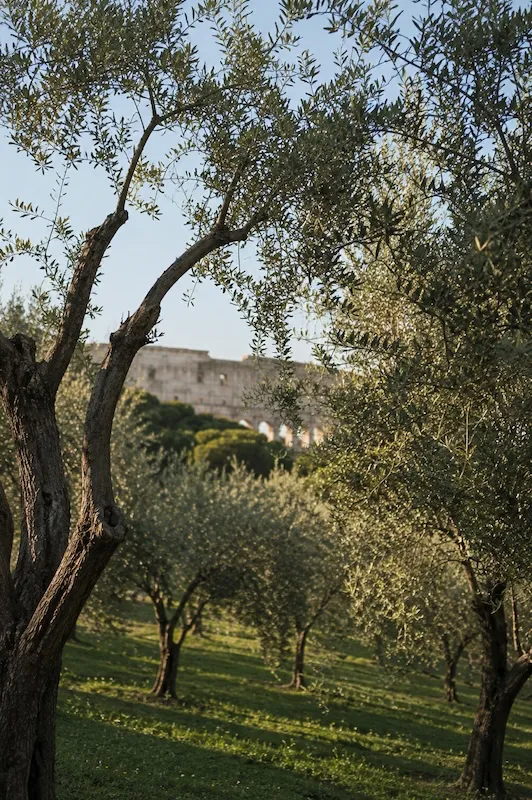
The olive tree asks very little of us. It grows slowly, survives harsh summers, and often lives for centuries. It reminds us that the best things rarely happen quickly. That is the Colosseum’s quietest lesson. Not every Roman treasure is carved from stone. Some continue to grow, season after season, just beyond the arena walls. And once you notice the olive trees, it becomes surprisingly difficult to think of the Colosseum as simply a monument. It becomes what it has quietly been all along—a place where history is still alive.
CONTINUE EXPLORING
Inspired by this story? Continue your journey with The California – Mediterranean Pantry →