The Evolution of Italian Coffee Makers
There are expensive coffee machines with touch screens, Wi-Fi, Bluetooth, and enough buttons to make you wonder if they also launch satellites. And then there’s the Bialetti. It sits quietly on the stove, asks for nothing more than water, ground coffee, and a little patience, and has been doing exactly the same job since 1933.
If coffee makers had personalities, the Bialetti would be that charming Italian grandfather who insists there was never a reason to complicate things in the first place. Its story began when Italian engineer Alfonso Bialetti introduced the Moka Express, an octagonal aluminum coffee maker that allowed people to brew rich, concentrated coffee at home. It wasn’t technically espresso—that requires much higher pressure—but it came wonderfully close, bringing the spirit of the Italian coffee bar into ordinary kitchens.
More than ninety years later, the design is still instantly recognizable. That says something. In a world where appliances seem to reinvent themselves every other Tuesday, the Bialetti has barely changed. It still has its distinctive eight sides. It still bubbles gently on the stovetop. It still announces that coffee is ready with its cheerful little gurgle, a sound that has probably saved more sleepy mornings than any alarm clock ever could.
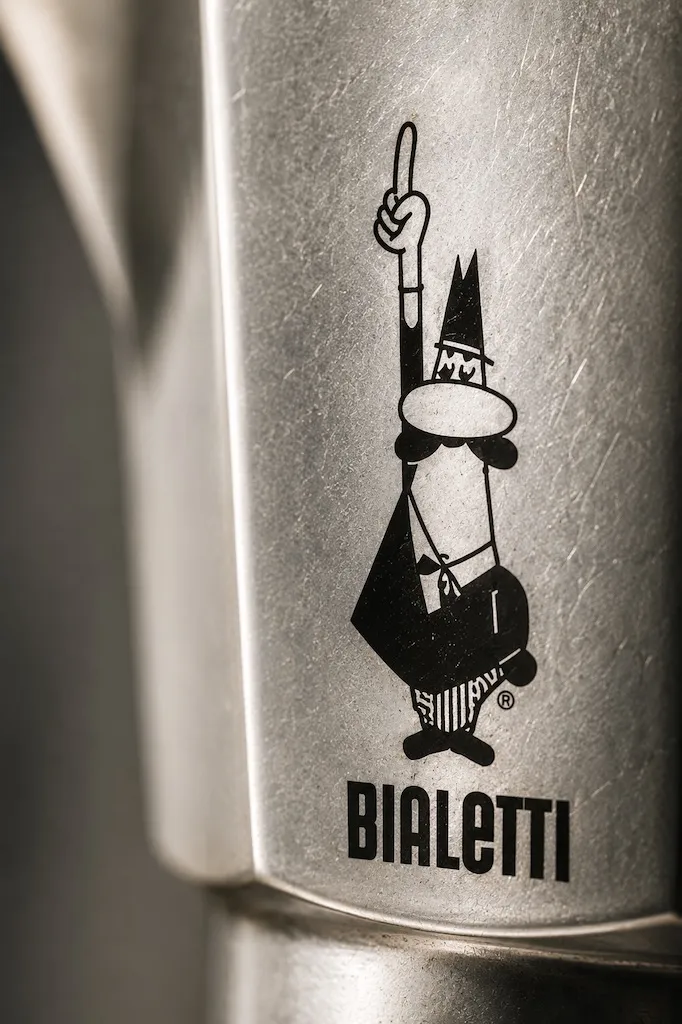
And then there’s the little man. Officially, he’s called L’omino con i baffi—the little man with the mustache. Created in the 1950s by illustrator Paul Campani, he has become one of Italy’s most beloved advertising characters. His raised finger seems permanently caught between ordering another espresso and making an important point, although nobody is quite sure which. Either way, he has quietly become a permanent guest in millions of kitchens around the world. Not bad for a fellow who’s only a few centimeters tall.
The Moka Express became more than a coffee maker because it represented something uniquely Italian. It proved that everyday objects didn’t have to be purely practical. They could be useful, beautifully designed, and affordable at the same time. In fact, the little aluminum pot became such an icon of industrial design that today it is part of the permanent collection of New York’s Museum of Modern Art (MoMA). Not many kitchen appliances can say they’ve made it into one of the world’s most famous museums.
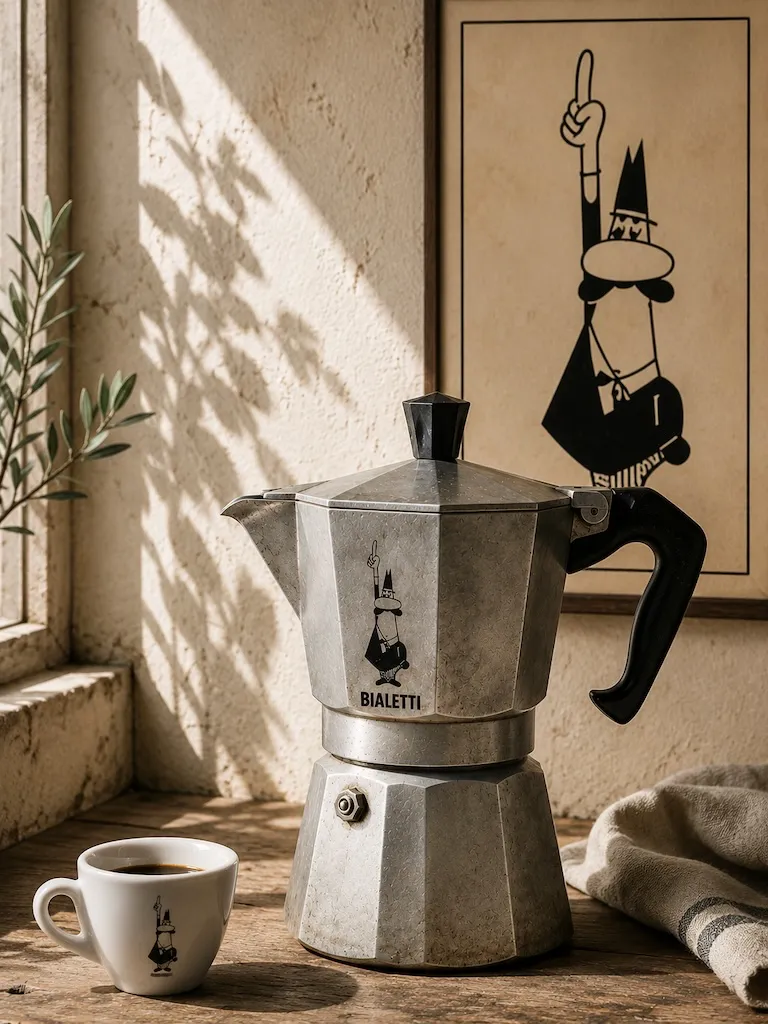
Of course, Italians rarely leave a good idea alone. Over the decades, coffee makers became sleeker, shinier, and more sophisticated. Espresso machines moved from cafés into homes. Stainless steel replaced aluminum. Steam gave way to pumps. Suddenly making coffee involved pressure gauges, milk frothers, digital displays, and enough accessories to fill an entire kitchen drawer. Yet somehow, the little Bialetti never disappeared. Perhaps because it asks so little of us. No expensive filters. No software updates. No instruction manual the size of a novel. No annual maintenance appointments. Just coffee, water, and a flame.
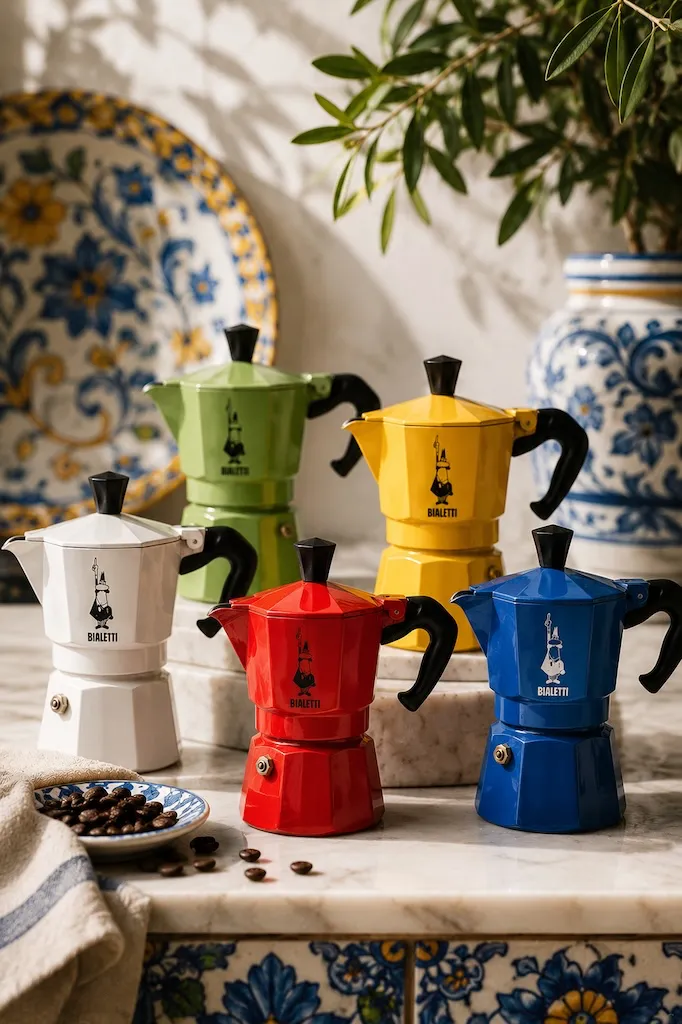
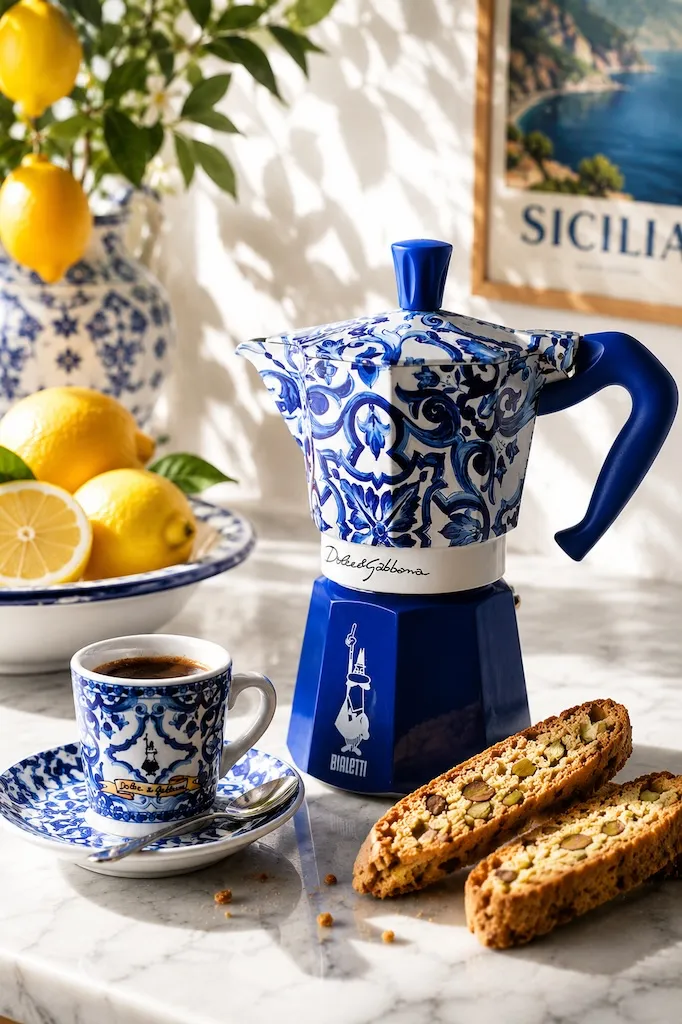
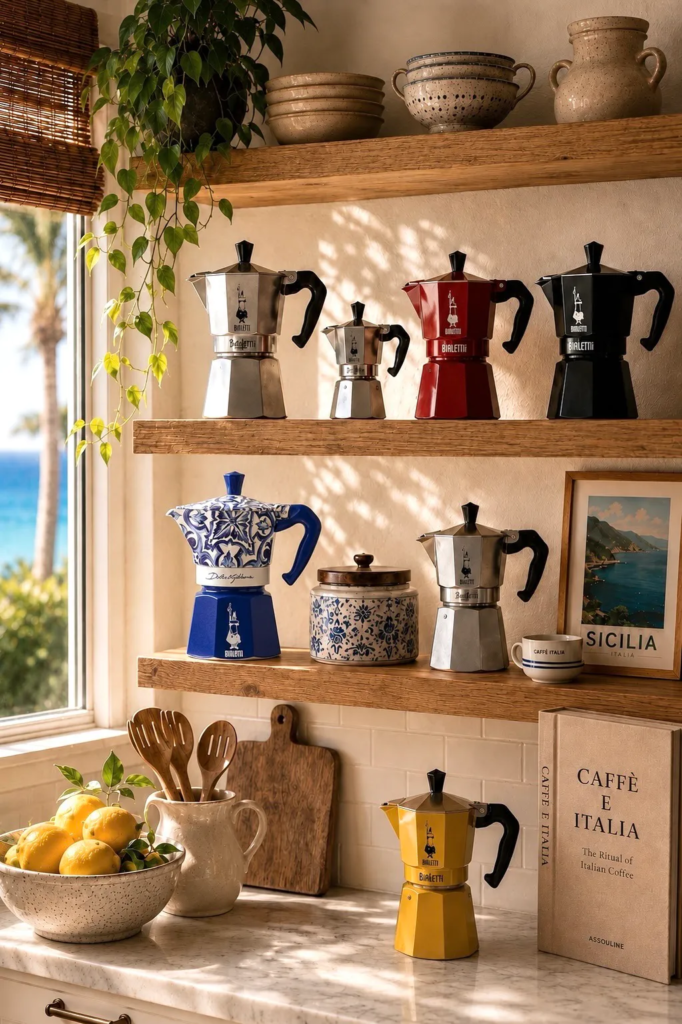
It may be one of the few household relationships that gets easier with age. Then, just when it seemed the humble Moka pot had reached icon status, Italian fashion stepped into the kitchen. In 2018, SMEG and Dolce & Gabbana introduced the Sicily Is My Love collection, transforming everyday kitchen appliances into colorful celebrations of Sicilian craftsmanship. Soon afterward came equally joyful collaborations with Bialetti itself. Suddenly the familiar little coffee maker appeared dressed in brilliant blues and whites, vibrant reds, sunny yellows, lemons, flowers, and traditional Sicilian patterns inspired by hand-painted ceramics.
The tiny one-cup versions are especially irresistible. They’re practical, yes, but they’re also impossible to ignore. They look less like coffee makers and more like miniature works of art that just happen to brew an excellent morning coffee.
Some people collect watches. Others collect classic cars. There is a perfectly reasonable argument for collecting Bialettis. After all, few objects combine design, tradition, and daily pleasure so effortlessly. One day it’s the classic silver original. The next it’s a cheerful burst of Mediterranean color sitting proudly on the stove, making the same familiar coffee it always has. Perhaps that’s the real magic of Italian design. It doesn’t believe beautiful things should be reserved for special occasions. Beauty belongs in ordinary moments—in the first aroma of coffee filling the kitchen, in the comforting sound of water beginning to boil, and even in the simple satisfaction of placing a colorful little coffee maker back on the shelf until tomorrow morning.
For something made almost a century ago, the Bialetti remains remarkably modern. It still reminds us that sometimes the most memorable luxury isn’t the most expensive machine on the counter. It’s the one that makes you smile before you’ve even had your first sip.

Interested in the full history? Explore the fascinating evolution of the Moka Express on Bialetti’s official history page.