Beautiful Homes Often Need Less Than We Think
“Mediterranean minimalism” sounds calmer, but it is also a suspiciously tidy phrase. The Mediterranean is not one culture or one architecture. What many of its homes share is not a look, but a logic: work with the climate, use what is available and do not waste labor on something that serves no purpose.
Traditional restraint was therefore less a philosophy than a practical agreement with reality. Long before buildings depended on mechanical systems, comfort was built into the structure itself. Orientation, thick walls, courtyards, shutters and the arrangement of rooms helped manage heat; limewash reflected strong light, while stone and earth provided thermal mass. Windows were positioned to admit air, shaded spaces allowed daily life to move with the temperature, and built-in ledges or niches reduced the need for additional furniture. These houses were not empty because emptiness was chic. They were edited because materials, money and human effort were valuable.
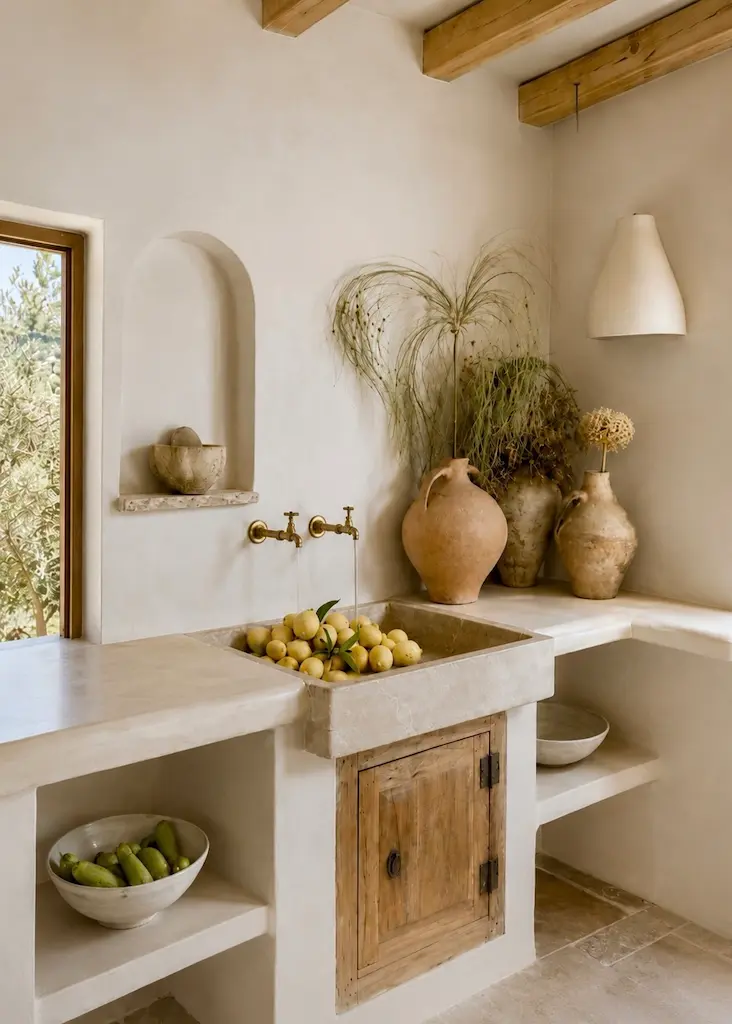
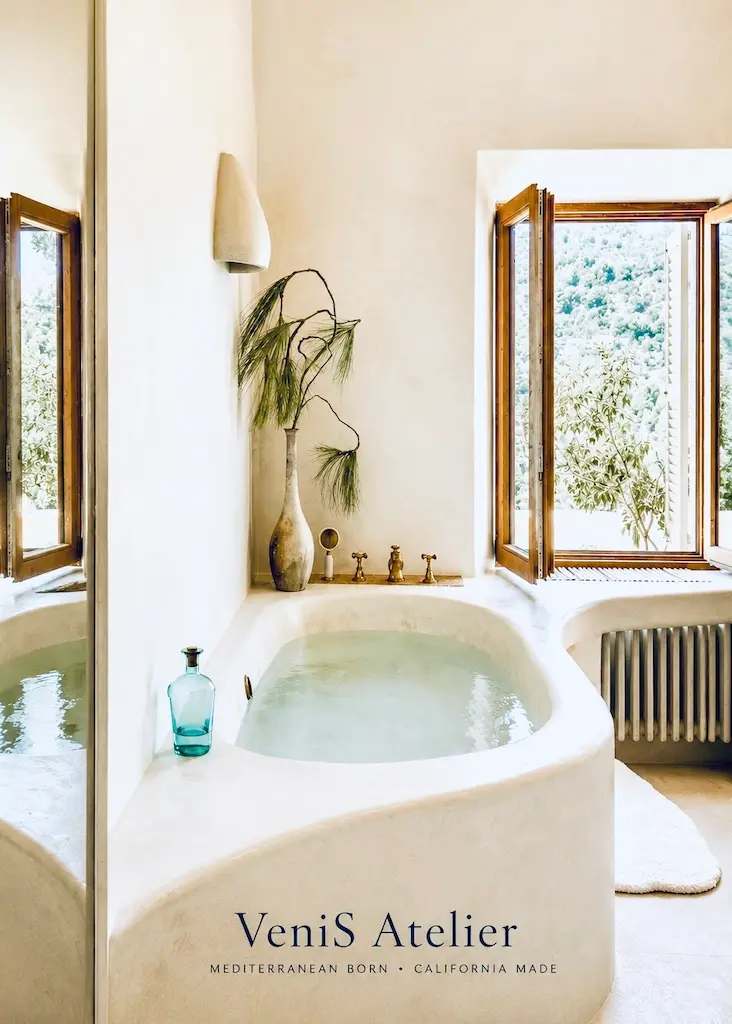
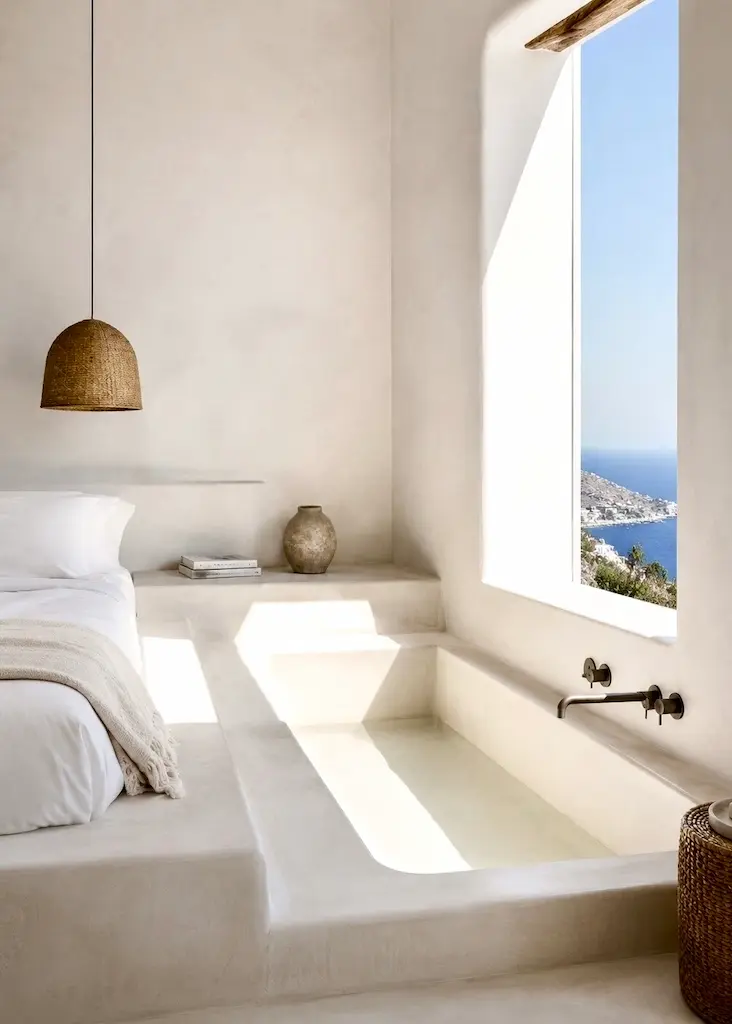
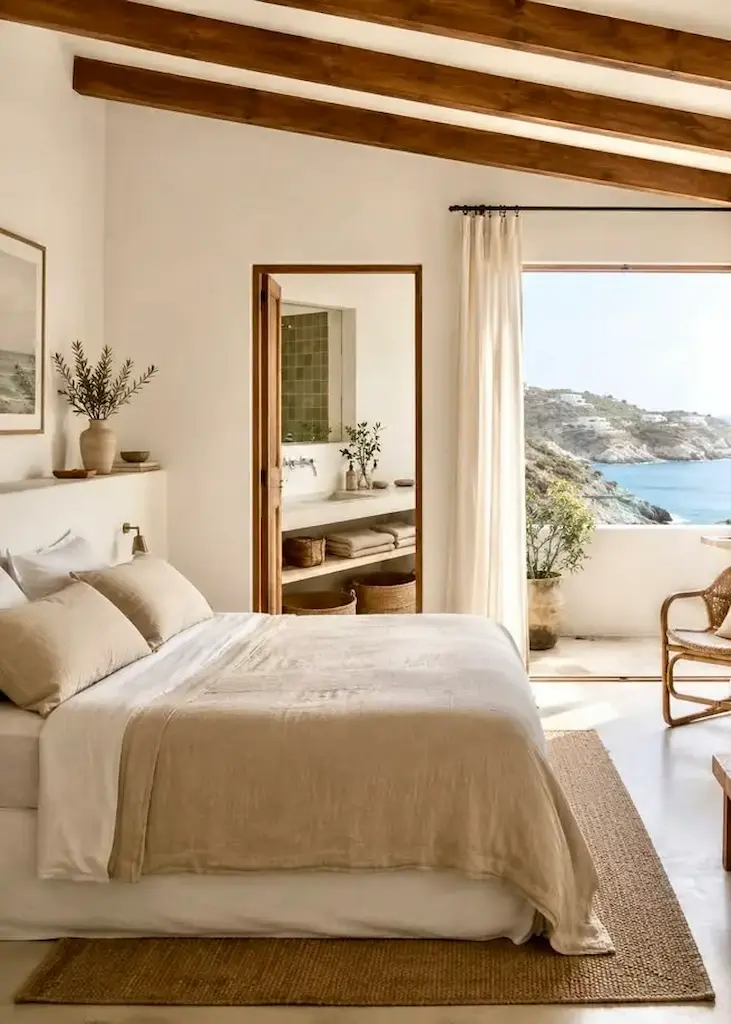
That same logic can be brought into contemporary rooms without turning the home into a historical reproduction. A bathtub can be formed directly from cement, a kitchen sink can become part of the counter, and shelves, benches and bedside ledges can emerge from the walls. The room needs fewer separate fixtures and furnishings because the architecture is already providing them.
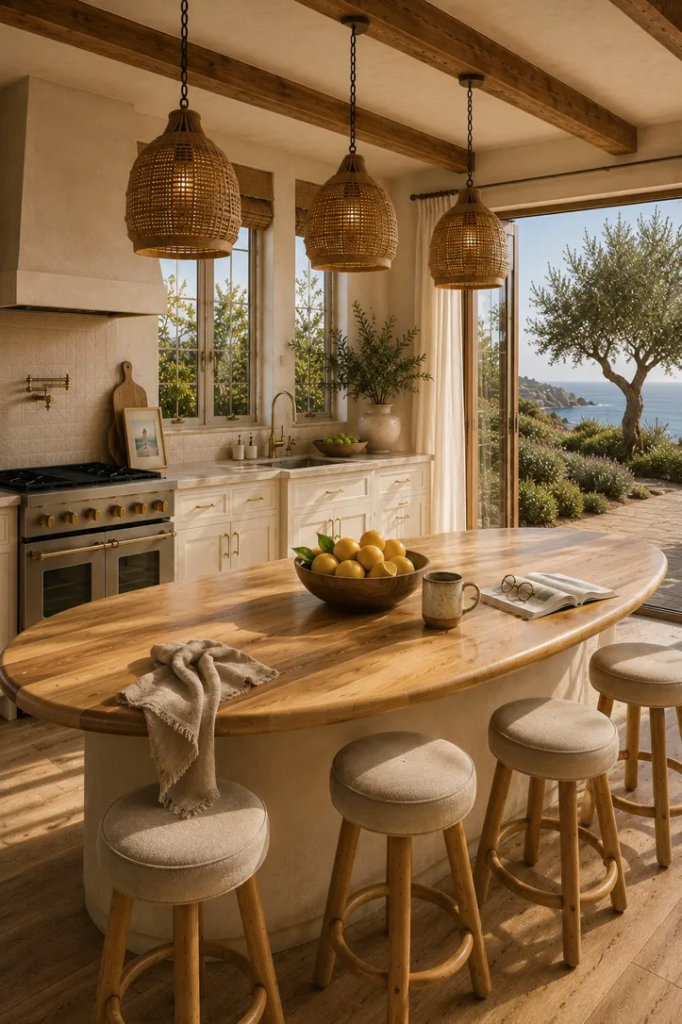
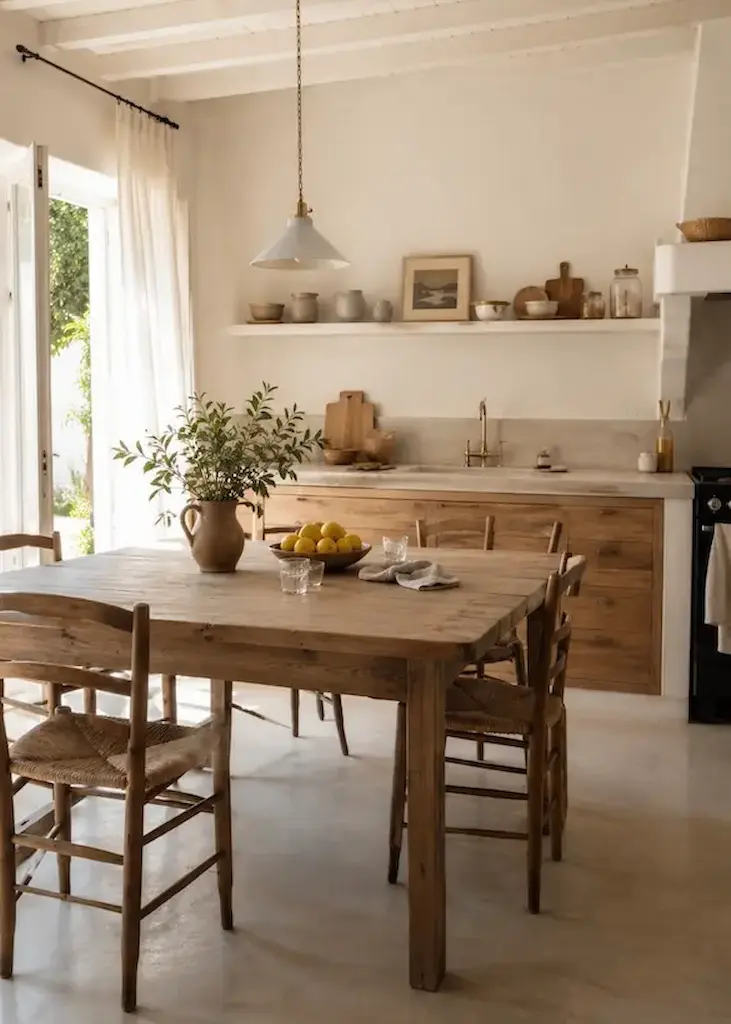
A beautiful kitchen does not begin with an appliance package, just as a bathroom does not become more convincing because its fittings have recognizable brand names. Appliances may be necessary; making them the room’s personality is optional. Cement, plaster, timber, stone and tile can provide depth through texture and workmanship alone. Their beauty comes from the way they are shaped, joined and used, not from how many products have been installed around them.
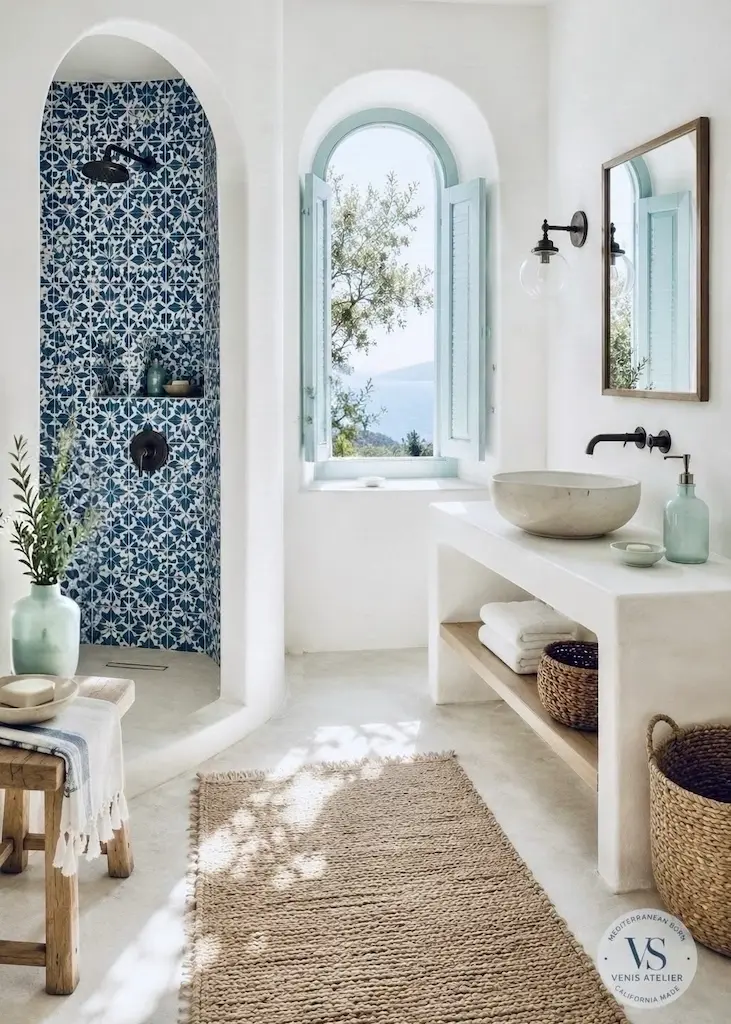
Restraint does not require refusing color or decoration either. A patterned shower can animate an otherwise quiet bathroom precisely because it is not competing with six other decorative ideas. Color might be concentrated across a tiled surface, around an opening or on an object used every day. Simplicity makes ornament more powerful; it does not require sending it into exile.
One reason these homes feel so welcoming is that they reveal the people who live there. A favorite ceramic bowl left on the kitchen counter, a linen tablecloth softened by years of washing or a wooden chair polished by countless family meals tells a richer story than perfectly arranged décor. These objects are not displayed to impress visitors. They are simply part of everyday life. Over time, they collect memories and give a home something no showroom can supply: evidence of living.
Objects are rarely perfect, but they are known. The bowl may have a small chip at the rim. A cupboard door sits slightly unevenly because the house has settled and, apparently, everyone else has decided to settle with it. Brass has lost its shine, while terracotta varies slightly from tile to tile. These details reveal time rather than disguising it, which is precisely what makes the rooms feel personal.
Many contemporary interiors are designed to look finished the moment the final cushion is placed. Mediterranean rooms often become more convincing gradually. Timber darkens where hands touch it. Stone records footsteps so subtly that we notice the warmth before we notice the wear. Linen grows softer, and pottery develops tiny marks from years of use. The home improves because life has happened there.
This gradual change is one reason natural materials carry so much visual weight. A perfectly uniform surface needs additional decoration to keep it from feeling flat, while plaster, wood, stone and woven fibers already contain variation. Light changes them throughout the day, revealing texture in the morning and softening it by evening. The room never looks exactly finished because it is never completely still.
Modern interiors also tend to encourage addition. More furniture. More accessories. More styling. Mediterranean homes quietly suggest the opposite. When fewer things compete for attention, natural light becomes more noticeable, the grain of wood appears richer and handmade pottery begins to feel sculptural. Even an ordinary linen towel hanging in the kitchen becomes part of the room’s character. The sunlight is doing more decorating than we usually give it credit for.
Mediterranean minimalism begins with subtraction, but not the severe kind. It does not ask us to live with as little as possible. It asks us to notice which things are earning their place. A room can contain books, baskets, ceramics, textiles, family photographs and the small disorder of daily life without feeling crowded. What it tends to avoid is the unnecessary.
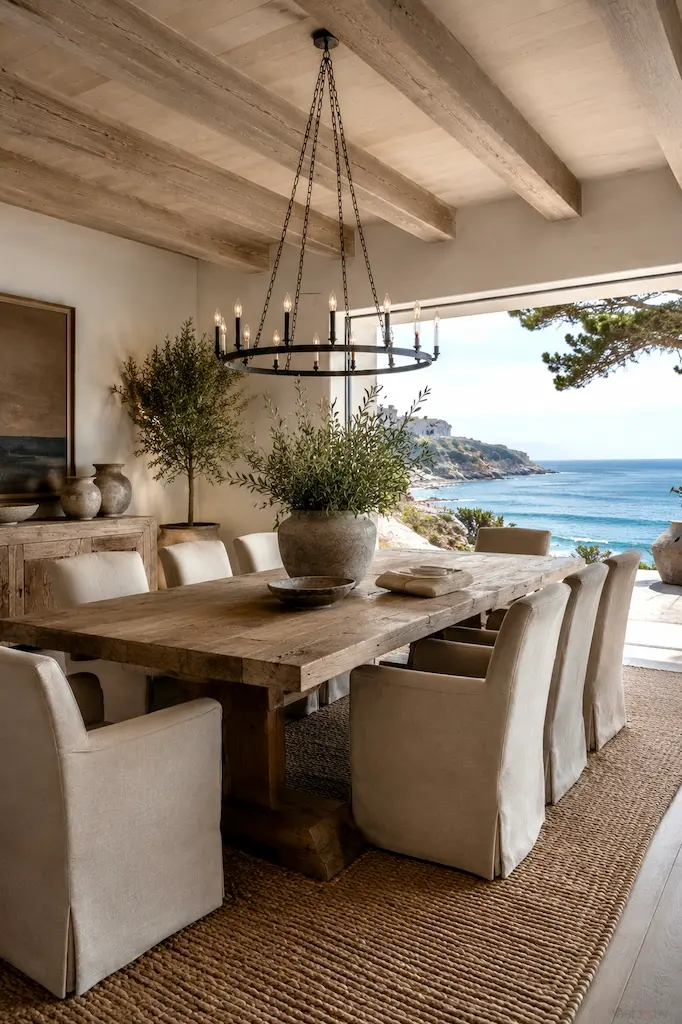
Enough does not mean bare. It means a dining table large enough for the people who regularly gather around it, rather than the imaginary twelve guests who have apparently been influencing furniture purchases for years. It means dishes that are pleasant to use, chairs that invite lingering and storage designed around what a household genuinely owns. An empty wall need not be treated as a must place something to fill the space, particularly when afternoon light already gives it something to say.
Designer’s Note
There is quiet confidence in this approach. A home with fewer competing elements makes ordinary materials more noticeable. Mediterranean minimalism is most convincing when it begins with editing rather than shopping. Before adding anything new, notice what is already working. A patch of sunlight, a well-proportioned table, a textured wall or a view toward the garden may deserve more attention than another decorative object.
Begin with the things used every day. Keep the ceramics you enjoy holding, the linens that improve after washing and the furniture that becomes more comfortable with age. Store what creates visual noise, but do not hide every sign of life. A kitchen should still look capable of preparing lunch.
Let the construction perform more of the work whenever possible. A cement sink, built-in bath, plastered ledge or recessed shelf can provide function without introducing another separate object into the room. This does not mean every surface must be made from the same material. It means considering whether the room already contains the answer before purchasing something to stand in front of it.
Let materials create the depth. Limewash, plaster, timber, terracotta, linen, stone, woven fibers and aged metal introduce quiet variations without requiring an elaborate color scheme. Their imperfections prevent neutral rooms from feeling flat or overly controlled. Pattern can still appear, but it becomes more effective when given a clear place rather than distributed across every available surface.
Choose furniture according to the way the room is actually lived in. One comfortable chair is more useful than two decorative ones, because you want balance or matching pair. An open table is more valuable than a surface permanently occupied by styling. Leave enough room for people to move, shutters to open and daylight to reach the floor.
Edit slowly. Removing everything at once can make a home feel staged in a different direction. Take away one unnecessary object, live with the room and notice what becomes more visible. Often, restraint reveals the quality that was already there.
The danger comes when this practical intelligence is reduced to white plaster, beige linen and several conveniently photogenic clay pots. “Mediterranean” then stops describing real places and begins functioning as a decorating mood—one from which weather, work, clutter and actual Mediterranean people have been carefully removed. But the beauty of enough is not a palette, a product category or another carefully assembled shopping list.
Above all, do not aim for emptiness. Aim for belonging. A Mediterranean home feels calm not because it contains very little, but because very little feels out of place.
CONTINUE EXPLORING
Inspired by this story? Continue your journey with Caliterranean Homes: The Intelligence of Yacht Design, Brought Ashore →