When Surf Culture Became Fashion

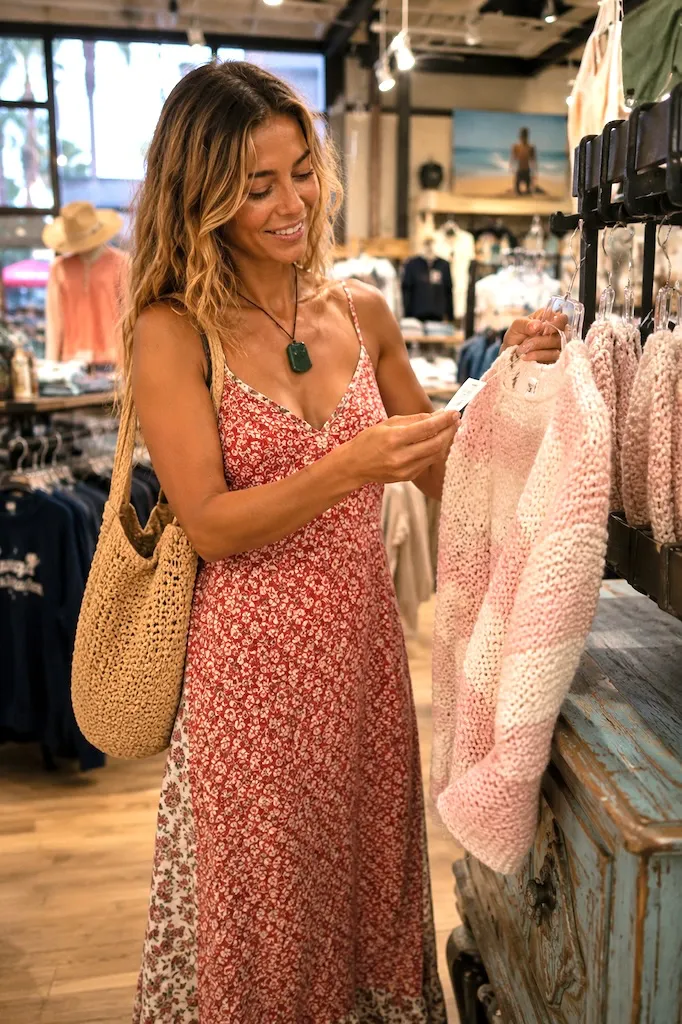
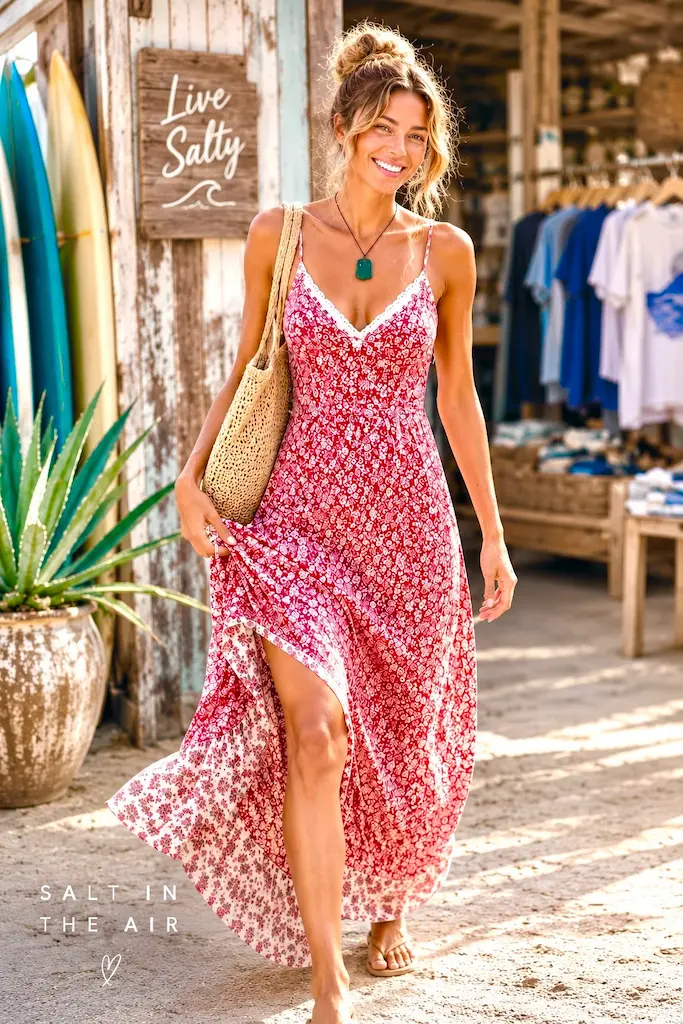
It has become surprisingly easy to look like a surfer without ever setting foot on a surfboard. Walk into almost any luxury boutique in summer and you’ll find oversized linen shirts, weathered knits, raffia totes, striped sweaters, rope sandals, washed cotton, and beach towels folded with museum-like precision. Somewhere nearby, there may even be a surfboard. It is unlikely to smell of saltwater. It is even less likely to have wax on it.
Fashion has spent decades perfecting the appearance of a life that began with people who couldn’t have cared less about appearances. The original surf wardrobe was assembled for one simple reason: the ocean has little interest in style. Board shorts needed to dry quickly. Sweatshirts had to warm you after sunset. T-shirts faded because they lived in the sun, not because someone in Milan carefully selected the exact shade of washed blue. Flip-flops were practical. Salt in your hair wasn’t a product. It was simply Tuesday.
Nobody dressed to look like a surfer. They dressed because they were one. Perhaps that’s precisely why the rest of the world became fascinated.
Authenticity has always been fashion’s greatest challenge. It can recreate almost anything—a silhouette, a color, even the appearance of age—but it struggles to manufacture the quiet confidence of people who have nothing to prove. Surfers carried that confidence naturally. Their days were shaped by tides rather than appointments. They left parties early because dawn promised better waves. Weather forecasts mattered more than stock prices. Looking relaxed wasn’t the goal. It was simply the side effect of living differently.
Long before Paris discovered surfing, California had already done the practical work. In 1958, a small company called Sundek began making board shorts designed for life in the water, not life on magazine covers. Bright nylon fabrics replaced heavy cotton, and eventually the rainbow stripe stitched across the back became one of surfing’s most recognizable details. It wasn’t intended as a fashion statement. It simply became one.
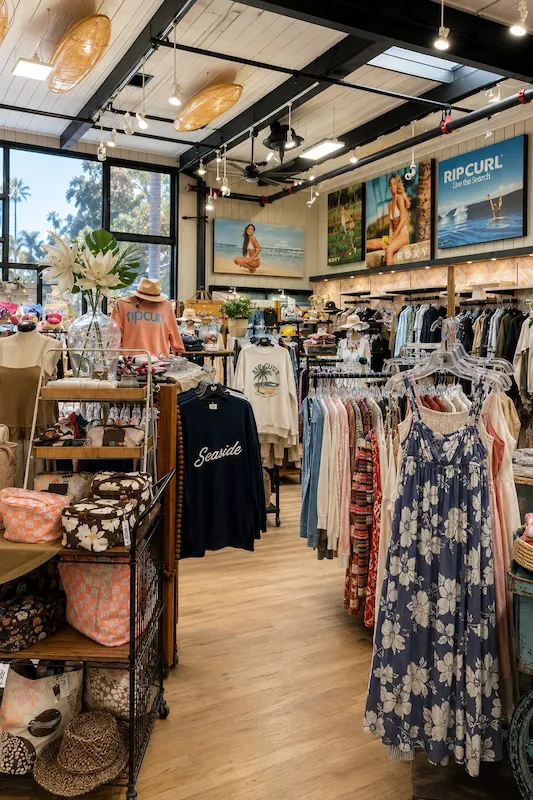
That happens more often than we think. The clothes we admire usually begin as solutions before they become symbols. Blue jeans were workwear. Tennis shoes belonged on tennis courts. Breton stripes identified French sailors long before they reached fashion editorials. Surfwear followed the same current, drifting quietly from California beaches into wardrobes around the world.
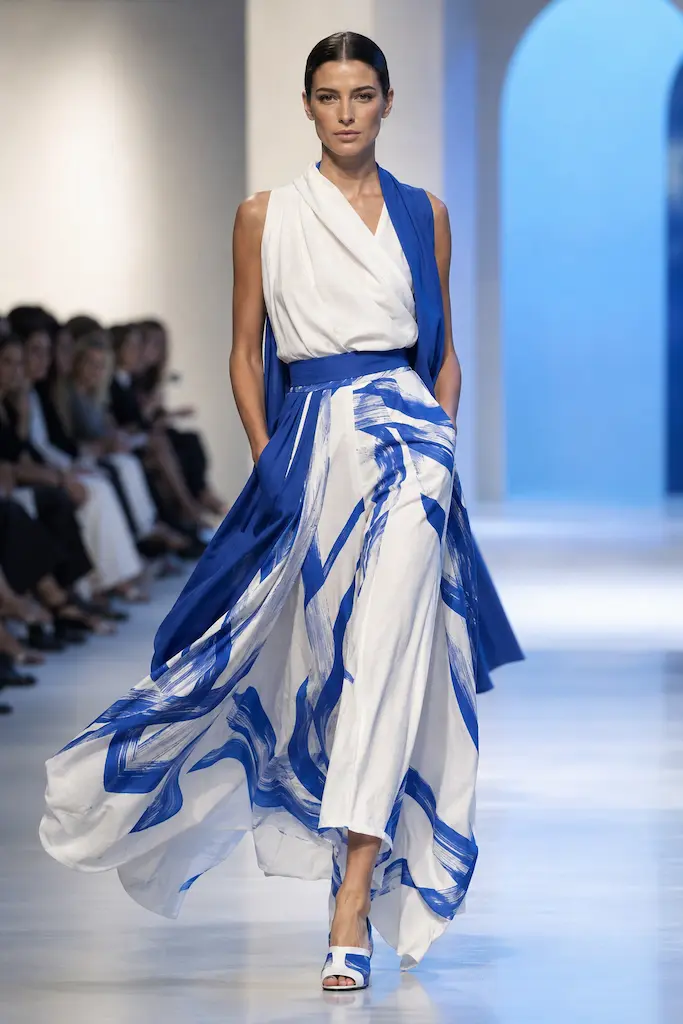
Luxury fashion eventually noticed what surfers had accidentally created. Not clothing. A feeling. Karl Lagerfeld was among the first to recognize it. Chanel’s Spring/Summer 1991 collection borrowed the language of surf culture, bringing boards and beach silhouettes onto the runway without losing the elegance of the house. Years later, Chanel photographed campaigns in Biarritz and even introduced surfboards that looked almost too beautiful to enter the ocean. They belonged somewhere between a gallery and a beach house. The irony wasn’t lost on anyone who actually surfed.
A surfboard designed to spend its life leaning against a limestone wall has rather different ambitions than one expected to survive an afternoon at Trestles.
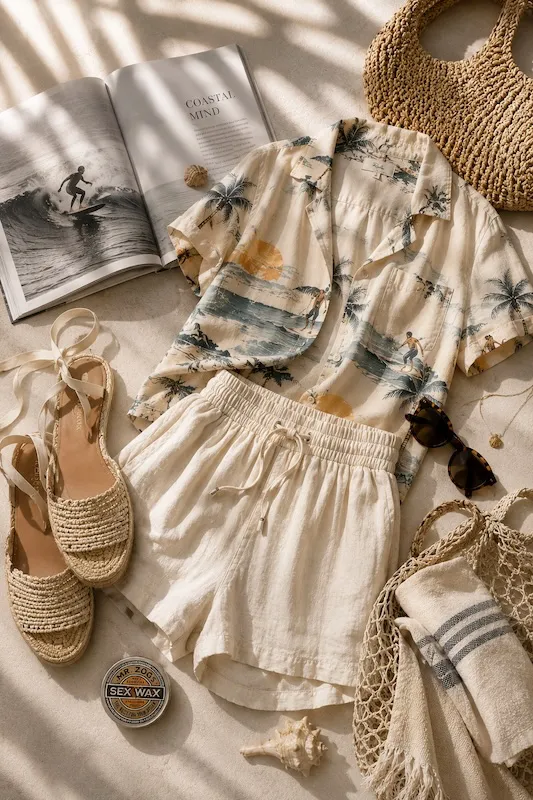
Other fashion houses soon joined the tide. Dior refined beachwear into polished resort collections where crisp whites, striped knits, woven baskets, and relaxed tailoring suggested long days beside the sea. Saint Laurent embraced California’s particular version of coastal cool—sun-bleached, understated, quietly rebellious. Across the industry, rope details appeared on sandals, raffia became a summer essential, oversized beach shirts returned each season, and the humble surf sweater quietly evolved into luxury knitwear.
None of these collections were really about surfing. They were about everything surrounding it. The first coffee before sunrise while checking the swell. Sand still caught between the pages of yesterday’s novel. A wetsuit drying over a fence. Friends who judge the day by wind direction rather than traffic reports. The comforting knowledge that tomorrow offers another chance. Fashion wasn’t selling waves. It was selling the possibility that life might slow down enough for you to notice them.


There is something quietly amusing about the whole transformation. A luxury boutique can now assemble an impeccable “surfer’s wardrobe” for the price of several excellent surfboards. Meanwhile, many lifelong surfers continue wearing the same faded sweatshirt they’ve owned for ten years because, quite frankly, it’s comfortable. Simplicity has become surprisingly expensive.
Yet perhaps that says less about fashion than it does about what people are searching for. The appeal of surf culture has never been athleticism alone. Most of us aren’t dreaming about paddling into six-foot waves before breakfast. We are dreaming about a life where there is enough room to decide, on a perfectly ordinary Tuesday, that the ocean deserves our attention more than our inbox.
That dream feels strangely familiar on both sides of the world. Along the California coast and across the Mediterranean, the wardrobe follows the lifestyle rather than leading it. Linen softens after years of sea air. Cotton fades honestly beneath the sun. Espadrilles collect dust from village streets as easily as boardwalks. A knitted sweater waits patiently for the evening breeze. The pieces are different, yet the philosophy remains the same.
Clothes exist to support the day. The day does not exist to support the clothes. Perhaps that is why surf style continues to resonate far beyond California. It isn’t really about surfing at all. It is about making room for weather, light, seasons, and moments that refuse to fit neatly into a calendar. It is about believing that the best part of the day might still be waiting just beyond the horizon.
Fashion can recreate the wardrobe of a surfer. It cannot recreate the feeling of catching the last wave before sunset. That still requires an ocean, a board, and perhaps just enough optimism to paddle out one more time.