A Fabric That Improves With Time
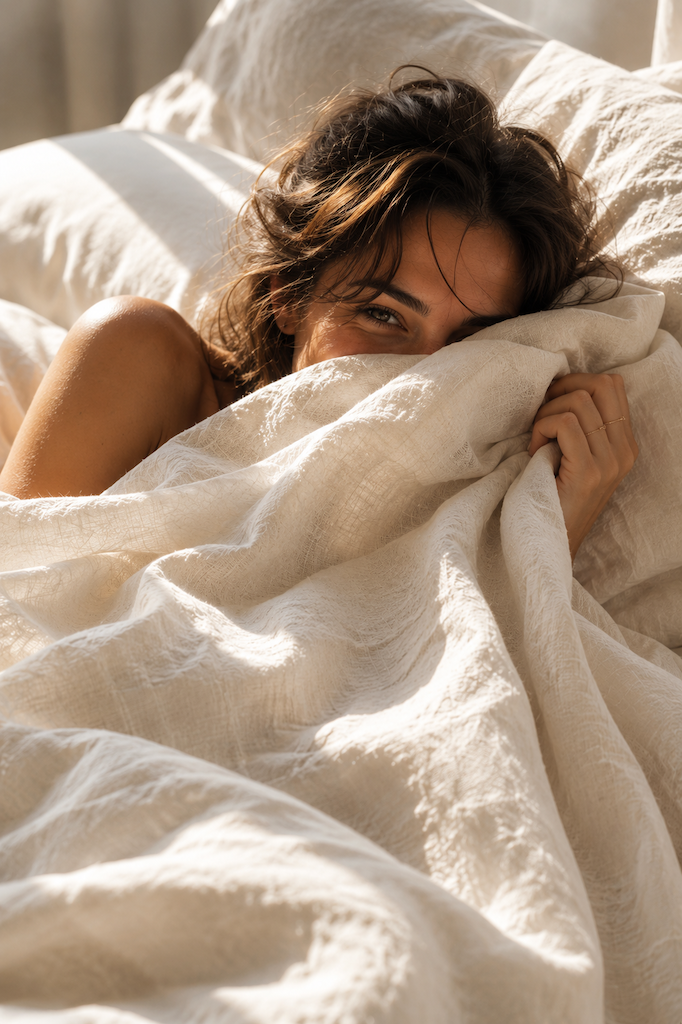
The first thing we notice each morning rarely comes from our eyes. Before we’ve opened the curtains, checked the weather, or reached for the coffee, our skin has already made its first decision about the day. A cool pillowcase beneath a tired cheek. A blanket folded back in the middle of the night. It’s remarkable how little attention we give to something we experience every single day.
We spend months choosing flooring, debating paint colors, and comparing sofas, yet the material we touch for nearly a third of our lives often becomes an afterthought. Linen has never asked to be the center of attention. It simply has a habit of becoming the fabric people return to once they’ve lived with it. That relationship began long before modern bedrooms.
Linen is woven from the fibers of the flax plant, one of the oldest cultivated crops in the world. Long before cotton filled wardrobes and bedrooms, civilizations across the Mediterranean relied on linen to stay comfortable through long, hot summers. Its natural fibers breathe exceptionally well, drawing moisture away from the skin and releasing it just as quickly, which is why linen feels cool on warm nights without ever feeling damp. Yet it performs another quiet miracle: when temperatures fall, it provides gentle warmth without becoming heavy. Few natural fabrics move so effortlessly between seasons.
Linen is also remarkably durable. While many fabrics slowly lose their softness or strength, linen does the opposite. Its fibers become softer with every wash while remaining exceptionally strong, which is why well-made linen bedding can last for decades. Owners often discover that their oldest linen is also their favorite—not because it still looks new, but because it no longer does.
That may explain why linen has never been interested in perfection. For thousands of years, it has quietly ignored our obsession with crisp edges and flawless finishes. Those gentle creases aren’t flaws to be corrected; they’re evidence that someone slept well, lingered over breakfast, opened the windows, or took an afternoon nap instead of worrying about presentation. Linen doesn’t look lived in despite its wrinkles. It looks better because of them.
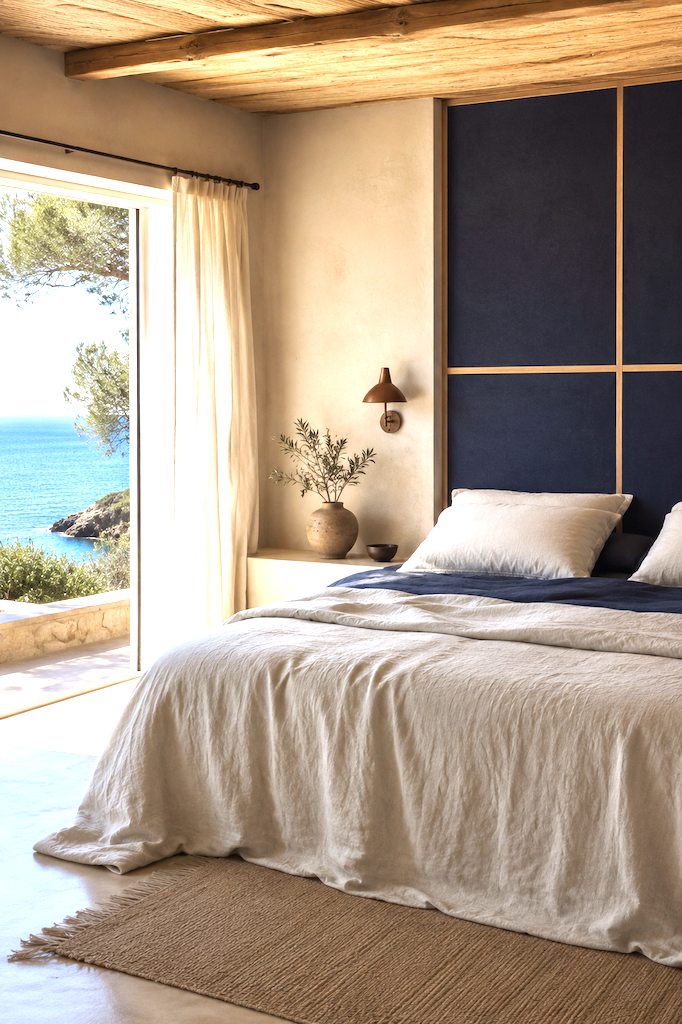

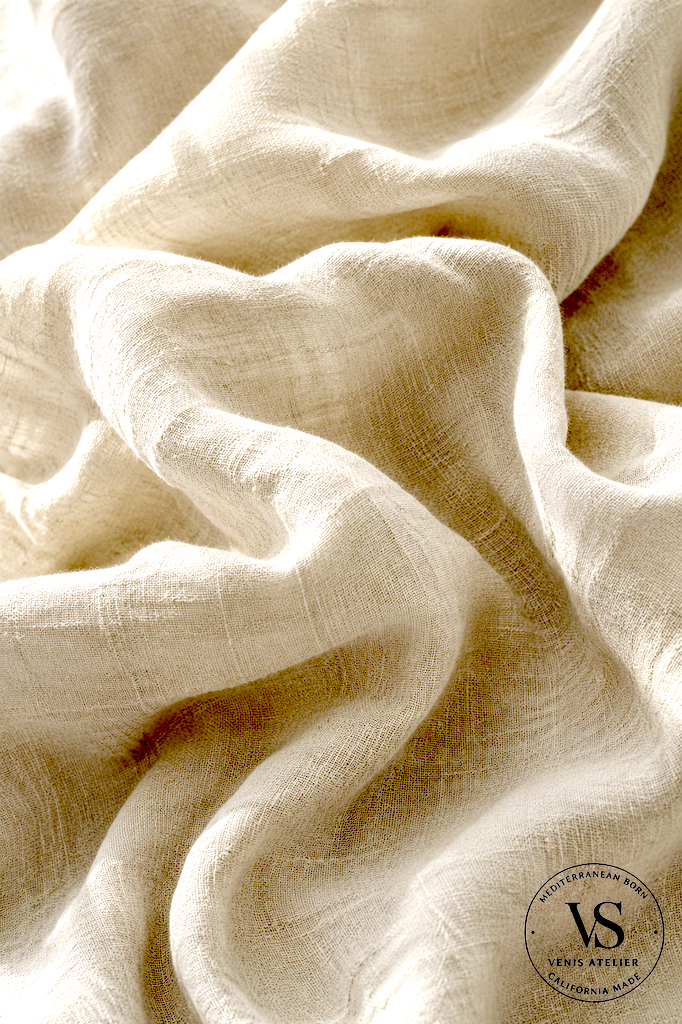
Linen has another quality that’s harder to describe but immediately recognizable. It changes the light. Unlike glossy fabrics that reflect sunlight, linen softens it, giving a room the hazy glow so often associated with coastal homes. Designers often call this texture. In reality, it’s atmosphere. A simple linen curtain can transform a room more than another decorative object ever could.
That versatility explains why linen has remained relevant for thousands of years. The same fabric appears on beds, dining tables, summer wardrobes, and beach bags without ever feeling out of place. It is equally at home in a Mediterranean farmhouse, a California beach cottage, or a city apartment with a single open window. Few natural materials move so comfortably between fashion, interiors, and everyday life.
The more you live with linen, the less you notice it—and that’s probably the highest compliment any material can receive. It never competes for attention. It simply makes ordinary moments feel a little more comfortable, a little more relaxed, and a little more human. The cool sheet on a summer evening. Sunlight filtering through linen curtains. A shirt drying naturally on a clothesline. Bedding that has welcomed hundreds of peaceful nights. The best materials don’t simply decorate our homes. They quietly shape how those homes shape us.
Designer’s Note:
How to Choose Quality Linen Bedding
Not all linen bedding is created equal. A few details make a significant difference in how the fabric feels and performs over time.
Look for European flax linen.
French, Belgian, and Lithuanian flax are widely considered among the finest in the world thanks to ideal growing conditions and generations of craftsmanship.
Choose stone-washed linen.
Stone washing softens the fibers before the bedding reaches your home, creating the relaxed feel linen is known for from the very first night.
Focus on weight, not thread count.
Unlike cotton, linen is not measured by thread count. Quality is often indicated by fabric weight, typically measured in GSM (grams per square meter). Around 160–190 GSM offers an excellent balance of softness, durability, and breathability.
Expect wrinkles.
The relaxed texture is part of linen’s charm. A perfectly pressed linen bed often loses the effortless beauty that makes the material special.
Invest in natural colors.
Soft whites, sand, oat, sea-glass blue, sage, and warm stone tones allow linen’s texture to become the focal point.
Know that linen improves with age.
One of linen’s greatest luxuries is that it becomes softer and more beautiful over time. Unlike many fabrics, it often feels better after years of use than it did when first purchased.
CONTINUE EXPLORING
Inspired by this story? Continue your journey with Why Linen Became the Fabric of Slow Living →