Modern Greek Interior Design
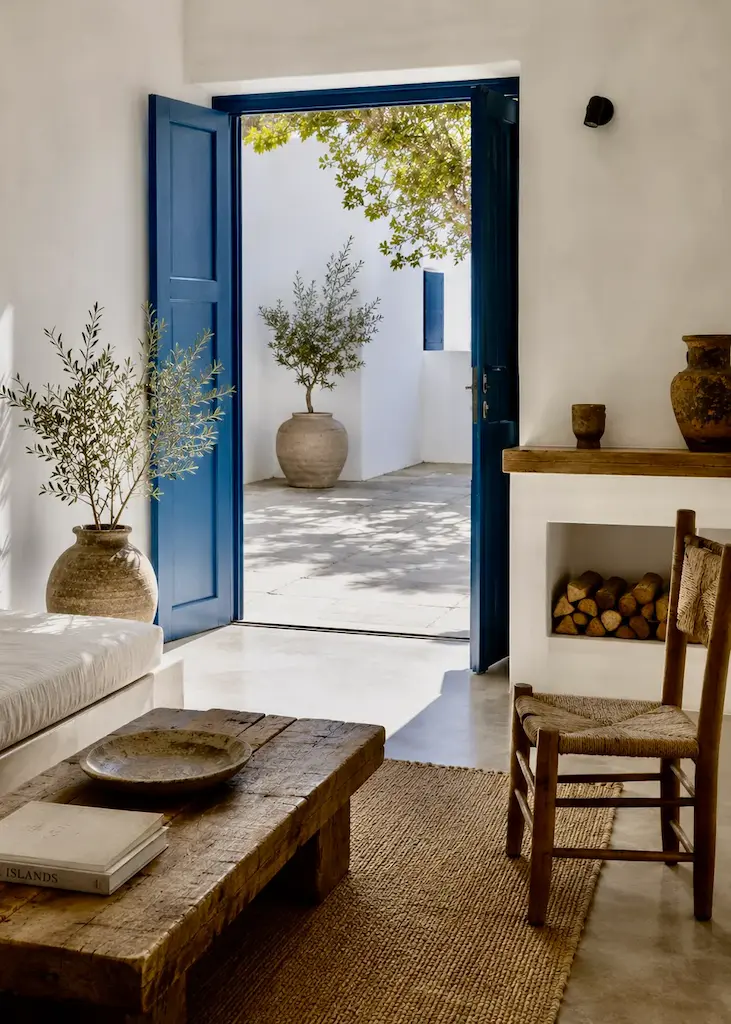
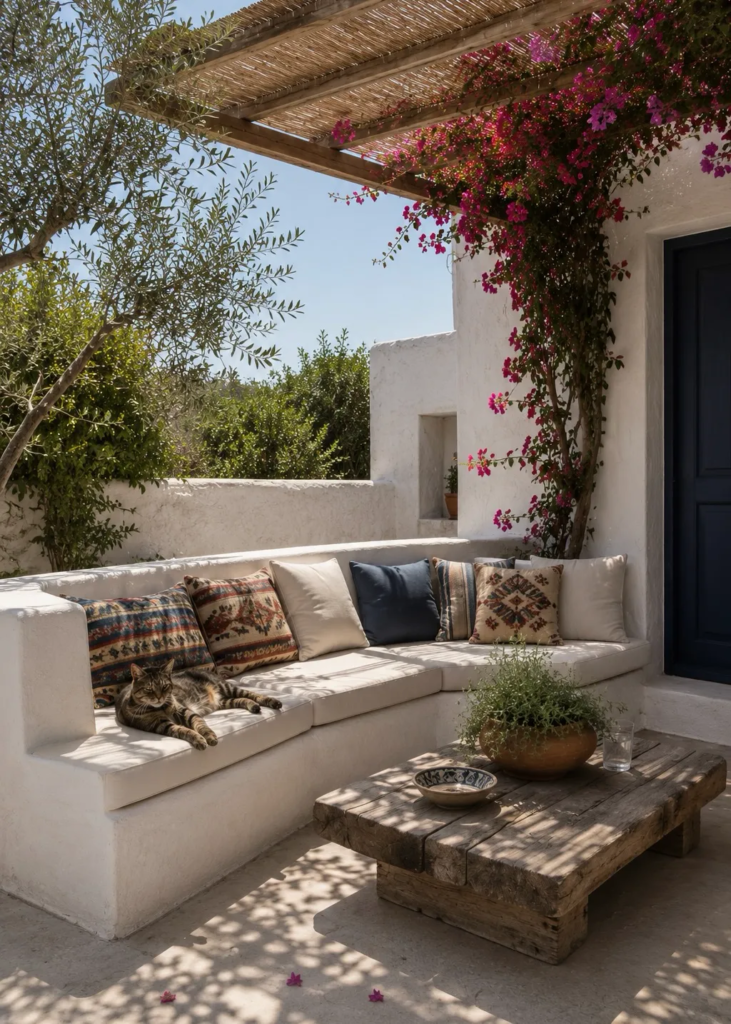
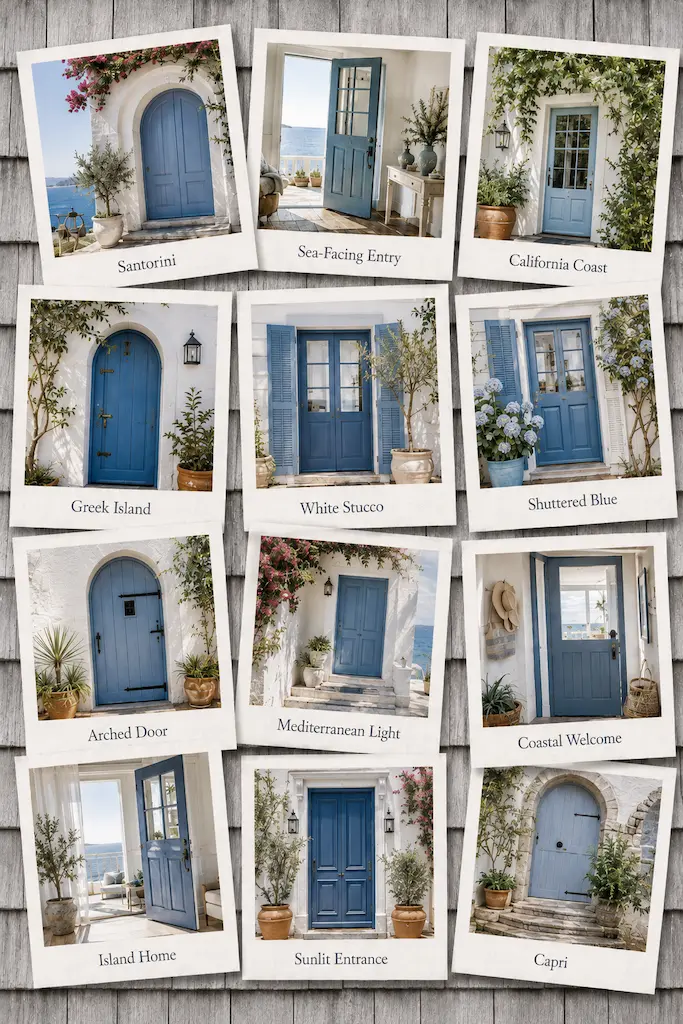
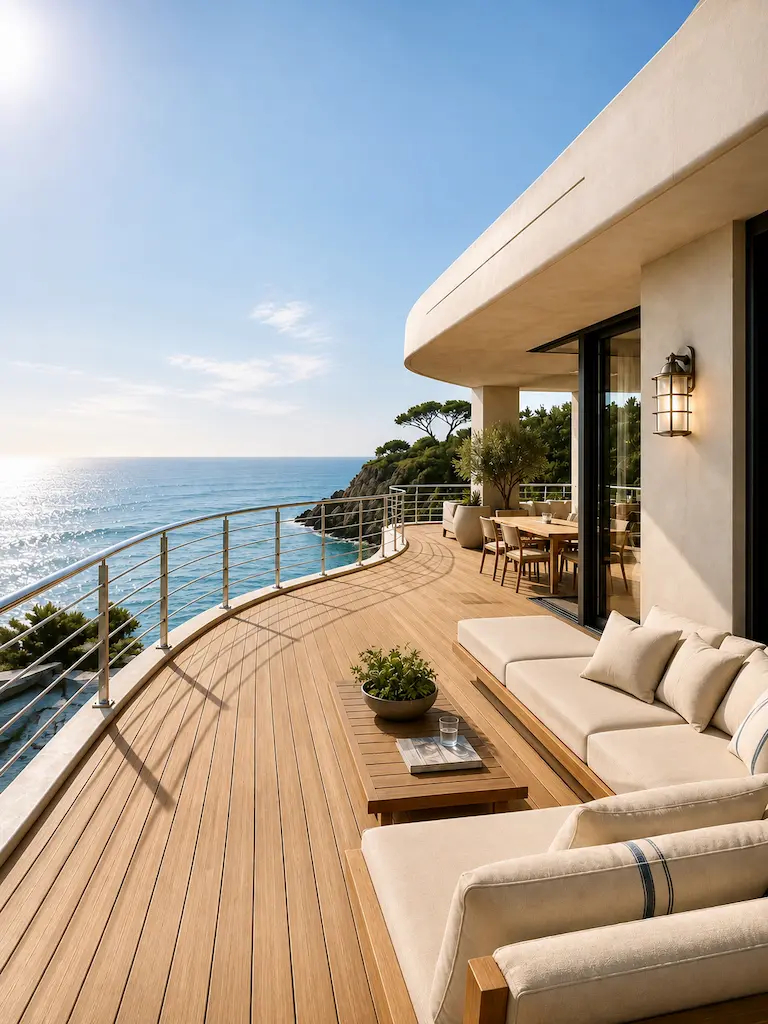
You visit Greece and fall hopelessly in love with the designs. Whitewashed walls glowing beneath the Mediterranean sun. Blue doors weathered by salty air. Bougainvillea tumbling over stone pathways. Infinity pools disappearing into the Aegean. A sleepy cat stretched across a warm courtyard, looking as though he owns the place—which, after a few days in Greece, you begin to suspect he probably does.
You return home convinced that this beautiful feeling can somehow be recreated in your own house, minus the cat. A generous renovation budget seems like a good place to start. A celebrated interior designer? Probably necessary. Then come a few weekends wandering luxury furniture stores, wondering whether a dining chair should really cost as much as your trip to Greece. Before long, you’re building mood boards, saving Pinterest pins, and quietly convincing yourself that if you buy the right white sofa, the perfect shade of blue cushions, and perhaps a handmade clay vase, a little of that Greek magic might follow you home.
The only problem is that these beautiful images tell only a small part of the story. The more contemporary Greek homes we studied, the less interested they seemed in reproducing the postcard version of Greece. Instead, they quietly preserved something far more valuable than white walls and blue doors. They preserved a philosophy of living. Instead of asking what colour the walls were or which furniture designers were fashionable, we began asking a different question: What actually makes a Greek home feel Greek?
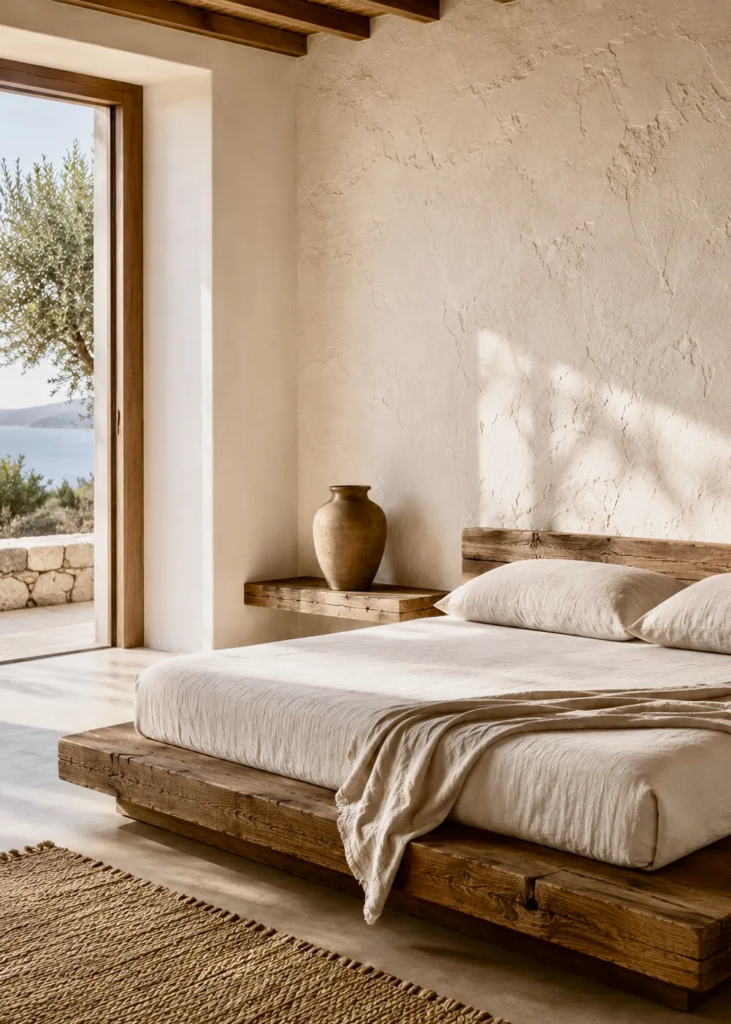
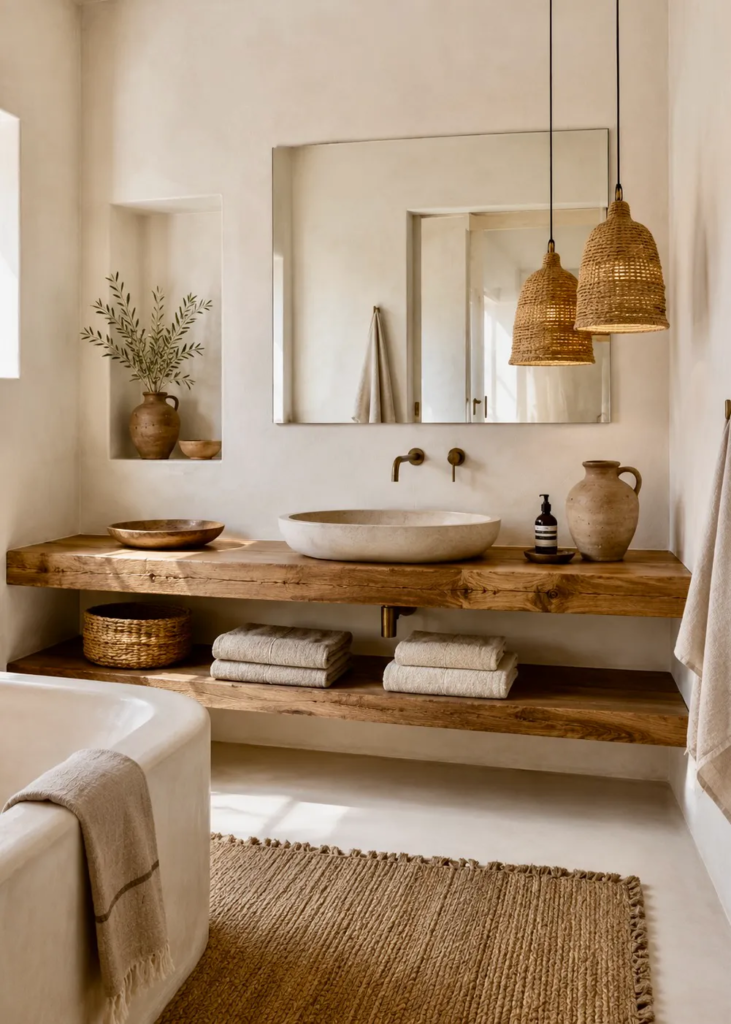
The answer surprised us. It wasn’t the paint. It wasn’t the furniture. It wasn’t even the view. Greece doesn’t decorate its architecture with furniture. It asks the architecture to become the furniture. That idea sounds almost absurd at first. Then you begin looking more carefully. The bed rests on a simple timber platform. The bathroom vanity is nothing more than a thick oak shelf suspended between plaster walls. Deep wall niches quietly replace shelving units. Built-in benches define courtyards and living rooms long before anyone thinks about buying outdoor furniture. Slowly, you realize that the house feels complete before the furniture has even arrived. The architecture has already done the heavy lifting.
This is perhaps the greatest difference between many contemporary Greek homes and the homes many of us are encouraged to create today. Turn on almost any decorating program, and the process usually begins with an empty room waiting to be filled. A sofa. A coffee table. Side tables. Shelving. Artwork. Decorative objects. Baskets. Lamps. And perhaps another basket because apparently one is never enough.
Greek homes seem to work in reverse. The architecture solves the room first. Furniture simply fills the few remaining gaps. Of course, like anywhere in the world, Greek homes reflect different tastes, generations, and lifestyles. Many are filled with furniture, decoration, and family treasures. What interested us wasn’t the average Greek home, but a distinctly Greek way of thinking about architecture that continues to inspire many of the country’s most thoughtful contemporary interiors.
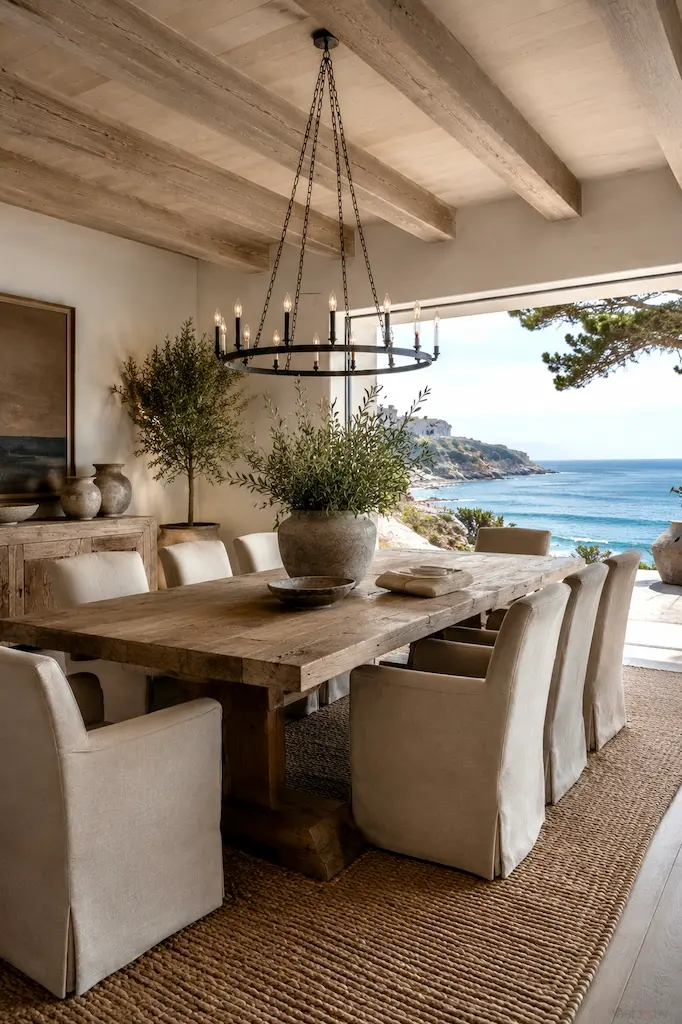
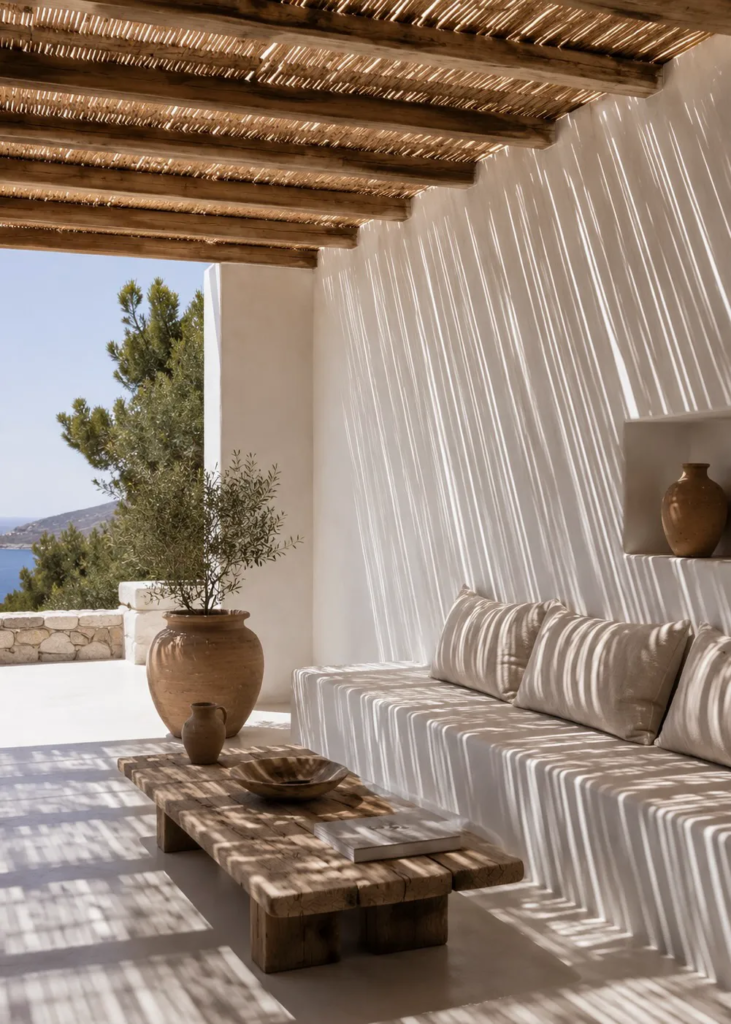
That same philosophy continues through the choice of materials. Contemporary Greek interiors rarely rely on decoration to create warmth. Instead, they trust natural materials to carry the emotional weight of the room. Lime plaster proudly reveals the hand of the craftsman rather than hiding beneath perfectly smooth finishes. Timber still looks like the tree it came from. Clay pots weather gracefully outdoors. Linen wrinkles without apology. Woven reeds filter the Mediterranean sun into moving patterns that drift across white walls throughout the day. Nothing pretends to be something else.
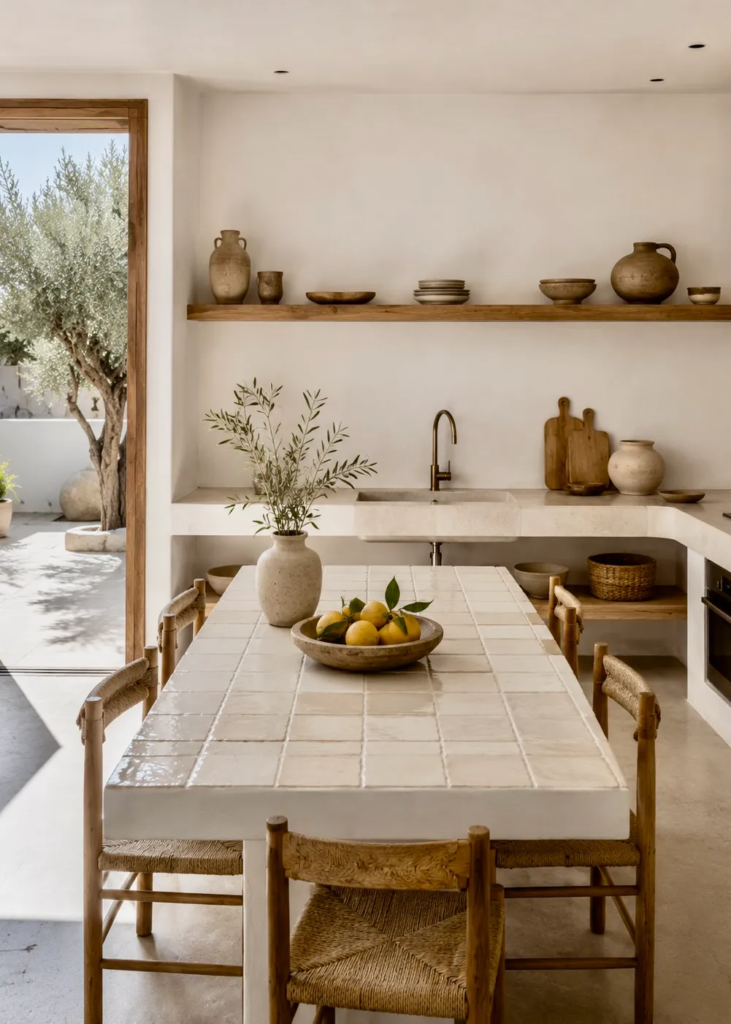
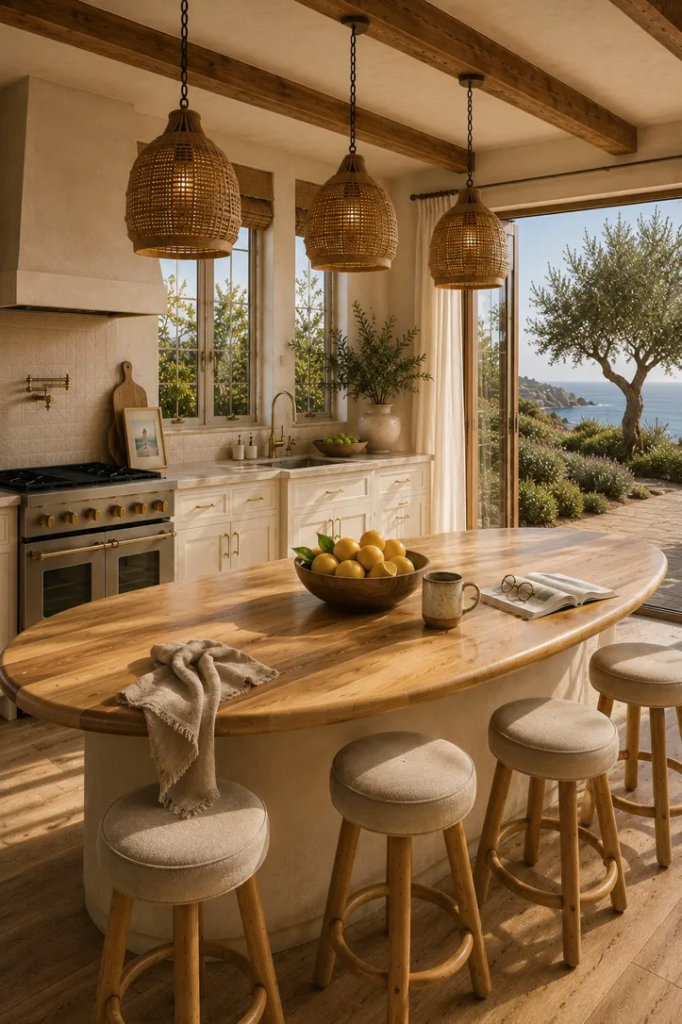
Even the dining table tells the same story. A tiled tabletop isn’t simply a design statement. It is practical, durable, easy to maintain, and naturally cool beneath the Mediterranean sun. Bathroom shelves are often little more than solid timber planks. Kitchens favour open shelving over endless rows of glossy cabinets. Every decision feels as though it began by solving a problem rather than creating an aesthetic.
Perhaps that is what fascinated us most. Almost every beautiful decision turned out to have begun as a practical one. Thick walls stay cool during long summers. Reed pergolas create shade while allowing air to circulate. Built-in seating reduces the need for additional furniture. Handmade ceramic tiles become floors, tables, and courtyards that quietly improve with age. Beauty arrives almost as a consequence of intelligent design rather than as its primary objective.
That practical honesty also explains why contemporary Greek homes feel remarkably calm. They are rarely crowded with decorative accessories, framed prints, or carefully styled collections. Everyday life isn’t hidden away. Towels remain neatly folded on open shelves. Handmade pottery stays on the counter. Woven baskets hold ordinary necessities without disappearing behind cabinet doors. Nature, craftsmanship, proportion, and light become the decoration.
Calling this approach minimalist never feels quite right. Minimalism often asks what can be removed. Greek design seems to ask a more interesting question: What is truly necessary for living well? The answer usually isn’t another object. It is better architecture, better craftsmanship, better materials, and rooms designed around climate, comfort, and daily rituals rather than visual trends.
Contemporary Greek interiors are undeniably modern. Kitchens are cleaner. Windows are larger. Bathrooms have become sculptural. Furniture has become simpler and more refined. Yet the philosophy remains remarkably familiar. Simple. Geometric. Functional.
Crafted from natural materials and guided by a restrained palette, today’s Greek homes continue to prove that timeless design is less about adding more and more about choosing better. White walls and blue doors will always belong to Greece. They are part of its architectural identity and always will be. But reducing Greek design to those colours misses the deeper lesson.
Contemporary Greek interiors haven’t abandoned tradition. They have edited it. They preserve craftsmanship, the honesty of natural materials, the generosity of light, and the belief that architecture should work harder than decoration. They remind us that a home doesn’t become beautiful because it contains more objects. It becomes beautiful because every material, every wall, every shadow, and every piece of furniture knows exactly why it is there.
Greek homes are not trying to impress the next visitor or follow the next trend. They are simply trying to make everyday life more pleasant. And that may be the greatest luxury a home can offer.
Designer’s Note
- The House Does Half the Furnishing
- Many of us furnish a home one purchase at a time. We buy a vanity for the bathroom, shelving for the living room, a bed frame for the bedroom, and cabinets for the kitchen. Greek homes often begin with a different question: Could the house itself become these things?
- A timber platform replaces an elaborate bed frame. Thick plaster walls become benches softened with generous linen cushions.
- Bathroom counters emerge from masonry rather than assembled cabinetry. Shelves appear as recessed niches or a single weathered plank of timber instead of an expensive wall system.
- The lesson isn’t to copy Greek architecture. The lesson is to ask a different question before buying the next piece of furniture.
- Could the architecture solve this instead?
Explore the contemporary Greek furniture and interiors of Milanode for a thoughtful interpretation of modern Greek Home Interior aesthetics.
CONTINUE EXPLORING
Inspired by this story? Continue your journey with Mediterranean Minimalism: The Beauty of Enough →