The Curious History Behind Spain’s Messiest Tradition
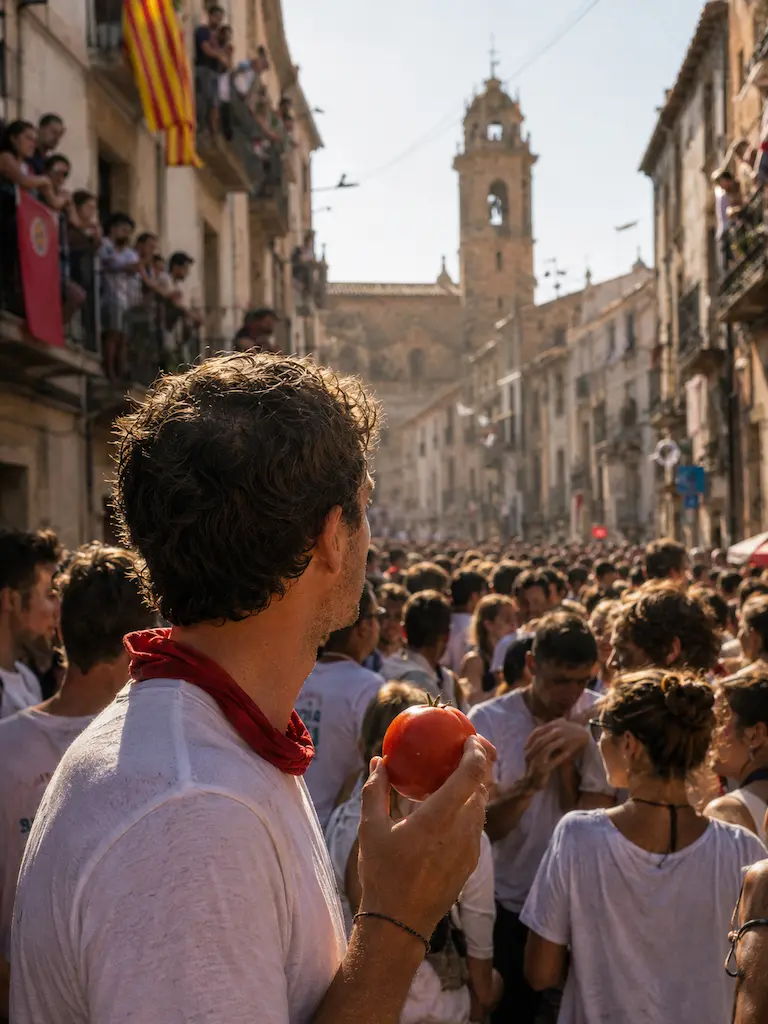
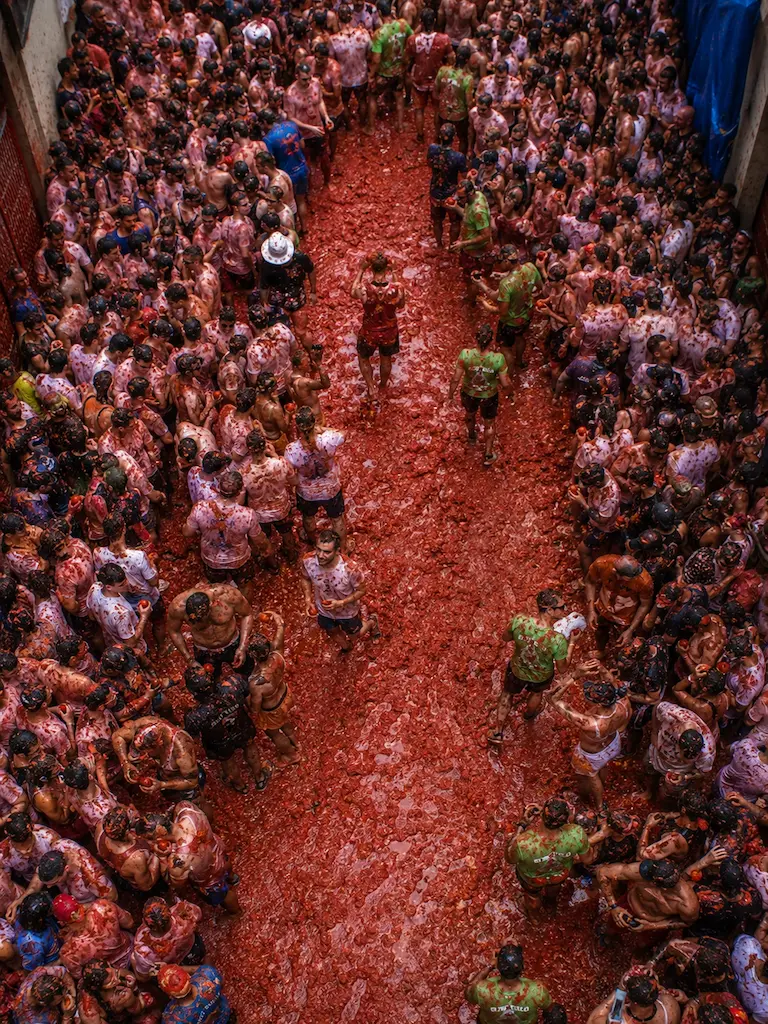
At precisely eleven o’clock on the last Wednesday of August, a rocket echoes through the narrow streets of Buñol, a small town near Valencia, Spain. Moments later, trucks begin unloading mountains of ripe tomatoes as thousands of people brace themselves for what is about to happen. Within minutes, the streets dissolve into a sea of red. Friends chase one another, strangers burst into laughter, and everyone—regardless of age, nationality, or profession—becomes equally covered in crushed tomatoes.
To an outsider, it can seem wonderfully absurd. Why would thousands of adults travel across the world simply to throw tomatoes at one another? The answer has surprisingly little to do with tomatoes. It has everything to do with joy.
The Universal Need for Play
Somewhere between childhood and adulthood, we quietly stop giving ourselves permission to be ridiculous. We learn to stay composed. To keep our clothes clean. To avoid looking foolish. Society rewards self-control, professionalism, and polish, leaving fewer and fewer opportunities to simply play. Yet throughout history, communities have continued to preserve festivals that temporarily suspend those expectations. Carnivals overturn social order. Water festivals encourage strangers to splash one another. Harvest celebrations fill streets with music and dancing. Every culture seems to have invented moments where seriousness is deliberately set aside.
La Tomatina may be one of the world’s most spectacular examples, but it reflects something remarkably universal. For one hour, adulthood takes a holiday.
The Power of Shared Experiences
What makes La Tomatina remarkable isn’t simply the number of tomatoes flying through the air. It’s the thousands of people choosing to participate together. For sixty minutes, nobody is a tourist, a local, a lawyer, a student, or a retiree. Everyone is simply another person laughing in the middle of a tomato fight. Shared rituals have a remarkable way of flattening the differences that usually separate us, replacing them with something far simpler: the feeling of belonging. Everyone gets splashed. Everyone becomes part of the same story.
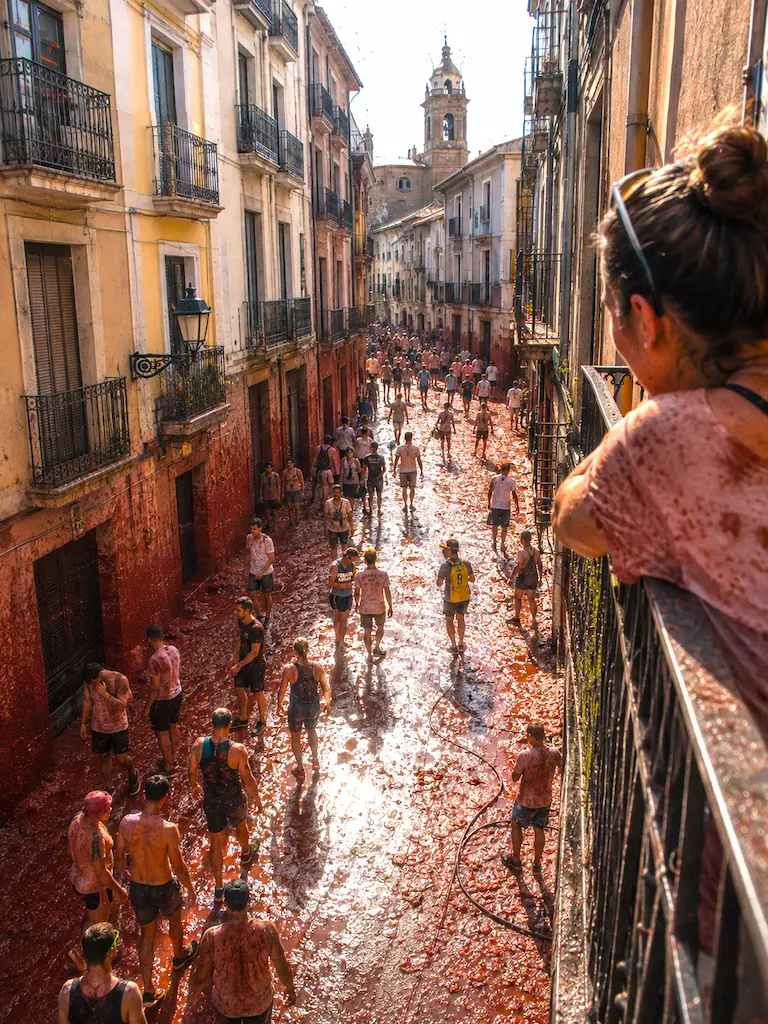
May be this is why traditional festivals continue to matter. They remind us that some experiences aren’t meant to be streamed, photographed, or watched from the sidelines. They’re meant to be joined. Then again, when 150 tonnes of tomatoes are flying through the air, nobody would blame you for choosing a balcony instead.
Why Mess Can Be Liberating
Modern life often encourages perfection. We curate photographs before posting them. We carefully choose outfits, protect expensive shoes, and try to control how we’re perceived. La Tomatina turns that instinct upside down. Within moments, clean clothes become stained. Hair becomes sticky. Sunglasses disappear beneath tomato pulp. Any attempt to remain elegant quickly becomes impossible. And strangely, that is exactly what makes the experience so freeing. Once everyone looks equally ridiculous, nobody needs to worry about looking ridiculous anymore.
There is a quiet liberation in discovering that happiness doesn’t depend on staying polished. Sometimes it begins the moment we stop trying.

The Tradition Behind the Tomatoes
La Tomatina began in 1945 during Buñol’s annual patron saint festivities after a spontaneous street scuffle involving tomatoes from a nearby market. What started as an impromptu prank gradually evolved into one of Spain’s most recognisable celebrations. Today, the event takes place every year on the last Wednesday of August between 11:00 a.m. and noon. Around 120 to 150 tonnes of tomatoes arrive aboard seven trucks, supplying roughly six kilograms for each participant.
A rocket fired into the air signals the official beginning of the food fight, while a second rocket marks its absolute end exactly one hour later. Since 2013, participation has been limited to around 20,000 people, with ticketed entry helping manage the event while preserving the unique atmosphere that has made La Tomatina famous around the world.
The tomatoes themselves are grown specifically for the festival and are intentionally overripe, making them soft enough to minimize injuries while ensuring they create exactly the spectacular mess everyone expects.
A Lesson Beyond Spain
La Tomatina may be uniquely Spanish, but the impulse behind it is anything but local. Across cultures, people keep returning to moments of organised chaos—not because they are meaningless, but because they briefly suspend the rules that normally shape everyday life. What remains constant is the feeling: a collective exhale into something lighter, freer, more immediate.
And what these moments share is not spectacle, but psychology. Beneath structure and responsibility, there is a persistent human need to play. To move without purpose. To laugh without restraint. To belong without having to explain why. Play is often treated as something we outgrow, yet it functions more like a reset—one that adulthood rarely replaces. It softens identity, shortens the distance between strangers, and returns us, however briefly, to a state where connection feels effortless rather than constructed.
Seen in this light, La Tomatina is not really about tomatoes. It is about what happens when thousands of people agree—silently, instinctively—to let go at the same time. To be seen without polish. To exist, for one hour, inside a shared moment that asks nothing except presence. And perhaps that is why it stays with people long after the streets are washed clean. Because the streets may be cleaned by afternoon, but the feeling of letting go tends to stay much longer.
CONTINUE EXPLORING
Inspired by this story? The story continues. Here is your next read From Bialetti to Dolce & Gabbana →