What California and the Mediterranean Reveal About Beauty, Style and Age
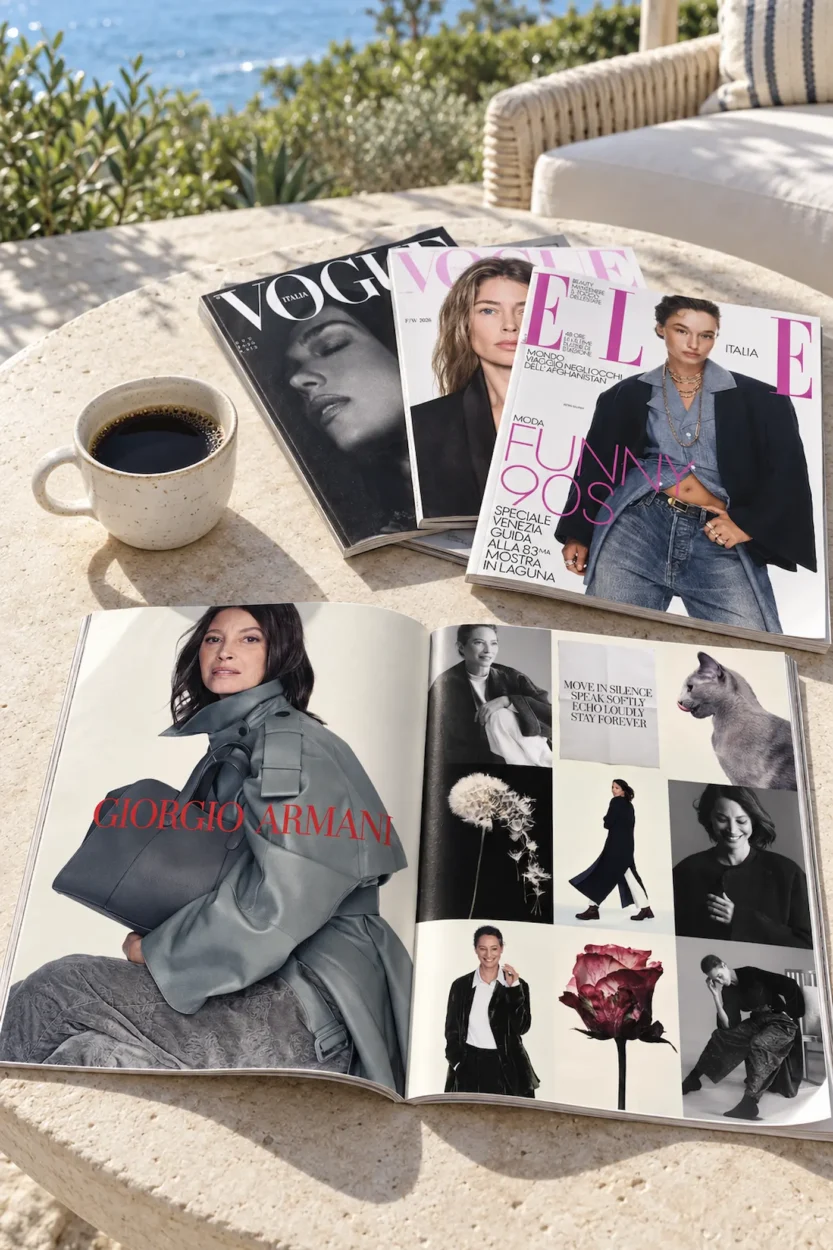
California and the Mediterranean share more than sunlight: both make the body unusually public. Faces are seen on terraces, beaches, boulevards, film screens and fashion campaigns, yet the two coastal cultures have developed different languages for what time is allowed to leave behind. In places where life happens visibly, growing older becomes strangely difficult to keep private.
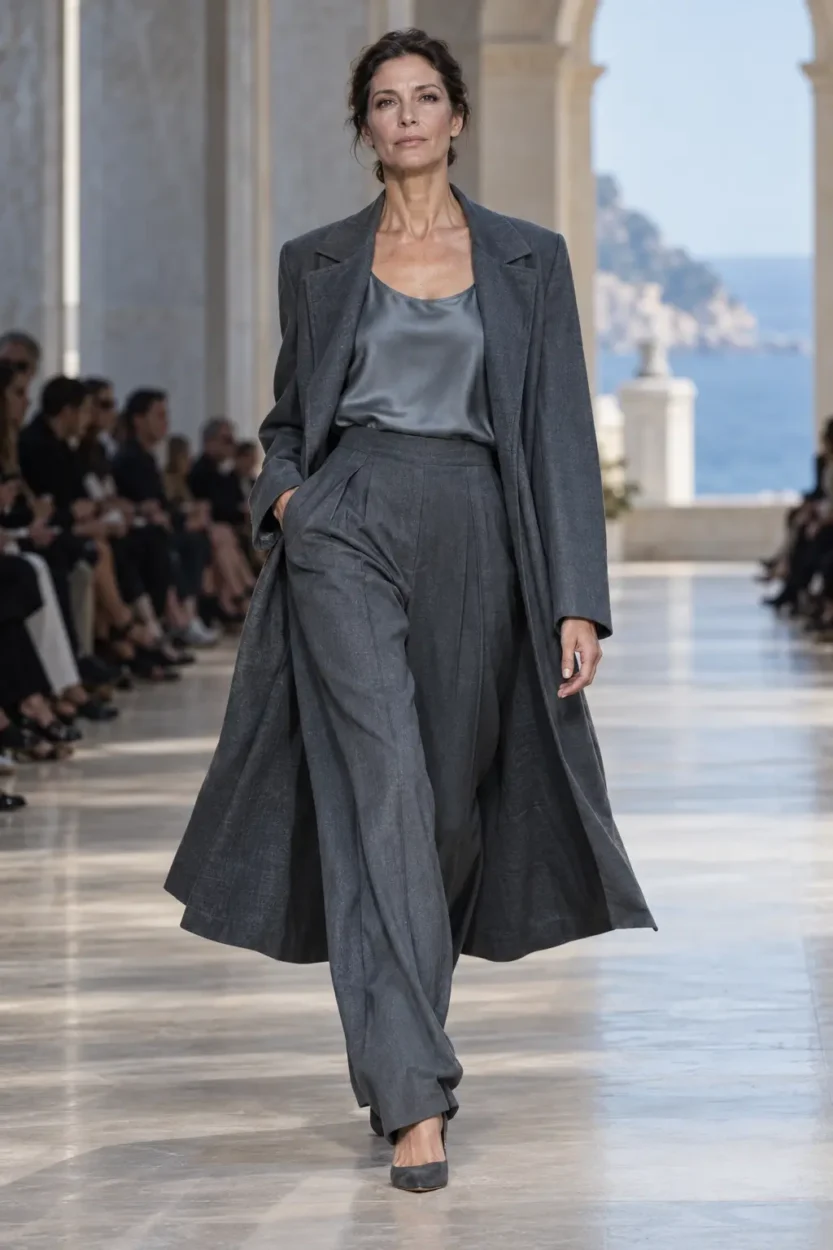
Fashion has recently rediscovered women over 40, 50 and 60, as though they had been waiting patiently behind the curtain. Turlington returned to Giorgio Armani decades after first walking for the house, Stephanie Cavalli opened Chanel with gray streaks visible, and Miu Miu cast women carrying entire careers into the room. The mature woman is back in fashion, but visible aging remains subject to approval.
Fashion has learned how to style age. An older woman is welcomed when her years appear elegant, controlled and commercially useful; the ordinary evidence of aging remains less desirable. The faces may be older, but the permission is still remarkably narrow.
Two Italian brands make that condition unusually easy to see. Armani presents Turlington as a woman with a history at the house, allowing the lines around her eyes to contribute authority to the portrait. KIKO Milano photographs Madonna against saturated pink, with a polished finish that makes time difficult to read. One image uses age as character; the other uses transformation as fantasy.
Both approaches sell. Armani tells us that experience can make a garment more persuasive, while KIKO suggests that beauty can still defeat the calendar with sufficient pigment, lighting and determination. We cannot know from these photographs what either woman has chosen to do to her face, but we can see exactly what each brand has chosen to reveal.
This is why the story cannot be reduced to natural Mediterranean women and youth-obsessed Californians. Turlington and Madonna are American; Armani and KIKO are Italian. The same debate is circulating between the two coasts, translated through different products and degrees of retouching, polish and permission.
California often treats age as a problem of optimization. Hollywood, dermatology, wellness culture and beauty technology offer an endless program of prevention, correction and maintenance, all wrapped in the reassuring language of health. “Anti-aging” became “longevity,” because apparently even vanity performs better after a rebrand.
Yet California can recognize the power of a woman who has become more distinctive with time. Los Angeles label MOTHER chose Martha Stewart for its Spring 2026 campaign and built the imagery around her authority, humor and cultural memory. She was not invited to play somebody’s stylish grandmother; she was the reason for looking.
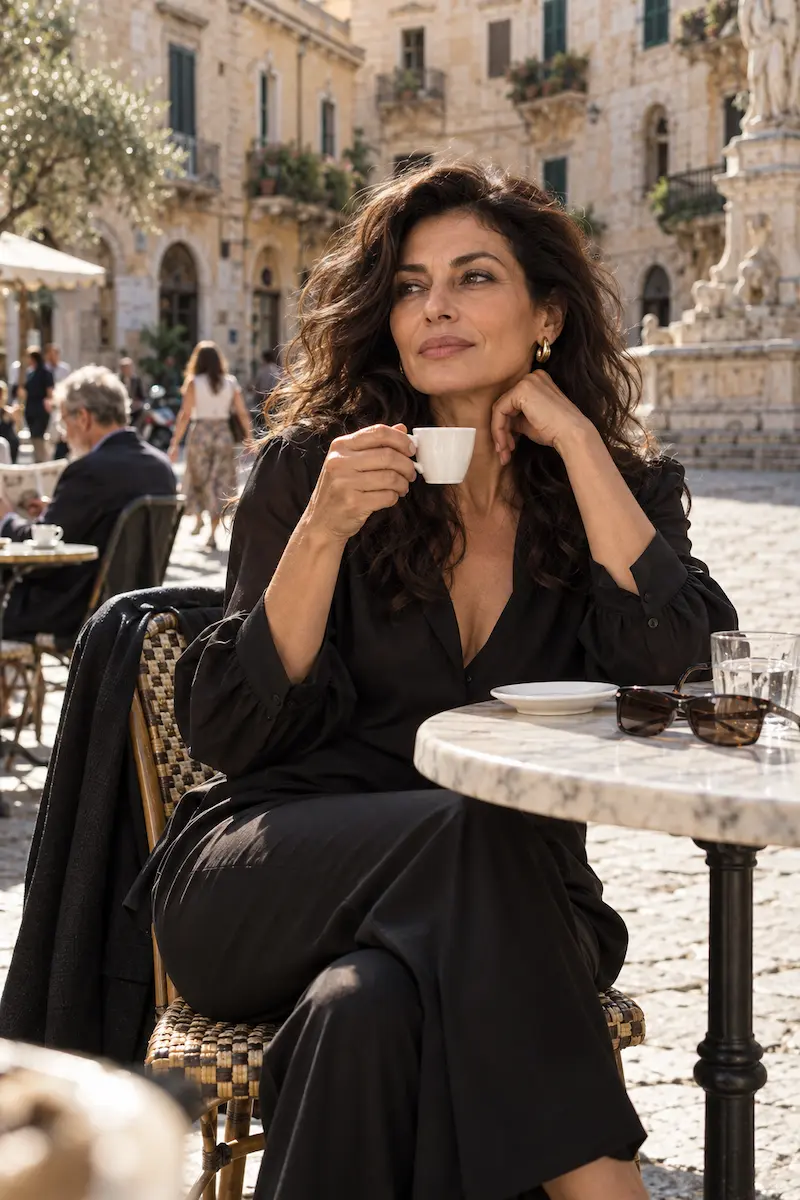
Mediterranean culture gives older women somewhat more room to remain publicly sensual, fashionable and socially present, although it offers no immunity from beauty pressure. Spanish magazines celebrate Ángela Molina’s gray hair and wrinkles while publishing instructions for concealing both. Greek fashion coverage praises Philippine Leroy-Beaulieu for making mature sensuality visible while the surrounding beauty industry sells products promising to reverse time.
A recent Italian study brings actual women into a conversation usually conducted through celebrity faces. Researchers followed 25 women aged 63 to 73 in Milan and Turin and interviewed 28 professionals working in beauty and anti-aging centers. The women negotiated gray hair, wrinkles, treatments and salon visits in different ways, moving between acceptance and intervention rather than choosing one permanent philosophy.
That complexity matters. A woman who colors her hair has not failed at aging, and one who leaves it gray should not be recruited as the movement’s unpaid spokesperson. The freedom lies in making either choice without having her character diagnosed from the result.
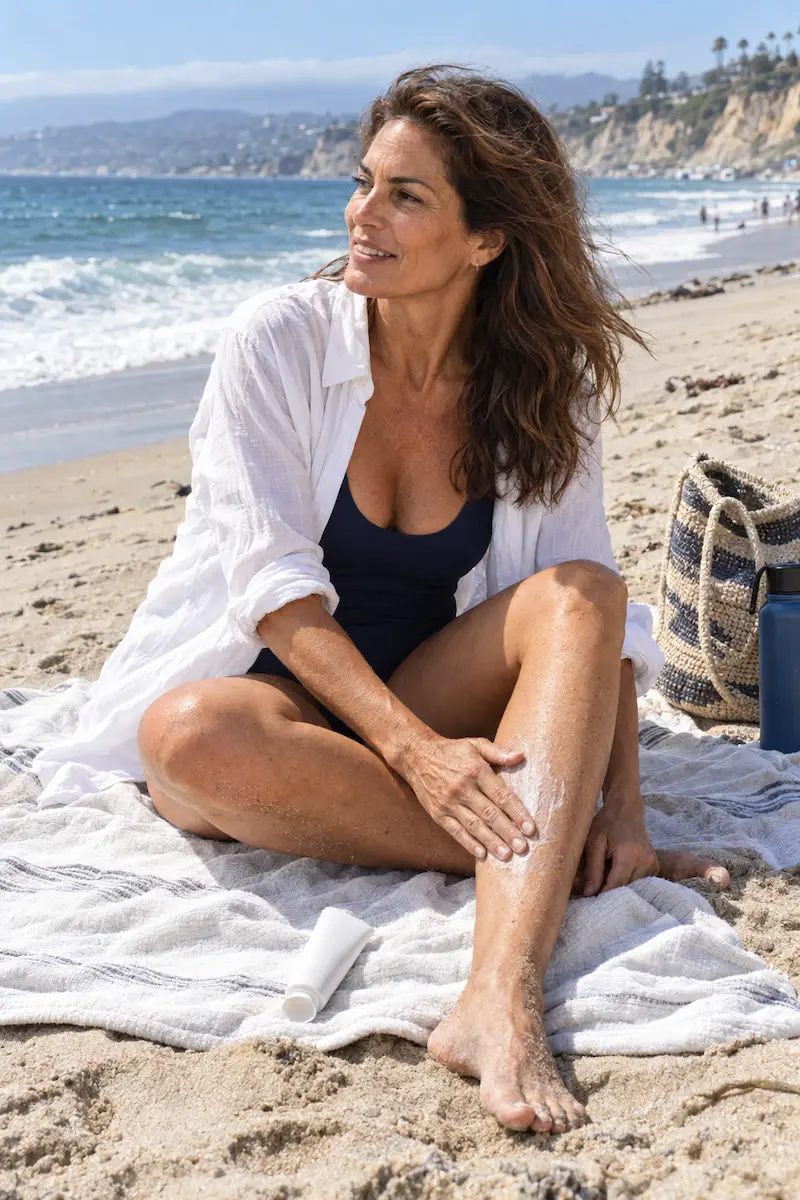
The industry will have changed when an older woman no longer needs to be famous, thin or exceptionally beautiful before she is allowed to look older. Casting a few celebrated women expands fashion’s imagery, but it does not yet expand its definition of beauty very far. Age has entered the picture; ordinary aging is still waiting outside the frame.
That is the question beneath Who Gets to Look Their Age? It asks whether fashion has accepted women as they grow older, or merely discovered an elegant new way to sell age without showing too much of it. Real progress begins when time can remain visible without becoming a campaign concept.
That is why “You look wonderful for your age” remains such a peculiar compliment. It praises a woman by suggesting she has successfully escaped the years that made her who she is. We could end the sentence three words earlier—and allow age to remain in the picture.
CONTINUE EXPLORING
Inspired by this story? Continue your journey with The New Luxury of Looking a Little Undone →