A Greek island best experienced before you reach for the camera.
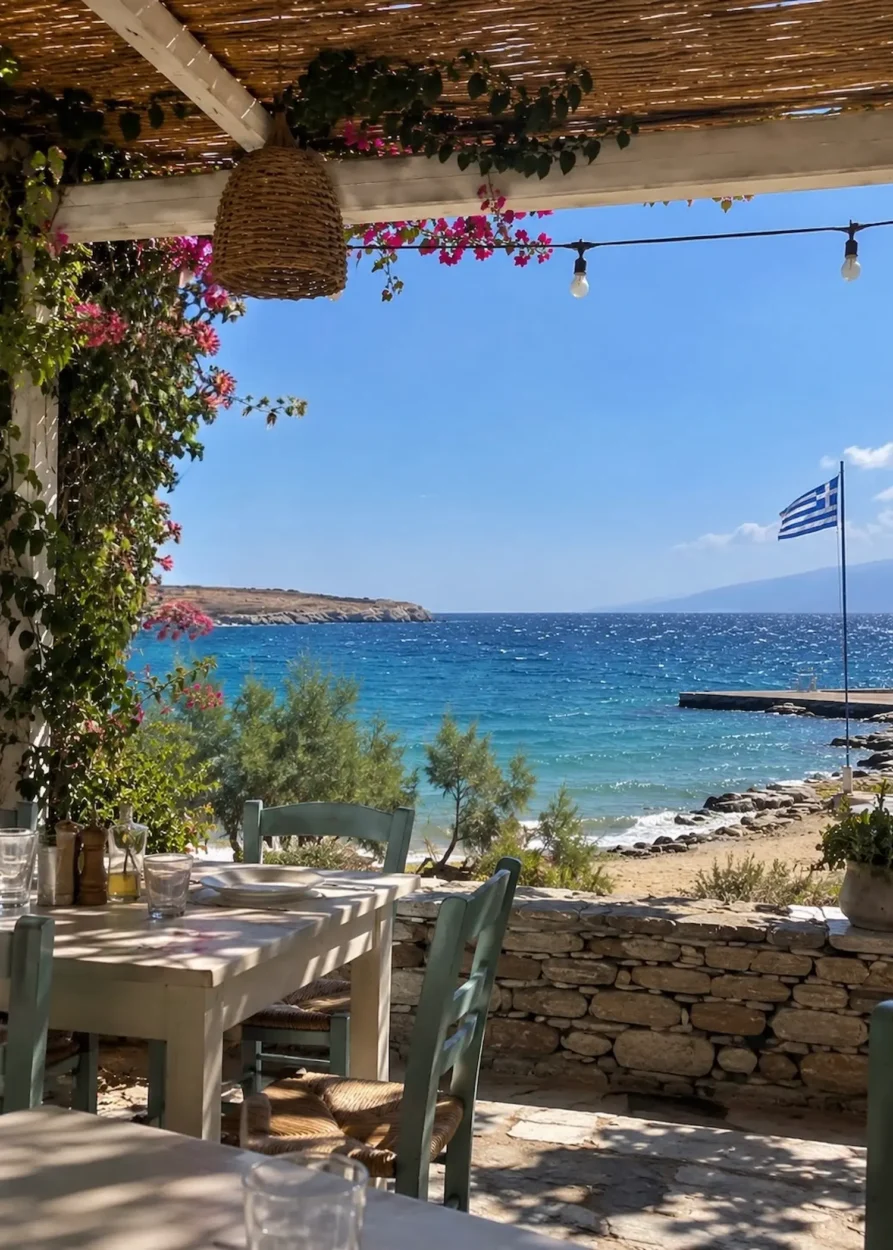
There is a particular moment when a Greek island becomes familiar before you have even arrived. You’ve seen the white houses, the blue shutters, the impossibly clear water. You know what the sunset is supposed to look like, where to have lunch and which corner of which village deserves a photograph. By the time the ferry docks, half the holiday has already happened on somebody else’s Instagram. Tinos, fortunately, has other ideas.
The first thing you notice about Tinos isn’t necessarily what you see. It’s what you hear. The Meltemi, the famous northerly wind of the Aegean, has a way of introducing itself without waiting for permission. It rattles shutters, moves through narrow streets and sends whitecaps racing across the water. Somewhere behind it come church bells, cicadas and the everyday sounds of an island that has never entirely organized itself around visitors.
Tinos lies just a short ferry ride from Mykonos, yet its character is remarkably different. It has beaches, beautiful villages and increasingly sophisticated places to stay, but it also has working farms, marble workshops and one of Greece’s most important religious pilgrimage sites. The island is not undiscovered, nor should we pretend it is. What makes it appealing is that there is still a great deal to discover beyond the familiar Cycladic postcard.
The Island You Hear
The wind is not merely background weather here. It is part of the island’s personality, occasionally charming, occasionally inconvenient and entirely uninterested in your beach reservations. The Meltemi is particularly associated with the Aegean summer, when strong northerly winds can turn a perfectly reasonable plan into an invitation to do something else. On Tinos, learning to change your plans may be the beginning of a better holiday.
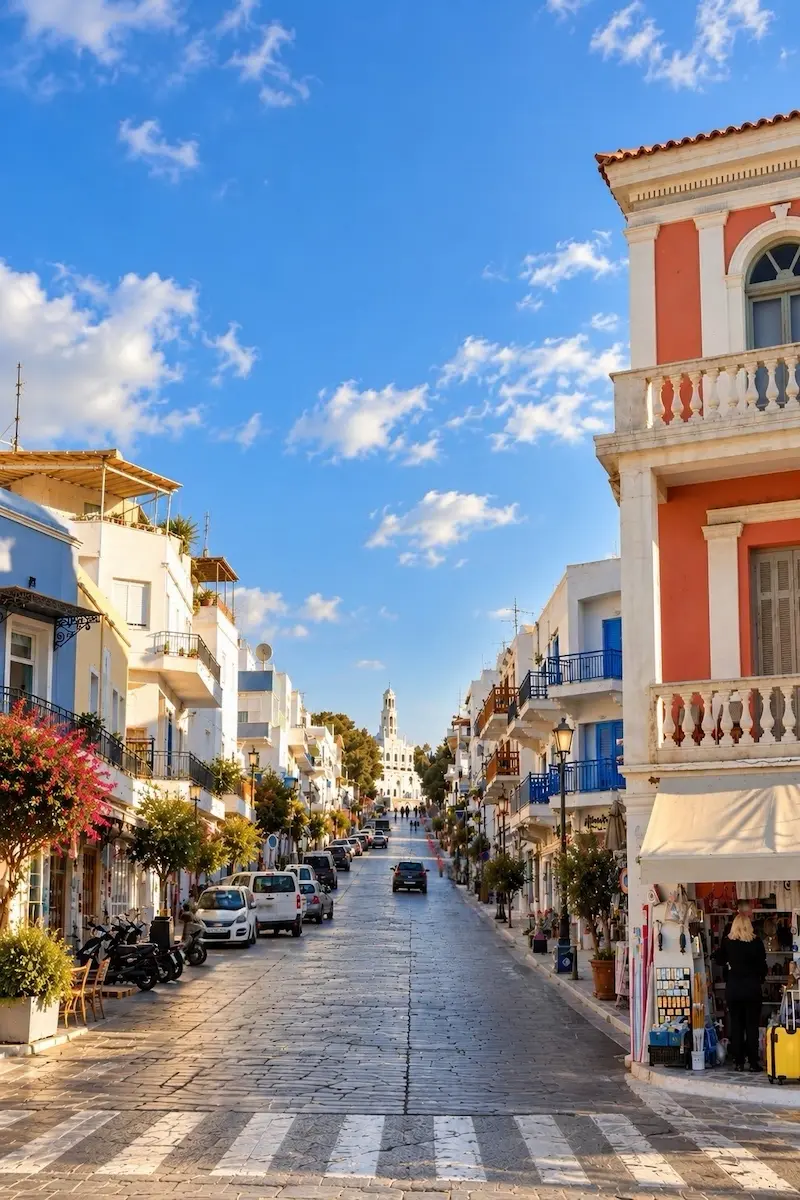
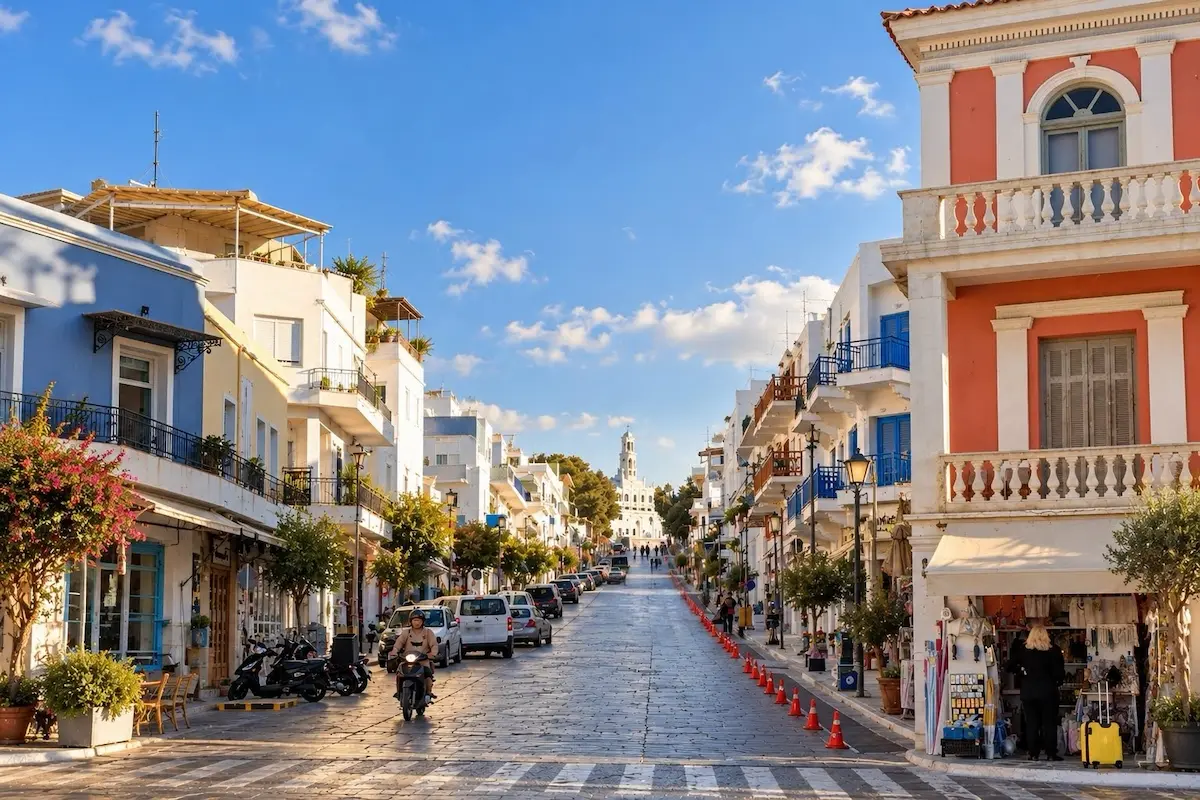
In Chora, the island’s main town, the broad avenue leading uphill to the Church of Panagia Evangelistria brings another sound into the picture. Pilgrims make their way toward one of the most revered Orthodox shrines in Greece, while daily life continues in the surrounding streets. Shopkeepers open their doors, scooters pass, conversations spill from cafés and the church bells mark a rhythm older than the summer season. It is a reminder that Tinos has a life entirely independent of the people arriving with suitcases.
And that may be the first luxury of being here. You don’t have to fill every hour. Sometimes the most memorable part of a Mediterranean afternoon is simply sitting somewhere long enough to notice what is happening around you.
The Island You Touch
Leave the coast and Tinos begins to change beneath your feet. Around Volax, enormous rounded granite boulders rise unexpectedly from the landscape, creating scenery that seems to belong to another planet. The nearby village sits among these extraordinary formations, its houses and narrow passages surrounded by stone that has been shaped over geological time. It is one of those places where the natural landscape is far more imaginative than anything a designer could invent.
Elsewhere, particularly in Pyrgos, stone takes on an entirely different personality. Marble appears in doorways, fountains, architectural details and village squares. Tinos has a remarkable tradition of marble craftsmanship, and Pyrgos is closely associated with some of Greece’s most celebrated sculptors, including Yannoulis Chalepas. What might look like decorative detail to a visitor is part of a living artistic heritage.
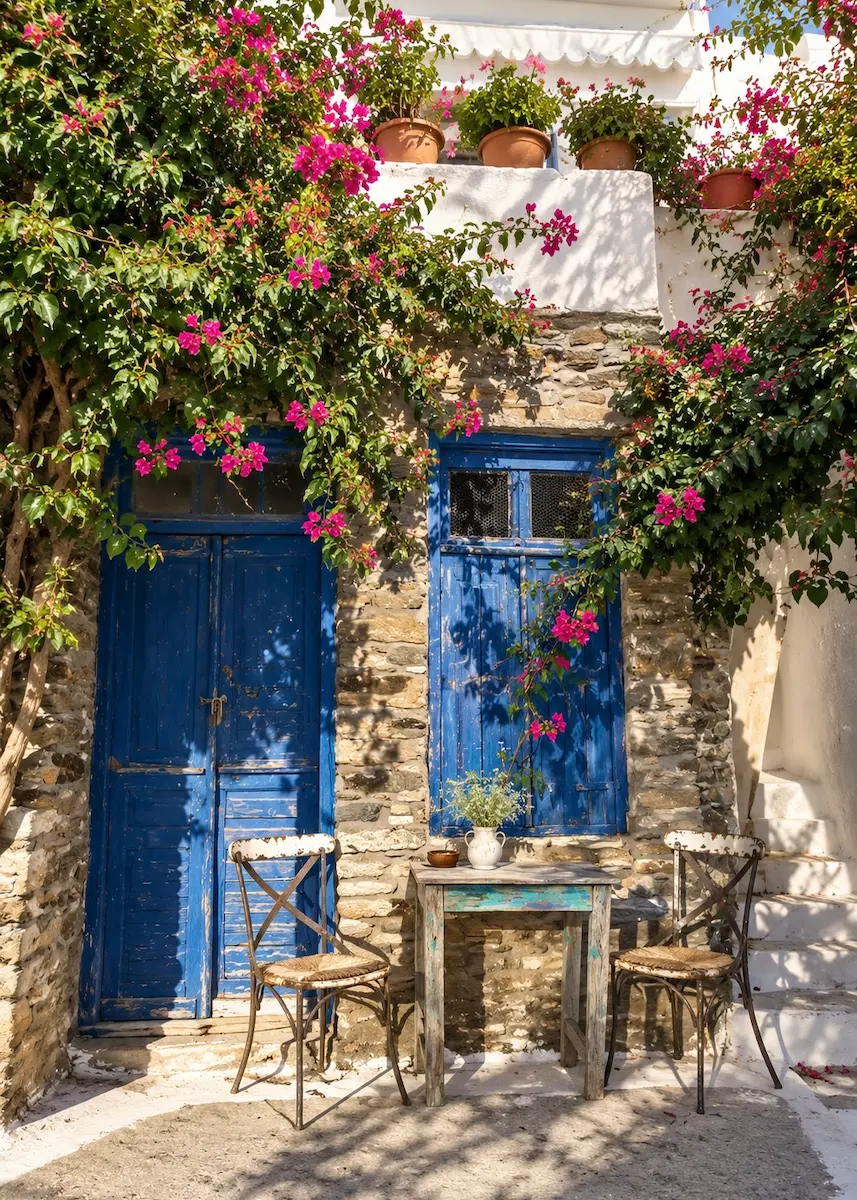
There is something wonderfully satisfying about a place where beauty is not always delicate. The stone is substantial, the walls have texture and the architecture feels inseparable from the landscape. You begin to understand why Tinos doesn’t need to rely on the familiar white-and-blue formula. It has an entire vocabulary of its own.
The Island You Smell
Tinos has a culinary identity that deserves considerably more attention than the standard Greek-island menu. Its agriculture and food traditions have produced a remarkable collection of local ingredients, from capers and artichokes to distinctive cheeses and thyme honey. This is food closely connected to the island’s geography, its farming communities and the practical business of preserving what the land provides.
A table might begin Tinian cheeses such as volaki or the more assertive kopanisti. Artichokes appear in traditional dishes, capers lend their sharpness to salads, and local fennel finds its way into other specialties. Even something as simple as bread, cheese and tomatoes can become an unexpectedly memorable lunch when the ingredients have a place and a story behind them.
There is also a growing contemporary food culture on Tinos, with cooks and producers finding new ways to interpret the island’s ingredients. But the pleasure isn’t necessarily in seeking out the most elaborate meal. It may be in finding a shaded table overlooking the sea, ordering a few local dishes and allowing lunch to become the main event of the afternoon. The Mediterranean has been making a convincing argument for this arrangement for centuries.
The Island You Finally See
By now, something rather interesting has happened. You’ve heard the wind, felt the stone, noticed the herbs and tasted the island’s food. Only then do you begin to look at Tinos differently. The white houses are still beautiful, of course, but they are no longer the whole story.
Across the countryside stand hundreds of extraordinary dovecotes, many decorated with intricate geometric stonework. They reflect a history of pigeon breeding and agricultural life, as well as the island’s tradition of craftsmanship. Around them are terraced hills, small chapels and villages that seem to grow naturally from the landscape. These are not decorative additions created to make Tinos picturesque. They are the remains and continuations of a working island, which is considerably more interesting.
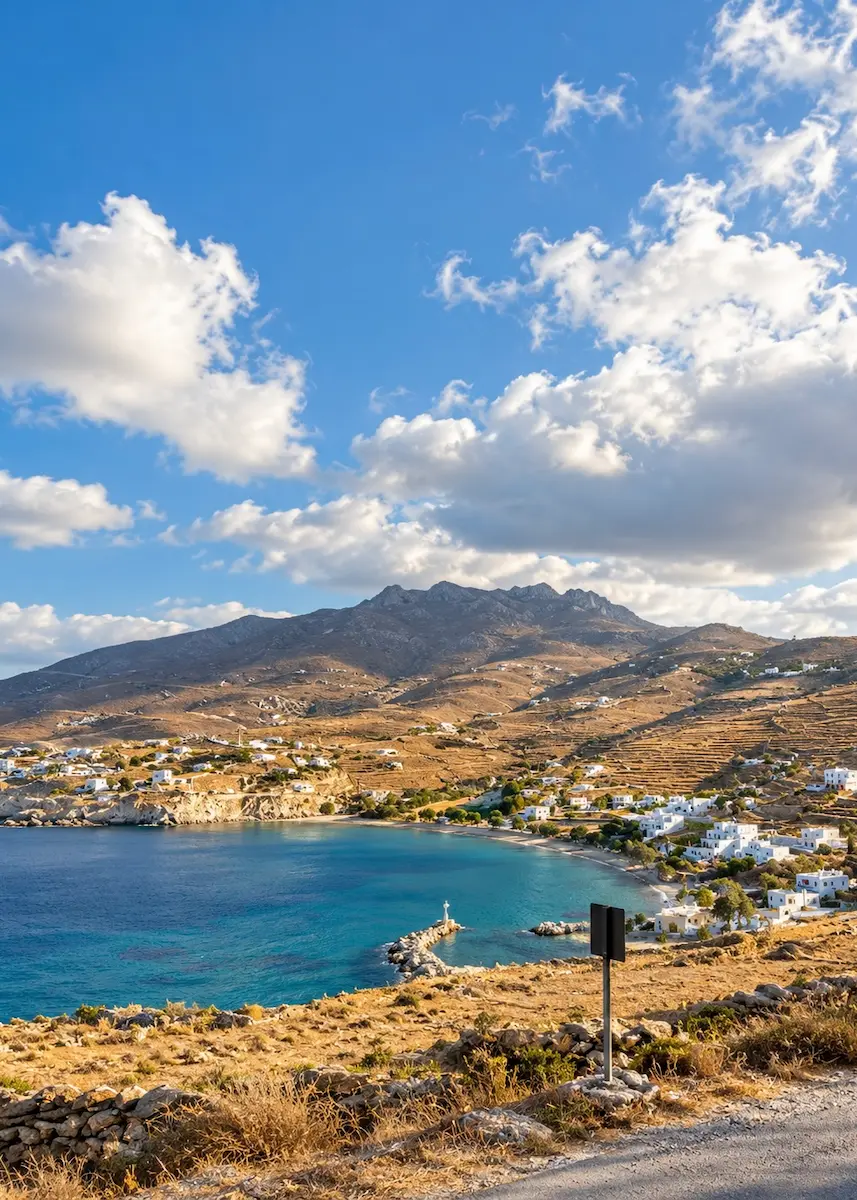
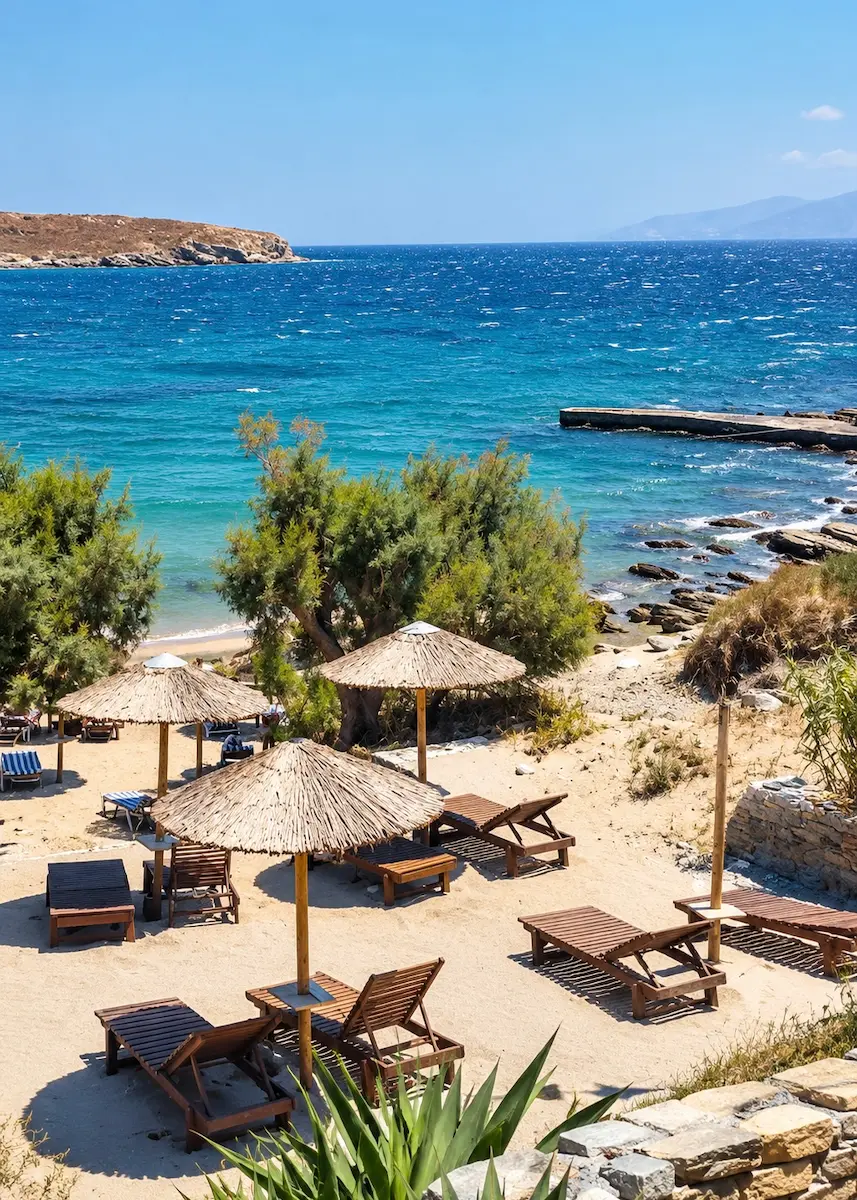
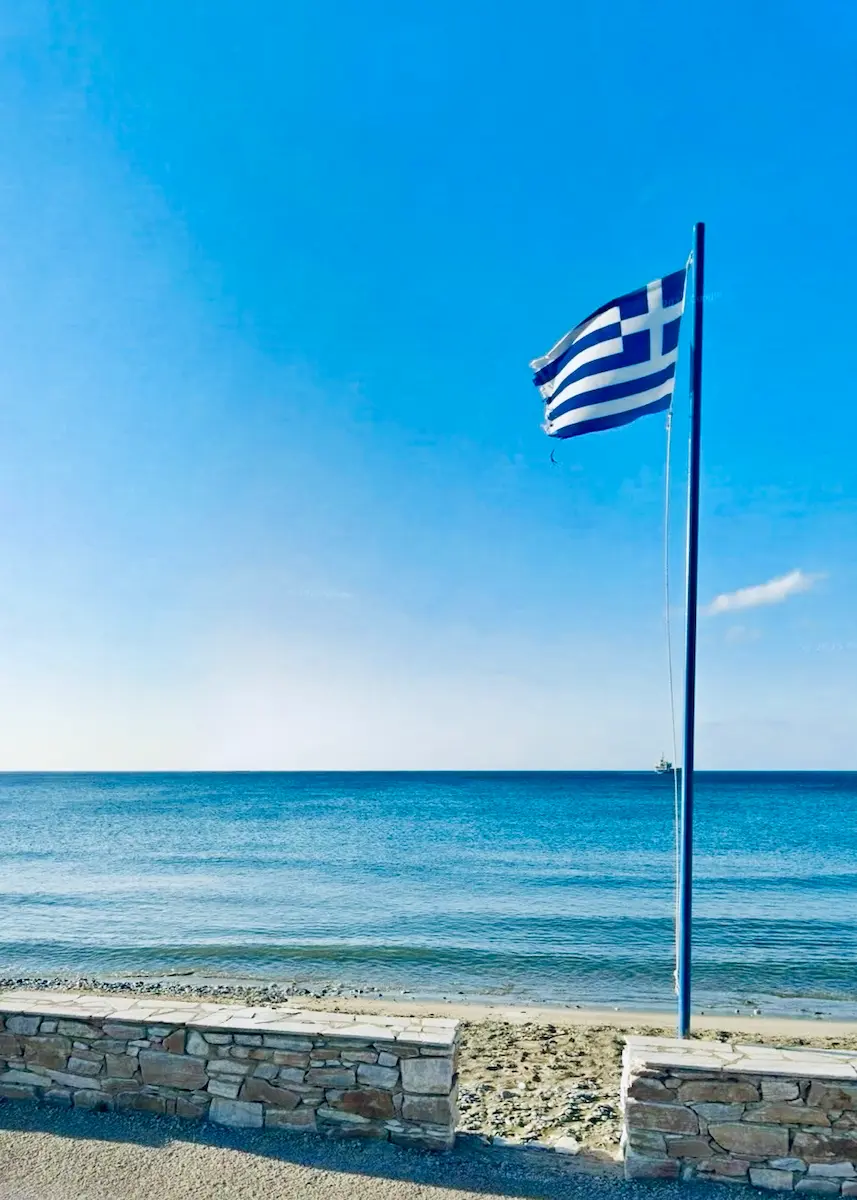
Along the coast, the scenery changes again. Some beaches are sheltered and inviting, while others are exposed to the full force of the Aegean wind. Tamarisk trees provide patches of shade, small tavernas sit near the water and rocky headlands interrupt the horizon. Tinos does not offer a single perfect view. It offers a succession of landscapes, each with its own character and its own relationship with the sea.
That is why it makes such an appealing escape. The island doesn’t ask you to stop looking at beautiful things. It simply gives you more ways to appreciate them.
Before Everyone Else Arrives
There is a practical pleasure in visiting Tinos outside the busiest summer weeks. Late spring and early autumn offer the possibility of exploring villages and countryside without the intensity of peak-season travel, although the weather and ferry schedules deserve attention. September can be particularly appealing for travelers who prefer a quieter rhythm, while October brings a different, less predictable side of island life.
Yet the real meaning of arriving before everyone else has little to do with the calendar. It is about arriving before the expectations, the recommendations and the photographs have made every decision for you. Tinos is not a place without visitors, and it certainly isn’t a secret. Its charm is that there is still room to experience it on your own terms.
You may leave with photographs of blue doors, marble villages and a particularly beautiful stretch of coastline. But what stays with you might be something less easily captured: the sound of shutters moving in the wind, the coolness of stone beneath your hand, the fragrance of thyme or the memory of a lunch that lasted much longer than intended.
And somewhere in the middle of all that, you may realize you haven’t looked at your camera for hours. Which, on a Greek island this beautiful, might be the best souvenir of all.
Editorial note: The factual references have been checked against Greek tourism and local gastronomy sources. The sensory descriptions are atmospheric writing, not claims of a firsthand visit. The photographs should be treated as editorial illustrations rather than documentary photographs of exact locations.