Forget the sightseeing checklist. In Valencia, the most interesting thing to see may be the sunlight itself.
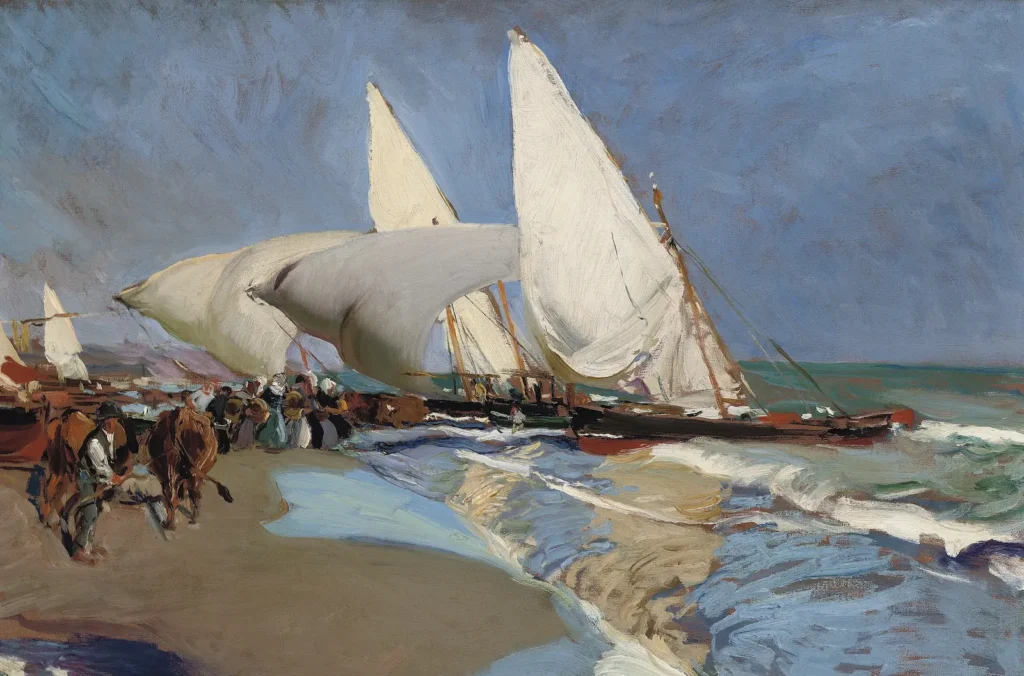
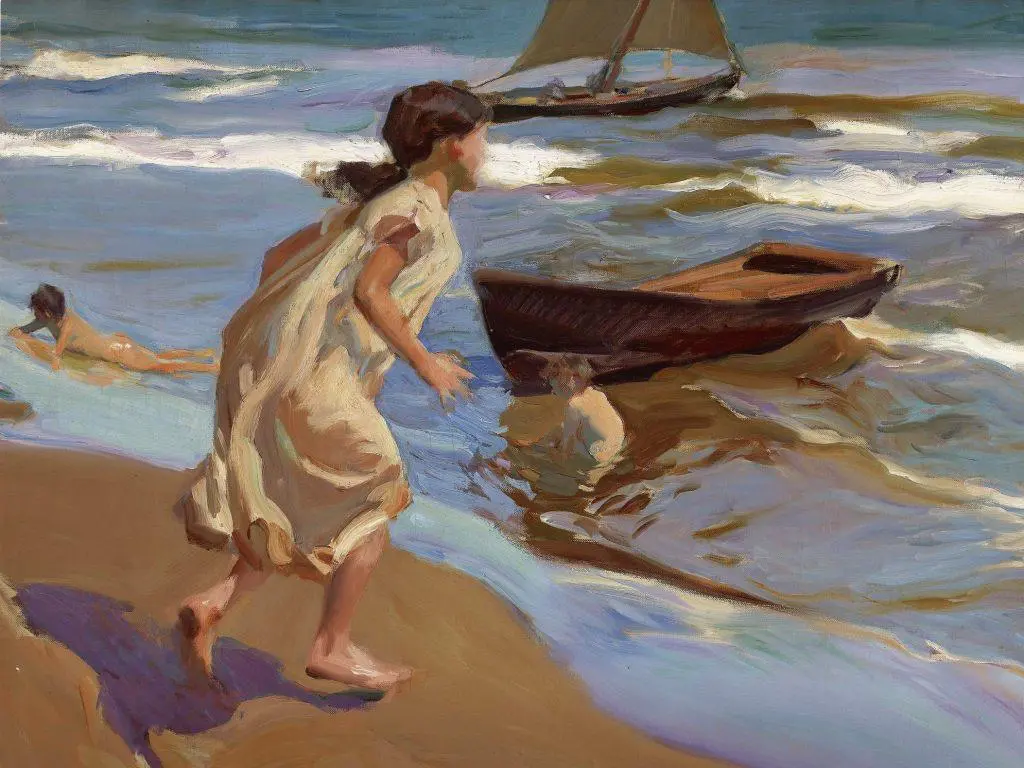
What happens when you visit Valencia, Spain not for its monuments, but for its light? The Spanish painter Joaquín Sorolla spent much of his life answering that question, painting the Mediterranean as though sunlight were a material—something that could turn wet sand silver, white dresses blue, and ordinary fishermen into extraordinary subjects.
More than a century later, the fishing boats have changed, the swimsuits certainly have, and the oxen that once hauled boats ashore have sensibly retired. But the light remains remarkably unwilling to modernize.
So rather than spend a day chasing Sorolla’s paintings through museums, we are borrowing his eyes. Morning at the beach, afternoon in Valencia’s old maritime neighborhood, and sunset where the rice fields meet the sky. A perfectly legitimate day of sightseeing, just without the usual checklist.
Morning: The Beach Sorolla Never Forgot
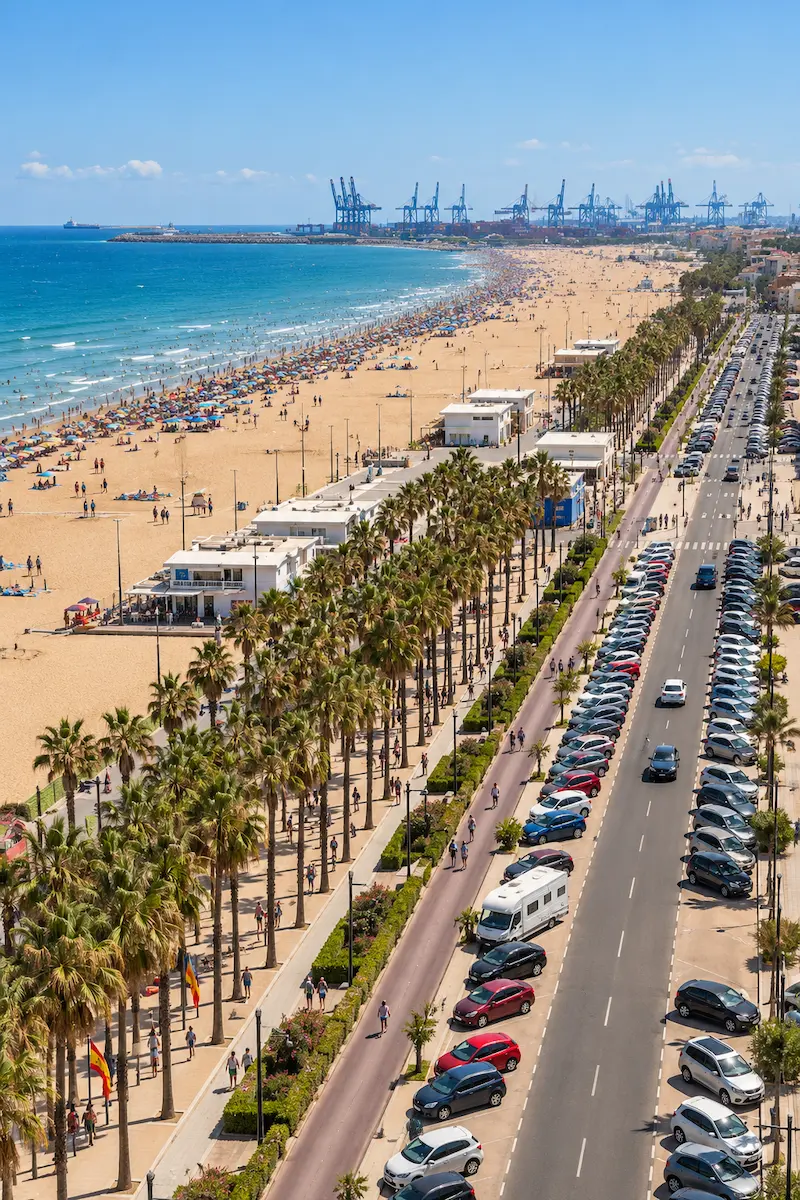
At Malvarrosa Beach, the Mediterranean begins its day without much ceremony. Runners pass, café chairs scrape across terraces, swimmers enter the water, and somebody has already decided that doing absolutely nothing is a reasonable morning activity.
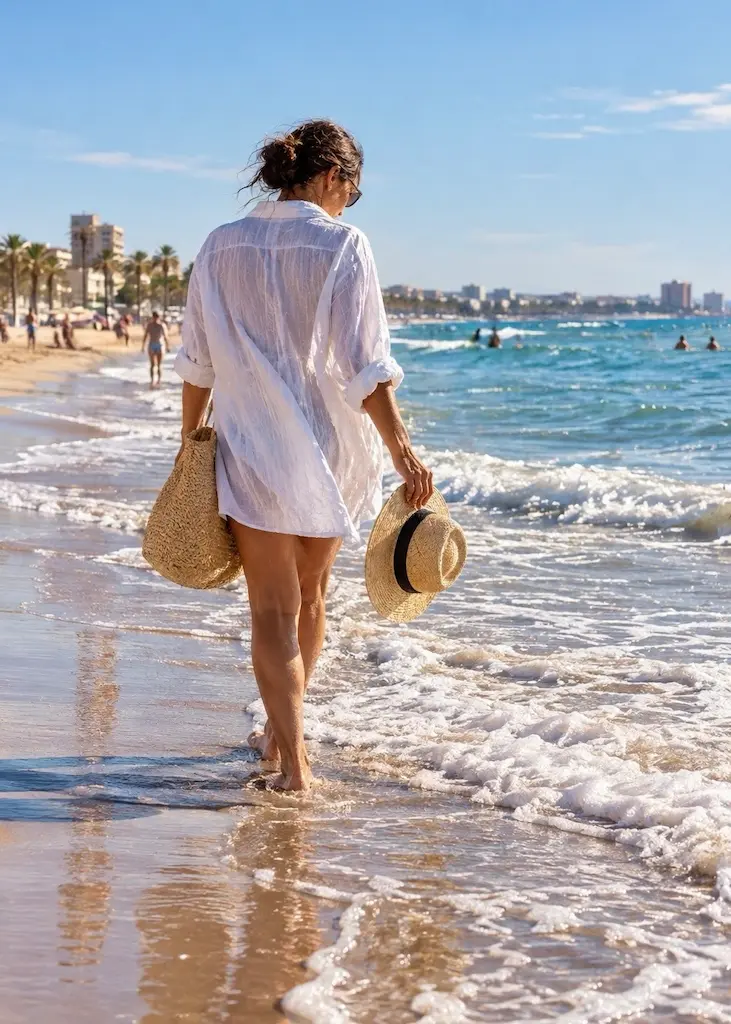
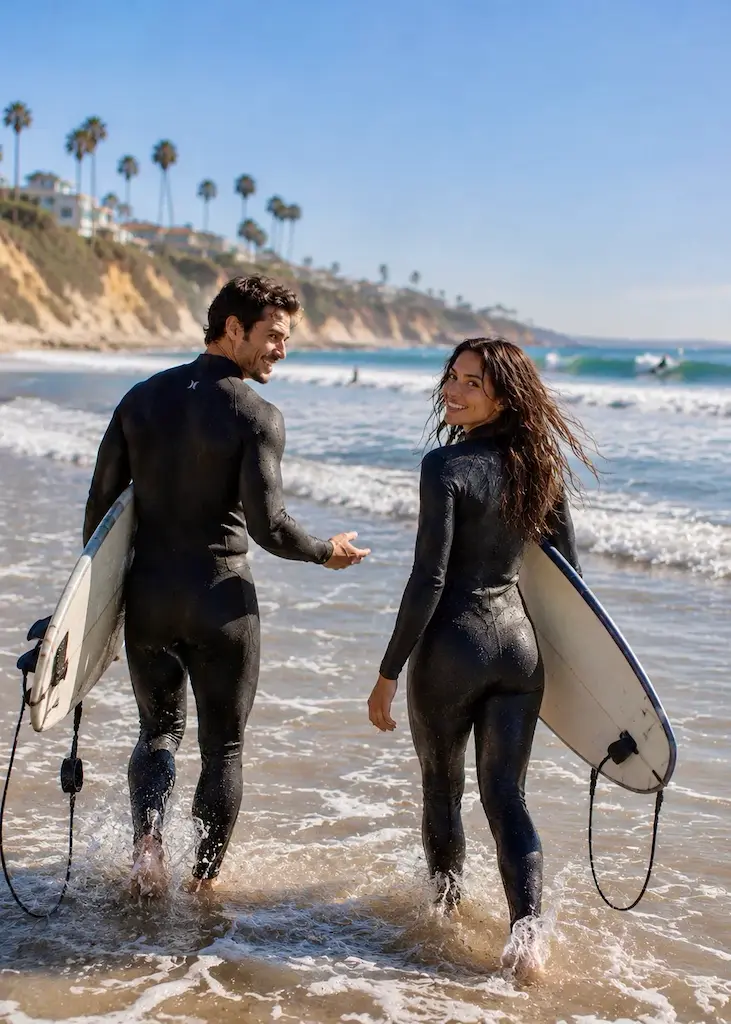
The beach could almost belong to California, until you notice the Mediterranean details. The sea shifts between blue, silver and green, while a white shirt walking along the shore becomes cream, pink and blue-grey depending on where the sunlight falls. Sorolla understood this peculiar magic: white is rarely just white, and ordinary life rarely stays ordinary once the Mediterranean sun gets involved.
He painted fishermen, children playing in the shallows, women beneath parasols and working boats pulled onto the sand. Today, paddleboards and volleyball nets have replaced much of that world, but the beach still belongs to people rather than monuments. Take off your shoes, walk beside the water, and look at what the sunlight is doing before deciding what deserves a photograph.
Afternoon: Behind the Beach, Another Valencia
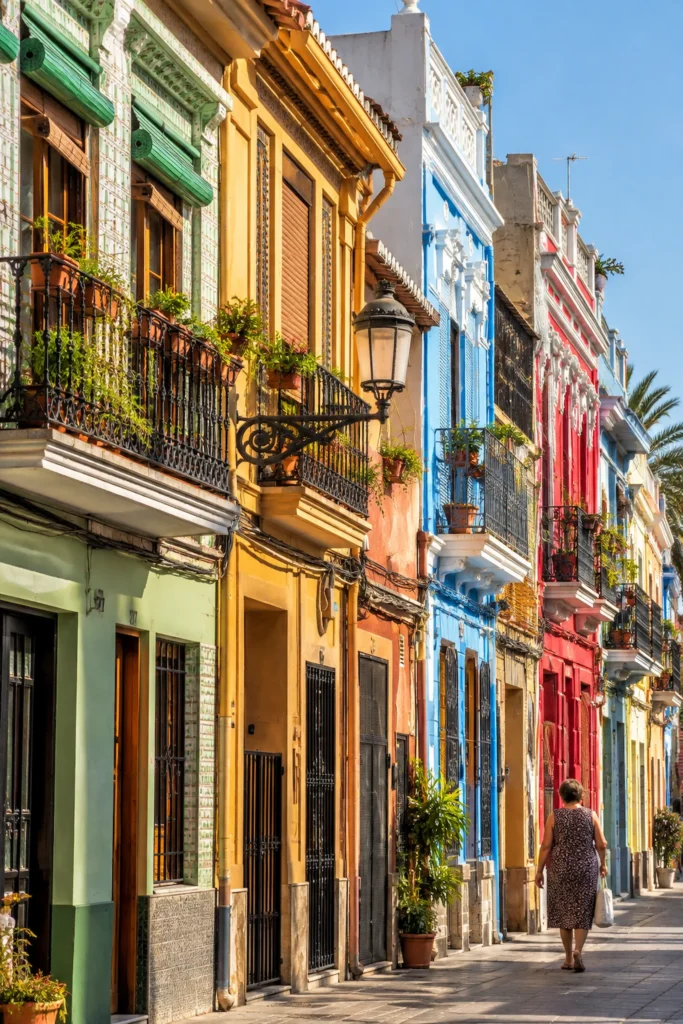
A short distance inland, El Cabanyal reveals the Valencia that postcards tend to overlook. This old fishing neighborhood is a wonderful jumble of narrow houses, patterned ceramic tiles, faded shutters, balconies and colors that appear to have been chosen without consulting the neighbors.
One façade is pale green, another blue, another covered in elaborate tiles. Laundry hangs above the street, bicycles lean against walls, and open windows release fragments of conversation. Nobody seems particularly concerned with making the neighborhood picturesque, which is precisely what makes it so interesting.
Sorolla rarely painted people waiting around to be admired. His Valencia was busy, and El Cabanyal still is.
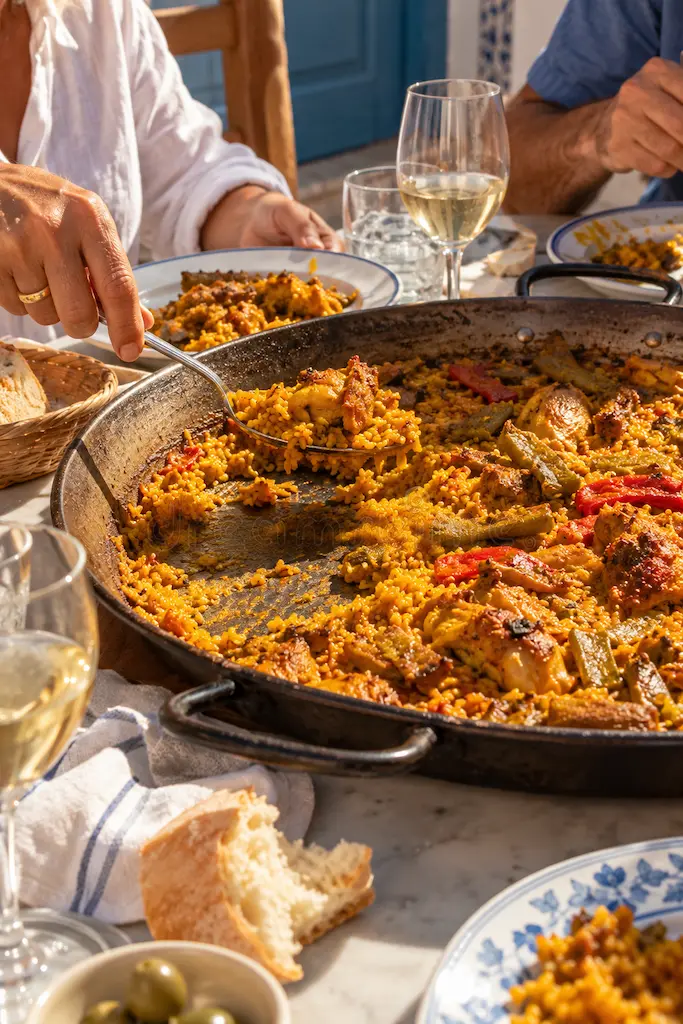
Eventually, architecture loses its battle with hunger. Valencia is a city built around rice, and lunch should involve a wide pan of paella, a leisurely table and the prized socarrat, those toasted grains clinging stubbornly to the bottom. One begins to understand why Valencians have never felt an urgent need to reinvent lunch.
Afterward, order a cold horchata de chufa with a farton, the long, soft pastry traditionally dipped into it. The pastry absorbs liquid with considerably more enthusiasm than structural planning, so eat quickly. Sorolla apparently neglected to document this particular Valencian drama, a curious omission from the historical record.
Before leaving Cabanyal, wander into a ceramics shop. Valencia’s relationship with decorative tiles goes well beyond souvenirs; here, ceramics have long been part of the architecture itself. A small hand-painted bowl makes a better memory than another object announcing its place of purchase in capital letters.
Evening: Where Valencia Grows Its Rice
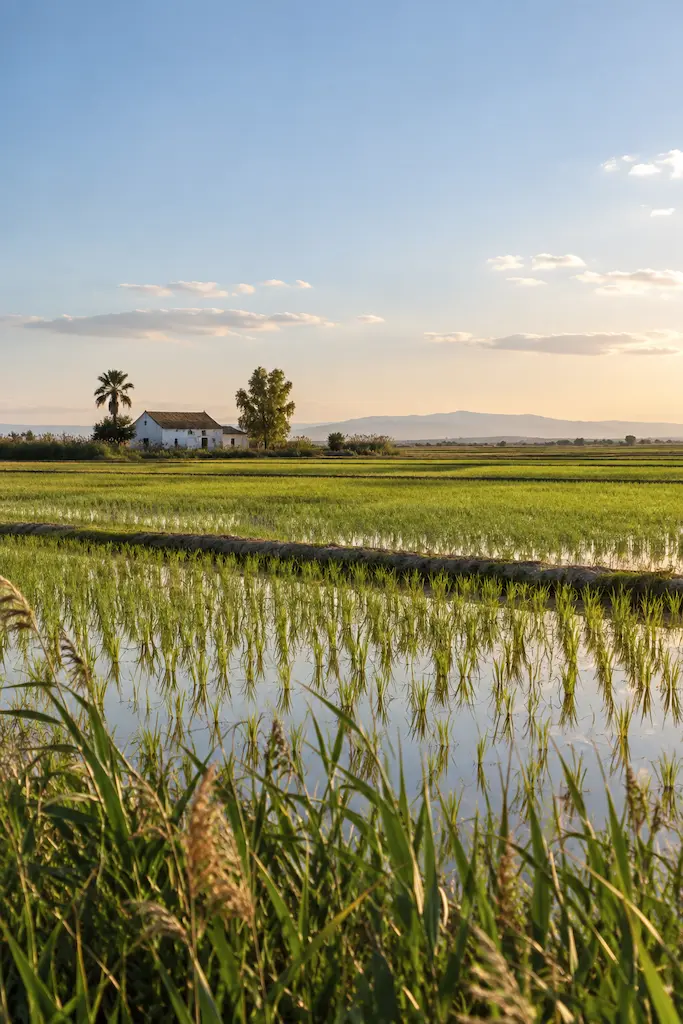
Drive south toward Albufera Natural Park and the city gradually loosens its grip. Buildings give way to pine trees, irrigation channels and vast rice fields, so flat that earth and sky seem to have negotiated an unusually uncomplicated border.
Suddenly, lunch you just ate makes sense. Valencia’s rice culture is not simply a culinary tradition; it belongs to this watery landscape, where rice has been cultivated for generations. After scraping the last toasted grains from a paella pan, seeing the fields where the story begins feels like meeting the person responsible for a particularly good meal.
The landscape is quieter here. Birds move above the reeds, narrow waterways reflect the sky, and the afternoon sun turns green rice fields into something approaching gold. There is very little to accomplish, which may be Albufera’s greatest attraction.
Sunset: Sorolla Gets the Last Word
By sunset, the lagoon becomes an enormous mirror. Traditional boats cross the still water, reeds darken along the shore, and the sky changes color faster than anyone can reasonably describe it. A passing boat breaks the reflection of the sun, and seconds later the water repairs itself as though nothing happened.
There is no need to identify a Sorolla painting that resembles the scene. By now, you understand what he saw: Valencia’s beauty is not contained in a monument, a museum or even a beach, but scattered across water, ceramic tiles, rice fields and ordinary people going about their lives.
Tomorrow, the shutters will open again in Cabanyal, someone will misjudge a horchata-soaked farton, and the Mediterranean sun will begin its performance all over again. Valencia will do all of this without us, which seems slightly rude.
But Sorolla leaves us with something better than a sightseeing checklist: the suspicion that, when the light is right, ordinary life is often the thing worth traveling to see.