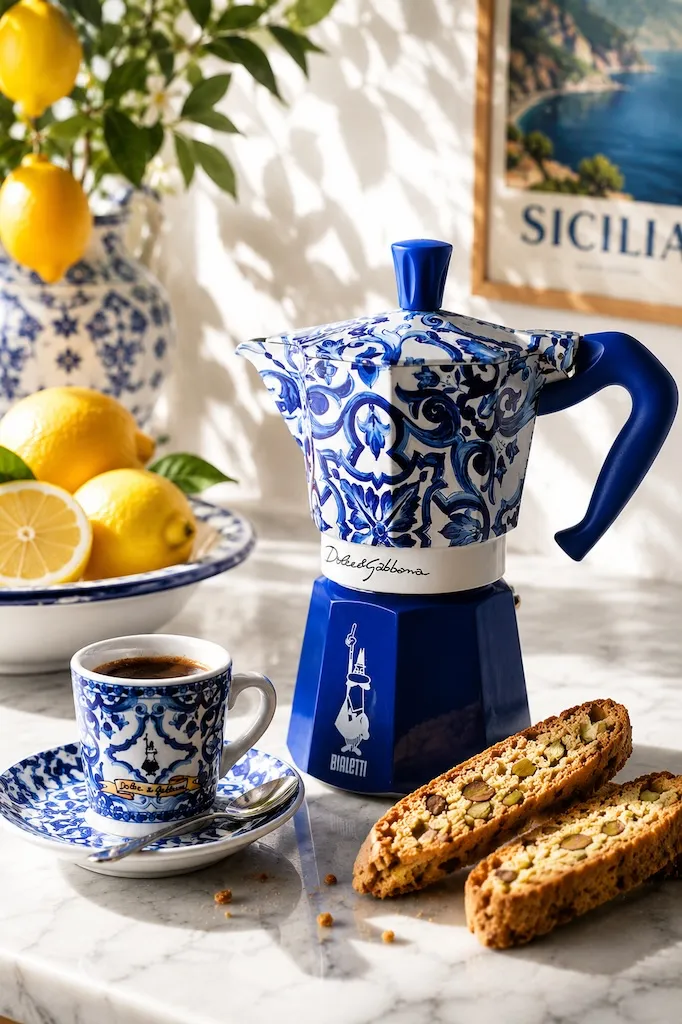
From Hollywood to high fashion, designers are turning toward clay—and rediscovering something Mediterranean makers never forgot.
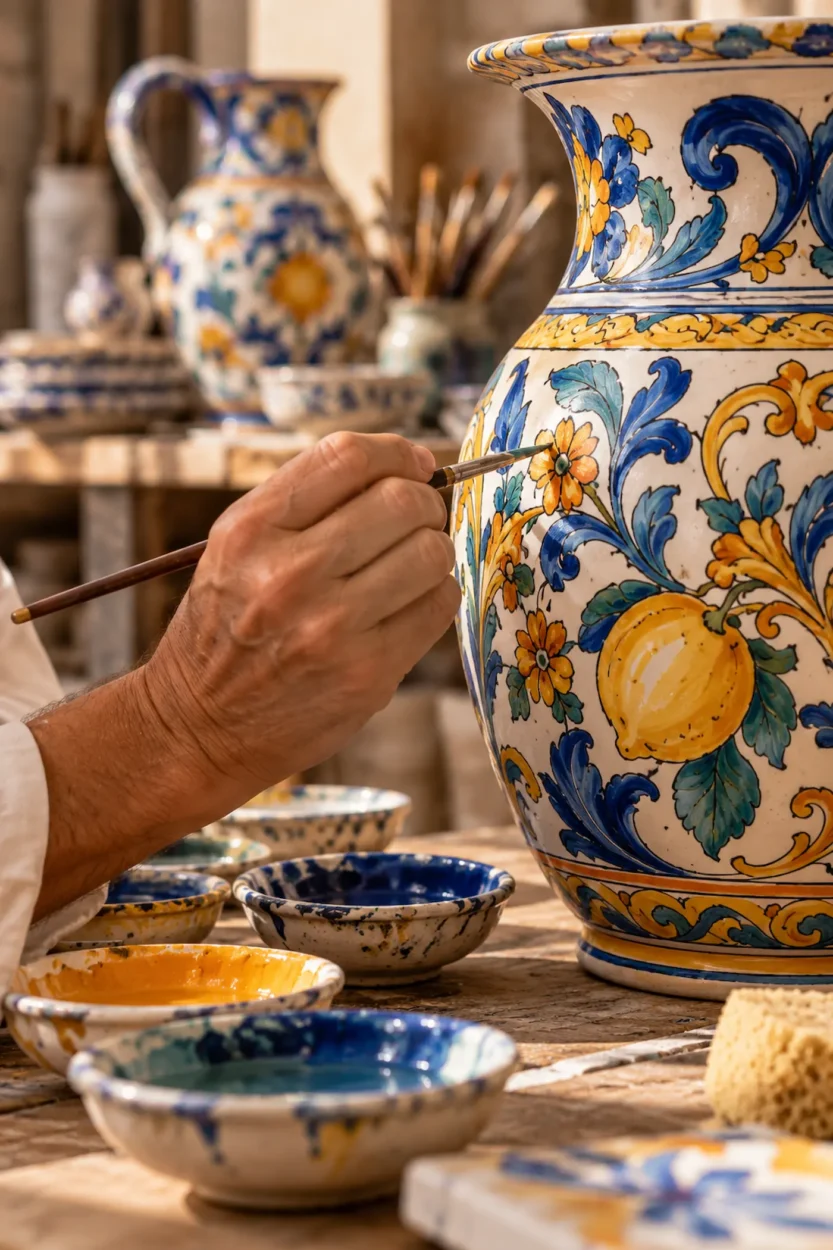
There is something wonderfully backward about spending your day at a computer that can correct almost anything, then spending your night making ceramics and working with clay—a material capable of ruining almost anything. Tina Charad has spent more than two decades creating graphics for film and television, including the meticulously constructed worlds of La La Land, Once Upon a Time in Hollywood and The Batman. In a recent Vogue profile, however, Charad opens the doors to her home outside Los Angeles, California, where another body of work has been taking shape: colorful, strange and sometimes satirical ceramics made decidedly by hand.
Charad told Vogue that ceramics initially offered an escape from digital work and later became an emotional outlet following the death of her husband. Clay gave her unpredictability and a different kind of creative freedom; she continues working in graphic design, but now moves between the precision of Hollywood and a material that cannot be persuaded to behave quite so perfectly. It would be tempting to call this another analog revival, except that across the Mediterranean, making things from clay never really went away. So why does one of our oldest crafts still feel so relevant?
An Ancient Craft, a New Vocabulary
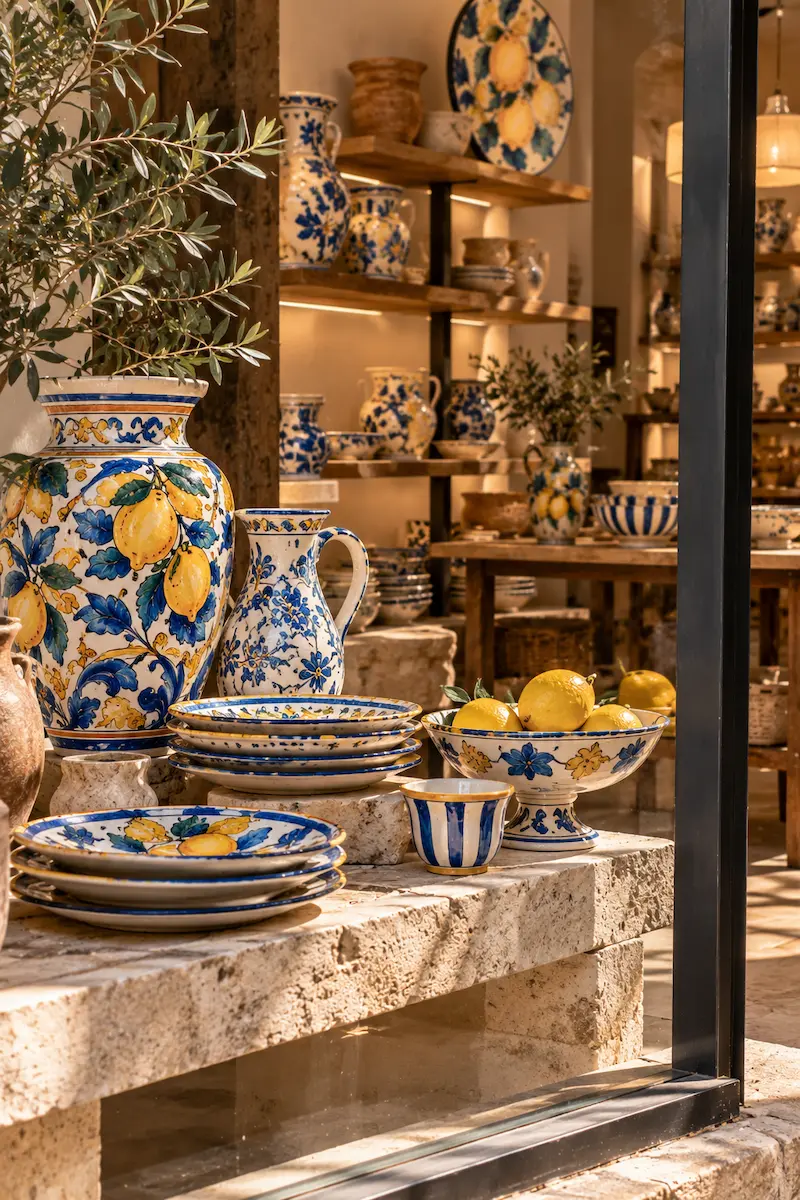
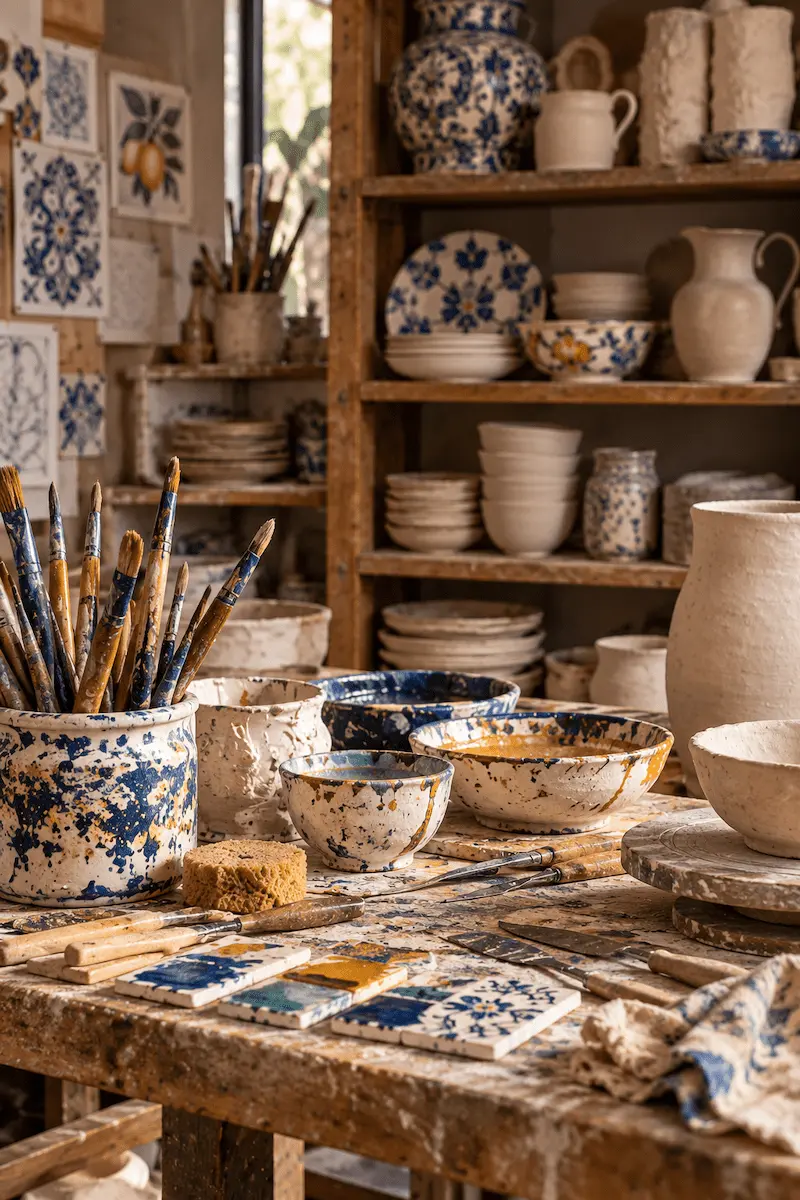
Italian maiolica has been turning ordinary earthenware into brilliantly painted objects for centuries. Dolce & Gabbana’s 2026 Casa collection doesn’t try to disguise that history; it works directly with ceramic centers including Faenza and Agrigento, where pieces are formed, fired and decorated using traditional maiolica techniques. What changes is the visual language: traditional Italian ceramic craftsmanship becomes the canvas for Dolce & Gabbana’s own interpretations, from the exuberant colors of the Carretto Siciliano “Sicilian cart” to Blu Mediterraneo and Verde Maiolica.
The important word here is not revival. These artisans weren’t waiting for fashion to rescue them. Dolce & Gabbana gives an old technique another contemporary chapter, placing inherited ceramic knowledge inside today’s design culture and supporting the workshops that still know how to execute it. That is how craft remains alive—not by insisting that every plate look as it did three hundred years ago, but by allowing a new designer to ask an old technique a different question.
When Clay Leaves the Plate
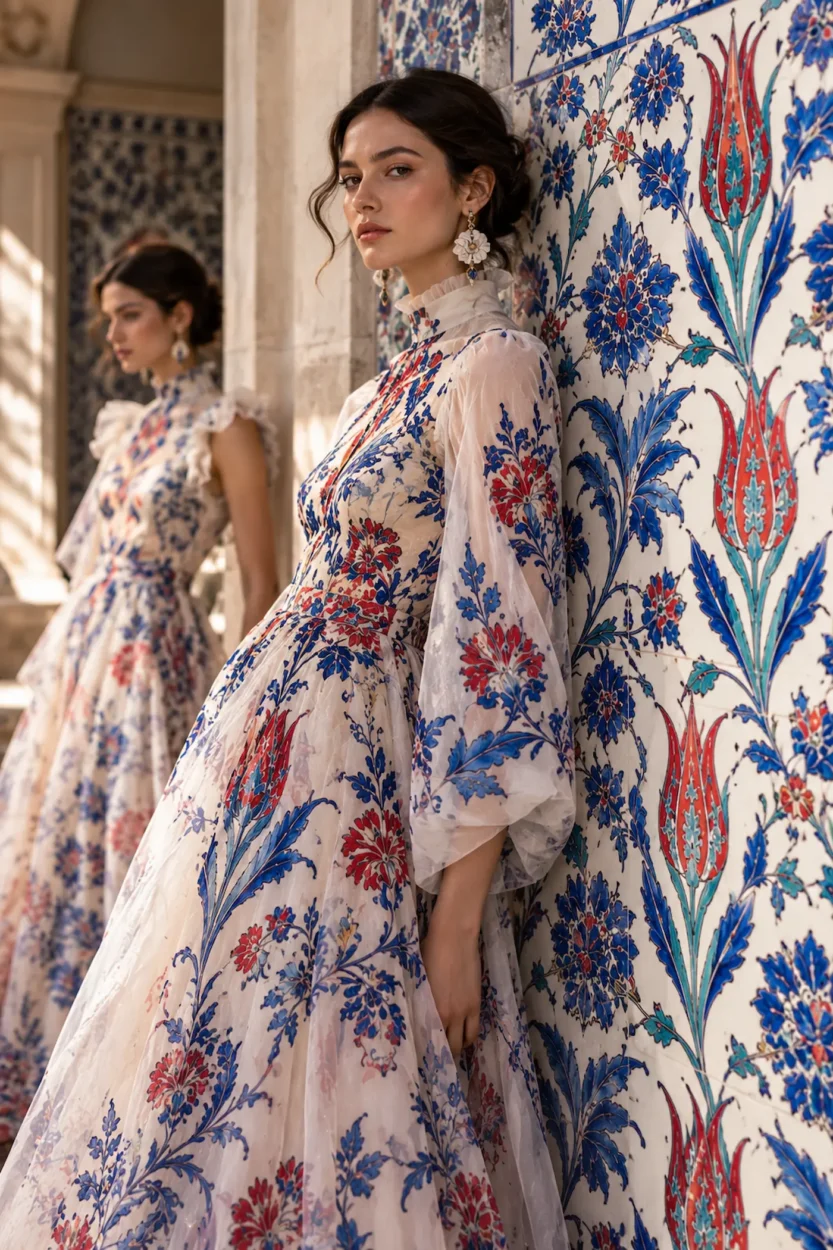
Sometimes the craft survives by allowing its visual language to travel. Turkish designer Bora Aksu returned to his roots for Spring 2024, looking to Ottoman textiles and the hand-painted patterns of İznik tiles. Instead of reproducing a ceramic object, he translated that centuries-old vocabulary into layers of tulle and organza—the memory of painted clay becoming contemporary fashion.
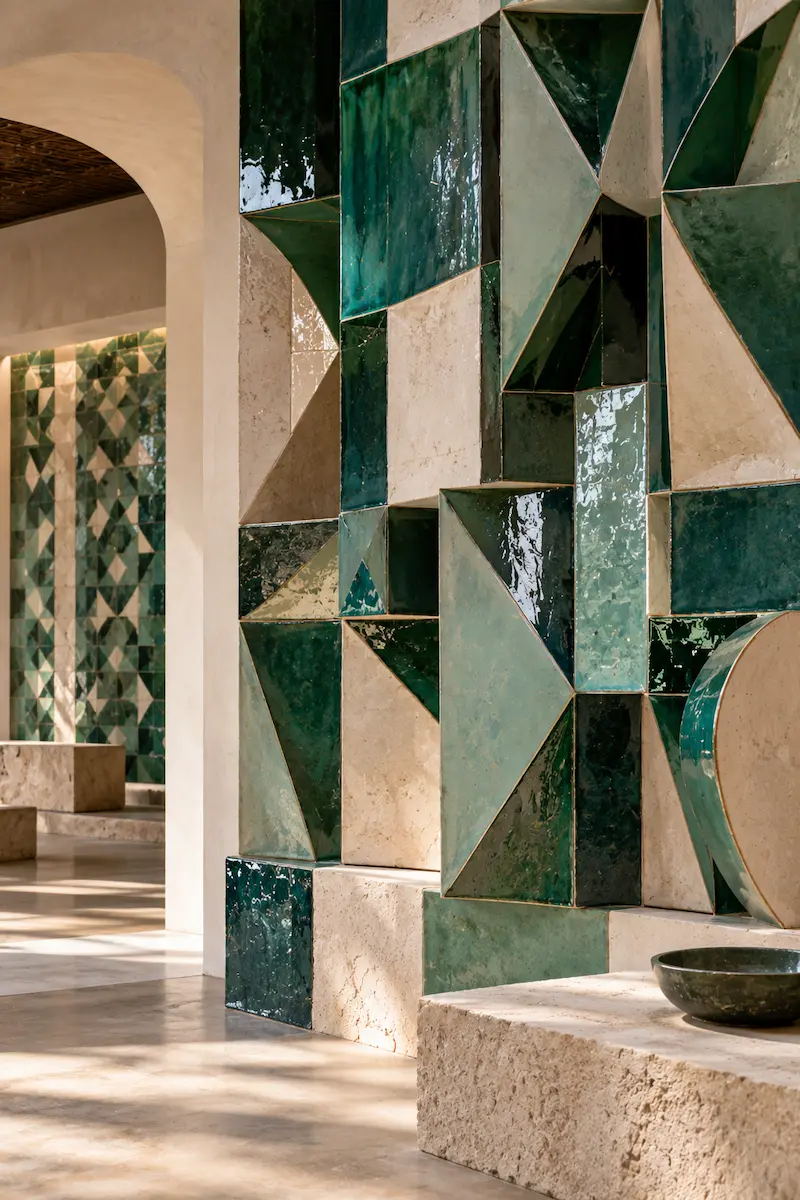
In Morocco, Franco-Moroccan designer and sculptor Samir Mazer goes further because he keeps the clay itself. For three decades he has worked with zellige, the traditional Moroccan glazed terracotta associated with Islamic architecture, while deliberately freeing it from familiar ornamental compositions. He folds it visually, breaks apart its geometry, works with raw and glazed surfaces, and turns what we recognize as “tile” into sculptural and architectural work.
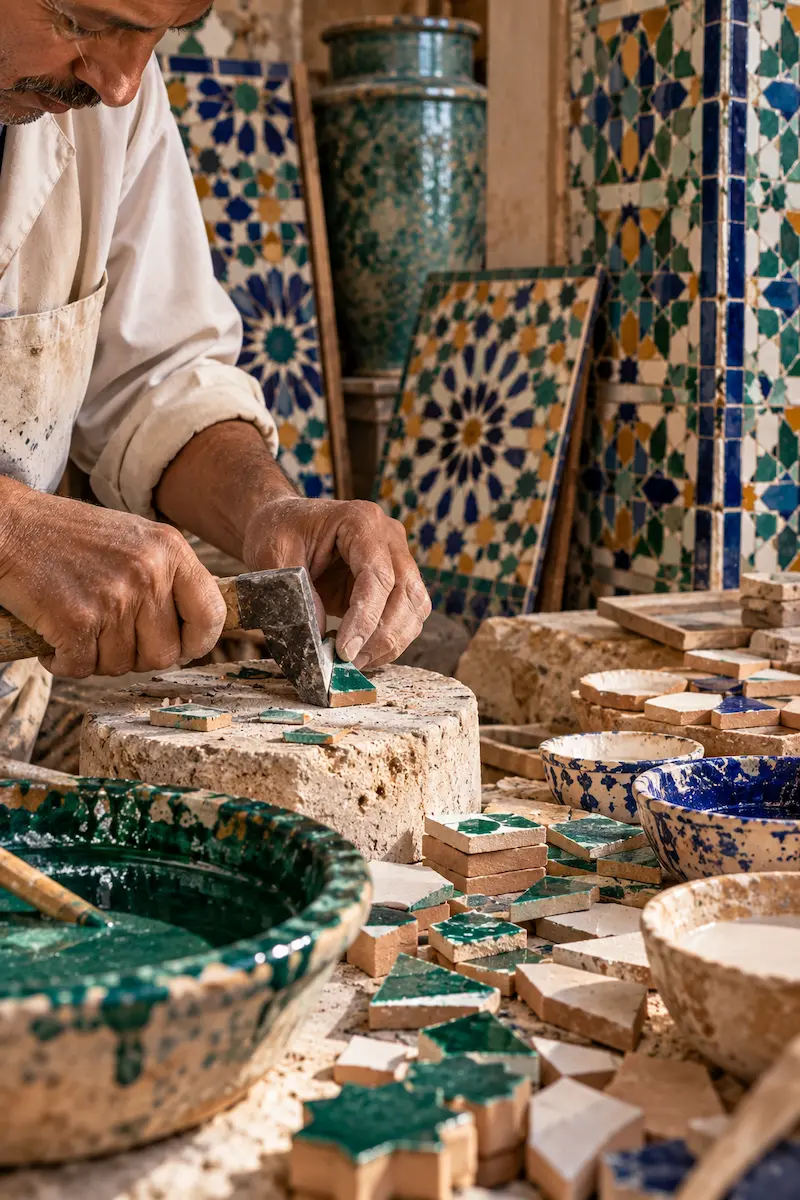
Mazer’s philosophy could almost serve as the argument for this entire story: preserving a culture isn’t enough to keep it alive; it must also be reinvented. Crucially, his contemporary language retains traditional technique and the expertise of master zellige artisans from Fez. The pattern can change dramatically while the knowledge in the hand continues.
The Hand Is Not Obsolete
Put these stories together and ceramics start to look less like a decorating trend and more like a remarkably adaptable creative language. Charad discovers clay from the highly controlled world of Hollywood graphics; Dolce & Gabbana brings contemporary design into Italian ceramic workshops; Aksu lets the visual memory of İznik migrate into fashion; Mazer takes Moroccan zellige somewhere its traditional geometry never expected to go.
What survives isn’t necessarily the original pattern. It is the knowledge of clay—how to shape it, glaze it, paint it, cut it, fire it and understand what it will do. A craft stays alive not because we preserve it exactly as it was, but because someone still wants to make something new with what it knows.
We Still Want to Make Things
There is an obvious irony in all this. We are living through a moment when digital tools, including AI, can produce sophisticated creative work almost instantly, yet designers are still attracted to a material humans have been shaping for thousands of years. Technology has transformed what we need to make with our hands; it hasn’t eliminated the pleasure of making.
The Mediterranean has a several-thousand-year head start, but its ceramic traditions remain alive precisely because people keep refusing to leave them alone. They paint them differently, alter their geometry, put them into new rooms, send their patterns onto a runway and occasionally hand them to a fashion designer with rather extravagant ideas.
So ceramics aren’t really “back.” They never disappeared. The remarkable thing is that after everything technology has given us, contemporary designers still find something in clay worth carrying forward—and skilled hands still know exactly what to do with it.
CONTINUE EXPLORING
Continue your journey with:
- When the Souvenir Becomes the Hotel Itself
- Made by the Coast: Clay, Mosaic and Glass
- From Palette to Room: Sea Glass