Hotels Made by the Places—and People—Around Them
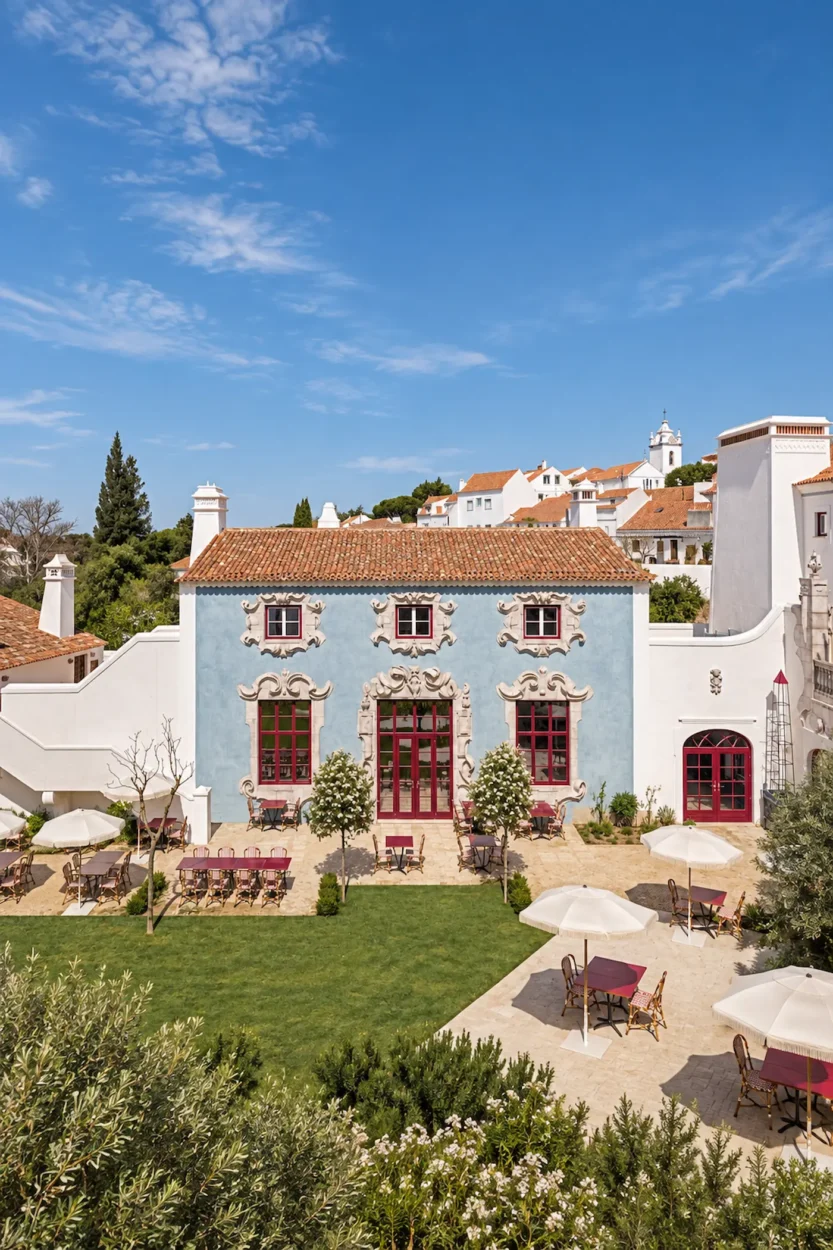
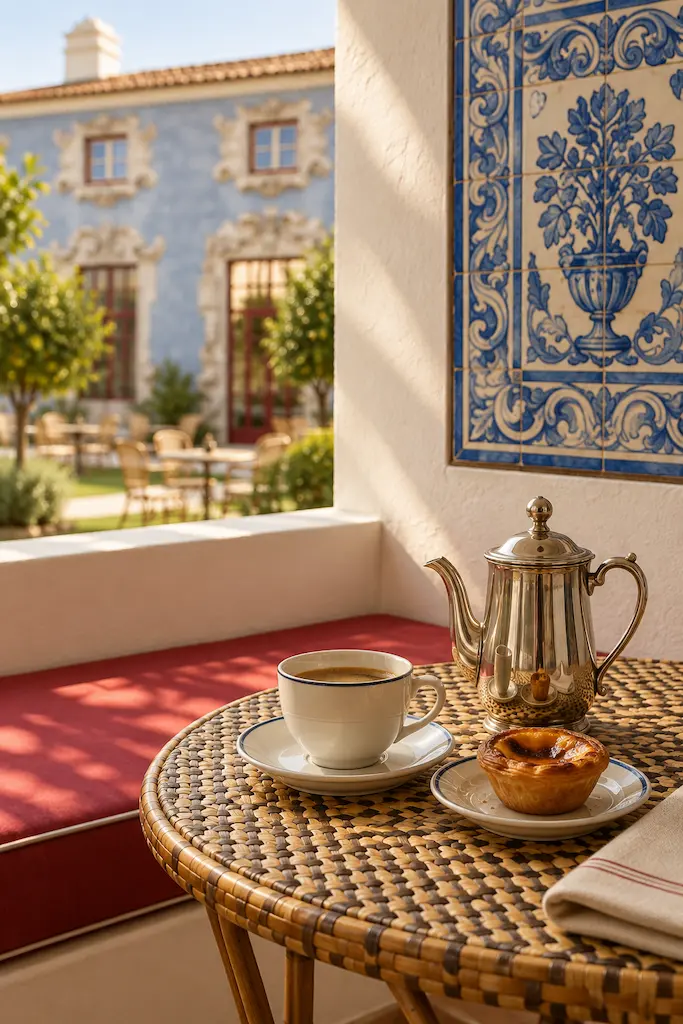
A souvenir is usually the thing you take home to remember a place. At Vermelho in Melides, a small coastal village in Portugal’s Alentejo region, Christian Louboutin seems to have reversed the usual arrangement: he built an entire hotel out of things worth remembering. The thirteen-room property mixes Portuguese azulejos and local craftsmanship with antiques, artworks and objects gathered from elsewhere, creating something closer to an eccentric private house than a hotel assembled by a procurement department.
That was deliberate. Louboutin worked with architect Madalena Caiado and Carolina Irving, filling Vermelho with pieces whose origins are unusually specific: floor tiles from Fábrica de Azulejos de Azeitão, silverwork made in Seville, Indian marble, frescoes, sculptural commissions and objects accumulated through years of travel. Even the bar refuses to behave itself—it combines Indian marble with hammered silver made by Sevillian craftsmen whose work draws on the elaborate metal traditions of Semana Santa.
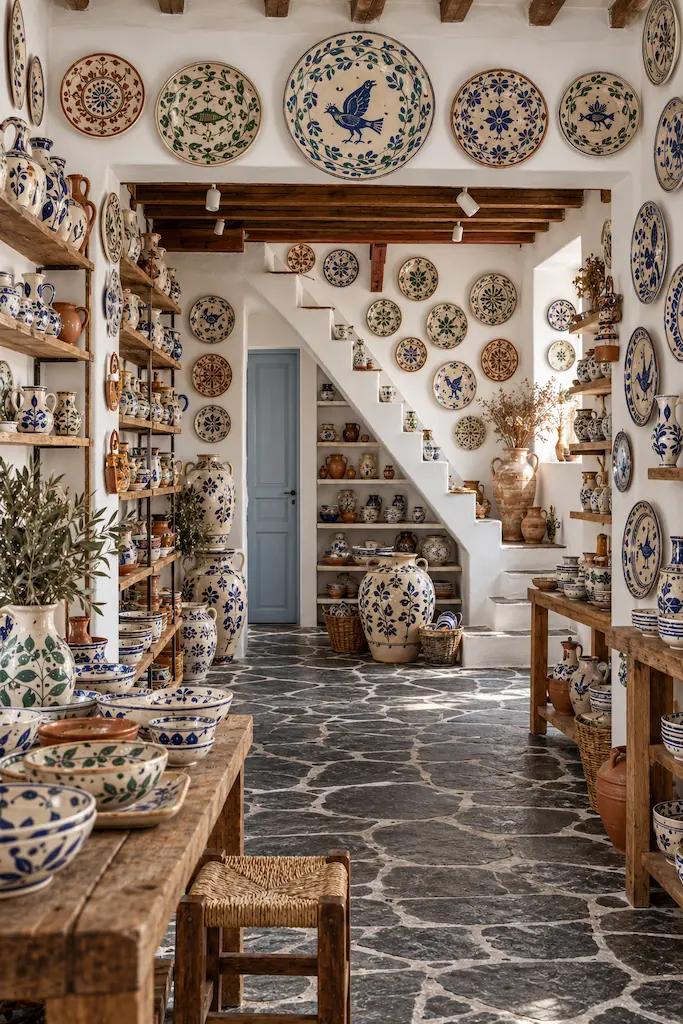
The important word here may not actually be local. It may be made. Vermelho proves that a hotel can feel collected rather than specified. At Stamna Sifnos, on the Greek Cycladic island of Sifnos, the idea becomes even more local.
The hotel takes its name from a traditional ceramic vessel, while its restaurant, Pilós, means clay; the owners commissioned the island potter Giannis Atsonios to create ceramic pieces used throughout the rooms and shared spaces. Guests are then sent to his workshop for pottery classes, which creates the sort of wonderfully circular economy in which the hotel buys the pot, displays the pot and then introduces you to the person who made it.
Sifnos’s craft traditions are not treated as a decorative theme. Olive wood appears in custom furniture, stone and marble come from Cycladic islands, and textiles draw on materials produced nearby. The result is not “Greek-style” in the increasingly meaningless international-design sense of white plaster plus one heroic amphora; it is a contemporary hotel whose materials still retain their addresses.
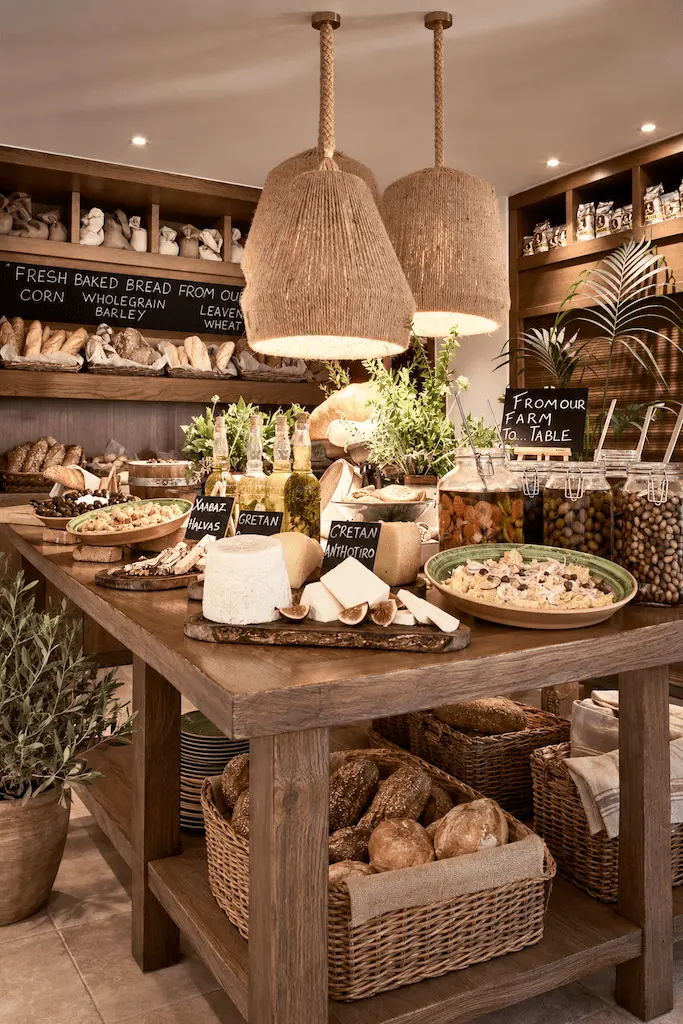
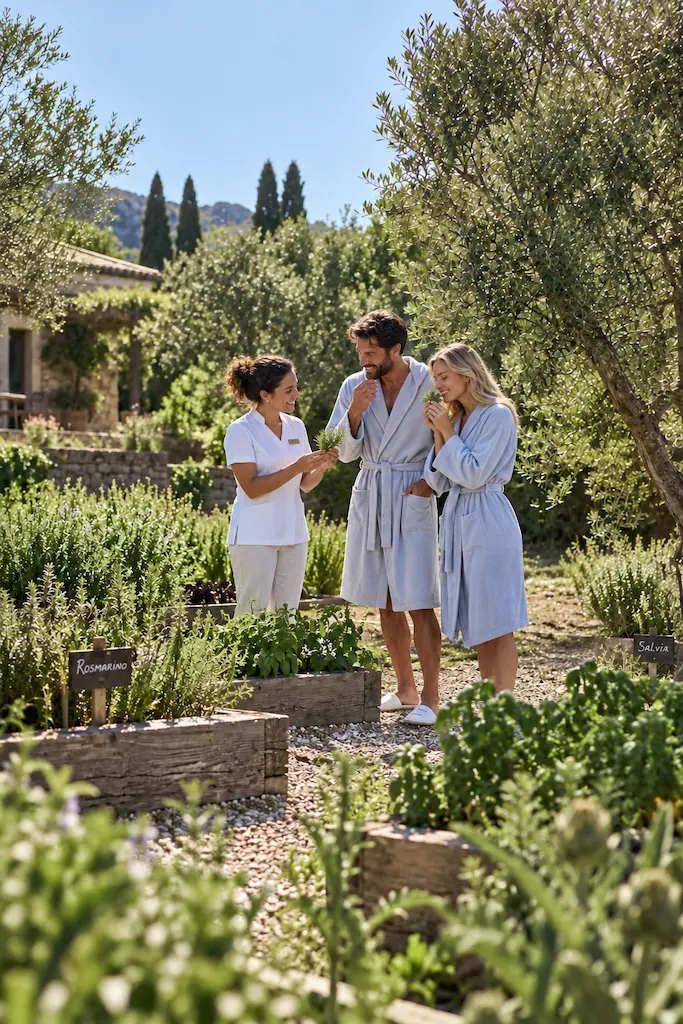
Once a hotel starts caring about who made the chair, the next question is obvious: who made breakfast? In Crete, Phāea Cretan Malia treats food as part of the same local story as craft. Produce comes from its Bostani organic garden and nearby small-scale growers, while local olive oil and honey bring the surrounding landscape directly onto the table. The meal stops being something served inside Crete and becomes part of how the hotel explains Crete.
Cascioni Eco Retreat in Sardinia pushes that idea even further. Much of what appears on the plate begins on the property itself—vegetables, herbs, fruit, grains and olive oil—while other ingredients come from small Sardinian producers preserving regional crops and traditions. Here, food is not simply an amenity after the room and the pool; it is another way the hotel lets you experience where you are.
That is what makes this new kind of hospitality interesting. The local ceramic cup, the woven basket, the olive oil and the tomato are all doing the same job: giving the place authorship over the experience. You are not just staying in Sardinia or Crete. You are eating from it, drinking from it and, quite literally, taking it in.

California has developed its own version of Mediterranean shorthand: pale wood, linen and, when everyone is feeling particularly adventurous, a room that looks vaguely like a surf shack. At Surfhouse in Leucadia, an eight-room hotel created by Encinitas locals, the hotel doesn’t try to contain the entire California experience behind its doors. Rooms are named after nearby surf breaks, decorated with a relaxed surf-house sensibility and filled with work by local artists.
Guests are then sent back out into the neighborhood for coffee, food, surfing and shopping along Highway 101. Local food may not come from a hotel garden, but the experience is still deeply local because the neighborhood is already doing the cooking: morning coffee comes from the café across the street, lunch from a nearby restaurant serving the day’s fresh catch, and the rest of the afternoon can unfold on foot or by bike. If you feel adventurous, there is no need to consult a city guide—the hotel offers surf lessons for every level, turning the town itself into part of the stay.
Instead of importing Leucadia into the hotel, Surfhouse sends the guest out into Leucadia.
A great hotel has always promised escape. These properties offer something slightly different: arrival. The souvenir is no longer waiting in the shop downstairs, because the most memorable object may be the room itself—and, for once, you know who made it.
That distinction matters because hotels have become extremely good at looking local. Pale plaster, handmade-looking ceramics, woven baskets and a menu scattered with regional ingredients can manufacture a sense of place remarkably quickly. But a hotel becomes memorable for a different reason when the objects, food and people around you actually belong to somewhere.
Perhaps that is why these places stay with you. The cup at breakfast was made by a potter nearby, the olive oil came from the surrounding landscape, the chair was commissioned rather than ordered by the hundred, and the artist whose work hangs above the bed may live a few streets away. The tiny inconsistencies that once would have been designed out of a luxury hotel become the very things that give it character.
And that brings us back to the souvenir. Normally, we leave a hotel and search for something small enough to carry home—a ceramic bowl, a bottle of olive oil, a woven basket—hoping it might preserve a little of the place after we leave. These hotels reverse the idea. The room, the meal, the cup, the chair and the people who made them become the souvenir themselves.
The more interesting hotels now offer something beyond escape: a place worth remembering because almost everything around you remembers where it came from.
CONTINUE EXPLORING
Inspired by this story? Continue your journey with When Fashion Houses Take Over the Beach →