Why Luxury Is Designing Experiences Instead of Rooms
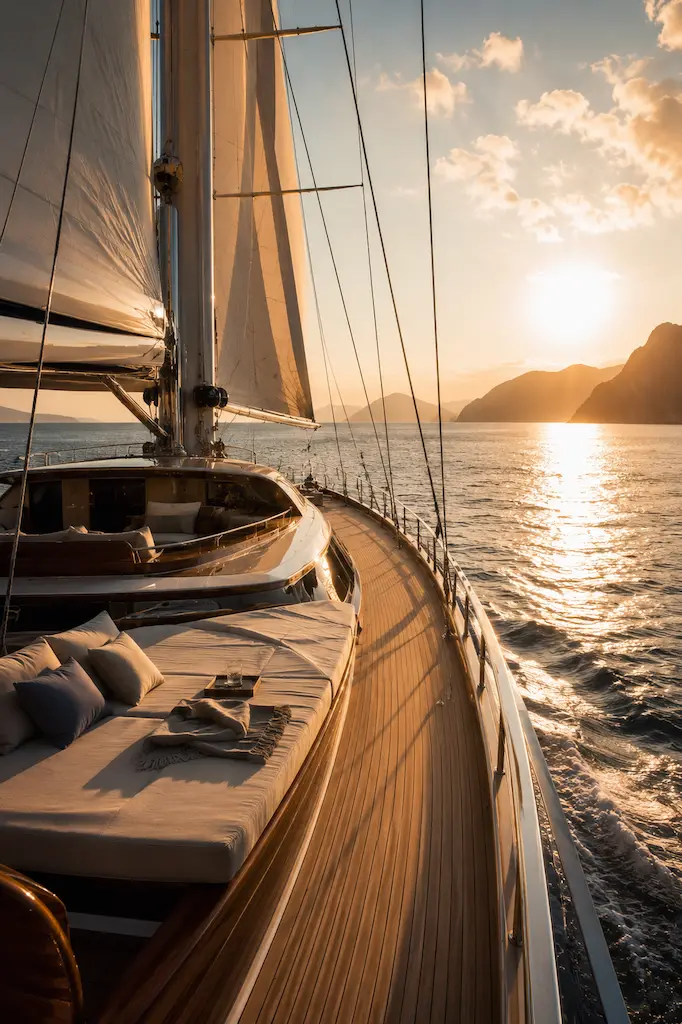
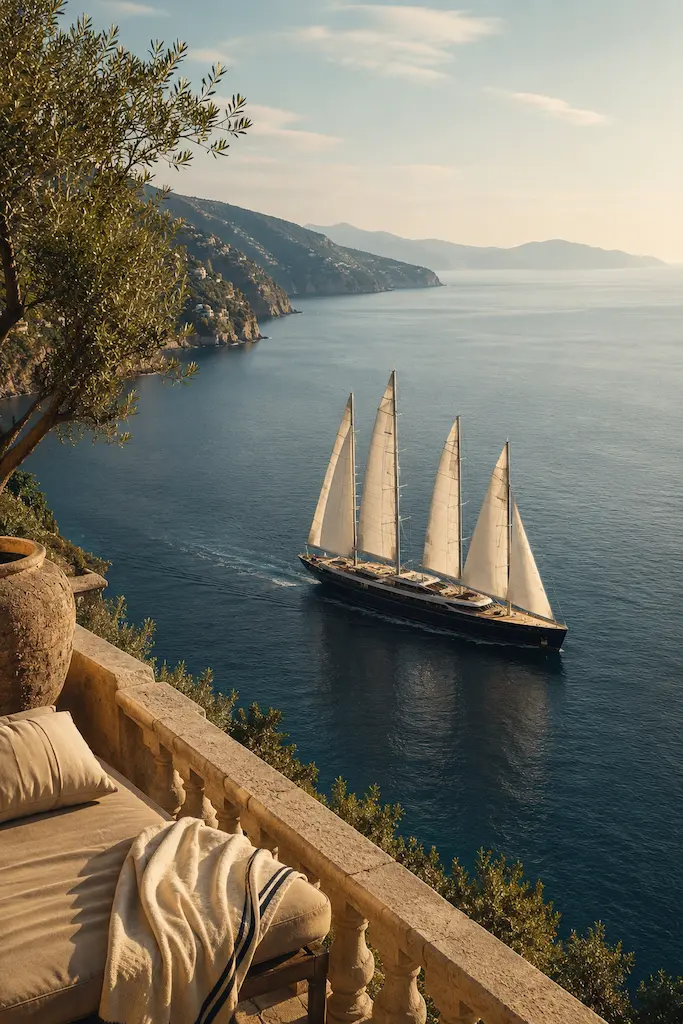
There is something slightly strange about the way we learned to vacation. Fly somewhere beautiful. Check into a beautiful hotel. Spend the next several days leaving that beautiful hotel to see everything else.
Hospitality is beginning to play with the formula. What if the hotel moved with you? It sounds thoroughly modern until you look backward. The Grand Tour of the 18th century was built around the journey itself: weeks or months spent moving through Europe, encountering cities, landscapes, art, architecture and food along the way. It sounds wonderfully romantic until we remember the roads were terrible, carriages were uncomfortable, journeys took forever and a hot shower was not waiting conveniently at the end of the day. There were no perfectly pressed sheets, no infinity pools and certainly no room service arriving with an espresso because the road through Tuscany had been particularly exhausting. Still, the idea was rather brilliant. You didn’t travel simply to arrive somewhere. The traveling was part of the experience.
Three centuries later, we seem to be rediscovering exactly that idea—with considerably better plumbing. For much of modern travel, speed won. Trains became faster. Aircraft made crossing continents ordinary. Connections were optimized, transfers shortened and everyone became strangely pleased when they could spend as little time as possible actually getting somewhere. Luxury travel is now experimenting with the opposite idea: perhaps getting there shouldn’t be something we rush through.
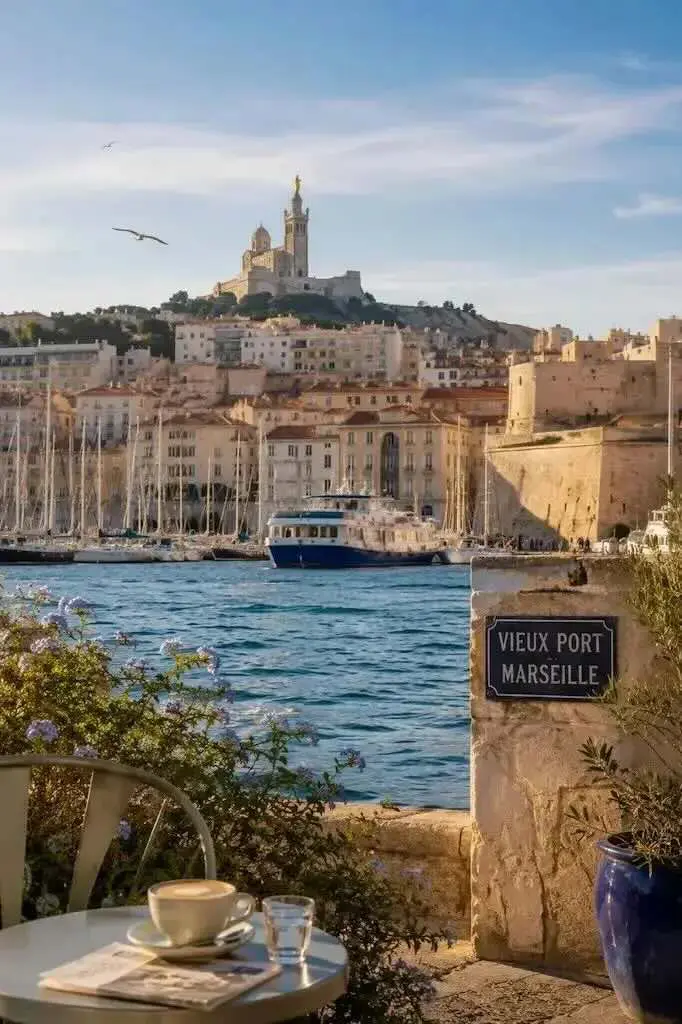
That helps explain the arrival of a rather unusual new category of hospitality. Four Seasons has launched a yacht. The Ritz-Carlton has a yacht collection. Even Orient Express, the name practically synonymous with making the journey more glamorous than the arrival, has taken to the water. Apparently, once you’ve perfected the train, the Mediterranean is the logical next step.
But these aren’t simply ships borrowing hotel terminology. They represent an interesting reversal. Instead of transporting ourselves to a hotel, unpacking and using it as a base for seeing a destination, the hotel comes along. You sleep there. You eat there. You swim, read, have coffee, watch the coastline and go to dinner there. Meanwhile, almost unnoticed, your address changes.
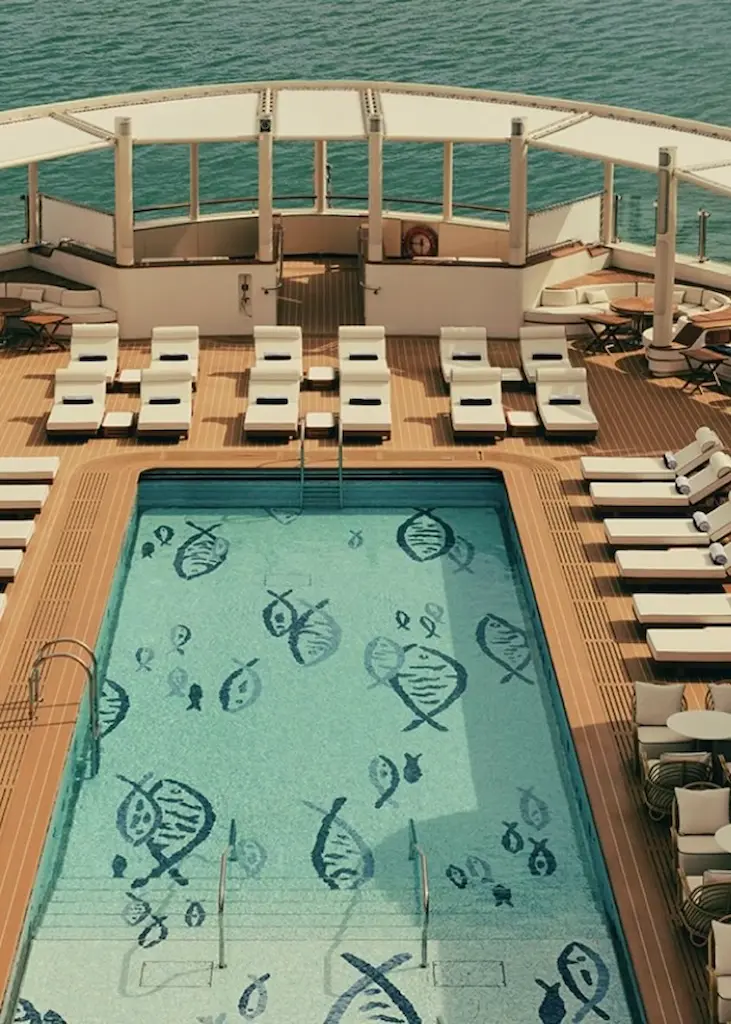
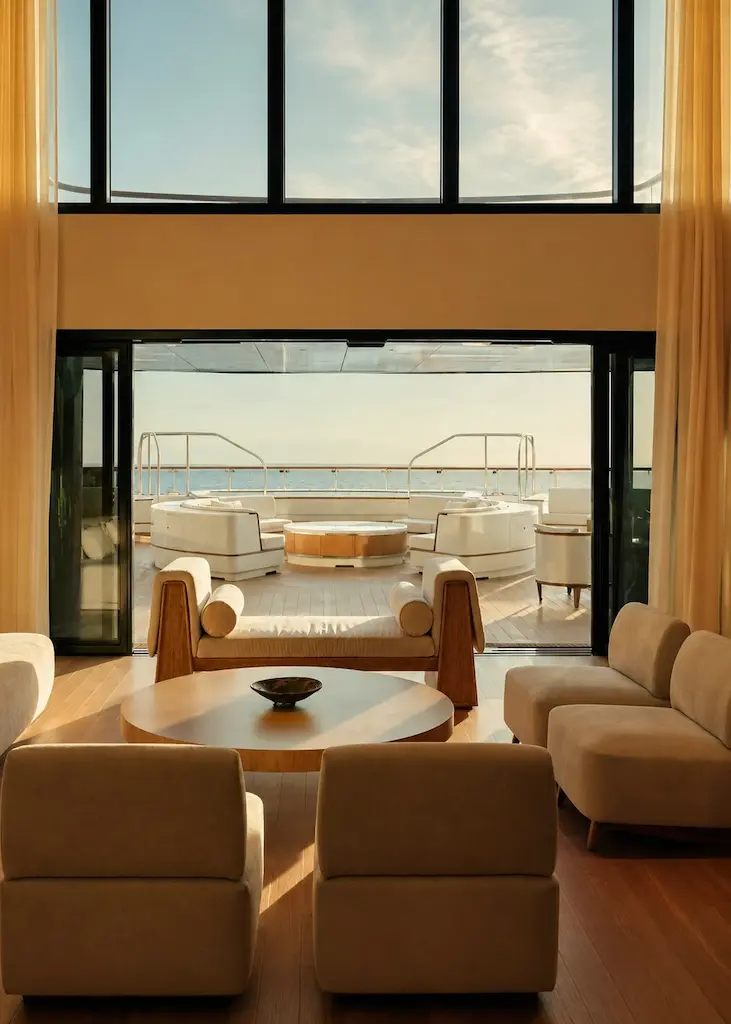
The Ritz-Carlton Yacht Collection has taken the idea to sea. Rather than reproducing the traditional cruise experience with a more expensive room, the concept borrows from small-yacht travel and resort hospitality: suites instead of conventional cabins, restaurants and terraces rather than simply places to pass the time between ports, and itineraries designed around the places visited.
Four Seasons Yachts has pushed the idea further into familiar hotel territory. Its first yacht, Four Seasons I, began Mediterranean voyages in 2026, bringing the company’s approach to restaurants, wellness, service and residential-style spaces onto a vessel that changes destination as guests sleep.
And this is where the room suddenly becomes interesting. A hotel traditionally sells a view that stays reassuringly where you left it. Book a room overlooking the Amalfi Coast and, barring a fairly serious geological event, the Amalfi Coast should still be outside the window tomorrow morning. A yacht hotel can’t make the same promise. Your morning coffee may come with one island. Lunch with open water. Dinner with another harbor entirely. It is, quite literally, a room with a 24-hour view.
Perhaps no name illustrates this return to journey-as-experience better than Orient Express. The original idea of the great luxury train wasn’t simply that it could take passengers somewhere. Ordinary trains could manage that perfectly well. What made the Orient Express legendary was that the hours between departure and arrival mattered. Dining mattered. Sleeping mattered. Looking out of the window mattered. The journey acquired its own identity. Now Orient Express has translated that philosophy onto water with Corinthian, its sailing yacht. The famous railway name has effectively become a floating hotel, with Mediterranean journeys that make being at sea part of the experience rather than an inconvenient gap between destinations.
There is something wonderfully circular about it. The Grand Tour made the journey important. The great trains made it comfortable. Air travel made it fast. Now hospitality is asking whether perhaps we hurried things a little too much. This changes another familiar idea about vacations: today, the destination is no longer one place. For generations, we chose one. Capri. Mykonos. Dubrovnik. Saint-Tropez. We arrived, unpacked and temporarily adopted it as home.
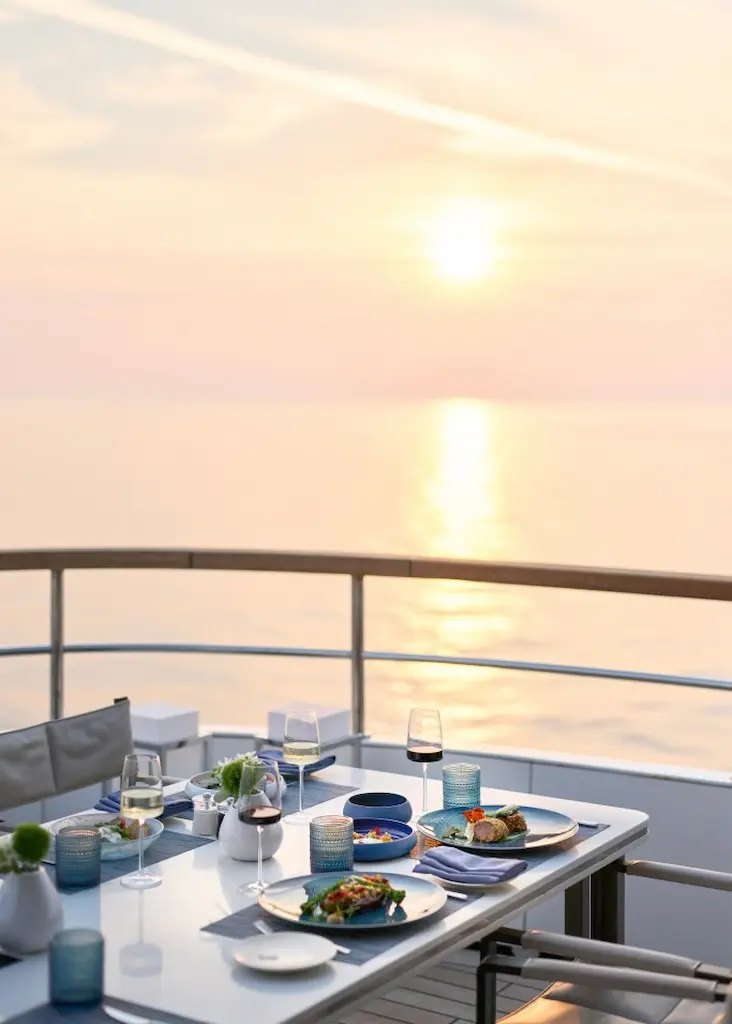
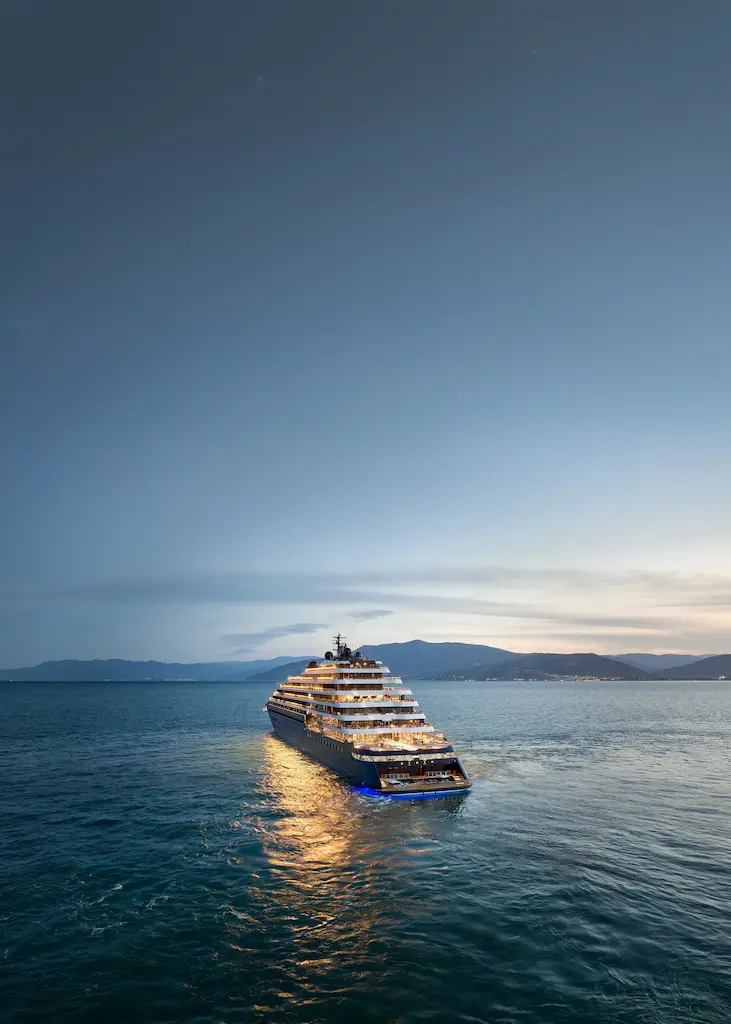
A moving hotel makes the destination less certain. Is the destination the Greek island where you had lunch? The coastline you watched from the terrace that afternoon? The harbor where you spent the evening? Or the stretch of Mediterranean between them? Maybe it doesn’t particularly matter. The experience is no longer organized around one spectacular place. It becomes a sequence of places connected by the hours between them.
That is surprisingly close to the old Grand Tour philosophy. The traveler isn’t simply collecting destinations. The movement between them becomes part of the memory. Only now there is Wi-Fi. And a spa. Progress has its advantages.
There is a larger shift hiding behind all of this. For decades, luxury hospitality competed through the room. Bigger suite. Better bathroom. Better sheets. Better minibar. Better view. Eventually there are only so many ways to make a hotel room larger before you have accidentally built an apartment.
So the competition has moved outside it. Hotels now design what happens when you wake up. Where you swim. What you eat. Who cooks it. What you learn. What you see at sunset. Where you sail. How you encounter the landscape. The room still matters, of course. Nobody is campaigning for the return of the uncomfortable carriage and questionable 18th-century inn. But the room is becoming one piece of a much larger composition. Luxury has shifted from giving us beautiful things to designing ways of experiencing beautiful places. The yacht hotel simply makes that shift unusually easy to see.
None of this means the traditional hotel is disappearing, nor that everyone suddenly needs to cross the Mediterranean on a floating Four Seasons. The interesting part isn’t whether most of us will ever book one. It’s that these experiments tell us something about where travel is going. After decades of trying to get everywhere faster, some of the most ambitious new travel experiences are making the journey longer on purpose. They are giving us reasons to notice the hours between destinations again. Perhaps that is the real luxury being sold. Not the suite. Not the yacht. Not even the view. Time to experience where you are while you’re still on your way somewhere else. The travelers of the Grand Tour understood that part rather well. They just would have appreciated the shower.
And What About California?
For now, California appears to be sitting out this particular version of the new Grand Tour. Four Seasons Yachts, The Ritz-Carlton Yacht Collection and Orient Express have announced voyages across the Mediterranean and other parts of the world, but none currently has a California itinerary. So if a floating hotel with a different view outside your window every morning sounds irresistible, you will need to travel for it.
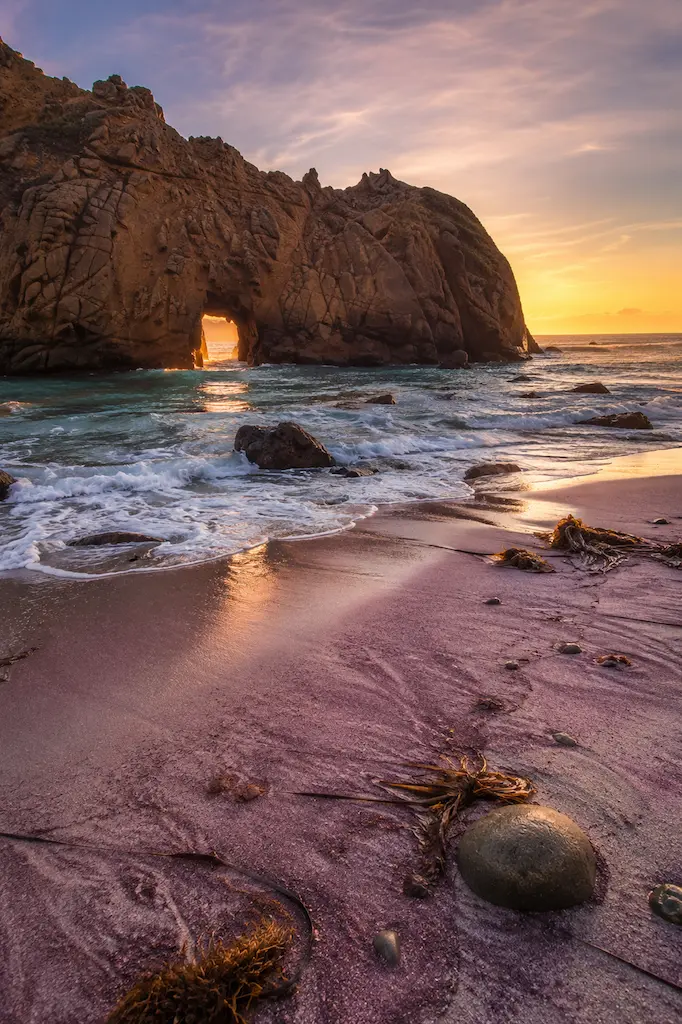
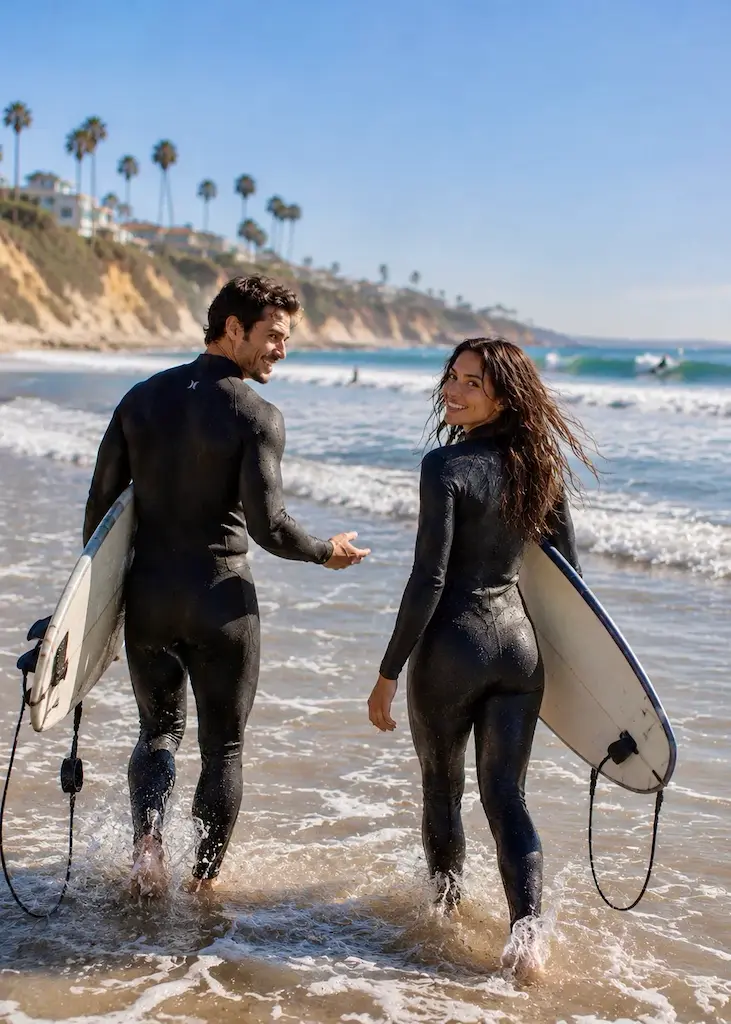
California, however, has another arrangement. You can walk onto many of its beaches without checking into anything at all. No suite. No yacht. No perfectly arranged breakfast waiting on deck. Just the Pacific, a towel and miles of coastline where public beach access is protected by law.
Which leaves us with two rather wonderful ways to escape. Cross the Atlantic and experience the 21st-century Grand Tour—with excellent plumbing—or stay in California and enjoy one of coastal life’s great luxuries without booking a room: access to the sea. Apparently, there is still more than one way to get a 24-hour view.
CONTINUE EXPLORING
Inspired by this story? The story continues. Here is your next read Space In California, Intimacy in The Mediterranean →