The Most Moroccan Drink Didn't Begin in Morocco

The most Moroccan thing about Moroccan mint tea may be how little of it began in Morocco. The green tea came from China, British merchants helped bring it to Moroccan ports, and sugar arrived through expanding trade networks. Morocco supplied the mint, the craftsmanship, and something considerably harder to import: the art of making a guest feel welcome.
Today, atay, as tea is known in Morocco, appears in family kitchens, Marrakech riads, roadside cafés, and the smallest shops tucked into winding medinas. It arrives in delicate glasses, often accompanied by a silver-colored teapot and enough fresh mint to suggest someone has been gardening indoors. Yet this seemingly timeless national tradition became widespread surprisingly recently.
A Chinese Leaf, a British Merchant, and an Unexpected Moroccan Success
Tea was known among Morocco’s wealthy households before the nineteenth century, but it remained a luxury rather than an everyday habit. During the 1800s, expanding commerce with Europe brought larger quantities of Chinese green tea into Moroccan ports, particularly Tangier and Essaouira. The Crimean War of the 1850s is often credited with accelerating the trade when British merchants sought alternative markets, although the tea trade had begun earlier. By the 1870s, imported tea had become part of everyday Moroccan life, an unusually rapid transformation for a national custom.
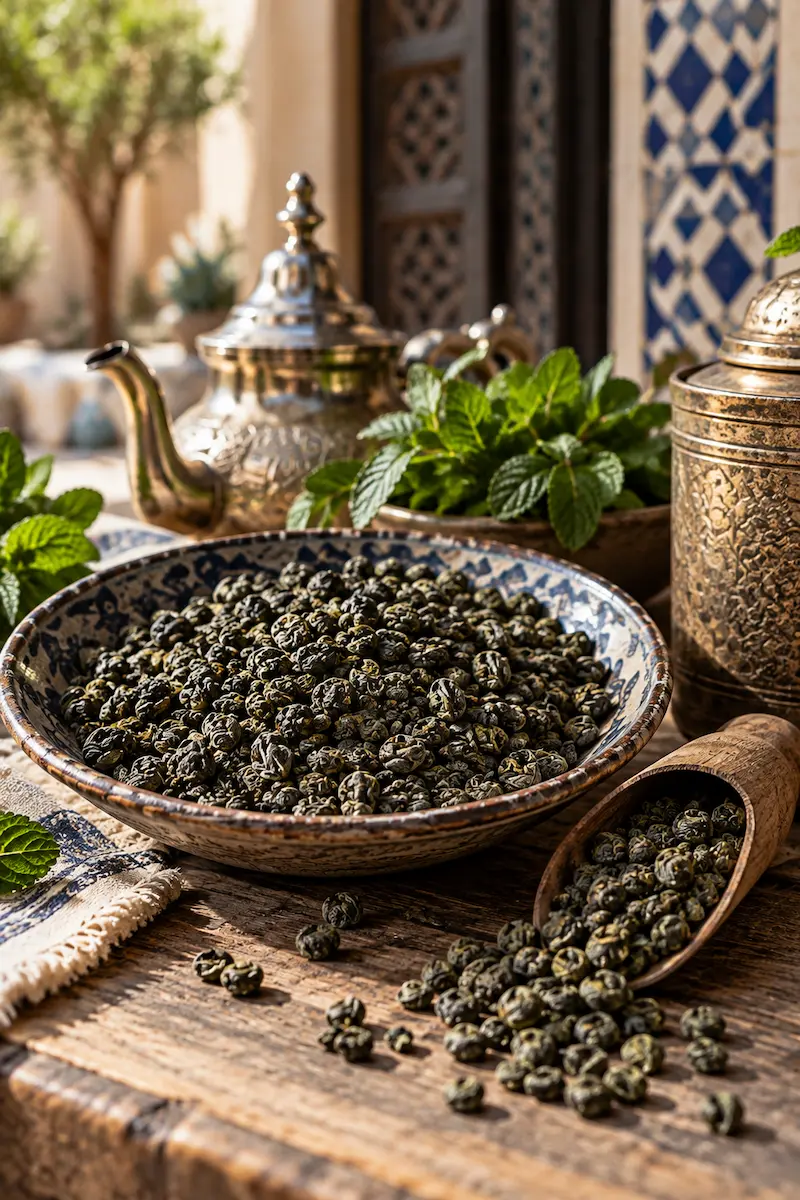
The preferred variety was Chinese gunpowder green tea, named for its tightly rolled leaves rather than anything particularly explosive about the beverage. Its assertive flavor stood up beautifully to Morocco’s generous additions of fresh spearmint and sugar. What began as an imported commodity became something entirely different, shaped by local tastes and social customs. China supplied the leaves; Morocco gave them a personality.
Why Morocco Turned Tea Into a Performance
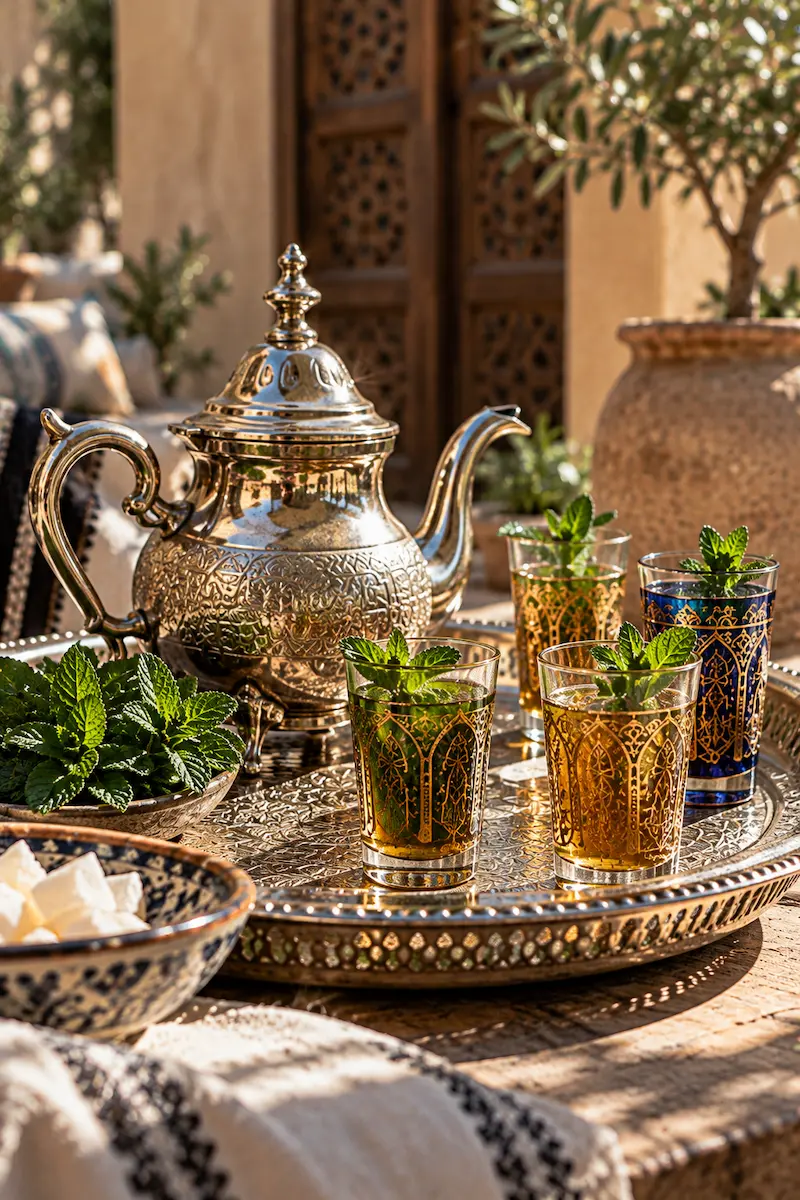
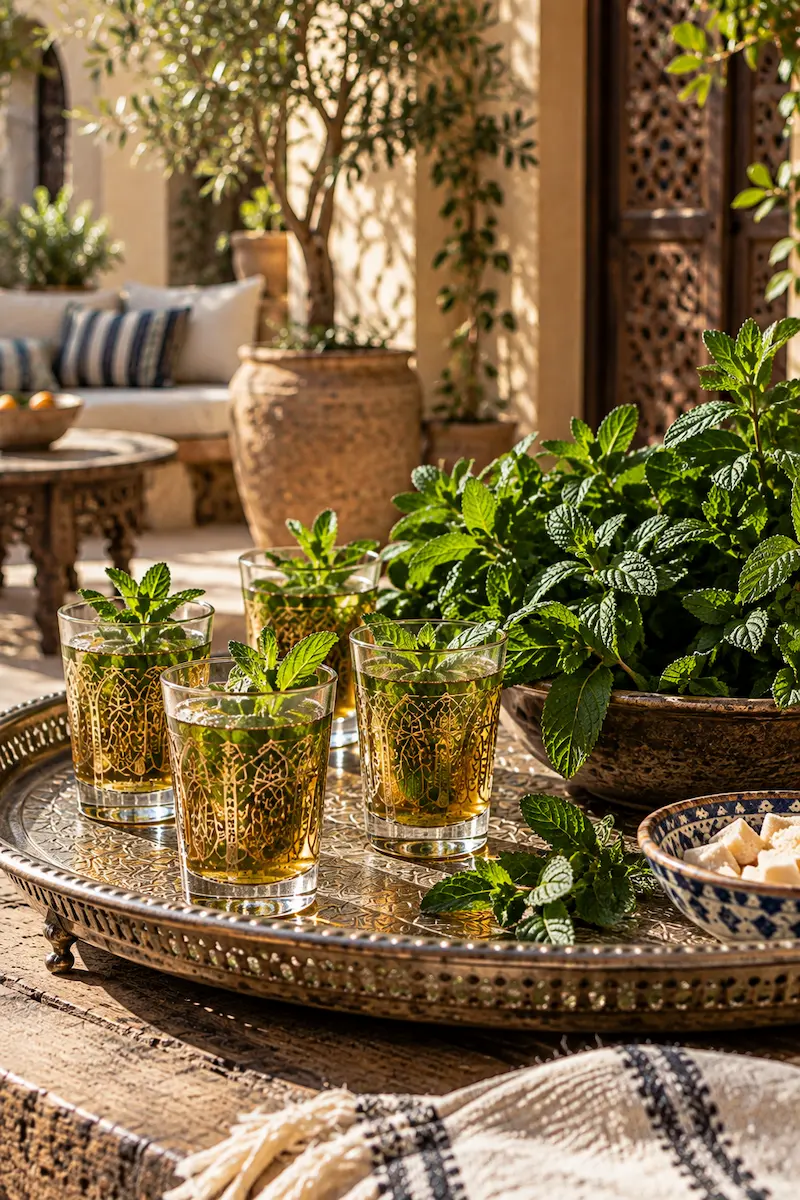
A Moroccan tea service is a small exhibition of craftsmanship. The berrad, a distinctive teapot with a curved spout, is often made from polished metal and sometimes elaborately engraved, while the accompanying glasses display colored patterns, gilded details, or intricate geometric designs. The tray is part of the composition, turning an ordinary refreshment into something that deserves its own furniture.
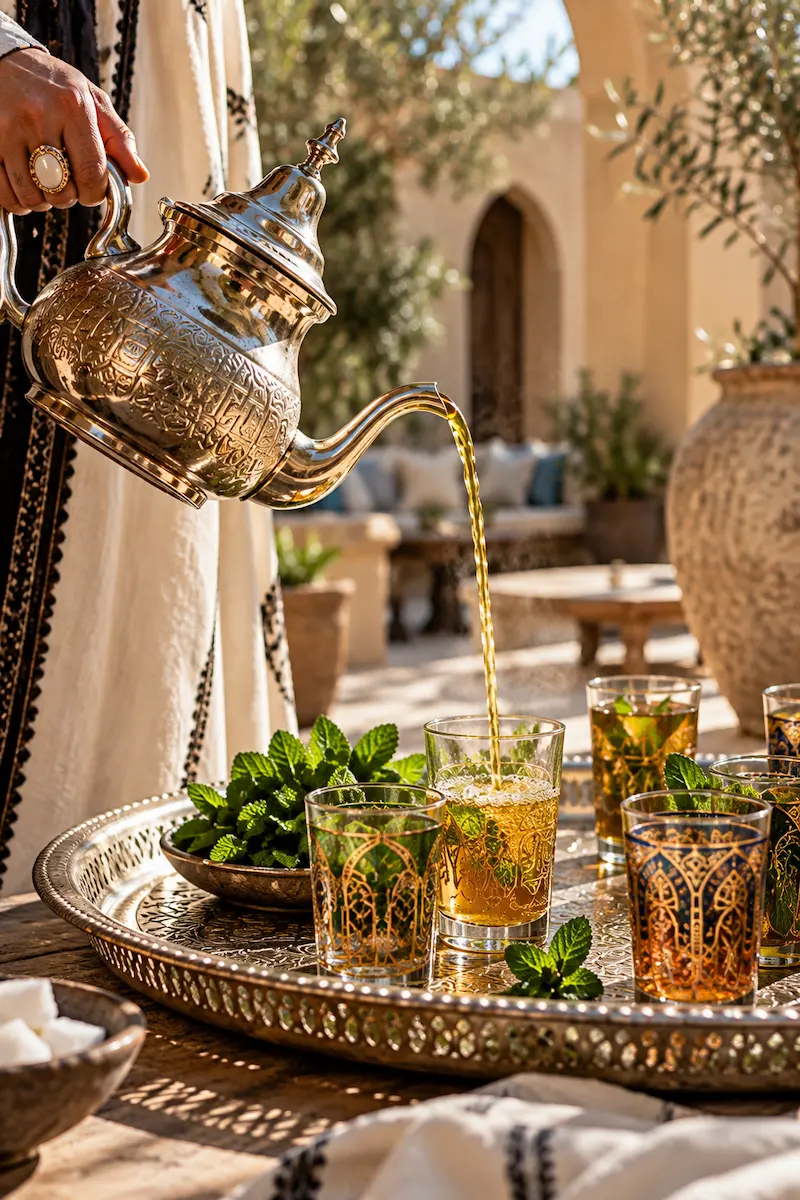
Then comes the pouring, frequently performed from a height that would make a cautious English tea drinker deeply uncomfortable. The technique helps mix and aerate the tea, producing the delicate foam prized in a well-served glass. Traditionally, the person preparing tea for guests may be the household’s host or another respected family member, although customs vary. The performance isn’t simply decorative; it transforms preparation into a visible gesture of attention.
And the drink itself is hardly uniform. Fresh spearmint dominates the familiar version, but Moroccan tea traditions also incorporate herbs such as wormwood, thyme, sage, and lemon verbena, depending on season and locality. The bitterness of the tea, freshness of the herbs, and sweetness of the sugar create a balance that changes from household to household. There is no single glass that speaks for an entire
The Real Ingredient Is Hospitality
In Morocco, offering tea is rarely just about satisfying thirst. It welcomes a visitor, begins a conversation, accompanies a negotiation, and gives people permission to remain seated a little longer. The ritual carries social meaning beyond the ingredients, something anthropological research has examined through hospitality, family roles, and everyday customs.
There is also a charming contradiction in how elaborate this supposedly simple drink has become. Three basic ingredients require a teapot, a tray, specialized glasses, careful preparation, and sometimes an impressive demonstration of pouring accuracy. Yet none of it feels excessive when the purpose is to make someone feel that their arrival matters.

What California Could Learn From a Glass of Tea
California and Morocco share a fondness for sunshine, outdoor gatherings, and the pleasure of lingering over something refreshing. Yet their approaches to entertaining reveal an interesting contrast. California has perfected the informal invitation, where guests wander between the kitchen and terrace, helping themselves to whatever is available. Morocco’s tea tradition gives that same hospitality a more deliberate beginning.
Perhaps the lesson isn’t to replace California’s relaxed entertaining with engraved silver teapots and ceremonial pouring. It’s simply to recognize that welcoming someone can be an occasion in itself, even when the occasion is nothing more than an afternoon visit. A few minutes spent preparing something for another person can change the atmosphere of an entire gathering.
And then there is the scent. Long after the glasses have been cleared, the fragrance of fresh mint has a remarkable ability to recall a place, a conversation, or an afternoon that seemed entirely ordinary at the time. Morocco may have imported the tea, but the memory it leaves behind is unmistakably its own.
EDITORIAL RESEARCH – Historical background draws on Etty Terem’s Old Texts, New Practices: Islamic Reform in Modern Morocco, research published in the Canadian Journal of African Studies, and Monika Sudakov’s anthropological study of Moroccan mint tea and hospitality.