Don't Call Puglia Charming. Call It Calm.
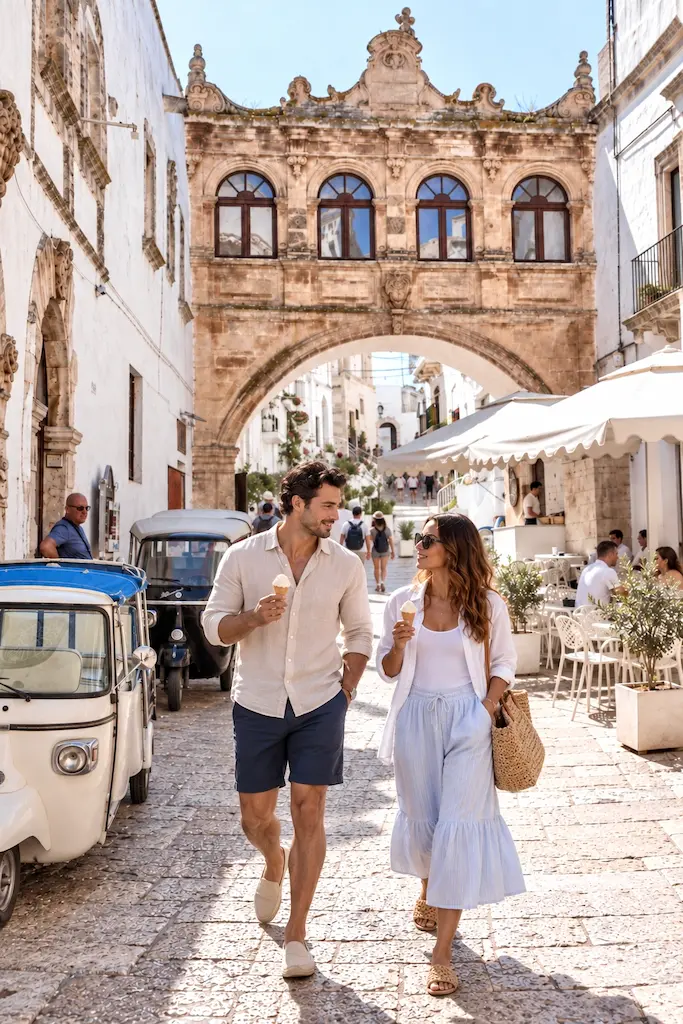
Every village in Europe is charming. Every café is quaint. Every street is picturesque. Somewhere along the way, travel writing ran out of adjectives. Calm, on the other hand, is something people are desperately looking for. That’s what makes Puglia different. Most visitors arrive expecting whitewashed villages, turquoise water, handmade pasta, and photographs worthy of a postcard. They usually find all of those things, yet many leave without noticing the region’s greatest achievement. Puglia isn’t simply beautiful—it is remarkably good at removing the little frictions that make modern life feel busy, and that quiet difference is what stays with people long after the holiday ends.
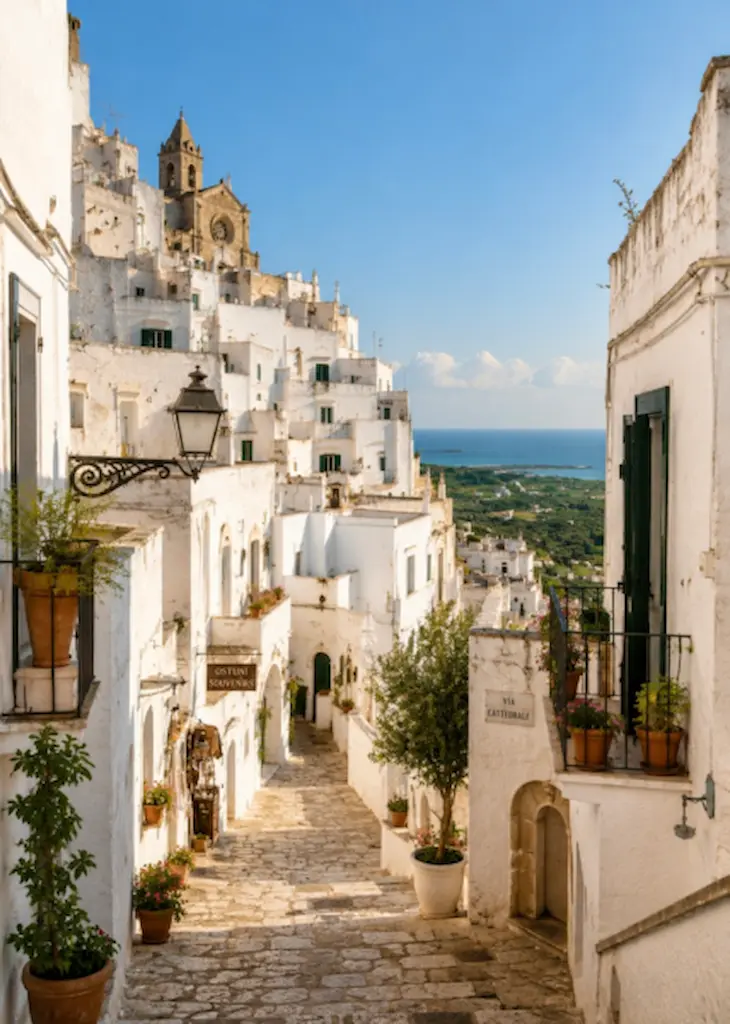
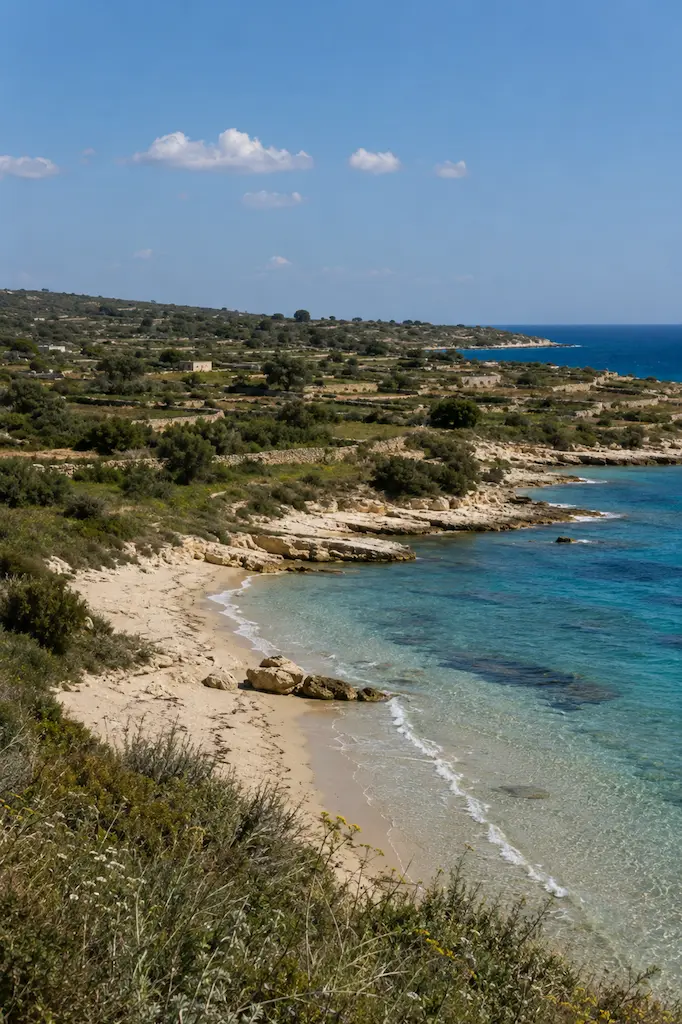
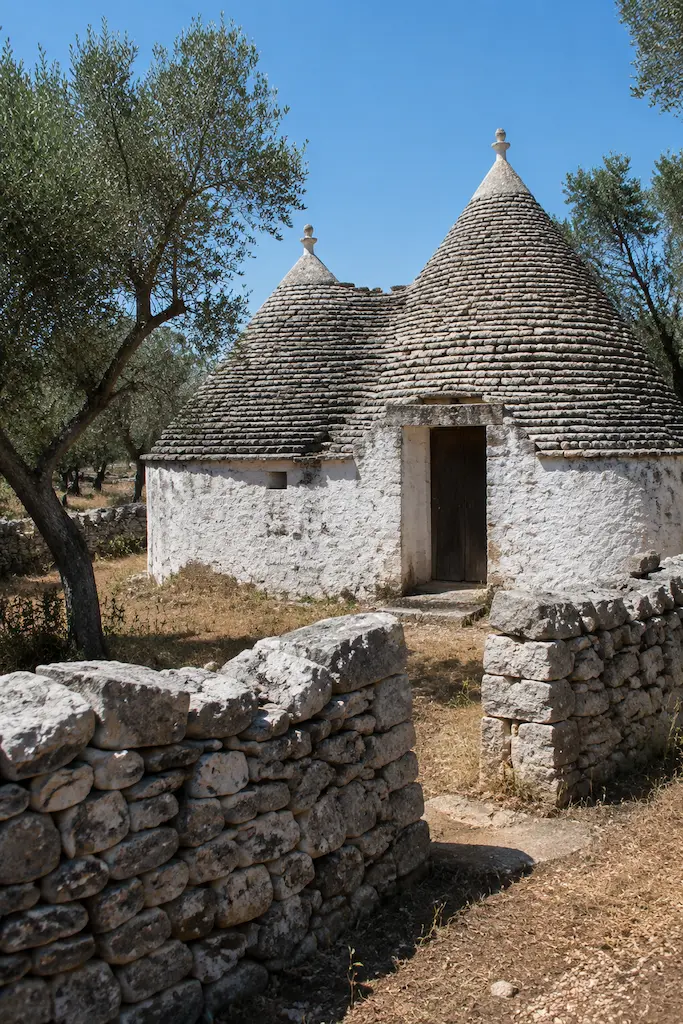
Travel guides will point toward Alberobello’s famous trulli, the white streets of Ostuni, the dramatic cliffs of Polignano a Mare, and the beaches that stretch between the Adriatic and Ionian seas. They’re all worth seeing, but they aren’t the reason Puglia has quietly become one of Italy’s most beloved regions. The real attraction is the rhythm of everyday life unfolding between those landmarks. A bakery has no reason to reinvent its bread because the recipe already works. Lunch is never treated like a task squeezed between sightseeing, and nobody seems apologetic when a conversation in the piazza lasts longer than expected. Tourists photograph the scenery; locals simply live in it.
One of the easiest mistakes to make in Puglia is assuming its beauty was intentional. Those whitewashed villages weren’t created because someone preferred minimalist architecture. White limestone reflected the fierce southern sun, narrow streets created welcome shade, thick stone walls cooled homes long before air conditioning, and courtyards became outdoor living rooms because they were naturally the most comfortable place to gather. What visitors admire today as timeless beauty began as everyday problem-solving, which may be exactly why it still feels so effortless.
This does not mean Puglia has always preferred restraint. Lecce’s richly carved Baroque façades, particularly the Basilica di Santa Croce, offer enthusiastic evidence to the contrary. A region capable of that much ornament cannot reasonably be reduced to a white wall and an olive branch. What connects these different buildings is the attention given to material: stone can become a modest shelter or an elaborate façade, depending on what people need—and occasionally how much they wish to impress.
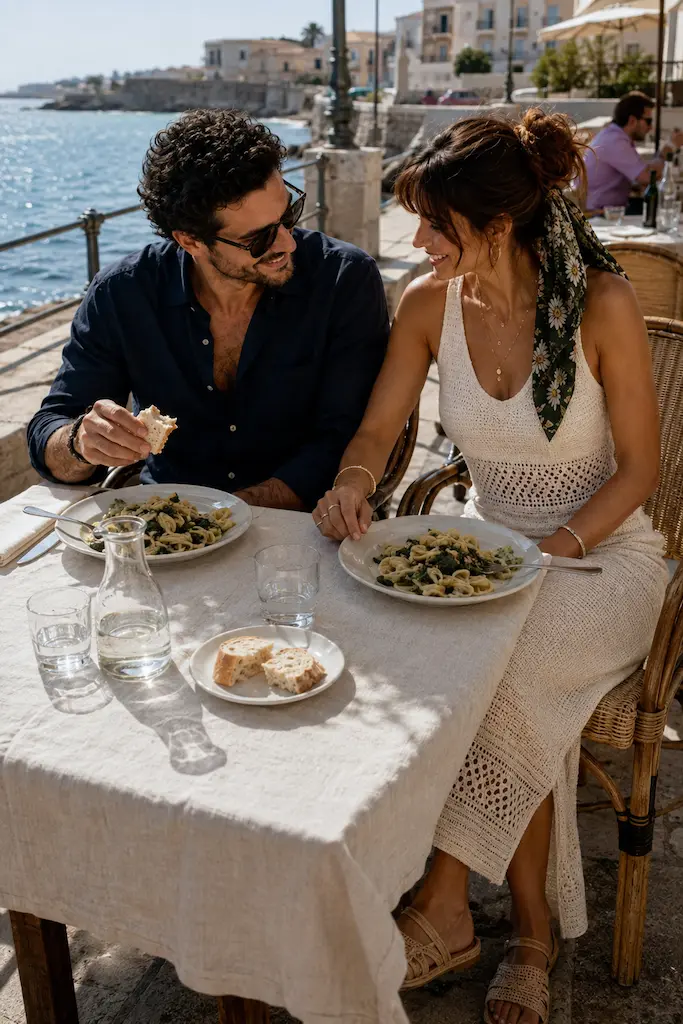
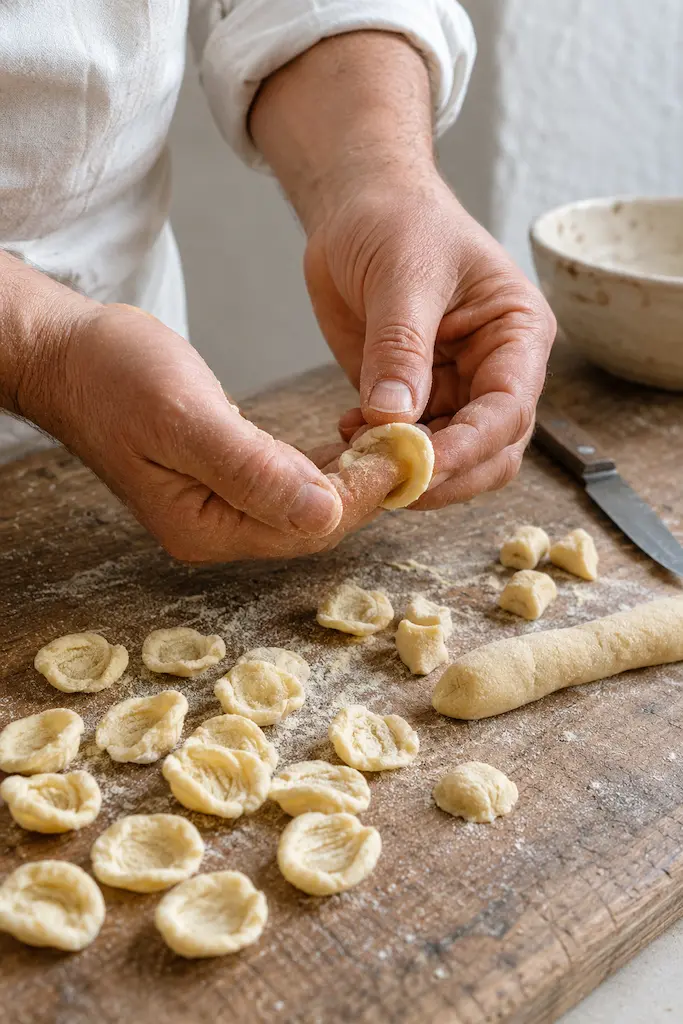
The kitchen offers another way into the same story. Orecchiette begin with semolina and water, a short ingredient list that says almost nothing about the skill required to shape them. The little ears need the right thickness and texture; the finished dish needs timing. In chef Fabio Abbattista’s preparation of orecchiette con cime di rapa, the pasta cooks with the greens before being combined with garlic and anchovies in olive oil. The ingredients are modest, but the balance of bitterness, salt, and texture is precise. Simplicity gives an indifferent cook very little room to hide.
Fave e cicoria makes an equally convincing case with fava-bean purée, bitter chicory, and olive oil. Soft beans temper the greens; the contrast gives the plate its character. Such dishes belong to the traditions commonly described as cucina povera, cooking shaped by limited resources. Their appeal today need not turn past hardship into a romantic ideal. What deserves admiration is the knowledge that made a satisfying meal possible: how to handle an ingredient, where to add flavour, and when the dish was complete.
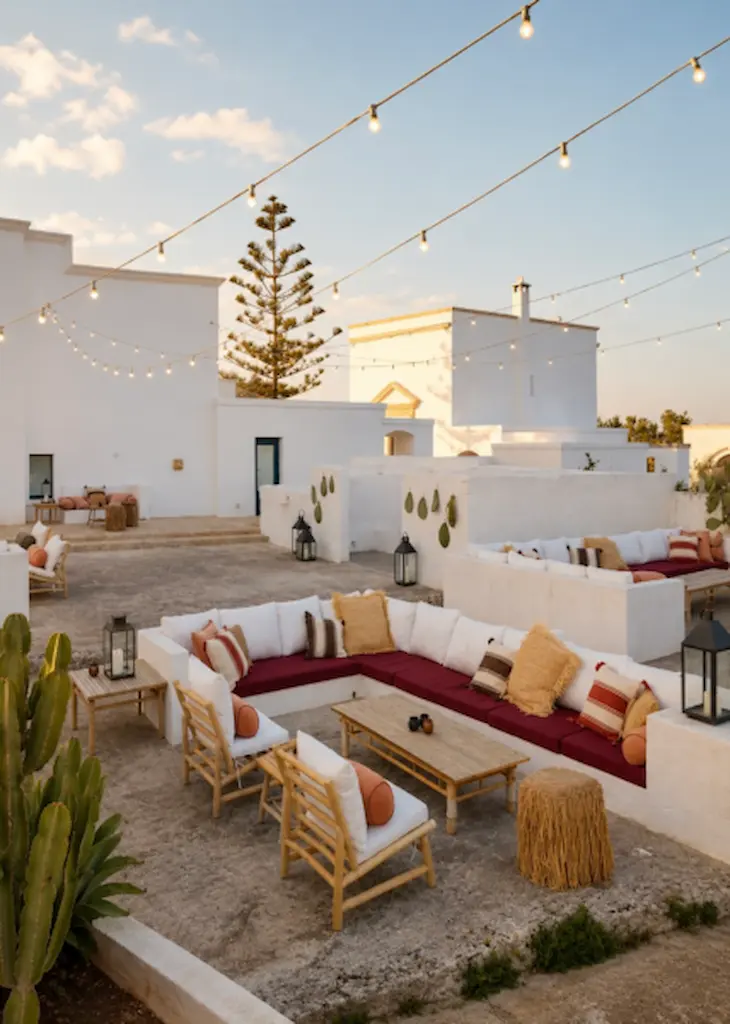
There is a contemporary expression of that resourcefulness in Puglia’s restored masserie. These rural estates are now often encountered through hospitality, although their buildings had working lives long before anyone arrived with a suitcase. At Masseria Calderisi near Savelletri di Fasano, a seventeenth-century farm has become a boutique hotel surrounded by olive groves, citrus and almond trees, and gardens. Its accommodation includes converted stables and a historic tower, with vaulted ceilings, fireplaces, and deep wall niches retained in parts of the property.
A courtyard that now invites you to sit with a drink belongs to this changed economy. Its present ease involves restoration, maintenance, design, and the daily work of hospitality. Recognising that does nothing to diminish the pleasure of staying there. It gives the place another dimension: an old building has found a new use, and its earlier character still contributes to the experience. The calm is something people have made possible.
For a visitor, this suggests a more rewarding way to spend time in Puglia. Keep the town walk, the coast, and the long lunch, but leave room for questions. How was that roof assembled? What did this room once contain? How does a cook turn a piece of dough into an orecchietta with one practiced movement? A place becomes more memorable when its details acquire meaning. You come away with more than a photograph of something attractive.
The thought carries naturally to California, too. A shaded place to eat, an existing room adapted to work better, a meal built around a few ingredients you know how to use: these are pleasures that travel without requiring a replica of a Puglian farmhouse. The useful souvenir is a habit of attention, a greater interest in how ordinary things serve the day.
May be that is the calm worth bringing home. A room feels comfortable, a meal feels complete, and there is no immediate reason to improve either. Behind that ease may be years of practice, careful maintenance, or a decision made long before your arrival. Puglia rewards the visitor who notices. The art of living simply begins with knowing how much care simplicity can contain.
Before You Go:
STAY – Masseria Calderisi: A seventeenth-century farm near Savelletri di Fasano, restored as a boutique hotel amid olive groves and gardens. Explore the Hotel →
SIGHT — Ostuni: Walk the old town’s whitewashed lanes and steps, then look across the olive-growing countryside toward the Adriatic. Explore Ostuni →
TASTE: Orecchiette con Cime di Rapa. Ear-shaped pasta with greens, garlic, olive oil, and anchovies in many versions. Fave e cicoria offers another regional combination: fava-bean purée with bitter greens. Explore the Recipe →
CONTINUE EXPLORING
Inspired by this story? Continue your journey with GREECE | The Tears of Chios →