Exploring Chios Through the Senses
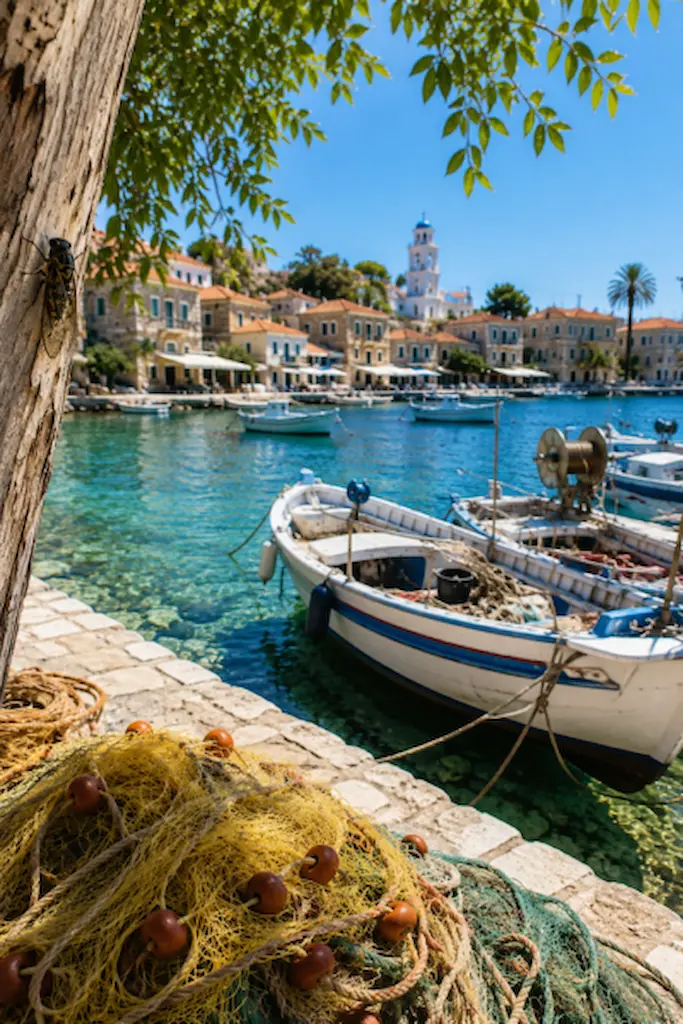
Most islands introduce themselves through something obvious. A beach. A harbor. A whitewashed village conveniently positioned for photography. Chios is more complicated. Its most extraordinary landmark is barely visible at all. It grows on low evergreen trees in the dry southern half of the island and begins as a clear drop of resin. Over centuries, that resin became valuable enough to influence trade, taxation, settlement patterns and daily life. Villages were organized around its production. Families built their year around its harvest. Foreign powers took a remarkable interest in controlling it.
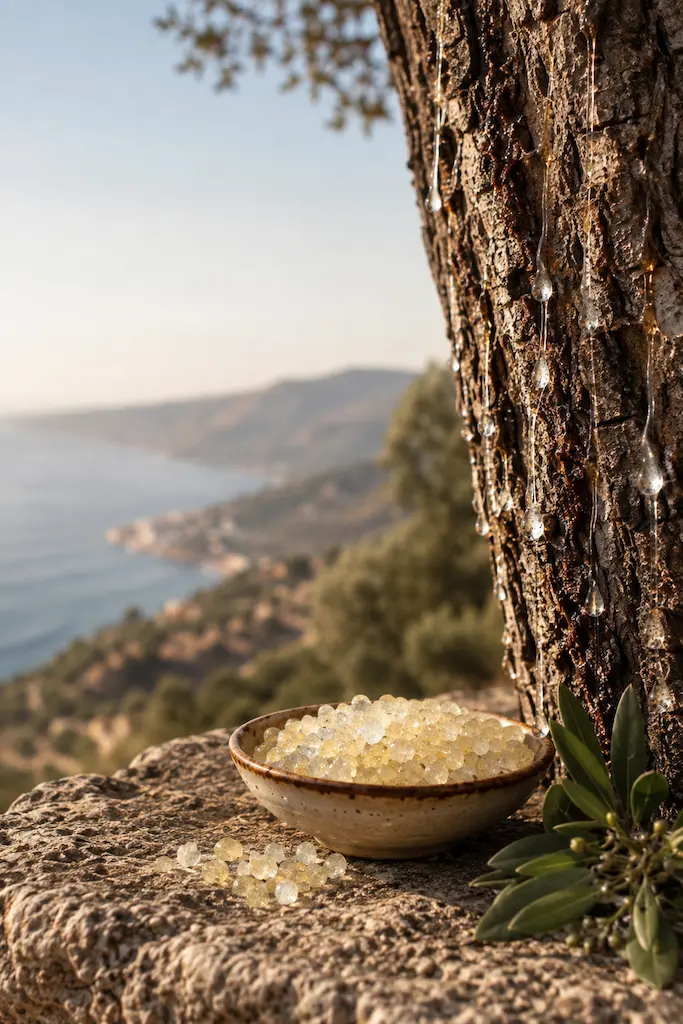
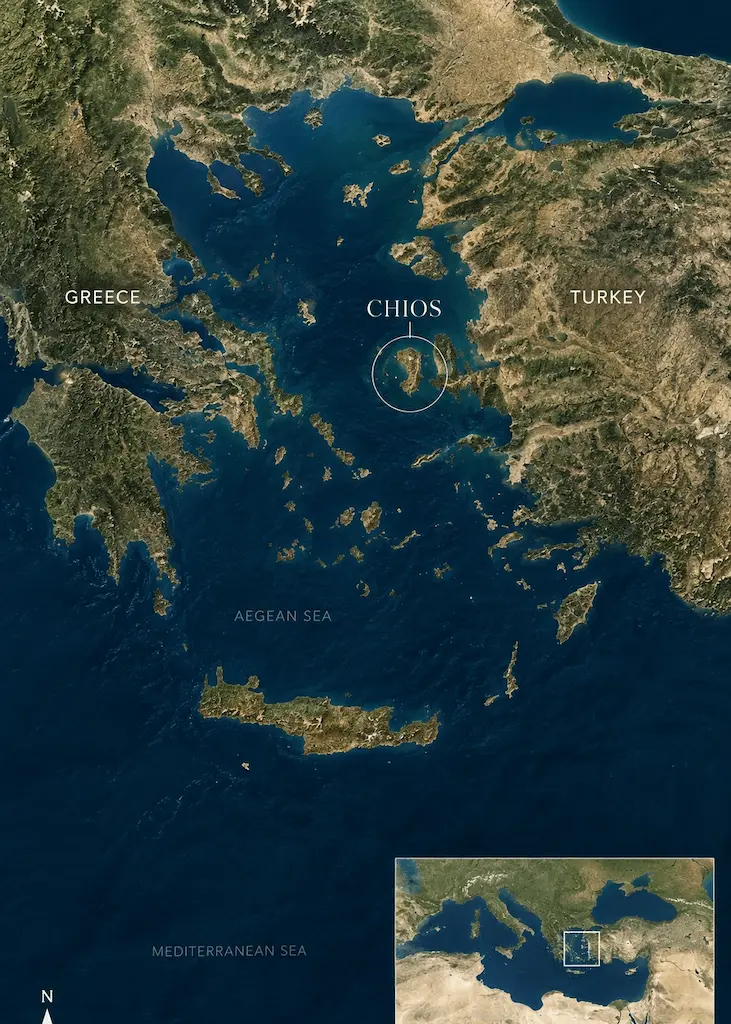
Quite a career for something that looks like a tear. This is mastiha, the aromatic resin for which Chios has been known since antiquity. The mastic shrub, Pistacia lentiscus, grows elsewhere around the Mediterranean, but Chios is associated with the cultivated variety Pistacia lentiscus var. chiaand the distinctive resin produced in the island’s southern Mastichochoria—the Mastic Villages. The relationship between plant, place and people became so specific that UNESCO inscribed the traditional know-how of Chios mastic cultivation on its Representative List of the Intangible Cultural Heritage of Humanity in 2014.
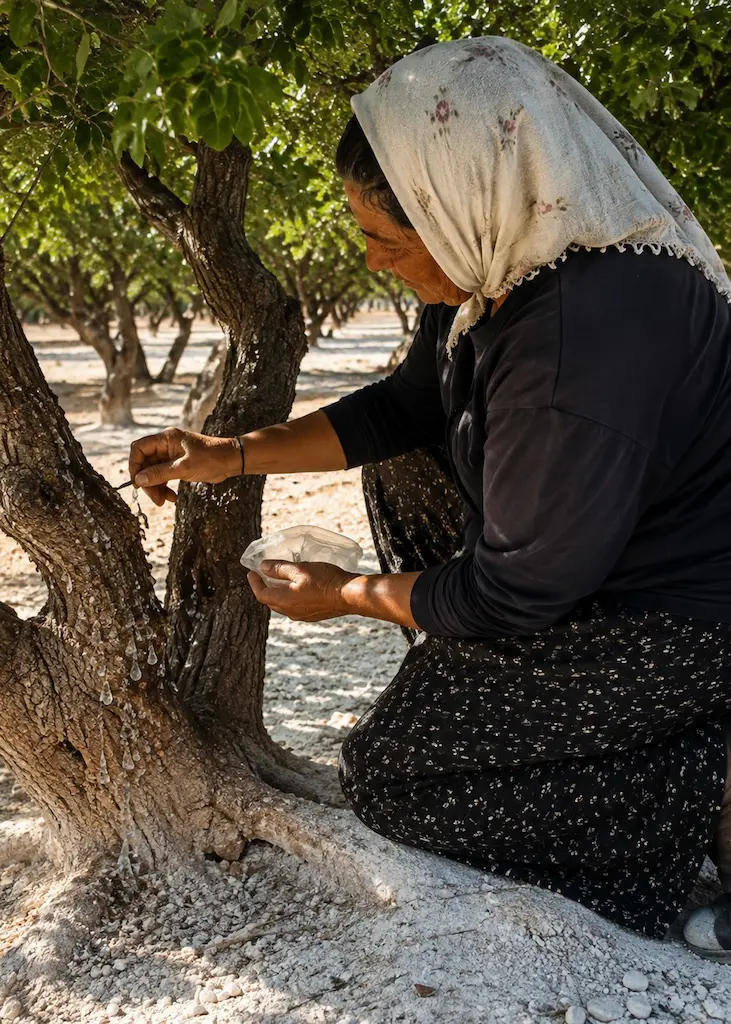
Mastiha arrives without much visual drama. Small incisions are made in the bark and branches during summer, allowing droplets of resin to emerge and eventually harden. The ground beneath the trees is carefully prepared so that the precious pieces can be gathered cleanly. What follows is slow work: collecting, sorting, washing and cleaning the tiny crystals by hand. UNESCO describes the cultivation not merely as agriculture but as a social practice, maintained through family work, mutual help and knowledge passed from older growers to younger generations.
And then there is the smell. Fresh mastiha is difficult to place neatly into the usual language of flavor and fragrance. It can seem resinous, green, herbal and faintly pine-like, familiar enough to make you search your memory and peculiar enough that you probably will not find a precise match. Chios does not need to bottle the Mediterranean fantasy of wild herbs and hot earth. Here, part of the landscape actually becomes aromatic.
The strange part is that once you understand mastic, southern Chios begins to look different. The Mastichochoria are not simply a picturesque collection of medieval villages that happen to sit near mastic groves. Mastic was an economic force, and economic forces have a habit of leaving architecture behind.
Under Genoese rule from the fourteenth century, the valuable trade was tightly controlled. Settlements in the mastic-growing south developed as fortified villages, with houses built closely together, narrow passages and defensive forms intended to make the communities easier to protect. Later, under Ottoman rule, mastic continued to give Chios particular economic importance and contributed to special systems of administration and taxation. The Chios Mastic Museum goes so far as to frame the story of the resin as one that shaped both the agricultural and inhabited landscape of southern Chios.
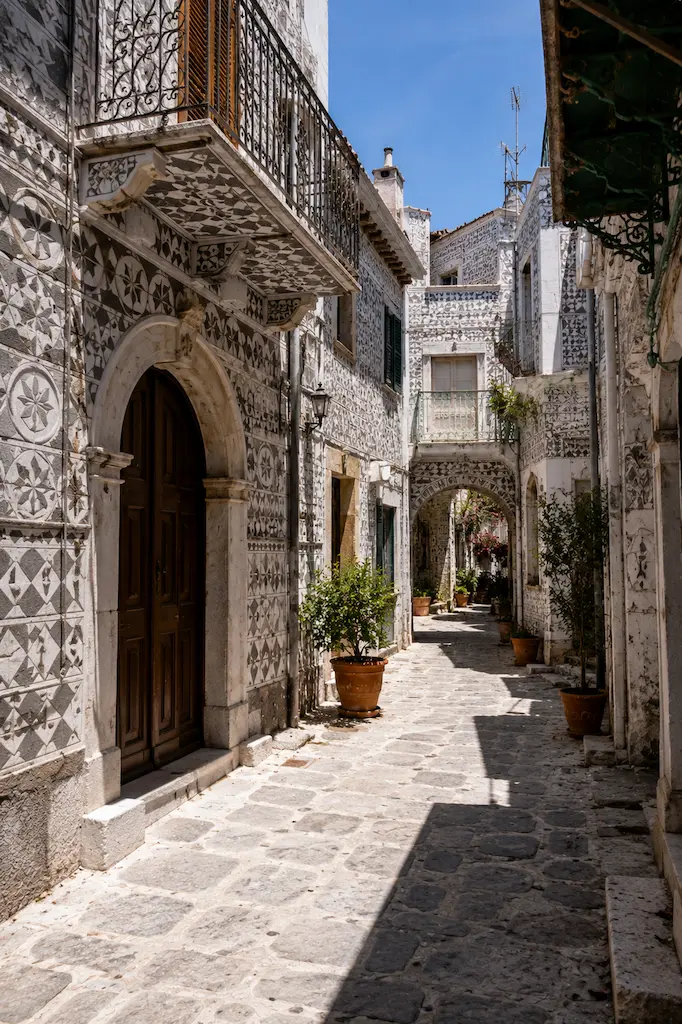
That makes wandering through Pyrgi rather more interesting than simply calling it charming. Pyrgi is one of the best-known Mastichochoria, famous today for its black-and-white geometric xysta decorating building façades. Balconies project over tight streets, arches connect structures and elaborate patterns turn entire walls into graphic compositions. Mastic did not invent the xysta, but the village belongs to the cultural landscape that mastic helped sustain. What appears at first to be a wonderfully eccentric Greek village is also part of a much larger system of production, protection and trade.
This is where Chios becomes especially interesting. We usually think of landscapes as natural and villages as architectural, as though the two developed politely in separate departments. Here they overlap. The tree influenced the economy; the economy influenced settlement; the settlement protected the people who cultivated the tree.
The Mediterranean can occasionally be very efficient with its storytelling.
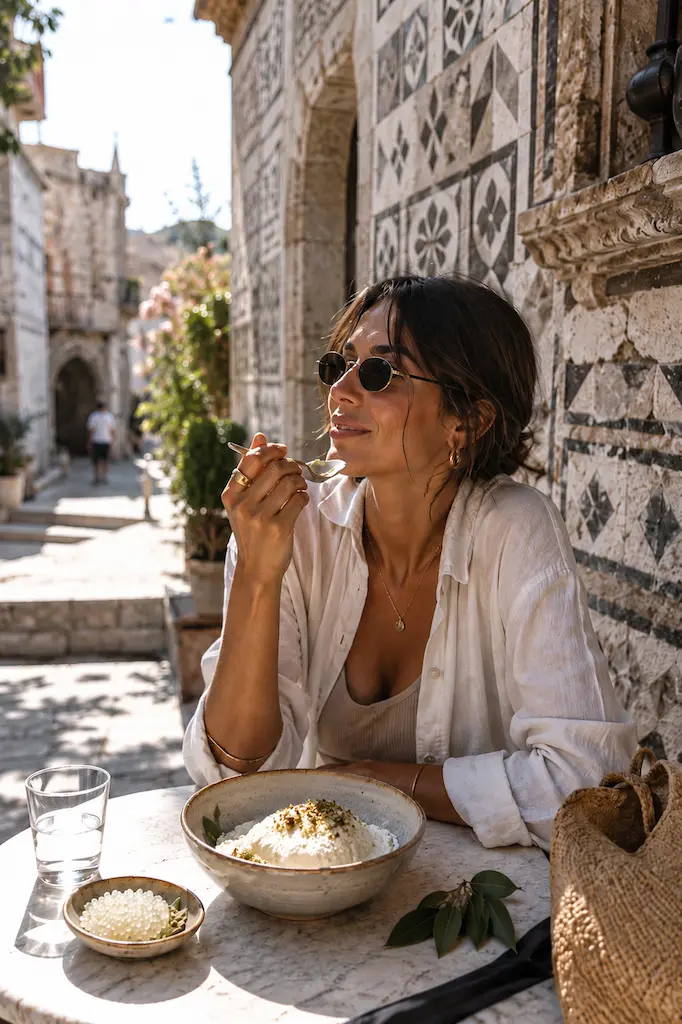
Mastic still refuses to stay in one category. It is agricultural product, fragrance, flavor, craft and cultural memory at the same time. It appears in chewing gum and confectionery, baked goods and other sweets, bringing that unmistakably resinous quality from the grove onto the table. But tasting mastiha is interesting precisely because it does not taste like a manufactured idea of sweetness. There is something botanical about it. Something that reminds you where it came from.
More importantly, the harvest remains alive. The establishment of the Chios Gum Mastic Growers Association in 1938 helped organize cultivation, processing and marketing in the modern era, while the old work of tending and harvesting the trees continued. The island did not preserve mastic by turning it into historical theatre. It survived because people kept producing it. That distinction matters.
There is a particular kind of travel story that treats tradition as something visitors arrive just in time to discover—as though generations of local people had been patiently waiting beside their trees for someone with a camera. Chios offers a useful correction. Mastic culture existed long before tourism took an interest in it, and its meaning belongs first to the people who cultivate it.
May be that is why the resin makes such an unusual way to understand the island. You can photograph Pyrgi. You can photograph the Aegean. You can photograph the strange white ground beneath a mastic tree waiting for its translucent drops to fall. But Chios’s real landmark is the relationship between all of them. A tree became a harvest. The harvest became a trade. The trade helped shape villages. The villages preserved knowledge. And generation after generation kept returning to those small evergreen trees, waiting for something almost invisible to appear.
They call them the tears of Chios. It turns out an island can build quite a lot around a drop. Explore Chios →
CONTINUE EXPLORING
Inspired by this story? Continue your journey with Encinitas | California’s Closest Thing to Utopia →