The Handmade Art the Coast Never Gave Up
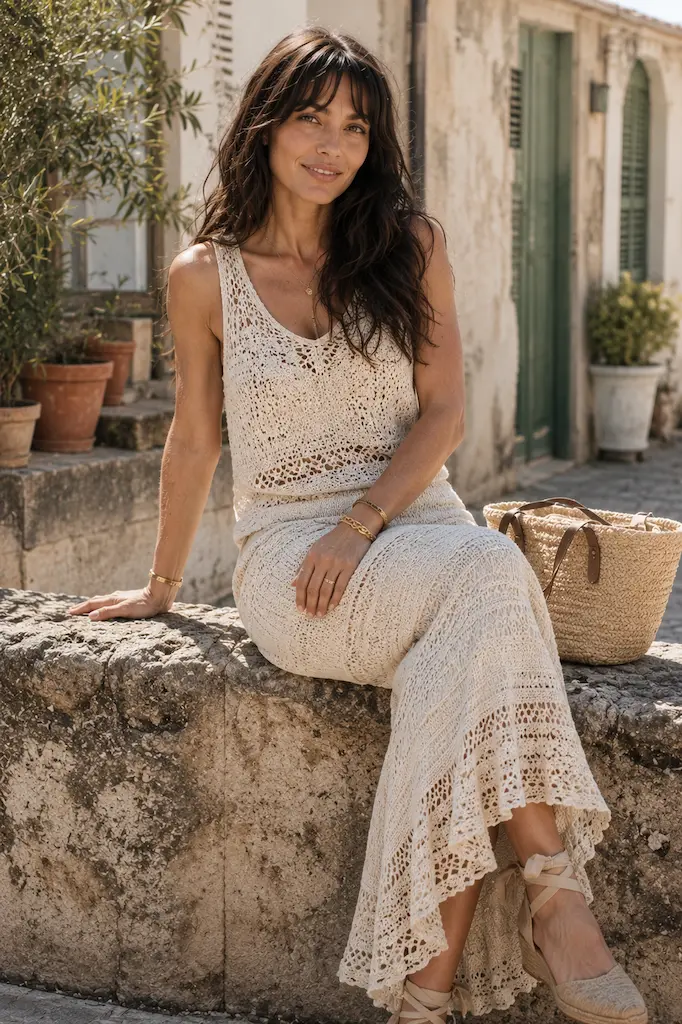
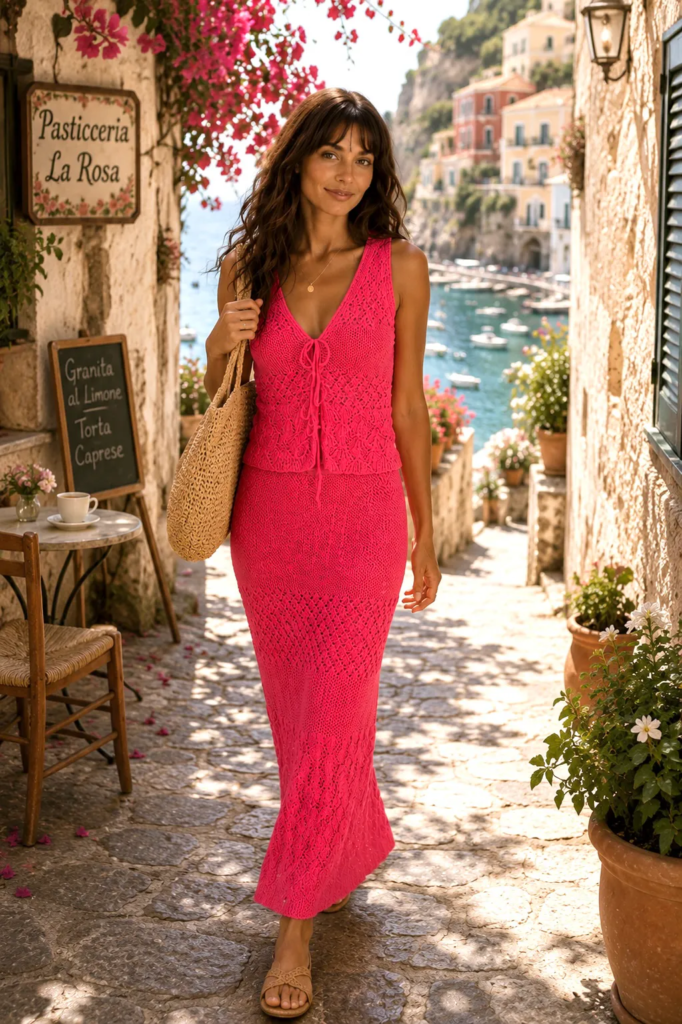
Long before crochet dresses appeared under the heading of resort wear, generations of Mediterranean women already knew what could be done with yarn, thread, needles and a remarkable amount of patience. Knitting, crochet, lace-making, embroidery and other forms of textile handwork were familiar skills, learned within families, workshops and schools and passed from one generation to another. Fashion would eventually give much of this a new vocabulary—artisanal, slow, handcrafted—but the making came first.
There was never one universal “Mediterranean knit.” Techniques varied enormously between countries and regions, and even neighboring communities developed distinctive forms of handwork. Yet together they reveal something important about Mediterranean material culture: useful things were often expected to be beautiful too. Clothing, household linens and decorative textiles became places where skill could be seen rather than hidden.
Not Everything With Holes Is Crochet
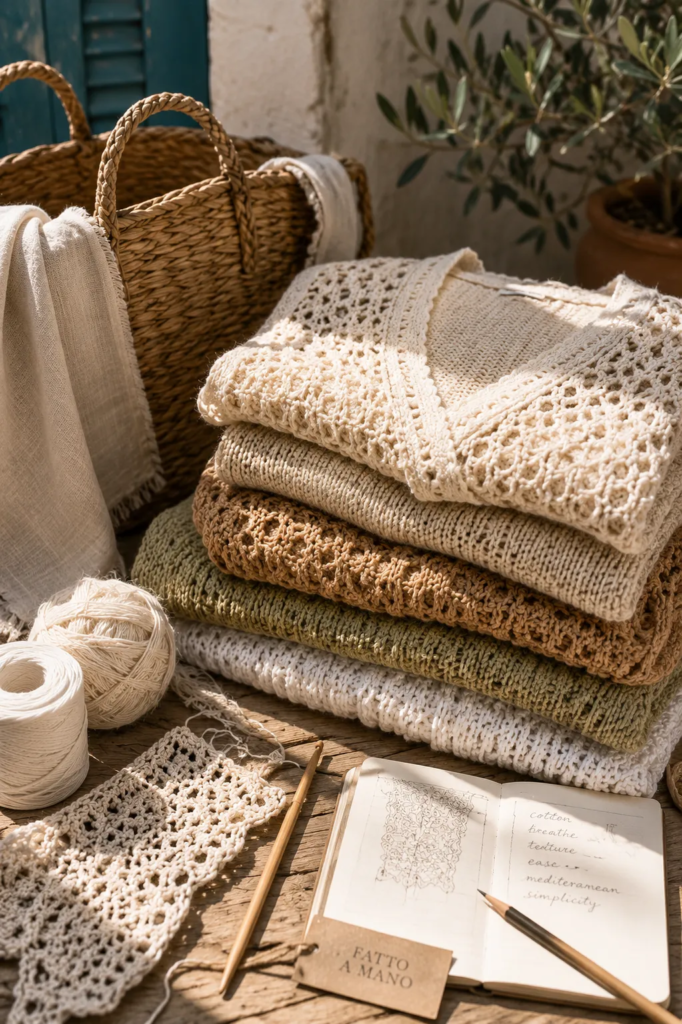
Modern fashion has been rather generous with the word crochet. An airy dress, an open cardigan and anything vaguely resembling a fishing net can quickly find itself described that way, but the traditions are considerably more interesting than the label suggests. Knitting creates fabric through interconnected loops, traditionally worked with needles, while crochet is constructed with a hook. Needle lace and bobbin lace follow entirely different processes, and netting and other openwork techniques add still more variations.
The technical differences could fill an entire textile manual, which fortunately is not required reading here. What matters is that these techniques may share a family resemblance, but they are not interchangeable. The holes deserve the correct introduction.
A Mediterranean History Written in Thread
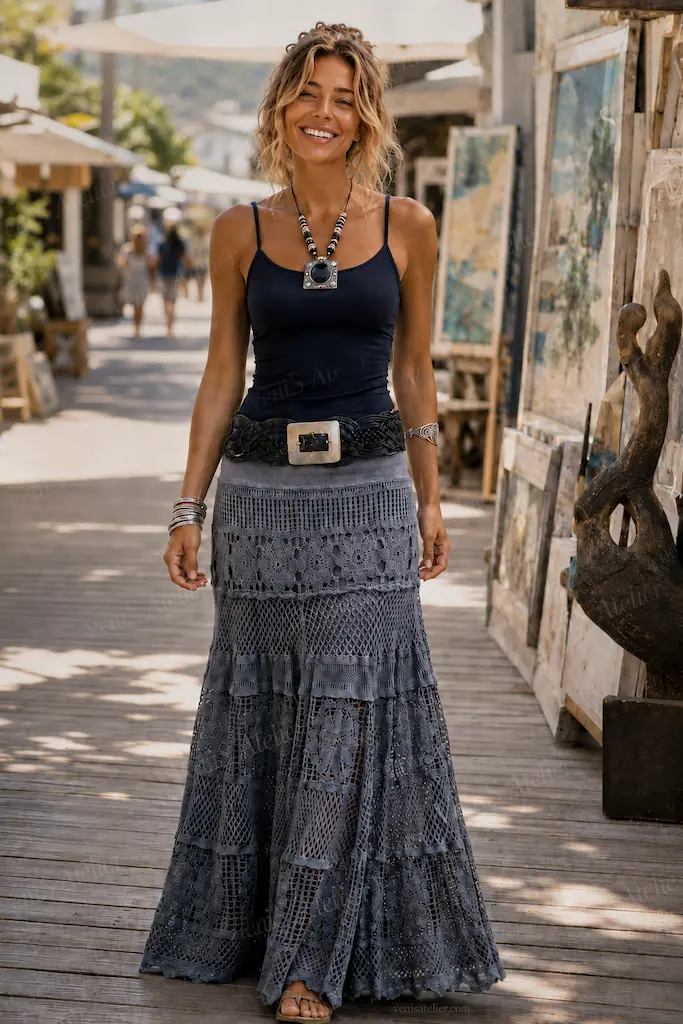
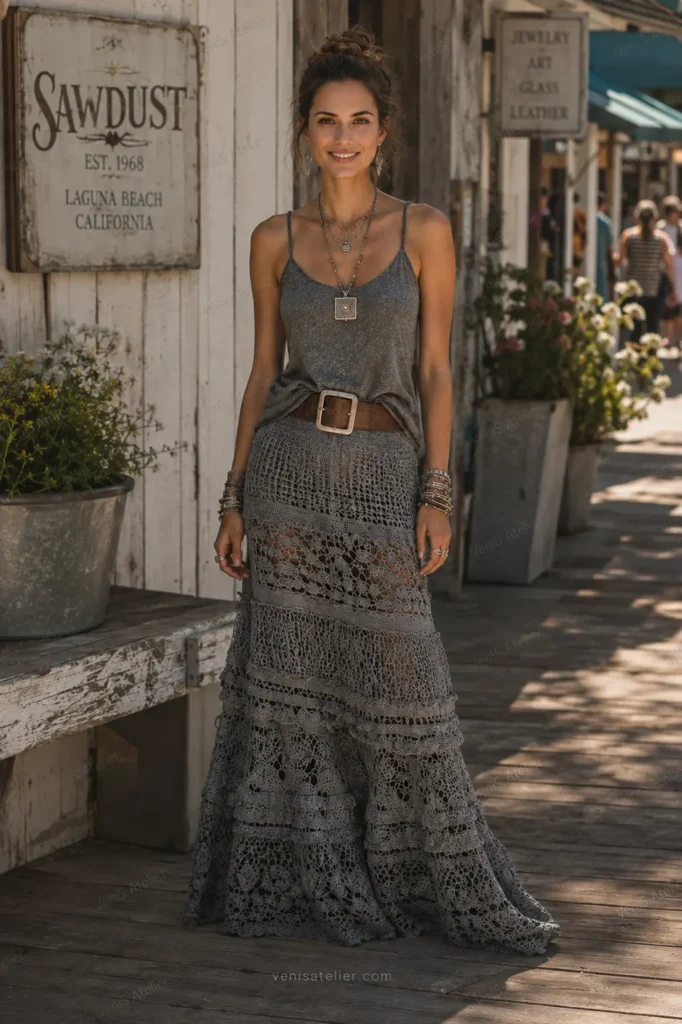
The history does not need to become a lecture to prove how remarkable the craft is. A few surviving examples do the job rather well. Some of the earliest surviving examples of true knitting come from medieval North Africa, and by the later Middle Ages knitted goods had spread through Europe. Italy offers an extraordinary example: the Victoria and Albert Museum holds an intricately patterned Italian silk jacket dating from around 1600–1620, evidence that hand knitting could already be highly sophisticated and luxurious centuries before modern resort wear arrived.
The Mediterranean relationship with textile handwork extends far beyond knitting. Venice became internationally celebrated for lace, with the lagoon island of Burano developing a particularly famous tradition. The Burano Lace School, founded in the 19th century, occupied the building that today houses Venice’s Lace Museum, while communities elsewhere in Italy developed their own forms of needlework, bobbin lace, embroidery and textile making. There was no single Italian style, but rather a patchwork of regional traditions.
Across the Adriatic, Croatian lacemaking offers an even more unusual example. UNESCO recognizes several Croatian lacemaking traditions as Intangible Cultural Heritage, including the extraordinary work of Benedictine nuns on the island of Hvar, where delicate lace is made using fine plant fibers extracted from aloe leaves. Apparently even Mediterranean plants were eventually persuaded to participate in the wardrobe.
When Handwork Was Simply Work
It is easy to romanticize traditional textile making as leisurely afternoons spent crocheting beside an open window. The reality was considerably more practical. Handwork could clothe families, furnish homes, preserve local knowledge and provide women with valuable sources of income. Greece offers a particularly revealing modern example. During the 20th century, a state-supported handicraft program trained and employed thousands of women producing textiles, rugs and embroidery, demonstrating that traditional handwork was not simply decorative nostalgia but skilled economic activity.
That history changes the way a handmade garment can be understood today. Small variations between stitches are now praised as signs of artisanal authenticity; historically, they were simply evidence that a person had made the object. What contemporary luxury spends considerable effort trying to reproduce was once the perfectly ordinary signature of the human hand.
Industrialization made clothing faster and increasingly uniform, but it also changed the meaning of handwork. The visible stitch gradually acquired another kind of value precisely because it no longer looked industrial. Texture, irregularity and evidence of construction began to suggest individuality rather than necessity. Fashion had performed one of its favorite tricks: taking something generations already understood, rediscovering it and returning it with a considerably more impressive price tag.
By the 1970s, crochet had reached the American beach wardrobe too; The Metropolitan Museum of Art preserves a cotton crocheted bikini by American designer Barbara Baumann from the period. What had once belonged largely to the language of domestic handwork was now perfectly comfortable beside the swimming pool and on the beach.
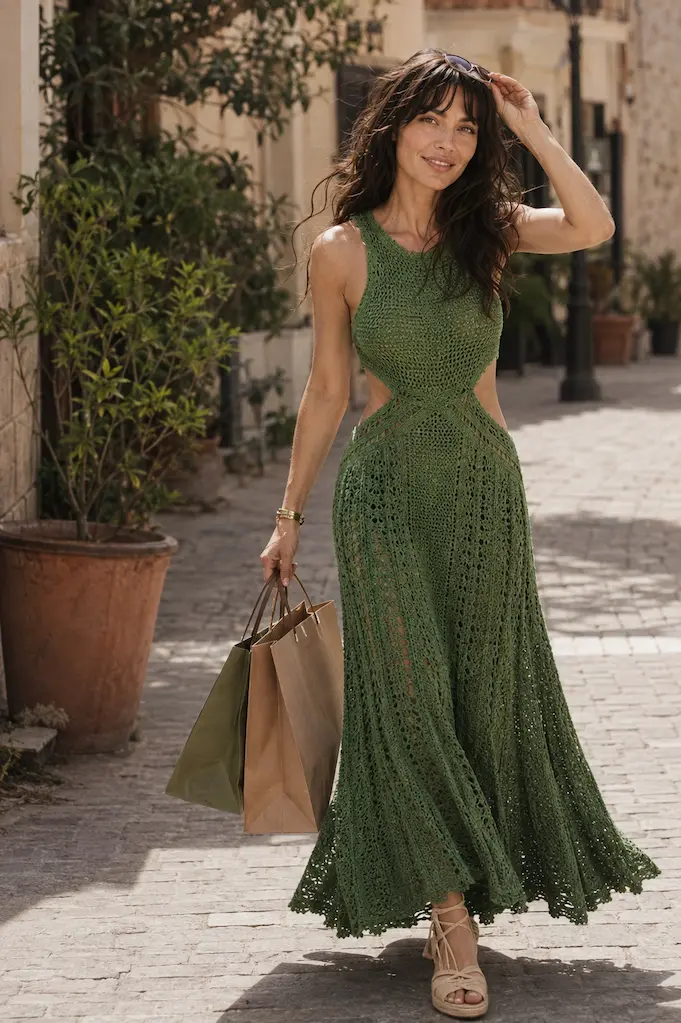
A modern dress shows just how far that language has travelled. French label ba&sh’s green ALAGA maxi dress, created in collaboration with Brazilian designer Andrea Almeida, combines hand-crocheted details with pointelle knit. It is a useful reminder that what fashion casually calls “crochet” may actually be a conversation between several textile techniques. Its long, fluid silhouette and open construction also show how traditional-looking handwork has found a natural place in contemporary resort dressing: intricate enough to feel special, relaxed enough to belong beside the sea.
Why the Coast Never Let It Go
Mediterranean summers create an interesting wardrobe problem. An afternoon can be genuinely hot while an evening beside the water calls for another layer. Narrow shaded streets, terraces, boats and sea breezes can produce noticeable temperature changes within the same day, making the heavy sweater unnecessary but the lightweight layer indispensable.
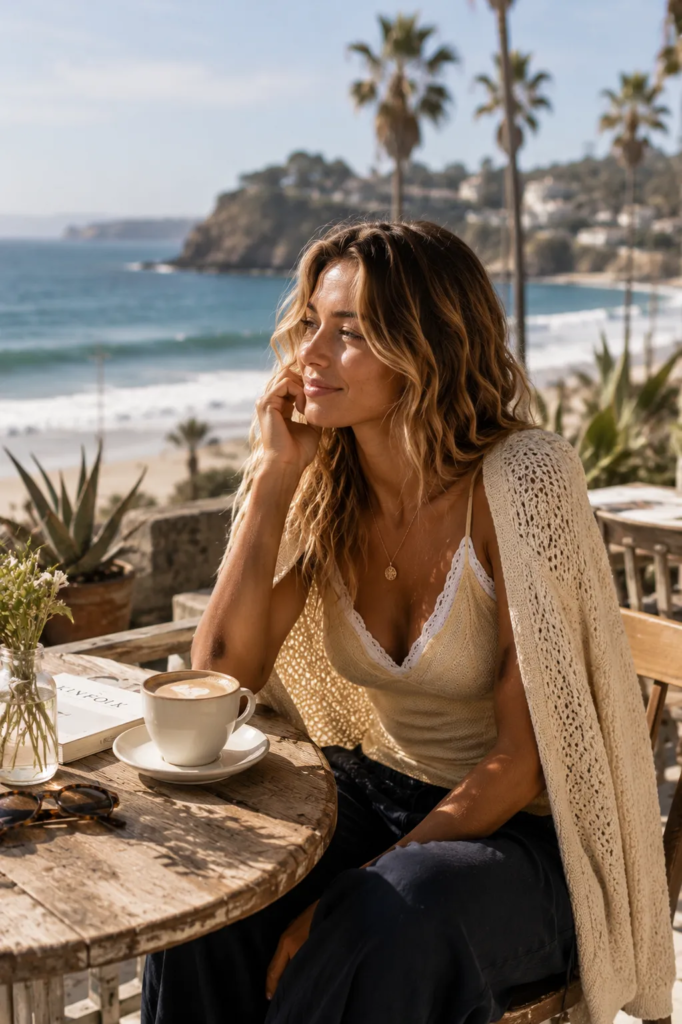
Openwork provides an elegant solution. Space between stitches allows air to circulate, while lightweight cotton and linen yarns can provide texture and coverage without the density associated with winter knitwear. A fine cardigan can cover bare shoulders after sunset, an open-knit sweater can sit comfortably over a tank, and a crochet or knitted dress can move from swimwear cover-up to lunch without requiring an entirely new wardrobe.
The holes, in other words, are not merely decorative. They are part of what makes the garment work. Open construction creates a layer that offers coverage without completely shutting out the air—a surprisingly sophisticated answer to a climate that frequently cannot decide whether another layer is necessary.
California Understands the Same Logic
Across the Atlantic, California understands this logic remarkably well. Sunny afternoons regularly give way to cooler evenings, while marine air and wind make lightweight layering useful even during summer. From Santa Barbara south toward San Diego, the climate rarely demands heavy clothing but frequently rewards having something soft and breathable within reach.
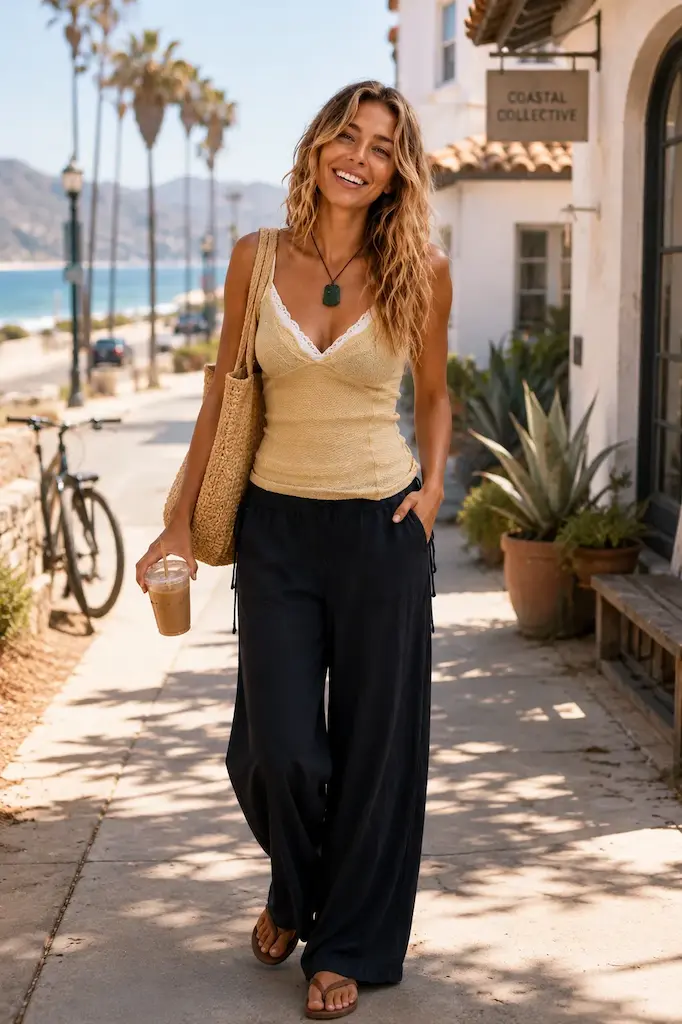
California interprets the idea more casually: an open-knit sweater over shorts, a textured cotton tank with loose trousers, a lightweight cardigan over a simple dress or an airy crochet piece over swimwear. There is no need to invent a Californian history for Mediterranean textile traditions; the connection lies in the way the garments function.
While the Mediterranean contributes centuries of craftsmanship and regional handwork, California contributes its particular talent for removing formality from almost anything it wears. Together they create something fundamental to the Caliterranean™ wardrobe: clothing with texture and craftsmanship that still feels effortless enough for everyday life.
The Handmade Piece Worth Keeping
A Caliterranean™ wardrobe does not need an entire collection of crochet. One exceptional handmade piece can do considerably more than several trend-driven versions because its construction already provides the interest normally supplied by prints, embellishment or excessive styling.
It is also worth looking beyond the holes. Not every openwork garment is handmade, not every “crochet” dress is actually crochet, and not every coastal knit is made from natural fibers. Technique, material and construction all matter. Cotton and linen yarns are particularly appealing for warm-weather clothing because they complement the breathable character of open construction, while genuine handwork reveals dimension, variation and the rhythm of individual stitches.
A machine-knit pointelle dress and a hand-crocheted garment may both be beautiful; they are simply not the same object. Knowing the difference makes the craftsmanship easier to appreciate rather than turning every textured summer dress into one very large category called crochet.
Most importantly, a well-made piece deserves to be kept. It can soften through wear, travel repeatedly, acquire memories and be repaired when necessary rather than discarded when a stitch comes loose. In a fashion culture accustomed to replacing things quickly, keeping something beautiful for years may now be the more radical luxury.
The Coast Never Needed the Trend
Crochet and openwork knitwear periodically return to fashion as though they have been away somewhere. Along the Mediterranean, their deeper story belongs to a much larger culture of handwork—one shaped by regional craft, women’s labor, inherited knowledge, practical necessity and eventually the glamour of seaside dressing.
California gives that tradition a natural contemporary companion because both shores understand the usefulness of clothes that breathe, layer easily and move comfortably between beach, town and evening. The result is not a costume borrowed from the Mediterranean but a modern wardrobe built around the same principles of usefulness, texture and ease.
The handmade knit therefore earns its place as a Caliterranean™ essential for a reason considerably more lasting than a seasonal trend. Long before fashion called it artisanal, sustainable or resort wear, generations of Mediterranean makers already understood the essential idea: with enough skill, even a simple length of thread could become something beautiful enough to wear—and beautiful enough to keep.
CONTINUE EXPLORING
Inspired by this story? Continue your journey with Caliterranean Style – One Scarf, Two Coasts →