Borrowing Shapes from the Coast

Why Nature Was the First Interior Designer

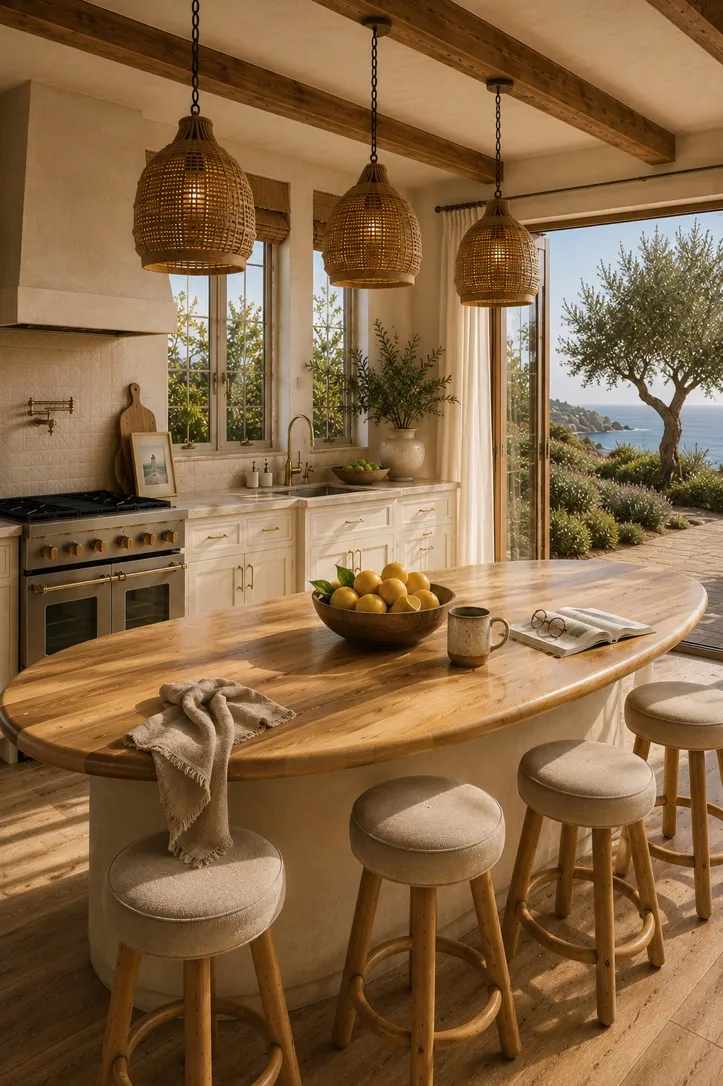
Surfboard Kitchen Island overlooking the ocean
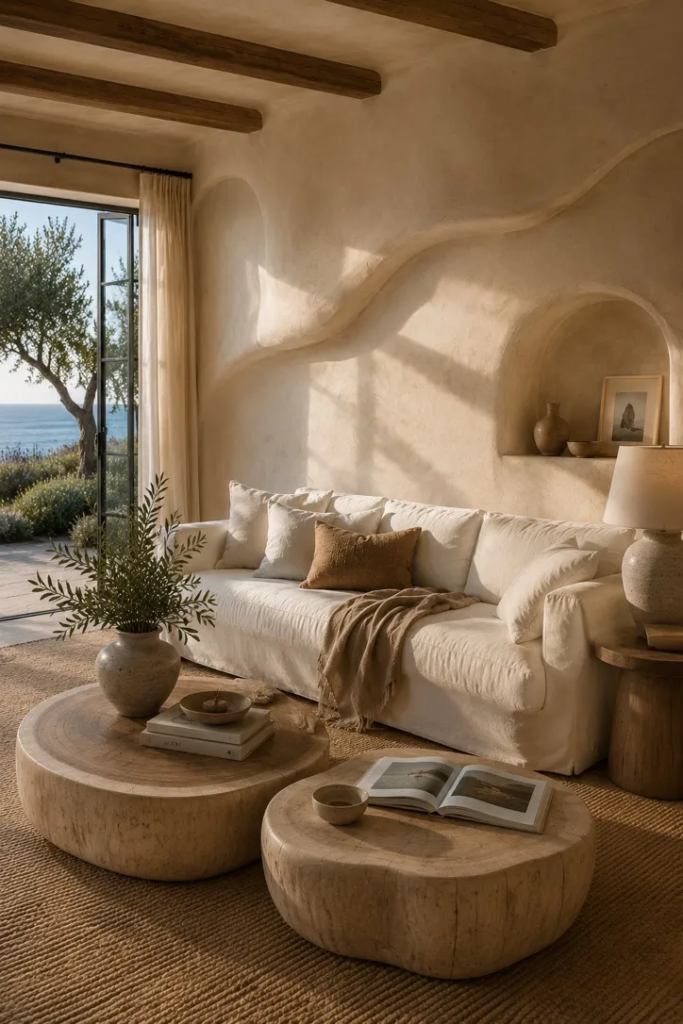
Beach stone form coffee table in a living coastal room

When people think of coastal design, they usually think of color. Sea-glass blues, sandy neutrals, whitewashed walls, perhaps a striped cushion or a bowl of shells resting on a coffee table. Those details certainly belong by the sea, but they are not what makes a home feel truly connected to its surroundings.


The real secret lies in something much older. Long before there were architects, interior designers, or furniture makers, the coast was already designing. For millions of years, waves have rounded rocks into smooth pebbles, wind has sculpted sand dunes into gentle curves, and water has carved sea caves from solid cliffs. Nature rarely draws a straight line, chooses a single color, or repeats the same texture twice. That is why the most timeless coastal homes don’t simply borrow the colors of the shoreline. They quietly borrow its shapes, its materials, its palette, and its relationship with light.


Think about the last time you walked beside the sea. The shoreline curved. Waves folded gently into one another. Cliffs softened over centuries, and even the stones beneath your feet had surrendered their sharp edges long ago. If nature rarely insists on perfect lines, perhaps our homes don’t need to either.


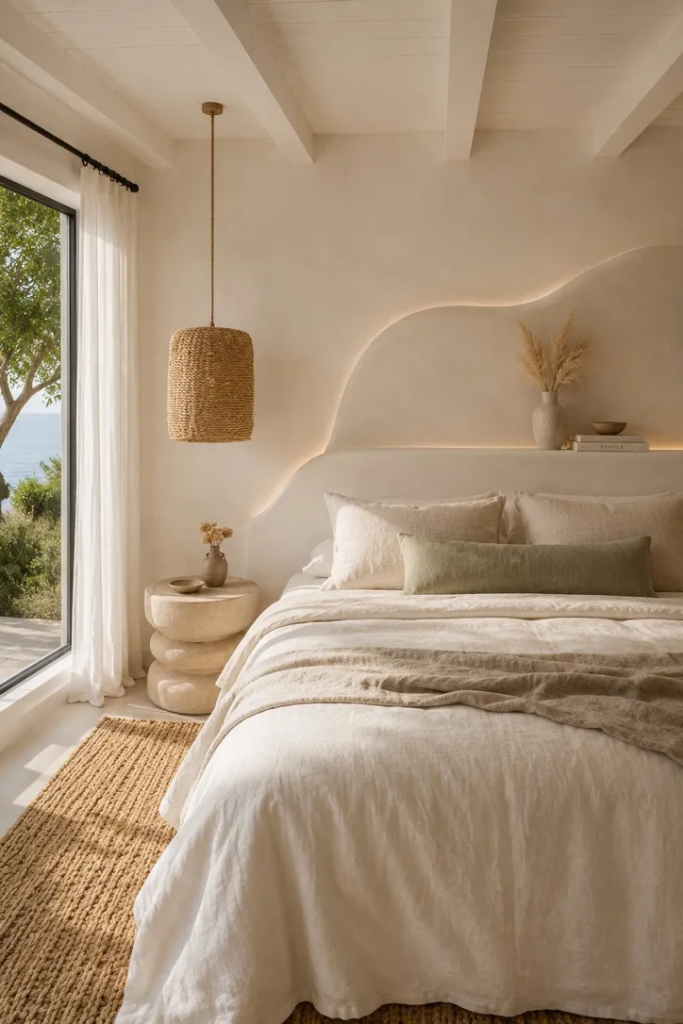
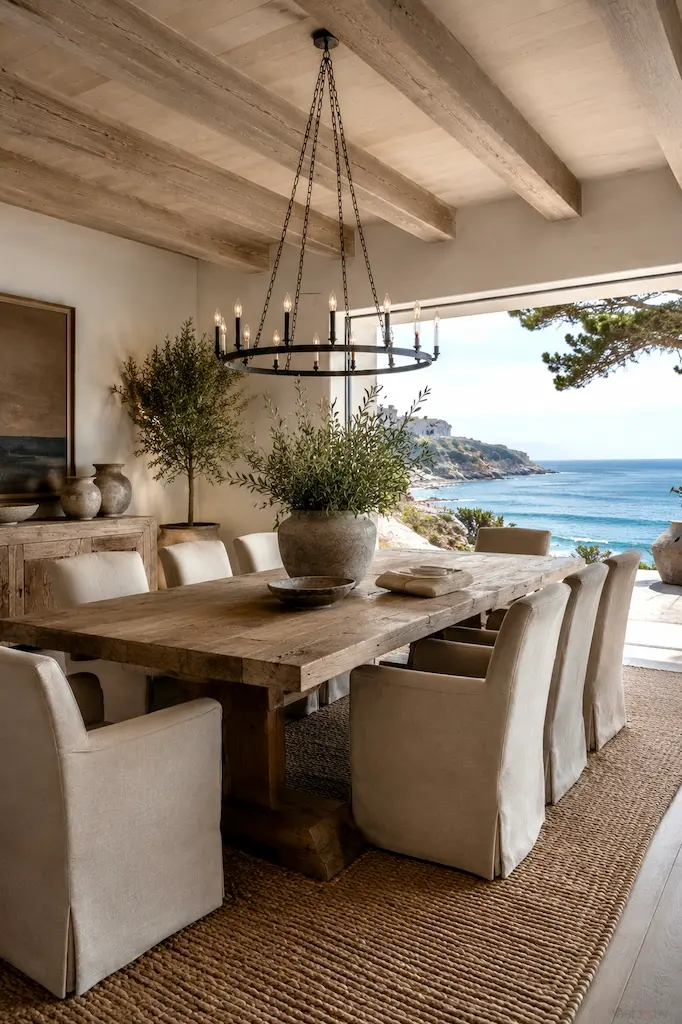
Spend a few minutes looking at today’s most thoughtful interiors and the influence becomes surprisingly easy to spot. Kitchen islands resemble the elegant outline of a surfboard. Rounded dining tables encourage conversation from every side, while pebble-shaped coffee tables soften the geometry that often dominates modern living rooms.


The same philosophy continues throughout the home. Curved headboards create a gentler backdrop than perfectly rectangular ones. Organic mirrors resemble quiet tide pools, while sculptural lighting twists like branches shaped by years of coastal wind. Nothing feels themed, yet everything feels naturally at home. The inspiration isn’t decoration. It’s observation.

Curved Shaped Bedroom with Pebble Nightstand
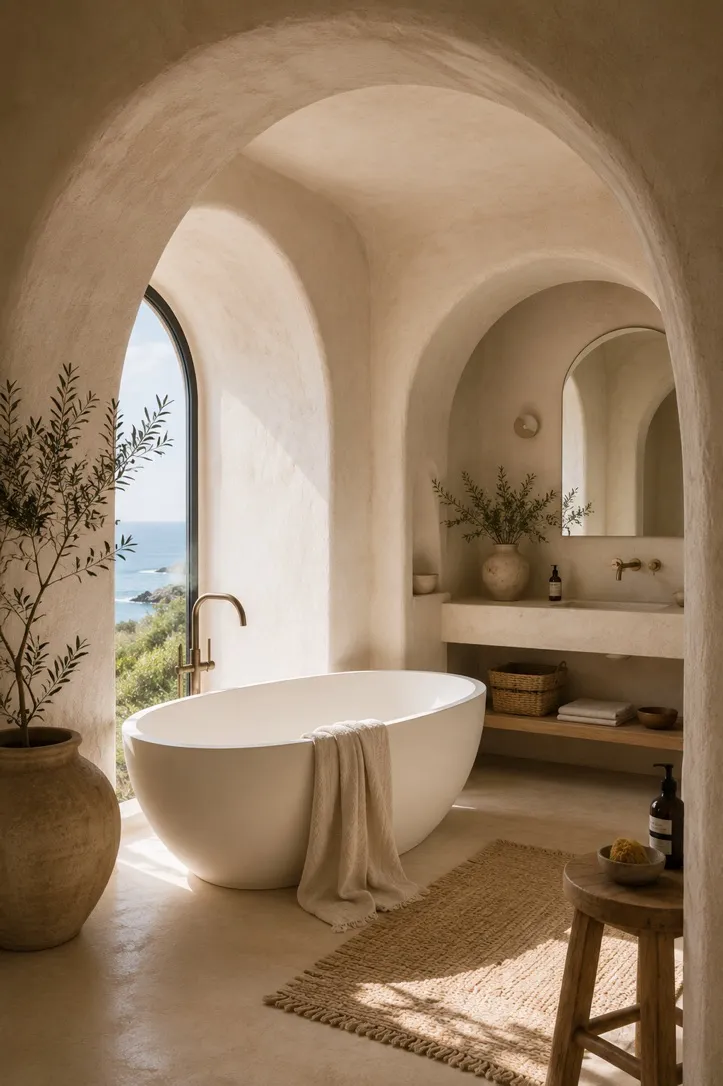
Sea Cave Bathroom with White Tub

Nature’s Materials

Nowhere is this more evident than in the materials themselves. Limewashed walls catch changing light like weathered cliffs. Sculptural plaster recalls sea caves patiently carved by water. Travertine, raw linen, weathered oak, woven grasses, handmade ceramics, and natural stone all feel as though they belong to the landscape before they belong in a room.


One of the lessons nature teaches better than any designer is that beauty often arrives with time. Sea glass begins as discarded bottle fragments. Driftwood starts as ordinary timber. Stone becomes smoother with every passing tide. None were designed to become beautiful—they simply aged well.


Great coastal interiors follow the same philosophy. Linen softens with every wash. Brass develops a gentle patina. Limewash becomes richer as daylight moves across its surface. Natural wood records the life lived upon it rather than hiding it. Perfection is rarely the goal. Character is.


The Coast’s Quiet Color Palette


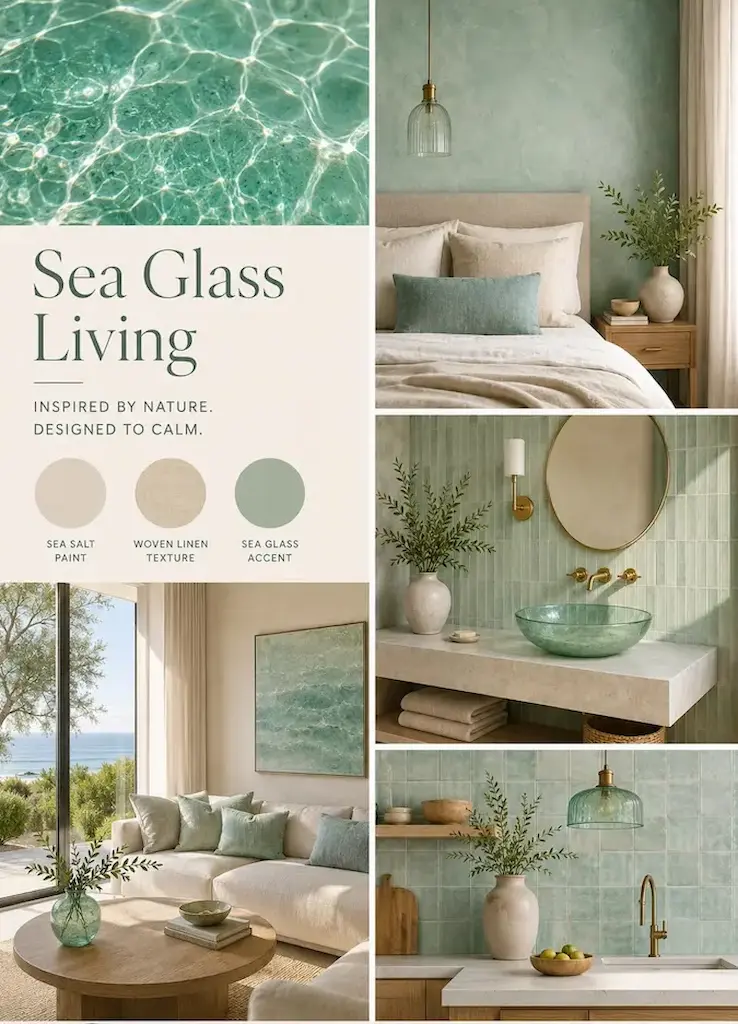
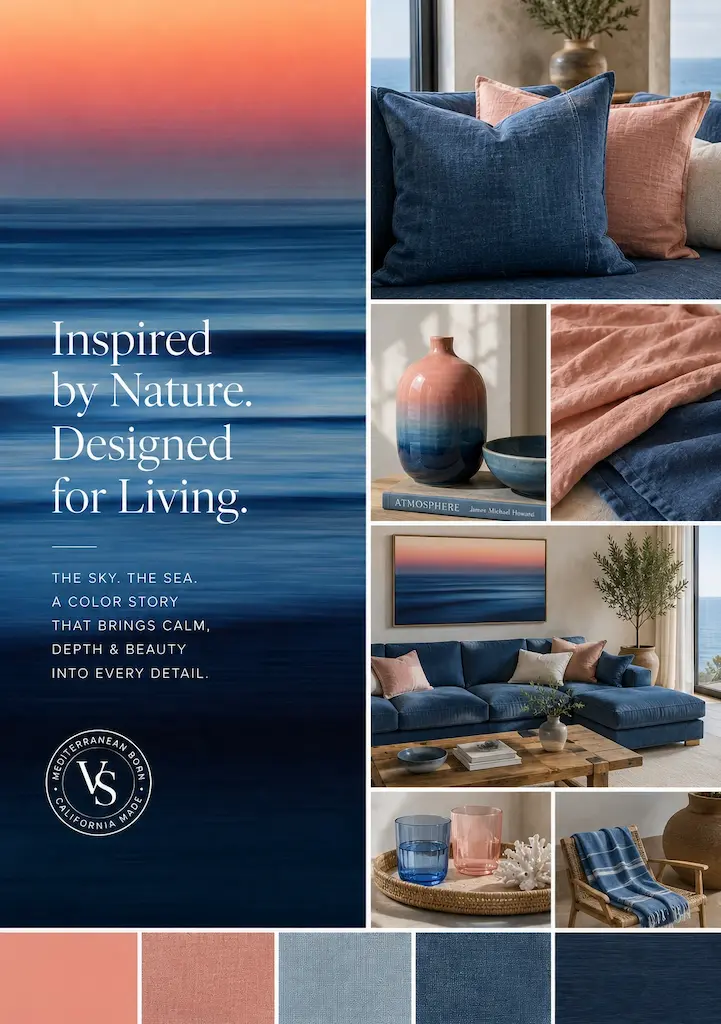
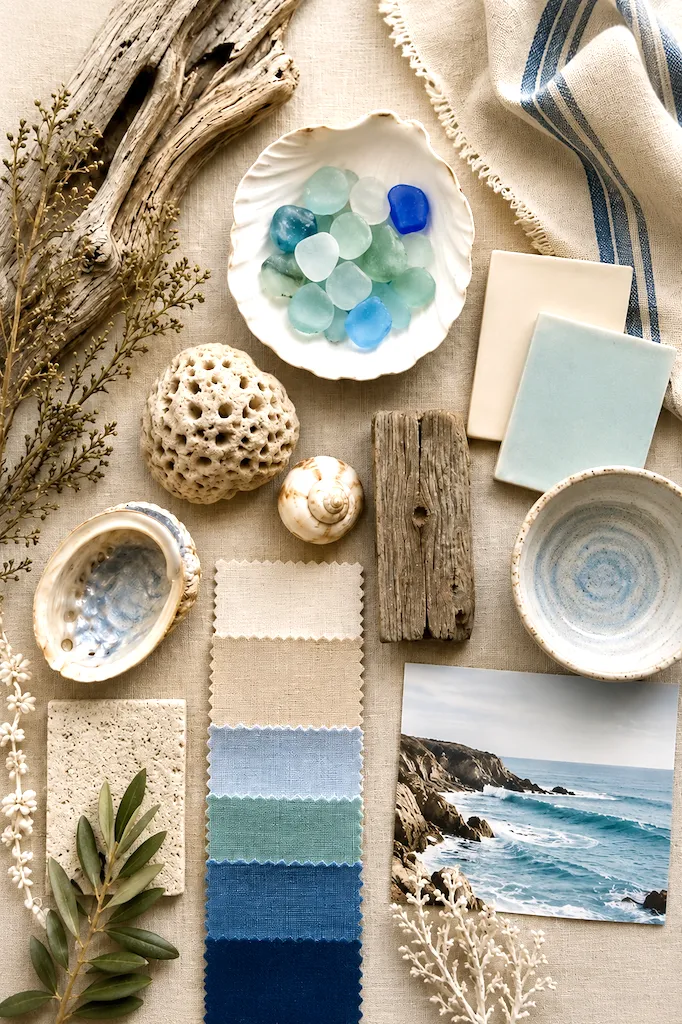
Perhaps the greatest misconception about coastal interiors is that they are simply blue and white. Spend an afternoon beside the sea and you’ll discover a palette that is far richer than that. Sea glass shifts between pale sage and translucent aqua. Sun-bleached driftwood carries soft grays and warm taupes. Weathered limestone glows cream beneath the afternoon sun, while sea foam leaves behind hints of muted green that almost disappear into white. At sunset, the horizon introduces dusty coral, terracotta, golden sand, and deep navy as the day quietly fades into evening.


None of these colors shout for attention. They sit comfortably beside one another because nature has already spent thousands of years refining the combination. That may explain why the most beautiful coastal homes rarely rely on a single statement color. Instead, they layer quiet tones that feel collected rather than coordinated. A linen sofa the color of sand. A sea-glass ceramic bowl. Olive-green textiles. Deep navy inspired by the horizon at dusk. Terracotta recalling cliffs warmed by the evening sun. The room doesn’t imitate the beach. It simply shares its palette.

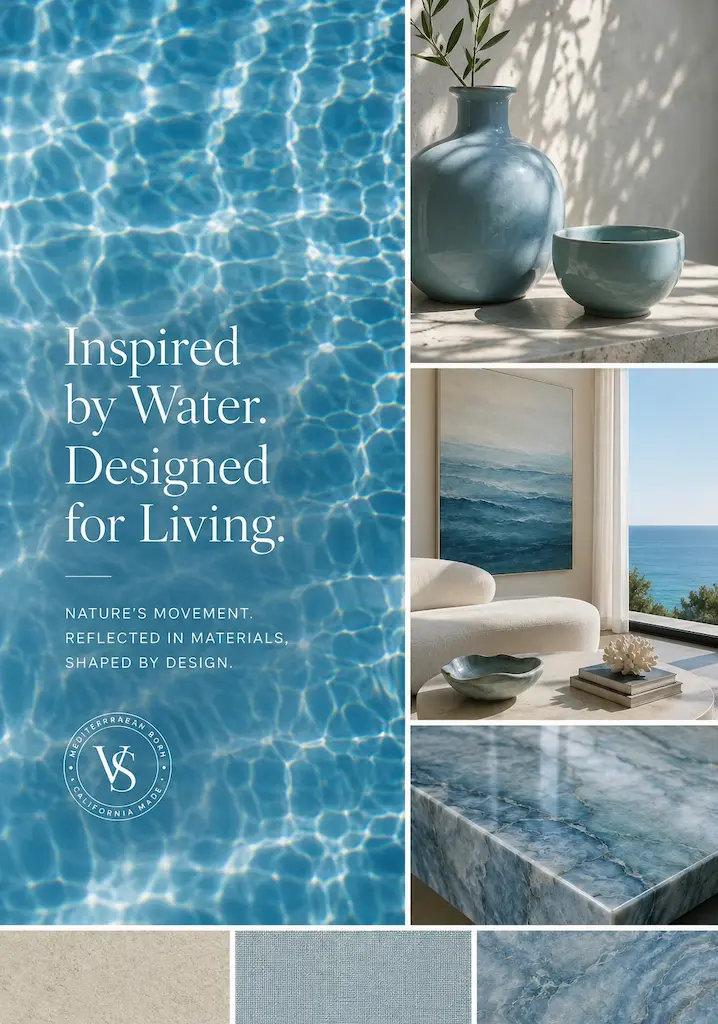
From shimmering water to polished stone, the movement, color, and rhythm of the sea inspire interiors that feel both peaceful and enduring.
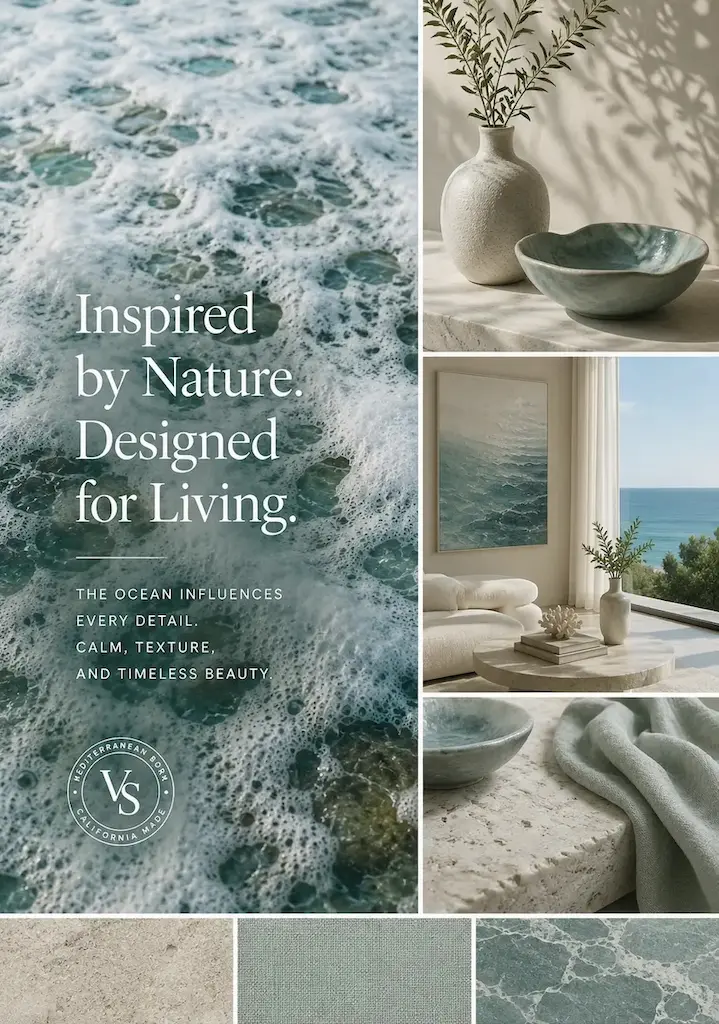
Foaming waves, pale stone, soft linen, and handmade ceramics reveal how nature's textures can be translated into calm, timeless interiors.

Designing with Light

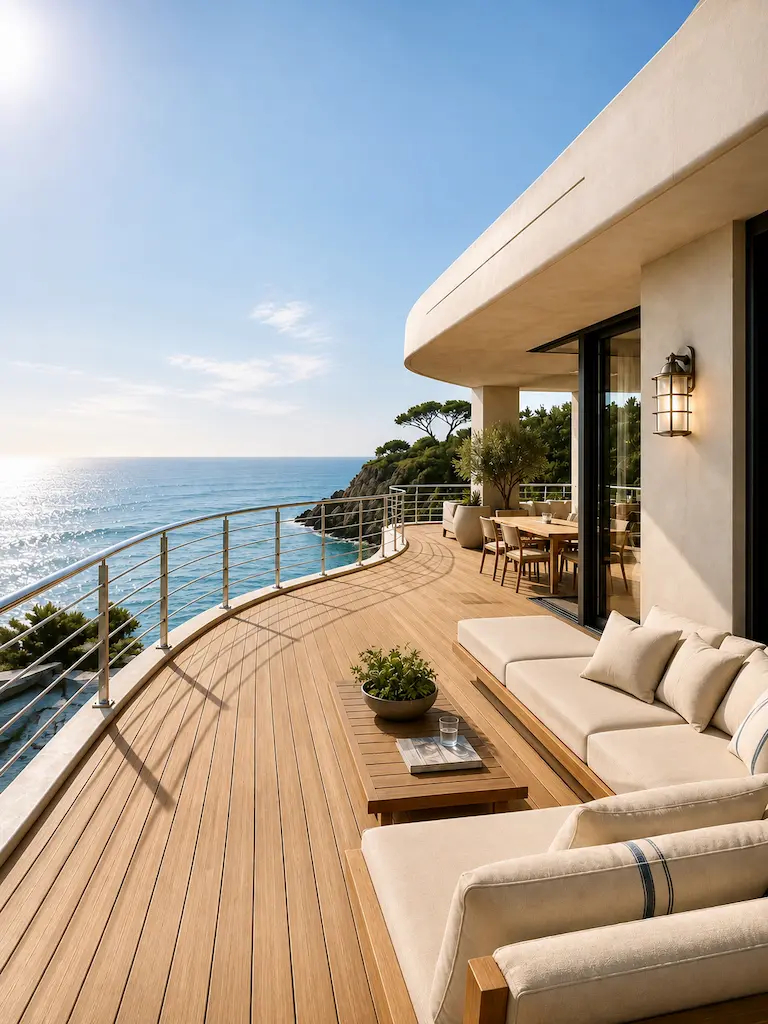
The same is true of light. Mediterranean homes have always understood that light is a design material, not simply something that enters through a window. It reflects from pale stone, filters beneath pergolas, moves across textured plaster, and changes every room throughout the day. California homes embrace that same philosophy. Expansive windows frame the ocean, soft linen curtains diffuse afternoon sunshine, and natural materials reveal different personalities from morning until dusk. Great coastal homes don’t compete with light. They give it something beautiful to play with.


Designing Like the Coast

For years, coastal decorating relied on obvious references. Anchors. Ropes. Seashell collections. Decorative signs reminding us that life is better at the beach. Today’s homes speak a much quieter language. Instead of decorating with the coast, they design like it. Organic forms, curved furniture, sculptural plaster, natural textures, and palettes borrowed directly from sea, sky, sand, and stone may sound like contemporary trends, but they are simply rediscovering lessons the coastline has been teaching for thousands of years.


The coast has always preferred curves over corners, texture over perfection, harmony over contrast, and movement over symmetry.


Perhaps that’s why these interiors feel instantly familiar. They remind us of places we’ve already experienced—walking barefoot across rounded pebbles, running a hand over sun-warmed stone, standing inside a sea cave, watching sea glass shimmer beneath clear water, or seeing dunes shift gently with the breeze. Good design doesn’t copy those memories. It quietly awakens them.


A Caliterranean Principle

Creating a home inspired by the coast begins long before choosing paint colors or furniture. It begins by paying attention. Notice the way waves layer blues that never quite match. Observe how sea glass softens under years of gentle movement. See how driftwood, linen, stone, shells, woven grasses, weathered plaster, and handmade ceramics all share something in common—they become more beautiful because of time, not despite it. Before bringing a new piece into your home, ask yourself three simple questions.


Could this shape have been created by wind, water, or time?

Could this color exist naturally beside the sea?

Will this material become even more beautiful as it ages?


If the answer is yes, it will almost always feel at home in a coastal interior. After all, the goal isn’t to decorate with the coast. It’s to let the coast quietly shape the way we live.
Sea glass, weathered limestone, natural linen, and handcrafted ceramics create a palette shaped by years of wind, water, and light rather than passing trends.
Sea glass, weathered limestone, natural linen, and handcrafted ceramics create a palette shaped by years of wind, water, and light rather than trends.
The coast offers more than blue and white. Soft coral skies, deep ocean blues, and natural textures prove that coastal living is defined by balance, warmth, and quiet contrast.
The coast offers soft coral skies, deep ocean blues, and natural textures. Coastal living defined by balance, warmth, and quiet contrast.

CONTINUE EXPLORING

Inspired by this story? Continue your journey with What Is a Caliterranean™ Home? 

Scroll to Top