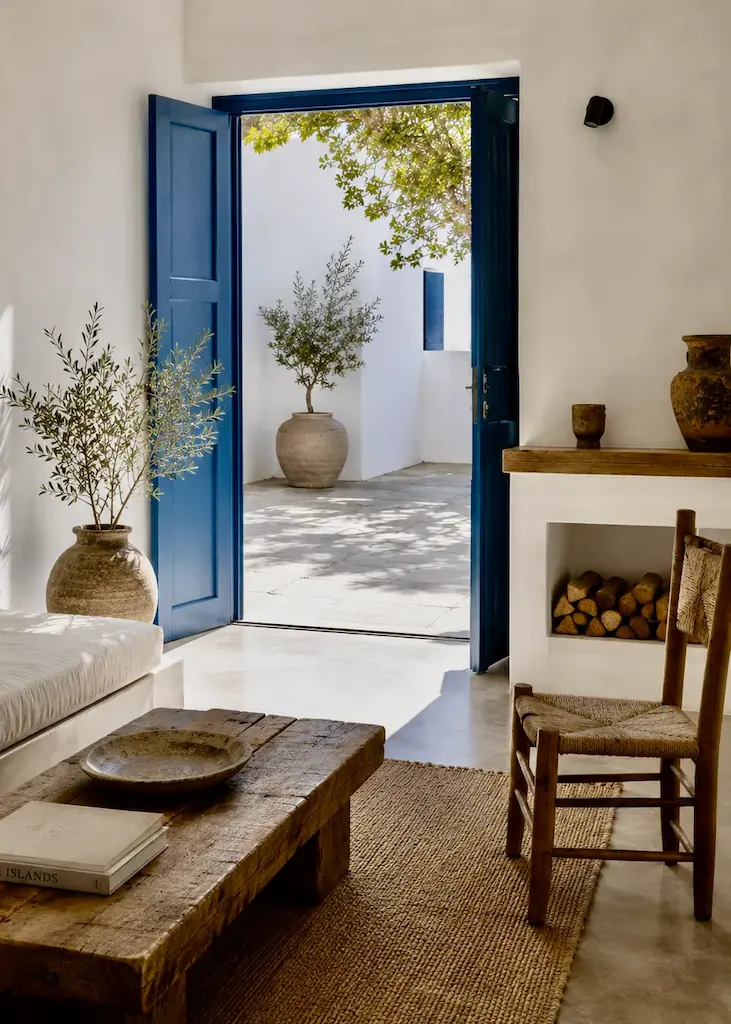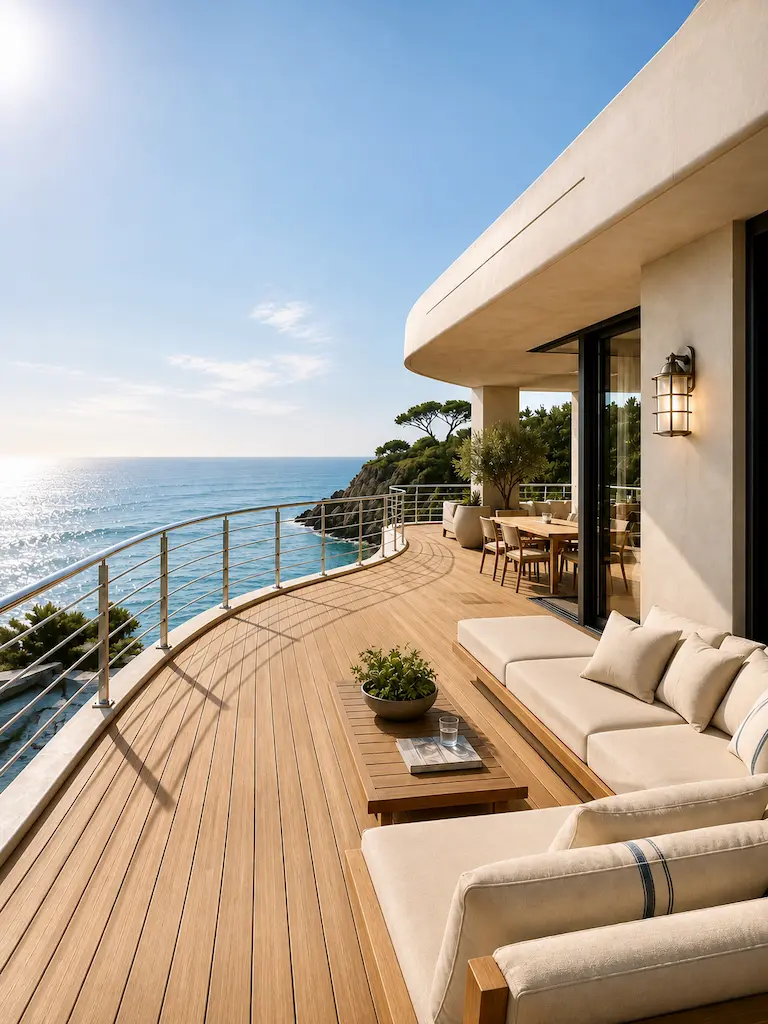
The most interesting outdoor spaces were never designed to be merely looked at.
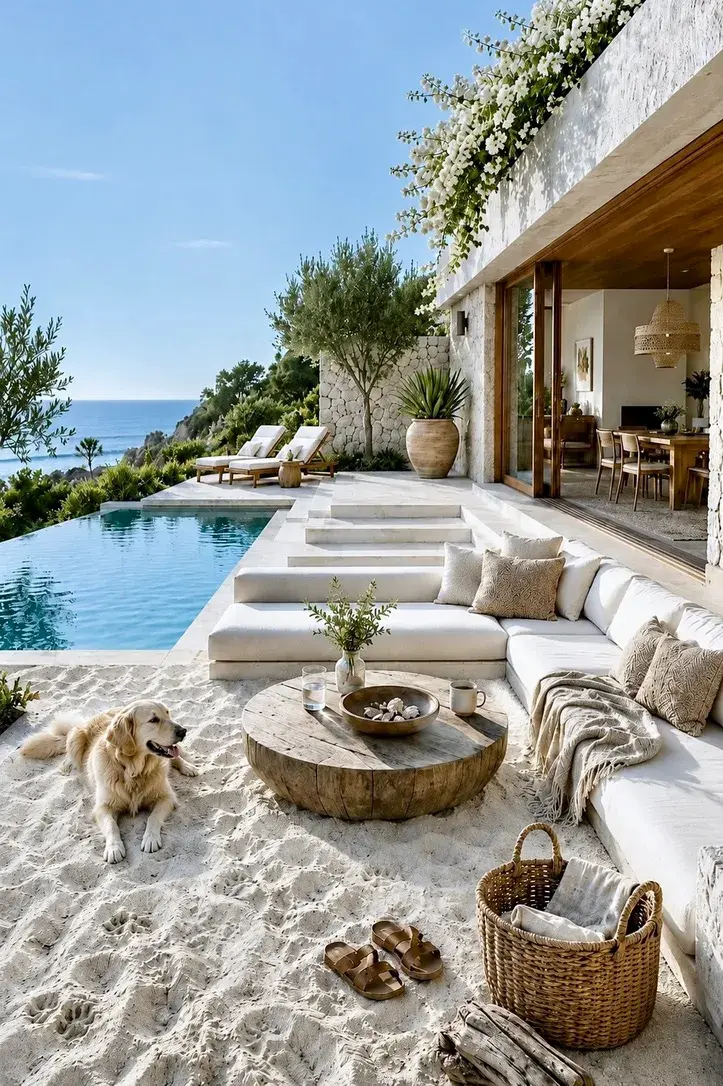
Most backyards have a peculiar relationship with the house they belong to. Inside, every room has a purpose. Outside, there is often an expensive arrangement of furniture waiting for a barbecue invitation, a patch of grass requiring constant attention, and perhaps a patio that receives more admiration than actual use. We have become remarkably good at decorating outdoor spaces without necessarily knowing what to do in them.
Yet some of the most beautiful homes in California and the Mediterranean approach the question differently. They don’t simply extend the house into the garden. They challenge the assumption that living indoors and living outdoors should be two separate activities.
The Outdoor Room Is Much Older Than the Open Floor Plan
Long before architects began celebrating indoor-outdoor living, ancient Roman houses were already organized around open courtyards. The peristyle, a garden enclosed by covered colonnades, could provide a place for conversation, dining, walking, and relief from the heat. It was not a decorative afterthought at the end of the property. In some homes, it was central to how domestic life unfolded.
The Getty Villa in Malibu, modeled on the ancient Villa dei Papiri near Herculaneum, makes the principle wonderfully visible. Its courtyards, shaded walkways, and gardens demonstrate how architecture could use open air as part of the home itself. What we now advertise as seamless indoor-outdoor living was already familiar to wealthy Romans nearly two thousand years ago. They simply managed it without retractable glass walls.
Across the Mediterranean, different versions of the idea evolved according to climate, materials, and local customs. Spanish patios, Italian loggias, and shaded courtyards in Greece and North Africa did not all look alike, but they often addressed similar concerns: sunlight, ventilation, privacy, and the need for somewhere comfortable when the interior became too warm. The outdoor room was not invented to complete an aesthetic. It was designed to make life work.
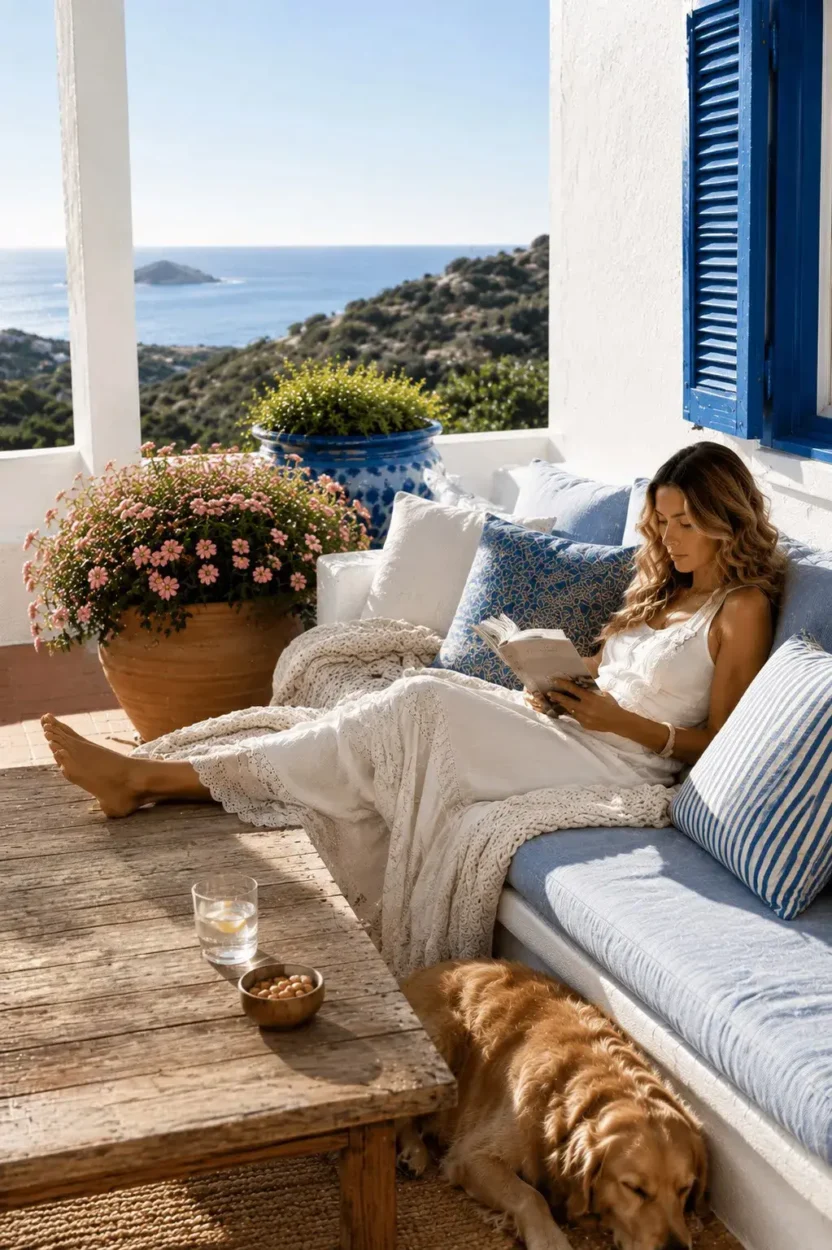
California Didn't Invent Outdoor Living. It Reimagined It.
California’s relationship with the outdoors developed its own architectural personality. In the early twentieth century, architects drew on Mediterranean precedents, introducing courtyards, arcades, and sheltered terraces into homes suited to the state’s climate. These were not simply European houses transplanted across the Atlantic. Their forms were adapted to American domestic expectations, changing landscapes, and new ways of living.
Midcentury modernism took the conversation further. Joseph Eichler’s California houses, including models designed with architects A. Quincy Jones and Frederick Emmons, brought atriums, expansive glazing, and open living spaces into suburban residential design. In some plans, the courtyard wasn’t behind the house at all. It sat inside the arrangement of rooms, creating privacy while bringing daylight and greenery into everyday life.
The difference is fascinating. Traditional Mediterranean courtyards often used surrounding walls and covered passages to create shelter and intimacy. California modernism frequently emphasized visual continuity, transparency, and movement between spaces. One tradition brought the outdoors into the architecture; the other made the architecture seem to disappear into the outdoors.
Both understood something that many contemporary backyards still overlook: a view is lovely, but a place to actually sit is better.
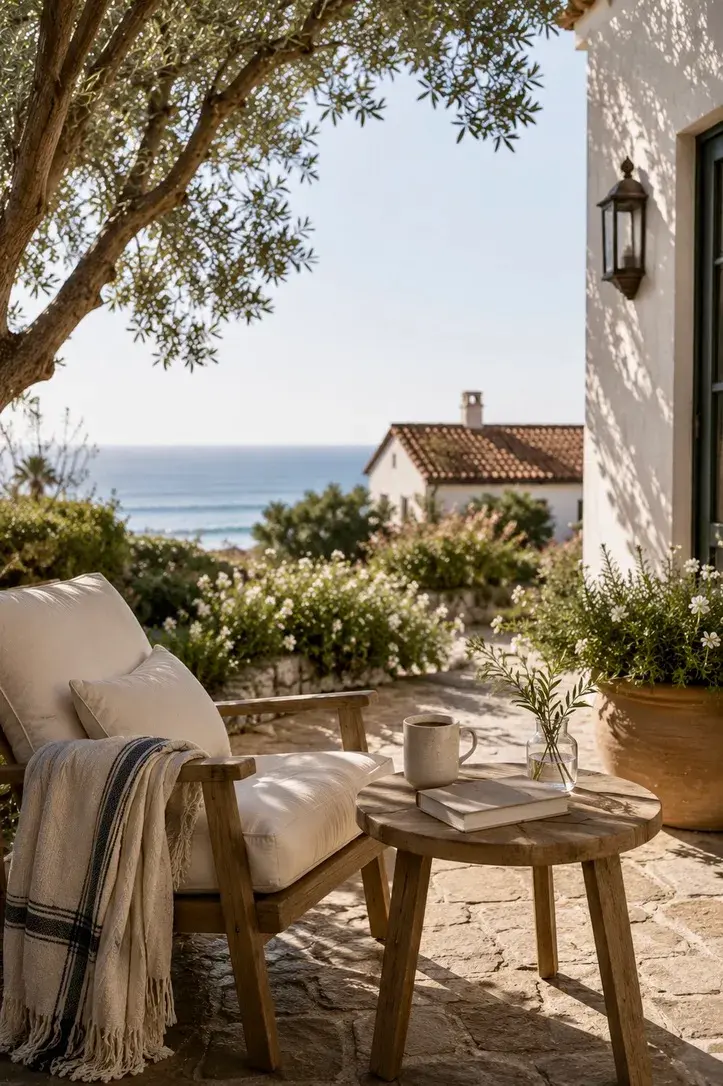
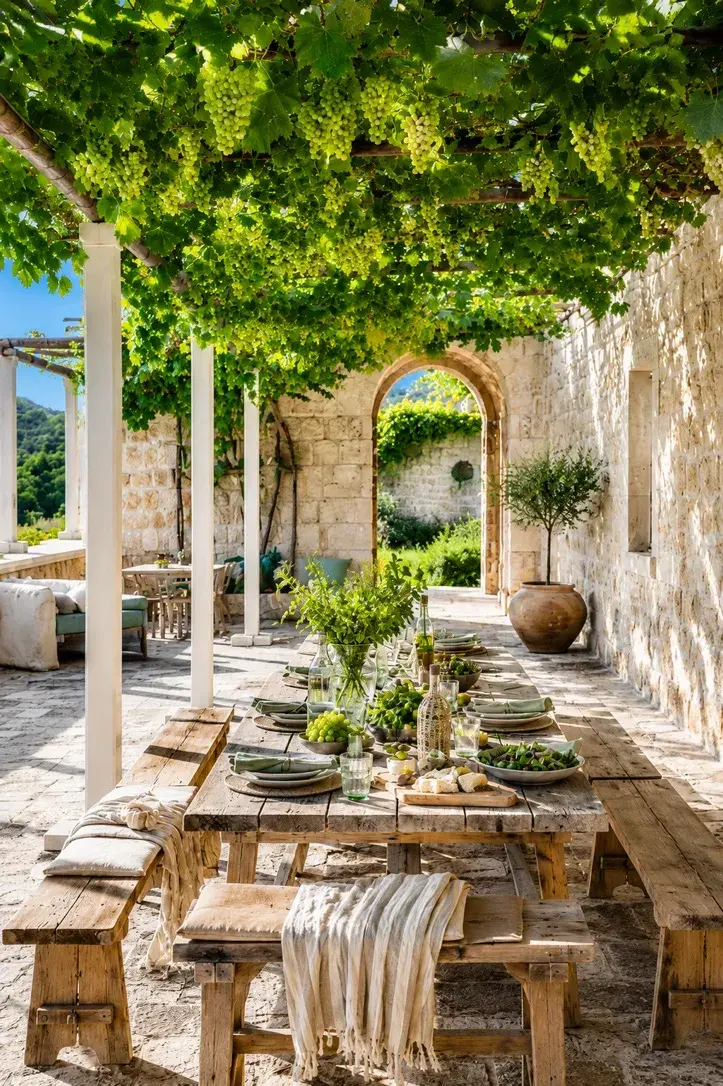
The Most Important Outdoor Furniture Might Be the Shade
There is a reason the most inviting Mediterranean terraces often appear almost disappointingly simple. A substantial table, a few chairs, and somewhere to escape the afternoon sun may accomplish more than an entire collection of designer furniture. The architecture does much of the work. A covered loggia, an old tree, or a courtyard wall determines whether the space feels comfortable long before anyone considers upholstery.
Traditional Mediterranean buildings frequently relied on orientation, shaded openings, and courtyards to moderate heat and encourage ventilation. These were practical responses to climate rather than decorative preferences. A beautifully furnished terrace exposed to relentless afternoon sunshine is not particularly successful design. It is an expensive place to discover that nobody wants to sit.
The same principle matters in California, where outdoor living can be remarkably pleasant but varies considerably by location, season, wind, and sun exposure. A coastal terrace might need protection from cool evening breezes, while an inland garden may require substantial afternoon shade. Designing for the photograph is one thing. Designing for four o’clock on an August afternoon is another.

A Garden Becomes a Room When Life Moves Into It
The most interesting distinction between a backyard and an outdoor room has little to do with walls. It is whether the space has become part of someone’s daily routine. A courtyard used for morning coffee, a shaded table where lunch regularly stretches into the afternoon, or a terrace where someone reads after work has already become a room in every meaningful sense.
This is why smaller outdoor spaces can sometimes feel more successful than elaborate gardens. A balcony with enough room for two comfortable chairs may be more valuable to everyday life than a vast lawn that nobody uses. The important question is not how many activities a property can accommodate, but which activities naturally belong there.
Even the arrangement of furniture changes the experience. Chairs positioned for conversation create a different atmosphere from a row of loungers facing the same direction. A dining table close to the kitchen is more likely to be used than one requiring a minor expedition across the garden. Good design understands human behavior, including our remarkable unwillingness to carry dinner very far.
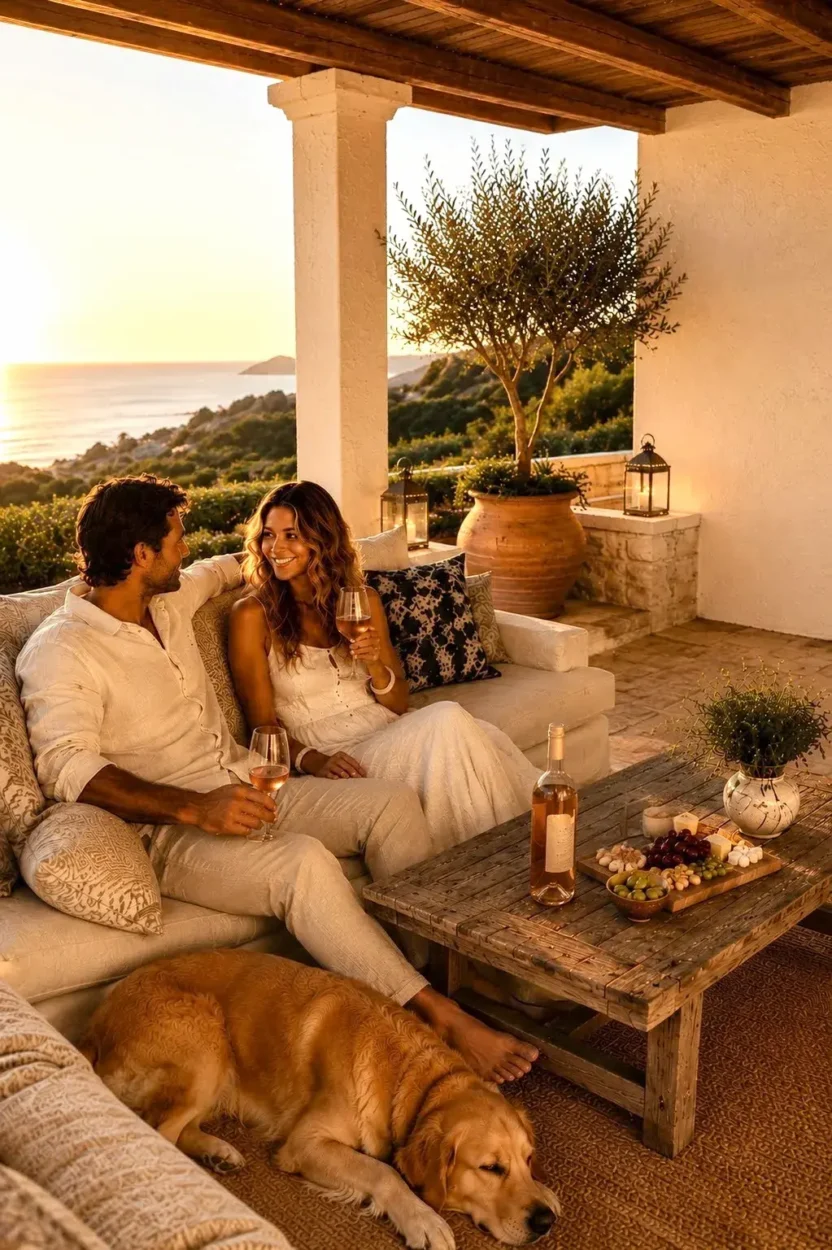
The Luxury of Having Nowhere Else to Be
Somewhere along the way, outdoor living became another category of home improvement. Entire outdoor kitchens appeared, followed by elaborate lighting systems, weather-resistant upholstery, and furniture collections that could comfortably furnish a small hotel. There is nothing inherently wrong with any of it. But more equipment does not automatically produce more living.
The Mediterranean courtyard offers a useful reminder that comfort can come from proportions, enclosure, shade, and the relationship between rooms. California’s best indoor-outdoor homes add another lesson: the easier it is to move between spaces, the more naturally they become part of ordinary life. Neither principle depends on owning a large property or installing an impressive amount of stone.
Perhaps the best test of an outdoor room is what happens when nobody is entertaining. Does someone take their breakfast there? Is it where the family naturally gathers? Does a quiet evening somehow last longer because nobody feels the need to move?
The most successful outdoor spaces are not the ones that look like another living room. They are the ones that make you question why the living room needs to be indoors at all.
More Great Stories From VeniS Atelier