From Workwear to Coastal Style: The Timeless Appeal of Corduroy
There are two kinds of clothes. The ones you buy because they’re fashionable, and the ones you keep because they simply work. Five years later, only one of them is still hanging in your wardrobe. Corduroy has never seemed particularly interested in fashion. It has survived far too many trends to concern itself with the latest one. While other fabrics reinvent themselves every season, corduroy quietly waits for the first cool morning when you reach into the closet almost without thinking. Somehow, it always feels like the right decision. That is quite an achievement for a fabric originally designed for people digging gardens rather than browsing boutiques.
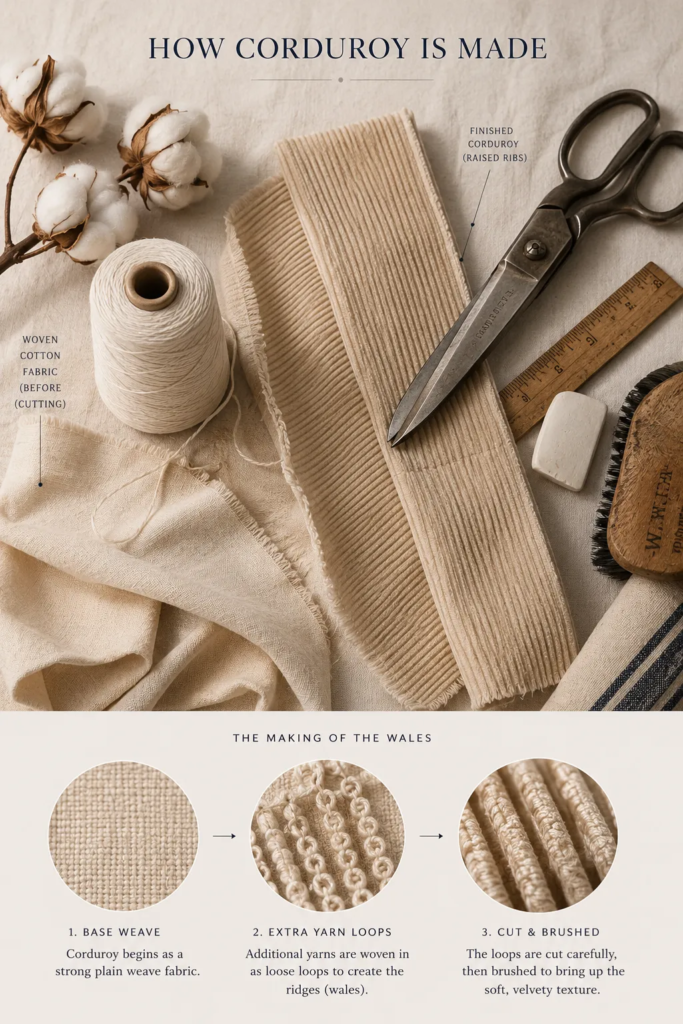
If corduroy could talk, it would probably be slightly amused by its current reputation. Today it accompanies cashmere sweaters, artisan coffee, and weekends spent wandering farmers’ markets. Its early life was considerably less glamorous. Its story begins with fustian, a durable cotton cloth woven throughout medieval England and northern Italy. Practical fabrics rarely receive much attention because they are too busy doing their jobs. Fashion was never the point. Longevity was. By the eighteenth century, English weavers discovered that by adding extra rows of woven loops and carefully slicing them open with fine blades, they could create a fabric unlike anything else. Soft enough to touch constantly. Strong enough to survive decades.
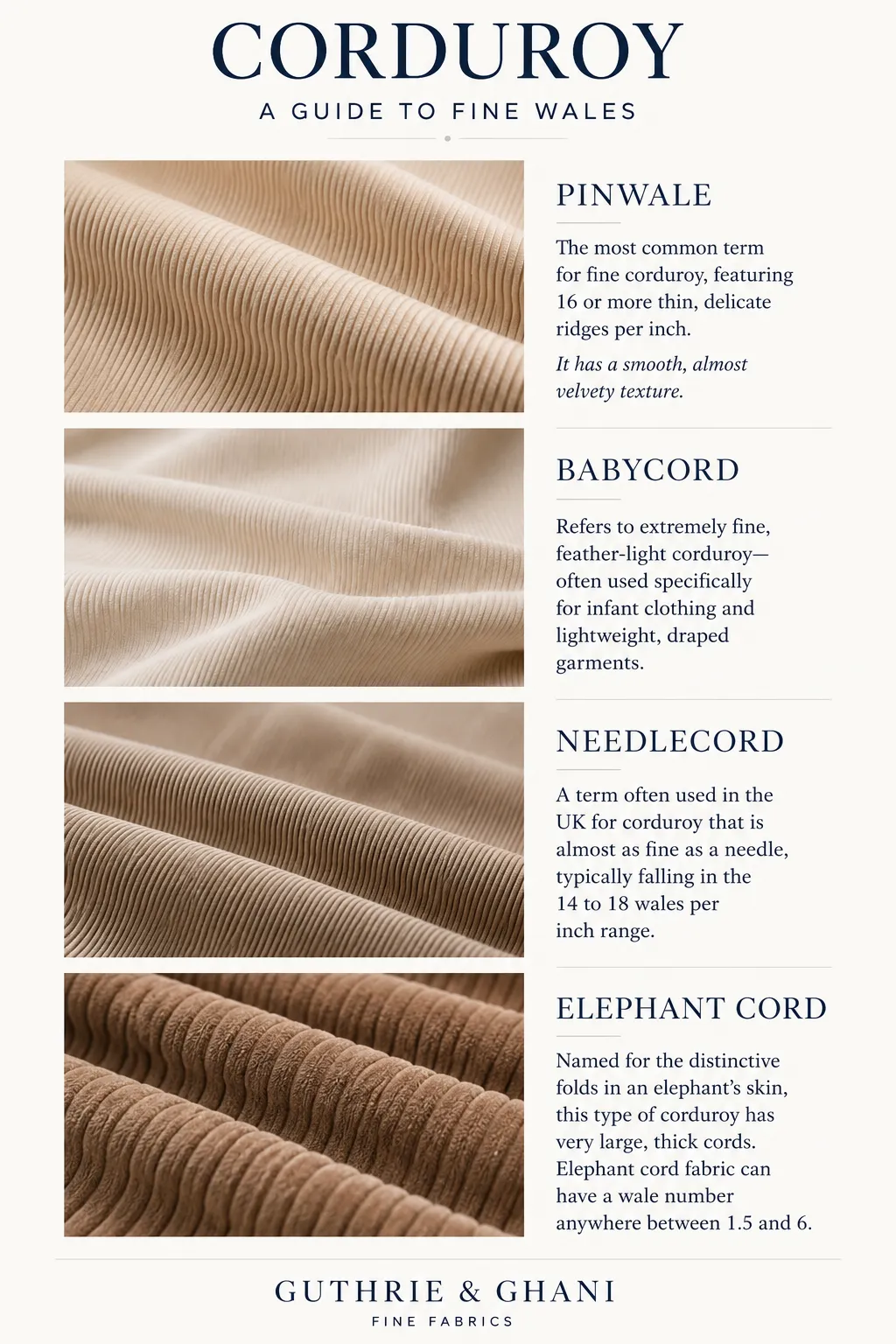
Those little ridges even have their own name. They’re called wales. Once someone tells you that, you’ll never stop counting them. The number of wales determines the personality of the fabric. Pinwale feels almost velvety beneath your fingertips. Babycord is lighter still, soft enough to drape gracefully. Needlecord, beloved in Britain, strikes a happy balance between refinement and texture. Then there is elephant cord, whose broad ribs borrow their name from the folds of an elephant’s skin. It is impossible to mistake one for the other, rather like meeting cousins who all inherited the same eyes but entirely different personalities.
Corduroy has another amusing habit. It collects stories. The most famous claims its name comes from the French corde du roi—”cloth of the king.” It is exactly the sort of tale fashion adores because it sounds wonderfully aristocratic. Historians, unfortunately, have always been rather difficult dinner guests. They have found no convincing evidence that French royalty ever wore anything called corde du roi. The name almost certainly evolved from English textile terminology describing the raised cords themselves. The truth is far less glamorous. Which is precisely why it is more interesting. Corduroy wasn’t woven for kings. It was woven for people who expected their trousers to survive Monday.
For much of the nineteenth century, it belonged to railway workers, gardeners, gamekeepers, carpenters, and farmers. It kept people warm without becoming heavy, breathed surprisingly well, and resisted wear in places where ordinary cotton quickly surrendered. It was practical in the best possible sense of the word. And like a well-used leather chair or an old wooden table, it became more comfortable the longer it lived with you.
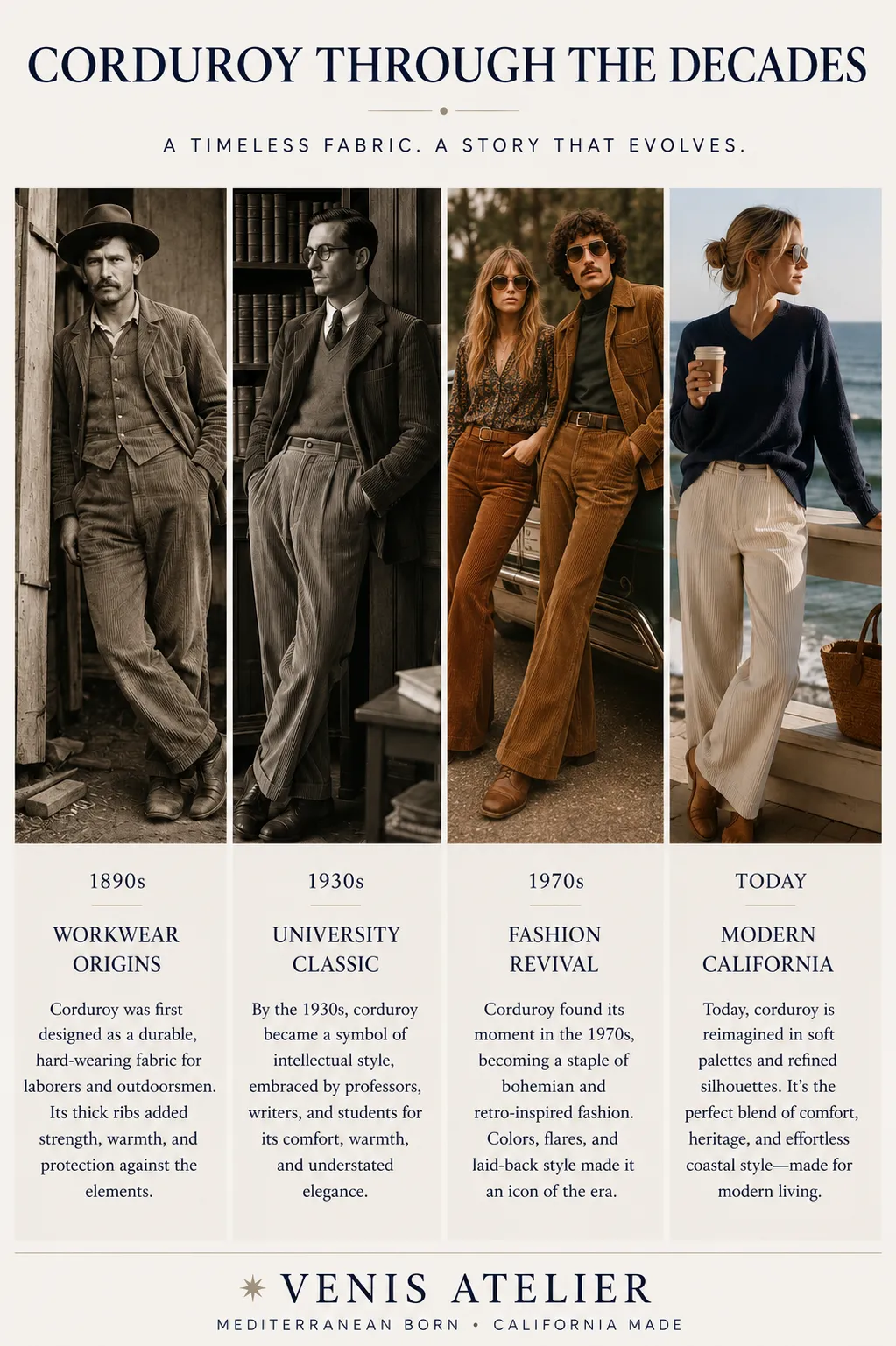
Then something rather unexpected happened. Corduroy changed professions. It left muddy fields for university libraries. The same fabric that had accompanied gardeners suddenly found itself surrounded by bookshelves, sketchpads, rolled architectural drawings, and half-finished cups of coffee. Professors adopted it. Architects did too. Writers seemed especially fond of it, perhaps because corduroy looks exactly like the sort of fabric that doesn’t mind spending an afternoon thinking. Somewhere along the way it exchanged utility for quiet intelligence, although in truth it managed to keep a little of both.
Fashion eventually noticed, although not in the way fashion usually does. The 1970s embraced corduroy with enthusiasm, dressing it in wide-leg trousers, softly tailored jackets, and earthy shades of camel, rust, tobacco, olive, and chocolate. Looking back, the appeal seems almost inevitable. Those colors belong outdoors. They sit comfortably beside weathered wood, olive trees, vineyard soil, and California hills turning golden at the end of summer. They were never meant to be admired under boutique lighting. They were meant to be lived in.
Modern corduroy hasn’t abandoned that spirit. It has simply become lighter, softer, and more refined. Fine-wale versions drape beautifully, breathe easily, and pair as naturally with linen as they do with cashmere. The fabric has matured without losing the qualities that made people trust it in the first place.
Which brings us to the coast. California and the Mediterranean are separated by an ocean, yet they have reached remarkably similar conclusions about getting dressed. Neither place experiences dramatic winters. Both spend much of the year negotiating between warm sunshine and cool sea air. Mornings call for a sweater. Afternoons encourage rolled sleeves. Evenings politely request another layer. The wardrobe is less about changing seasons than responding to the day as it unfolds. Corduroy slipped quietly into that conversation.
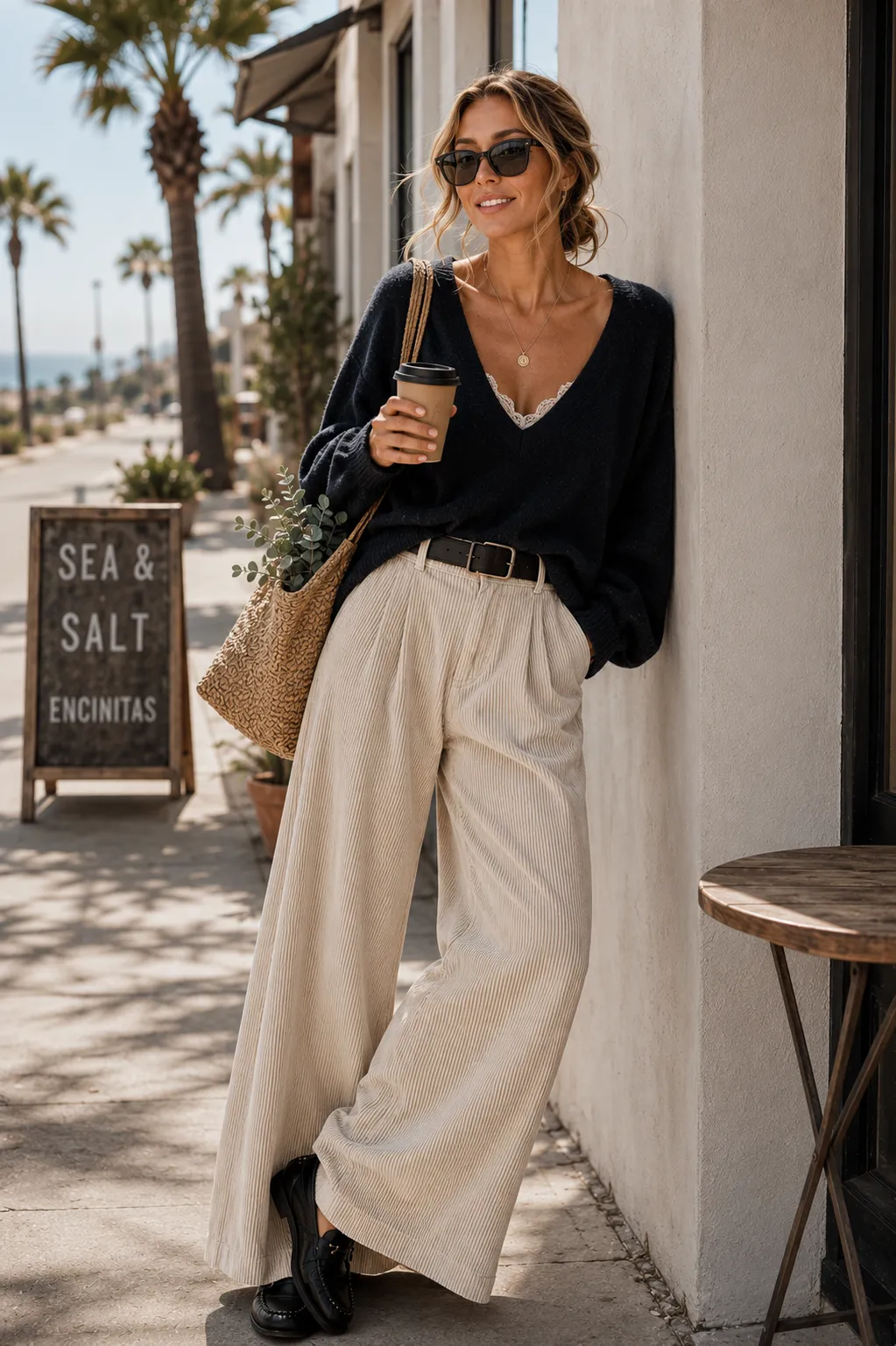
Cream pinwale trousers worn with a navy cashmere sweater feel entirely natural buying coffee in California coastal towns before the surfers have returned to shore. The very same outfit belongs just as comfortably in a village market in Mallorca, where someone is carefully choosing peaches, arguing cheerfully over tomatoes, and balancing a still-warm baguette beside a bouquet of sunflowers. Different coast. Same morning.
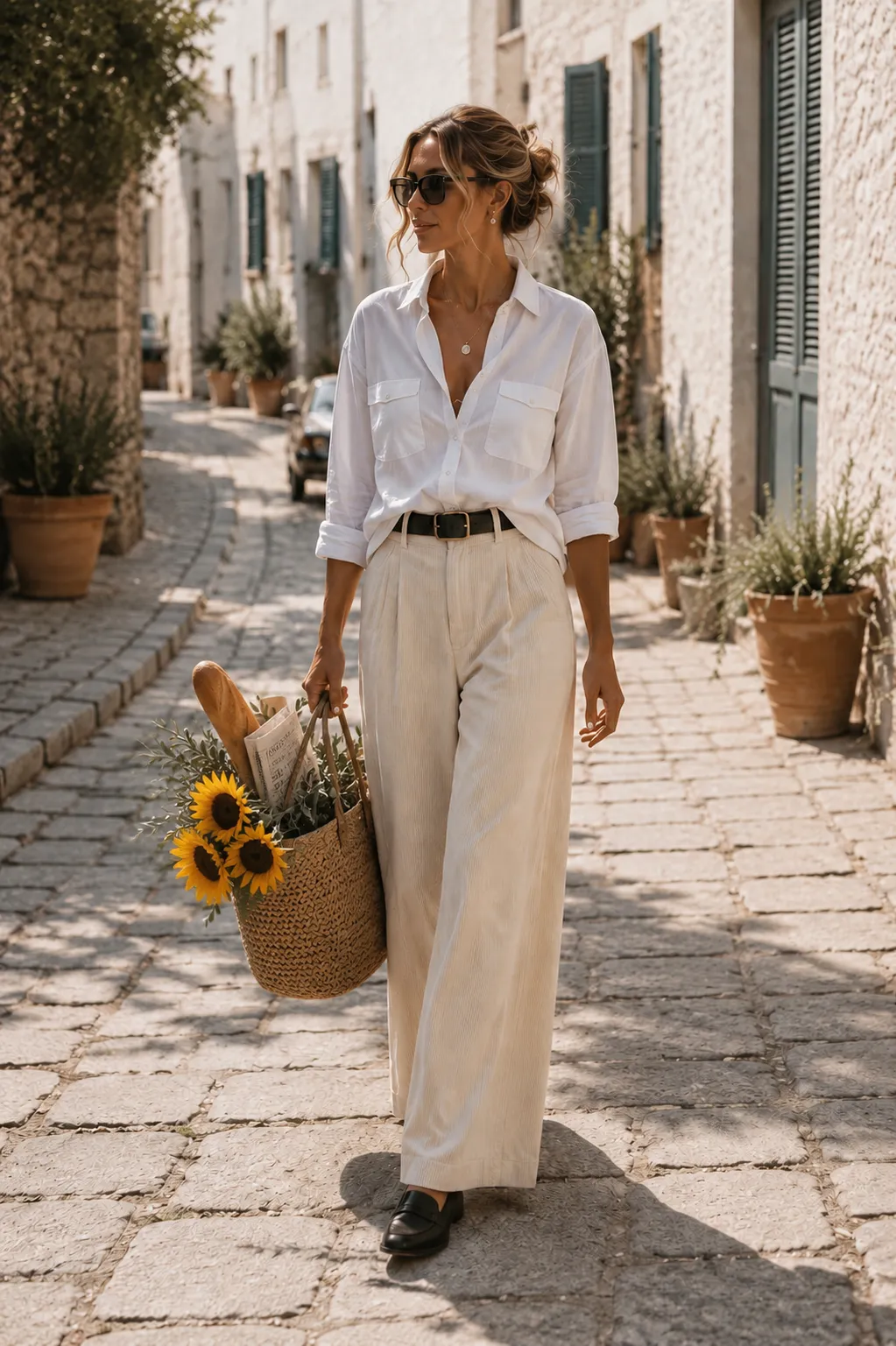
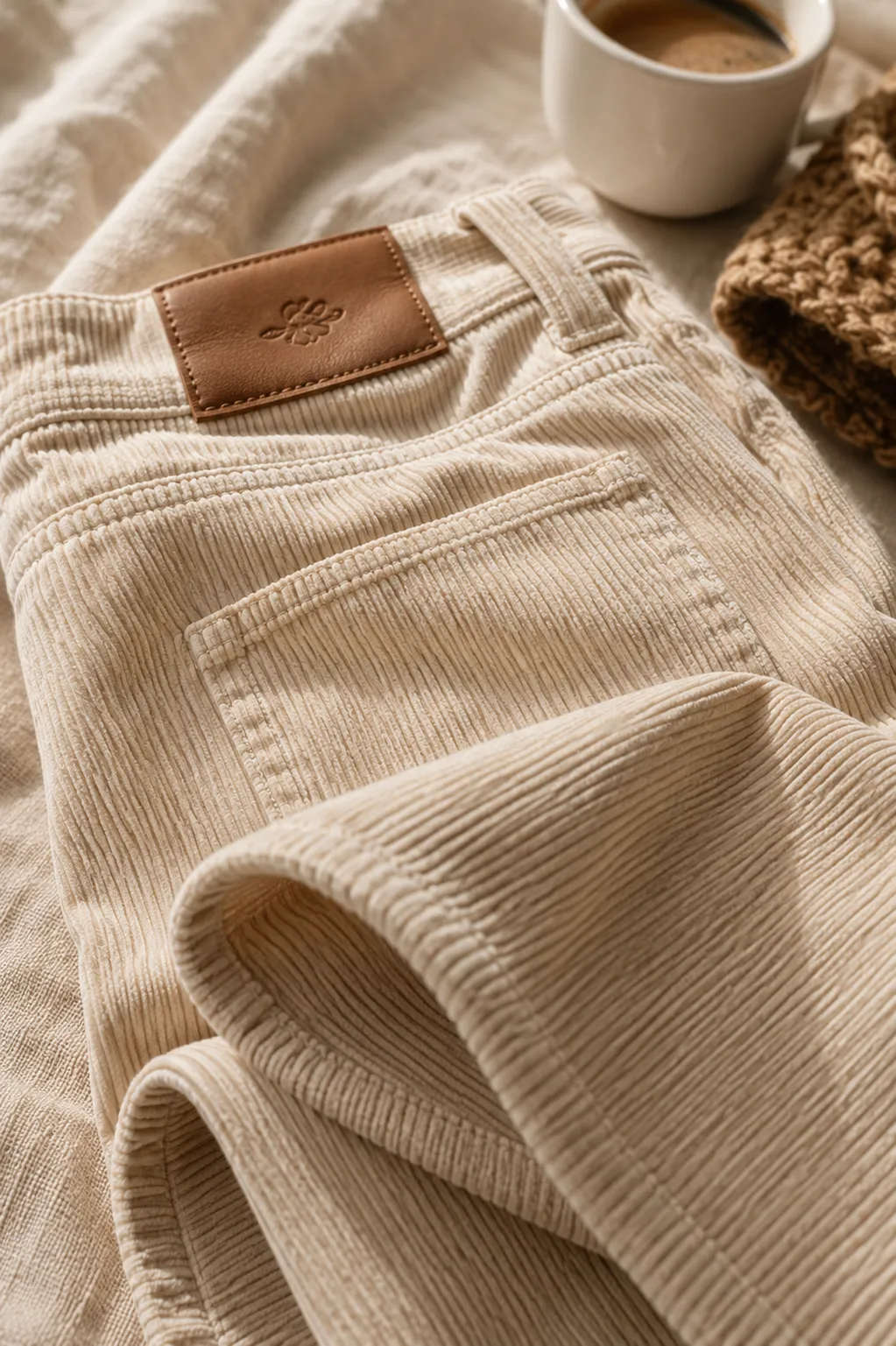
That, perhaps, is the real reason corduroy belongs in a coastal wardrobe. It understands that style is rarely about making an entrance. It is about being ready for whatever the day quietly becomes. A walk that turns into lunch. A coffee that becomes a conversation. A visit to the market that somehow ends beside the sea. The best coastal days are wonderfully unplanned, and corduroy has always been happiest following along without complaint. May be that explains why it never really disappears.
Every few years someone announces that corduroy is making a comeback, as though the fabric had spent the previous decade hiding in a cupboard somewhere. In reality, it was exactly where it has always been—in wardrobes belonging to people who value comfort, craftsmanship, and clothes that improve rather than expire. Trends simply catch up every now and then. California understands that instinct. The Mediterranean has been practicing it for centuries. Neither place treats clothing as the main event. It is simply part of a slower rhythm of living, where good coffee deserves to be enjoyed while it’s hot, bread is worth buying fresh each morning, and a comfortable pair of trousers might accompany hundreds of ordinary days before becoming someone’s favorite. Corduroy has always understood that. It just waited patiently for the rest of us to notice.
Designer’s Note
- Corduroy is at its best when it quietly supports the rest of the wardrobe rather than competing with it. Its texture provides enough character that everything else can remain uncomplicated.
- For California mornings, cream pinwale trousers paired with a navy cashmere V-neck, a lace-trimmed camisole, dark leather loafers, and classic sunglasses feel polished without appearing deliberate. Add a takeaway espresso and the Pacific in the background, and you’ve captured the easy rhythm of a coastal morning.
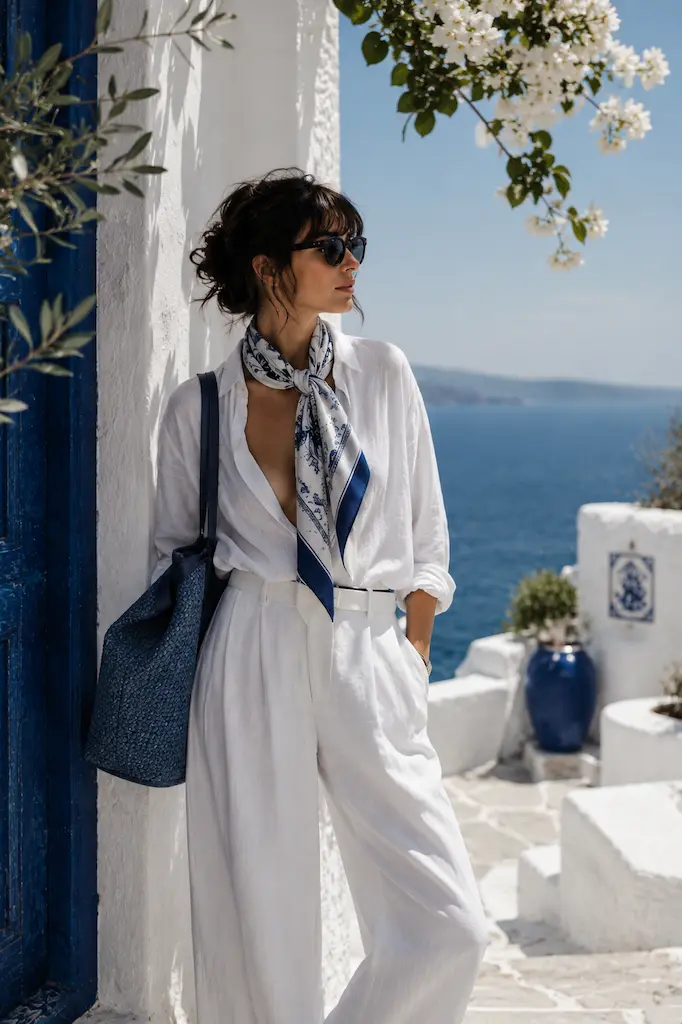
- Along the Mediterranean, camel or olive needlecord worn with a crisp white linen shirt and a woven market basket creates the same feeling through different details. Bread, citrus, and fresh flowers are less accessories than evidence of a morning well spent.
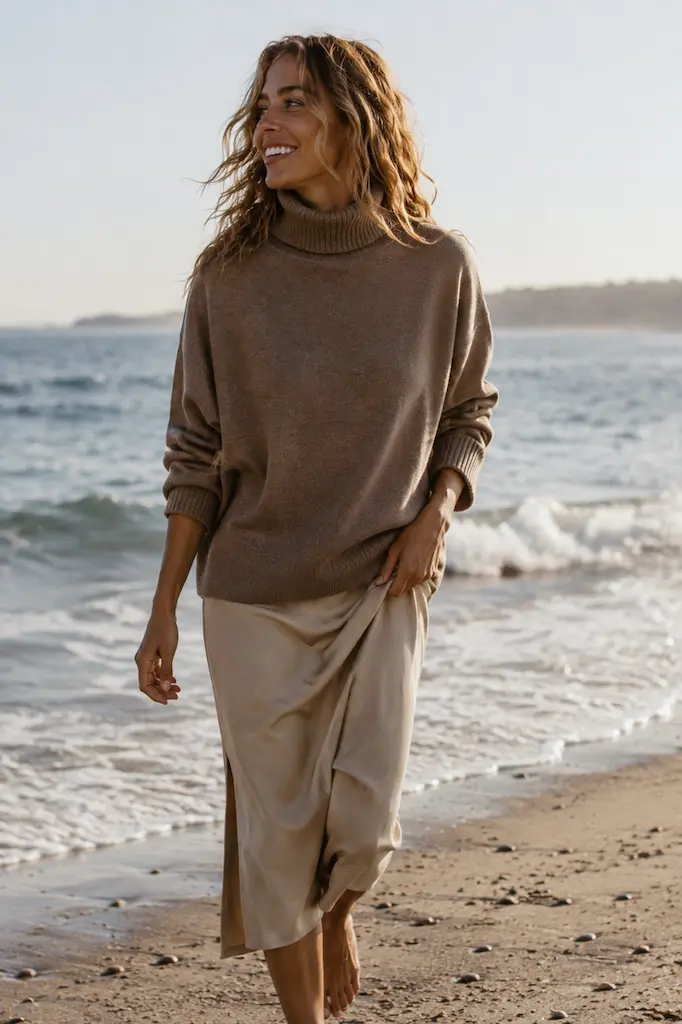
- As evenings become cooler, wide-leg cream corduroy with an ivory cashmere sweater offers a softer alternative to denim. The combination feels equally appropriate on a California bluff watching the sunset or at an outdoor table overlooking a Mediterranean harbor.
- Choose corduroy the way you might choose good olive oil or handmade ceramics: not because it is fashionable, but because it continues to reward everyday use. The longer it accompanies your life, the more naturally it becomes part of it.
One of the pleasures of learning about everyday objects is discovering how much craftsmanship they quietly contain. If today’s story made you look a little more closely at the fabric in your own wardrobe, the Victoria and Albert Museum’s Textile Collection is a wonderful place to continue exploring the history of weaving, textiles, and design.
CONTINUE EXPLORING
Inspired by this story? Continue your journey with The Luxury of Looking Like a Surfer →