Marine Design at Home • PART TWO
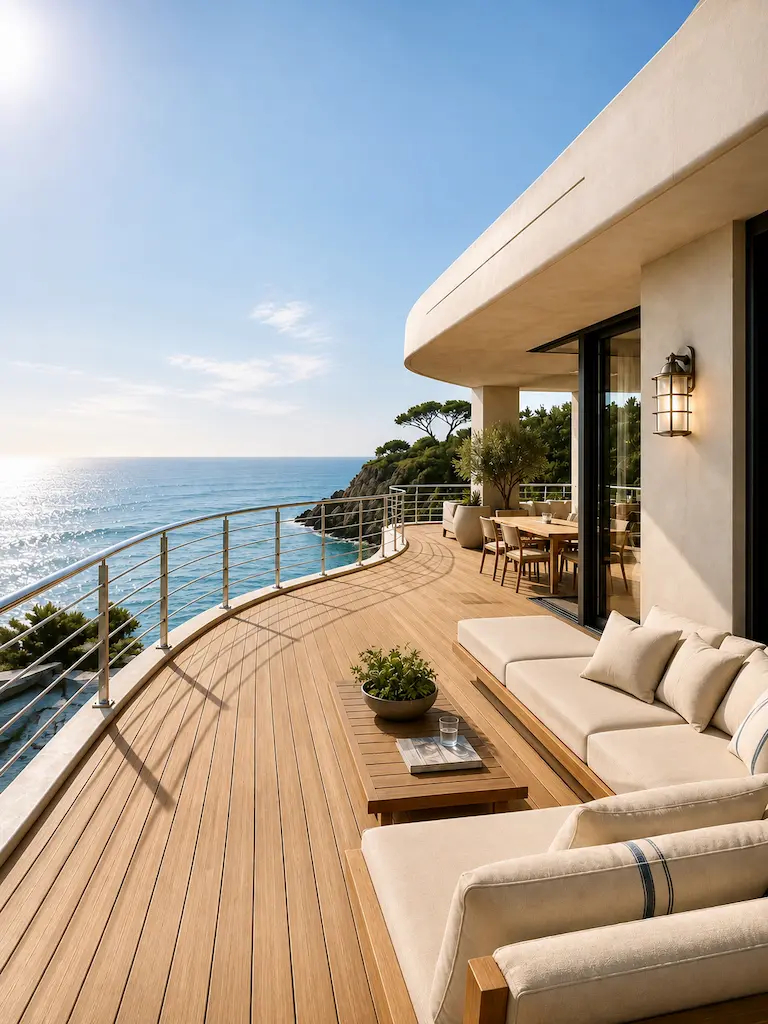
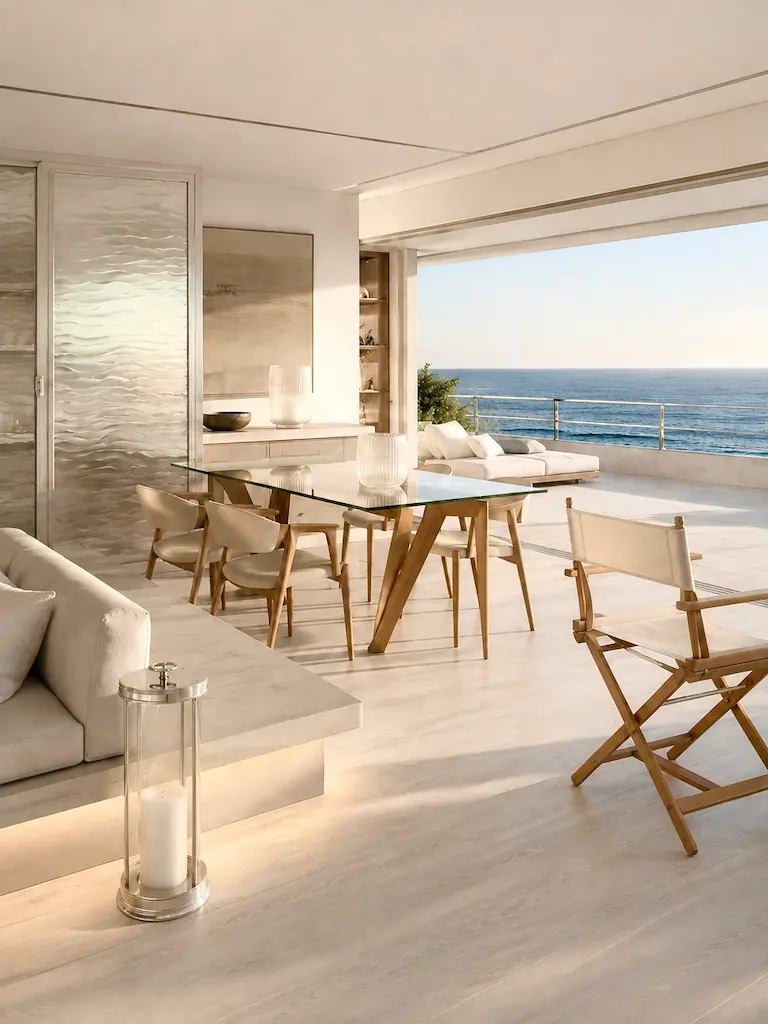
There is a difference between a home that looks coastal and one that actually understands coastal living. The first borrows the imagery of the sea. The second borrows its intelligence.
For decades, coastal interiors have been reduced to a familiar shorthand: pale linen, weathered wood, woven accessories, blue and white, perhaps a shell or two. Pleasant, certainly. But none of those things really explain why life beside the water feels different.
At VeniS Atelier, we think the more interesting answer may be found aboard a yacht. Not in nautical décor, polished brass or anything shaped like an anchor. In the thinking behind it. A beautifully designed yacht has to accomplish something most homes rarely demand: make limited space feel generous, keep movement effortless, conceal what does not need to be seen and preserve an uninterrupted relationship with the world outside.
Combine that intelligence with California’s openness and the quiet permanence of Mediterranean architecture, and something new begins to emerge. We call it the Caliterranean home.
What Is a Caliterranean Home?
A Caliterranean home combines California’s openness, Mediterranean permanence and the spatial intelligence of yacht design. It favors built-in solutions over unnecessary furniture, clear movement over clutter, honest materials over decoration and views over objects. The purpose is not to make a house resemble a yacht. It is to understand why well-designed yachts can feel so extraordinary in the first place.
Every surface has been considered. Storage disappears into the architecture. Furniture respects movement. Materials are selected not simply because they photograph beautifully, but because they can withstand life. Sheltered interiors and open-air spaces belong to the same experience. And the view is never treated as an afterthought.
On land, those principles create something very different from the traditional beach house: a home that feels calm without being empty, comfortable without being overfilled and refined without needing to announce itself.
What Yachts Understand That Homes Often Forget
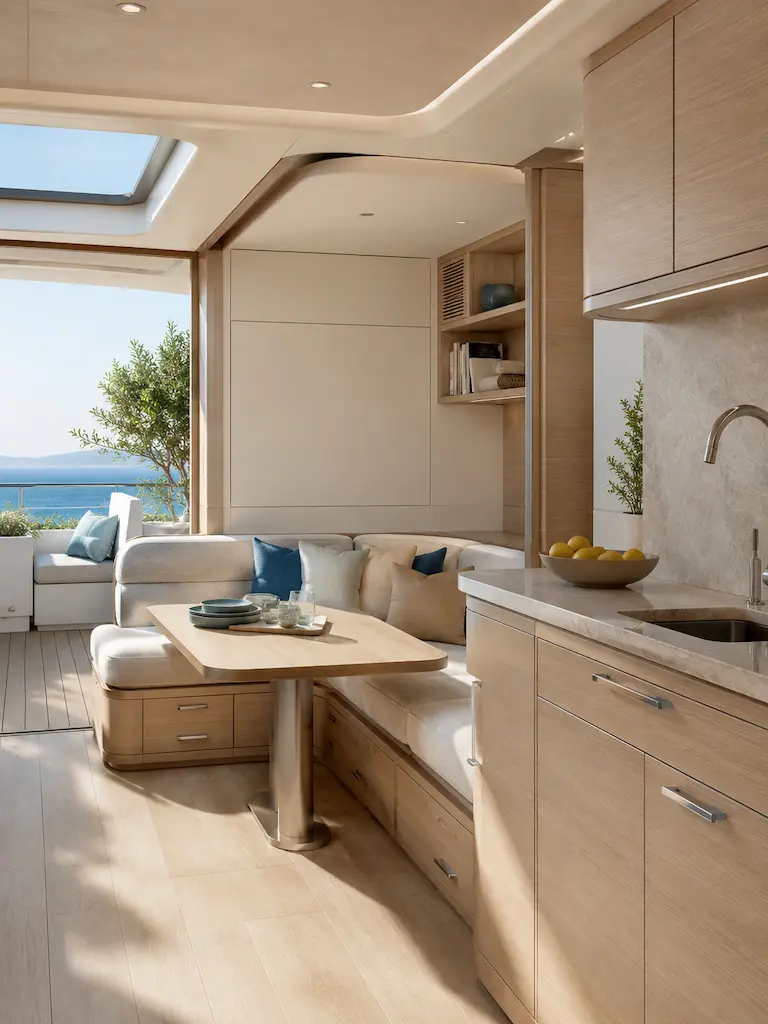
A yacht has no room for careless design. Every square foot has a job. A seat may conceal storage. A wall may become cabinetry. A corner may become a banquette. Furniture cannot interrupt circulation simply because it looks beautiful there. Doors, drawers and passageways have to work together. The relationship between inside and outside has to feel natural because life constantly moves between the two. Constraint creates discipline.
Homes have the opposite problem. Because there is usually more space, it is easy to fill rather than design. An empty wall receives a console because it looks empty. A corner acquires a chair nobody uses. Shelves slowly accumulate objects because something appears to be missing.
The Caliterranean approach begins by asking a more useful question: Does this make the home work—or merely make the room fuller?That small change in thinking can transform an interior.
The Six Principles of the Caliterranean Home
1. Let the Boundary Disappear
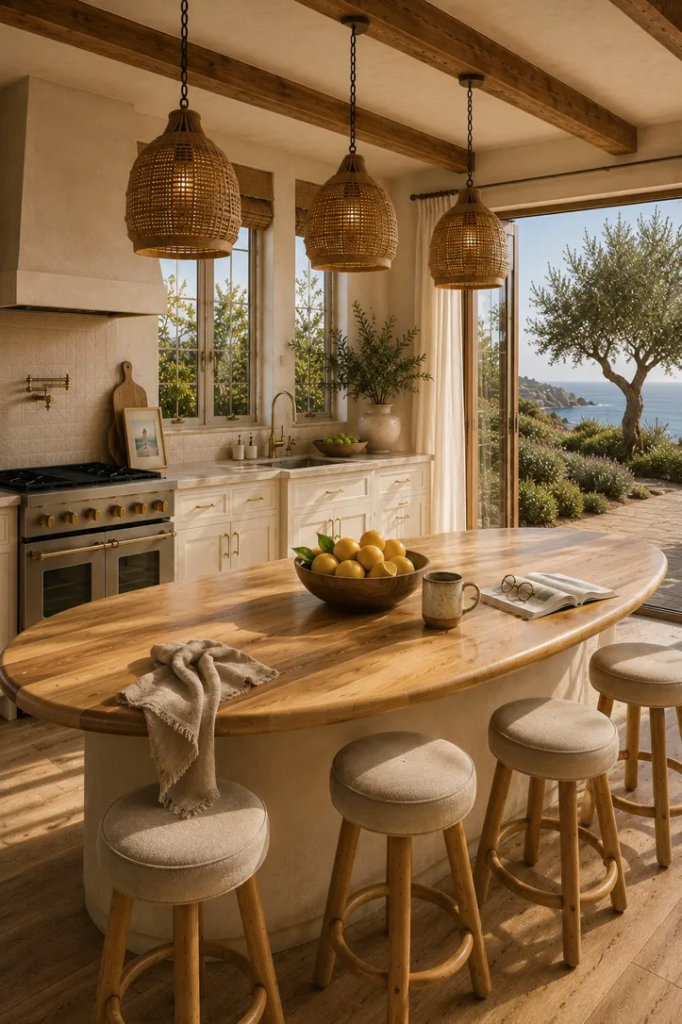
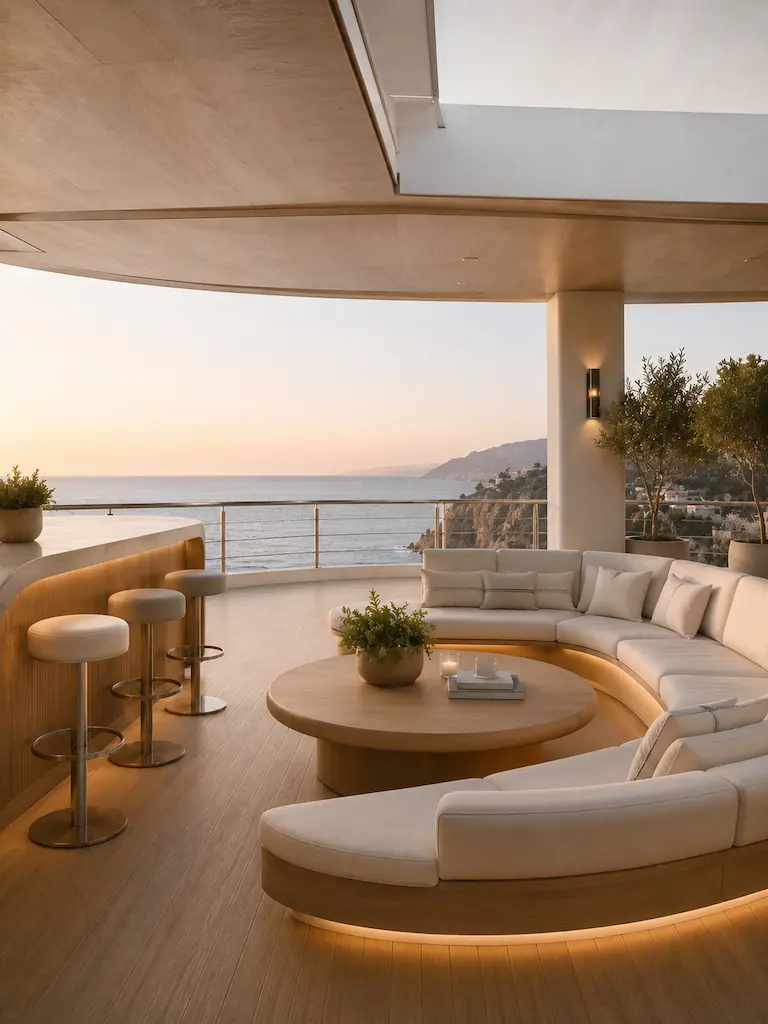
California has long understood one of the great pleasures of coastal living: the house does not need to stop where the walls do. Sliding doors disappear. Terraces become outdoor living rooms. Flooring continues visually toward gardens and balconies. Furniture is positioned so that interior and exterior spaces seem to belong to one composition. Yachts take this idea even further. The movement between salon and deck is part of the experience rather than a transition between two unrelated places.
A home can do the same. And an ocean view is not required. A courtyard, garden, balcony, tree or patch of open sky can become part of the architecture when the room is deliberately oriented toward it. The terrace should not feel like somewhere you go. It should feel as though the room simply kept going.
2. Every Space Must Earn Its Place
Yacht design rarely has meaningless corners because there is simply no room for them. Homes benefit from the same discipline. This does not mean creating austere interiors or living with almost nothing. Caliterranean simplicity is not absence. It is intention. A chair should be somewhere because someone wants to sit there. A table should support the way the room is used. An object may have no practical function at all and still deserve its place because it brings beauty, memory or craftsmanship into the home.
The point is not to eliminate things. It is to stop furnishing by reflex. The question is not whether a room has enough furniture. It is whether every piece deserves the space it occupies.
3. Built-In Before Brought-In
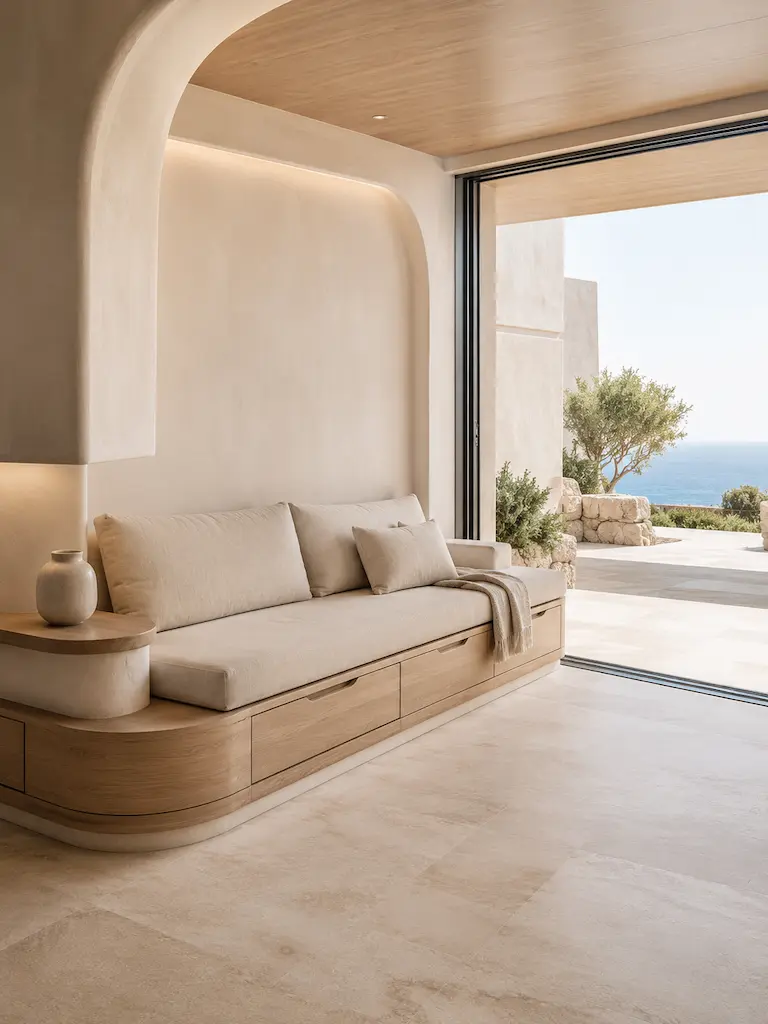
Here, yacht design and traditional Mediterranean architecture have surprisingly much in common. Both understand the value of making furniture part of the architecture itself. A plaster bench built into a Mediterranean wall and a banquette fitted into the curve of a yacht may come from entirely different worlds, yet they solve the same problem beautifully: they create function without making the space feel crowded.
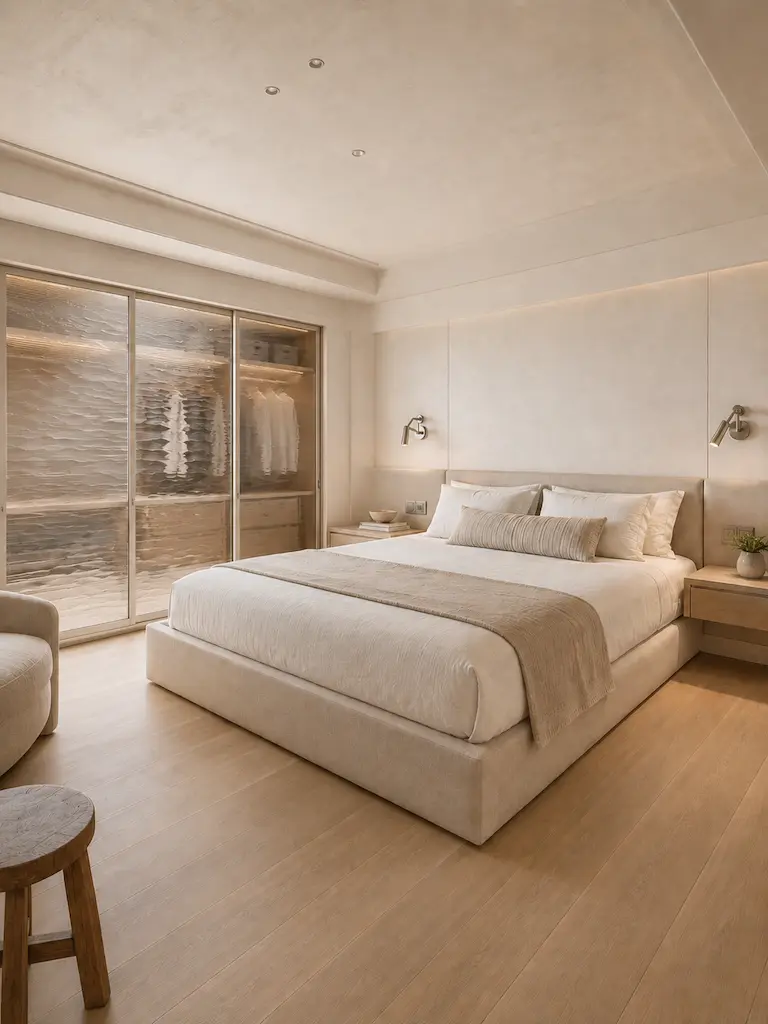
Window seats can conceal storage. Banquettes can replace several dining chairs. Niches can replace freestanding shelving. Daybeds can become part of a wall. Cabinetry can disappear rather than dominate. The result feels calmer because the architecture is doing more of the work.
Before bringing another piece of furniture into a room, ask: Could the architecture do the job instead? That may be one of the most useful lessons yacht design can teach a home.
4. Make the View Part of the Room
On a yacht, the horizon is never accidental. Seats turn toward it. Windows frame it. Railings preserve it. Furniture is kept low enough not to interrupt it. The exterior landscape effectively becomes another material in the interior. Homes often forget this. A room is arranged around walls, furniture or television placement while the thing actually worth looking at becomes secondary. The view does not have to be the Pacific or the Mediterranean. It might be an old olive tree, a fireplace, a courtyard, a piece of art, a garden wall or the way afternoon light falls across plaster.
Every room is facing something. The only question is whether anyone decided what. Arrange the space accordingly.
5. Choose Materials That Tell the Truth
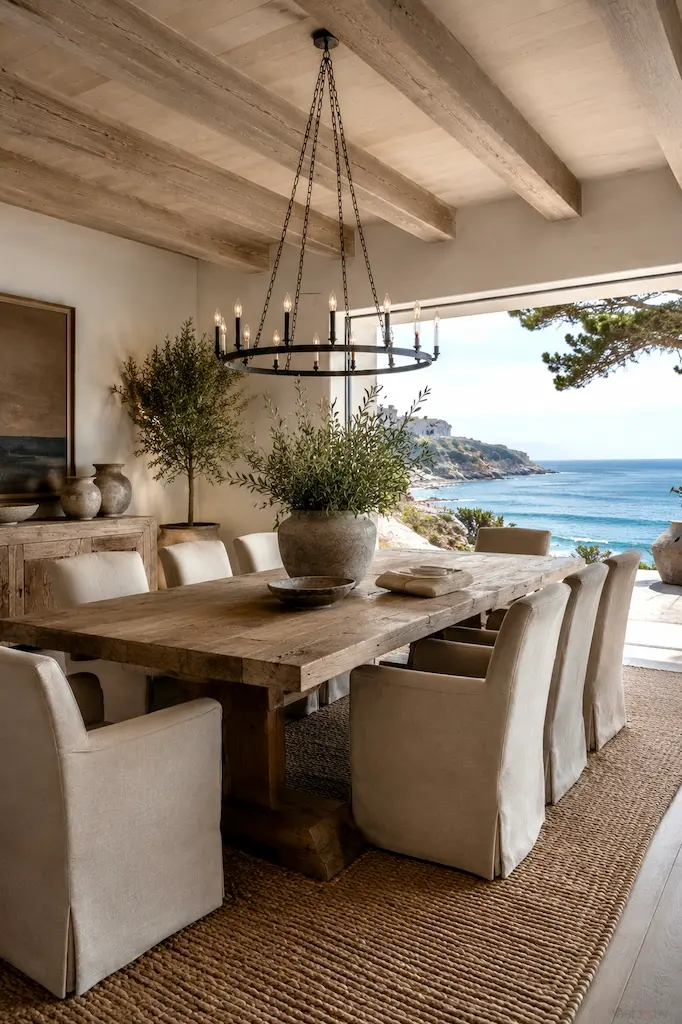
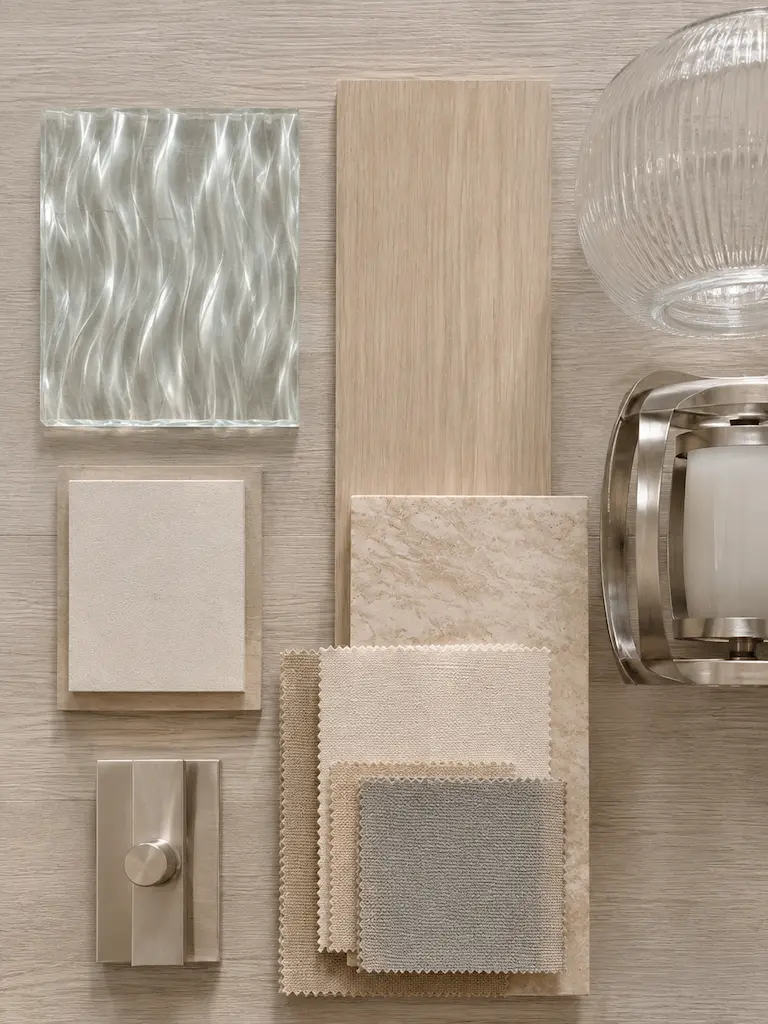
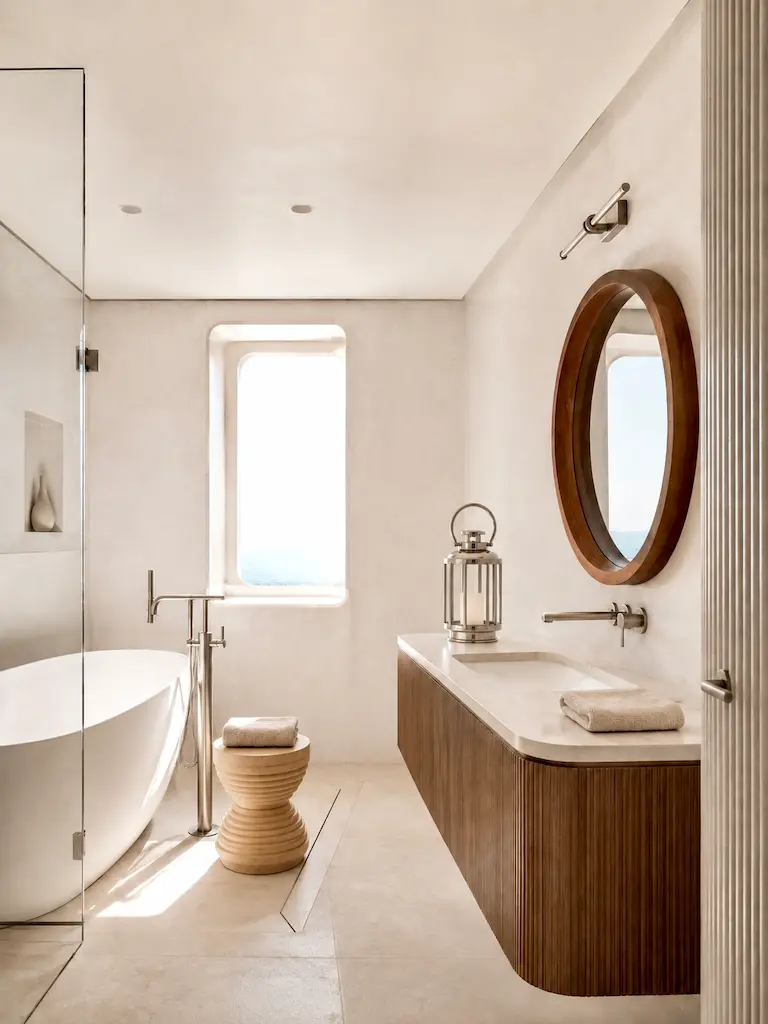
The best coastal materials rarely need to pretend to be something else. Wood can remain wood. Stone can show its variations. Linen can wrinkle. Metal can reveal its construction. Plaster can carry the subtle irregularities of the hand that applied it.
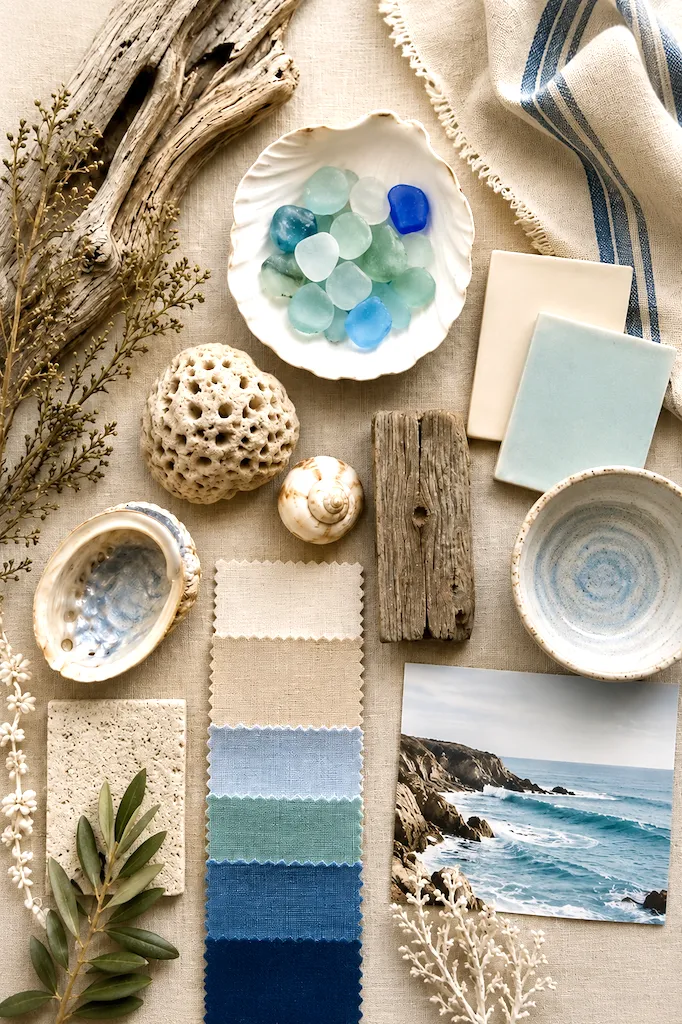
Yacht design adds another requirement: materials must perform. Pale woods, teak, linen, stainless steel, stone, glass, canvas and natural woven fibers can all carry a quiet maritime character without turning a home into a nautical theme. A cylindrical steel lantern might recall a deck light. A sculptural glass table can preserve sightlines rather than blocking them. A canvas chair can bring the practicality of life aboard into an otherwise residential room.
These references work because they are subtle. No anchors required. Good coastal materials should become more convincing with age, not need replacing the moment they stop looking new. That is a different idea of luxury: materials chosen for the life they will have, not merely for the day they arrive.
6. Design for Effortless Movement
Some of the most beautiful rooms fail in a very ordinary way: they are irritating to walk through. A chair sits slightly too far into a passage. A coffee table interrupts the route to the terrace. A cabinet door collides with another object. Furniture blocks a window that should have remained open.
Yachts cannot afford those mistakes. Circulation is designed almost like choreography. People need to move naturally between sheltered and open spaces, around furniture and past one another without constantly navigating obstacles.
The same principle makes residential interiors feel noticeably calmer. Curves can soften circulation. Low furniture can preserve sightlines. Transparent or visually light pieces can prevent a room from feeling blocked. Fewer, better-positioned objects can make even a modest room feel surprisingly generous.
The best spaces do not make you think about how to move through them. They simply let you move.
Bringing Yacht Intelligence Into Any Home
None of this requires a waterfront estate. In fact, the smaller or more ordinary the home, the more useful many of these principles become. Sit in your living room and notice where your eye lands. Is it somewhere worth looking? Walk through the room and notice where you naturally change direction. Is the furniture helping that movement or interrupting it?
Look at the pieces occupying the most space. Do they earn it? Could storage disappear into a wall? Could a window become a seat? Could one large built-in replace three smaller pieces of furniture? Then look toward the outside.
Perhaps there is no sea, but there may be a garden, terrace, courtyard, balcony or simply a beautiful window. Could the room acknowledge it more deliberately?
The Caliterranean approach rarely begins by adding something. Often it begins by noticing what is getting in the way.
A Different Kind of Coastal Home
That is the real lesson yacht design offers residential interiors. Not how to decorate for the coast, but how to design with greater discipline. Use space better. Build storage into the architecture. Preserve the view. Allow people to move naturally. Choose materials that can live rather than merely photograph well. Let indoors and outdoors belong to the same conversation.
These principles can work in a California bungalow, a Mediterranean villa, a suburban house or a city apartment. The sea is the inspiration, not the requirement. And that distinction matters. Because the Caliterranean home is not another coastal look to copy. It is a way of deciding what belongs in a home, what does not, and how architecture can quietly make everyday life feel better.
A coastal home does not need to look like the sea. It needs to have learned something from it.
DESIGN SOURCES:
The VeniS Atelier Edit
Our selection of designers and collections that embody the principles of the Caliterranean home—from yacht-inspired functionality and architectural forms to natural materials and effortless indoor-outdoor living.
RODA → for yacht intelligence and indoor-outdoor continuity
ETHIMO → for refined Mediterranean outdoor living
UNIQWA → for organic forms, natural materials and relaxed architectural furniture.
Liaigre → Refined residential and yacht interiors with exceptional spatial restraint.
Patricia Urquiola → Flexible furniture and interiors designed to make spaces work harder.
Achille Salvagni → Sculptural furniture and crafted interiors for residences and yachts.
CONTINUE EXPLORING
Inspired by this story? The story continues. Here is your next read our PART ONE in these series: What Homes Can Learn from Yacht Design →
We also recommend: What Is a Caliterranean™ Home? →