The Tunisian Peninsula of Fishermen and Silk Weavers
From California, the Mediterranean can feel strangely familiar before you ever reach it. We know the hard coastal light, long dry summers, olive and citrus trees, and the instinct to arrange life around the water. But familiarity can be misleading: the Mediterranean is not one culture repeated around one sea, and much of the version we know best comes from its European shore.
Mahdia sits across that water on Tunisia’s coast, and almost immediately the vocabulary changes. Here the Mediterranean seems to keep two rhythms: one comes from the harbor, where water knocks against wooden boats, fishermen call across the quay and nets are pulled over stone; the other comes from behind the medina walls, in the dry, deliberate clack of a wooden loom. For centuries, this narrow peninsula has lived between those two sounds.
The fishermen work outward toward the horizon while the weavers work inward, passing thread across thread until silk becomes cloth. One depends on current, rope and weather; the other on tension, pattern and patience. More importantly, both remain part of somebody’s working day rather than something staged for visitors.
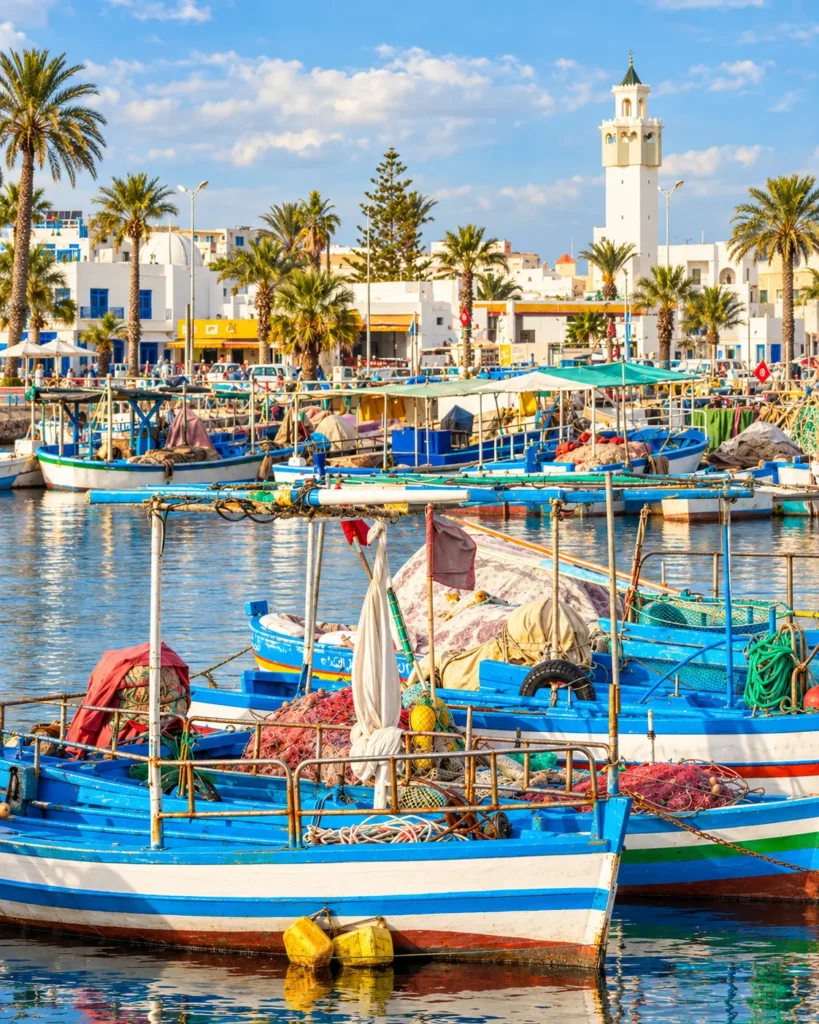
At the harbor, that distinction is obvious. Mahdia is not a former fishing village that has retained a few photogenic boats for atmosphere; fishing remains part of the town’s economy and daily life. Nets need mending, catches need unloading and nobody appears remotely concerned with looking picturesque, which naturally makes the entire thing rather picturesque.
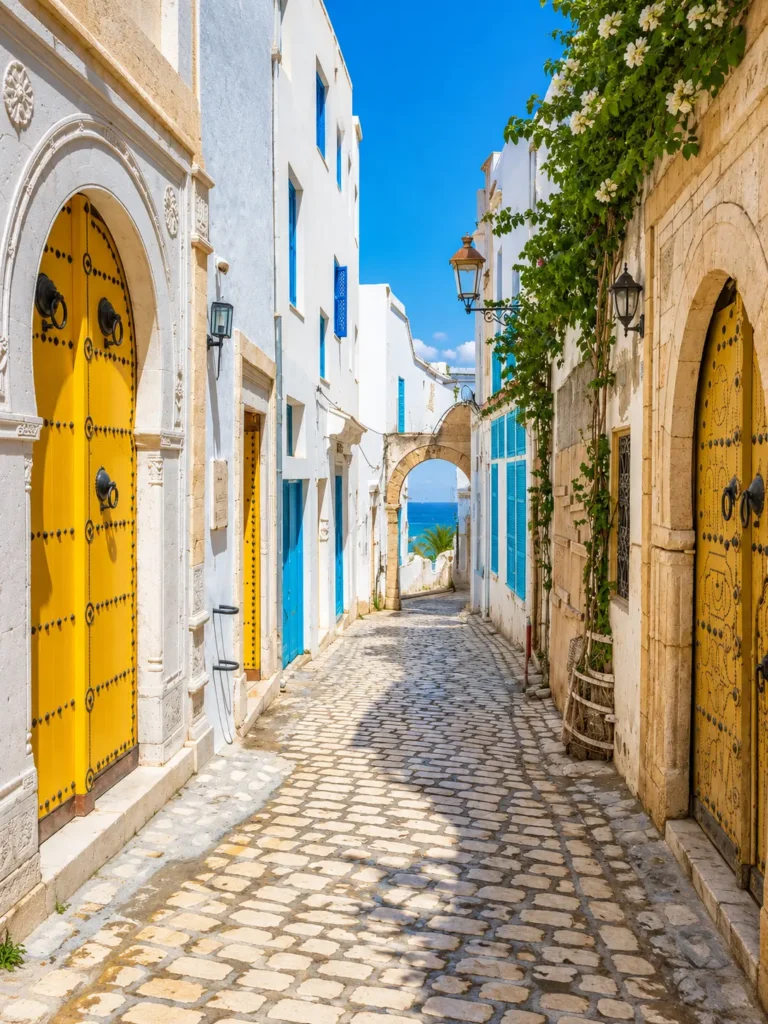
From the harbor, the old city draws you through the Skifa el Kahla, Mahdia’s monumental fortified gateway. Its name means the Dark Passage, and after the hard brightness outside, stepping into its shade produces an abrupt change in temperature, light and mood. Beyond it are white walls, blue doors and narrow streets that might feel familiar across the Mediterranean, but in Mahdia it is worth listening as much as looking.
The loom is what changes the story. Mahdia was known for fine weaving centuries ago, and silk remains closely associated with ceremonial textiles and wedding dress, where color and metallic threads carry meaning beyond decoration. The tradition is smaller today, which arguably makes the surviving workshops more interesting: this is not an entire medina pretending that every doorway has contained a loom since the twelfth century.
At SKILA Lab & Gallery, traditional wooden looms are still used to handweave natural fibers, continuing Mahdia’s textile vocabulary in contemporary form. The work is physical and repetitive—feet on pedals, hands guiding thread, wood striking wood—and the elegance comes afterward. A finished scarf looks effortless, as beautiful objects have an irritating habit of doing.
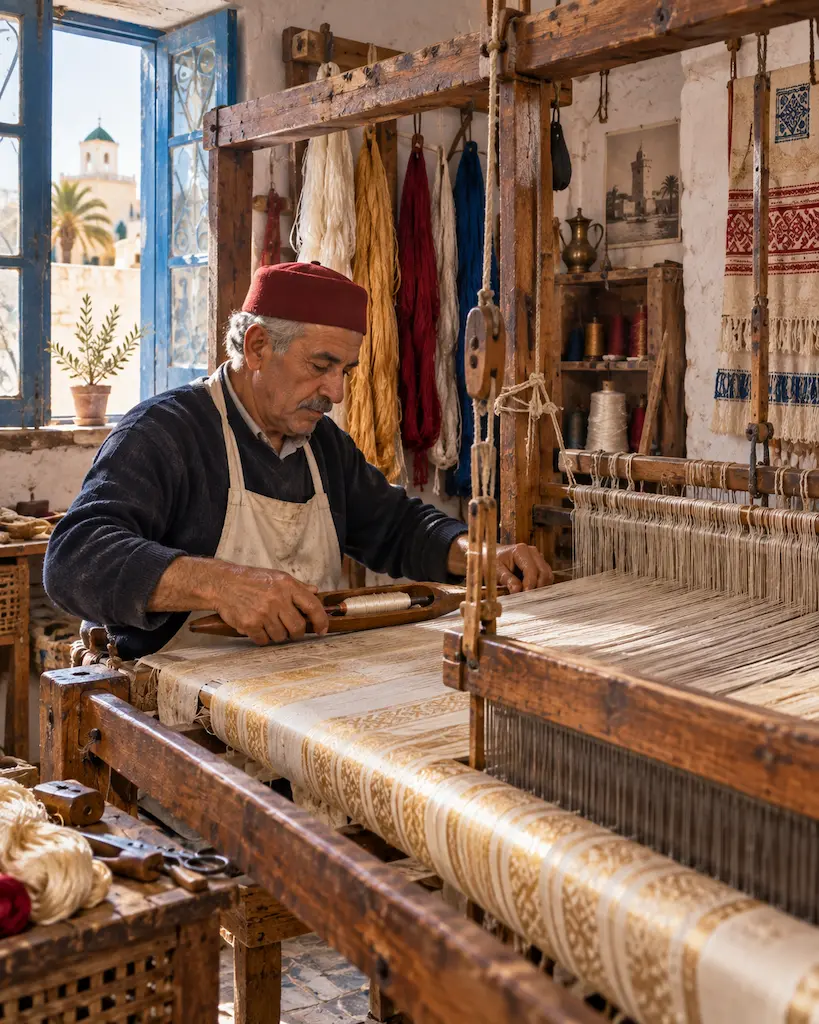
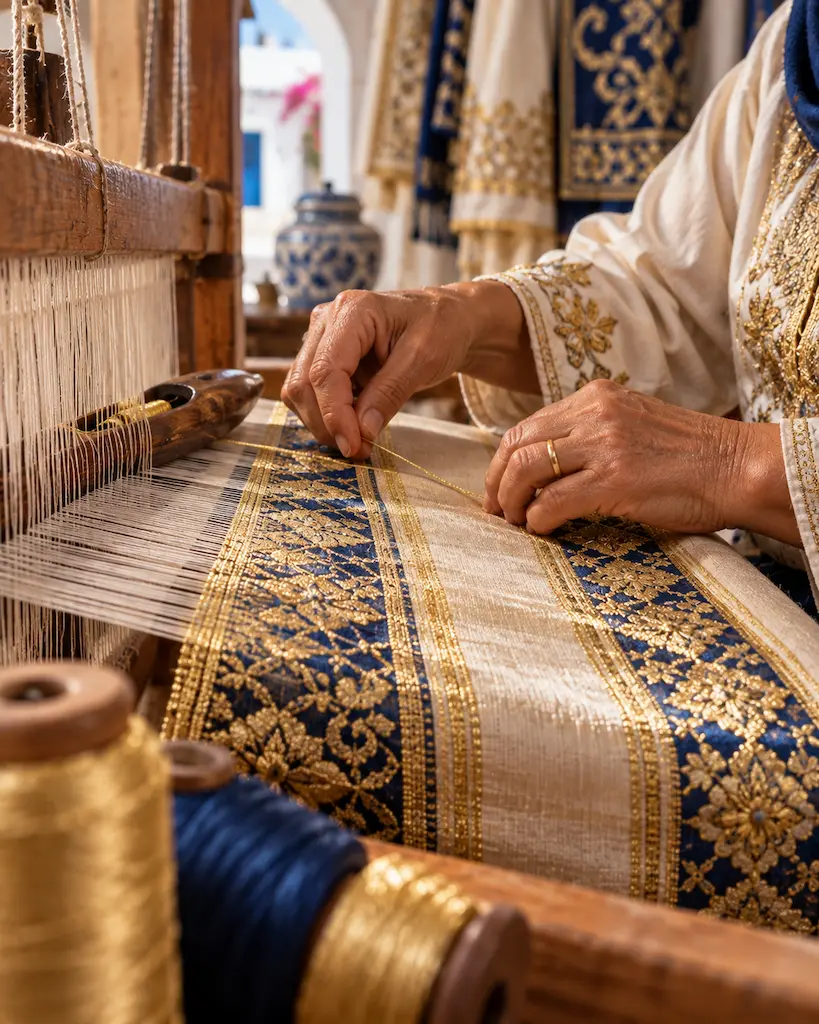
This is where Mahdia becomes more interesting than a collection of pretty Mediterranean details. In destinations shaped heavily around visitors, traditional crafts can acquire a slightly theatrical arrangement: the artisan performs, the visitor photographs, everyone understands the transaction. Mahdia has tourism, certainly, but much of the old peninsula still feels like a town first and a destination second.
By midday, the harbor has already told you what lunch should be. A whole grilled fish with olive oil and lemon, bread, salad and harissa need very little improvement, while fish couscous takes familiar Mediterranean ingredients and makes them unmistakably Tunisian. Harissa contributes not merely heat but pepper, garlic and depth; for something sweet afterward, almond pastries or sweet brik with tea do the job without requiring a dessert manifesto.
Mahdia also has the confidence not to provide an exhausting sightseeing list. Its historic peninsula is compact, which leaves time for the harbor, a loom, a long lunch and an aimless turn through the medina without converting the day into logistical warfare. Sometimes the luxury is not having twelve things you are supposed to see before sunset.
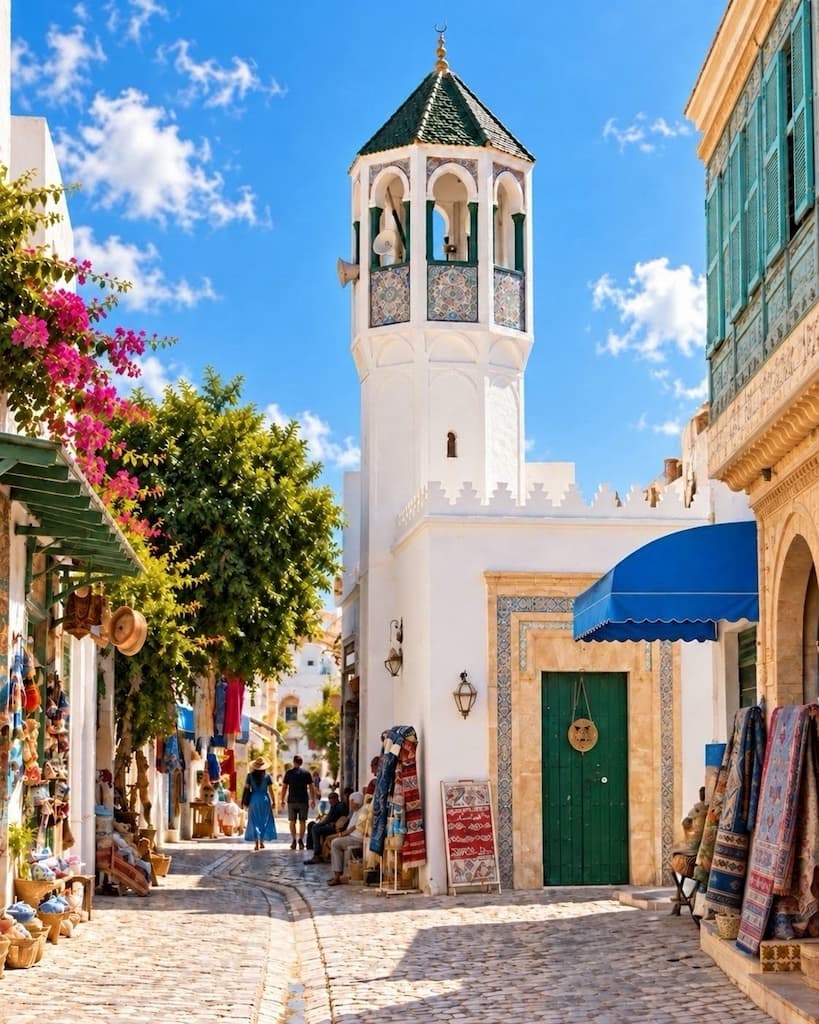
History is nevertheless difficult to avoid. Mahdia became the first capital of the Fatimid dynasty in the tenth century, and the old fortifications, Great Mosque and marine cemetery still occupy this narrow piece of land beside ordinary houses and cafés. The remarkable part is how little contemporary life has been cleared away to improve the historical presentation.
By afternoon, the white walls lose their glare and the sea shifts from pale turquoise near shore to deeper blue farther out. Californians may recognize the quality of the light and the habit of life spilling outdoors, but the similarity ends quickly: this coast carries Fatimid history, Arabic streets, ceremonial silk and generations of fishing culture. Similar climate, entirely different memory.
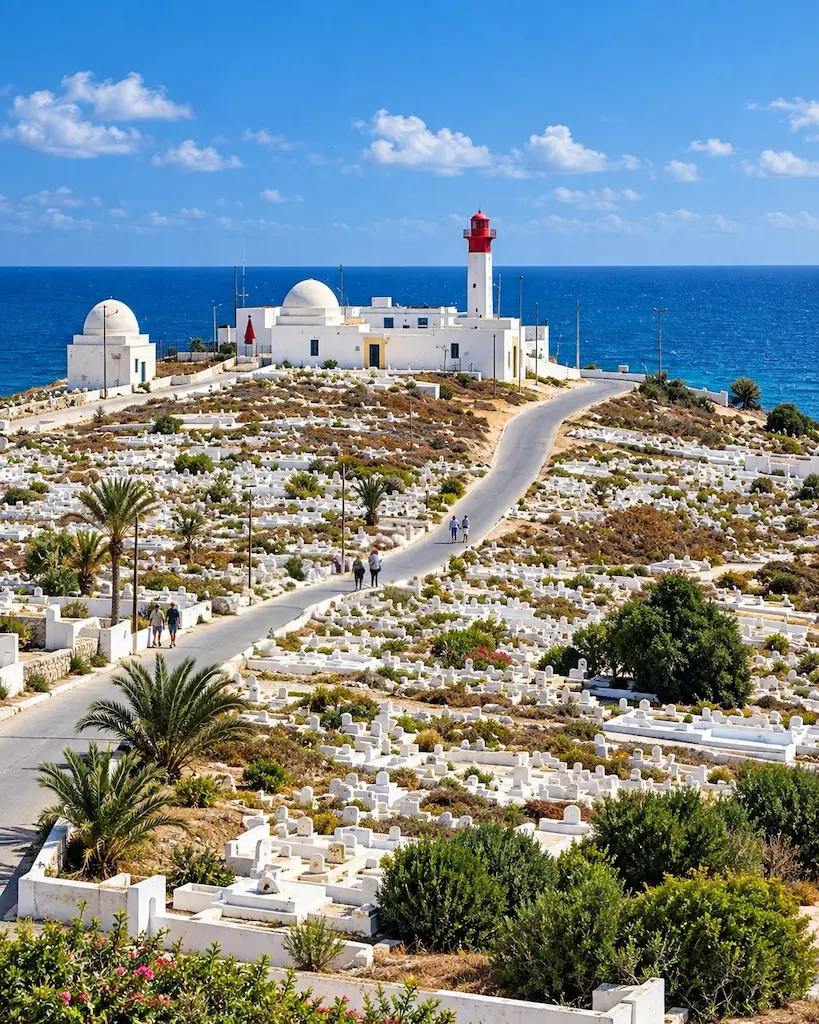
By evening, the two rhythms from the morning have slowed. Boats settle into the harbor, looms fall quiet and cafés fill without Mahdia suddenly transforming itself into an entertainment district for visitors. The town remains working rather than staged, which may be its greatest luxury.
Much of the Mediterranean has been reduced to an impressively efficient visual formula: pale stone, linen clothing, an aperitif and perhaps a tiny vintage car if the marketing department is feeling energetic. Mahdia does not contradict that Mediterranean; it enlarges it, adding North African architecture, harissa, silk workshops and a harbor whose boats have considerably more important things to do than decorate photographs. Perhaps that is what stays with you: you already knew the Mediterranean—Mahdia simply reminds you that you knew one shore of it.
ESCAPE NOTES
STAY — Dar Jamila
A small beachfront guesthouse on Avenue Cap Africa, close to the old town and well positioned for exploring Mahdia on foot. Choose it because the sea and medina remain part of the stay rather than something you travel to afterward. Stay at Dar Jamila
TASTE — Restaurant El Medina
Behind the municipal market, this traditional address serves Tunisian and Mahdia cooking, including grilled fish and local seafood dishes. Keep it simple: fresh grilled fish, salad, bread, lemon and harissa.
EXPERIENCE — SKILA Lab & Gallery
Go for the sound that gives this story its second rhythm: traditional looms working inside the medina. SKILA’s Mahdia Lab & Gallery focuses on handweaving and the preservation of the city’s textile heritage. Visit SKILA Lab & Gallery
In our Coastal ESCAPEs we travel through the senses, one shoreline at a time.
CONTINUE EXPLORING
Inspired by this story? Continue your journey with ITALY: Porto Rotondo: A Little Venice in Sardinia →