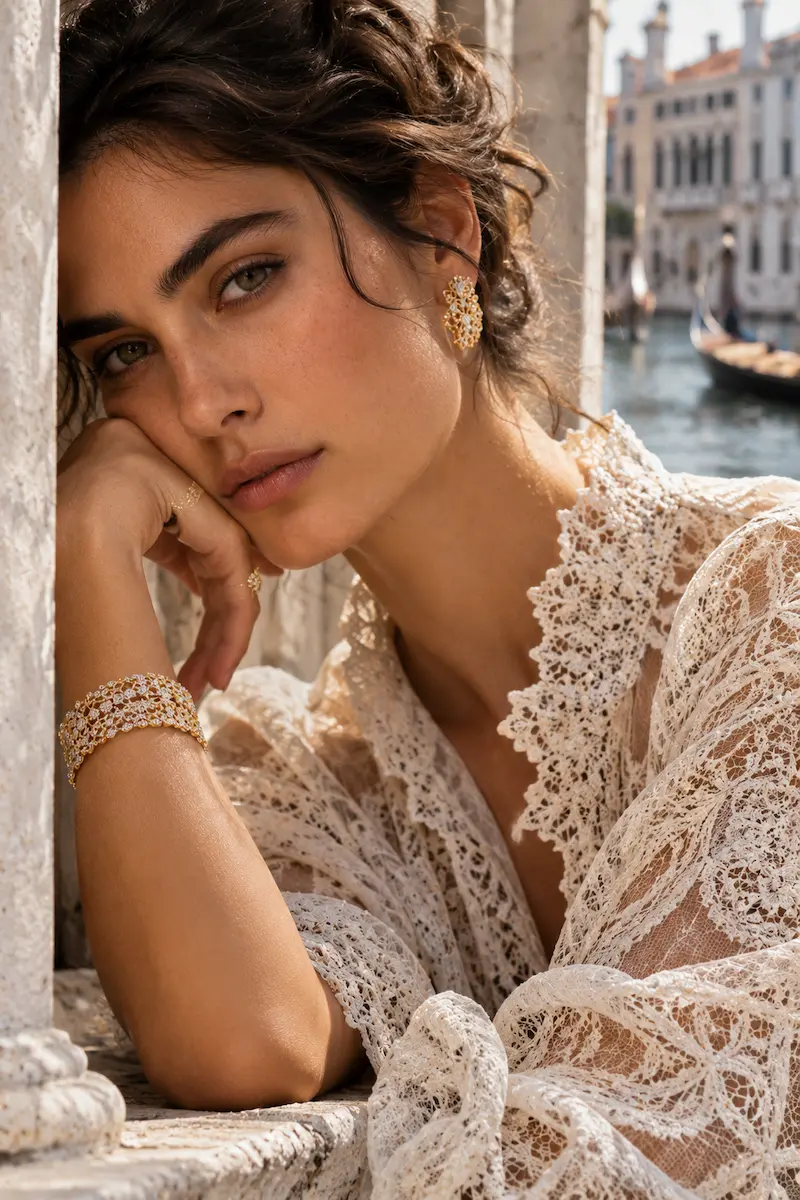
From Mongolian Goats to Italian Luxury: What Are We Really Paying For?

Cashmere has an interesting relationship with the coast. It belongs to neither the beach nor the winter wardrobe exclusively, yet a lightweight sweater is often exactly what a breezy evening calls for. From California to the Mediterranean, where dressing comfortably doesn’t necessarily mean dressing casually, cashmere has a certain effortless appeal.
But somewhere between choosing a beautiful sweater and paying for it, another question arises. Why does one cashmere sweater cost $200 and another $2,000? Both may be beige, impossibly soft, and labeled 100 percent cashmere. Apparently, one has a considerably more expensive story to tell.
That story begins far from the coast, with goats surviving the harsh winters of Mongolia, and continues through Italian textile mills, luxury fashion houses, and the increasingly accessible cashmere wardrobes of Paris. Along the way, nature, craftsmanship, and the prestige of a designer’s name all contribute to the price.
And understanding which contributes what may be the most interesting luxury of all.

The Goat Has Never Heard of Loro Piana
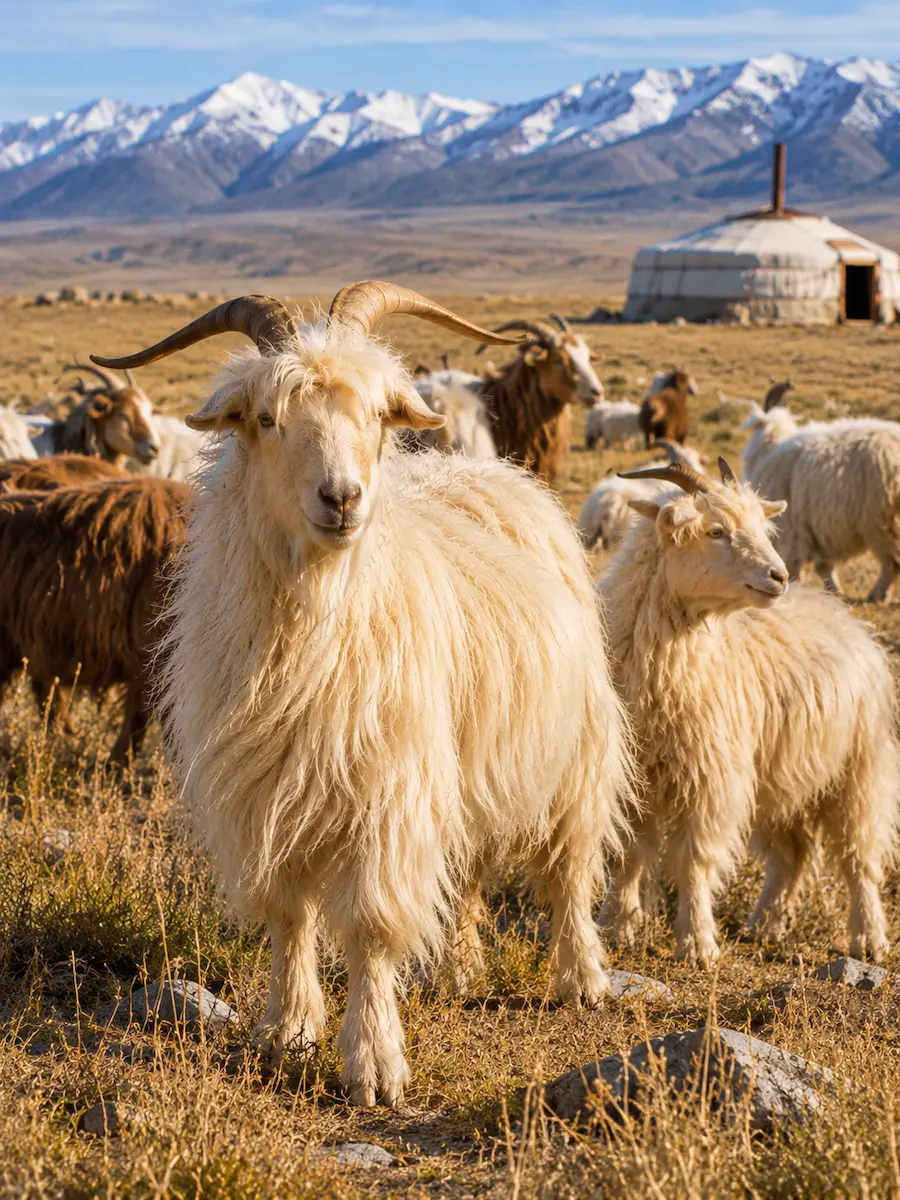
Long before cashmere became a symbol of understated wealth, it had a considerably more practical purpose: keeping goats warm. Across Mongolia, China, and parts of Central Asia, cashmere goats grow an exceptionally fine undercoat beneath their coarser outer hair. This natural insulation helps them survive bitter winters, and when spring arrives, the fibers can be collected, traditionally through careful combing. The process produces remarkably little material: a single goat typically yields only around 150 to 250 grams of usable cashmere annually, depending on the animal and production conditions.
That scarcity is one reason cashmere has historically commanded a premium. Another is that the fibers are not all created equal. Their fineness, length, and consistency influence how soft, strong, and durable the finished yarn can become.
The goats, meanwhile, remain gloriously unaware of the luxury industry built around their winter coats.
What Italy Adds to Cashmere
Italy doesn’t produce most of the world’s raw cashmere, but it has become one of the places where that fiber acquires an entirely different identity. Consider Loro Piana, whose textile heritage dates to 1924 in Piedmont. Its reputation rests on selecting exceptional raw materials and transforming them through sophisticated spinning, weaving, knitting, and finishing techniques. The journey may begin in Mongolia, but much of the value associated with Italian cashmere emerges in the decisions made after the fibers leave the pasture.
Brunello Cucinelli offers another interpretation. Based in Solomeo, a medieval village in Umbria, the fashion house has built its identity around craftsmanship, refined knitwear, and an approach to luxury that emphasizes lasting appeal. Here, the value of cashmere is inseparable from the way a garment is designed, constructed, and finished.
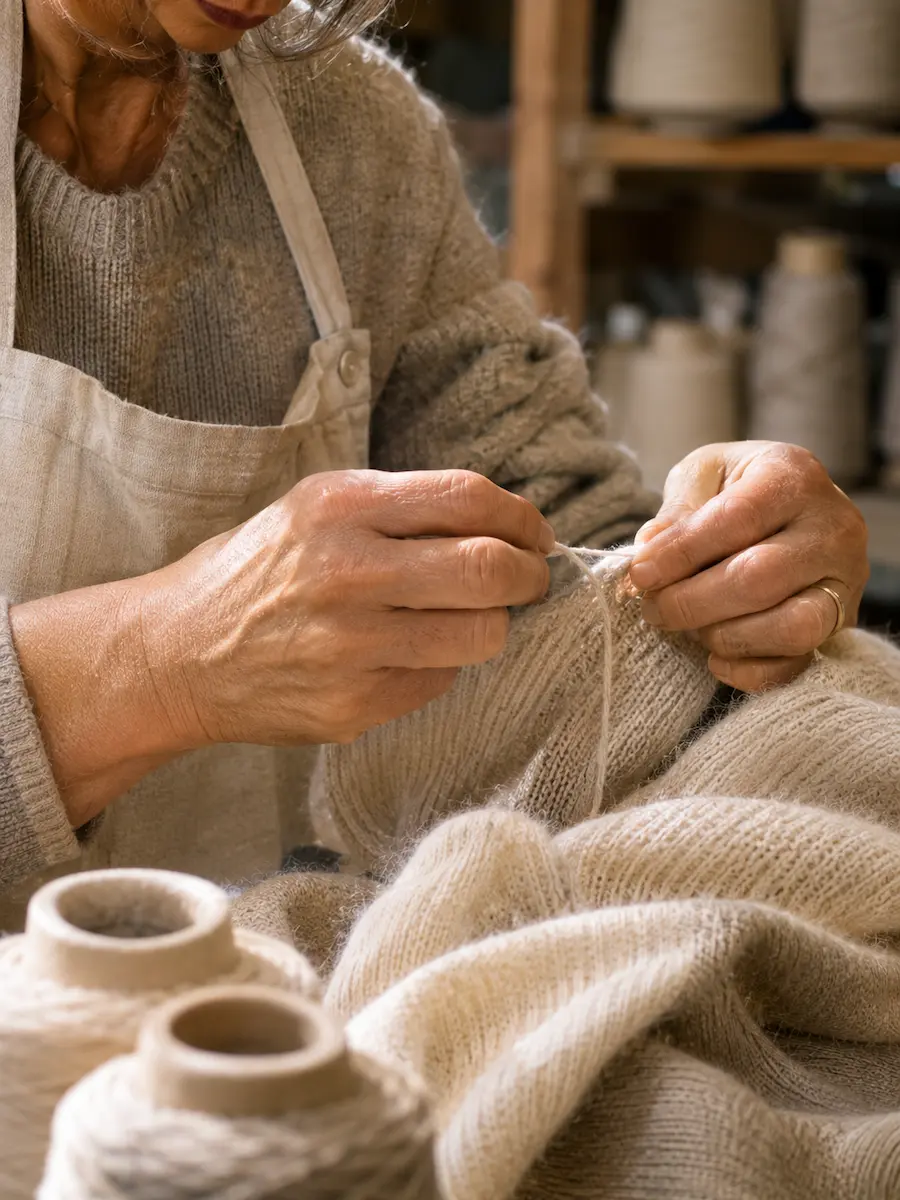
And those details matter more than the average clothing label suggests. The quality of the yarn, the density of the knitting, the finishing of the seams, and the treatments applied to the fabric can determine whether a sweater remains beautiful for years or begins looking tired after a season.
Italian craftsmanship can add genuine value. The interesting question is how much of that value we can actually recognize—and how much we simply assume because the label says Italy.
When Cashmere Became More Than a Winter Sweater
For a material associated with winter luxury, cashmere has become surprisingly versatile. Italian knitwear specialist Falconeri has built much of its identity around lightweight, ultra fine cashmere designed for everyday dressing. Rather than reserving the material for special occasions, the brand emphasizes simple silhouettes, easy layering, and garments that move comfortably between casual and elegant settings.
In a Grazia Italia interview accompanying a campaign photographed in Mongolia by James Harvey-Kelly, Falconeri’s Head of Style, Silvia Falconi, described the appeal of lightweight cashmere and its adaptability across different occasions. It’s an appealing idea, particularly along the coast. A fine-knit sweater can be just as welcome on a breezy evening by the Mediterranean or Pacific as it is in a mountain chalet. Perhaps cashmere’s greatest luxury is its versatility, not its exclusivity.
The material has also moved well beyond the familiar crewneck. Cashmere appears in relaxed trousers, dresses, scarves, tailored jackets, and elaborate knitted pieces. Italian houses such as Max Mara and Brunello Cucinelli demonstrate how the same fiber can serve entirely different ideas of dressing, from quiet practicality to sophisticated design.
Which raises another question: if cashmere is becoming something we can wear almost anywhere, should we still think of it as an occasional luxury?
Paris Has a Different Idea
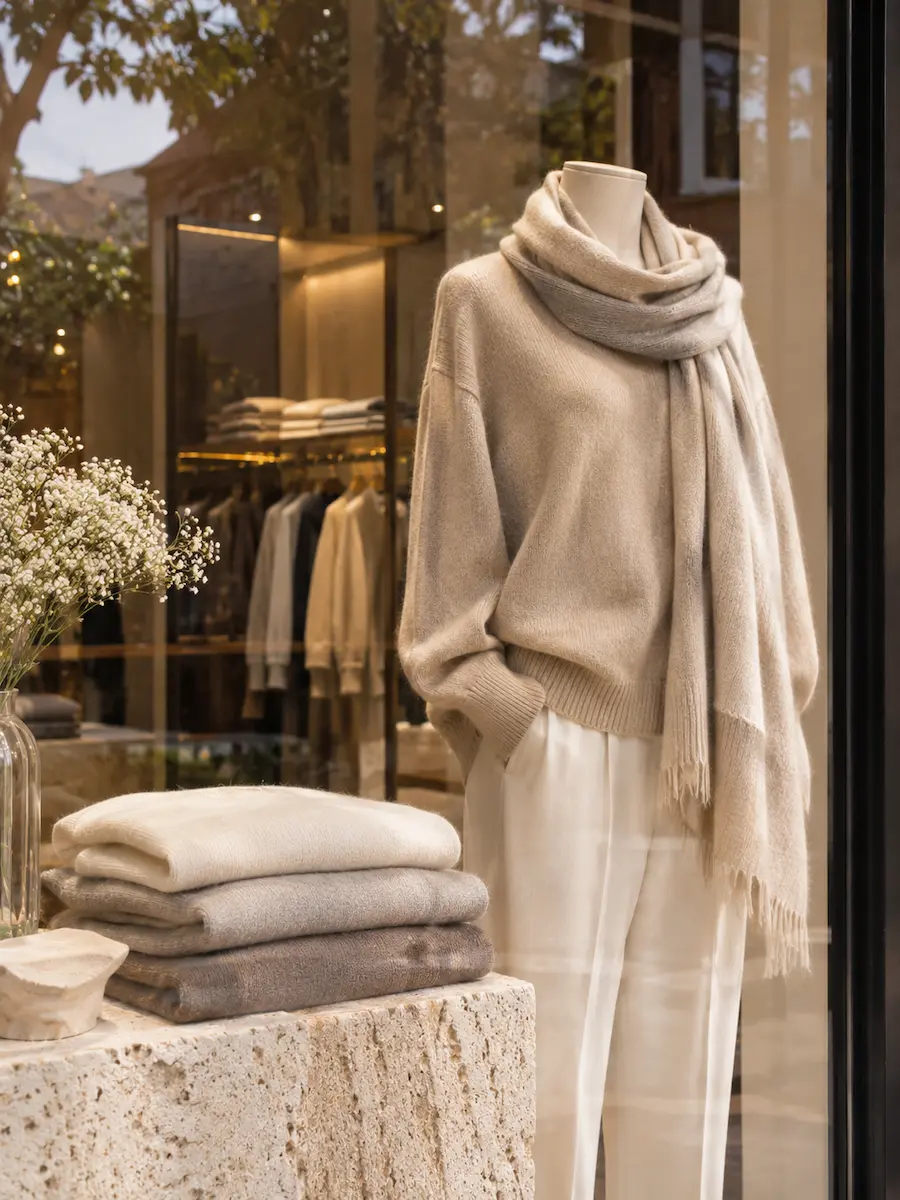
In France, the answer appears to be increasingly practical: why stop at one cashmere sweater when you could build an entire wardrobe around the material? An ELLE France advertising collaboration with Galeries Lafayette presented cashmere as a complete look, including wide-leg trousers, cardigans, shirt jackets, sweaters, and accessories. The advertised prices included a €109 V-neck sweater, €169 trousers, and a €199 shirt jacket.
It is a rather different proposition from the four-figure sweater displayed in a Milan boutique. Cashmere becomes something to wear regularly rather than preserve carefully for occasions worthy of its price. The collection also highlighted The Good Cashmere Standard, which addresses aspects of animal welfare, environmental management, and working conditions. Such standards can offer useful information about sourcing, although certification does not automatically establish the quality or durability of a finished garment.
Still, the French example introduces a fascinating contradiction. If cashmere can be sold at €109 and at ten times that amount, how much of the difference reflects better material, and how much reflects the way luxury is produced, marketed, and perceived? A lower price doesn’t necessarily mean inferior cashmere. Nor does a higher price guarantee that a sweater will last longer. Which brings us to the small label sewn inside the neckline.
What the Label Doesn't Tell You
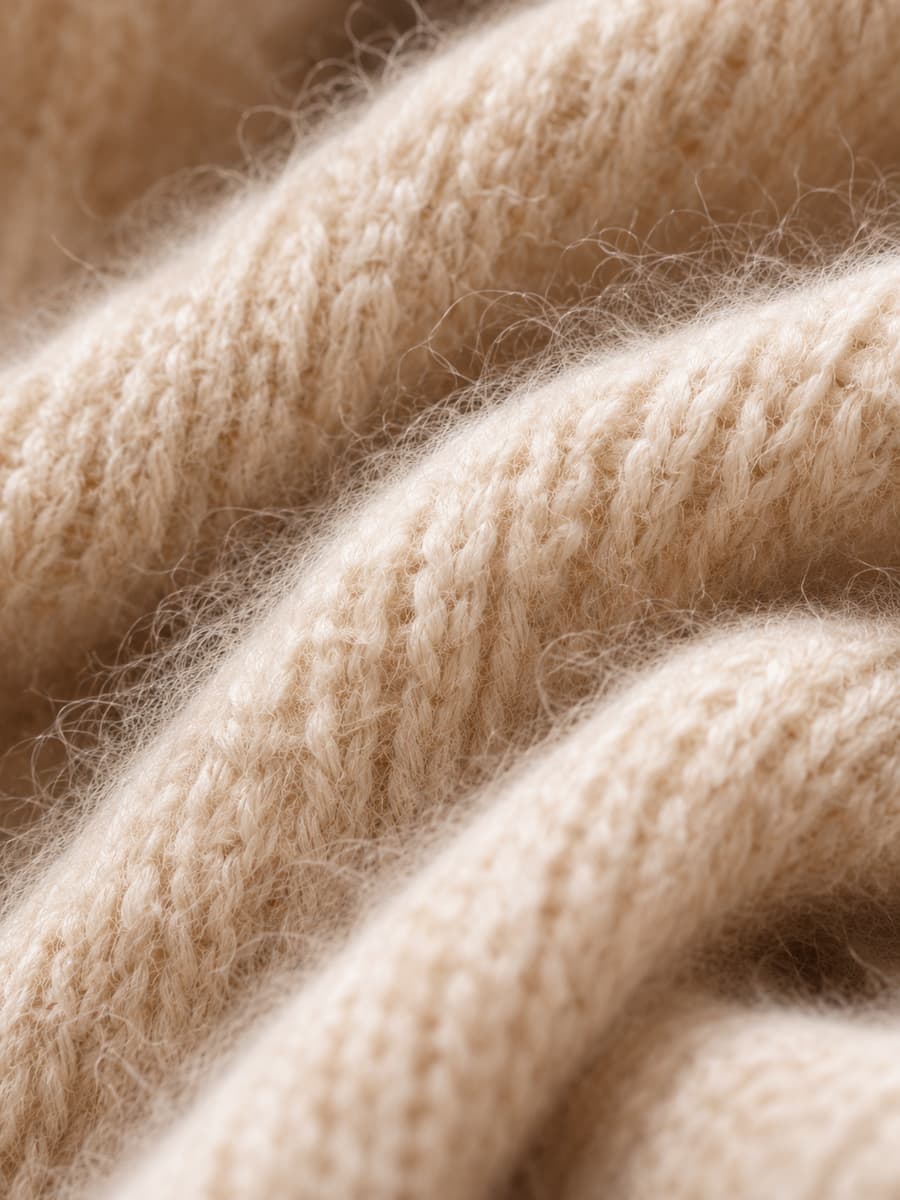
The words 100% cashmere sound wonderfully definitive. Unfortunately, they tell us considerably less than we might imagine. They identify the fiber content, not its quality. Two sweaters may contain exactly the same material by percentage while differing in fiber fineness, length, yarn construction, knitting density, and finishing. Those differences can influence everything from softness and warmth to how well the garment retains its shape.
Even the familiar boutique test—touching a sweater to see how soft it feels—can be misleading. Some finishing treatments create an exceptionally fluffy surface that feels luxurious immediately but may be more prone to pilling. A smoother, less dramatically soft sweater may prove more durable over time.
And then there is the question of origin. A sweater labeled Made in Italy may contain cashmere sourced from Mongolia or China, then processed and manufactured in Italy. That isn’t a contradiction; it is how international textile production often works.
The environmental story deserves attention, too. Cashmere production depends on grazing landscapes and herding communities facing pressures from climate conditions, land management, and market demand. Responsible sourcing requires more than a reassuring phrase on a tag, particularly when the effects of grazing and the livelihoods of producers are closely connected.
Perhaps the most revealing thing about a cashmere label is how much it leaves unsaid.
So, How Much Are We Paying for the Name?
Here is where our original question becomes difficult to answer—and considerably more interesting. The retail price of a cashmere sweater reflects far more than the cost of its fibers. There is labor, manufacturing, design, transportation, distribution, retail overhead, marketing, and profit. In luxury fashion, there is also the value attached to a brand’s reputation, exclusivity, and identity.
Without detailed financial information from individual manufacturers, there is no reliable way to assign universal percentages to nature, craftsmanship, and the label.
But the distinction matters. A beautifully constructed sweater made from exceptional fibers may justify a higher price through material quality and skilled workmanship. Another may command a substantial premium because of its design, limited availability, or the prestige of the fashion house behind it.
Consider Loro Piana, Brunello Cucinelli, and Falconeri. Each approaches cashmere differently, with its own philosophy of design, manufacturing, and market positioning. Their prices cannot be explained by fiber content alone, nor should we assume that the most expensive garment is automatically the best.
Luxury has always involved a little imagination. The trouble begins when imagination is mistaken for measurable quality.

The Softest Luxury Is Knowing the Difference
The most useful question isn’t why one sweater costs more than another, but what happens after we bring it home. Does it retain its shape? Does it feel just as good after repeated wear? Is it something we reach for naturally, whether we’re dressing for dinner, traveling, or heading out on an unexpectedly cool coastal evening? Cashmere begins as an extraordinary natural material, becomes a product of human skill, and eventually enters the complicated world of fashion, where practical value and emotional desire rarely agree on a price.
Exceptional fibers deserve appreciation. Skilled craftsmanship deserves recognition. And there is nothing wrong with loving a beautiful designer label. But the real pleasure may be understanding the difference between them. Because a sweater should have more to offer than an impressive introduction.