Where Corsica Wakes in Stone and Falls Asleep in Gold
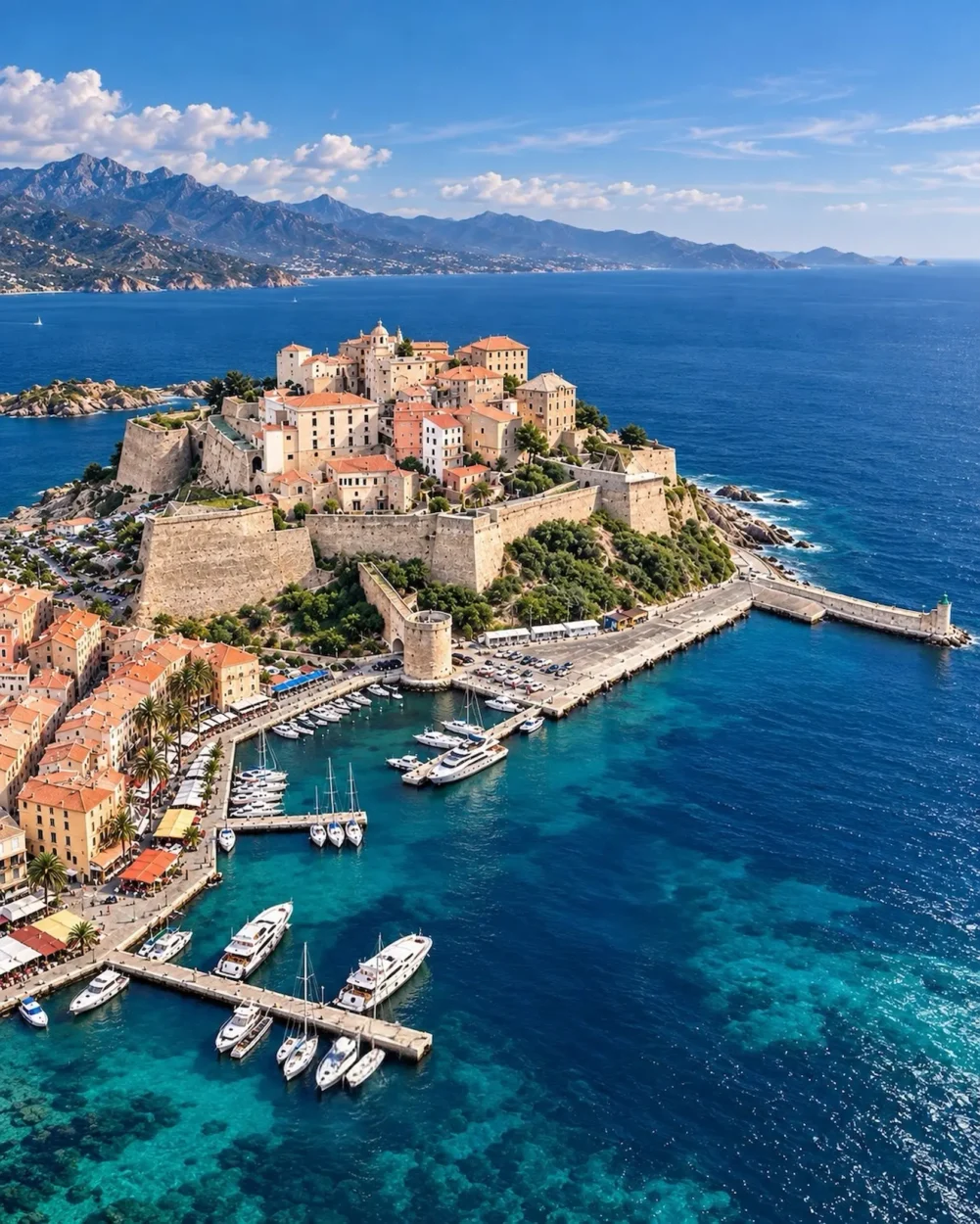
Calvi sits on Corsica’s northwest coast in Balagne, where mountains meet a broad Mediterranean bay and a Genoese citadel rises above the marina. It is one of the island’s best-known coastal towns, though still far less familiar to Californians than places such as Saint-Tropez, Positano or Mallorca. The French flag flies here today, but the old town still speaks fluent Genoese through its fortifications, churches and tightly packed houses.
Why escape here for a day or a weekend? Because Calvi gives you a surprisingly complete Mediterranean day without asking you to rush through it. Morning is coffee and warm pastry, lunch belongs to outdoor the table in the fresh market, afternoon to pine shade and a swim in clear blue water, and evening brings you back to the citadel as the stone changes color in the setting sun. The pleasure is not in collecting sights, but in watching the same landscape shift around you.
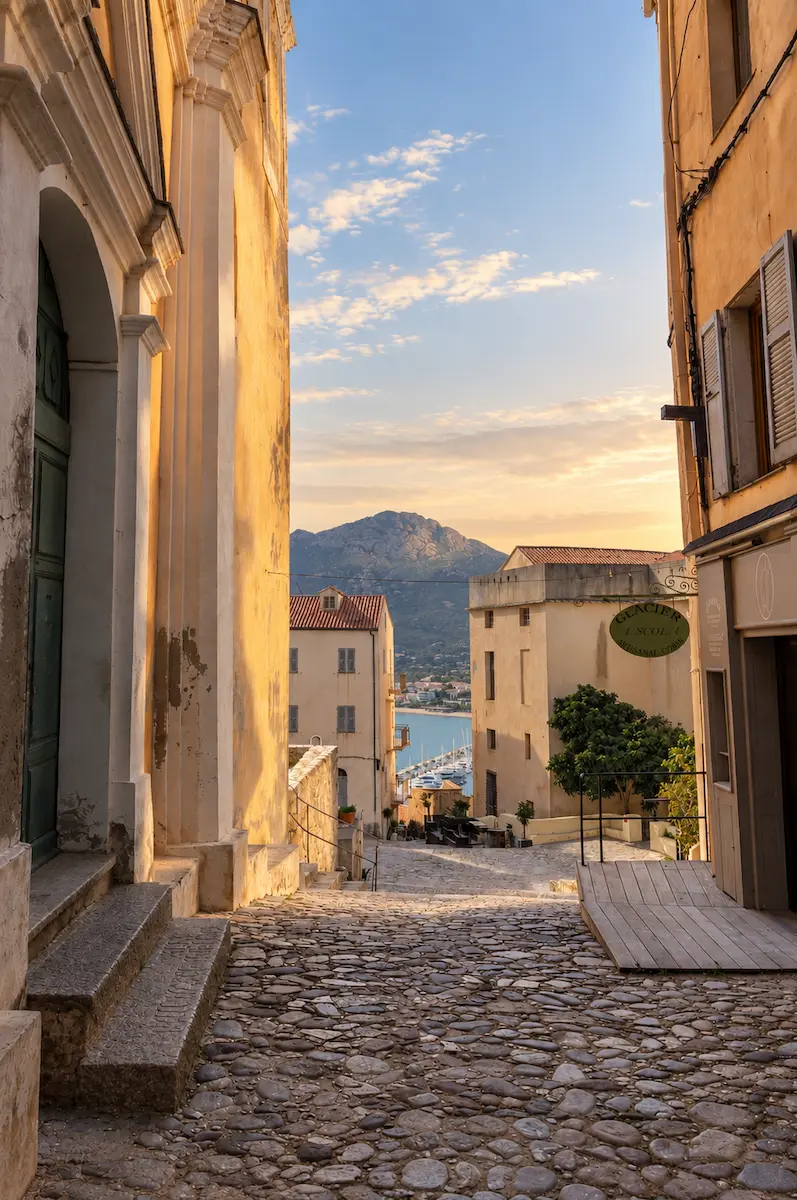
Start your morning by takeing a walk. You hear the metallic tap of rigging against sailboat masts while, above the harbor, the citadel is still cool and pale. Climb its cobbled lanes between Genoese houses, past Saint Anthony’s Oratory and the Cathedral of Saint John the Baptist, until a narrow street suddenly opens toward the view: marina below, mountains beyond, Mediterranean everywhere. Not a bad start to the day.
Calvi’s Italian character has history behind it. Corsica spent centuries under Genoese rule before becoming French in the eighteenth century, and the citadel still carries that past in its architecture and fortifications. There is even a longstanding local tradition that Christopher Columbus was born here while Calvi belonged to Genoa; historians remain unconvinced, but Calvi has understandably chosen not to abandon a perfectly good story.
By midmorning, life has moved downhill. At the Marché couvert de producteurs, the covered market gathers seasonal fruit and vegetables, regional specialties and local fish, while nearby terraces begin filling with coffee aroma and loud conversations. The air changes with the hour too: espresso and warm bread give way to ripe fruit, olive oil, herbs and salt coming in from the harbor.
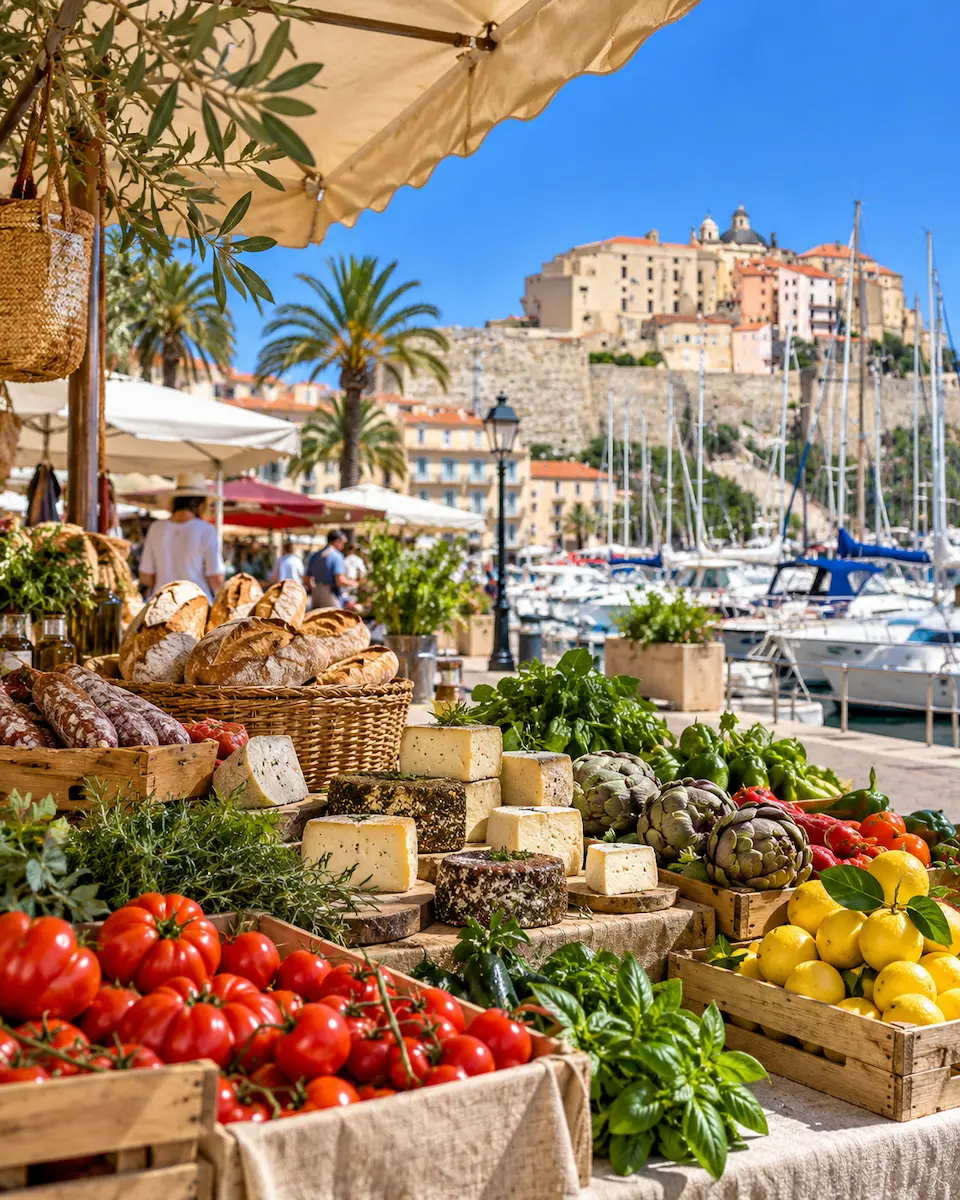
Lunch is where Corsica becomes tangible. Look for local fish, vegetables, olive oil and brocciu, the fresh sheep’s- or goat’s-whey cheese that appears just as comfortably in savory dishes as it does in dessert. Nothing needs much interference here; the ingredients have already had the benefit of Corsican sun, herbs and sea air.
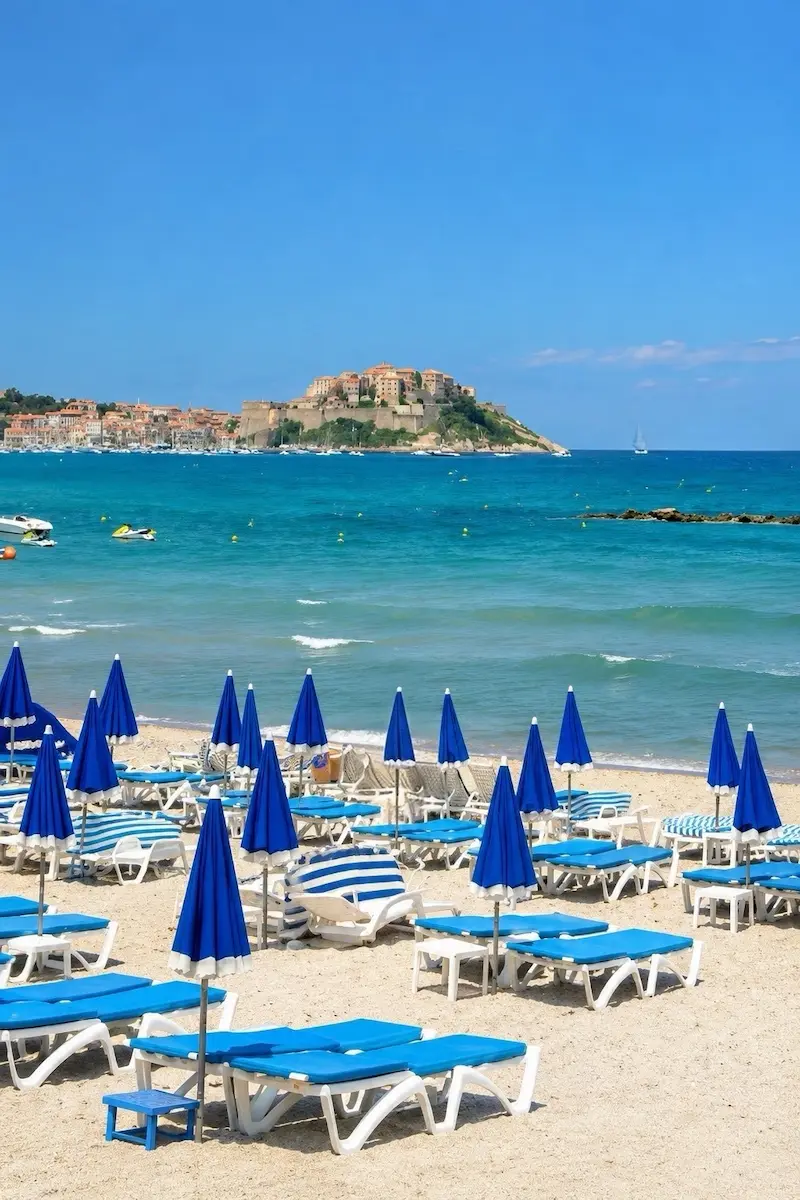
After lunch, follow Calvi toward its pine grove. The town gives way remarkably quickly to fine sand and dark-green trees, with shallow water stretching along several kilometres of beach and the citadel still visible across the bay. The little coastal train passes nearby on its way toward L’Île-Rousse, hugging the shoreline so closely in places that the journey feels almost suspended between pine trees and sea.
This is the hour when scent takes over. Pine needles warm in the sun and release their resin, cicadas replace the sounds of the marina, salt dries against the skin, and hot sand makes the first step into the Mediterranean particularly convincing. Behind the coast lies Balagne’s landscape of olive groves, lemon and almond trees, vineyards and aromatic maquis—the reason the region has long been known as the Garden of Corsica.
When the afternoon heat begins to soften, climb inland toward Pigna or Corbara. Balagne’s hill villages still support ceramicists, potters, basket makers, jewelers and instrument makers, giving the region a craft culture that feels lived rather than arranged for visitors. Stone replaces sand, salt gives way to herbs and dry earth, and the sea keeps appearing between the hills whenever the road turns.
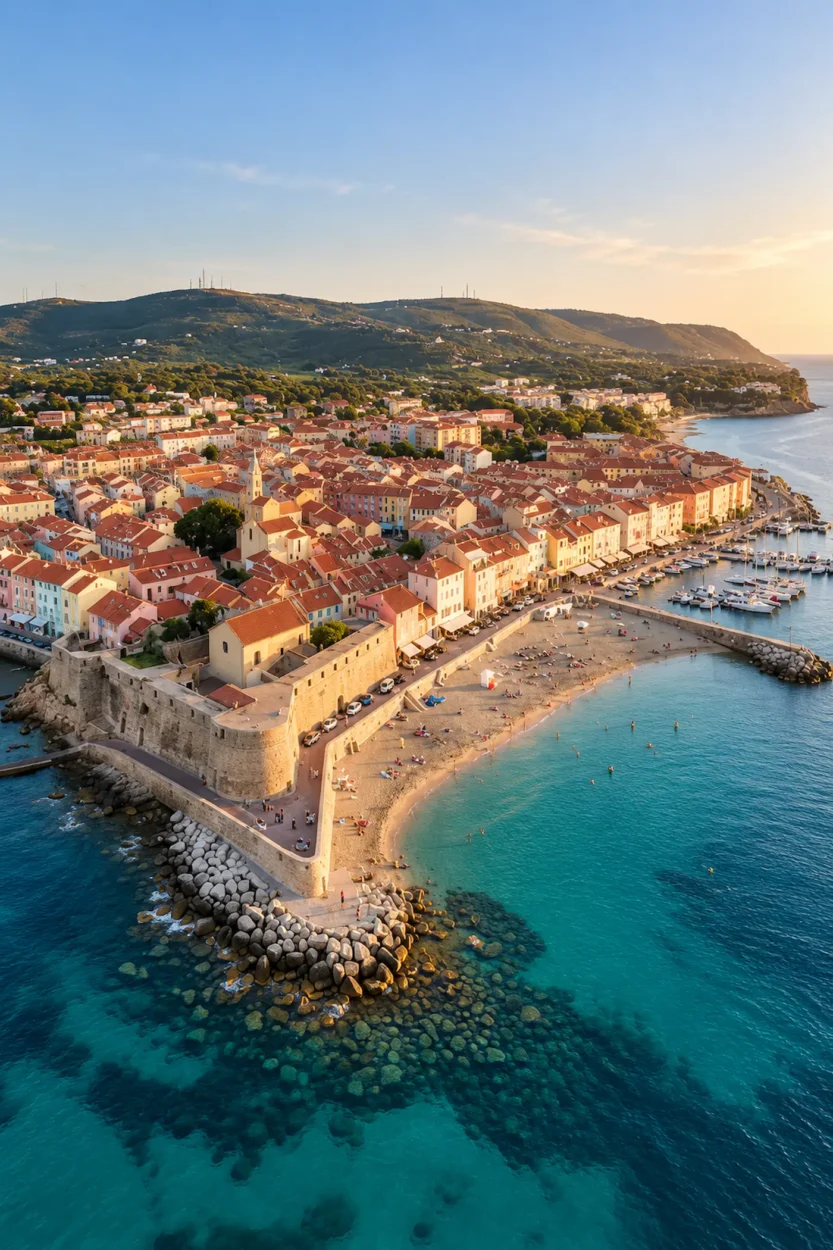
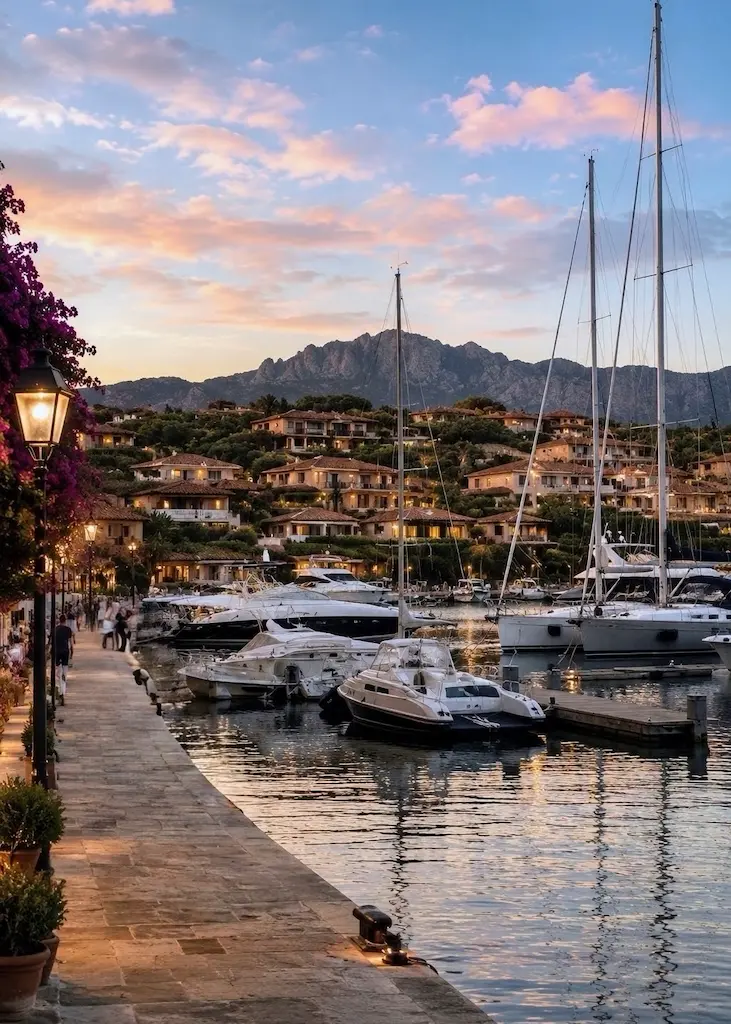
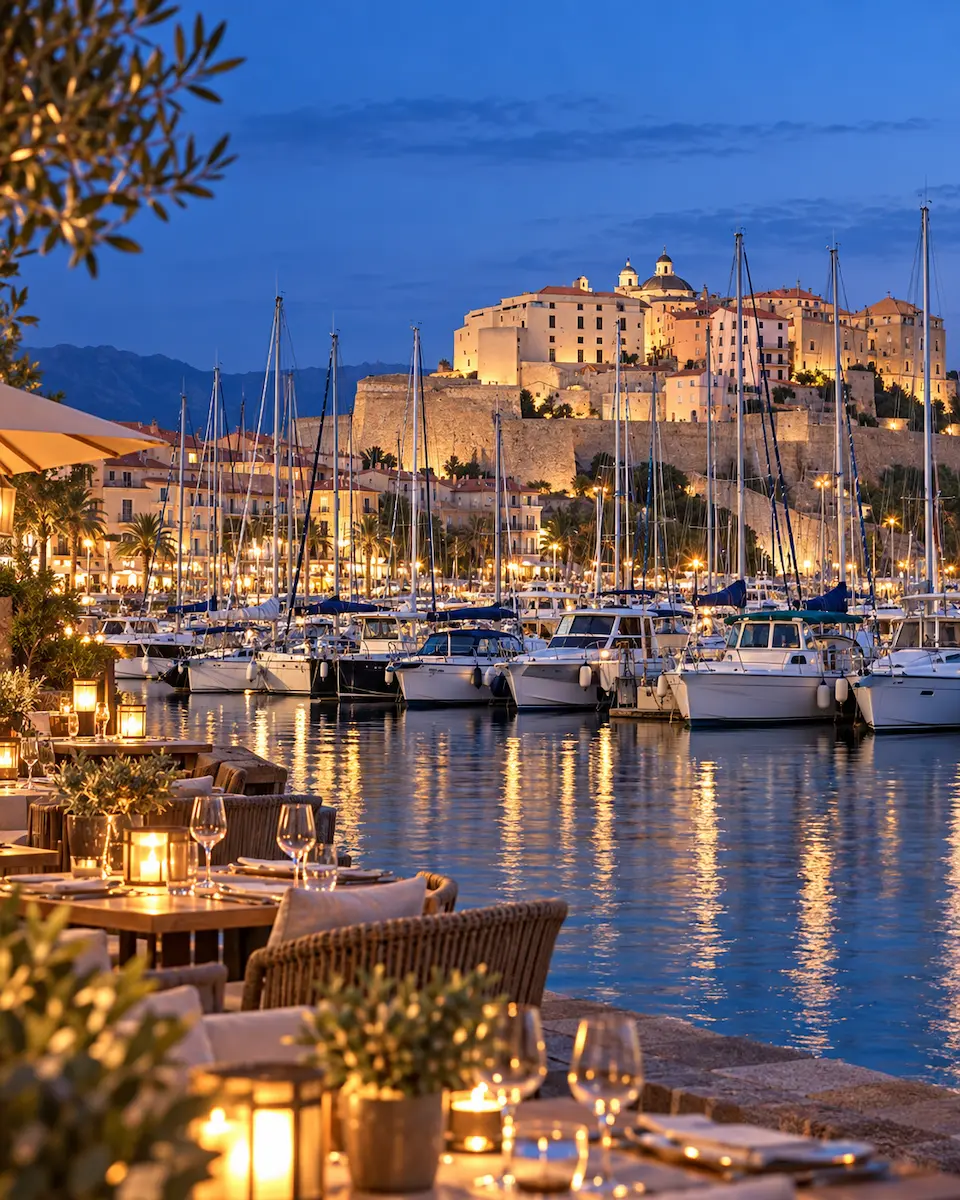
Return to Calvi before sunset. The citadel that looked pale at noon begins warming toward ochre and apricot, the mountains recede into blue shadow, and glasses along the marina catch the last light. Dinner at U Fanale, slightly removed from the busiest part of the harbor, brings Corsican and Mediterranean cooking to a terrace facing the coast.
Finish with fiadone, Corsica’s soft brocciu-and-lemon dessert, followed by coffee as the evening cools. The harbor quiets, the masts begin their metallic tapping again, and the stone that felt hot beneath your hand in the afternoon releases the last of the day’s warmth. Calvi ends almost exactly where it began, yet by now the town feels completely different.
What follows you home is less a checklist than a collection of sensations. In fact, Calvi leaves you with very little need for souvenirs. The memory is already packed: the smell of pine warming above the beach, the cool shock of the sea after hot sand, coffee and pastry in the morning, olive oil at lunch, lemon at dusk, and the sound of rigging tapping in the harbor after dark. This is the Caliterranean way of living—less about collecting things, more about collecting sensations, small rituals and the feeling of having spent a day exactly where you were.
ESCAPE NOTES
Stay. For seclusion and atmosphere, Hôtel La Signoria is the more distinctive choice, a five-star Relais & Châteaux retreat surrounded by eucalyptus, olive, orange and mature pine trees. For the view, choose La Villa Calvi, set above town with the bay and citadel spread below.
Taste. Start at the covered market, then seek out local fish, brocciu, Balagne olive oil and seasonal produce. Leave room for fiadone or a few canistrelli with coffee; this is Corsica, where restraint at the table is admirable but hardly compulsory.
Experience. Climb the citadel before the heat, swim beneath the pines after lunch, ride the little coastal train and save sunset for the marina. If you have another afternoon, head inland to the artisans and hill villages of Balagne.
Shop. Bring home something made rather than branded: local ceramics, basketry, jewelry or another piece from Balagne’s artisans. The best souvenir should still be useful long after you have forgotten where the airport shop was.