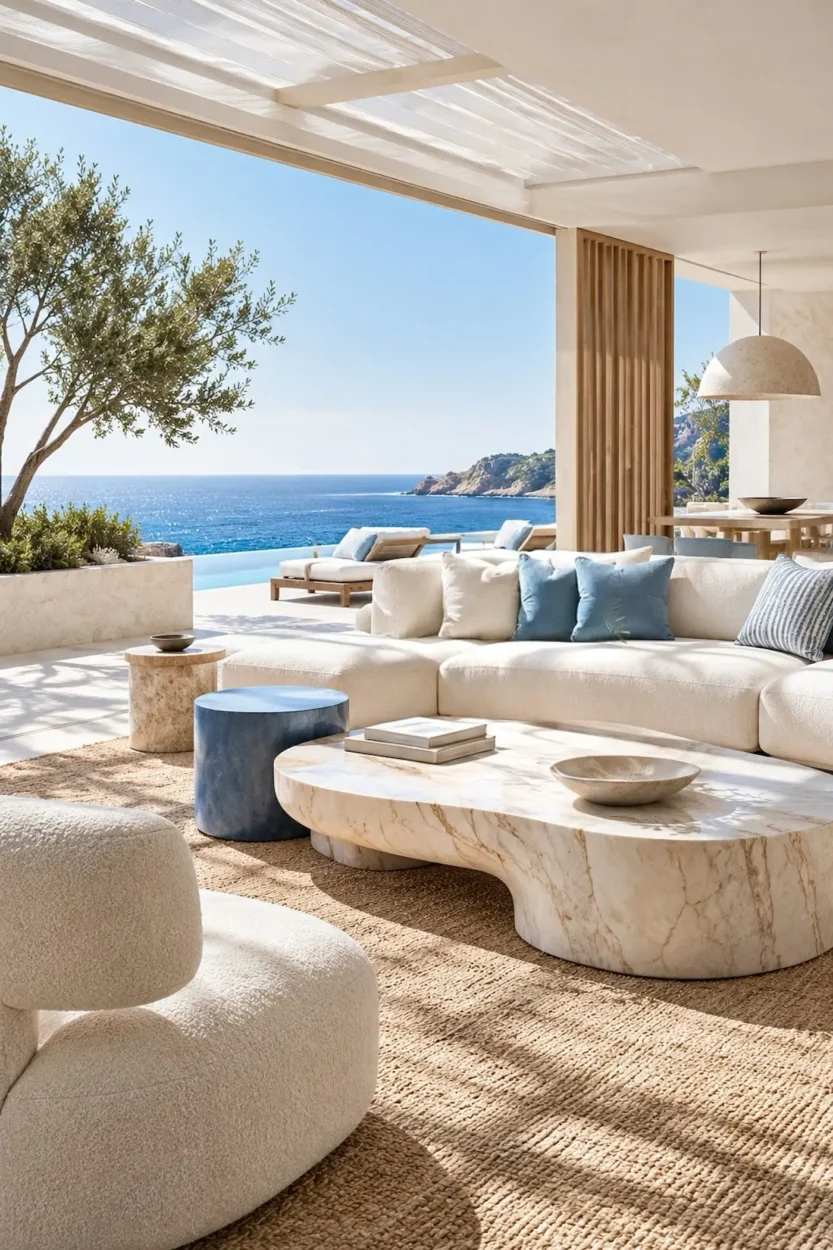
When Venice Moves to Provence
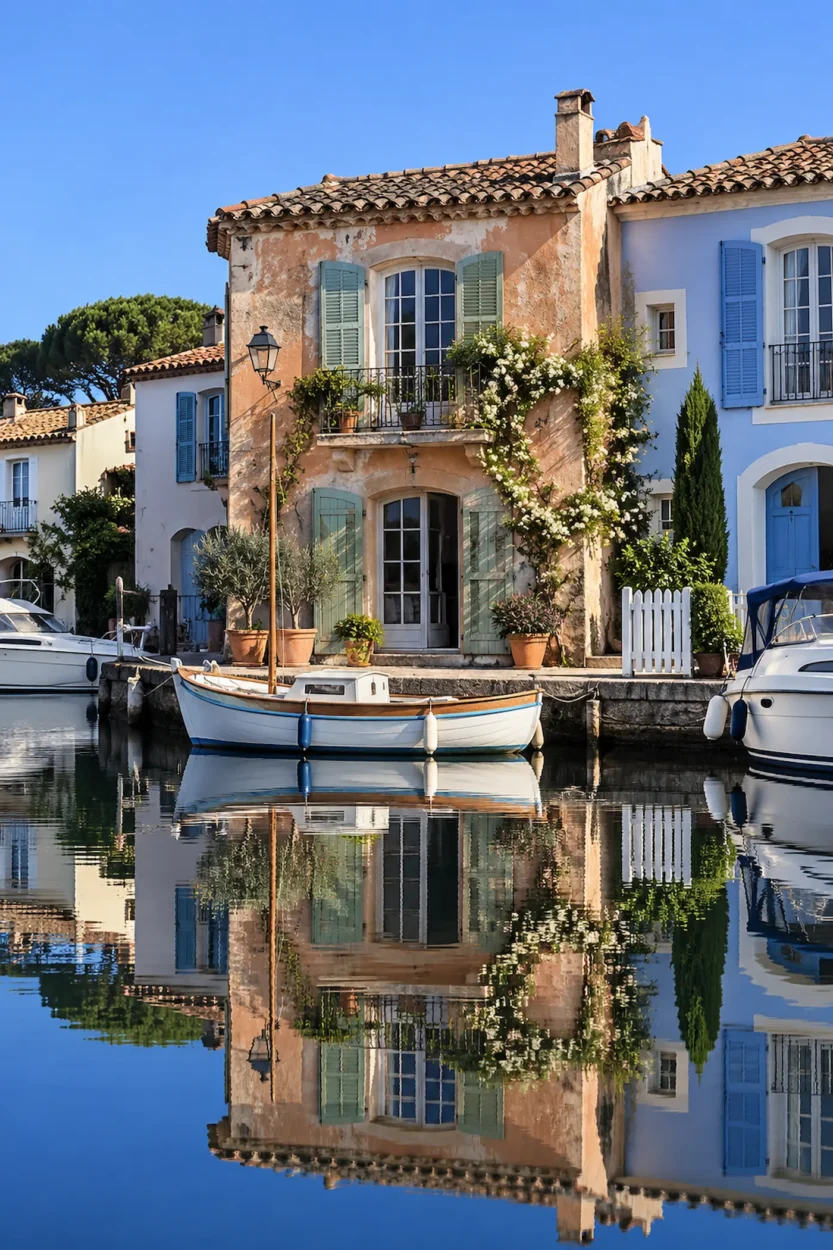
Can three colors, three materials and three textures make an old Port Grimaud house feel new without turning it into a different house? We put the 3×3 formula to the test for a quick renovation—and discover how little the house actually needed.
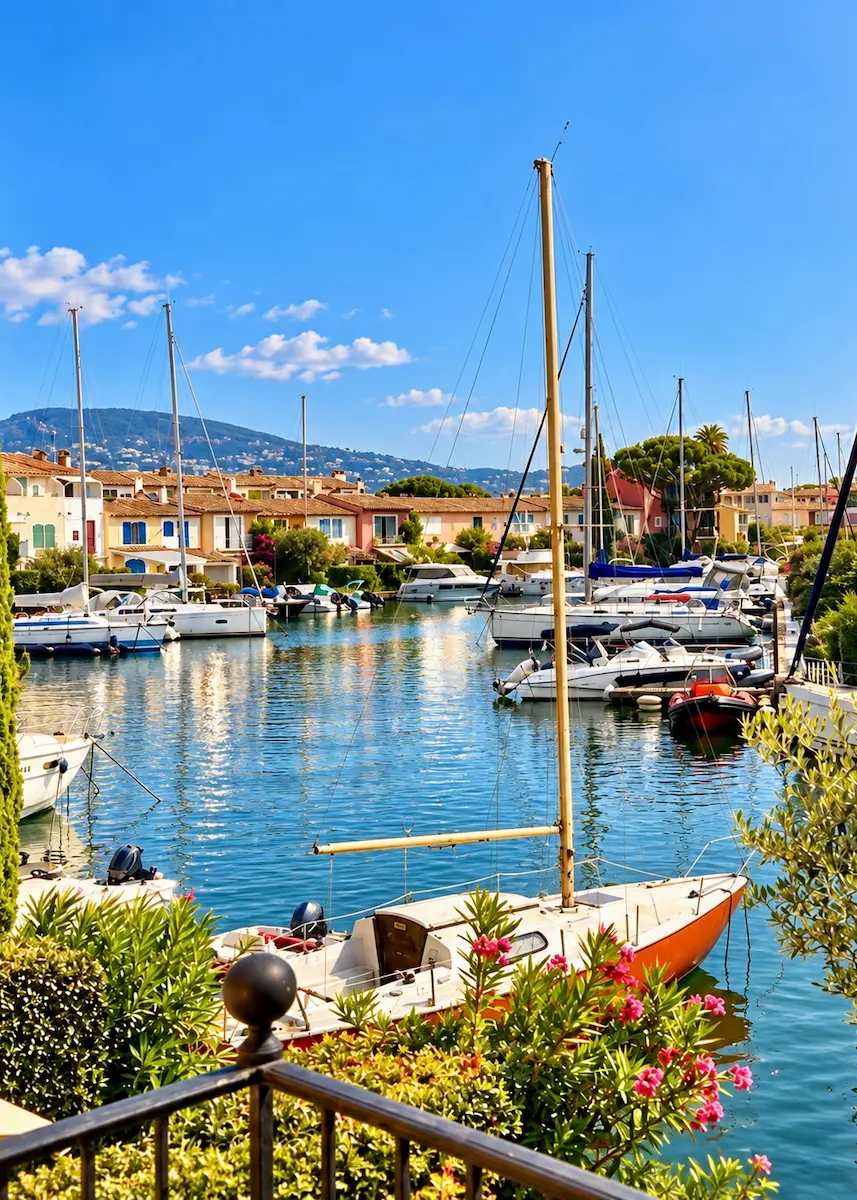
There are houses that practically beg for a sledgehammer. This one asked for considerably more self-control. It sits in Port Grimaud, where water is not scenery added for the real-estate photograph but part of everyday circulation. Boats wait beside houses much as cars do elsewhere, which already gives the place more personality than most decorating schemes could hope to manufacture.
Port Grimaud was conceived in the 1960s as a canal town with deliberate Mediterranean and Venetian references. Its houses were designed to feel settled into the landscape rather than dropped onto it, and the architectural character is still carefully protected. That makes renovation here an interesting exercise because the obvious solution—change everything until the before photograph becomes unrecognizable—is not really the point.
So we decided to test something smaller. Could the house feel entirely different without changing its essential architecture, removing every old surface or introducing a dozen new ideas? The experiment was simple enough to fit on one designer’s sample board: three colors, three materials and three textures. Nine ingredients, one old house.
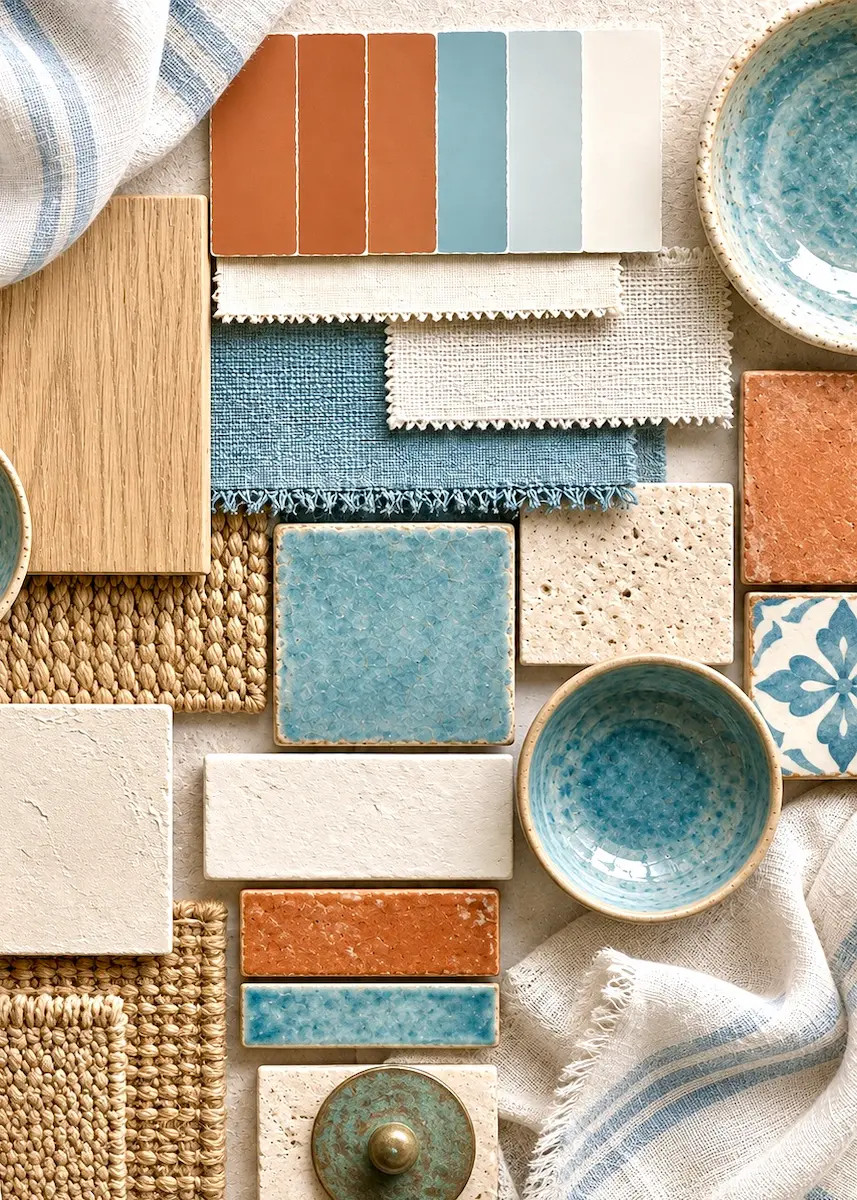
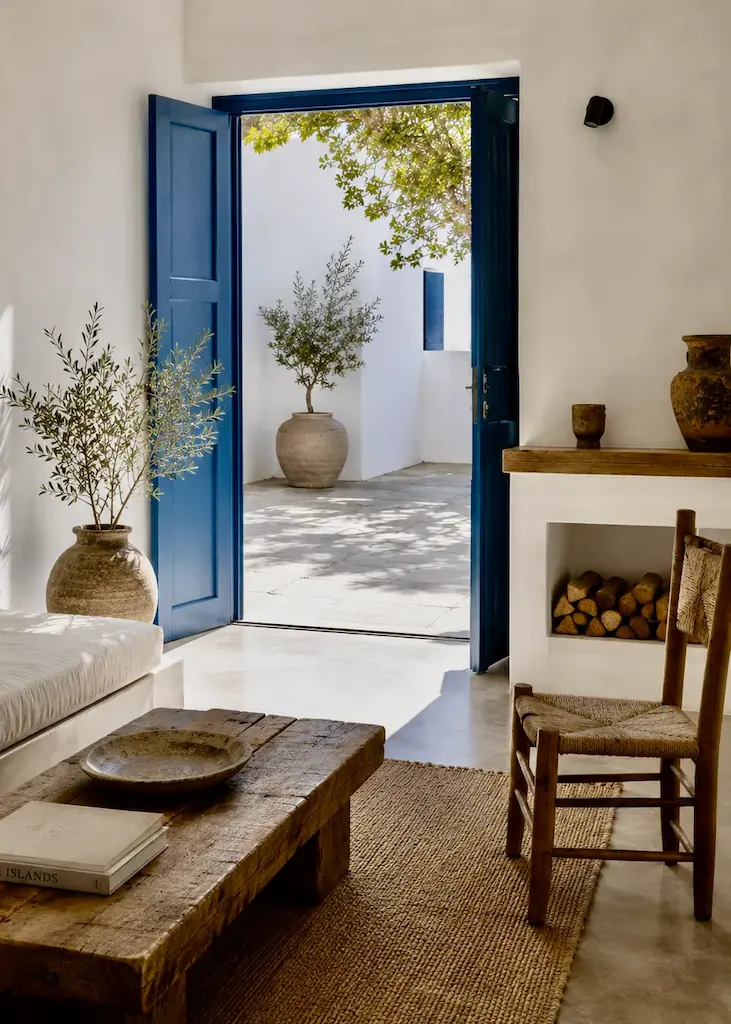
The colors are chalk white, lagoon blue and terracotta. The materials are natural wood, pale stone and plaster, while the textures are washed linen, woven natural fiber and softly aged surfaces. None of these is particularly revolutionary on its own, which is useful because a house rarely needs nine revolutionary things happening simultaneously.
The point of 3×3 is not to make everything match. It is to give every new element a common language, so that an old floor, a new sofa and an inherited tile do not behave as though they were introduced at a dinner party and immediately regretted it. Limitation becomes the organizing principle.
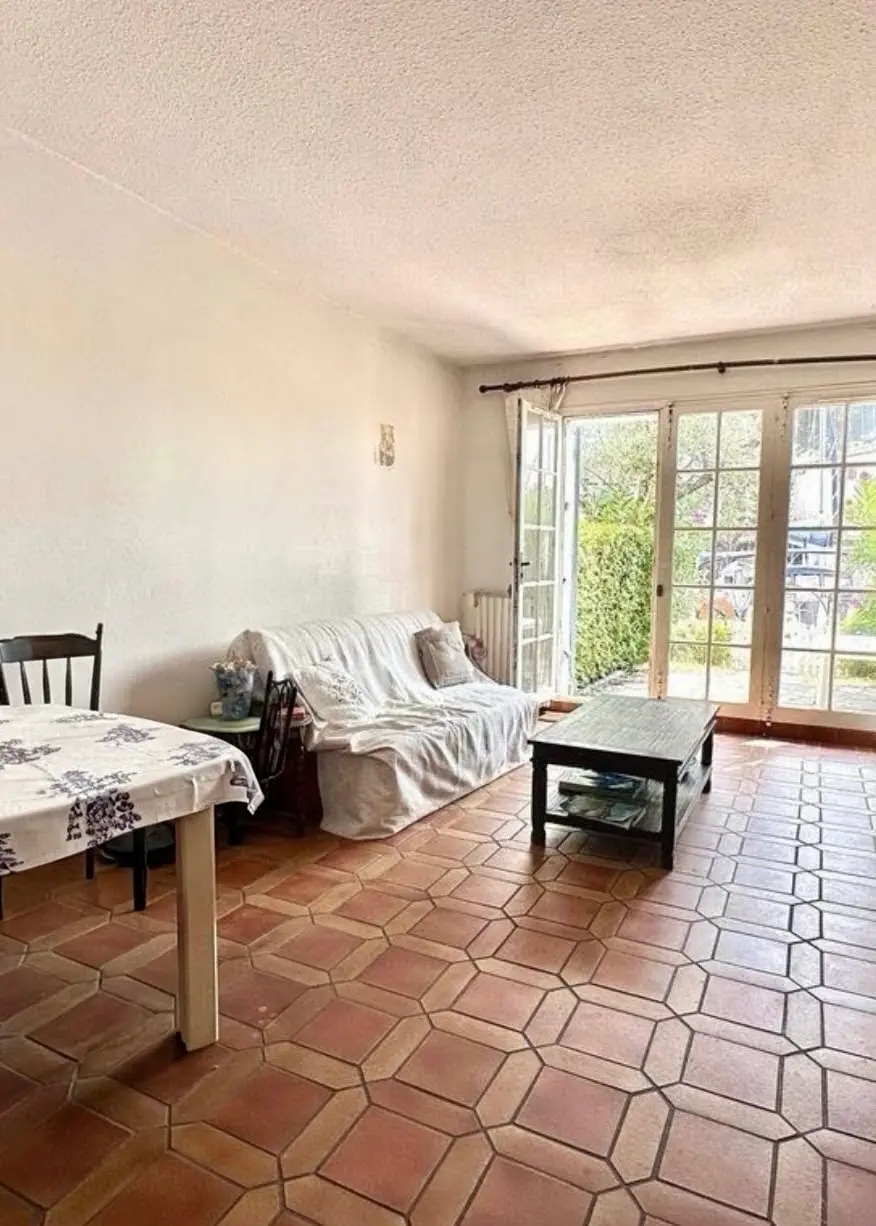
The houses here are particularly good test because much of what gives it character is already there. Terracotta floors run through the rooms, French doors frame the outside, a fireplace anchors the living area, and upstairs the view does more decorative work than most objects ever could. The question becomes not what to replace, but what happens when the things around those features finally stop competing with them.
Start with the thing you were about to remove. The terracotta floor is exactly the kind of surface that frequently disappears during a renovation. It can read as dated when surrounded by dark furniture, busy textiles and unrelated finishes, and once a room feels visually tired the floor tends to receive a suspicious amount of blame. In the 3×3 formula, however, terracotta is not a problem to solve; it is already one of the three colors.
Once the room is reduced to chalky walls, pale wood, washed linen and woven texture, the floor changes character without changing physically. Its reddish warmth becomes the counterpoint to everything lighter around it, rather than an old finish fighting for attention. A softer sofa, a simpler table and restrained touches of lagoon blue are enough to make the room feel calmer.
This is where the formula begins earning its keep. Instead of asking whether the floor is fashionable, it asks whether the floor belongs to the palette. If it does, keeping it becomes considerably easier than replacing it simply because a showroom somewhere has declared pale limestone the current answer to civilization.
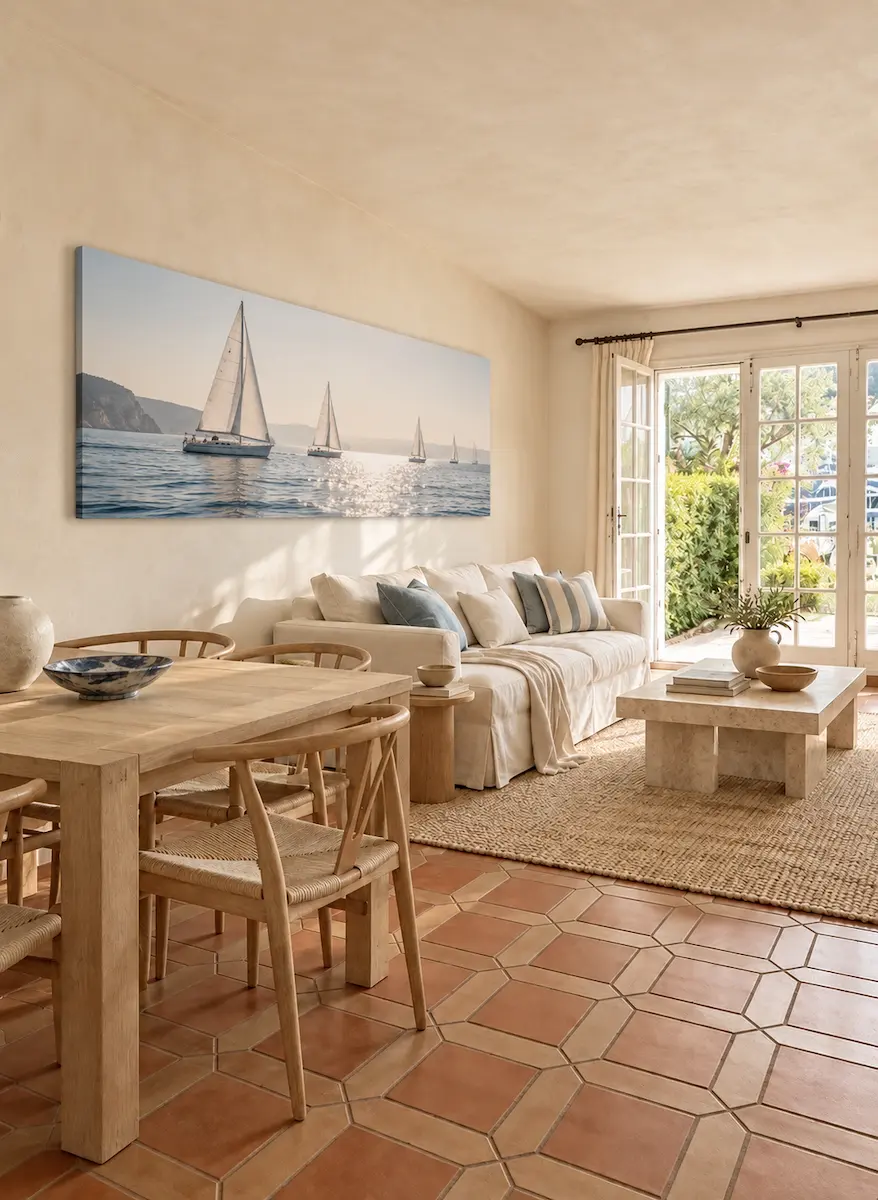
Let one architectural feature win.
The fireplace presents a different problem. It is already the obvious focal point, but years of furniture, pictures and small objects can make even an architectural feature look strangely shy. The 3×3 approach does not require redesigning the fireplace; it requires removing enough competition for the fireplace to resume its job.
Plaster remains visible, wood appears sparingly and the furniture stays within the same narrow material family. The mantel does not need an elaborate arrangement of ceramics, branches, books and one artfully empty frame suggesting generations of inherited sophistication. It is allowed to be a fireplace. That restraint matters in a small house. When materials, colors and textures repeat, the eye has somewhere to rest, and the architecture feels stronger almost by accident. The formula works less like decorating and more like editing.
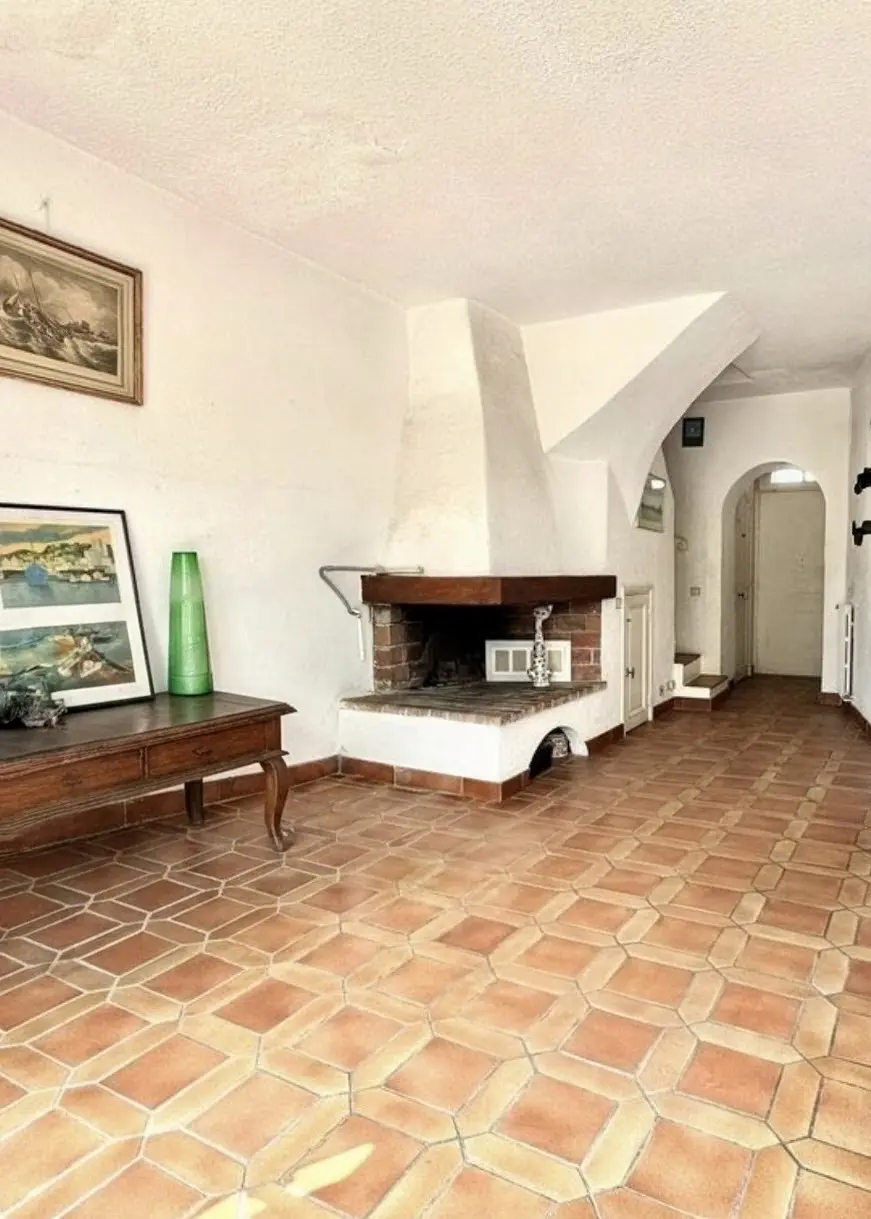
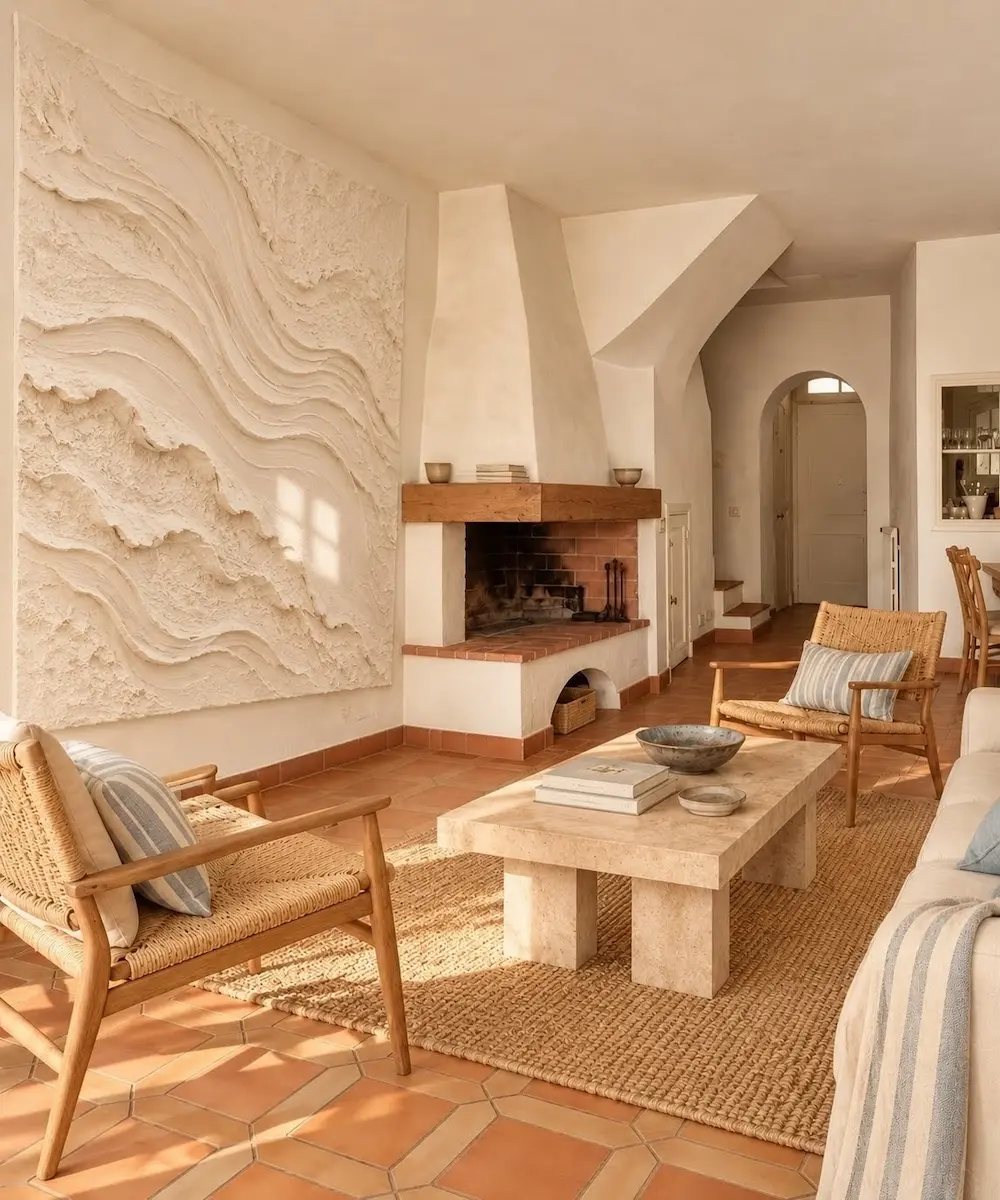
Make the old kitchen tile prove itself.
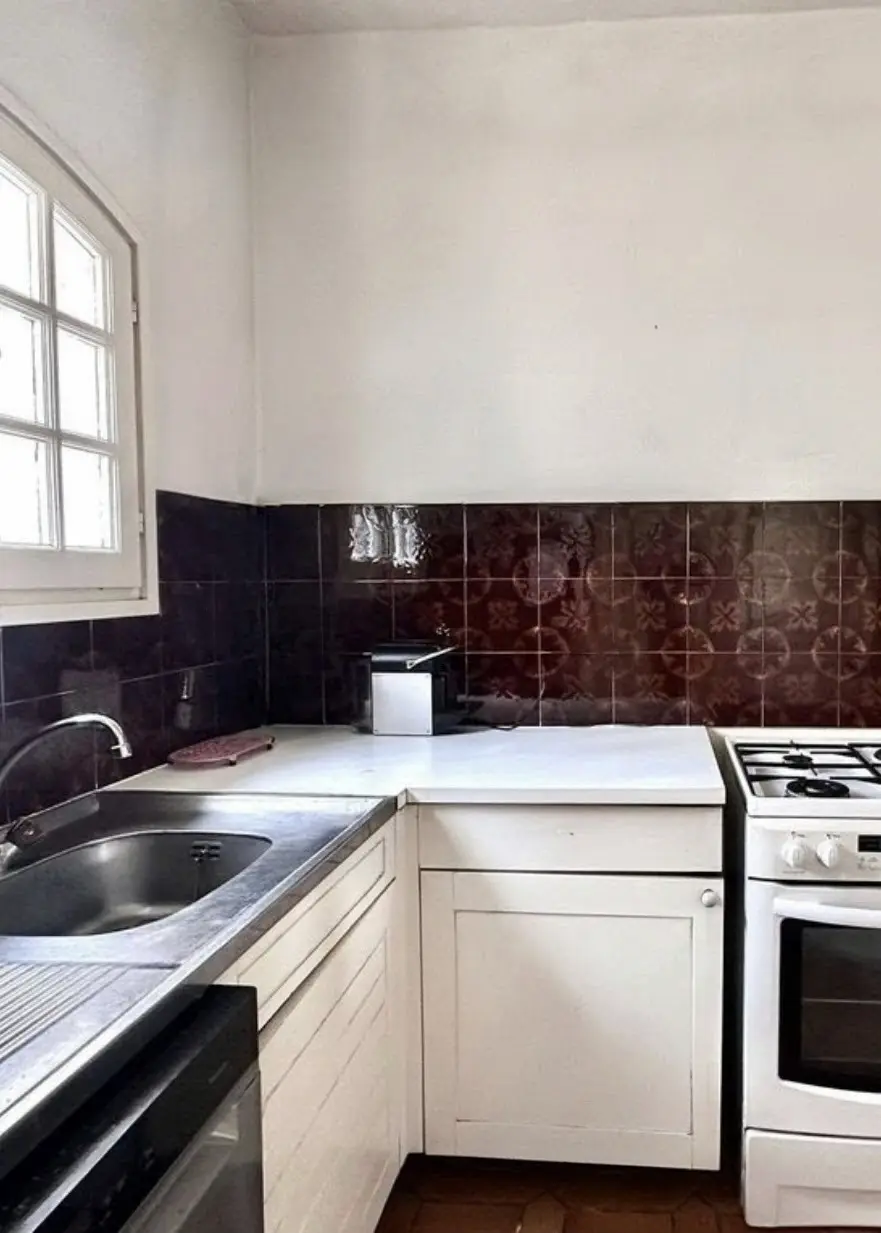
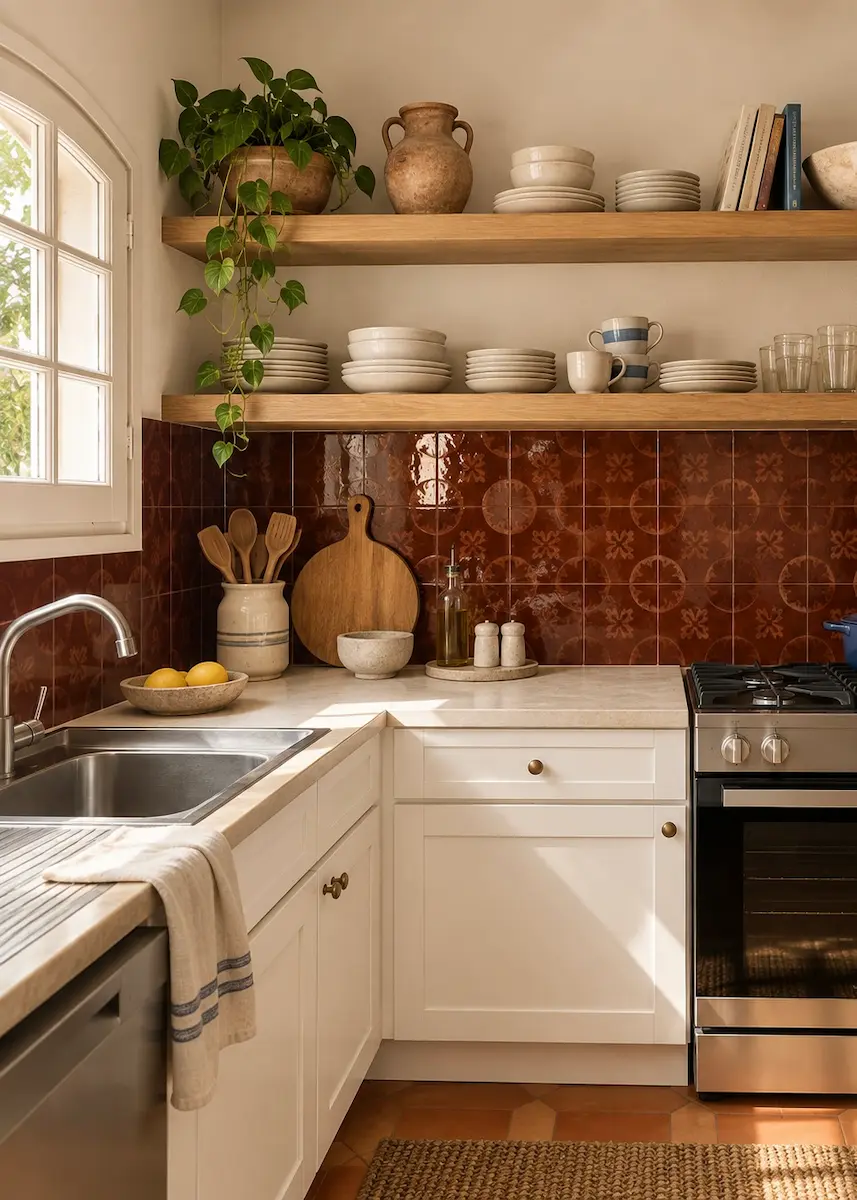
The kitchen is where the exercise becomes more interesting because the inherited surface is harder to love. The brown patterned tile is glossy, emphatic and unmistakably from another moment. Under normal renovation logic, it would be removed before anyone had finished saying “timeless.”
Under the 3×3 logic, the better question is whether the tile can coexist with the selected materials. Natural wood shelving, quieter cabinetry, pale surfaces and a restrained metal element give the pattern fewer things to argue with. Suddenly the old tile reads less like a mistake and more like the room’s strongest piece of character.
This is one of the most useful things the formula reveals. An old material can look wrong because its surroundings are wrong, not because the material itself has somehow failed morally. Before removing it, change its neighbors.
The bedroom barely needs decorating.
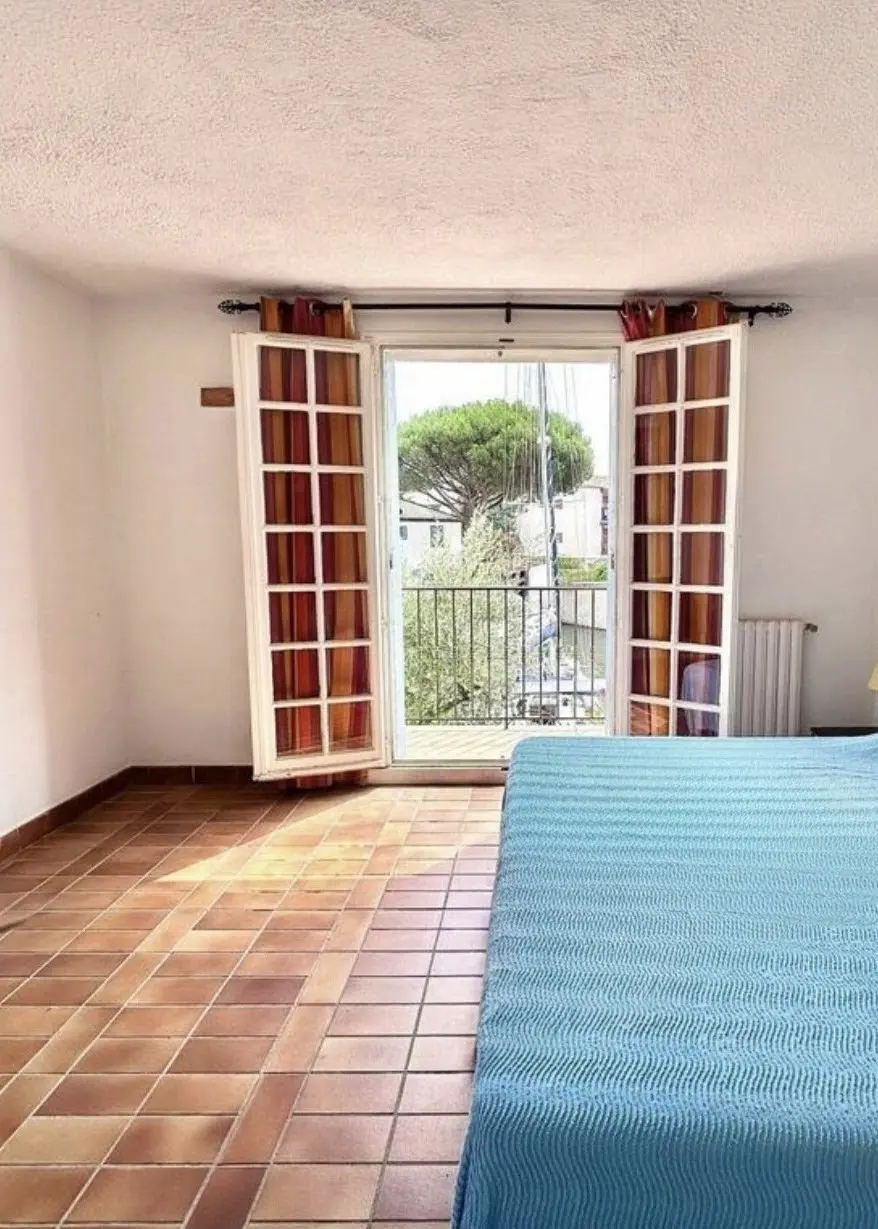
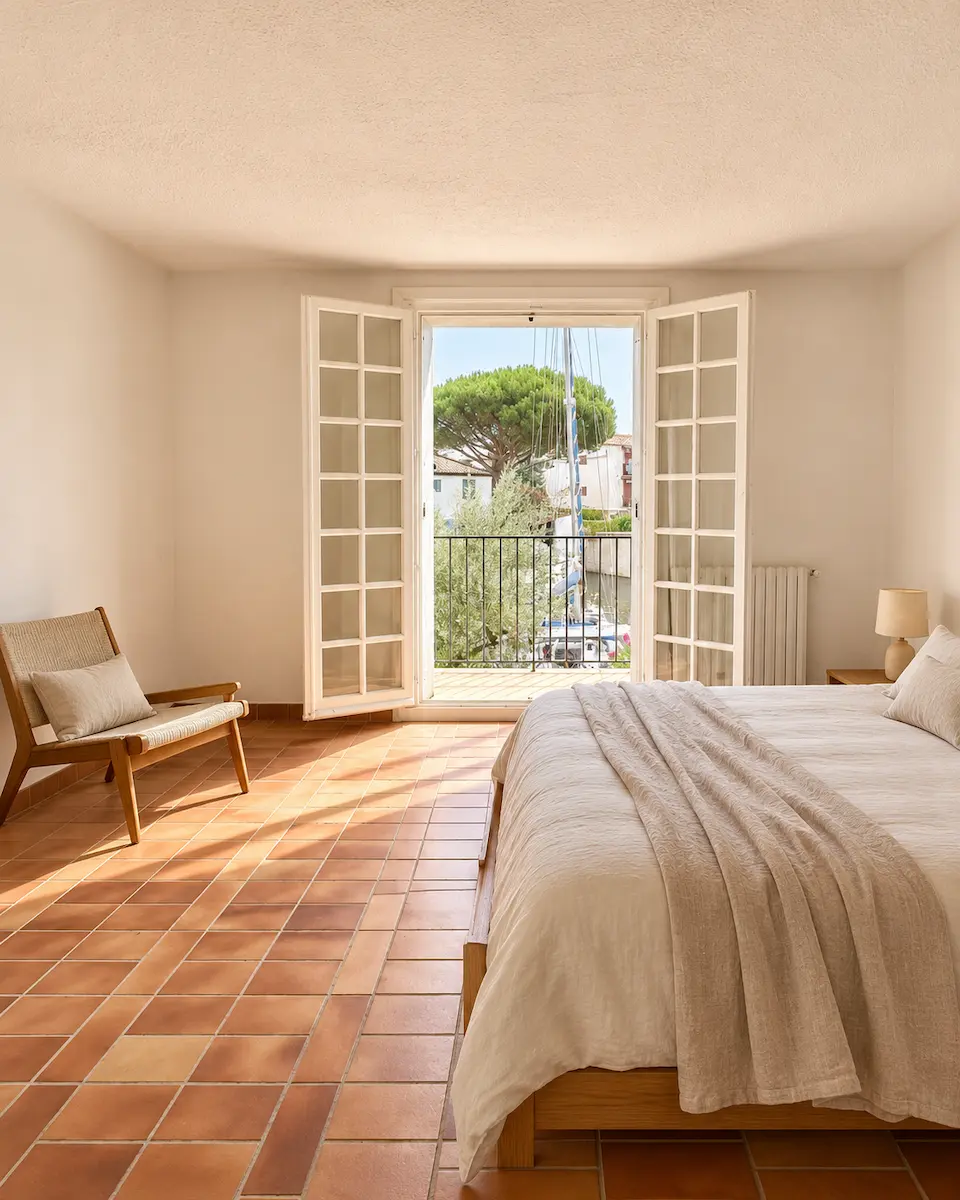
Upstairs, the exercise becomes almost embarrassingly simple. The room already opens toward Port Grimaud, which means the largest visual element is not a headboard, wallpaper or collection of framed prints but the view itself. The easiest improvement is therefore to stop blocking it.
Washed chalk linen, a natural-wood bed, a woven chair and the existing terracotta floor are enough. Lagoon blue does not need to appear everywhere simply because water exists outside the window. The palette works precisely because each element does not have to announce itself.
The result is Mediterranean without requiring any of the usual evidence. There are no shells, rope lamps or decorative anchors behaving as though the room might suddenly forget where it lives. The materials do the work, and the view confirms the address.
Then test the formula on the room you dislike most.
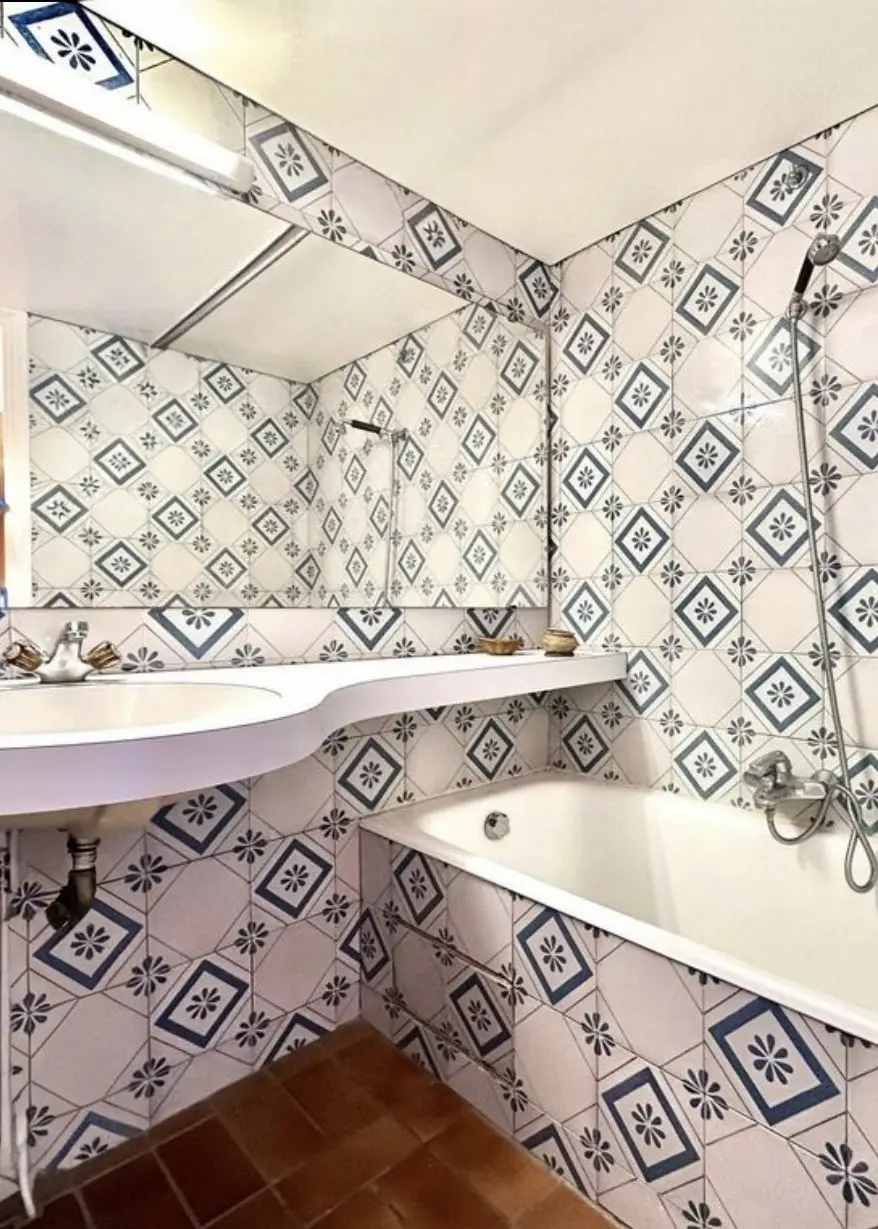
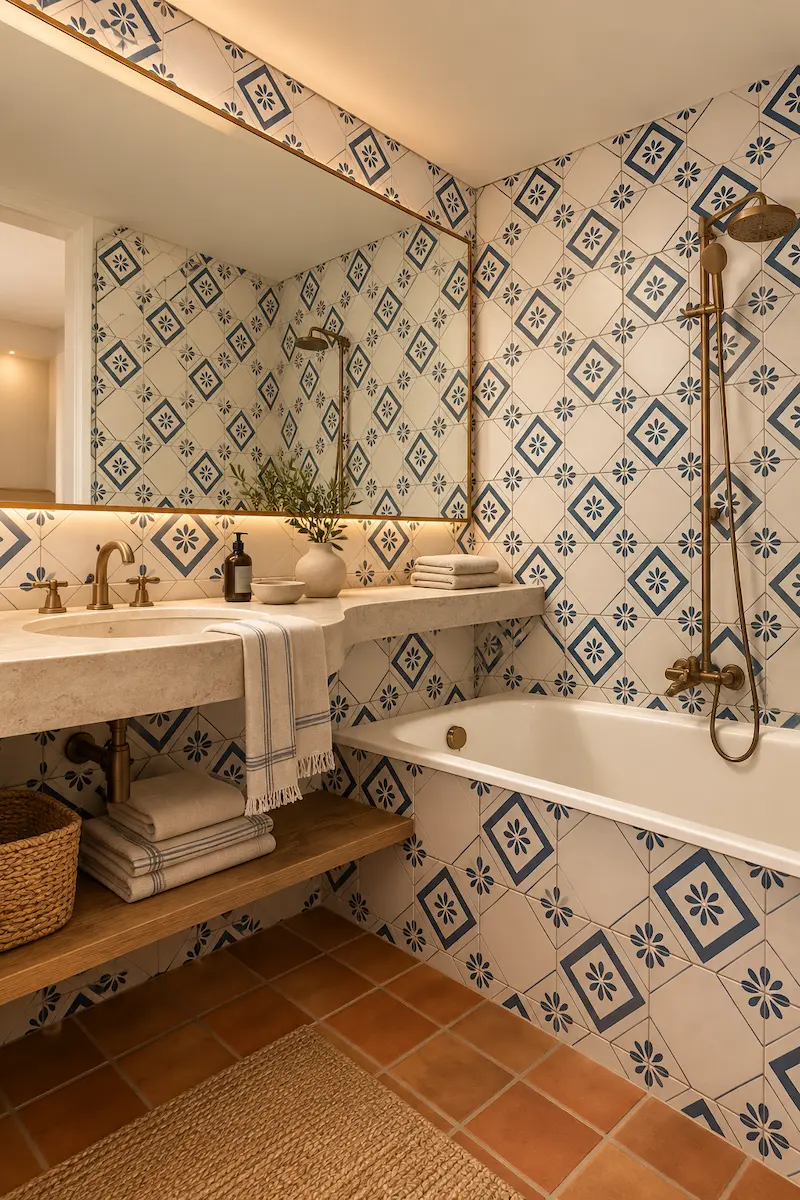
Every system becomes more convincing when it survives something difficult. In this house, that something is a bathroom covered in blue patterned tile. The initial impulse is obvious: remove it, replace it and enjoy the temporary satisfaction of having defeated 1987 or whichever decade is currently under suspicion.
But lagoon blue is already part of the 3×3 palette, which gives the old tile an unexpected route back into the house. Pale stone quiets it, warm wood introduces balance and simple metal fittings keep the room from accumulating another visual language. Neutral towels and terracotta underfoot connect it to the other spaces without attempting to disguise what it is.
The tile barely changes, but the room does. That is perhaps the clearest proof of the formula because the most visually difficult element becomes usable once everything around it is reduced. Context turns out to be a very effective renovation material.
Take the same nine ingredients outside.
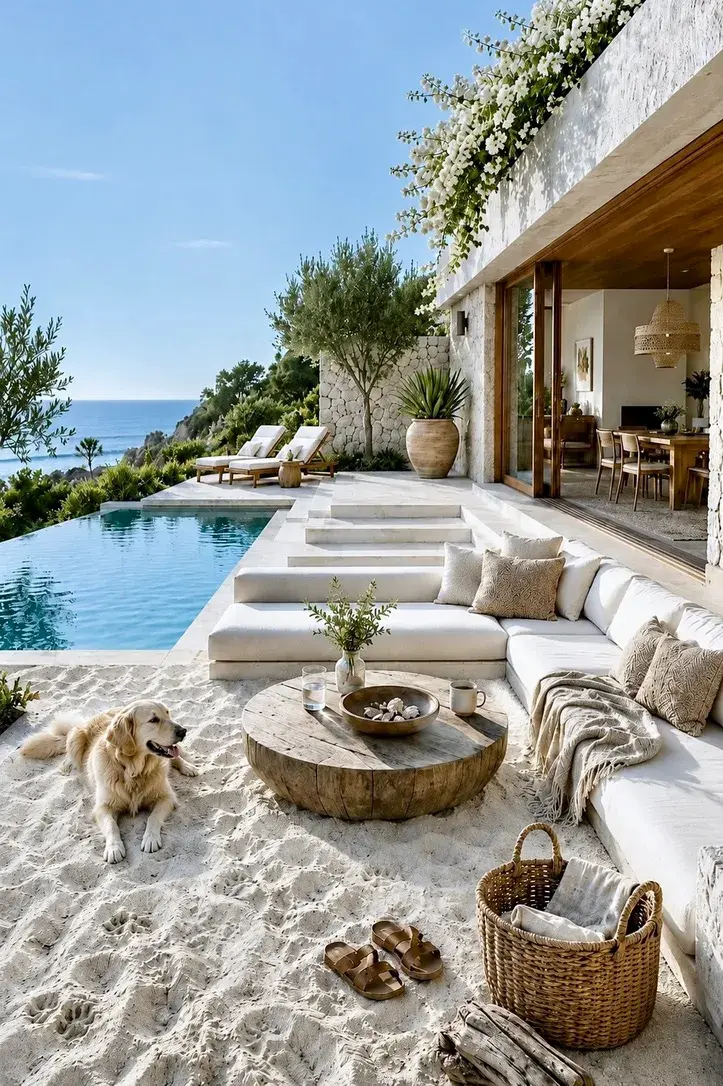
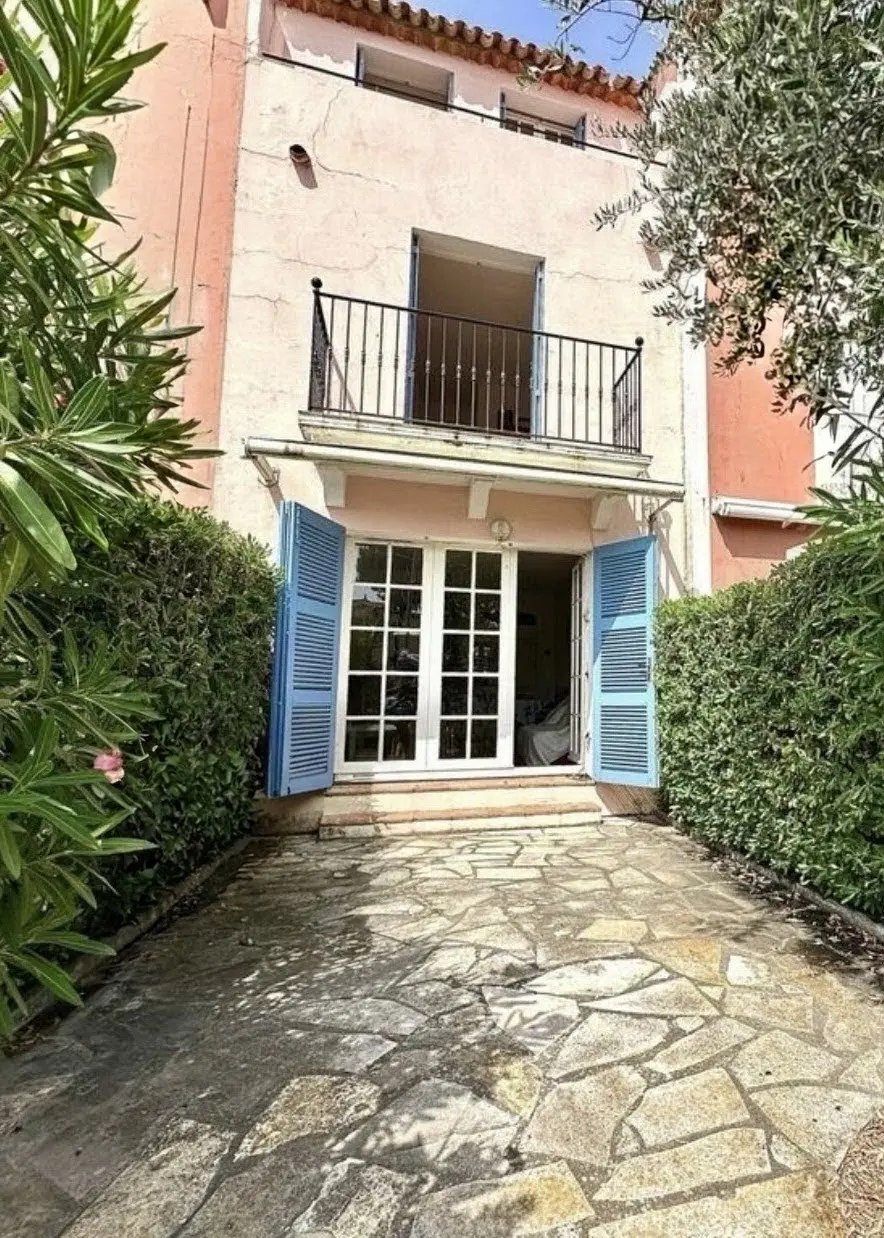
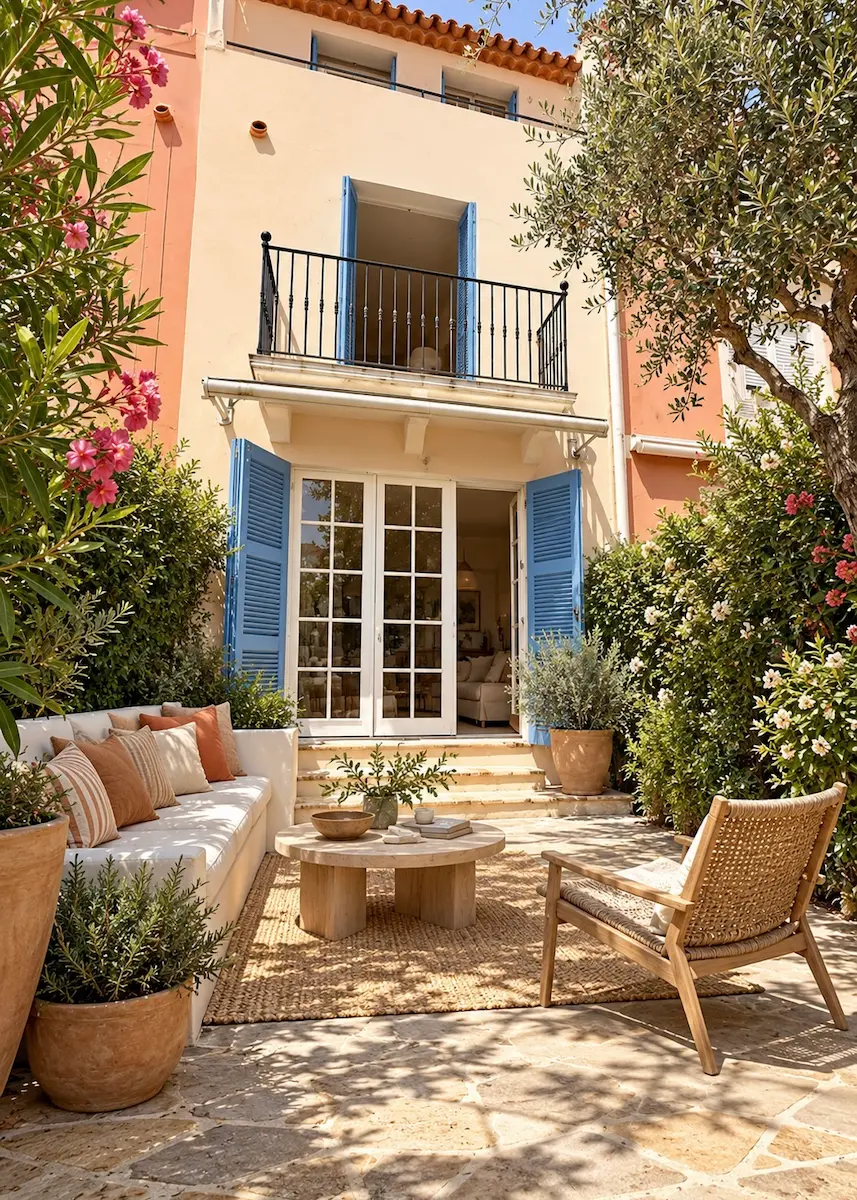
The terrace already has what most outdoor rooms spend considerable effort trying to imitate: old paving, established planting, shutters, sun and water nearby. What it lacks is not architecture but a sense of purpose. A collection of outdoor furniture can easily make a terrace look occupied without making it feel like a room.
The same nine ingredients solve that surprisingly well. A simple wood table, woven seating, chalk-colored cushions, softly aged surfaces and restrained blue connect the terrace to the interior without making indoors and outdoors identical. Terracotta warmth is already present in the house itself, so there is no need to scatter pots everywhere in case anybody misses the Mediterranean reference.
Repeating the formula outdoors also changes the way the house reads from inside. The terrace no longer feels like the space after the French doors; it becomes the next room in the sequence. No wall has moved, yet the house feels larger.
Venetian without dressing up as Venice
Port Grimaud’s Venetian associations could easily become a decorating trap. Water, balconies and narrow façades do not require striped poles, elaborate chandeliers or enough red velvet to suggest the Doge is expected for dinner. The place already has canals; that is quite enough evidence.
The more useful reference is atmosphere rather than motif: lagoon blue, warm mineral color, natural timber, aged surfaces and reflected light. The house can acknowledge Venice without impersonating it.
And that may be the real point of the 3×3 formula. The terracotta stays. The fireplace stays. The old tile stays. What changes is everything around them. Three colors, three materials and three textures are enough to give the house a common language without sanding away its character. Instead of asking what looks old, the better question becomes what still belongs. In this house, quite a lot did.