Where Venice Is Lived, Not Styled
At Orient Express Venezia, Palazzo Donà Giovannelli offers a rarer kind of luxury: not a version of Venice, but the temporary pleasure of living according to her rules.
Photography: Giulio Ghirardi
Venice has spent centuries being copied. There are Murano chandeliers hanging over Manhattan dining rooms, Venetian plaster on walls from Los Angeles to London, terrazzo floors in hotels that have never seen a canal, and enough velvet in circulation to furnish several imaginary doges. We have become extremely good at reproducing the ingredients of Venice far from Venice.
What we have not figured out how to reproduce is the feeling of Venice itself. That becomes obvious the moment you enter Palazzo Donà Giovannelli. Orient Express has not built a Venetian hotel; it has taken possession of a palazzo that has been Venetian for almost six centuries, carrying the marks of salt air, humidity, time and use in its stone, plaster and painted surfaces. The renovation has given the building a new life without scrubbing away the evidence of the old one. Once you see that distinction, much of what we casually call “Venetian style” begins to look suspiciously like an approximation.
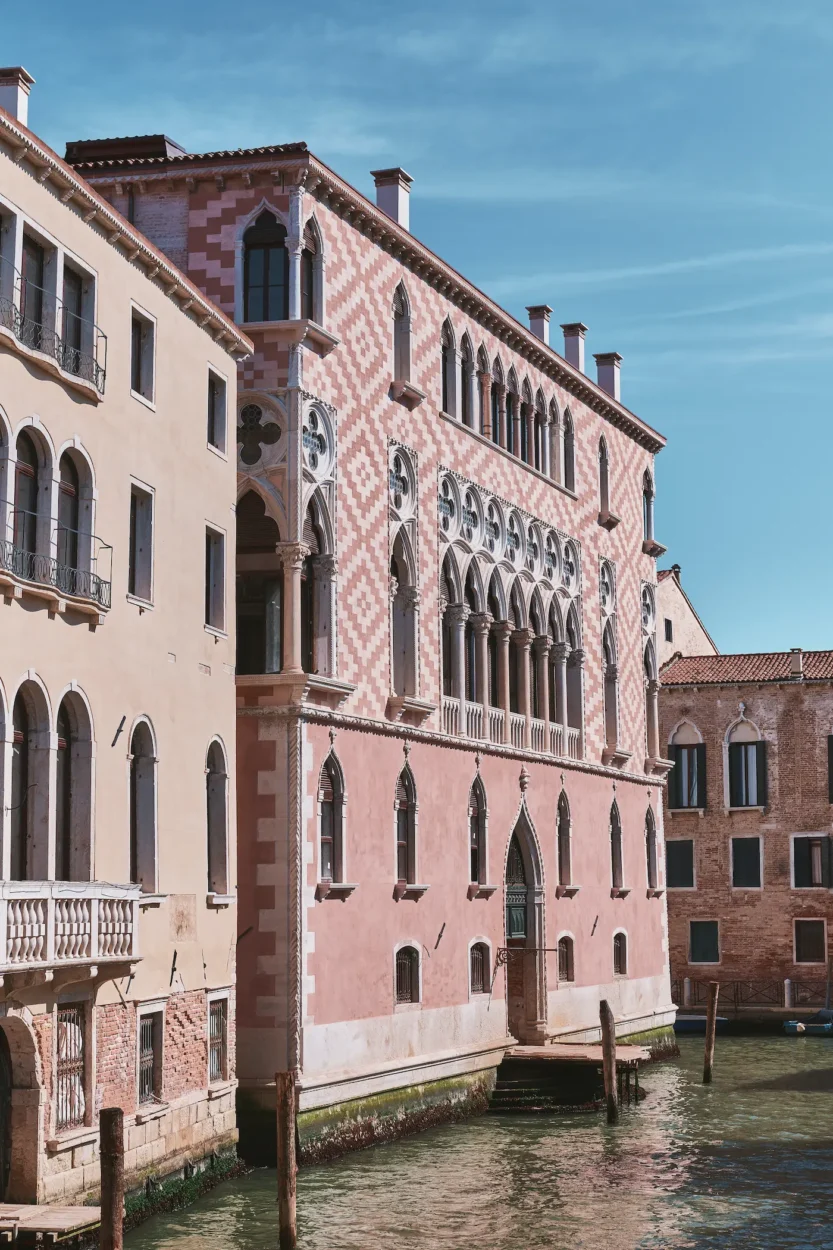
The palazzo has stood at the meeting of two canals in Cannaregio since 1436, passing through noble families, celebrations, changing tastes and nineteenth-century alterations before beginning an entirely new life in 2026. After an eight-year renovation led by architect and interior designer Aline Asmar d’Amman, Palazzo Donà Giovannelli became a hotel for the first time in its history. It now contains 47 rooms, suites and residences. That is almost all the background we need; the rest has already been dutifully covered in press releases and design magazines.
We are not here to promote another beautiful hotel in Venice, and we are not beginning another architectural case study. This is an escape story, and the more interesting question is not how successfully the palazzo was restored, but what it feels like to temporarily belong to a place carrying nearly six centuries of memory. A building this old does not need to convince you that it has a past; your much shorter life simply checks in alongside it.
And you arrive the Venetian way. A private boat can bring guests directly to the fifteenth-century Gothic portal opening onto the canal, exchanging engine hum and moving water for the cool solidity of stone as you cross the threshold. There is no sweeping driveway, no car door opening beneath a porte-cochère, no moment in which Venice politely behaves like somewhere else. That first arrival tells you almost everything. In most places, the coast is something you look toward; in Venice, water dictates circulation, light, sound and arrival. The coast is not represented here. It is operating.
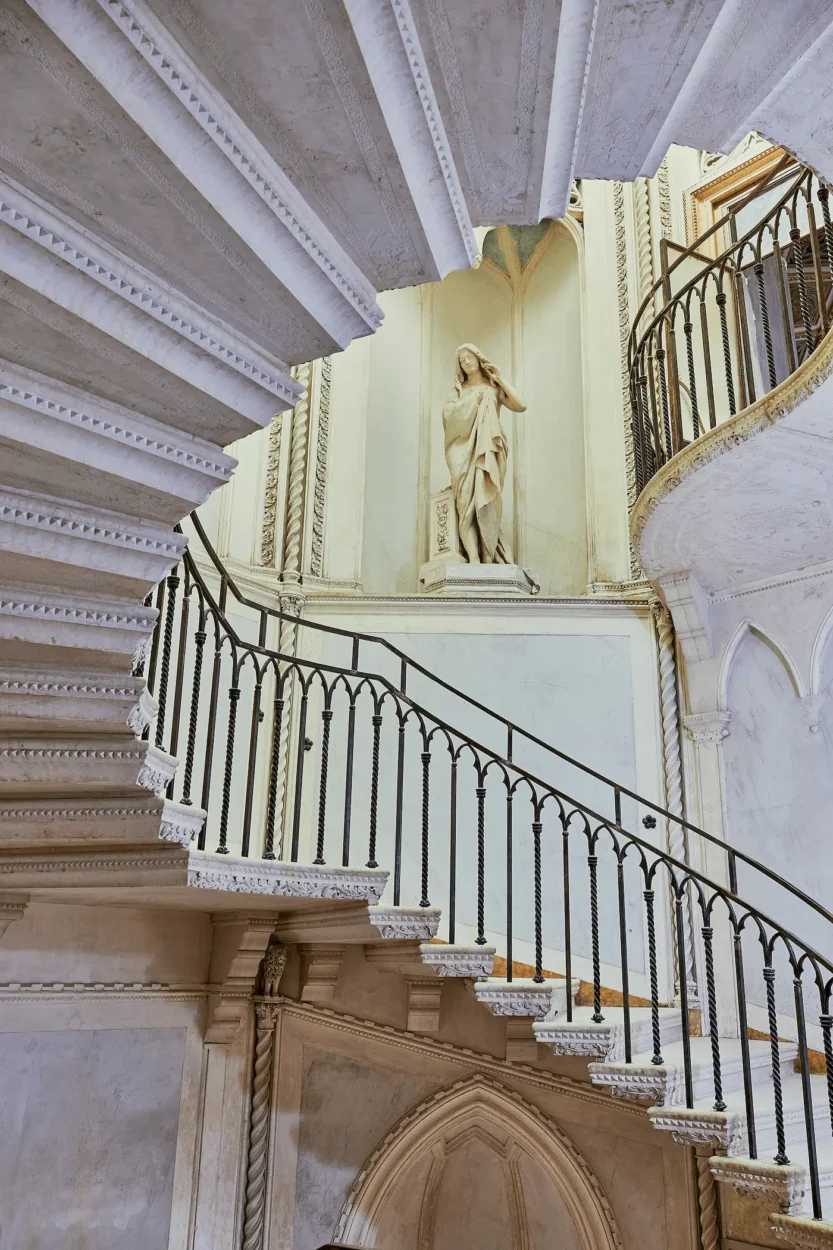
Inside, history immediately becomes physical. The nineteenth-century octagonal staircase by Giovanni Battista Meduna turns upward beneath its decorated vault, stone and ironwork transforming the very ordinary business of getting to another floor into something approaching theatre. During the eight-year restoration led by architect and interior designer Aline Asmar d’Amman, Meduna’s staircase was conserved alongside surviving frescoes and mosaic floors.
At home, a staircase is infrastructure. In a Venetian palazzo, apparently it is an opportunity to make you look up when your feet would strongly prefer you watch where you are going. Yet that extravagance reveals something important about the building: what now appears timeless was itself assembled through change.
Meduna’s staircase may feel ancient now, but when it was added in the nineteenth century, the palazzo had already been standing for roughly four hundred years. The new hotel therefore could never honestly be about returning the building to one immaculate historical moment, because there was no single moment to return to. Venice accumulated, altered, repaired and carried on; Palazzo Donà Giovannelli did the same.
That is where the renovation becomes interesting rather than merely expensive. New hospitality infrastructure had to enter rooms that had never been designed as hotel rooms, while frescoes, floors, architectural fragments and the building’s irregular history remained legible. The result is not untouched Venice. It is Venice continuing.
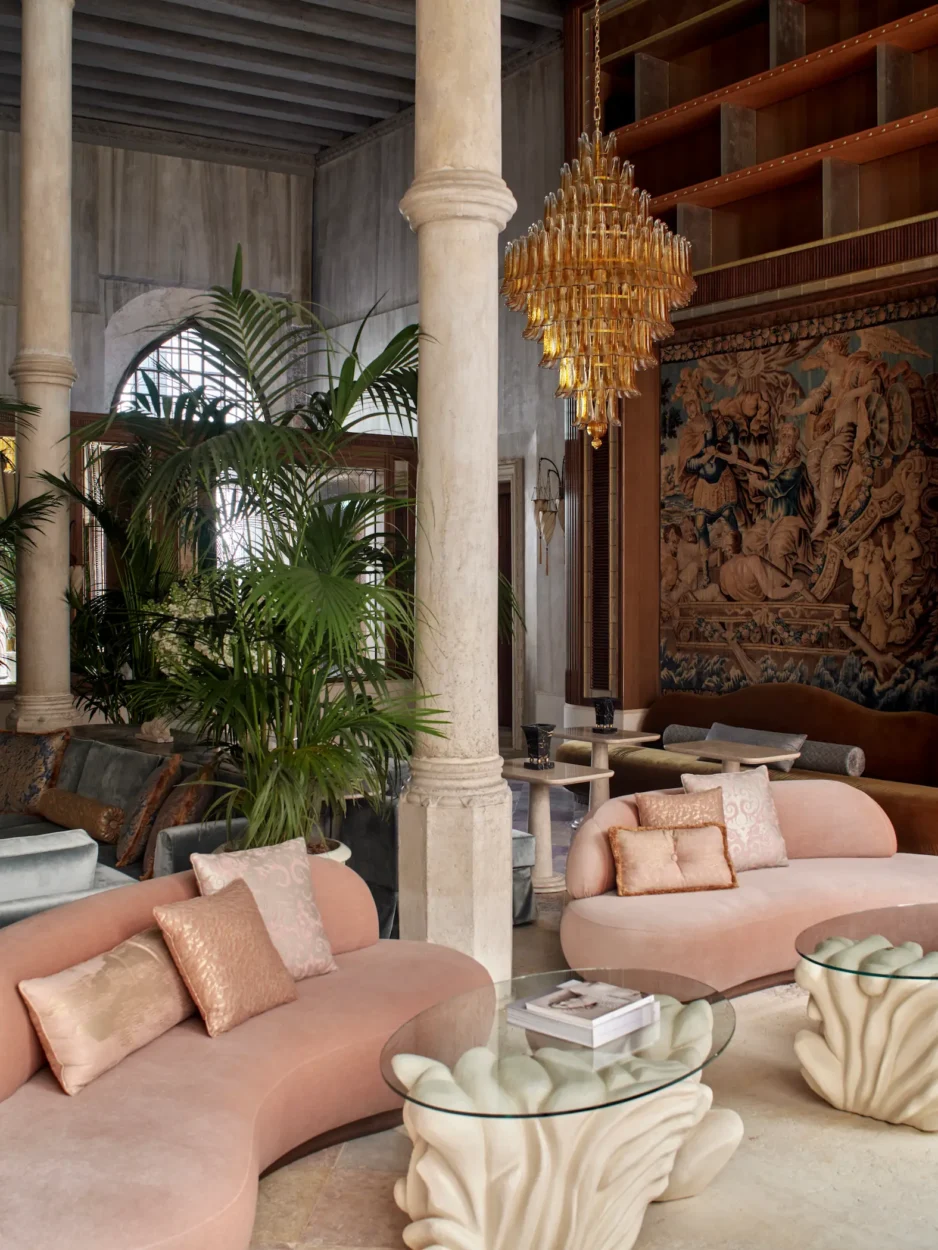
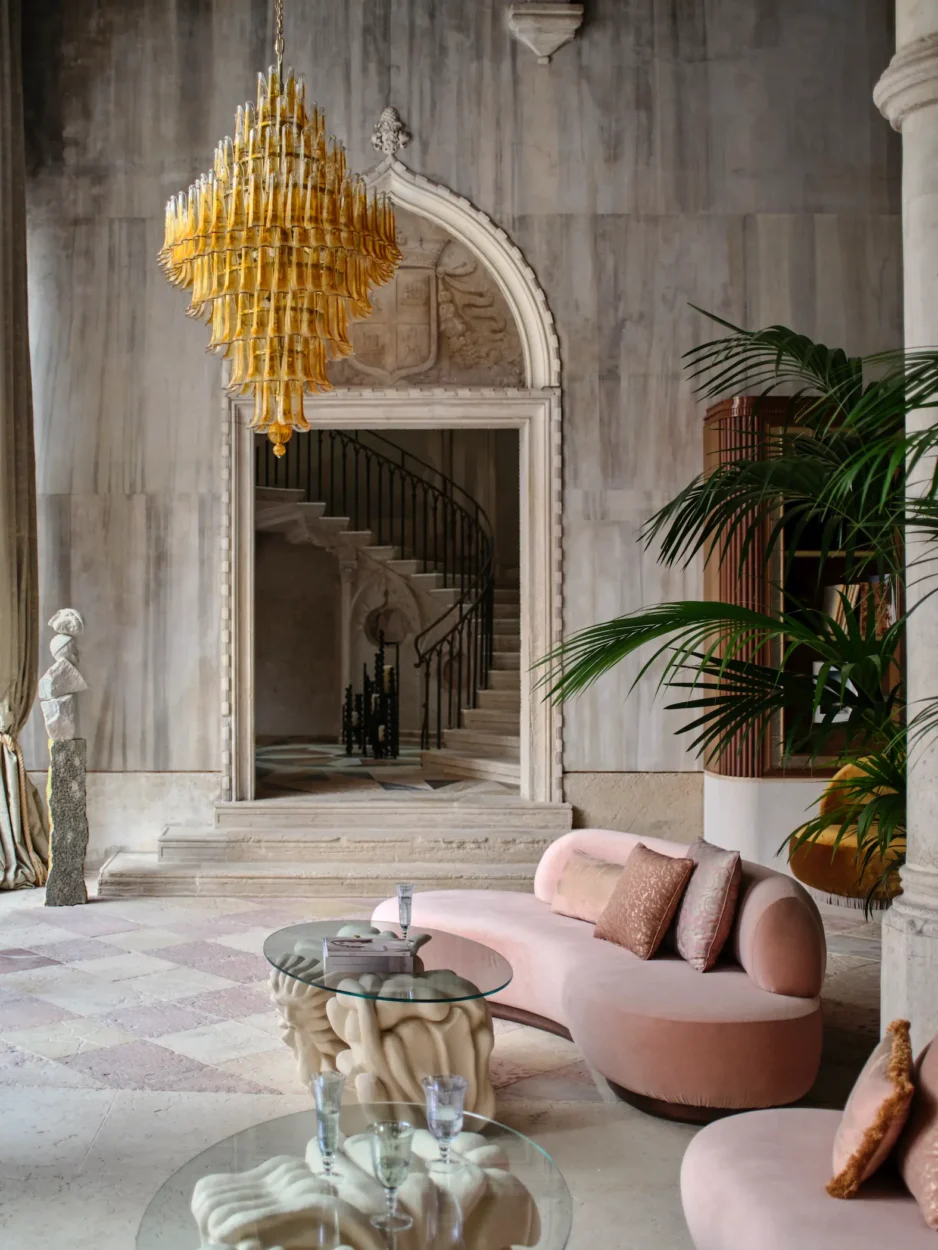
The contemporary pieces do not dress up as antiques and ask to be admitted to the eighteenth century. Curving sofas sit beneath old stone and enormous Murano chandeliers; saturated fabrics meet painted surfaces; mirrors, marble and sculptural furniture occupy rooms that visibly belong to other lives as well. That refusal to make everything agree may be one of the hotel’s most convincing decisions.
After all, Venice has never been particularly frightened of visual abundance. This is a city that put palaces on water and then decorated their ceilings because apparently gravity itself needed embellishment. Restraint has its virtues, but La Serenissima was rarely built by people wondering whether the chandelier might be a little much.
More importantly, the objects do not create the atmosphere alone. Venetian light participates in the rooms: brightness reflected from water shifts across glass, mirrors and polished surfaces, while shadow thickens the architecture as the day moves on. The hotel describes its interiors in terms of changing light and shadow across the canals, and here that is more than decorative language—the water outside changes the room from hour to hour.
That is the difference between installing Venetian things and listening to Venice. A Murano chandelier can travel to Manhattan and remain a beautiful Murano chandelier. Here, Venetian glass catches light bounced from a Venetian canal inside a Venetian palazzo, and suddenly object, architecture and geography become difficult to separate.
This is contemporary coastal living at its most persuasive. There is no need to signal proximity to water with blue upholstery or strategically placed coral; the landscape has already entered the room. A successful coastal interior does not tell you where it is. The place itself keeps interfering with the design.
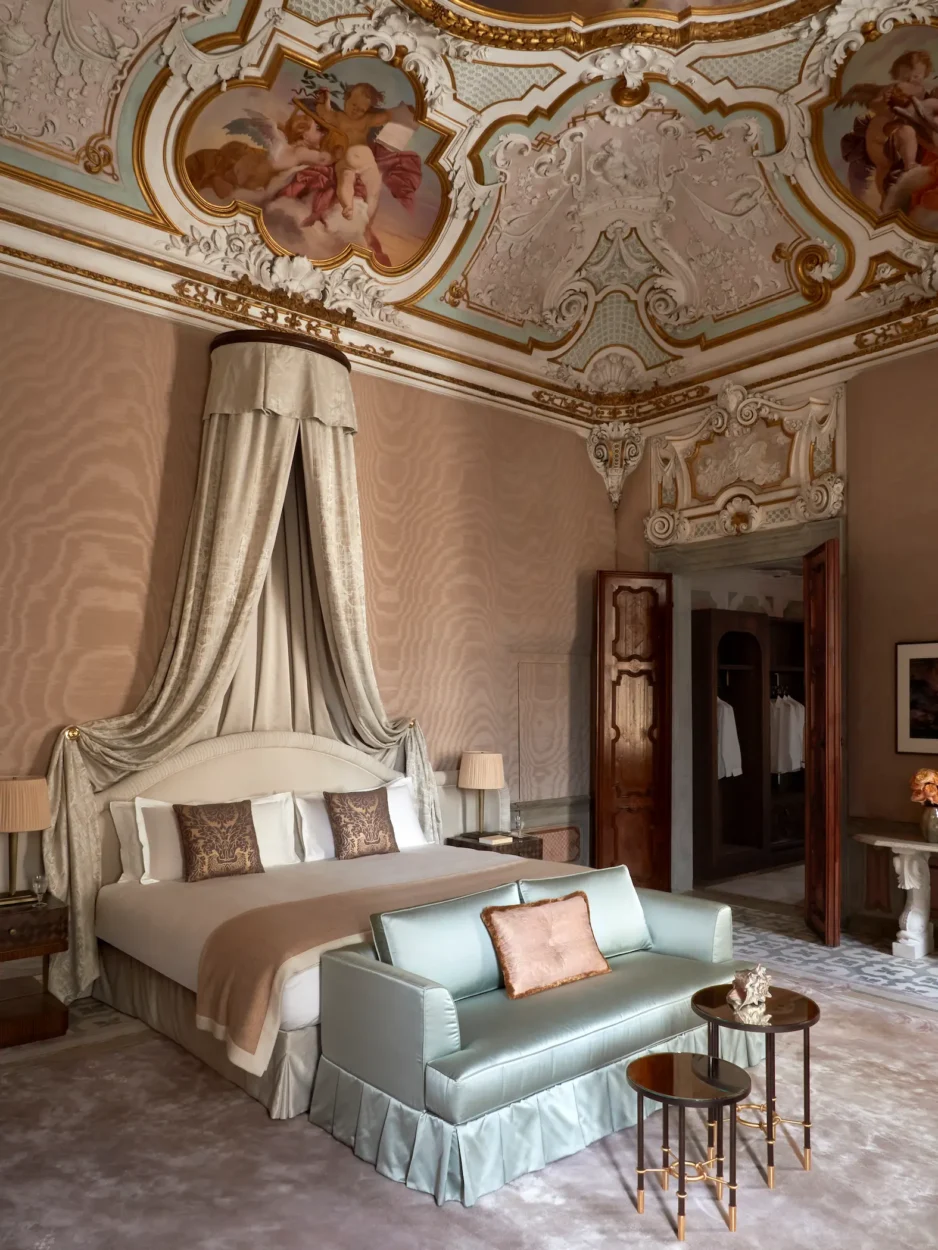
Upstairs, the experience becomes more intimate because eventually all this history has to accommodate the wonderfully ordinary act of going to bed. The hotel’s rooms and suites place contemporary comfort beneath painted ceilings and within architectural spaces that existed long before anyone imagined key cards or minibars.
There is something almost comical about lying beneath centuries of decorative ambition while checking messages on your phone. Yet that collision is precisely what makes the experience feel alive. History is no longer a museum exhibit encountered during opening hours; it has become the ceiling above your pillow.
And then there are the quieter sensations that no list of amenities can quite capture. Footsteps behave differently on old hard floors; stone holds a coolness that fabric cannot imitate; glass flickers as the light outside moves; beyond the walls is a city in which water replaces the familiar background noise of traffic. You begin noticing Venice less as scenery and more as a set of physical conditions.
Palazzo Donà Giovannelli does not need to compete with Venice’s other extraordinary historic hotels on authenticity. Its distinction is more specific: this is a building entering hospitality for the first time after nearly six centuries of being something else.
For a few nights, the rhythm of that building becomes part of your own. You arrive by water, climb Meduna’s staircase because your room happens to be upstairs, sleep below painted ornament that was never conceived as hotel décor, and wake to a city whose geography still refuses to reorganize itself around modern convenience. Venice does not adapt herself to your stay; wonderfully, your stay adapts itself to Venice.
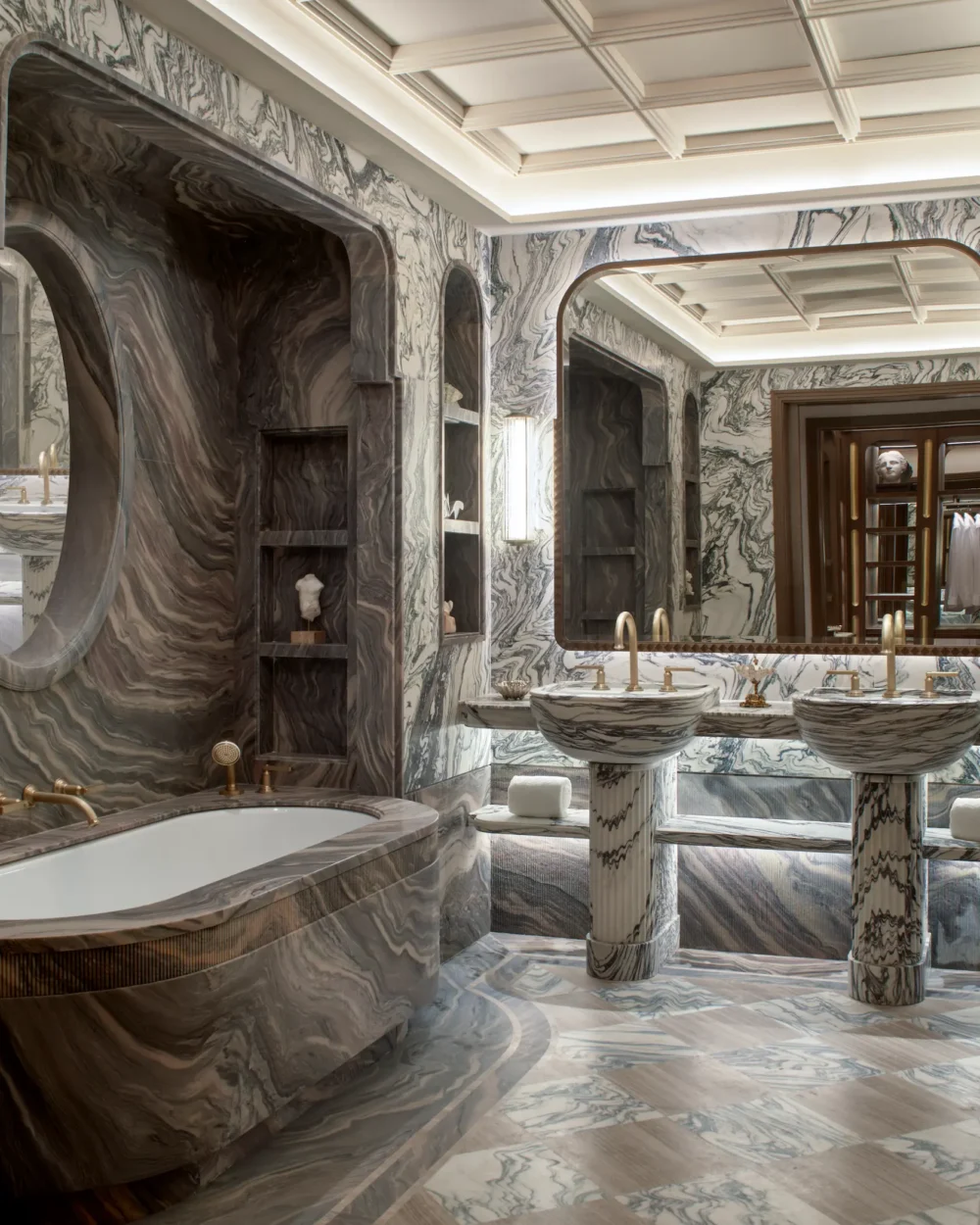
By evening, the rooms take on a different character. Glass catches smaller pools of light, gilding becomes warmer, stone recedes into shadow and the grand proportions that were architectural spectacle by day become surprisingly intimate. The hotel may be new, but the pleasure it offers is an old Venetian one: interiors responding to water, light and darkness rather than remaining visually frozen from breakfast until bedtime.
This is where the idea of the perfect escape changes slightly. Escape usually suggests leaving ordinary life behind for somewhere unreal. Palazzo Donà Giovannelli does something more seductive: it gives you another version of ordinary life, one in which getting home involves a canal, going upstairs involves Meduna, looking at the ceiling becomes unavoidable, and six hundred years of architecture have somehow become part of the route to breakfast.
Perhaps that is why Venice has such an unreasonable hold on the people who love her. She does not merely offer beauty; she makes you participate in it. You walk differently, arrive differently, notice light differently, and accept with surprising enthusiasm that the shortest distance between two points may involve a bridge, a boat and a small argument with a map.
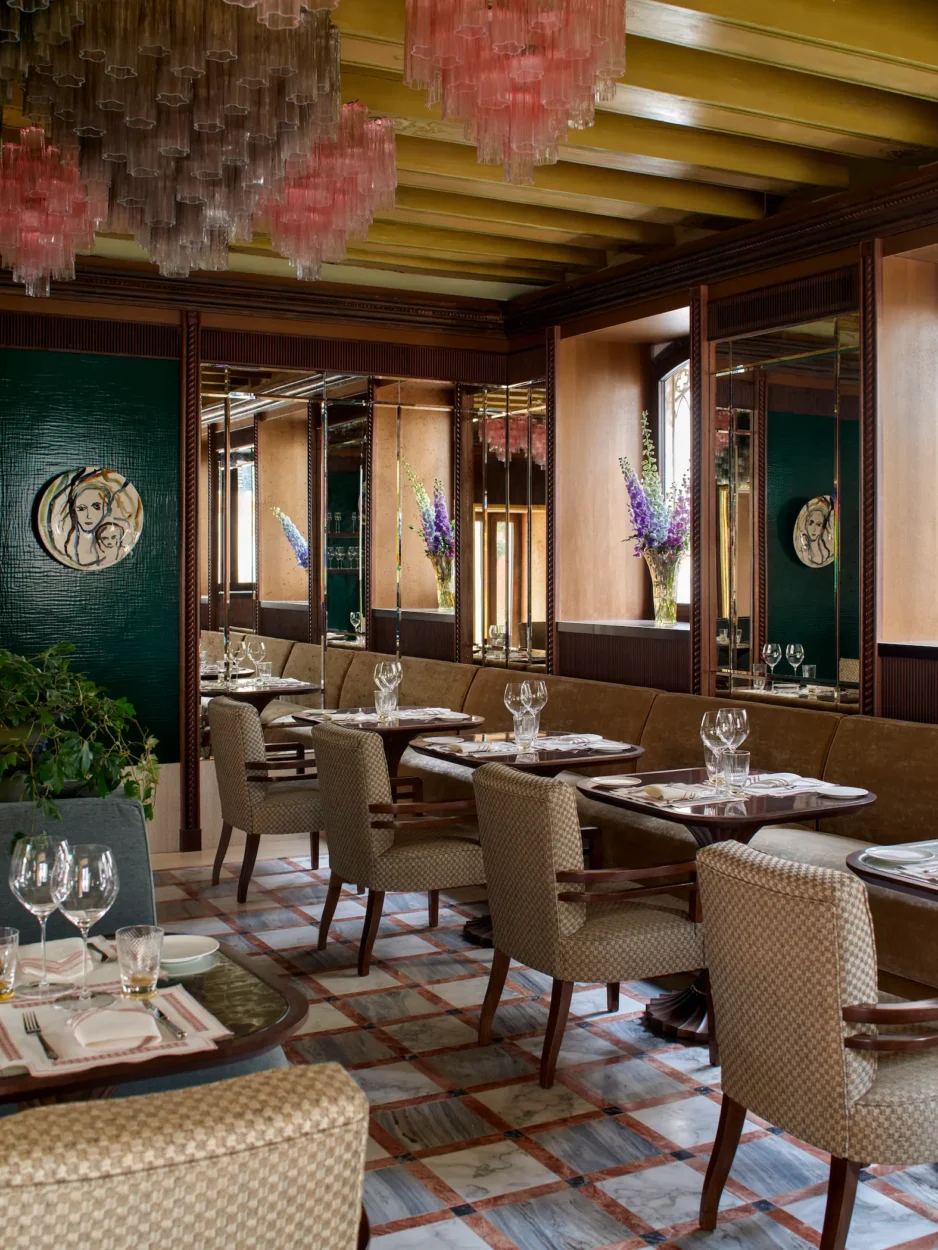
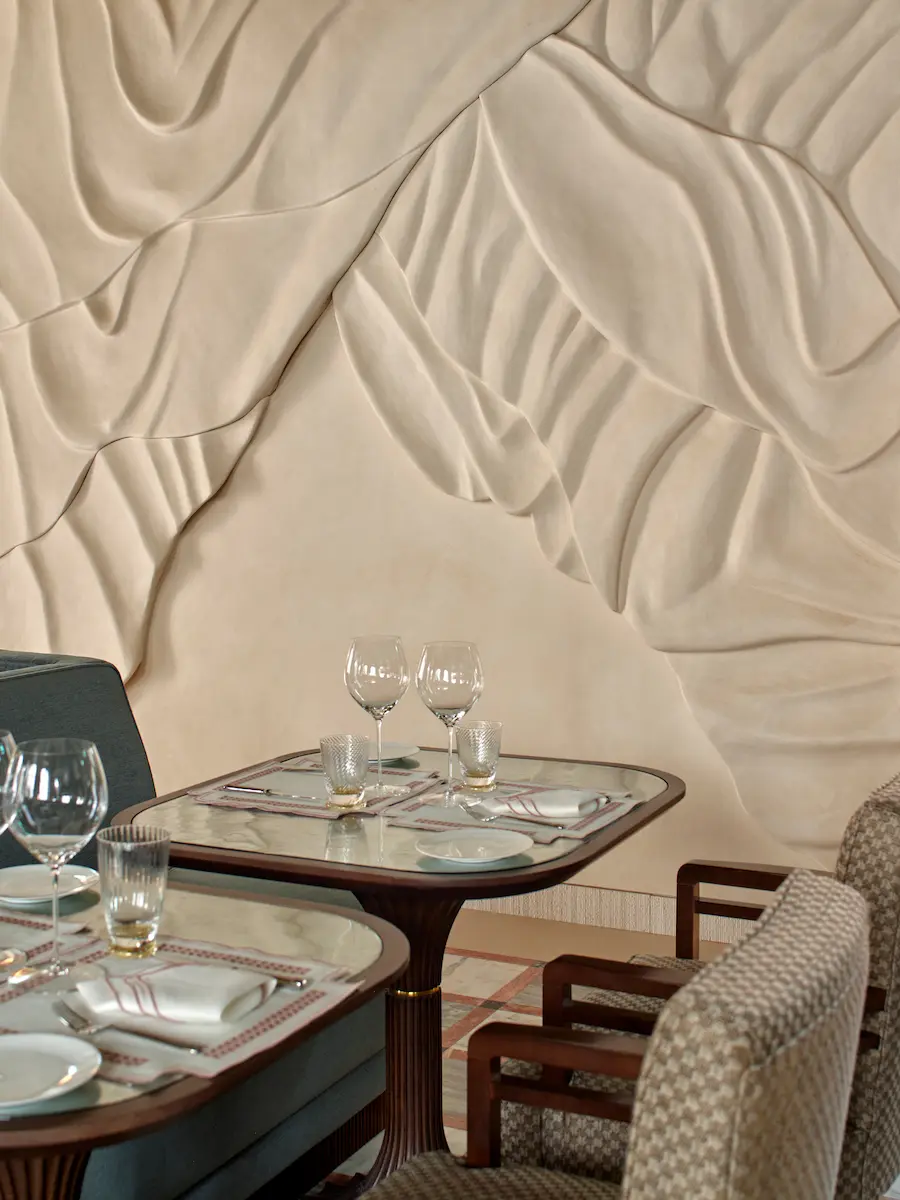
You can take the chandelier home. You can copy the plaster, specify the terrazzo and order velvet by the metre. What you cannot export is the reflected canal light moving across them. That is the difference between decorating with Venice and waking up inside her.
For a few days, Palazzo Donà Giovannelli changes Venice from something you have come to see into the architecture of your everyday life: the water determines how you arrive, centuries determine how you move through the building, and the city keeps slipping into the room through light, sound and material.
Orient Express did not need to manufacture that fantasy. The more interesting achievement was listening closely enough to the place to avoid drowning it out. Then morning comes, and for one more day La Serenissima is not somewhere on your itinerary. It is simply where you live.
CONTINUE EXPLORING
Inspired by this story? Continue your journey with Take the Train to the Sea →