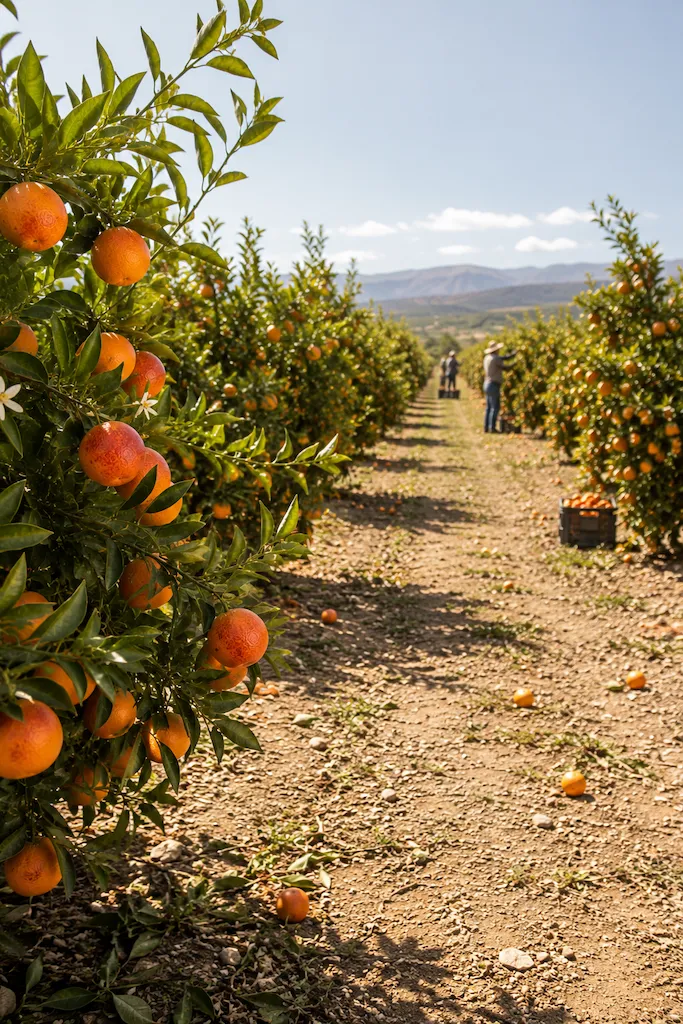
Few fruits capture winter sunshine quite like the blood orange. Unlike the bright orange citrus found in grocery stores year-round, blood oranges arrive with a deeper personality. Their ruby-colored flesh hints at flavors more complex than sweetness alone. Notes of raspberry, cherry, and citrus mingle together, creating a fruit that feels both familiar and unexpected.
The story of the blood orange begins along the Mediterranean. Sicily is perhaps its most famous home, where cool nights and sunny days help create the fruit’s distinctive crimson color. During winter, hillsides surrounding Mount Etna become dotted with groves producing some of the world’s most celebrated blood oranges. Across Spain, Greece, and southern Italy, the fruit has long been woven into seasonal cooking, from simple salads to cakes, preserves, and breakfast tables.
Several varieties are grown throughout the Mediterranean and California. Moro blood oranges are known for their dramatic dark color and rich flavor. Tarocco oranges, often considered among the finest in Sicily, are sweeter and less intensely red. Sanguinello, another Mediterranean favorite, offers a balance between the two.
On the opposite side of the world, California discovered that its climate was equally suited to growing exceptional citrus. From Ventura County to the inland valleys surrounding Riverside, blood oranges thrive beneath winter sunshine and cool evening temperatures. Today, California’s citrus groves produce fruit that feels remarkably at home beside its Mediterranean cousins.
One of the most fascinating things about blood oranges is that they reach their peak season on both shores at nearly the same time. From December through April, groves throughout California and the Mediterranean harvest their most colorful fruit. While much of the landscape feels quiet during winter, citrus trees are reaching their most vibrant moment, filling orchards with brilliant color and the scent of fresh fruit.
Yet the appeal of blood oranges extends beyond geography. There is the fragrance released when the peel is broken—a burst of citrus oils that instantly fills a kitchen. There is the contrast between the jewel-like flesh and a cloudy winter morning. There is the slow ritual of slicing, juicing, tasting, and preserving.
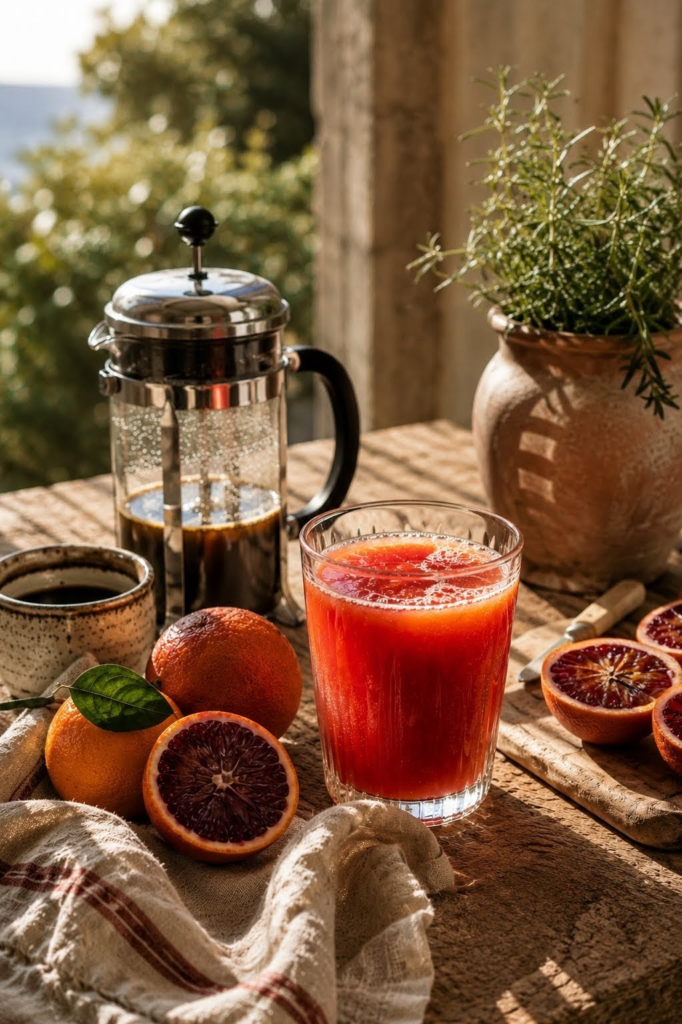
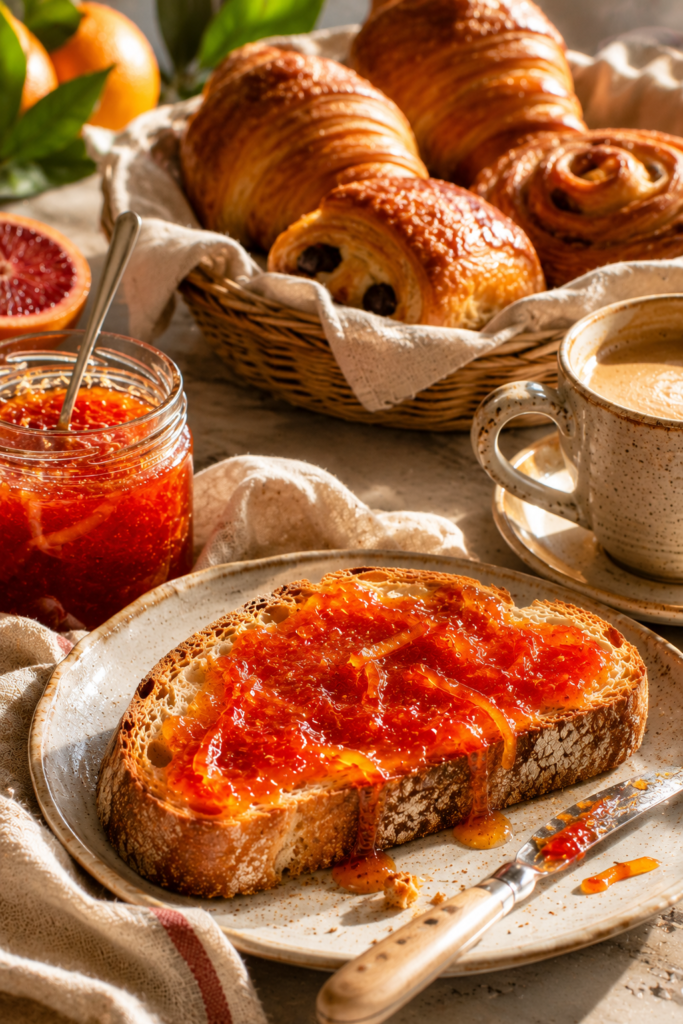
Freshly squeezed blood orange juice has become a cherished winter ritual on both shores. In Mediterranean villages and California kitchens alike, a glass glowing ruby-red in the morning light feels like a small celebration of the season. Perhaps nowhere is this more evident than in blood orange marmalade. A jar of marmalade captures the season itself. The gentle bitterness of the peel balances the sweetness of the fruit, creating a preserve that feels far more sophisticated than ordinary jam. Spread onto warm sourdough, spooned over yogurt, or served alongside morning coffee, it carries the brightness of citrus long after the harvest has ended.
From Sicilian groves overlooking the Mediterranean to California orchards beneath winter sunshine, blood oranges remind us that some flavors belong equally to both shores.
Coastal Kitchen Tip
Blood orange season is relatively short, making it one of the most anticipated citrus harvests of winter. For the fullest sensory experience:
• Look for fruit with deep ruby flesh and a fragrant peel.
• Display a bowl of blood oranges in the kitchen as a seasonal centerpiece.
• Pair blood orange marmalade with warm sourdough, Greek yogurt, ricotta, or flaky breakfast pastries.
• Add slices to sparkling water for a naturally colorful winter drink.
• Preserve the season by making a small batch of marmalade while the fruit is at its peak.
Explore the Recipe
The complete blood orange marmalade recipe can be found in the recipe section of our Pinterest Board →
CONTINUE EXPLORING
Inspired by this story? Continue your journey with Cherries: The Summer Fruit That Never Stays Long →