The distinctly Kefalonian story
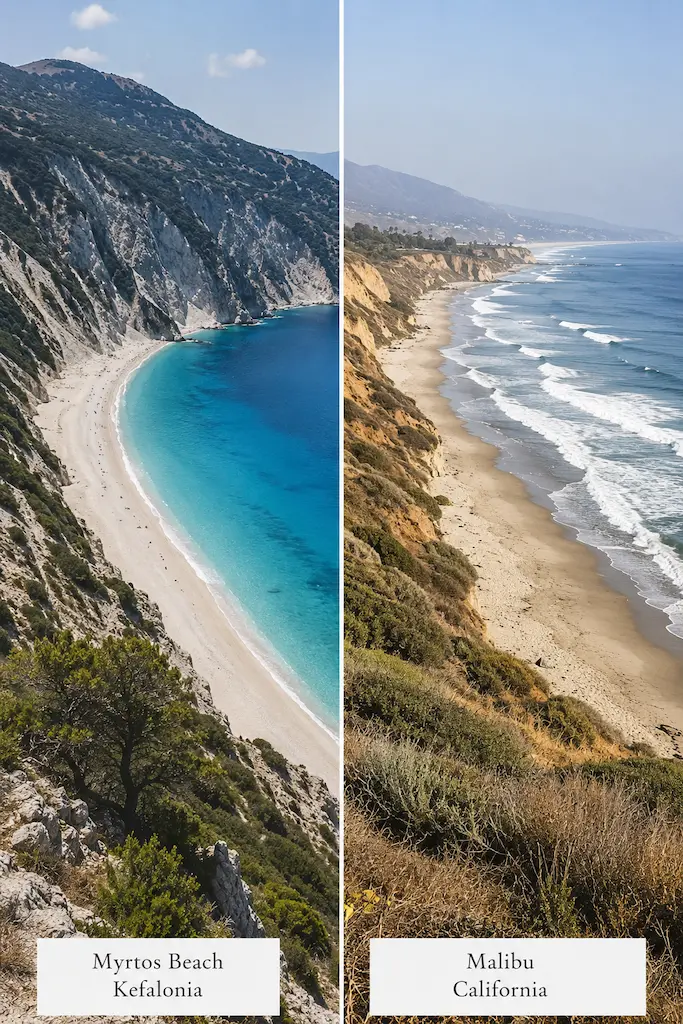
The road bends, the mountain falls away, and the sea suddenly occupies most of the view. Anyone who has travelled California’s more dramatic stretches of coastline knows the temptation to stop at the next proper lookout. Kefalonia, in Greece’s Ionian Islands, produces a similar reaction. The resemblance begins with the way the land meets the water: steep slopes, broad views, and roads that keep revealing how much landscape lies below them.
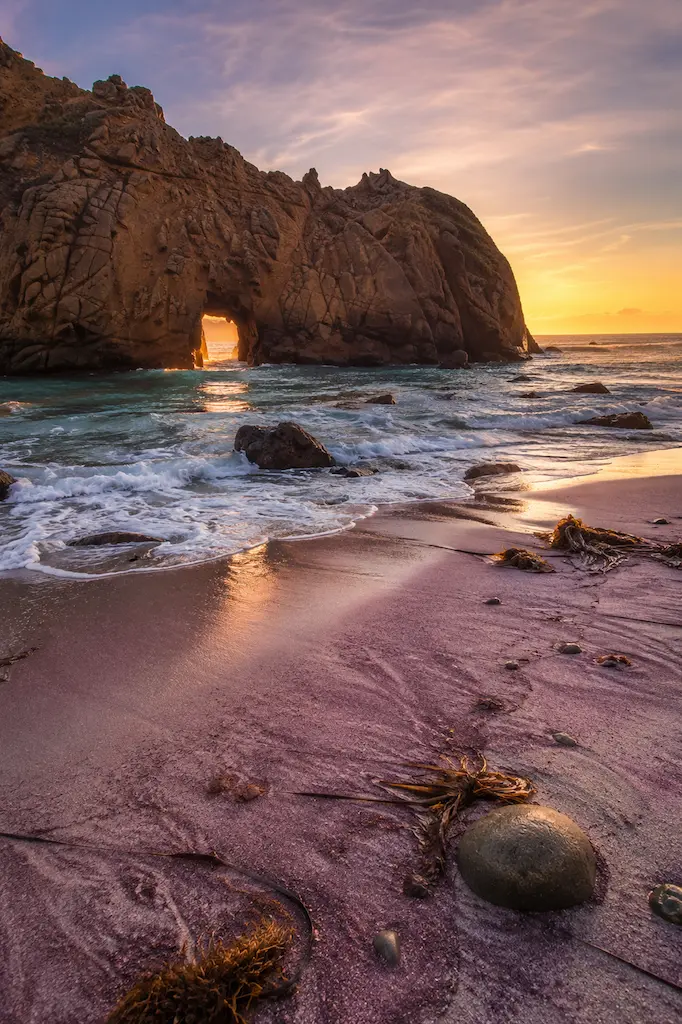
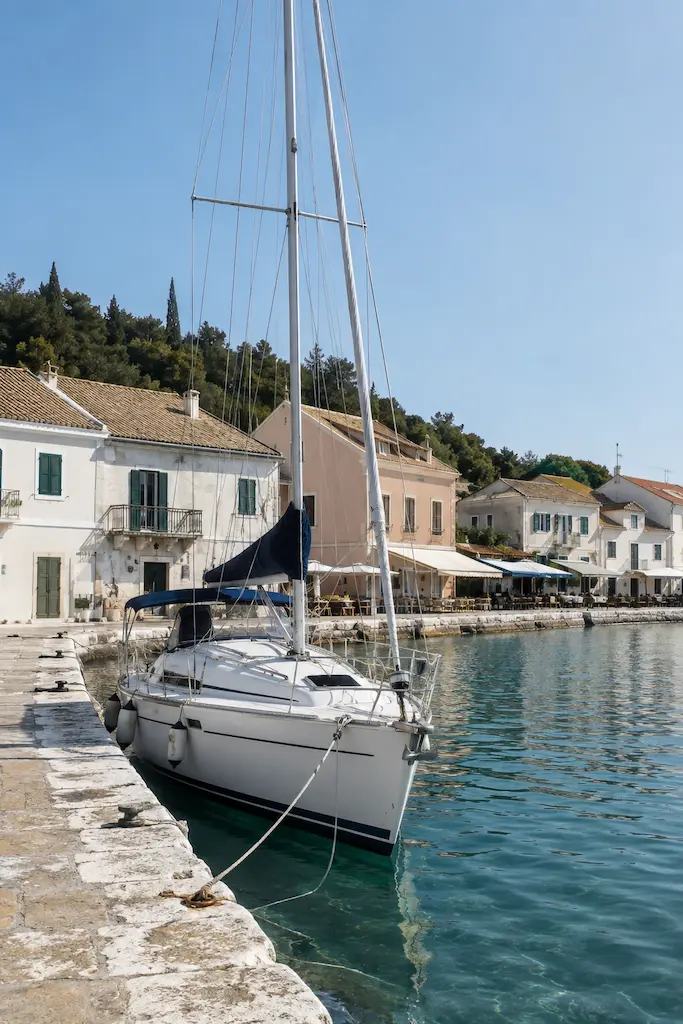
Then the differences come into focus. Pale shores give way to brilliant turquoise. Cypress and olive trees cover the hills. Harbour villages bring ochre, pink, and terracotta into a scene that a simple description of “Greek white and blue” would miss. California offers a useful point of recognition, especially its mountainous coast around Big Sur. Kefalonia supplies the reasons to keep looking.
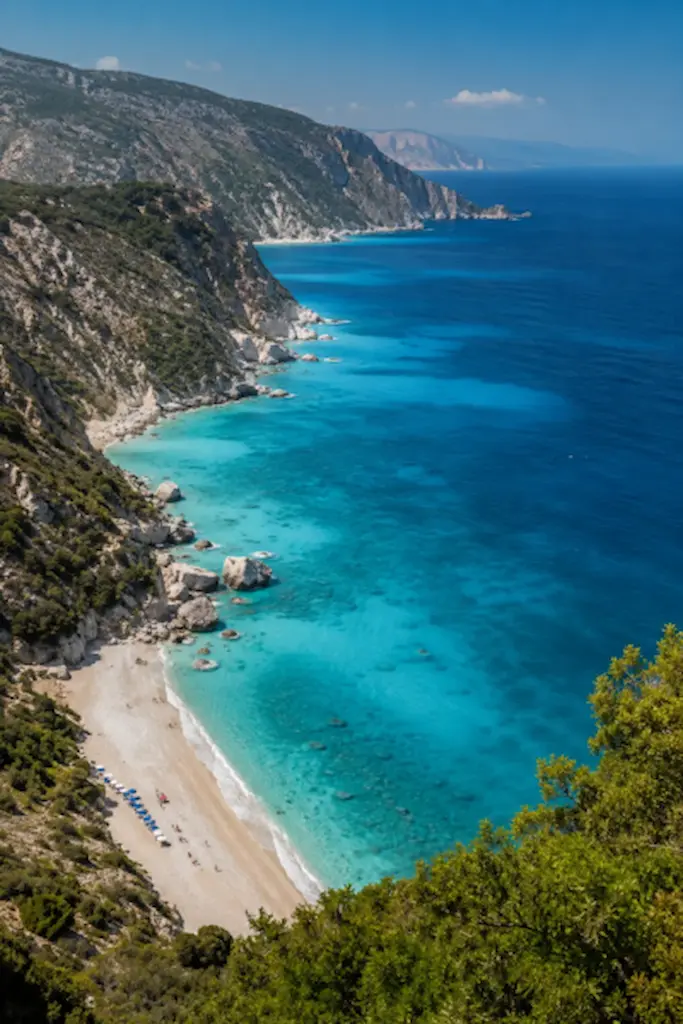
Myrtos is an obvious place to begin. Its pale sweep of beach sits beneath a steep amphitheatre of slopes on the island’s northwestern coast. The local geopark describes a landscape shaped by limestone, faulting, and erosion, with broken rock accumulating below the cliffs. The view has a physical history: the same forces that fractured the rock helped create the dramatic setting now admired from above.
The water deserves its reputation, although “an impossible shade of blue” only gets us so far. Water absorbs more of the red part of sunlight, leaving blue more visible; in clear shallows, light reflected from a pale seabed can contribute to turquoise tones. Depth, suspended material, and lighting change what we see. There is a perfectly respectable explanation for the colour, even if the first photograph still prompts someone to ask whether you adjusted it.
This is also where the California comparison needs some precision. Much of California’s coast is influenced by upwelling, which brings cold, nutrient-rich water toward the surface and supports abundant marine life. The Pacific and the Ionian do not need to match colours to evoke a similar feeling. The resemblance lies in scale and movement: the climb above a bay, the next headland, the road negotiating the slope. A coastal view can feel familiar while the water itself belongs to a different system.
Turn inland and the connection becomes more interesting. Mount Ainos rises to 1,628 metres, with forest dominated by Greek fir. Kefalonia contains a substantial mountain landscape behind its beaches; the island’s identity changes as you leave the waterfront. Big Sur also brings forest and coast into close company, with redwoods growing in places such as Pfeiffer Big Sur State Park. The trees are different, but the pleasure of moving between sea and woodland is recognizable.
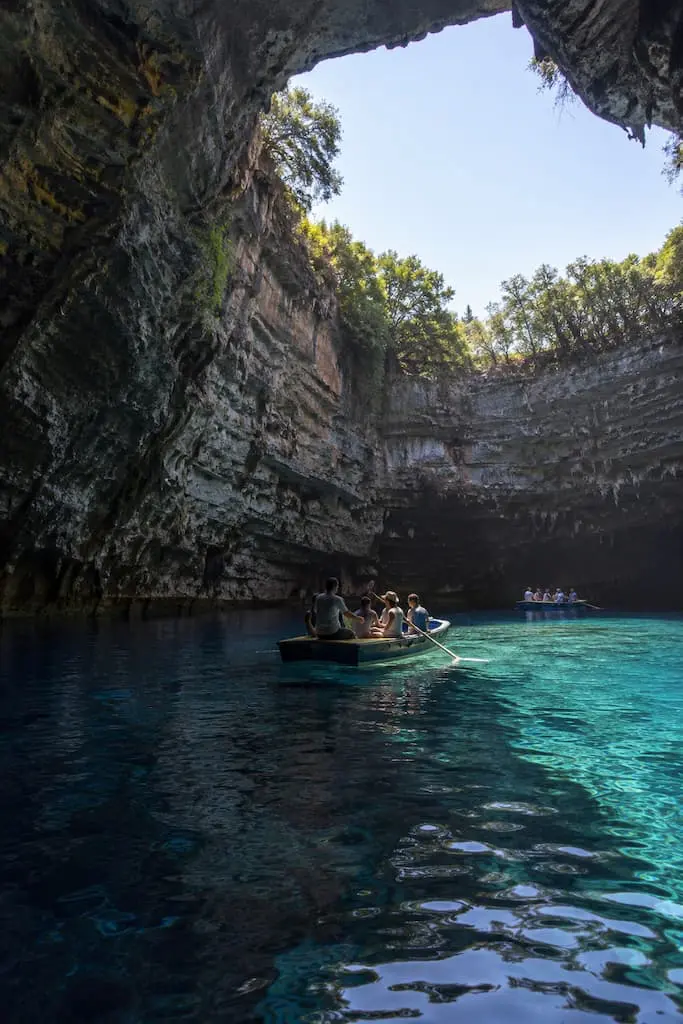
Kefalonia’s landscape continues underground. Near Sami, Melissani is a water-filled limestone cavity with an opening in its roof. Sunlight reaches the lake through that opening, producing the luminous water that makes the boat ride so memorable. The cave belongs to a wider network formed as water dissolves limestone, gradually opening passages through the rock.
The island’s underground plumbing is more surprising than the familiar cave photograph suggests. UNESCO describes a system linking seawater sinkholes near Argostoli on the western side with brackish springs at Karavomilos, about 15 kilometres to the east. Water crosses beneath the landscape, mixing with freshwater along the way. A visit that begins with looking at the sea can become an encounter with an island through which water travels. UNESCO
Its towns have histories just as important as their settings. The devastating earthquakes of 1953 reshaped much of Kefalonia’s built environment. Fiskardo was among the places that largely escaped the destruction and retains older architecture, while Assos has its own harbour setting and Venetian castle. These distinctions matter. Describing everything as timeless would erase the survival, rebuilding, and change that helped make the island visible today.
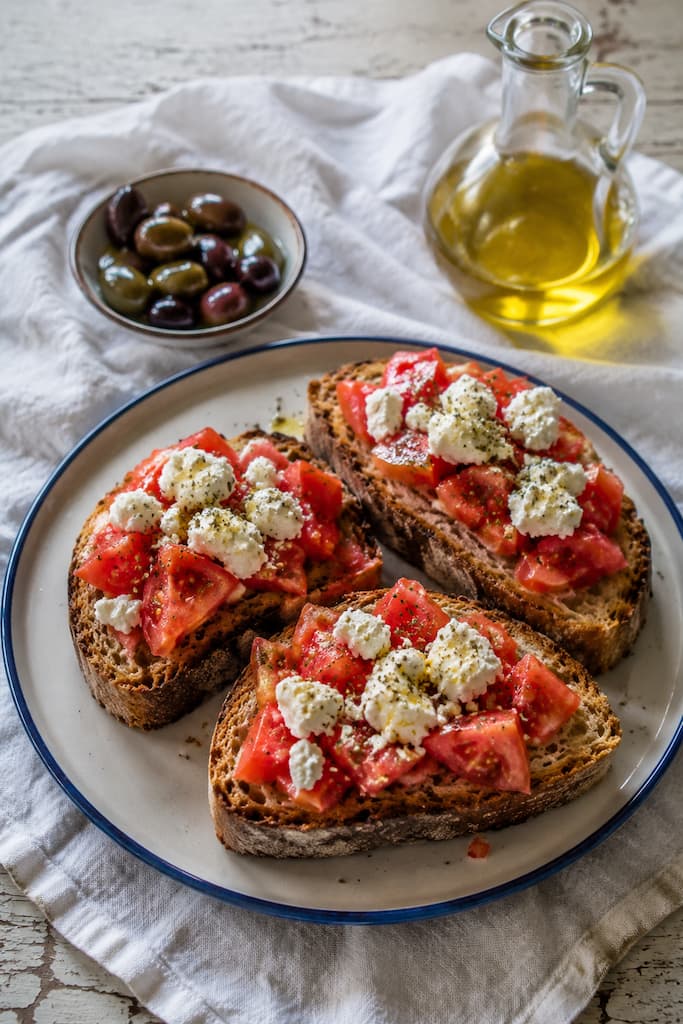
By lunchtime, Kefalonia’s particular character becomes easier to taste. Riganada combines bread with tomato, olive oil, and oregano, sometimes with vinegar and crumbled cheese. Its appeal is immediate: tomato juices soften the bread while the oregano gives the dish its direction. It is a useful reminder that a regional speciality can be something you would happily eat on an ordinary day.
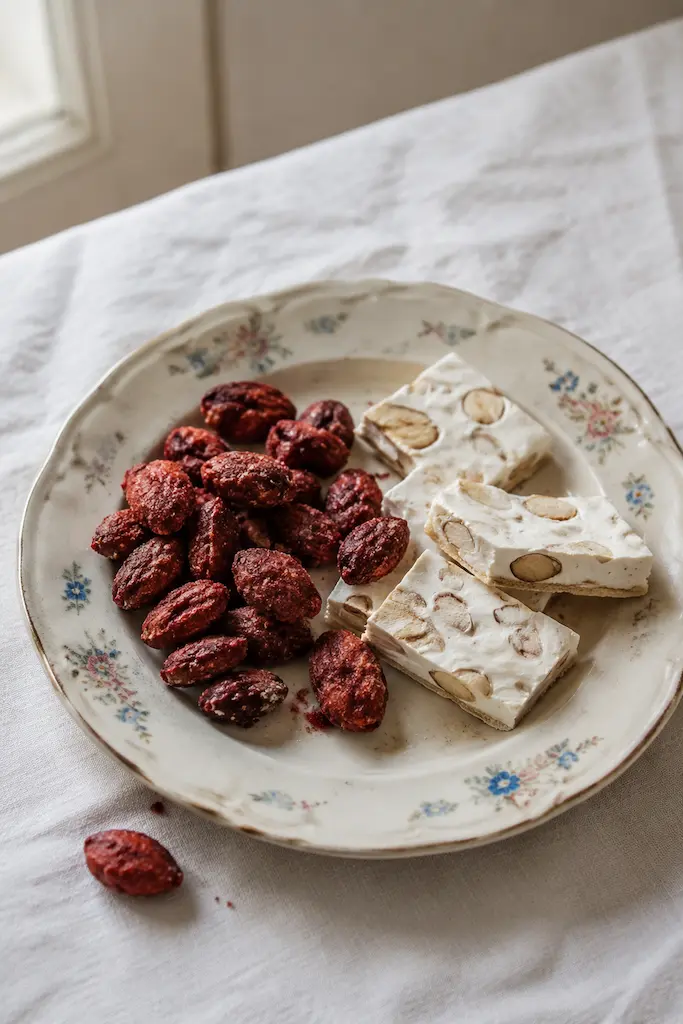
Tsigaridia brings greens and herbs to the table. which combines them with onions, garlic, tomatoes, olive oil, and rice, and associates the dish with spring’s wild greens. Mandoles, the island’s caramelised almonds, and mandolato, its almond nougat, offer a different expression of local tradition. Together, these foods give the island more definition than another general promise of Mediterranean flavor.
The strongest way to experience the island is to let those differences shape the day. Give a mountain walk its own time. Look at a harbour as a place where boats arrive and people work. Leave room for a meal that introduces something unfamiliar. The beach remains part of the attraction, but it becomes one element in a much fuller landscape.
For someone arriving from California, the first connection may be almost instinctive: that particular pleasure of seeing mountains meet the water. What lasts is the discovery that follows—the fir forest above the coast, the water moving through limestone, the town whose buildings survived, the flavour of oregano on bread. A familiar view can persuade you to visit. The details that could belong only to this journey are what give you a reason to remember it.
Travel Notes
Where to Stay: Wilderness Whisperings, Kefalonia →
Perched above the Ionian Sea, Wilderness Whisperings captures the relaxed spirit of the island. Natural materials, open views, and seamless indoor-outdoor living create a setting that feels surprisingly familiar to anyone who loves California coastal design. Mornings begin with mountain views and soft Mediterranean light, while evenings end overlooking the sea.
What to See
- Assos, a colorful harbor village framed by turquoise water and mountains.
- Myrtos Beach, famous for some of the most remarkable shades of blue in the Mediterranean.
- Melissani Cave, where sunlight transforms the underground lake into a glowing natural wonder.
- The island’s coastal roads, where nearly every turn reveals another view of the Ionian Sea.
What to Taste
- Riganada — local-style bread topped with olive oil, tomatoes, feta, and oregano.
- Tsigaridia — wild greens and vegetables cooked with tomato and spices.
- Mandoles — traditional caramelized almonds.
- Mandolato — a honey and almond nougat that has been enjoyed on the island for generations.
What to Smell
Sea air drifting through the harbors, wild oregano growing on the hillsides, olive groves warmed by the afternoon sun, and the scent of tomatoes and herbs arriving from waterfront kitchens.
What to Feel
The warmth of stone beneath your feet, the breeze coming off the Ionian Sea, long lunches that stretch into the afternoon, and the quiet reminder that some of the most memorable destinations are the ones that encourage you to slow down and simply look at the water.
Best Sensory Experience
Standing above the coastline and watching the colors of the Ionian Sea change throughout the day. The blues are not a single color but an entire palette—one that makes Kefalonia unforgettable.
Official Kefalonia Tourism: Visit Kefalonia Island →
CONTINUE EXPLORING
Inspired by this story? Continue your journey with FRANCE | Experience Marseille Through Your Senses→