The Answer Has Very Little To Do With Fashion

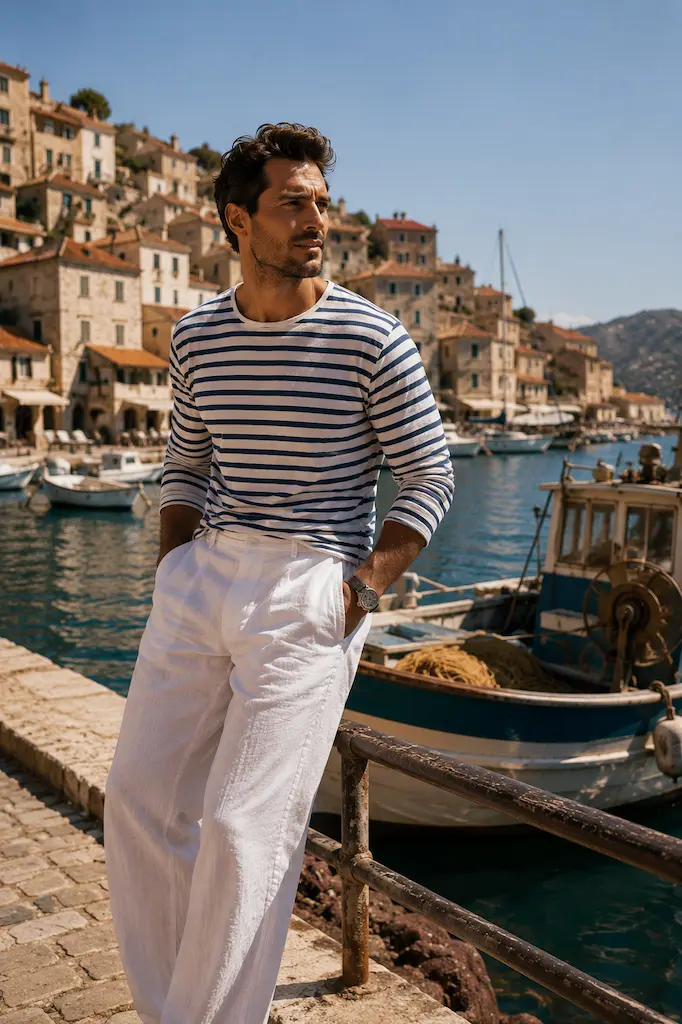
There is something wonderfully predictable about coastal towns. Visit enough of them and you’ll begin to notice that, although they speak different languages and serve different seafood, they quietly agree on a lot of things. One of them is stripes… white and blue, sometimes red and white, but always stripes… Breton stripes.
There are already hundreds of articles explaining Breton stripes. They’ll tell you about French sailors, Coco Chanel, Pablo Picasso, and why navy-and-white stripes became one of fashion’s most recognizable patterns. They’re fascinating stories, and thankfully, they’re already written. So, we’re not going to invent something new or repeat the same stories. What we really want an answer to is why so many coastal towns never stopped wearing Breton stripes in the first place.
Maybe the answer has very little to do with fashion.
The coast is surprisingly conservative, while big cities love novelty. Every season promises a new silhouette, a different color palette, or the reassuring announcement that something you already own is suddenly back in style. Coastal towns don’t seem nearly as interested in that conversation. They tend to keep the things that work, the things that become more comfortable and familiar over time. The striped shirt has survived generations without needing an update. It simply never went out of style.
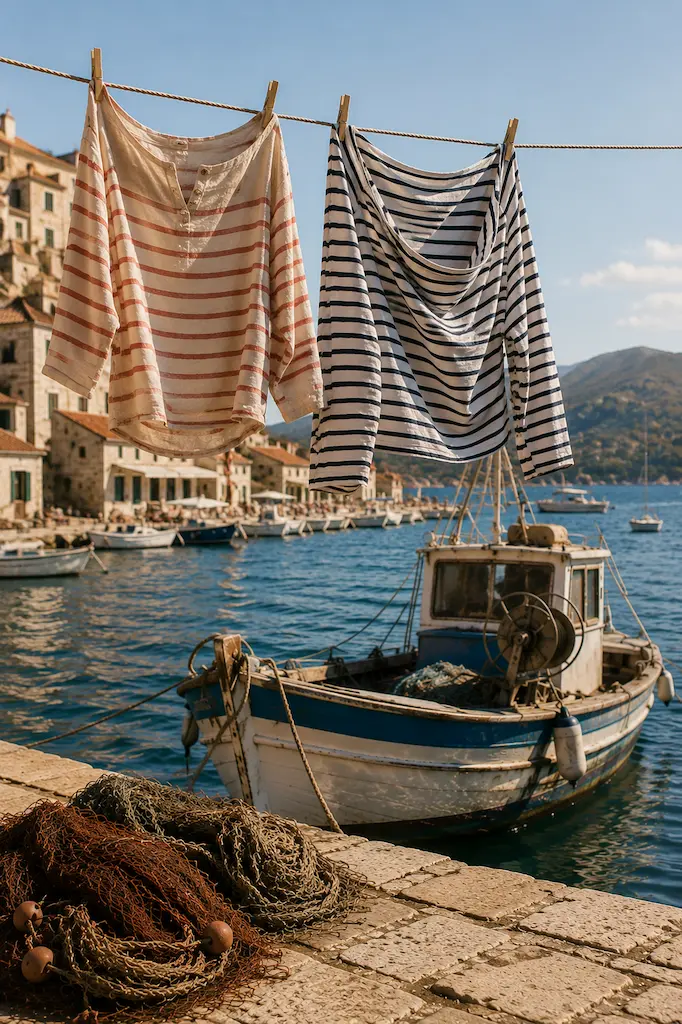

However, you’ve likely already read somewhere that the Breton shirt was born out of necessity rather than style. Along the coast of Brittany, fishermen and later French sailors needed clothing that could withstand wind, salt, and long days on the water. It was practical, comfortable, and easy to move in. More importantly, it solved several problems, including making a sailor easier to spot if he fell overboard. So the stripes never really left the coast.
Spend enough time by the sea and you begin to notice that clothing is often chosen by the landscape as much as by the wardrobe. A linen shirt makes sense because afternoons are warm and evenings are cool. Espadrilles feel appropriate because stone streets and sandy paths don’t demand polished shoes. Canvas totes are the perfect choice for carrying vegetables home from the market. And then there is the Breton shirt. It layers easily on breezy mornings with a navy sweater and jeans, feels comfortable because it’s made from cotton, and looks equally natural on a sailboat, at a harbor café, or wandering through a Saturday market. It isn’t dressed for the coast. It was shaped by it.
There may also be another explanation. Coastal towns wear Breton stripes long before anyone puts one on. White sails drift across blue water. Rope coils around weathered wooden docks. Navy shutters frame whitewashed walls. Fishing nets, striped deckchairs, awnings, and umbrellas repeat the same simple rhythm without anyone planning it. Suddenly blue and white become part of nature. Maybe that’s why the shirt never feels like an outfit by the sea. It feels like another detail in the landscape, as though someone simply borrowed the colors that were already there.


It’s easy to think the Breton shirt became popular because designers discovered it. In reality, designers noticed something coastal communities had never abandoned. Coco Chanel recognized its effortless simplicity. Artists appreciated that it never distracted from the person wearing it, just ask Picasso. Photographers loved how naturally it belonged beside the sea. Celebrities everywhere and fashion designers celebrated the Breton shirt. While the coastal comunities just simply kept wearing it. There is the difference.
Maybe every coastline quietly edits the world of materialism. Over time, unnecessary things fall away while the useful, beautiful, and enduring remain. Linen survives because it’s durable. Woven baskets survive because they’re useful. Espadrilles remain because they’re comfortable. Straw hats continue to protect from the sun. And Breton stripes seem to work effortlessly with all of them. Not because anyone decided they should become a coastal classic, but because they continue to make sense wherever life follows the tide instead of the clock.
And maybe we finally found the answer to why coastal towns never stopped wearing Breton stripes. They were never holding onto a trend. They were holding onto a way of life.
Did you know?
More than 150 years after the Breton shirt became part of the French Navy’s uniform, historic manufacturers such as Saint James continue to make traditional Breton shirts in Brittany, France.
Visit the Royal Museums Greenwich‘s history if you want to learn more about the history behind the Breton shirt.
CONTINUE EXPLORING
This article is part of our The Coastal Classic series. Every coastline has a way of editing our world of endless choices, quietly keeping the things that prove their worth over time. In The Coastal Classic, we explore the timeless garments, materials, and everyday objects that continue to shape life by the sea.
Inspired by this story? Continue your journey with: