The Venetian Craft That Refused to Stay in the Sewing Box
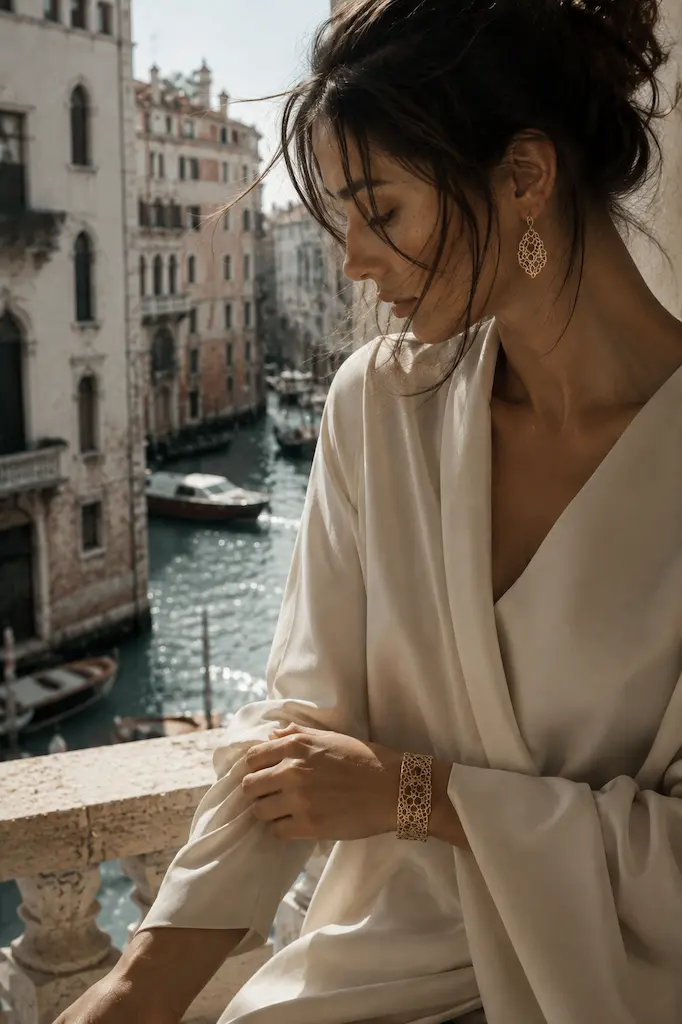
At first, the diamonds get your attention. Then you realize they may be the least remarkable thing in the room. In Buccellati’s new Serenissima high-jewelry collection, sheets of gold have been pierced, engraved, articulated and worked until metal begins behaving like something it absolutely is not: lace. White gold becomes an open honeycomb through which skin can be seen. Yellow gold curls into tiny garlands. Diamonds sit within structures so delicate that the eye stops registering weight and starts noticing light. And inevitably comes the question: how on earth did somebody make gold do that?
Buccellati has a fairly literal answer. Goldsmiths work thin sheets of precious metal with hand-held saws, gradually refining individual openings in the house’s celebrated “Honeycomb” technique. In the San Giorgio pieces, the house uses a technique it simply calls “Lace”; elsewhere, rigato engraving covers gold with minute parallel lines that soften its reflection and give it something approaching the sheen of textile. The Lido pieces use openwork honeycomb surrounded by engraved surfaces, while the Serenissima parure itself carves an elaborate network from white gold and sets naturalistic leaves and garlands with diamonds. This is not jewelry trying to look expensive. That problem was settled the moment somebody mentioned white gold and diamonds.
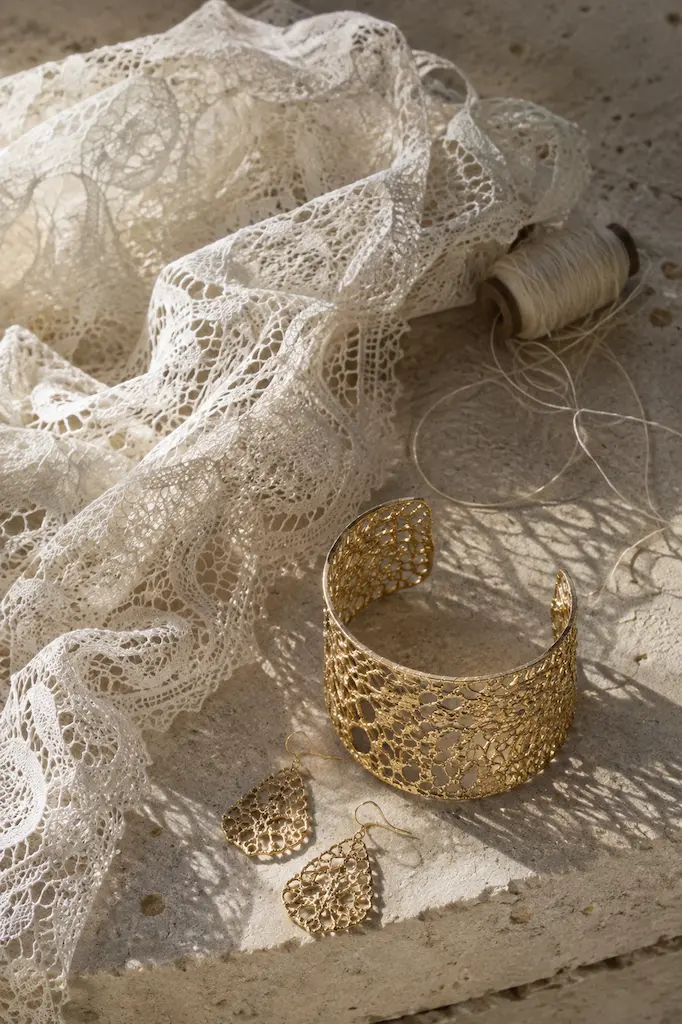
The extraordinary part is the labor spent making expensive material appear almost weightless. And that makes Serenissima particularly interesting now, because jewelry in 2026 is having a rather serious flirtation with things that once belonged somewhere else entirely. Thread. Rope. Cord. Beads. Tassels. Knots. Textile textures. Sculptural surfaces. Materials and techniques that traditional fine jewelry politely left to the dressmaker, craft table or hardware drawer have wandered into fashion’s jewelry box.
At Matthieu Blazy’s first Chanel collection, metals appeared alongside yarn and thread. Vogue grouped this broader Spring 2026 direction under “Mixed Messaging”: polished metal and stones meeting materials such as wood, yarn and rope. Elsewhere on the runways, jewelry was stacked, beaded, transparent, oversized, flattened or transformed into objects whose relationship with conventional jewelry was becoming pleasantly difficult to explain.
By summer, Harper’s Bazaar was pointing to long cord necklaces, thread-fringed tassels and refined versions of crafty beadwork, while ELLE identified bold sculptural forms as one of the season’s important jewelry directions—pieces occupying that increasingly fuzzy territory between ornament and wearable art.
Something is happening here. Jewelry is becoming less interested in simply displaying valuable material and more interested in what can be done to material. A gemstone can still be magnificent. Obviously. Civilization is probably not about to lose interest in diamonds before lunch. But the conversation around jewelry is widening from What is it made from? to What did somebody have to know in order to make it? That distinction matters. It matters particularly with Serenissima.
Buccellati unveiled the collection as a tribute to Venice, and its name deliberately recalls the Venetian Republic: La Serenissima. The individual groups carry names familiar from the lagoon—Torcello, San Giorgio, Giudecca and Lido—and the house explicitly connects its openwork gold to the needle-lace tradition of Burano. Buccellati says the collection seeks the qualities of Venetian lace itself: lightness, transparency and flexibility. This could very easily have become the sort of luxury collection in which Venice functions as atmospheric shorthand: a canal, a palazzo, perhaps a strategically positioned gondola and we are apparently done.
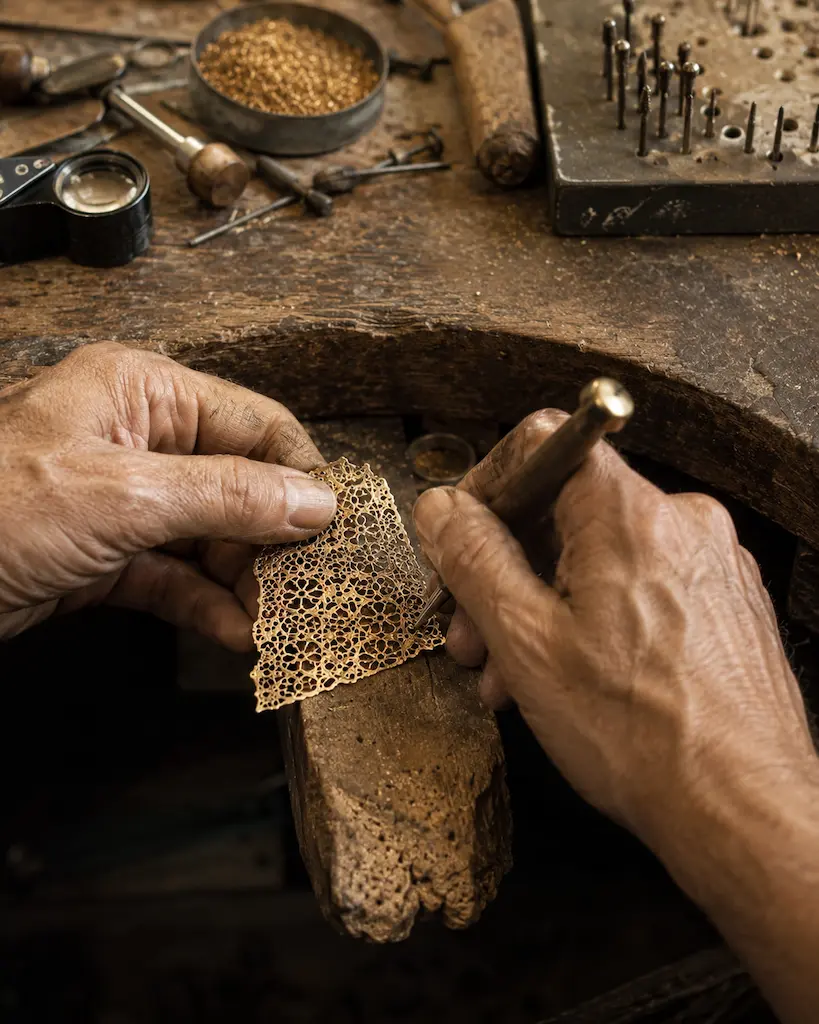
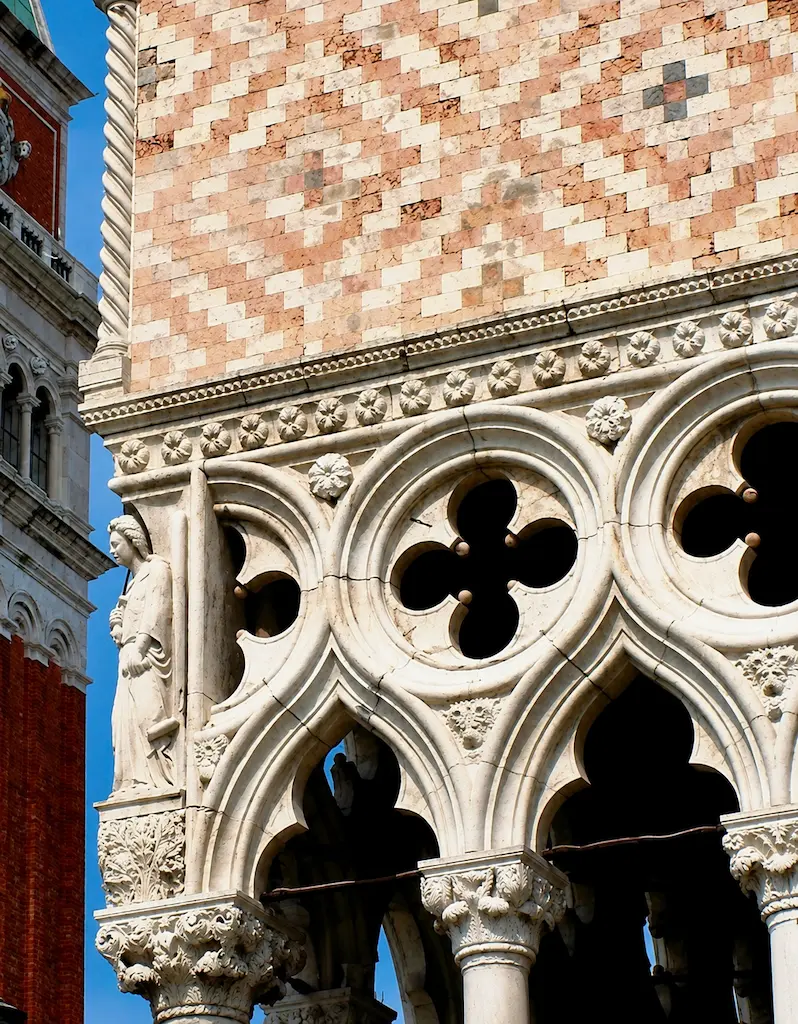
Serenissima is more interesting because Venice is embedded in the technique. To understand why, only a little history is required. Venetian needle lace developed an extraordinary relationship with empty space. In punto in aria—“stitches in the air”—the design was no longer dependent upon a woven fabric underneath it. The lacemaker could construct the pattern through thread and stitch, creating a textile whose structure was built around the spaces left open.
That is enough history for now. Because look again at the jewelry. The goldsmith is confronting essentially the same visual problem from the opposite direction. The lacemaker begins with thread and constructs a surface around air. The goldsmith begins with a surface and patiently removes it until air becomes part of the design. One builds the lace. The other cuts the lace free. Suddenly the resemblance between Burano and Buccellati is more than decorative inspiration. It is a shared way of thinking. Solid and void. Repetition and interruption. Surface and transparency. A material strong enough to hold its structure yet visually delicate enough to appear almost impossible.

Perfect symmetry can be produced by machine. Identical objects can arrive by the thousand. Images can be polished until surfaces cease to possess fingerprints, accidents or evidence of labor. The handmade object offers the opposite luxury. It contains difficulty. Serenissima takes that idea almost to absurdity. From a normal viewing distance, you see a necklace. Move closer and the object breaks apart into hundreds of decisions: openings, cuts, engraved lines, polished spheres, settings, tiny leaves and structural connections. It is not merely decorated. It is constructed through accumulation of microscopic acts. That may also explain why lace is such an intelligent reference for contemporary jewelry.
Lace has never depended upon sheer quantity of material for its effect. Its visual richness comes from manipulation. A relatively simple thread can become extraordinarily valuable because somebody knows how to persuade it into a structure most of us would abandon after approximately seven minutes.
Gold lace simply raises the stakes. And Venice understands this peculiar form of luxury unusually well. The city’s greatest decorative traditions have repeatedly taken difficult materials and made them appear improbable. Stone becomes filigree across Gothic façades. Glass becomes impossibly thin. Marble is cut and assembled into patterned surfaces. Mosaics dissolve architecture into light. Burano lace turns thread into an intricate structure held together by astonishingly small gestures.
The common denominator is not excess. It is transformation. That distinction is important because Venice is too often reduced to decoration now. We borrow its colors, mirrors, velvets, chandeliers, masks and gilding and call the result “Venetian,” as though the city’s contribution to design were simply an especially successful mood board. But the deeper Venetian lesson is about skill. How do you make something hard look soft? How do you make something heavy appear light? How do you turn ordinary material into something people cannot immediately understand how to make? Those questions feel unexpectedly current in a jewelry world rediscovering thread, cords, handmade beads, sculptural metal and visible craft.
And they make Serenissima far more interesting than another beautiful high-jewelry collection. The diamonds are beautiful. The gold is precious. But the real luxury is the human knowledge hiding between them. So how do you make gold look like lace? You cut. You engrave. You polish. You repeat. You learn where the metal can disappear without the structure disappearing with it. And eventually, if you are very, very good at it, the viewer forgets that they are looking at a solid sheet of precious metal at all. Which may be the highest compliment craftsmanship can receive. The gold was valuable before the goldsmith touched it. The art is what happened next.
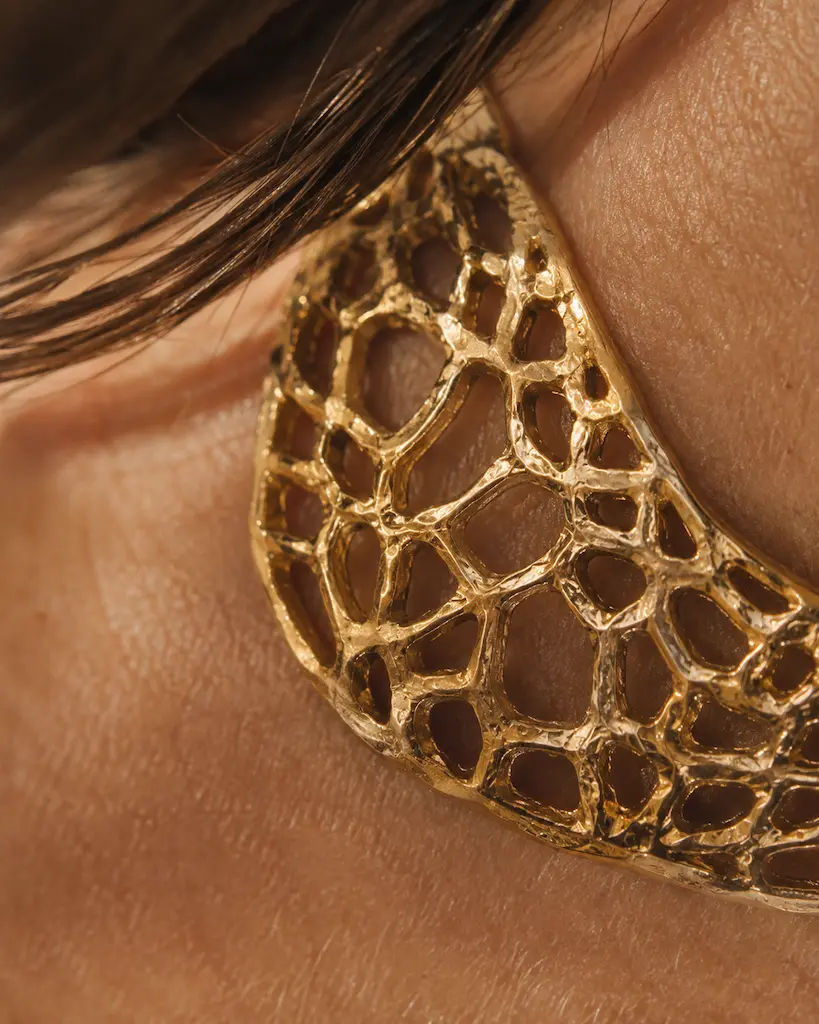
There is also something wonderfully contrary about the whole exercise. Gold is one of the materials humans have spent thousands of years valuing precisely because it is material. We weigh it. Measure it. Guard it. Store it. Attach numbers to it. Buccellati takes a sheet of the stuff and starts cutting holes into it. A lot of holes. In another context this might look financially irresponsible. Here it is craftsmanship.
And in 2026, even that joke comes with an interesting footnote. Gold prices have risen dramatically, forcing parts of the jewelry industry to reconsider how much precious metal pieces contain and encouraging experiments with silver, lower-karat gold, gemstones and alternative materials. At the Couture jewelry show in Las Vegas this year, designers responded to high gold costs with cords, beads, stones and found objects; Vogue has separately reported on demi-fine brands adapting their materials and production as gold became increasingly expensive.
Serenissima, of course, is high jewelry. Nobody is laboriously sawing Buccellati gold because the accounting department suggested an economical perforation strategy. Quite the opposite. The collection demonstrates another way value can operate when the raw material is already precious: craftsmanship becomes the multiplier. If we value a jewel only according to how much gold or how many diamonds it contains, Serenissima makes very little sense. The artisan is removing material, engraving surfaces people may barely notice, refining individual cells, connecting elements so that rigid metal can settle more naturally against skin. But if value includes difficulty, knowledge, time, hand control and the preservation of techniques that machines cannot simply imitate convincingly, the holes are suddenly worth something too.
That idea extends well beyond Buccellati. Across jewelry now, there is a renewed fascination with surfaces that reveal the maker’s hand. Hammering, engraving, irregular casting, braiding, threading, cord work and other visibly tactile techniques are competing with the polished perfection luxury once pursued almost automatically. Even when the materials themselves are humble, the attraction is frequently the same: we want to see that something happened to them. May be this is partly a reaction to a world in which manufactured perfection has become incredibly easy.
CONTINUE EXPLORING
Inspired by this story? The story continues. Here is your next read Whatever Happened to the High Heel? →