Designing with Light
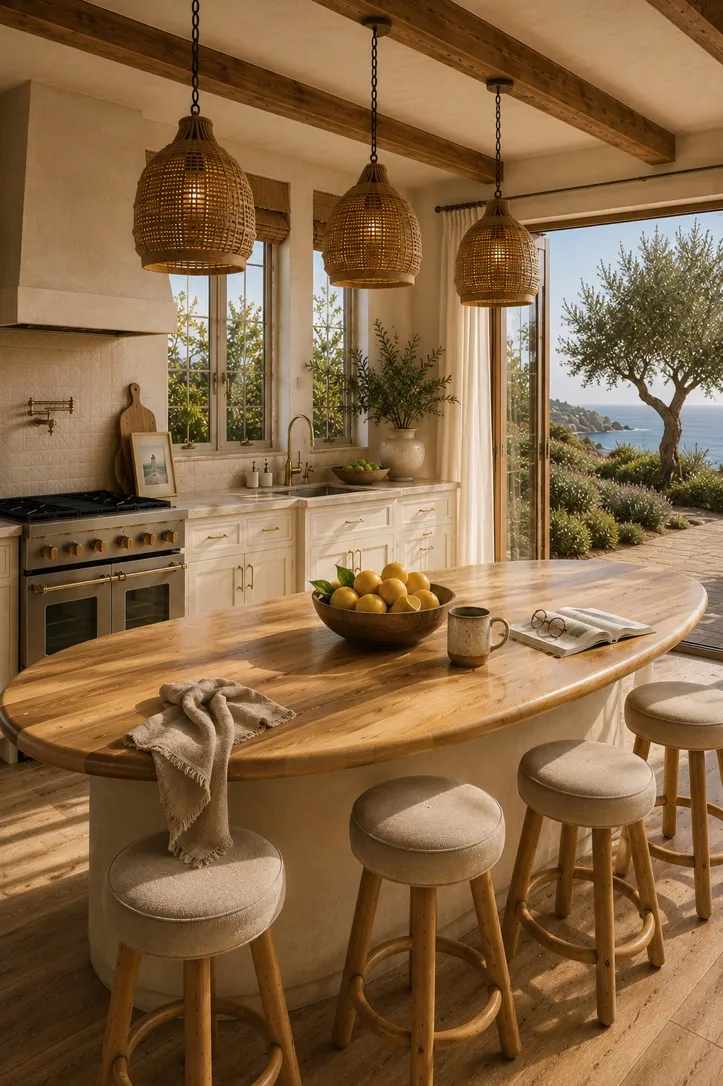
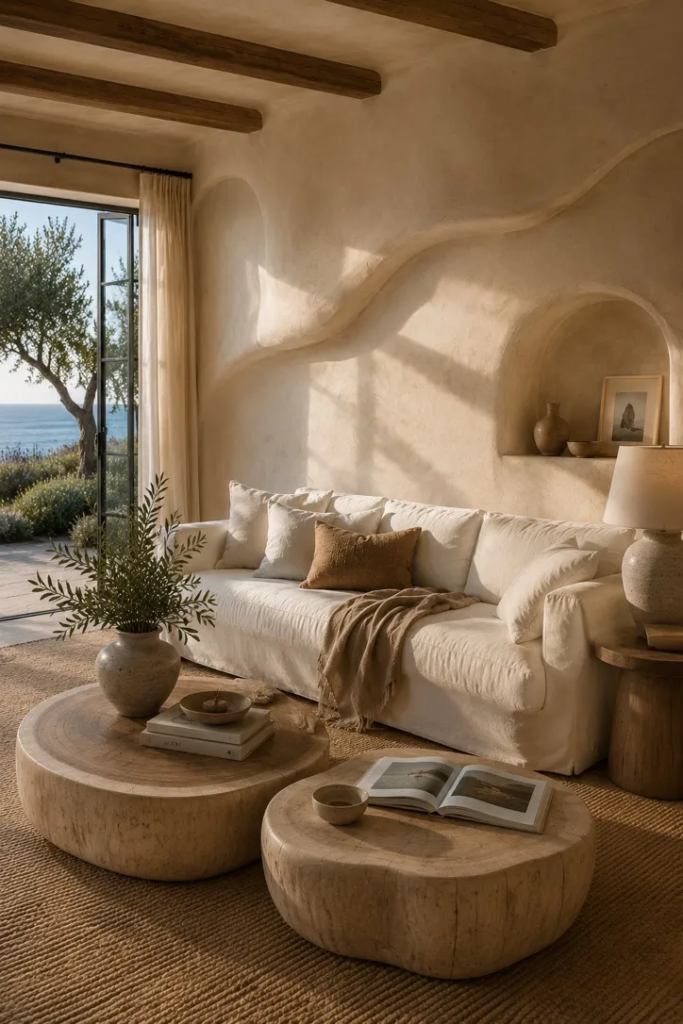
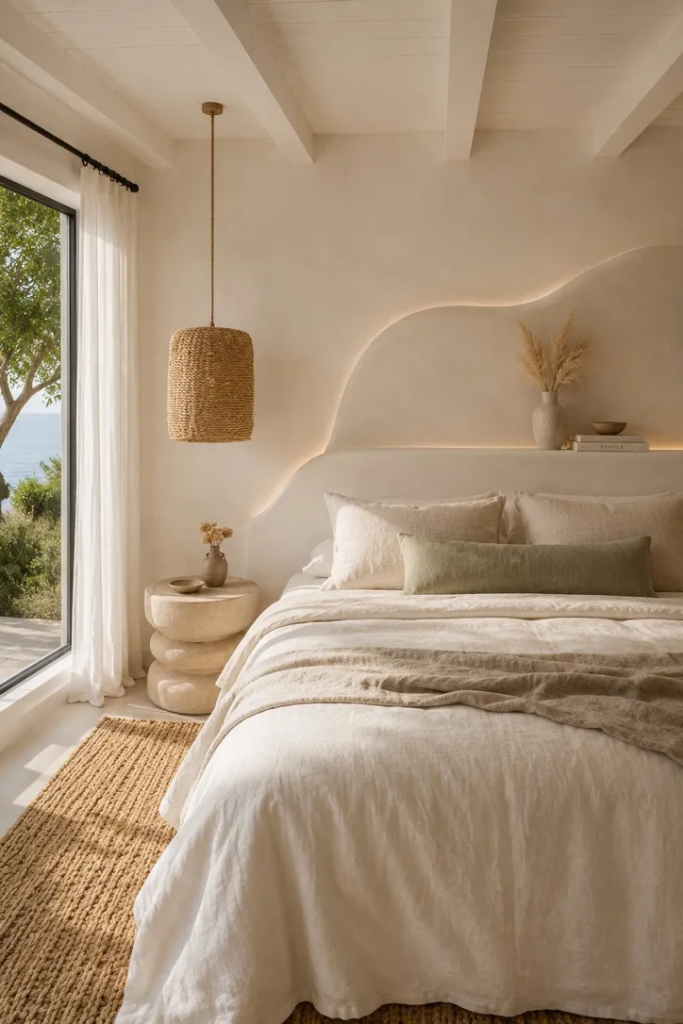
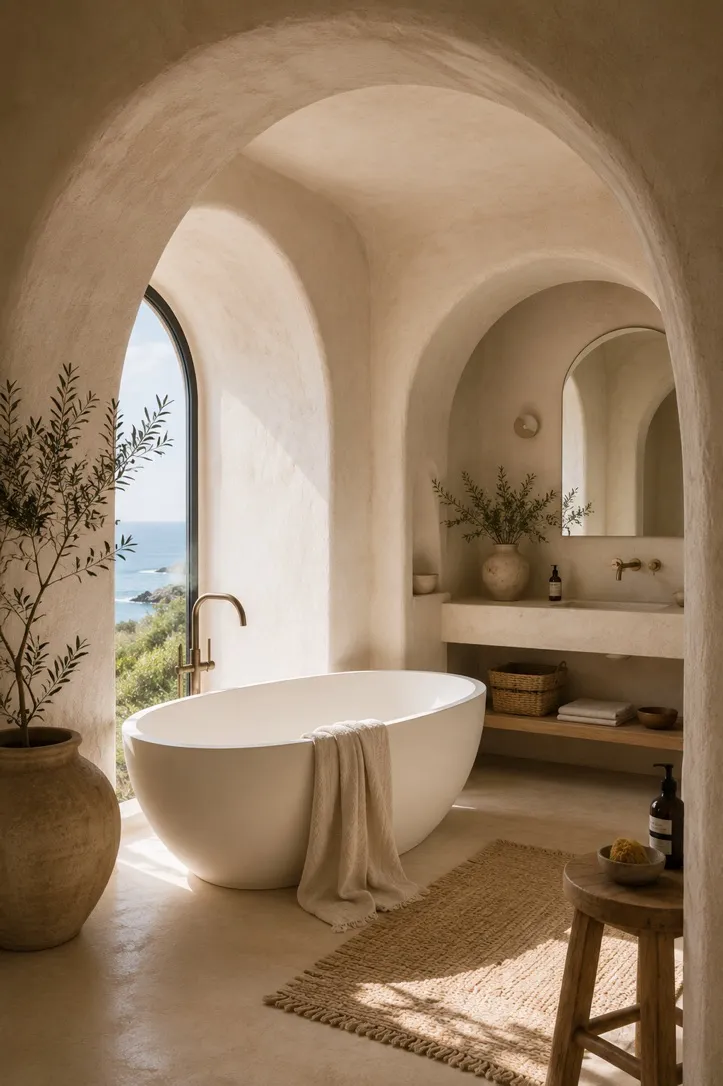
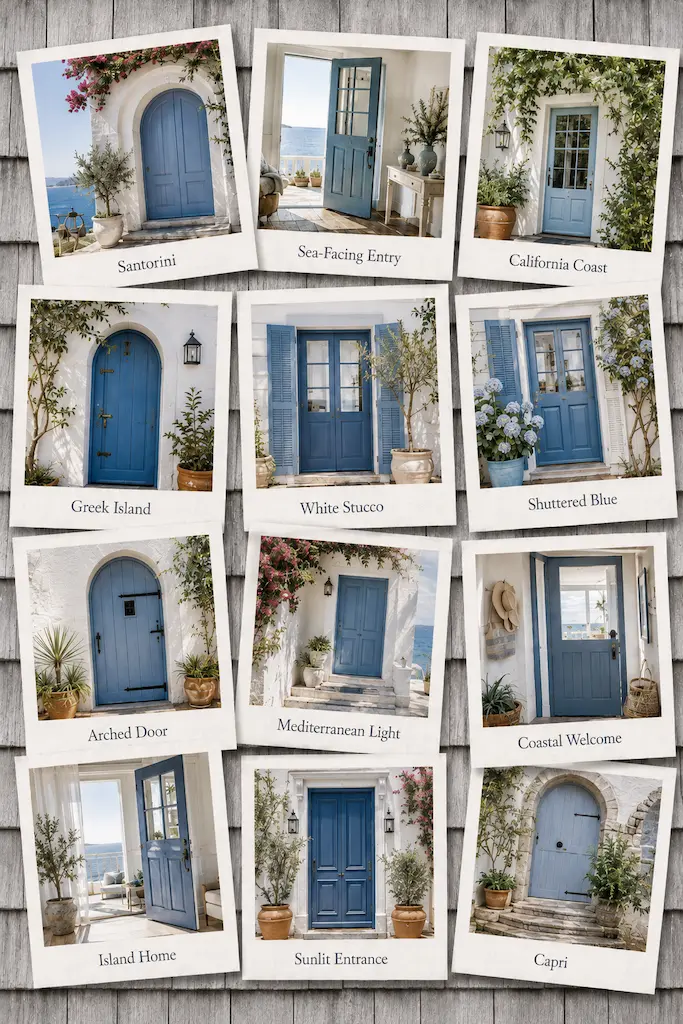
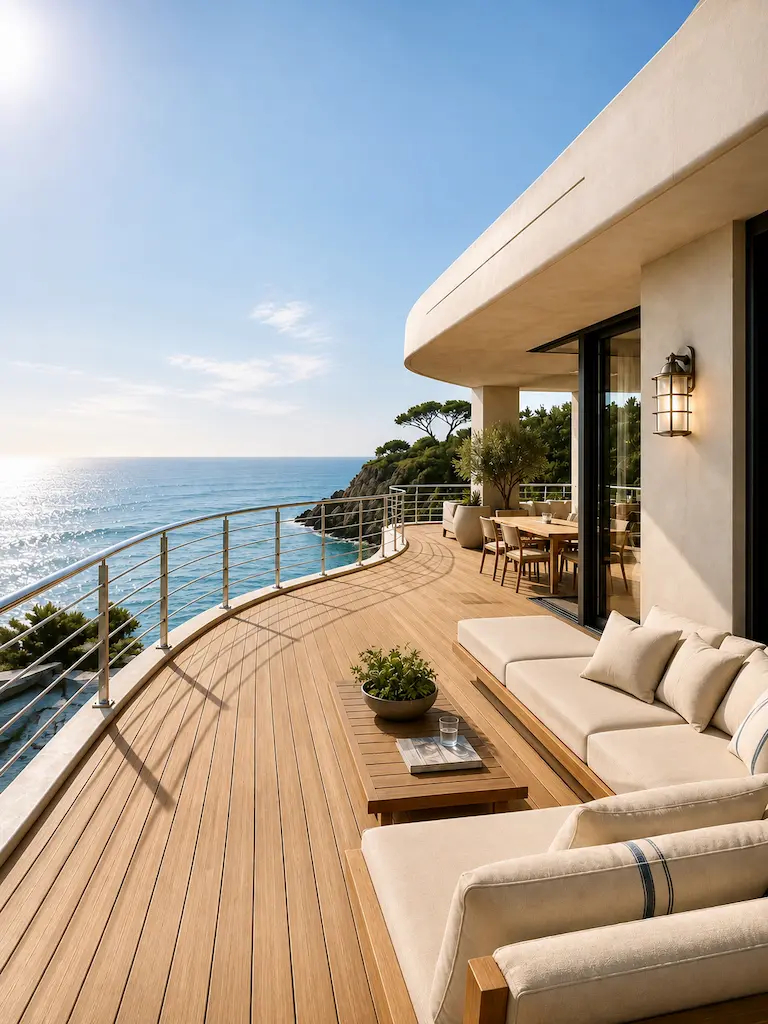
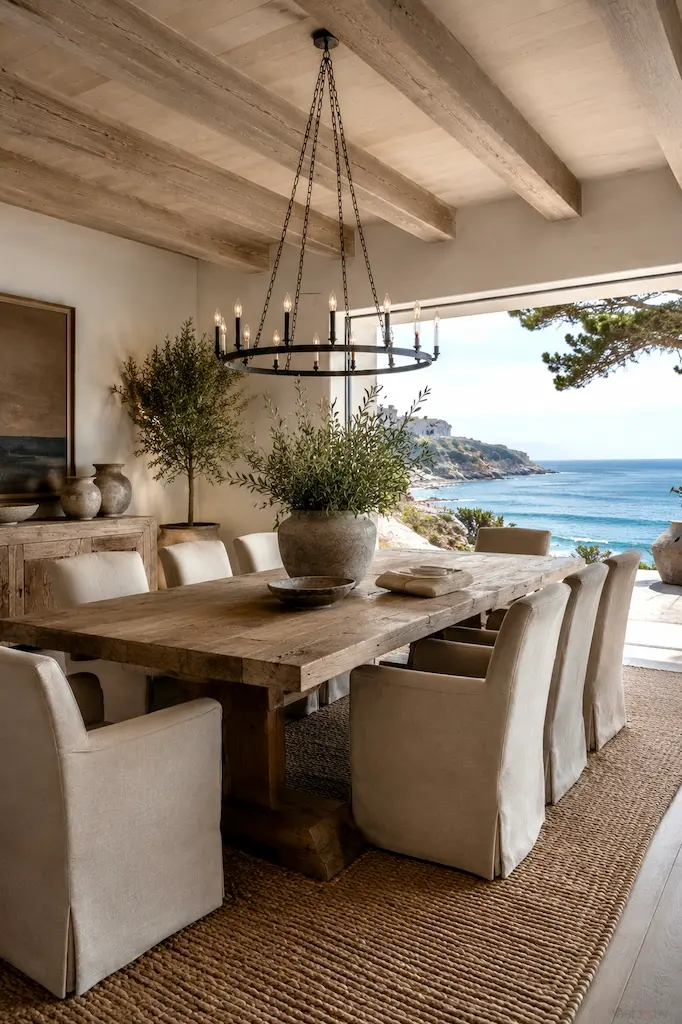
The same is true of light. Mediterranean homes have always understood that light is a design material, not simply something that enters through a window. It reflects from pale stone, filters beneath pergolas, moves across textured plaster, and changes every room throughout the day. California homes embrace that same philosophy. Expansive windows frame the ocean, soft linen curtains diffuse afternoon sunshine, and natural materials reveal different personalities from morning until dusk. Great coastal homes don’t compete with light. They give it something beautiful to play with.
Designing Like the Coast
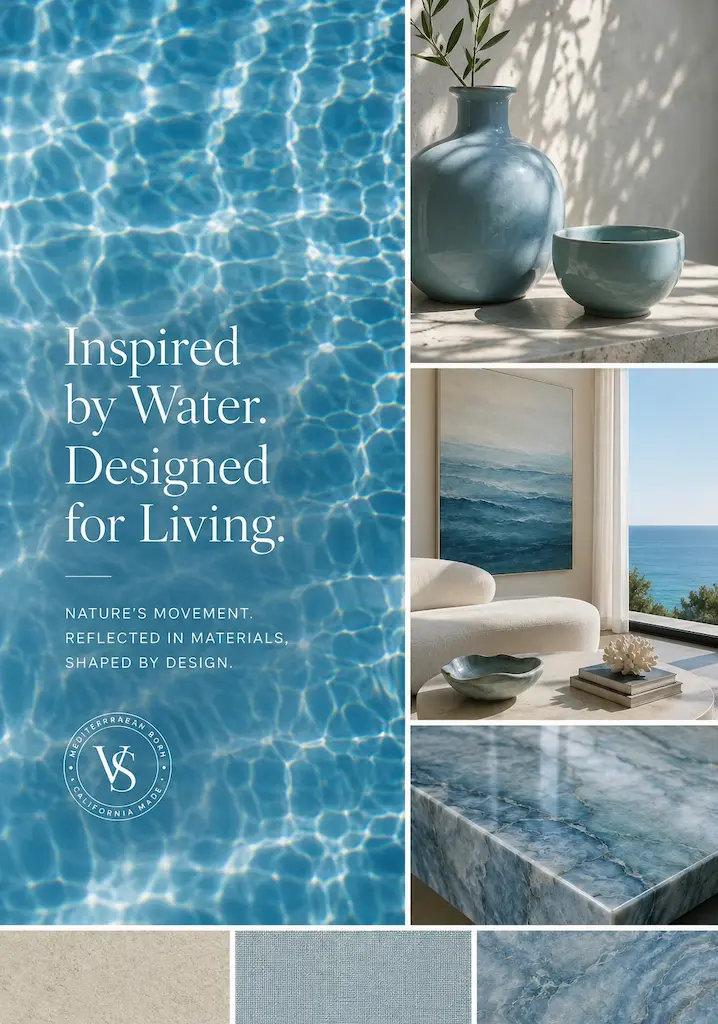
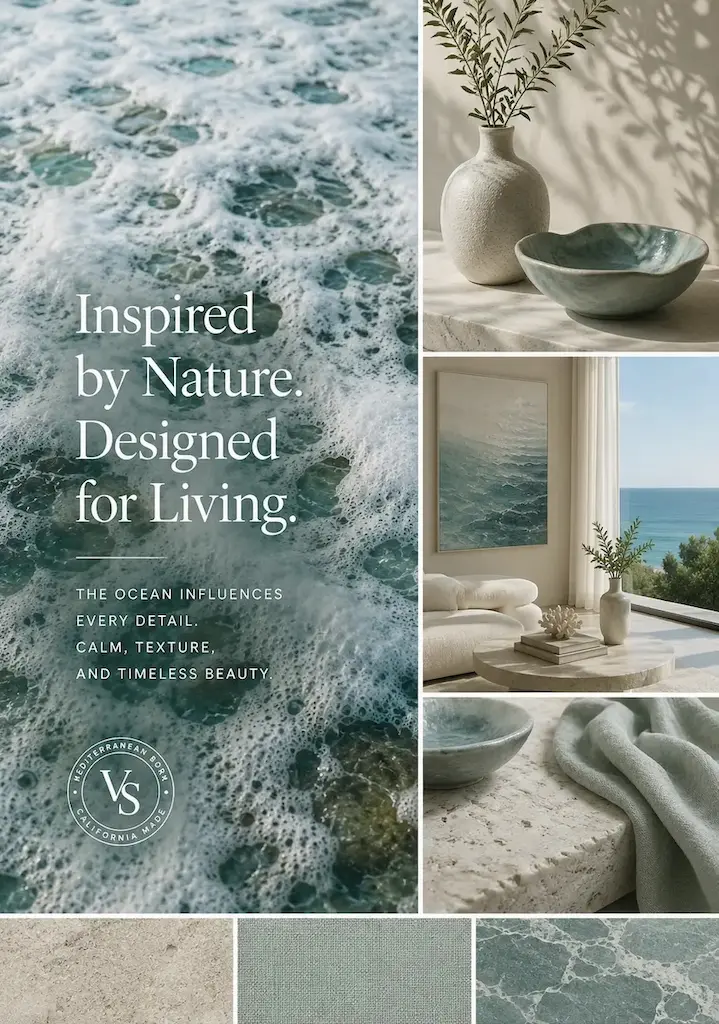
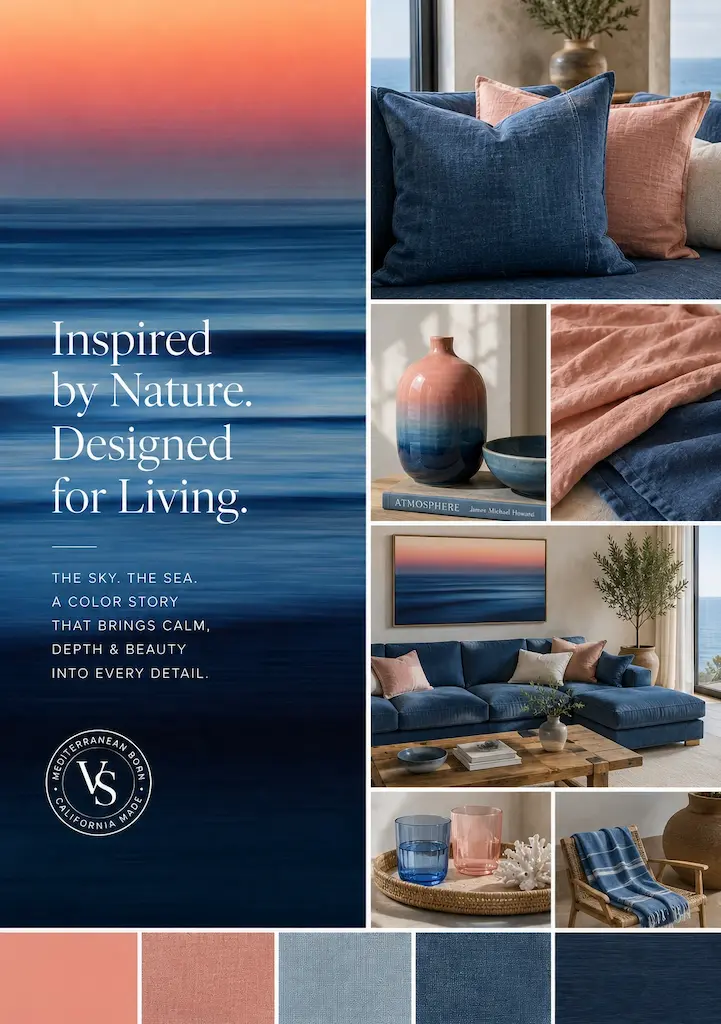
For years, coastal decorating relied on obvious references. Anchors. Ropes. Seashell collections. Decorative signs reminding us that life is better at the beach. Today’s homes speak a much quieter language. Instead of decorating with the coast, they design like it. Organic forms, curved furniture, sculptural plaster, natural textures, and palettes borrowed directly from sea, sky, sand, and stone may sound like contemporary trends, but they are simply rediscovering lessons the coastline has been teaching for thousands of years.
The coast has always preferred curves over corners, texture over perfection, harmony over contrast, and movement over symmetry.
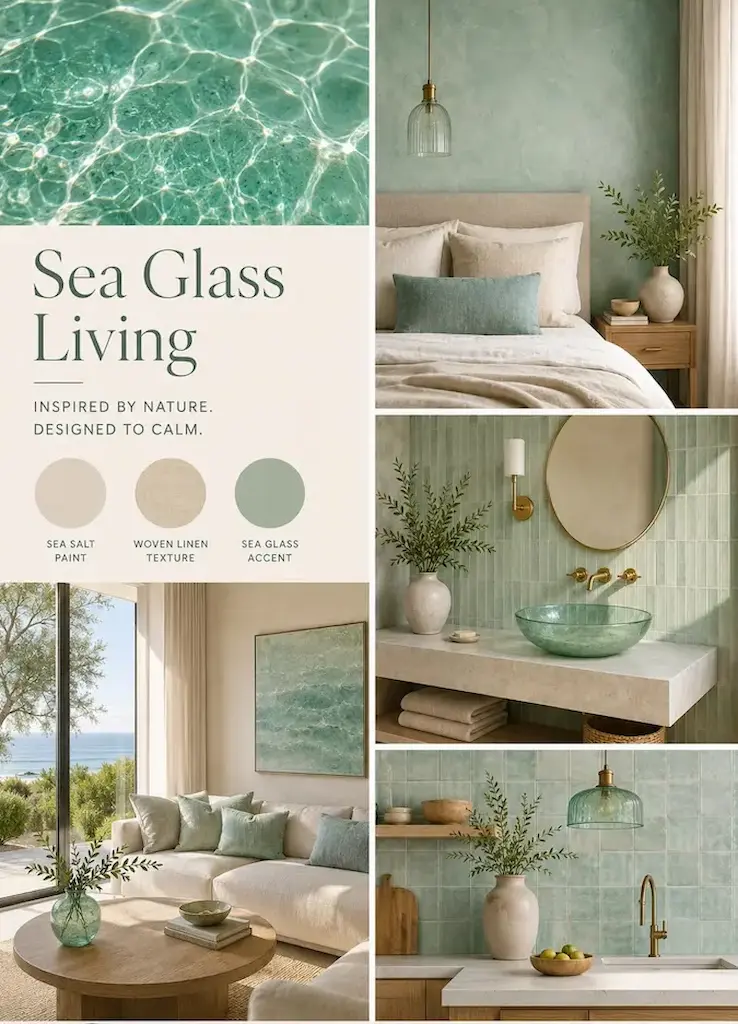
Perhaps that’s why these interiors feel instantly familiar. They remind us of places we’ve already experienced—walking barefoot across rounded pebbles, running a hand over sun-warmed stone, standing inside a sea cave, watching sea glass shimmer beneath clear water, or seeing dunes shift gently with the breeze. Good design doesn’t copy those memories. It quietly awakens them.
A Caliterranean Principle
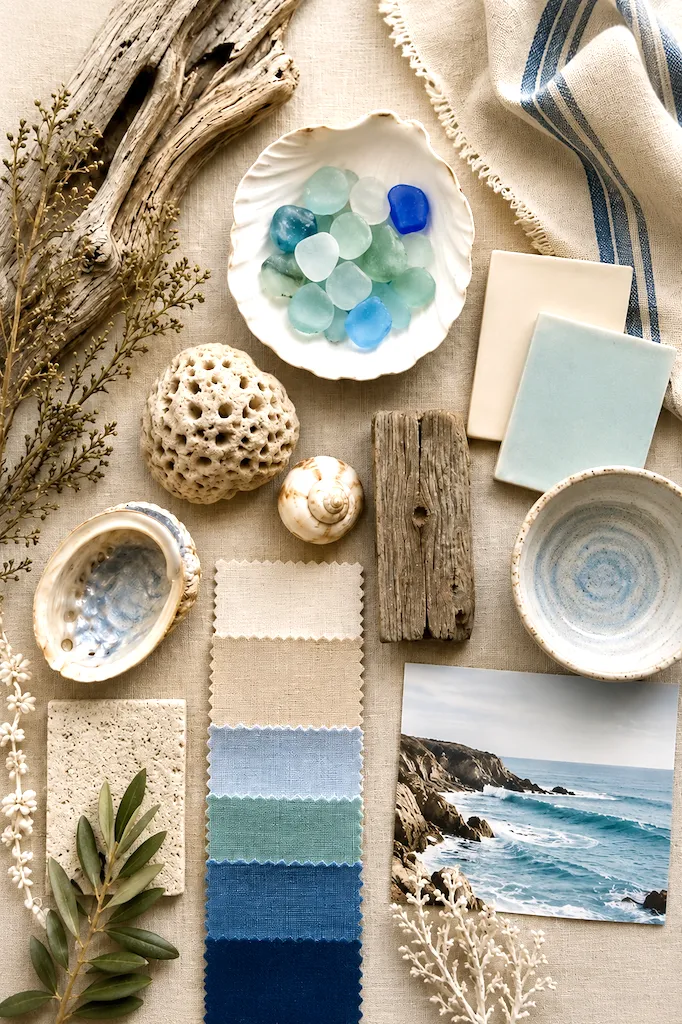
Creating a home inspired by the coast begins long before choosing paint colors or furniture. It begins by paying attention. Notice the way waves layer blues that never quite match. Observe how sea glass softens under years of gentle movement. See how driftwood, linen, stone, shells, woven grasses, weathered plaster, and handmade ceramics all share something in common—they become more beautiful because of time, not despite it. Before bringing a new piece into your home, ask yourself three simple questions.
Could this shape have been created by wind, water, or time?
Could this color exist naturally beside the sea?
Will this material become even more beautiful as it ages?
If the answer is yes, it will almost always feel at home in a coastal interior. After all, the goal isn’t to decorate with the coast. It’s to let the coast quietly shape the way we live.