WHY LINEN BECAME THE FABRIC OF SLOW LIVING
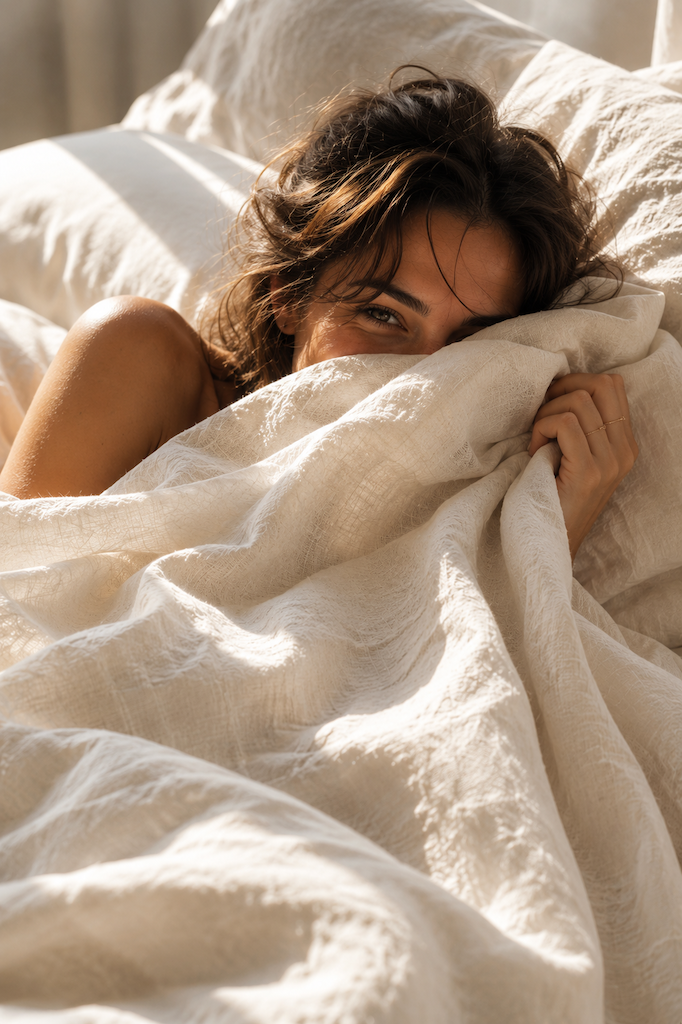
The last thing we feel before drifting to sleep and the first thing we feel when morning arrives is often the same thing: fabric. A cool pillowcase beneath a tired cheek. A sheet folded back in the middle of the night. The soft texture that greets us before our eyes have even adjusted to the morning light. Few objects in our homes are experienced more intimately, yet few receive less attention.
For centuries, linen has been one of the world’s most beloved textiles. Woven from flax fibers, it carries a quiet beauty that feels perfectly suited to a slower way of living. Unlike fabrics that strive for perfection, linen embraces character. Its gentle creases, relaxed drape, and subtle texture tell the story of use rather than display. Perhaps that is why linen feels equally at home in California and throughout the Mediterranean. Both places celebrate sunlight, open windows, natural materials, and homes designed for living rather than impressing.
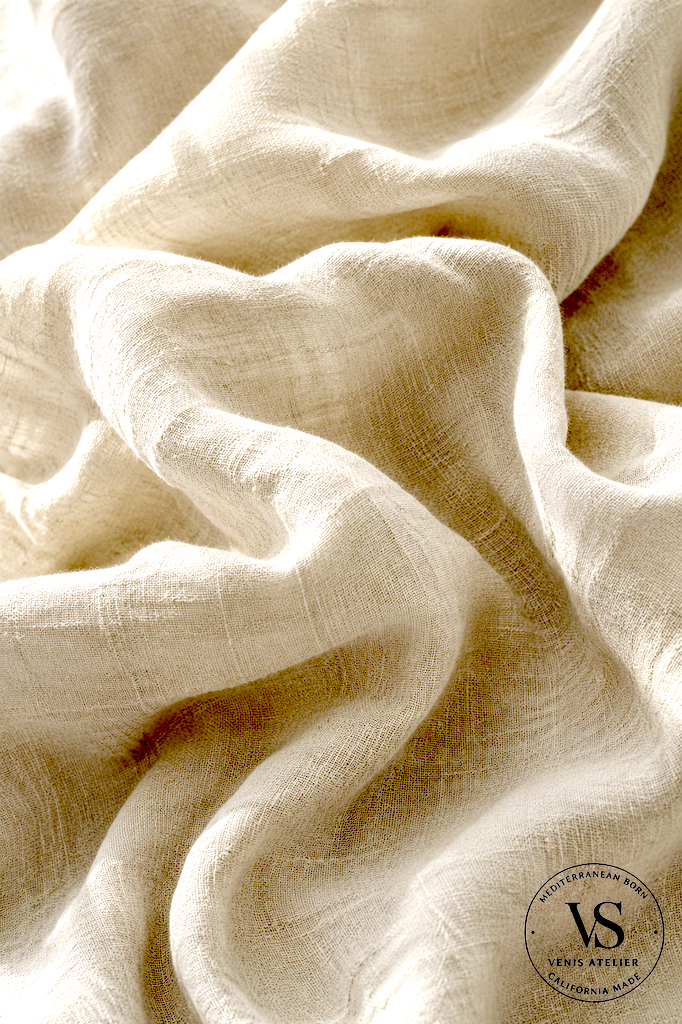
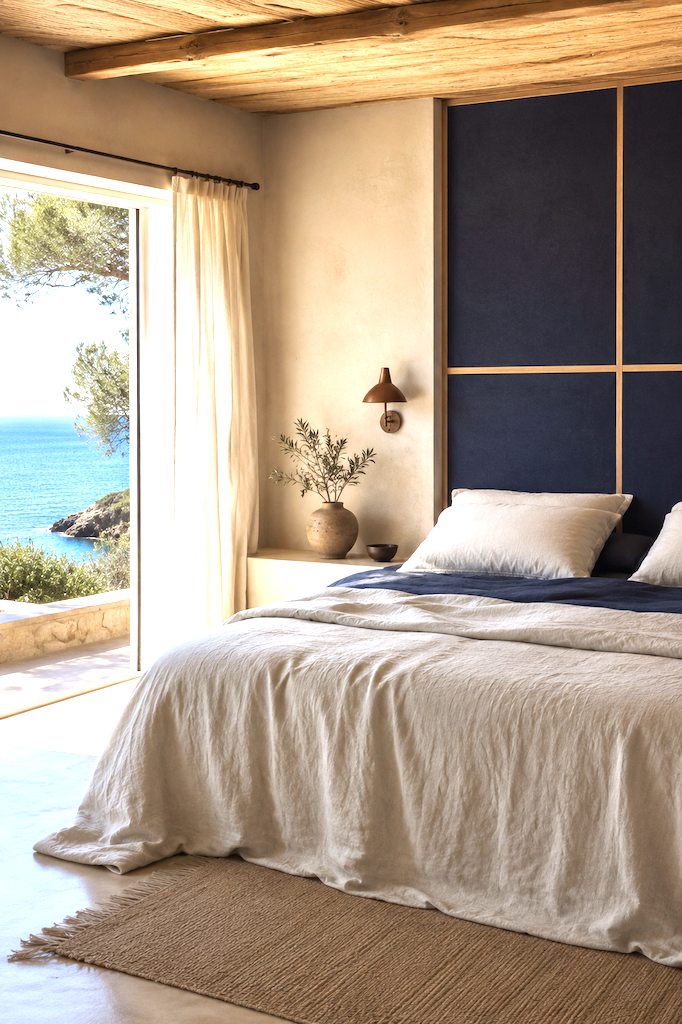
There is something comforting about climbing into a bed dressed in linen. The fabric feels cool against warm skin on summer evenings and surprisingly cozy on cooler nights. With every wash, it softens further, becoming less like a product and more like a familiar companion. Its appeal extends beyond comfort. Linen changes the atmosphere of a room. A bed dressed in soft sea-glass tones, warm whites, or sandy neutrals immediately feels calmer. The texture adds depth without clutter. The wrinkles catch the light in a way that feels effortless rather than staged.
In a world increasingly drawn to polished surfaces and perfect finishes, linen offers something different. It reminds us that beauty often lives in the relaxed, the imperfect, and the well-loved. The best bed is rarely the most elaborate one. More often, it is simply the one that invites us to stay a little longer.

Designer’s Note:
How to Choose Quality Linen Bedding
Not all linen bedding is created equal. A few details make a significant difference in how the fabric feels and performs over time.
Look for European flax linen.
French, Belgian, and Lithuanian flax are widely considered among the finest in the world thanks to ideal growing conditions and generations of craftsmanship.
Choose stone-washed linen.
Stone washing softens the fibers before the bedding reaches your home, creating the relaxed feel linen is known for from the very first night.
Focus on weight, not thread count.
Unlike cotton, linen is not measured by thread count. Quality is often indicated by fabric weight, typically measured in GSM (grams per square meter). Around 160–190 GSM offers an excellent balance of softness, durability, and breathability.
Expect wrinkles.
The relaxed texture is part of linen’s charm. A perfectly pressed linen bed often loses the effortless beauty that makes the material special.
Invest in natural colors.
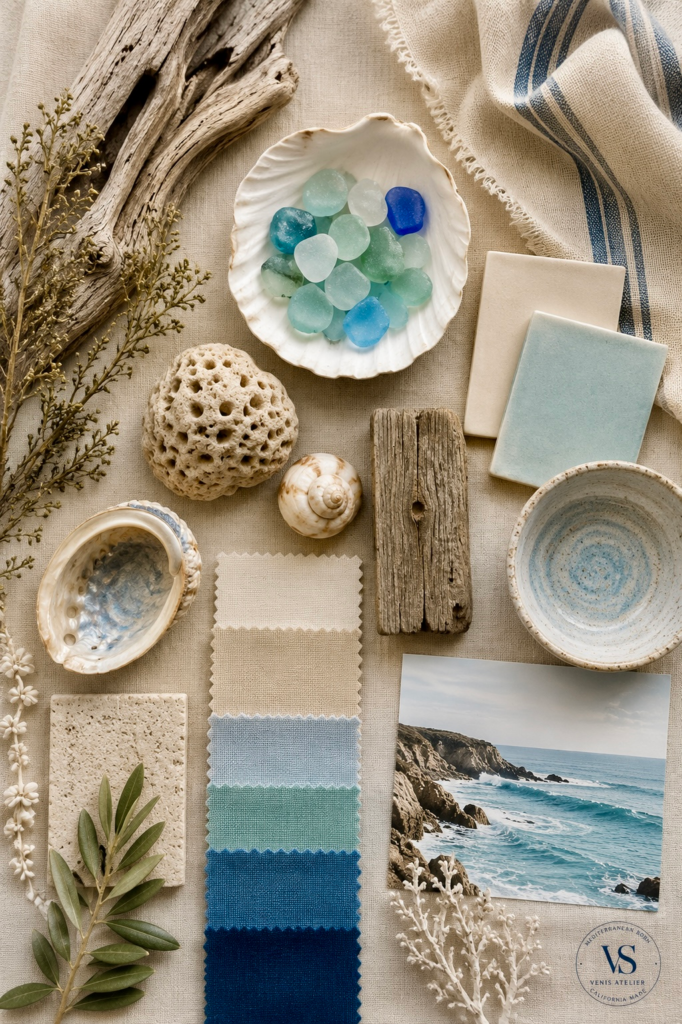
Soft whites, sand, oat, sea-glass blue, sage, and warm stone tones allow linen’s texture to become the focal point.
Know that linen improves with age.
One of linen’s greatest luxuries is that it becomes softer and more beautiful over time. Unlike many fabrics, it often feels better after years of use than it did when first purchased.
≈ VeniS Atelier Approved
For those looking to bring the feeling of this story home, the linen bedding featured throughout this article comes from ONLYSET’s 100% French Natural Linen collection. Chosen for its relaxed texture, breathability, and ability to soften beautifully over time, it remains the bedding used and experienced daily by VeniS Atelier. Its effortless wrinkles, natural drape, and timeless simplicity embody everything linen does best.