The ocean reminds us we never quite know it all.
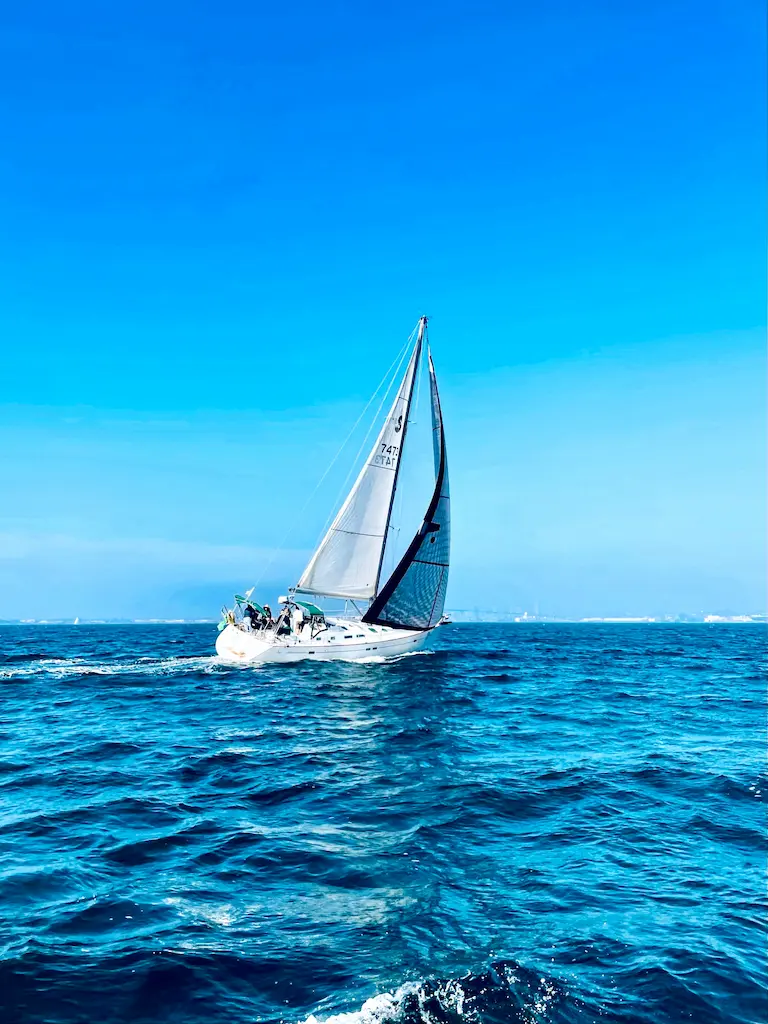
The Mediterranean lifestyle is often reduced to its most easily exported ingredients: olive oil, vegetables, walking, sunshine, and long meals with friends. All matter. But there is another characteristic that is harder to bottle: the joy of being a beginner.
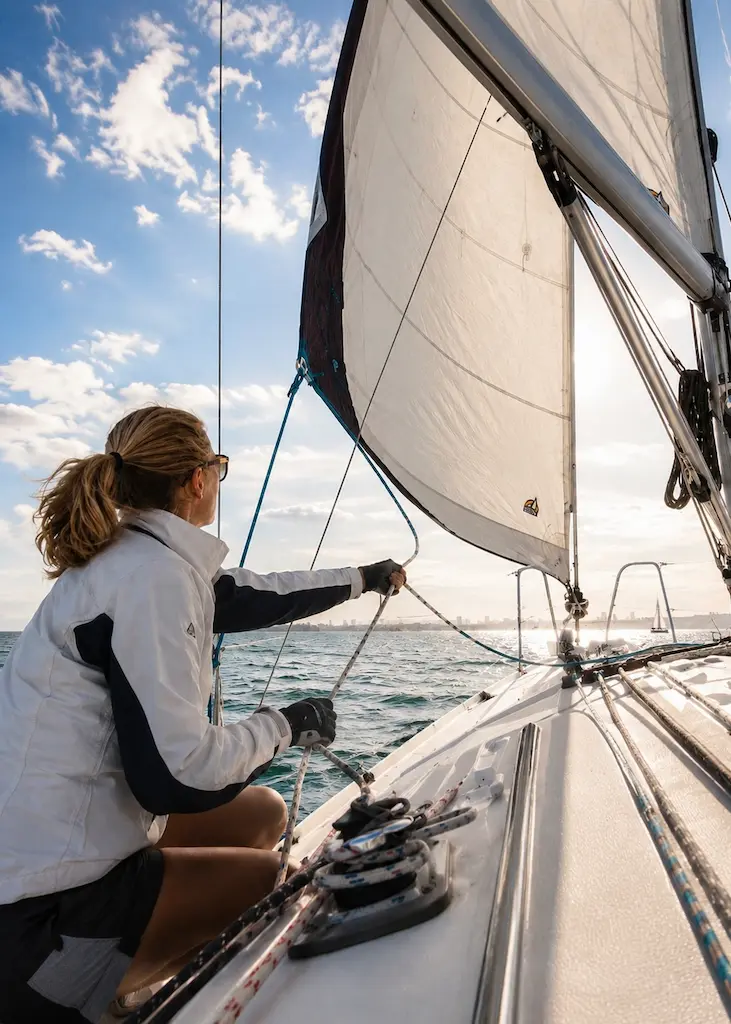
Throughout Mediterranean coastal life, the water has traditionally been something to participate in rather than simply admire. People sail it, swim it, fish it, float, row across it, and learn to understand the winds and rhythms that shape it. Living well, in other words, is not only about what we eat. It is also about how we continue to engage with the world around us.
There is a curious point in adulthood when competence becomes almost too comfortable. We know how to do the things we do, move through familiar routines, and increasingly choose experiences in which we already understand the rules. Yet research is making a compelling case for doing precisely the opposite: continuing to put ourselves in situations where there is something new to learn. The benefits appear to reach well beyond simply acquiring another skill. Research published in Neurology has associated intellectual enrichment with a slower onset of cognitive decline, while research from Trinity College Dublin has suggested that engaging in stimulating activities during midlife may reduce the risk of developing dementia later in life, even among people carrying a genetic marker associated with the condition. Other studies have connected learning with greater resilience, engagement, and the brain’s ability to adapt when solving problems, while research involving older adults has found associations between learning new skills and lower levels of loneliness and depression.
For all the complexity surrounding longevity, one of the practices that may help us remain engaged and adaptable is remarkably ordinary: keep learning. Or, as the famous blue fish put it, just keep swimming—and if you cannot, perhaps learn how. Few classrooms make that lesson more tangible than the sea. Surfing, sailing, and paddling demand a kind of attention that familiar routines rarely require. Wind changes. Water moves. Balance shifts. A wave that appeared manageable from shore behaves differently once you are on it. Experience matters enormously, but certainty is never guaranteed. Even people who have spent decades on the water remain in conversation with conditions they cannot control.
Linda Benson knows something about decades on the water. She began surfing at 11, and at 15 won the women’s division of the Makaha International Championship in 1959. Her place in surfing history was established while she was still a teenager. More than six decades later, however, one of the most interesting chapters in her relationship with the ocean began not with mastery, but with inexperience. At 80, Benson learned to paddle. There is something wonderfully unexpected about that. After a lifetime of reading waves and developing an instinctive relationship with the ocean, she was willing to encounter the water differently—to learn another rhythm, another balance, another way of moving across it. Her story has often been told through what she accomplished when she was young. Perhaps the more interesting question now is what it means that, at 82, she is still willing to learn.
Across the Mediterranean, there is another remarkable example. Greek windsurfer Anastasia Gerolymatou did not begin windsurfing until around age 40, yet continued the sport well into her eighties. Her story offers a different lesson from Benson’s. Linda shows that even a lifelong expert can choose to become a beginner again; Anastasia shows that it is never too late to begin in the first place.
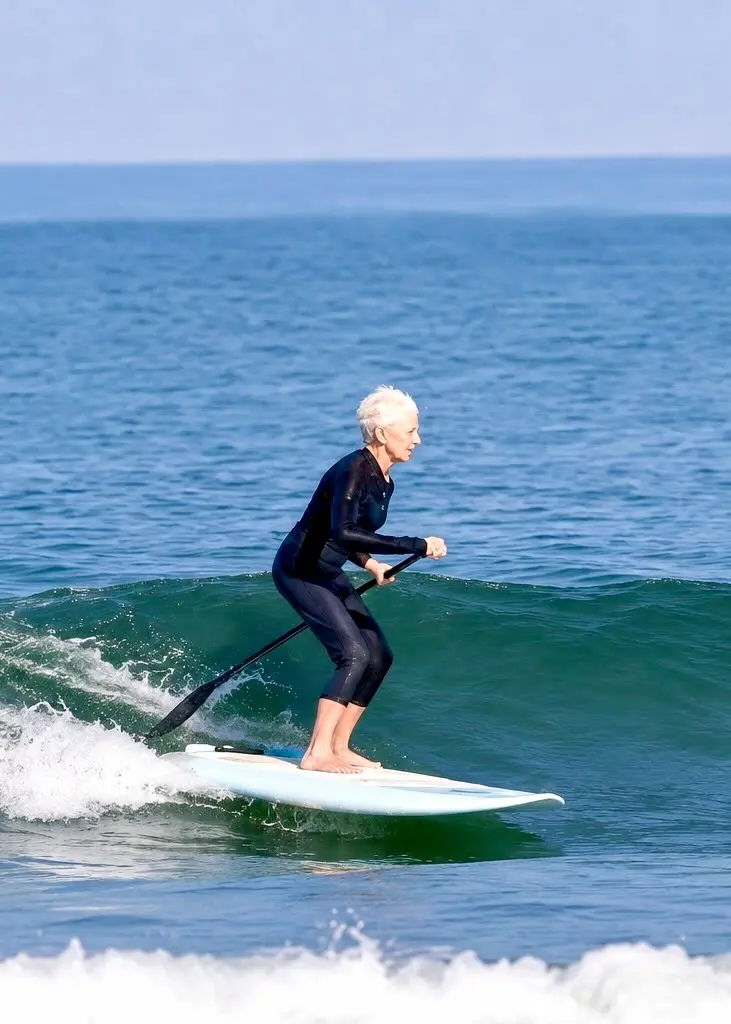
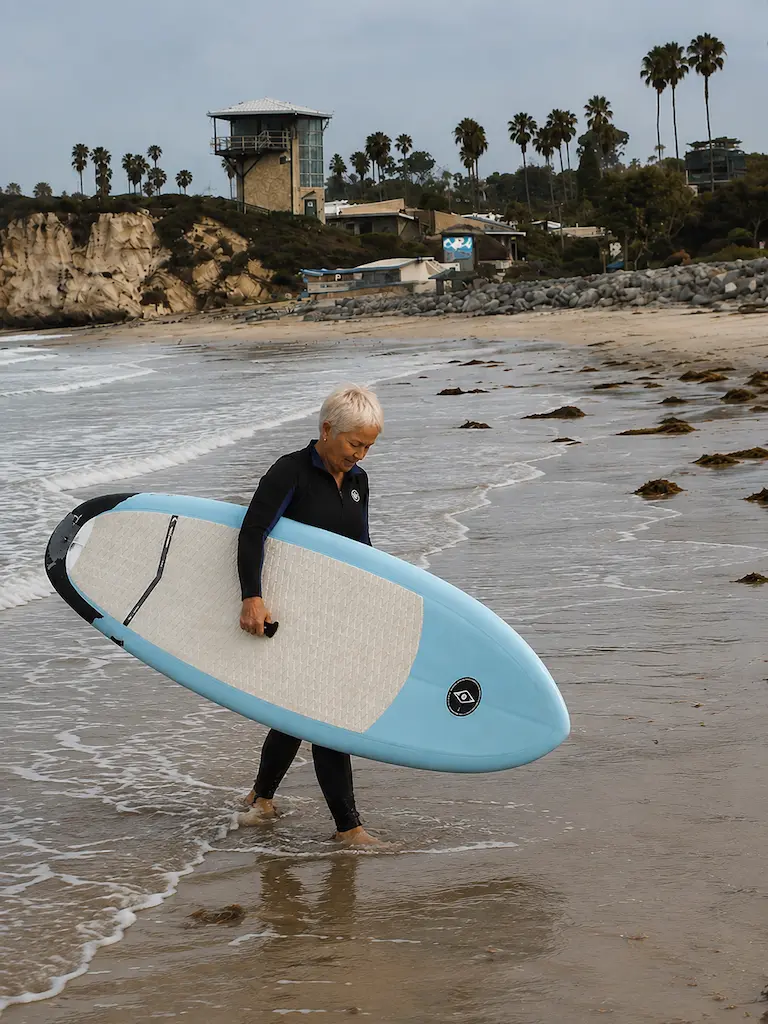
The fascination is not that women in their eighties are somehow defying age. It is that age has not removed Benson or Gerolymatou from the experience of doing, noticing, adapting, and remaining interested in what comes next. There is a different philosophy of longevity contained in that idea—one concerned less with trying to remain young than with continuing to remain engaged. In both women, experience has not displaced curiosity.
That distinction feels particularly relevant now. In a world where answers arrive almost instantly through Google, AI, tutorials, and an endless stream of how-to videos, there is something increasingly valuable about learning a skill that cannot simply be downloaded. No search bar can give you balance on a board, teach your body to read a wave, or give you the instinct to understand the wind. Those lessons still require time, attention, frustration, practice, and presence. Information can arrive in seconds; knowledge of another kind still has to be experienced.
This is what makes surfing, sailing, and paddling such natural models for lifelong learning. They require physical coordination, judgment, observation, and adaptation at the same time. There is always another technique to refine, another condition to understand, another small adjustment between what the mind intends and what the body manages to do. The ocean is particularly good at reminding us that even expertise has its limits.
California and the Mediterranean speak different dialects of the same coastal language. In California, it may be surf breaks, sailing harbors, and paddle boards; across the Mediterranean, fishing villages, island passages, small boats, and generations accustomed to reading the sea. The traditions are different, but the underlying instinct is remarkably similar. On both shores, the natural environment offers reasons to keep moving, adapting, participating, and learning. That may be the more interesting connection between Mediterranean and Californian ideas of living well. Healthy cultures are not created by food alone. They are also shaped by what people continue to do.
Learning something new asks us to leave competence behind temporarily. The first attempt may be awkward. Balance fails. The wind refuses to cooperate. The board goes one direction while the body has plans for another. Yet this period of uncertainty is precisely when attention sharpens. The beginner notices everything because nothing has become automatic yet, and there is pleasure in that heightened awareness. The goal need not be mastery, and perhaps that is where adulthood occasionally gets the idea wrong. We are accustomed to measuring activities by achievement: How good are we? How quickly did we improve? What did we accomplish? But learning has value before any of those questions are answered. The process itself asks the brain to make new connections and the person to remain open to surprise.
It also quietly changes the vocabulary of aging. Much of the cultural conversation around getting older is organized around preservation—maintaining strength, maintaining memory, maintaining independence. Those are worthy goals, but learning introduces a different word: expansion. Something can still be added. A skill can still be acquired. An unfamiliar place can still become known. There can still be a first time.
Linda Benson learning a new way to move across the Pacific at 80 makes that possibility wonderfully difficult to dismiss. Her story suggests that perhaps the opposite of aging is not youth at all. Perhaps it is curiosity. The most compelling lesson shared by the coasts of California and the Mediterranean is not a prescription for what to eat or how many steps to take. It is the idea of remaining an active participant in one’s surroundings. Sail. Surf. Paddle. Learn the winds. Learn another language. Pick up an instrument. Take the class for which you are spectacularly unqualified. The activity itself is almost secondary. Curiosity is the practice. There may be something quietly radical about reaching an age when the world expects us to have accumulated answers and deciding, instead, to keep collecting questions. That is the joy of being a beginner.
CONTINUE EXPLORING
Inspired by this story? The story continues. Here is your next read What Is the California Lifestyle, Really? →