From Roman Social Clubs to the New Science of Longevity
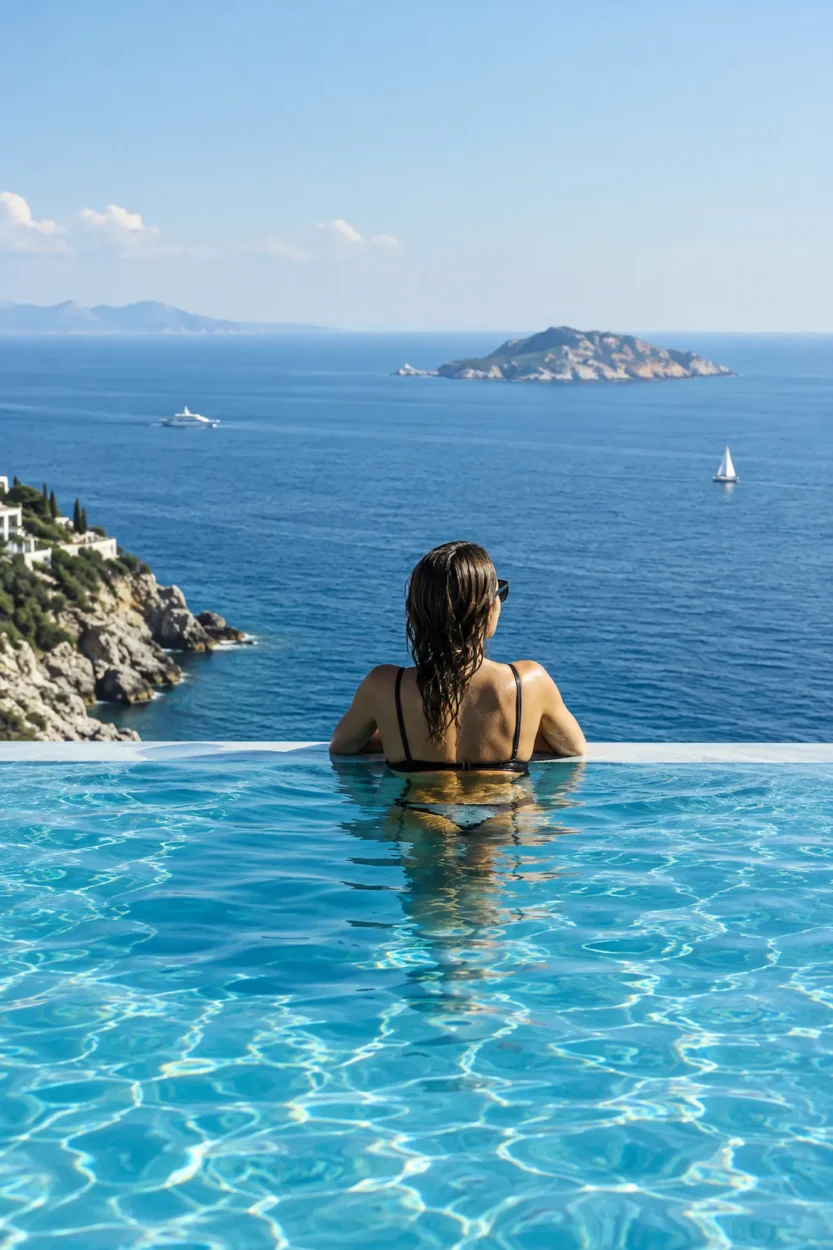
There was a time when modern wellness meant something considerably simpler: taking a bath required little more than water, time and somewhere to gather. You got dressed, left the house and went somewhere specifically built for the occasion. Once there, you might exercise, meet a friend, hear the latest gossip, conduct a little business, stroll through a garden, read something and eventually—almost as if remembering why you came—get into the water. The Romans made bathing into one of the great rituals of everyday life. Two thousand years later, we are still building elaborate places devoted to making ourselves feel better, although the instructions have become considerably more complicated. What began with hot water and conversation eventually became mineral cures, destination spas, nutrition programs, sleep tracking and personalized wellness. Now, at the newest longevity retreats, we can arrive for a little restoration and leave knowing considerably more about our biomarkers than we ever expected. Whatever happened to just taking a bath?
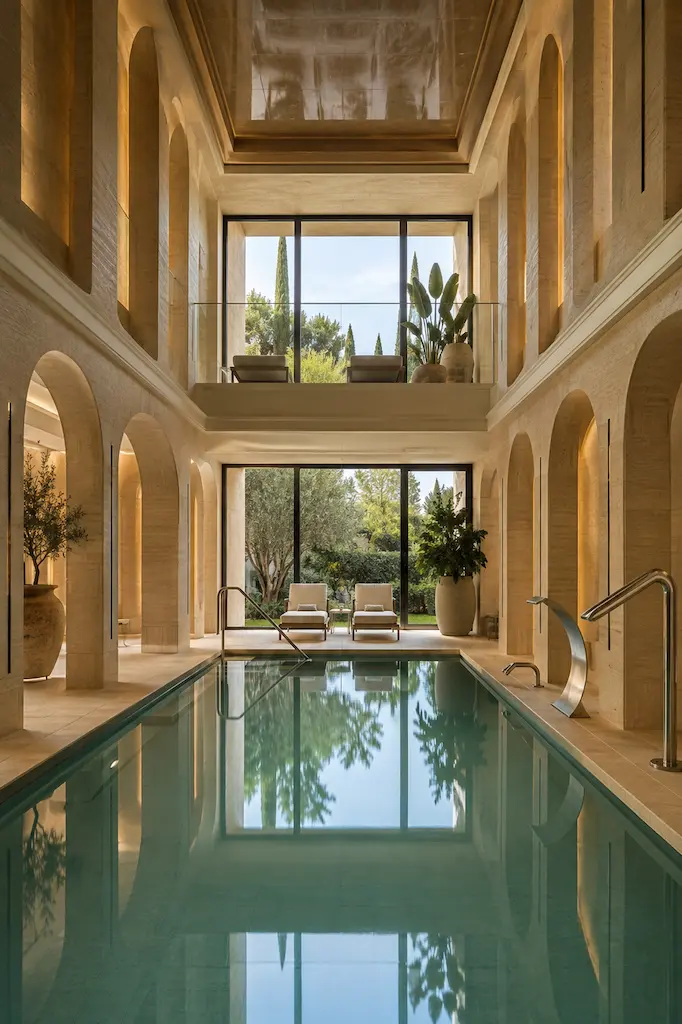
Rome: Let’s Take a Bath and Catch Up With Everyone
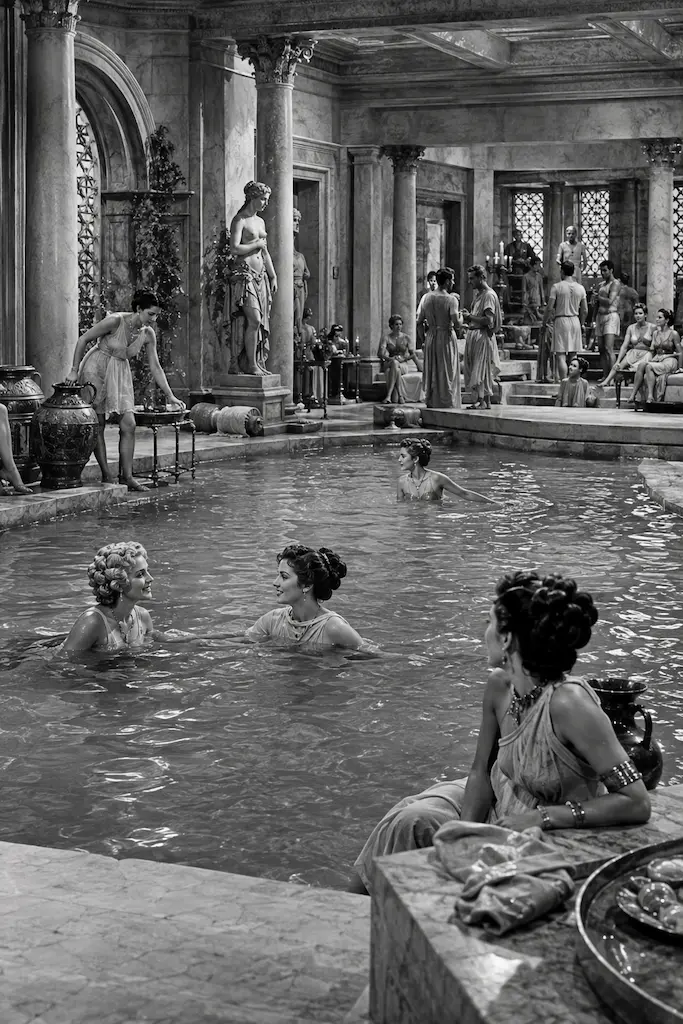
To call the great Roman thermae swimming pools would be rather like calling a piazza somewhere to stand. Public baths were among the most important social buildings of the Roman world. They were generally inexpensive to enter, making them accessible to a broad part of urban society. And bathing was only part of what happened inside. Large complexes could contain exercise grounds, gardens, lecture halls and libraries alongside warm rooms, hot baths, cold plunges and swimming pools. People exercised, strolled, read and spent leisure time with friends. In other words, the Roman bath was an early social network with remarkably good architecture. You went partly because other people went. Friends caught up. News traveled. Acquaintances crossed paths. Leisure and social life occupied the same physical space.
Our social networks still perform many of those functions, except that the architecture has shrunk to approximately the size of a phone. We can discover what everyone is doing without leaving the sofa. The Roman algorithm was considerably simpler: show up. There were no followers. There were simply the people who were there. There was also something rather sophisticated about the sequence itself. Roman bathers moved between the caldarium, tepidariumand frigidarium—hot, warm and cold spaces—within architecture specifically designed around water, temperature and human movement. Variations of that bathing tradition survived for centuries in the eastern Mediterranean and helped shape later hammam culture even as public bathing declined in much of Western Europe. Over the centuries, particularly in Western Europe, bathing gradually moved away from the great communal institution the Romans had known. Eventually, running water brought the ritual decisively into the home. The bathroom became a private room rather than a civic destination. Convenient? Absolutely. But the social network had lost its swimming pool.
Later Spa Culture: Let’s Go Somewhere to Feel Better
Water didn’t lose its reputation for making us feel better simply because we stopped bathing communally. Instead, we began traveling to it—and occasionally paying rather impressive amounts of money to sit in it. Mineral springs and thermal waters became destinations. European spa towns developed around waters believed to have therapeutic qualities. Seaside resorts added another idea: perhaps the ocean itself—the water, air, climate and change of scenery—could restore an exhausted body. Bathing was no longer simply something you did. It became somewhere you went. Thermal bathing, mineral treatments, sea bathing and eventually thalassotherapy helped transform water from an everyday ritual into something closer to a cure. Hotels and resorts followed the springs and coastlines, and the spa gradually became associated not merely with cleanliness but with retreat.
This was an important change. The Roman bath had brought wellbeing into ordinary urban life. Spa culture increasingly asked people to temporarily leave ordinary life behind. That idea remains remarkably familiar. We still travel somewhere beautiful, put on a robe and hope to return home feeling considerably better than when we arrived. Only now the robe has company.
Modern Wellness: Let’s Optimize Ourselves
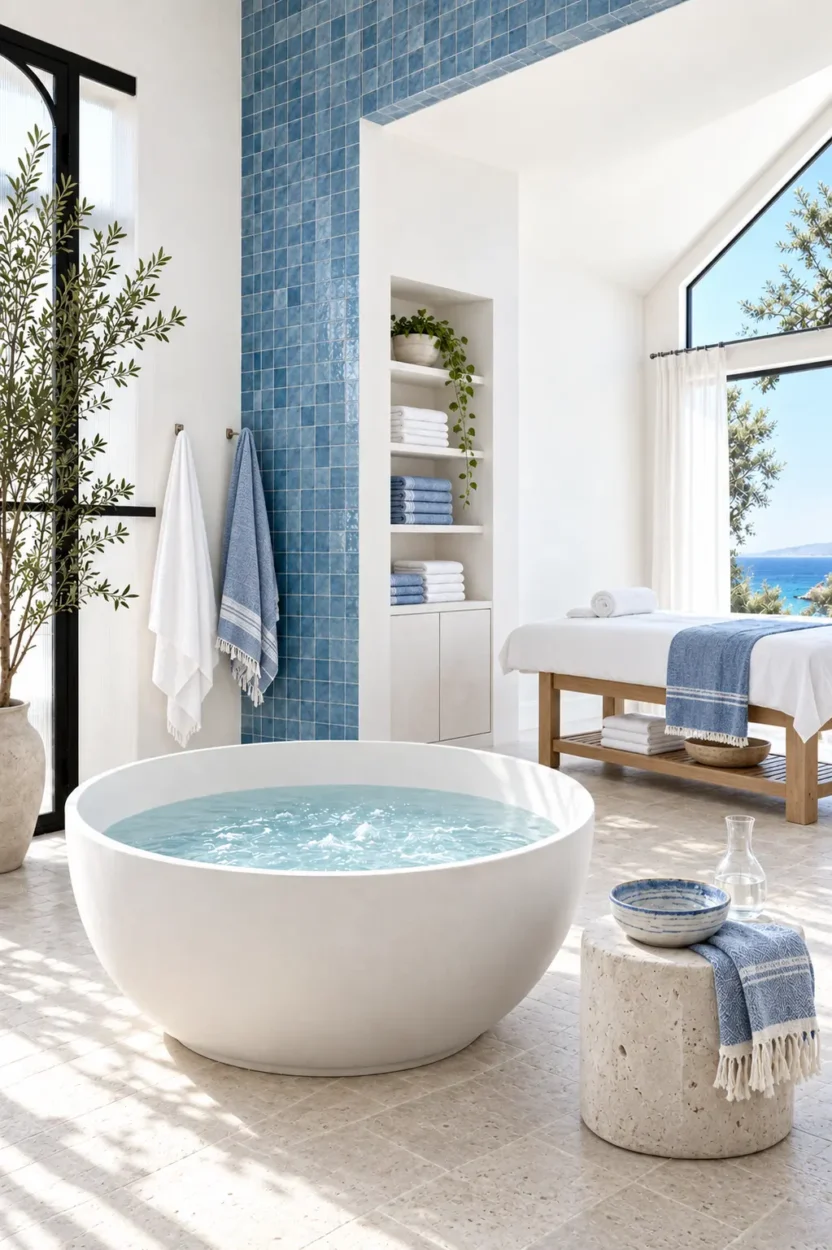
At some point, relaxing stopped being enough. The modern wellness retreat expanded far beyond massage tables and mineral pools. Exercise became part of the experience. Then nutrition. Meditation. Stress management. Sleep. Mindfulness. Personalized fitness. Food grown specifically for the guests eating it.
California became particularly good at this interpretation. At Golden Door in Southern California, for example, a stay can include personalized fitness and nutrition plans, hiking, meditation, farm-to-table meals, daily massage and dozens of movement classes. Its facilities include pools, a bathhouse, gyms, gardens and water therapy. The bath has effectively become an entire ecosystem. The goal has changed too. We are no longer simply trying to feel relaxed on Sunday afternoon. We want to sleep better on Tuesday, eat better on Wednesday, become stronger by Friday and somehow continue doing all of it when real life resumes on Monday. Wellness became a lifestyle. And then we decided that perhaps we could measure it.
The Longevity Era: Actually, While We’re Here, Could You Analyze Everything?
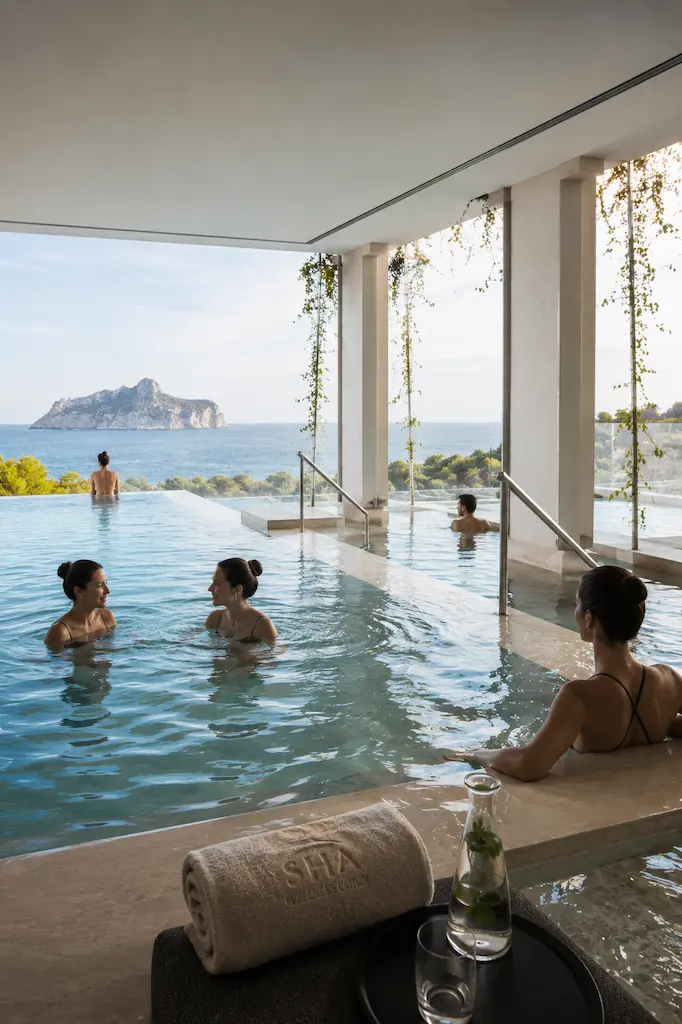
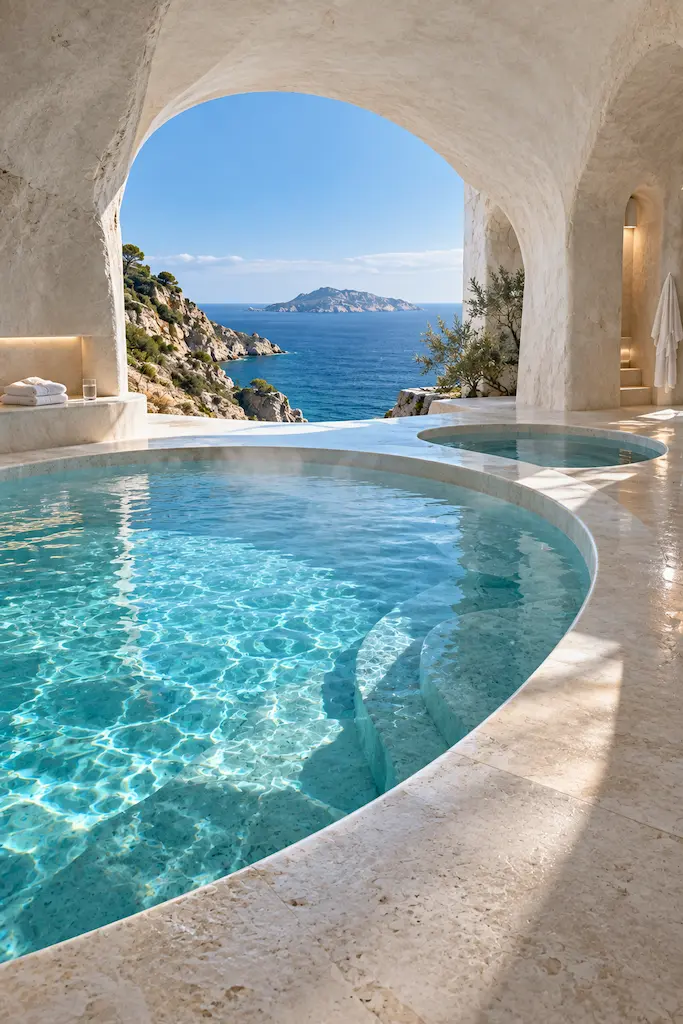
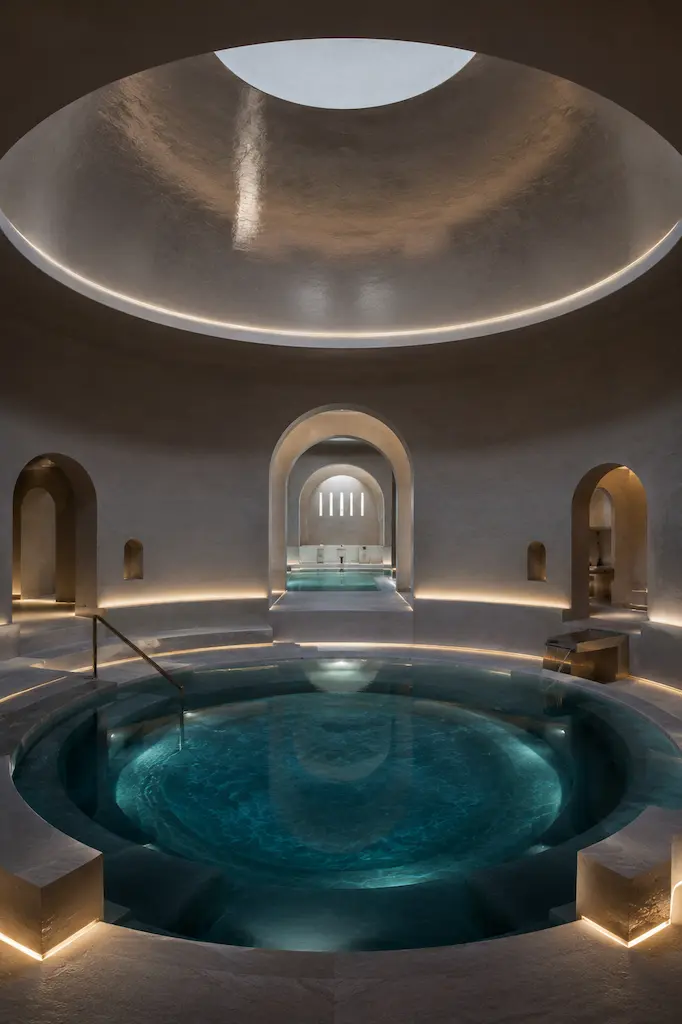
This may be the most fascinating turn of all. The newest generation of wellness destinations increasingly sits somewhere between resort, spa, nutrition center, fitness retreat and medical clinic. The language has changed accordingly: precision medicine, metabolic health, diagnostics, biomarkers, health span and longevity. At SHA Spain in Altea, the idea of the Mediterranean wellness retreat has evolved into medical wellbeing and longevity. At newer clinics and retreats across Spain, programs increasingly examine factors such as metabolic health, body composition, nutrition and individualized exercise rather than simply prescribing the same treatment to every guest.
California is heading in the same direction. Sensei Porcupine Creek near Palm Springs has a diagnostic center and describes its approach as science-led and technology-supported. One of its programs begins collecting information before guests even arrive through a wearable device; assessments at the retreat then inform personalized sessions in fitness, nutrition and mindset.
And Greece offers perhaps the most extraordinary illustration of how far we have traveled. Euphoria Retreat in Mystras combines ancient Greek ideas about wellbeing with contemporary precision medicine and says its advanced programs can analyze more than 250 biomarkers to create highly individualized interventions. Yet elsewhere in the same spa you can still find a tepidarium, steam bath, cold plunge and pools—the vocabulary of bathing that would hardly have seemed alien two millennia ago.
Which brings us to a rather wonderful question. Did We Become More Sophisticated—or Just More Complicated? The answer is probably both. Modern medicine can understand the human body in ways a Roman physician couldn’t have imagined. Personalized nutrition, preventive medicine and sophisticated diagnostics potentially give people information that warm water and an afternoon in the garden simply cannot.
It would be silly to romanticize the past. But it might be equally silly to assume that everything old was unsophisticated. The Romans understood that feeling well wasn’t necessarily one isolated activity. Movement mattered. Rest mattered. Water mattered. Architecture mattered. Gardens mattered. And other people mattered. Perhaps that last ingredient is particularly interesting today. We can track sleep, count steps, monitor exercise and receive increasingly detailed information about ourselves. Wellness has become extraordinarily individualized. Yet one of the earliest great wellness institutions was fundamentally communal.
You didn’t optimize yourself alone. You went to the baths. Perhaps the evolution of the spa tells us less about water than it does about what every generation believes a good life requires. Rome emphasized bathing and community. Later generations sought restorative waters. The destination spa promised escape. Modern wellness taught us to improve our habits. Longevity culture wants to understand the body deeply enough to extend the number of healthy years we have. Two thousand years of progress, and we’re still asking essentially the same question: How do I feel better—and stay that way? We have simply become much more elaborate about answering it.
AND THEN THERE IS THE ORIGINAL SPA
After Roman baths, thermal towns, thalassotherapy, destination retreats, personalized nutrition, wearable technology, biomarkers and longevity medicine, perhaps the most elemental wellness ritual has been sitting in front of us all along. The sea. No appointment. No treatment menu. No diagnostic assessment. No robe required. Just salt water, movement, sunlight, fresh air and the peculiar feeling that comes from walking out of the water different from the way you walked in. California has the Pacific. The Mediterranean has been inviting people into its water for thousands of years. Neither promises to optimize your biomarkers or tell you how well you slept last night. They simply invite you to swim of float.
May be the bath never disappeared after all. We just keep reinventing what we expect it to do for us. And sometimes, the best spa still has no walls—and admission is free.
WHERE THE BATH HAS GONE NEXT
If every generation reinvents wellbeing in its own image, these six places show just how many directions the humble bath has traveled—from geothermal water bubbling beneath California to Mediterranean resorts measuring biomarkers.
CALIFORNIA
The classic destination retreat. Golden Door represents the moment when the spa expanded into an entire way of living: movement, hiking, nutrition, massage, mindfulness, gardens and time deliberately set aside for yourself. Its current program includes personalized fitness and nutrition, dozens of classes, miles of hiking trails, pools and a bathhouse. It isn’t simply somewhere to receive a treatment; the entire day becomes the treatment.
Calistoga Spa Hot Springs — Calistoga
Here the story returns to the earth. Calistoga sits over a geothermal mineral field, and the resort uses naturally heated mineral water in four pools alongside the volcanic-ash mud bathing for which the area is known. In an industry increasingly fascinated by technology, there is something wonderfully elemental about this version of wellness: the attraction is still hot water coming out of the ground.
Sensei Porcupine Creek — Rancho Mirage
And then there is the future. Sensei represents California’s movement toward data-informed, individualized wellbeing. Its approach combines science, technology and personalized guidance around three deceptively simple principles—Move, Nourish and Rest. Its Optimal Wellbeing Program can incorporate pre-arrival wearable data, onsite assessments and individual sessions to create a personalized plan for what happens after the vacation ends.
THE MEDITERRANEAN
If Roman bathing represents one end of this story, SHA represents the other. Overlooking the Mediterranean in Altea, its approach helped make “medical wellbeing” and longevity part of the contemporary resort vocabulary. The emphasis is no longer simply on leaving rested, but on understanding and improving health over the longer term—the bath has officially acquired a medical team.
Terme di Saturnia — Tuscany, Italy
And then Italy reminds us that sometimes reinvention isn’t necessary. The thermal waters at Saturnia have flowed for thousands of years, and the site’s own history connects their use with Roman-era bathing traditions and later medieval therapeutic bathing. Today a contemporary resort surrounds the spring, but the protagonist remains what it always was: naturally warm mineral water emerging from beneath the Tuscan landscape.
Euphoria Retreat — Mystras, Greece
Euphoria may be the most appropriate place to finish because it refuses to choose between past and future. Its philosophy combines ancient Hellenic ideas, traditional Chinese approaches, contemporary wellness and increasingly sophisticated precision medicine. Inside its Byzantine-inspired spa are pools, a tepidarium, steam, cold water and other elements with ancient precedents; its newest programs simultaneously move toward biomarker testing and highly personalized interventions.
CONTINUE EXPLORING
Inspired by this story? The story continues. Here is your next read When Fashion Houses Take Over the Beach →