The Mediterranean Is a Region, Not a Decorating Mood
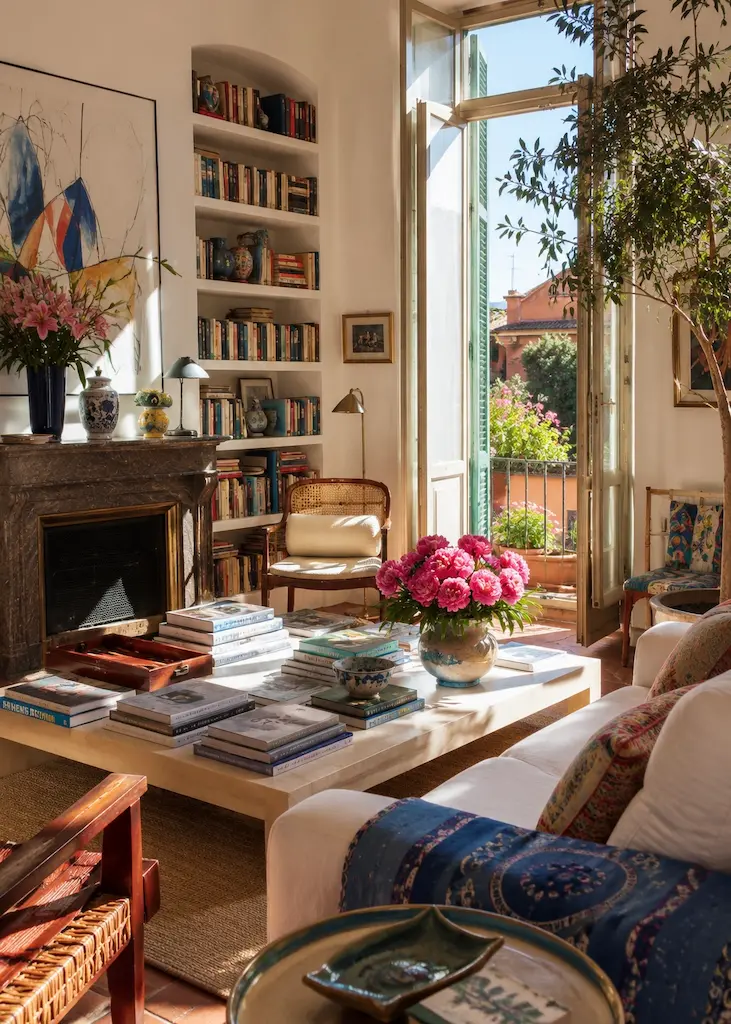
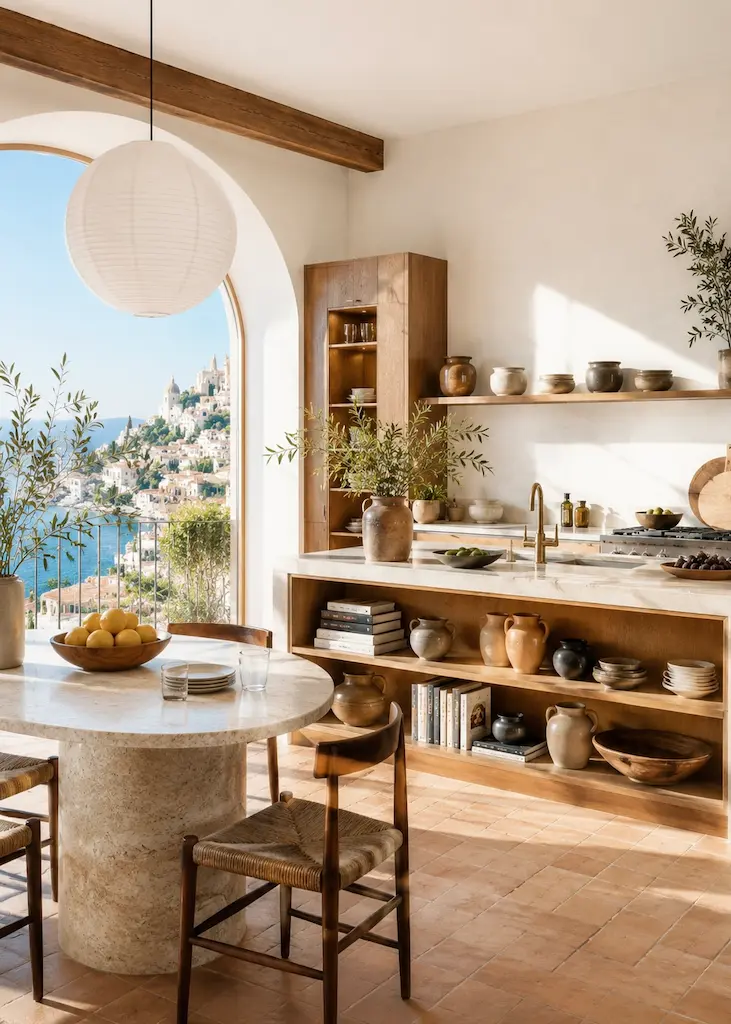
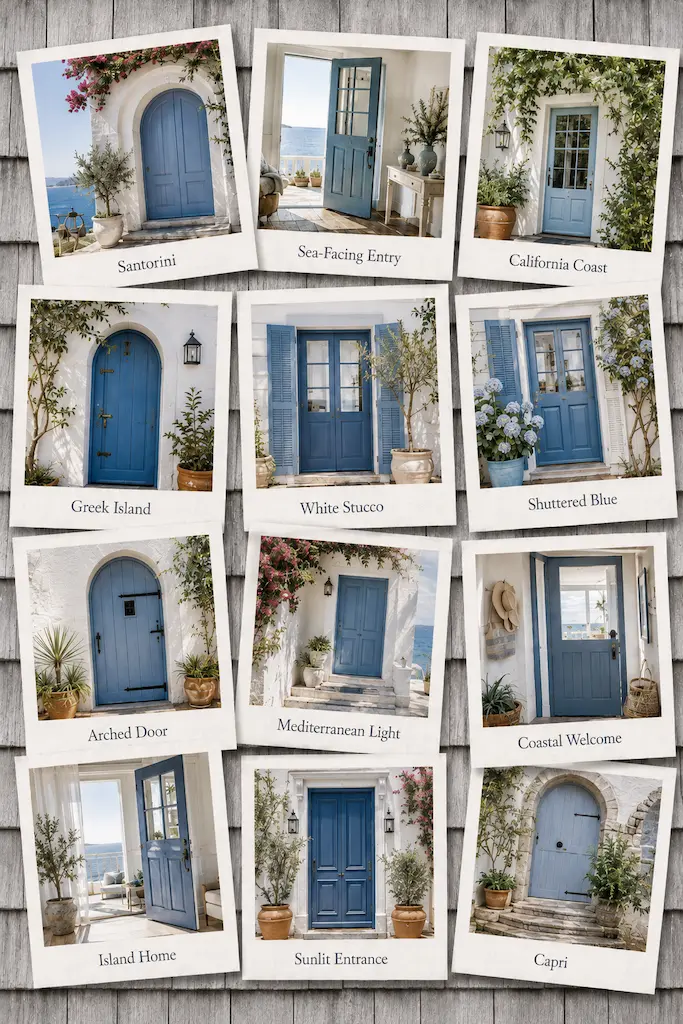
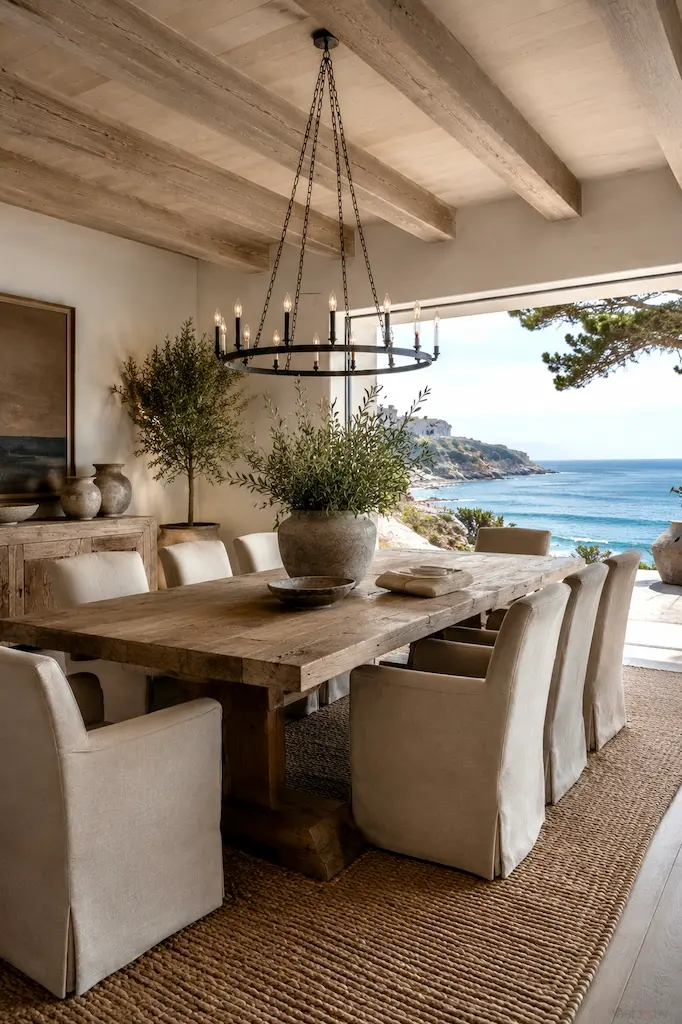
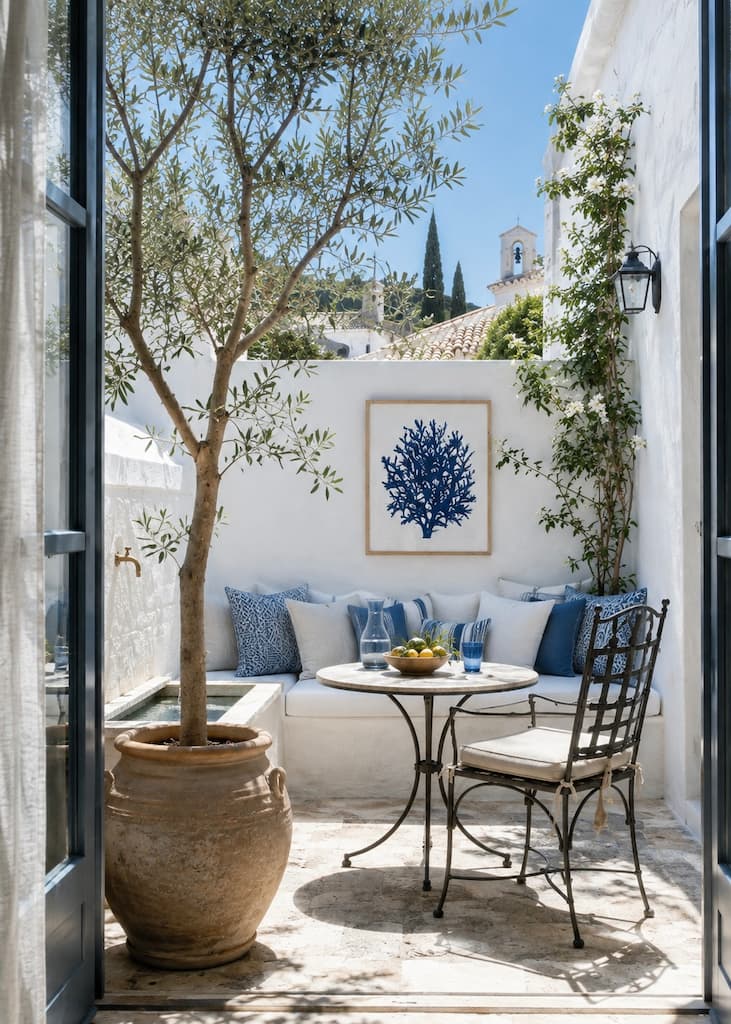
The word “Mediterranean design” is so overused these days that it has almost stopped describing a region and become a decorating mood. You know the one: white plaster, terracotta, linen, an arch, then a burst of bright bougainvillea. Add an olive tree indoors, a rough wooden stool that looks as though it spent several generations outside a Tuscan farmhouse, and something ceramic with a suspiciously ancient patina. Done. The internet has spoken: Mediterranean design.
The problem is not that any of this is unattractive. Quite the opposite. Whitewashed walls, stone, tile, shutters and courtyards can be extraordinarily beautiful. The problem begins when a vast, culturally layered region is flattened into one photogenic fantasy. Mediterranean does not mean the same thing in Barcelona, Athens, Marseille or Mykonos, any more than “California” means one house in Malibu. Around the Mediterranean are apartment blocks and old townhouses, modern villas and postwar buildings, tiny balconies and internal courtyards, inherited furniture, contemporary art, excellent tiles and occasionally terrible plumbing. It is dense cities and remote islands, historic rooms and unapologetically contemporary architecture. It does not come with one sofa.
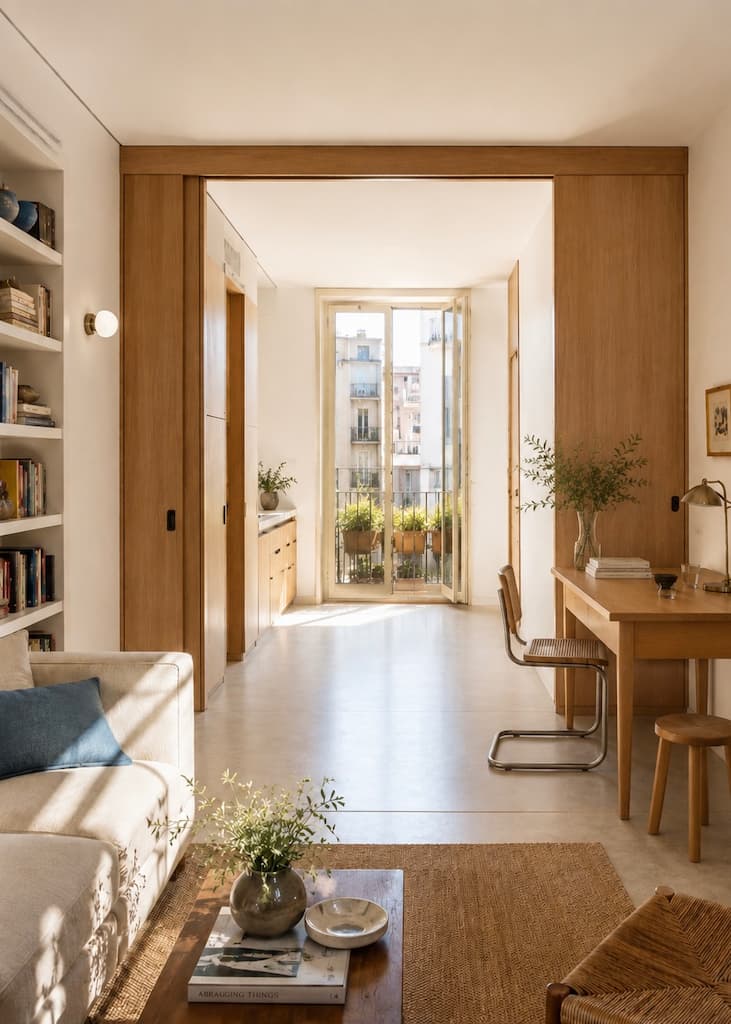
Perhaps the more interesting way to understand Mediterranean design is therefore to stop asking what it is supposed to look like and start asking what it does. Barcelona is a useful place to begin because the city is full of old apartments required to perform for contemporary life. In the Sant Antoni district, architect Roman Izquierdo Bouldstridge transformed an 1880 apartment using sliding timber doors to connect a sequence of rooms running between street and courtyard. Rather than demolishing every wall in pursuit of the apparently sacred open plan, the apartment can change throughout the day: rooms connect when useful and close again when privacy is needed. Light travels farther, air can move, and a modest footprint acquires several possible versions of itself without gaining a single square metre.
Athens offers much the same lesson in another language. In the Piscator Apartment by en-route-architecture, the starting point was living with less, in less space. Existing flooring was retained, storage and shelving became part of the architecture, and cabinetry was lifted onto walls so that the floor remained available for living. The materials are direct rather than theatrical. Nothing is trying particularly hard to look “Greek,” which is precisely the point: the apartment belongs to Athens because it is responding to a real building, a real owner and a real set of spatial limitations, not because someone remembered to add a blue vase.
And suddenly the supposedly glamorous Mediterranean design is discussing something remarkably practical: where do the books go, where does someone work, can one room perform two jobs, can a door move instead of a wall, can privacy exist without cutting off daylight? Not exactly the stuff of resort brochures. Much more useful.
There is another myth worth disposing of while we are here: that Mediterranean interiors must be calm, neutral and apparently allergic to possessions. Actual homes are often considerably less disciplined. Margherita Maccapani Missoni’s house outside Varese is not a Mediterranean coastal home, and it would be inaccurate to present it as one. But as an Italian rebuttal to the flattened “Italian-Mediterranean” fantasy sold abroad, it is wonderfully inconvenient. The 1970s villa has cotto floors, stone, generous windows and a strong relationship with the garden. So far, so expected. Then comes a deep-blue sofa, contemporary art, fresh flowers, books, patterned textiles, ceramics, vintage pieces, modern pieces and objects inherited or collected over time. In other words: a life.
Missoni has described the house as something close to a small museum of family life, and that may be the most useful design lesson in the room. Much of the furniture was not purchased to complete a predetermined aesthetic; it arrived from previous homes, previous generations and previous chapters. Our imaginary Mediterranean interior, by contrast, often looks as though the owner moved in yesterday with one delivery truck and a very strict beige policy. Real houses accumulate. A chair from one decade sits beside a lamp from another, a contemporary painting hangs above an old floor, and a ceramic bowl acquired on holiday refuses to coordinate with anything yet survives because somebody loves it. This is not failed styling. It is biography.
The same practicality applies outside. Mediterranean living is habitually illustrated with enormous terraces, swimming pools and long lunches beneath pergolas. Those exist, of course, but so do balconies barely deep enough for two chairs, courtyards squeezed into dense buildings and exterior spaces that must justify every centimetre they occupy. Throughout Mediterranean cities, even small outdoor spaces can function as genuine domestic territory: a balcony can hold breakfast, laundry, herbs, a folding table or twenty minutes of evening air; an internal courtyard can bring daylight into the center of a plan; a shutter can protect a room from afternoon heat; an awning can turn exposed space into usable space.
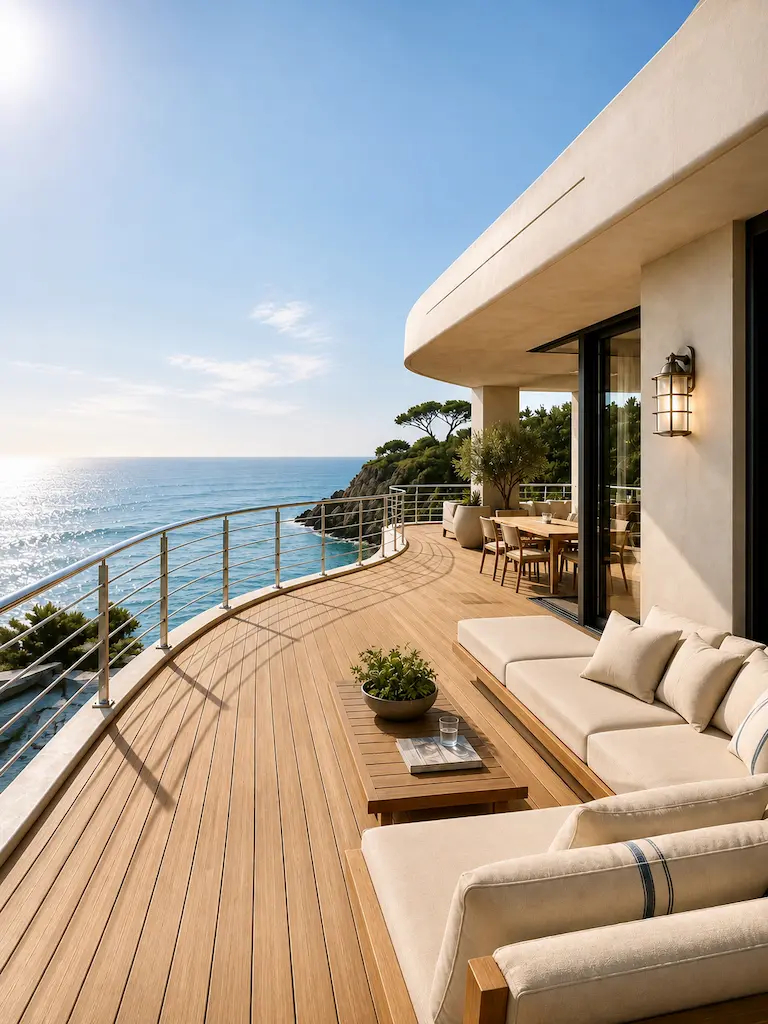
California tends to interpret indoor-outdoor living rather theatrically: immense glass walls disappear to reveal an equally immense terrace and a pool positioned approximately where the Pacific Ocean ought to be. Mediterranean cities frequently accomplish the same basic idea with three square metres and one very well-positioned chair. The principle is not grandeur; it is use.
That distinction matters because many of the features now marketed as Mediterranean “style” began as responses to ordinary problems. Shutters control light and heat. Courtyards can bring light and air into dense buildings. Tile tolerates water, wear and summer. Deep openings create shade. Pergolas make outdoor rooms habitable. Buildings changed over generations because families changed with them. We inherited the solutions, turned them into decoration and then occasionally forgot what they were solving.
Villa Mandra on Mykonos makes the point from the opposite end of the scale. Designed by K-STUDIO, the house is unmistakably rooted in the Cyclades without behaving like a stage set of Cycladic motifs. Lime-wash, stone and wood are present, but they are applied and engineered through contemporary techniques. The social heart of the house is organized around a large courtyard shaded by a chestnut pergola, connecting kitchen, living spaces and outdoor life while creating protection from the intense summer sun. Tradition is present, but it is doing a job.
That distinction is everything. Villa Mandra is not Mediterranean because it has accumulated enough recognizable ingredients to pass a style test. It belongs to its landscape because the architecture responds to sun, stone, views, outdoor life and the rhythms of summer. It can be contemporary without severing itself from place and traditional without pretending architecture stopped developing two centuries ago.
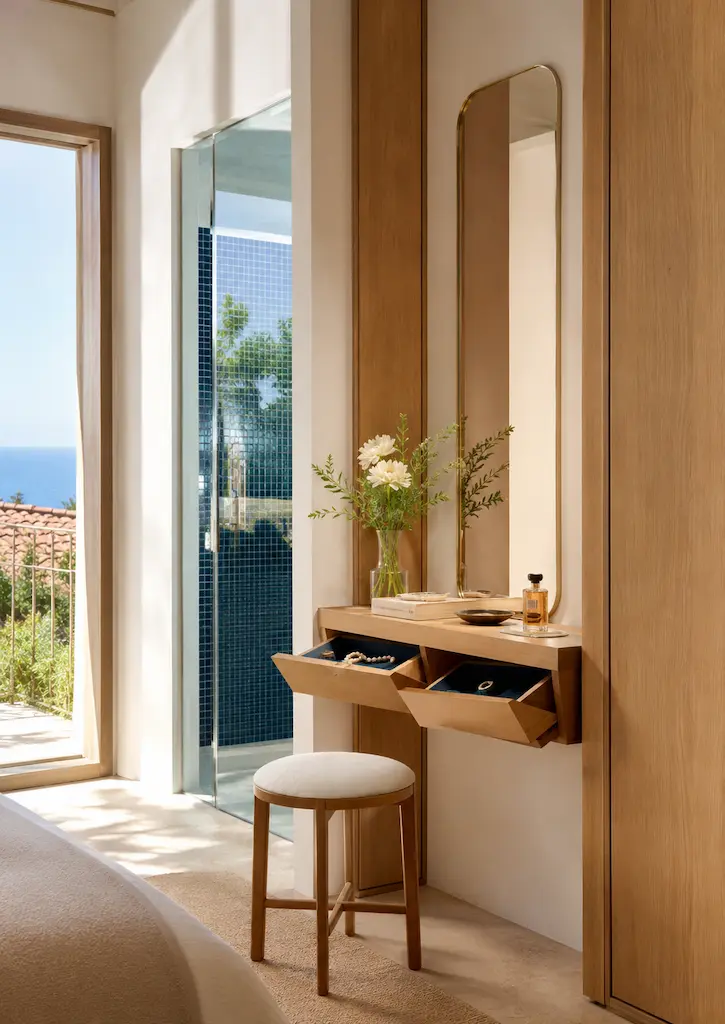
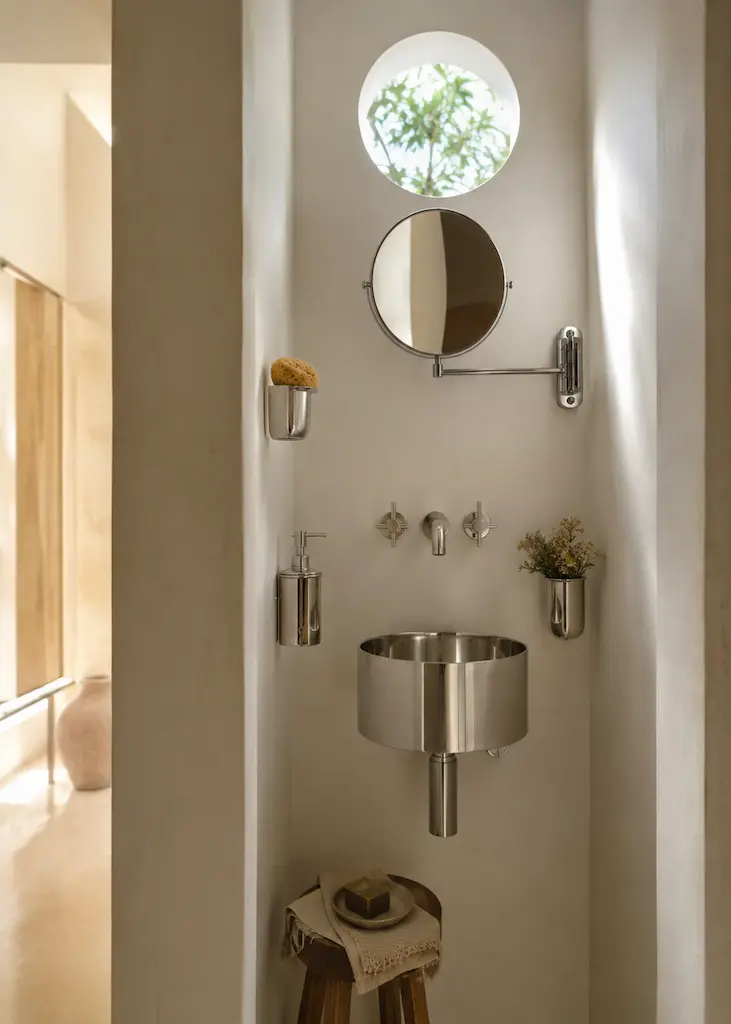
This is where contemporary Mediterranean design becomes much more interesting than the cliché. It can be spare and geometric in Greece, adaptive and layered in Barcelona, old and new simultaneously in Marseille. It can use concrete, glass, timber, stone, steel or translucent panels without somehow losing permission to belong to the region. Architecture around the Mediterranean has never been static, so expecting it to freeze at whichever historical moment photographs most beautifully would be rather strange.
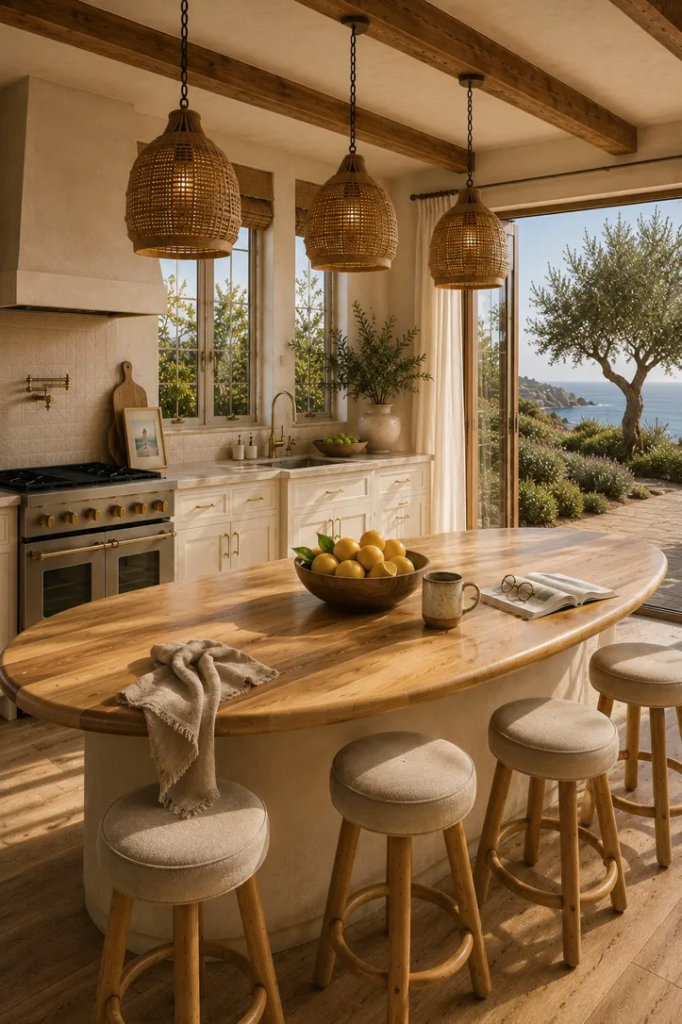
The more useful lessons are often almost embarrassingly practical. Take storage. A compact kitchen does not need to disappear behind acres of seamless cabinetry to feel sophisticated. Bowls, books, pantry goods and ceramics are not treated as visual contamination to be hidden away; they become part of the room. The cleverness is not in pretending nobody lives there. It is in giving real life somewhere intelligent to go.
Good small-space design can become even more specific. That may be the most useful thing to borrow from Mediterranean homes and from good architecture more broadly: adaptability rather than costume. A sliding partition that gives one room three possible uses is more valuable than an arch whose primary function is to announce that you have seen Positano. Storage can behave like architecture. Shade can be considered before mechanical cooling. Windows can be positioned for more than a view. Outdoor space can count even when it is small. Furniture can earn the square footage it occupies. And a home can be allowed to evolve rather than being trapped forever inside the mood board that created it.
California has more reason than ever to pay attention. Square footage is expensive, smaller secondary homes are becoming more relevant, cities are becoming denser and summers are getting hotter. Homes need to become more flexible, not merely more photogenic. The Mediterranean has centuries of experience negotiating an awkward combination of climate, density, old buildings, limited space and the human insistence on living comfortably anyway. That is where its real design intelligence lies, not in recreating one imagined villa again and again.
Barcelona does not look like Athens. Athens does not look like Marseille. A contemporary house on a Greek island does not need to resemble an apartment in Spain, and neither needs to apologize for failing the current definition of “Mediterranean.” The differences are not flaws in the category; the differences are the story. So keep the terracotta if you love it. Use plaster. Use all the linen you want. And if an arch actually belongs there, by all means have the arch. Just don’t mistake the ingredients for an entire region. Borrow the ingenuity, not the costume we have decided the Mediterranean is supposed to wear.
CONTINUE EXPLORING
Inspired by this story? The story continues. Here is your next read Greek Homes Beyond the White Walls & Blue Doors →