The Fiat 500 and California’s Woodie: How Two Ordinary Cars Became Coastal Legends

This year, one of Italy’s smallest cars is celebrating a surprisingly big birthday. The original Fiat 500—nicknamed Topolino, or “little mouse”—turns 90 in 2026. Meanwhile, across the ocean, another coastal icon, born just a few years earlier, belongs to automotive history: the American wood-bodied station wagon. Once adopted by California surfers, the humble woodie eventually went from sandy utility vehicle to collectible treasure, with exceptional examples approaching a quarter of a million dollars. Not bad for an oldie turned goldie.
It is a curious fate for two cars that began with such ordinary ambitions. Neither was designed to represent freedom, but coastal life—and the geography of two very different places—gave them that role. What makes their stories interesting is not simply their design, but how naturally each adapted to the way people lived.
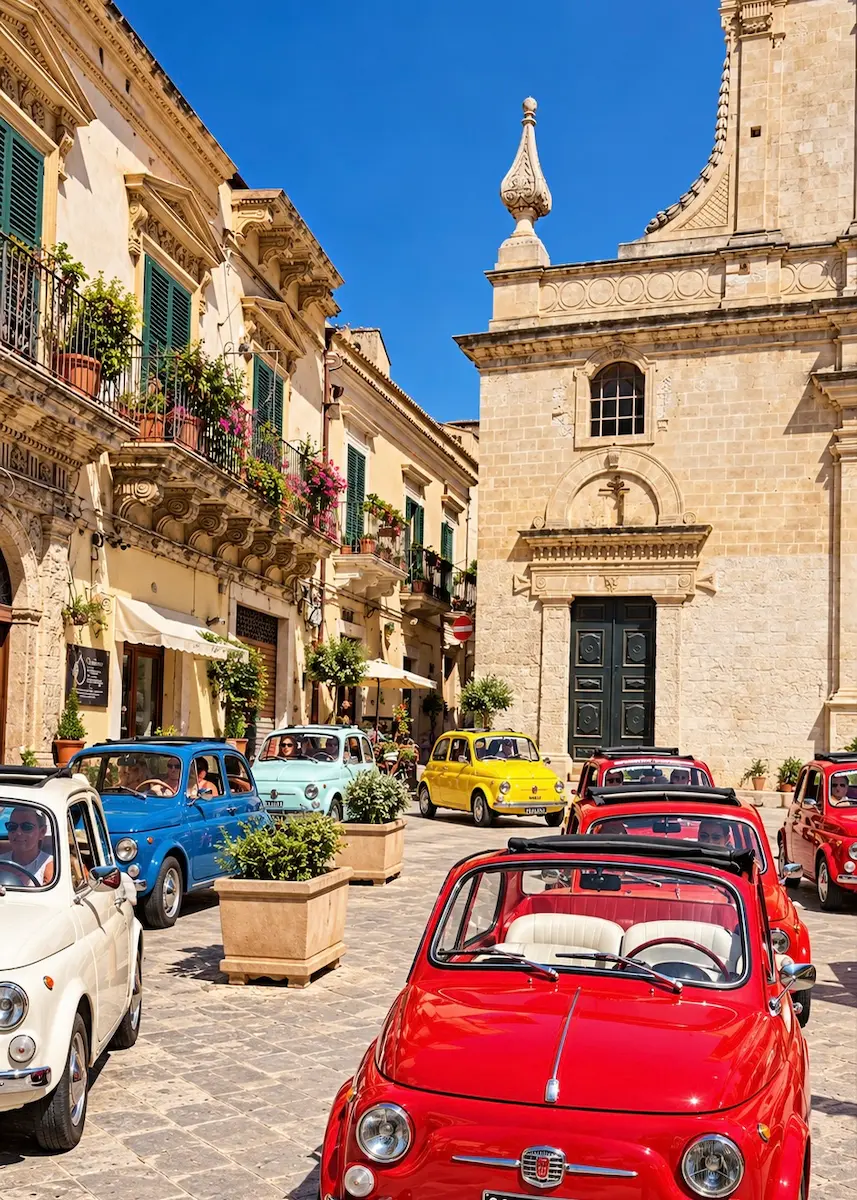
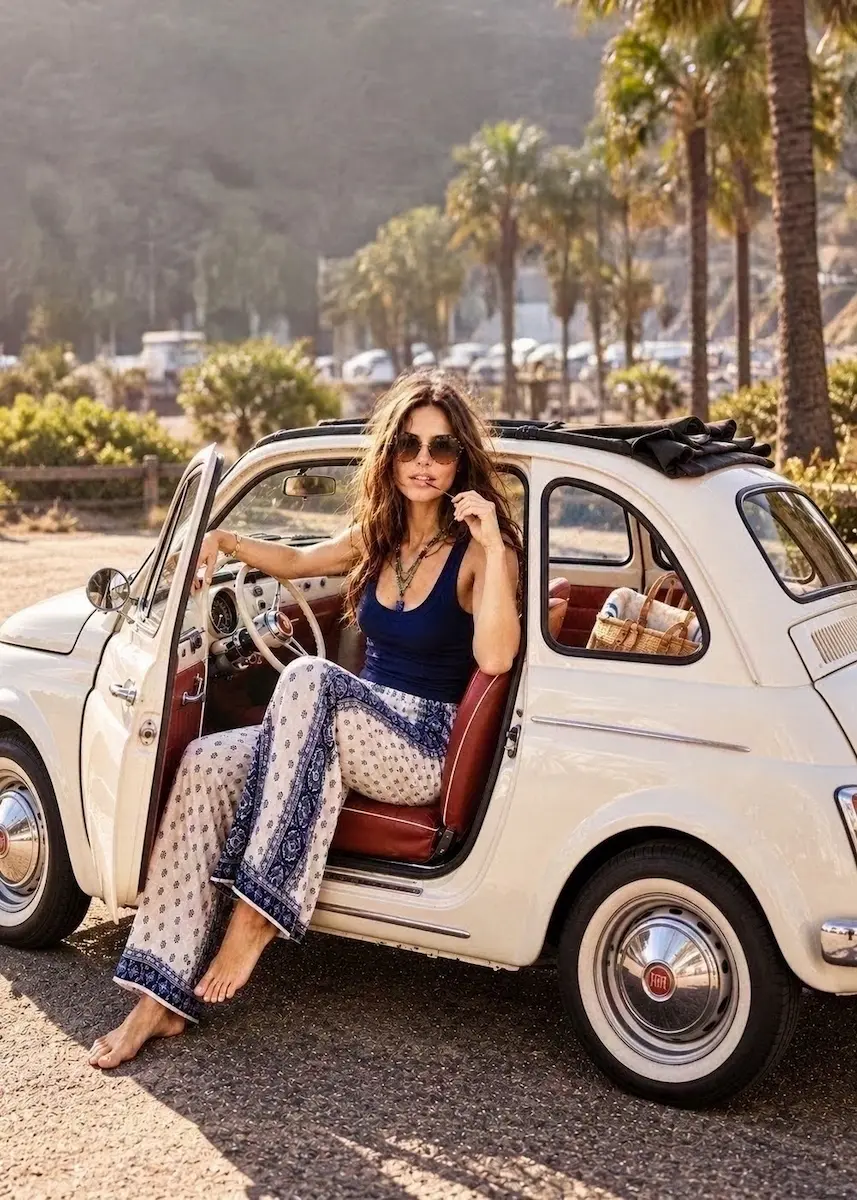
The Fiat had to navigate Italian streets originally made for pedestrians, carts and donkeys, not automobiles. Its compact dimensions suited an environment of narrow lanes, crowded town squares and villages built centuries before anyone imagined a car. A quick trip to the beach, a stop for lunch or a visit to a neighboring village could become part of an ordinary afternoon rather than an elaborate expedition.
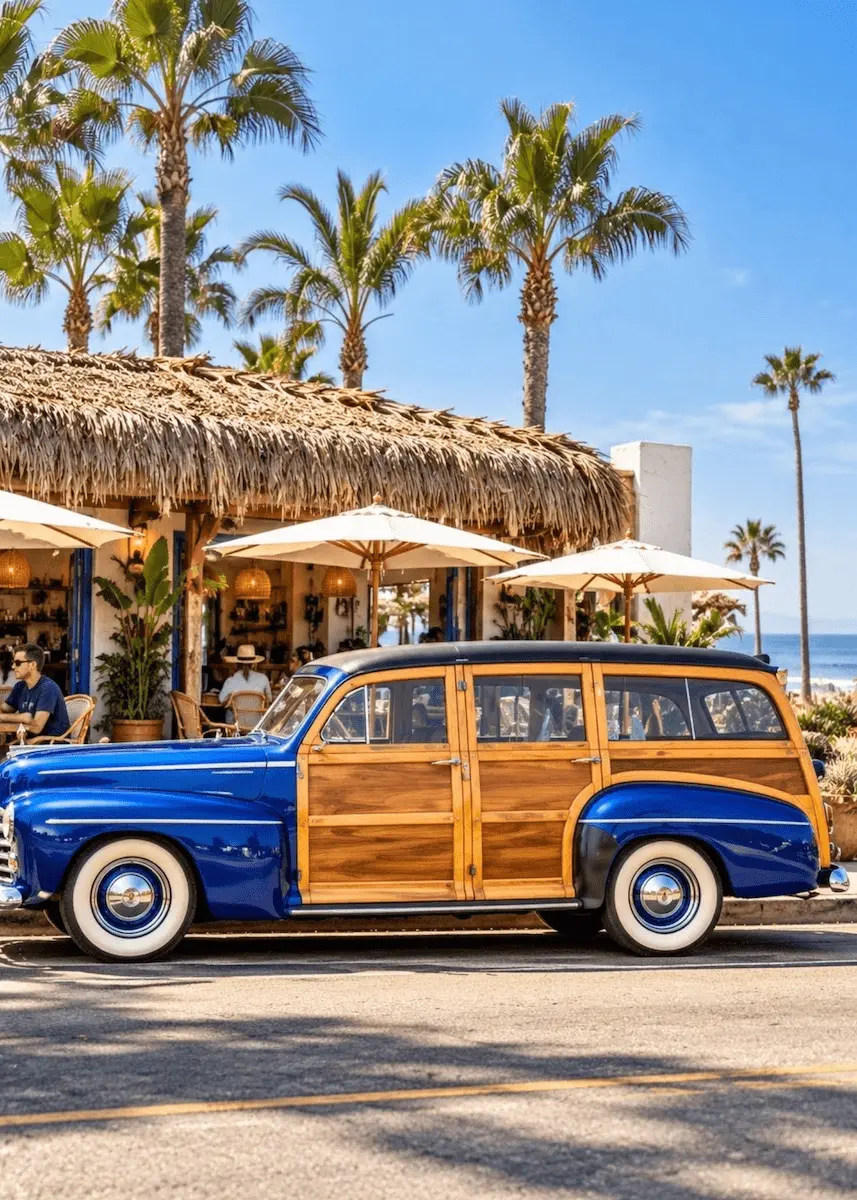
The woodie had a different job: carrying passengers and luggage across America’s expanding road network. California’s landscape invited longer journeys, with beaches stretching along highways and coastal communities separated by miles. The roomy station wagon offered the flexibility to travel farther, stay longer and carry whatever the day demanded. California surfers simply expanded the definition of luggage to include longboards, wet towels and friends who apparently arrived with neither car nor plan.
Of course, not every Californian drives long distances, and not every Mediterranean resident lives within walking distance of the sea. But as cultural symbols, the two vehicles captured distinct instincts about movement and leisure. California made freedom adventurous, while Italy made it convenient.
Neither required a particularly expensive car, and neither suggested that enjoying the coast should involve much planning. That was their greatest luxury: the freedom to leave without turning an afternoon at the beach into a carefully organized event.
The California Car That Became a Beach House on Wheels
The woodie was not invented for surfing. Early American wood-bodied station wagons were practical vehicles designed to transport passengers and luggage, with real timber construction that gave them character but demanded considerable maintenance. As automobile manufacturing evolved, wood-bodied wagons gradually gave way to more practical all-steel designs, leaving older examples increasingly outdated. Which, as it turned out, was excellent news for California surfers.
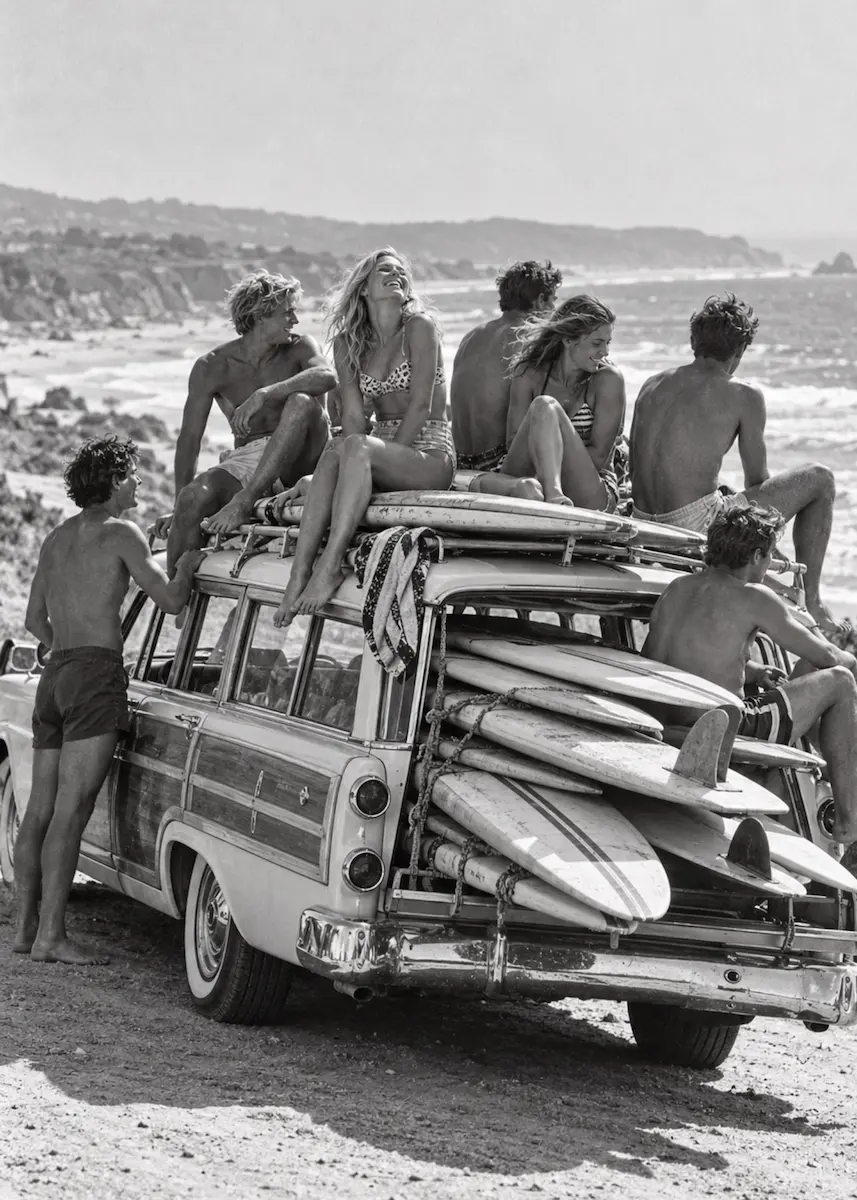
By the postwar decades, surfers needed affordable vehicles capable of carrying long surfboards, towels, friends and the assorted belongings required for an entire day at the beach. Along Southern California’s coastline, these roomy wagons found an enthusiastic new audience, with boards strapped to their roofs and equipment piled into their generous interiors. Sandy feet, damp towels and an occasional overnight adventure were hardly reasons to worry about the upholstery.
More importantly, the woodie allowed surfers to move between beaches in search of the right conditions and waves. The destination could change with the weather, the wave conditions or the enthusiasm of whoever happened to be driving. This was freedom measured in miles, with the Pacific Coast offering an almost endless invitation to keep moving.
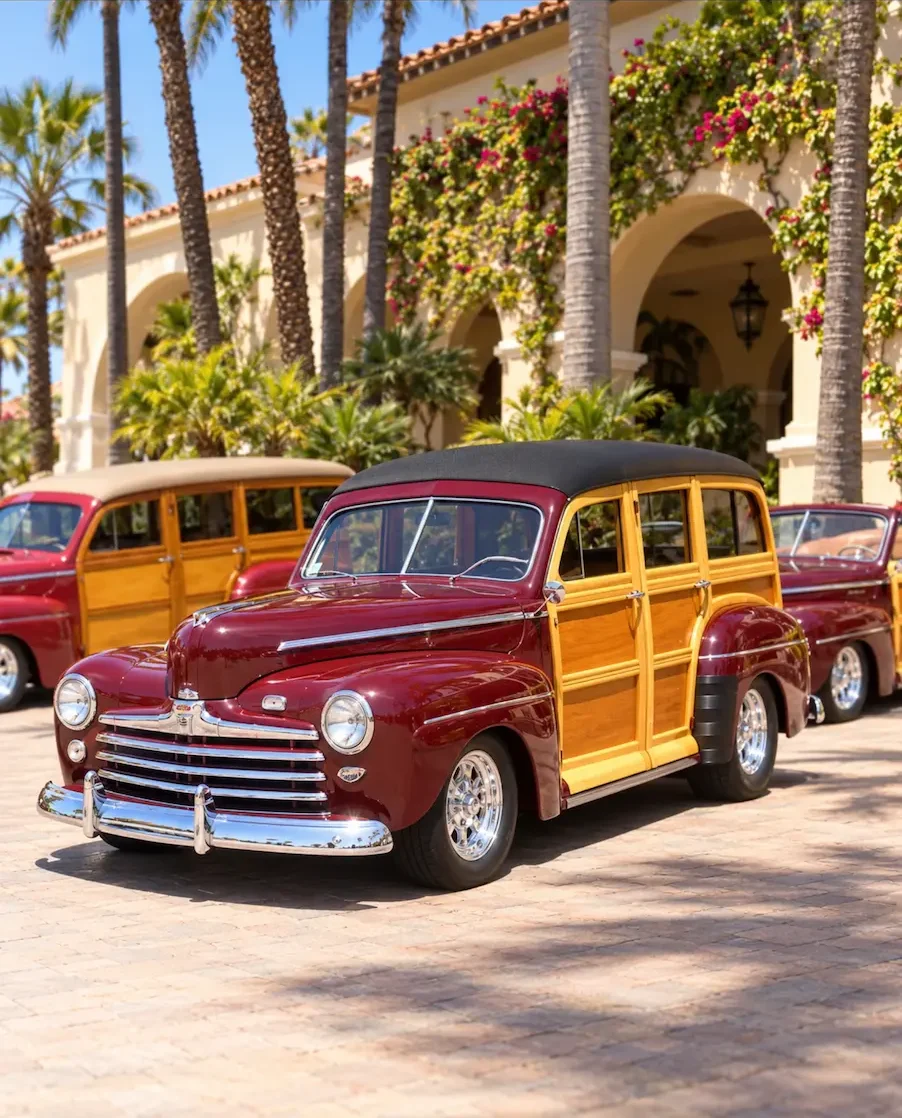
Eventually, the woodie became inseparable from California’s surfing identity, appearing in photographs, surf-inspired artwork and the broader mythology of American beach culture. Its original usefulness gradually became its greatest charm, although that charm acquired an unexpected price tag. Today, exceptionally restored examples can command extraordinary sums, sometimes approaching a quarter of a million dollars.
There is something wonderfully ironic about a vehicle once appreciated because nobody needed to worry too much about it becoming an object that collectors now worry about constantly. Apparently, even carefree living appreciates in value.
Italy Had a Different Idea of Freedom
While California was discovering the advantages of carrying half the beach in a station wagon, Italy was developing a rather different relationship with the automobile. The original Fiat 500 arrived in 1936, when affordable transportation had to negotiate narrow streets, crowded town squares and villages built centuries before automobiles existed. The Topolino was small because it had to be, offering personal mobility in a country where space was limited and incomes were modest.
In 1957, Fiat introduced the Nuova 500, designed under the direction of Dante Giacosa. This new generation would become especially associated with the cheerful image of postwar Italian life, with its compact rear-mounted engine, minimal interior and folding fabric roof. It was economical and remarkably uncomplicated, reflecting a country seeking affordable mobility during a period of rapid economic transformation.
Yet somewhere between the narrow streets of Italian towns and the coastal roads of the Mediterranean, its limitations began to look like advantages. The little Fiat could slip into places larger cars could not, making short journeys convenient and parking comparatively painless. With its roof folded back, even a modest drive could feel like an occasion.
It did not need to accommodate surfboards, bicycles or enough luggage for an expedition. A passenger, a small bag and perhaps a stop for coffee were sufficient for the sort of outing that required no elaborate arrangements. California wanted to bring everything along, while Italy seemed perfectly content to leave a few things behind.
Two Coasts, Two Ways of Living
Over time, the vehicles changed, but their influence remained. California surfers eventually embraced Volkswagen buses, vans, pickups and modern vehicles capable of transporting increasingly elaborate collections of outdoor equipment. What began with a surfboard and a towel can now involve bicycles, paddleboards, wetsuits, portable showers and enough accessories to make a supposedly spontaneous weekend resemble a small logistical operation.
Italy, meanwhile, never entirely abandoned its affection for compact mobility. The Fiat 500 continued to evolve, maintaining its association with clever design, urban convenience and a distinctly Italian ability to make practicality feel charming. Its enduring appeal was never simply about being small, but about making small feel desirable rather than compromised.
Interestingly, these two approaches extend beyond automobiles. California’s coastal lifestyle often celebrates the freedom to take everything along, while Mediterranean living has traditionally made an art of enjoying what is close at hand. One favors the possibilities of the open road; the other finds pleasure in the convenience of a familiar neighborhood, a nearby café or an afternoon by the sea.
Neither philosophy is necessarily better, and modern coastal life increasingly borrows from both. What matters is how easily we can move between everyday responsibilities and the places we would rather be. After all, the appeal of coastal living was never supposed to be the amount of equipment required to enjoy it.
A Little Italian Ingenuity Comes Full Circle
In 2026, Fiat introduced another interpretation of adaptable mobility with its Multiplay concept. Bringing together elements of an SUV, a family vehicle and a pickup, the design explores how one car might accommodate different activities without requiring a completely different vehicle for each occasion. Its transforming rear section is intended to make room for passengers, bicycles and outdoor equipment, reflecting the increasingly flexible demands of modern family life.
The Multiplay remains a concept rather than a production vehicle, but the thinking behind it is revealing. Ninety years after the original Topolino made a virtue of having very little space, Fiat is exploring how to make space serve several purposes. The emphasis is no longer simply on making a car smaller, but on making its available room work harder.
In other words, Italy has discovered that sometimes you really do want to bring the bicycles. And perhaps California could borrow something from the original little Fiat: not every outing requires packing as though civilization might disappear before dinner. What began as two opposing ideas about mobility may be finding some common ground.
The Fiat 500 and the woodie became icons for opposite reasons. One promised you did not need much room, while the other promised there was room for everyone—and probably the surfboards too. Yet what they shared mattered more: neither was meant to become the center of the day, only to move people from ordinary life toward somewhere that felt less ordinary, whether that meant a Mediterranean beach a few kilometers away or a stretch of California coast an hour down the highway.
That may be the part worth borrowing now. The best coastal luxury is not having more things for the escape, but needing fewer things before you can leave.