Where Natural Coastal Beauty Meets Industrial Strength
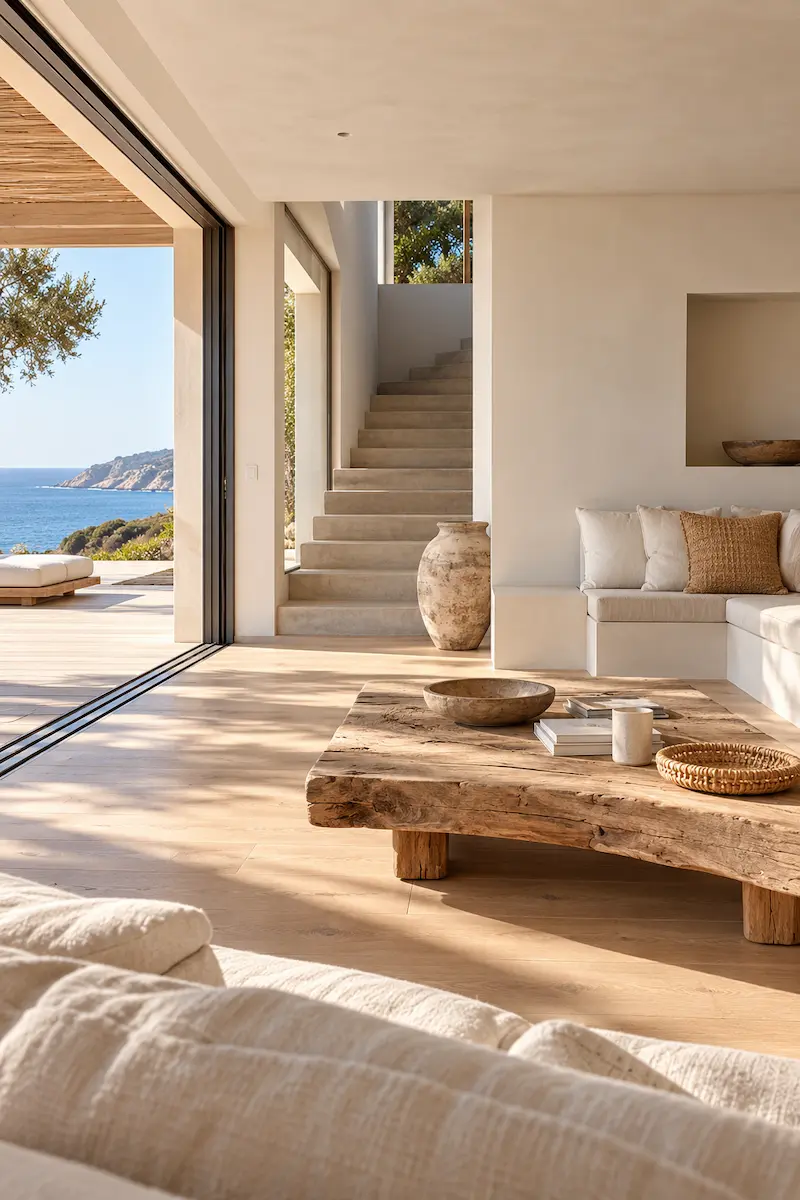
For a place surrounded by so much natural beauty, coastal decorating has developed a remarkable dependence on accessories. Seashells, nautical stripes, weathered anchors, and enough blue-and-white cushions to suggest the ocean might otherwise go unnoticed. Yet some of today’s most compelling coastal homes are finding beauty in something considerably less decorative: concrete, natural wood, and steel.
One comes from the construction site, another from the forest, and the third from an industrial world of precision and engineering. They have different textures, different strengths, and very different ideas about aging gracefully. Together, however, they can create architecture that feels both substantial and unexpectedly welcoming.
The appeal isn’t simply minimalist design. It’s the intelligence of allowing each material to do what it does best, particularly in coastal environments where sunlight, moisture, salt, and weather have opinions of their own.
Concrete Has More Personality Than Its Reputation
Concrete has spent decades being accused of making buildings look cold. It’s an understandable criticism when the material is used without imagination, although concrete itself is hardly responsible for every unfortunate office building.
Its architectural possibilities are considerably more interesting. Reinforced concrete allows architects to create substantial walls, dramatic overhangs, sculptural staircases, and expansive spaces without relying entirely on traditional load-bearing masonry. It can be polished, textured, cast against timber boards, or left with the subtle imperfections of its construction.
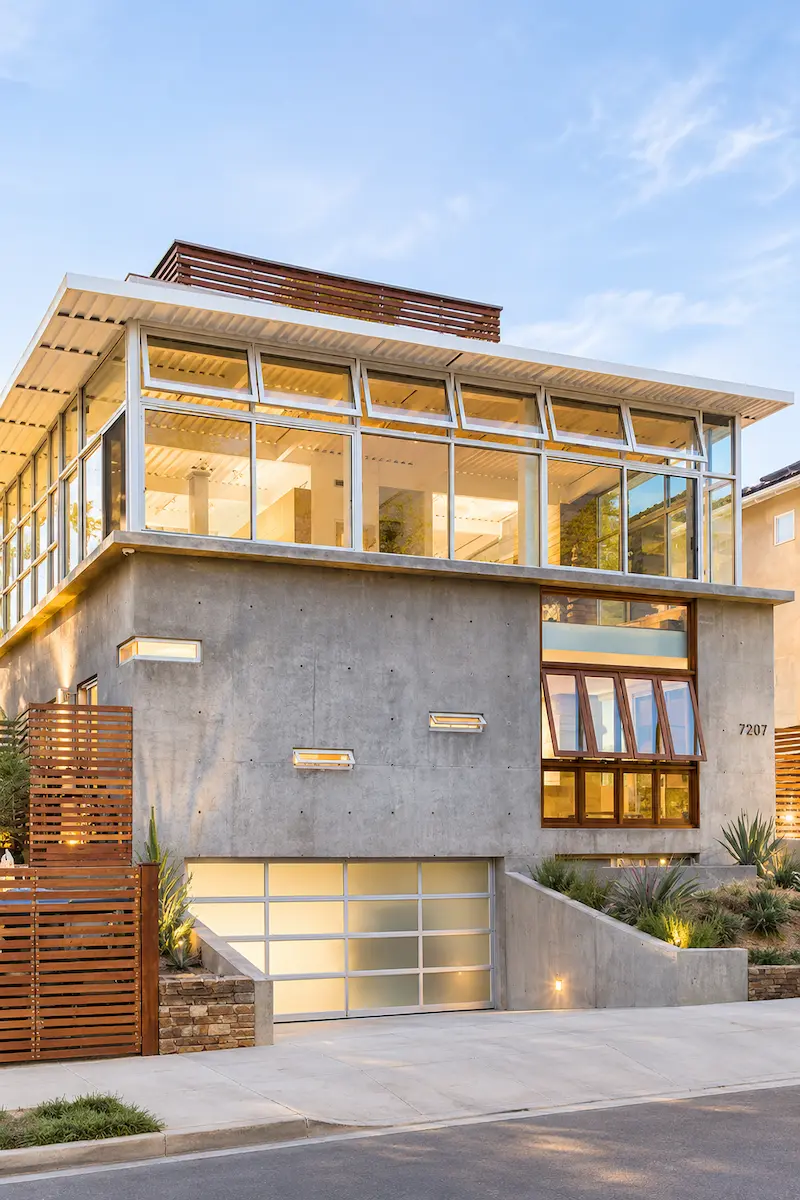
At Malibu’s Carbon Beach House, architect Tom Kundig of Olson Kundig uses an imposing concrete wall to shield the residence from traffic along Pacific Coast Highway. Behind that substantial exterior, glass, steel, and timber create a very different atmosphere, opening the house toward the Pacific. The concrete provides protection, while the lighter materials introduce openness and warmth.
The house also sits on a specially designed elevated foundation intended to respond to high tides and storm surges. Here, the architecture’s relationship with the ocean is more than an aesthetic consideration. A beautiful view is one thing; accommodating the forces that accompany it is quite another.
Wood Knows How to Make It Feel Like Home
If concrete establishes the architecture, wood changes how we experience it. Natural grain, knots, subtle color variations, and the patina that develops with age introduce something that perfectly uniform surfaces cannot easily reproduce.
California has a long history of timber construction, from redwood houses to midcentury post-and-beam architecture. Wood was never merely a decorative addition. It formed roofs, supported structures, lined ceilings, and helped modern houses feel connected to their surroundings.
Mediterranean building traditions developed their own relationship with timber. In regions where stone and masonry dominated, wood appeared in ceiling beams, shutters, doors, and pergolas. Local species and available craftsmanship influenced how it was used, creating architectural details that were practical long before they became desirable.
Today, the relationship between wood and concrete has become particularly interesting. At the Seacliff Residence in Central California, Anacapa Architecture approached the two materials with an unusual sense of practicality.
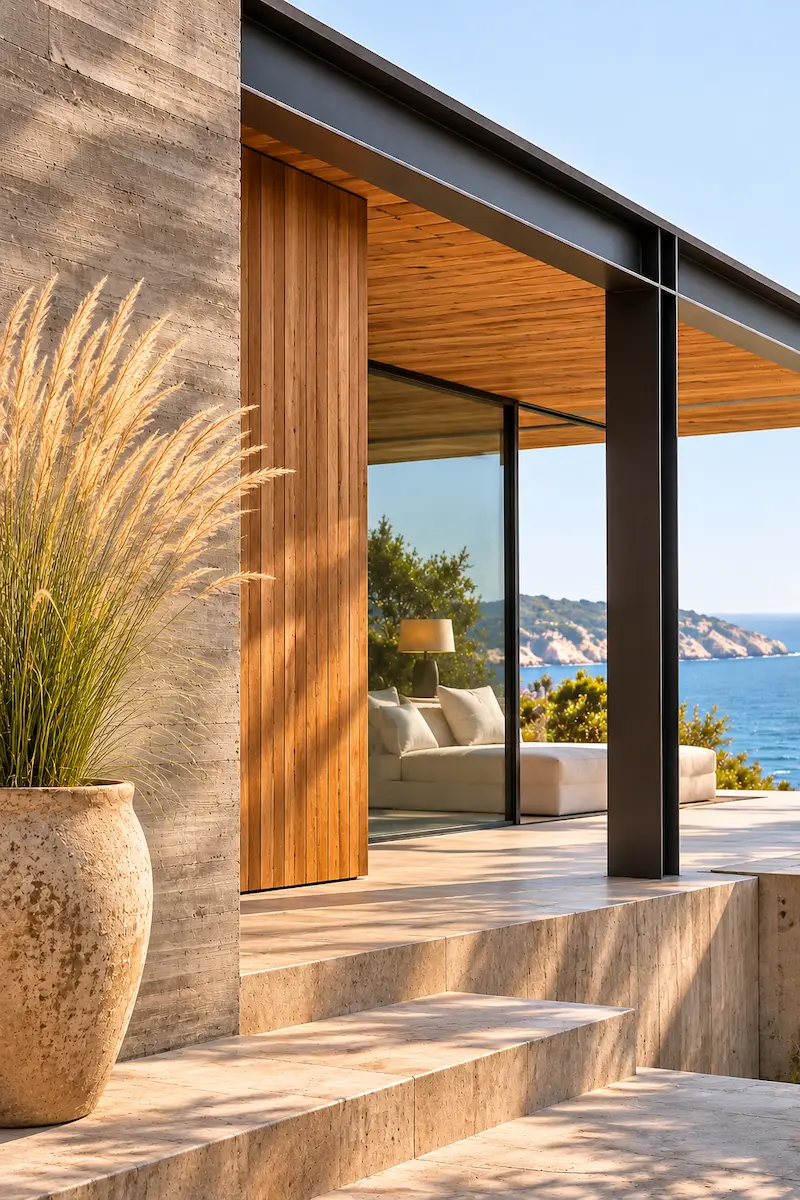
The house is built primarily from concrete, but its exterior carries the texture of weathered timber. Vertical boards used to form the concrete leave their imprint on the surface, creating the visual character of wood in a material better suited to the exposed marine setting. Inside, sheltered from the coastal winds and salt spray, natural white oak introduces warmth.
It’s a clever reversal of expectations. Concrete gets to look like wood without pretending to possess its vulnerabilities, while the real timber is reserved for places where people can appreciate it.
Steel, the Unexpectedly Elegant Guest
Steel doesn’t usually arrive with the romantic associations of natural wood or Mediterranean stone. Its reputation belongs to bridges, factories, professional kitchens, yachts and ships. Yet its structural precision has helped shape some of California’s most celebrated residential architecture.
In 1949, Charles and Ray Eames completed their famous house in Pacific Palisades using prefabricated industrial components, including a steel frame and large areas of glass. The result was neither a factory nor a conventional California residence, but a remarkably personal home.
The story behind its design is even more revealing. The Eameses originally planned a house that would span a meadow. Delays in obtaining steel gave them time to become attached to the landscape, and they eventually redesigned the building to preserve it. They used essentially the same industrial components, with one additional steel beam, to create a home that sat more gently within its surroundings.
It’s a wonderful architectural contradiction: industrial construction employed in the service of nature.
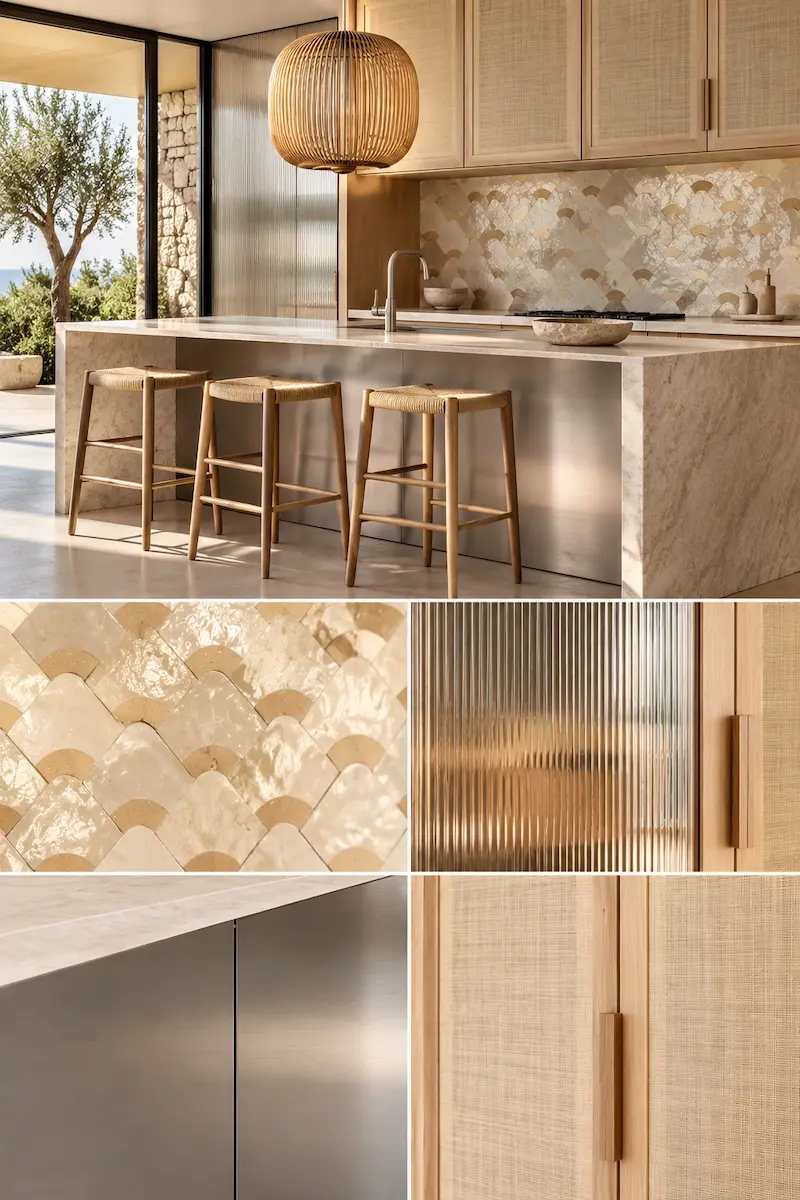
Today, steel continues to perform several roles in coastal homes. Structural steel makes slender supports and generous openings possible, while stainless steel brings a different set of advantages to kitchens, fittings, and interior surfaces. Its clean finish can look particularly beautiful beside textured timber, concrete, or handmade ceramics.
A stainless-steel kitchen beside natural oak cabinetry doesn’t need decorative flourishes to become interesting. The contrast between the manufactured and the organic is already doing the work.
Where the Mediterranean Joins the Conversation
On the Spanish Mediterranean coast, architect Guillem Carrera’s Casa Maridia offers a particularly thoughtful example of how these materials can coexist. Completed in 2025 in Tarragona, the residence occupies an unusually shaped plot between a railway line and the sea. Its triangular, almost crescent-shaped geometry had discouraged development for decades. Rather than treating the difficult site as an inconvenience, Carrera made its geometry part of the architectural design.
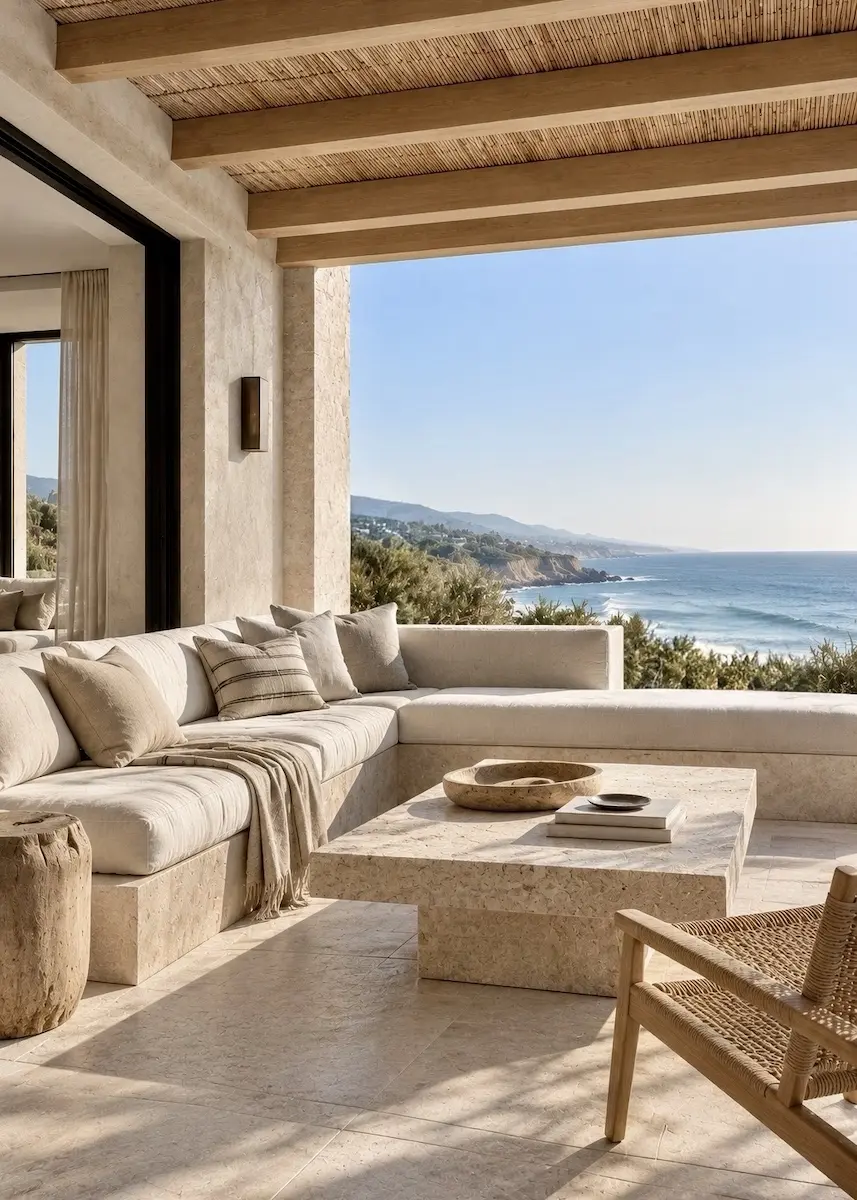
Natural stone, exposed concrete, wood, and steel form the house’s material vocabulary. The combination isn’t intended to create an industrial statement or reproduce a traditional Mediterranean villa. Each material contributes to a building designed around its coastal setting, with carefully framed views, shaded transitional spaces, and a private courtyard.
The house also incorporates passive solar strategies, cross-ventilation, photovoltaic panels, and heat-recovery ventilation. Its material choices are part of a larger architectural approach that considers durability, comfort, and energy performance.
What makes the project interesting isn’t that Spain has discovered concrete or that California has suddenly developed an appreciation for wood. Both regions have used these materials for generations, although in different architectural traditions.
It’s how contemporary architects combine them according to the demands of the building rather than the expectations of a particular coastal style.
Beautiful Materials Still Have to Behave
There is, of course, a less glamorous side to the romance between concrete, wood, and steel. Coastal environments are demanding, and even the most beautiful architectural materials must eventually answer to chemistry and weather.
Concrete is strong and versatile, but poorly detailed reinforced concrete can deteriorate when salt and moisture reach the steel inside it. Timber can last for generations when correctly selected, protected, and maintained, but constant exposure to moisture and ultraviolet light takes its toll.
Stainless steel is similarly misunderstood. Its name suggests a rather heroic resistance to deterioration, yet not every grade is suitable for marine exposure. Chlorides can cause corrosion, and material selection, detailing, and maintenance remain important.
Durability is therefore less about choosing one supposedly indestructible material than understanding where each belongs.
There’s also the environmental question. Concrete’s cement content carries a substantial carbon footprint, steel production requires considerable energy, and timber’s environmental benefits depend on responsible sourcing and the building’s overall design. Natural appearance and sustainability are not interchangeable qualities.
A durable home is not automatically a sustainable one, but thoughtful material selection and long service life can contribute to a more responsible approach to construction.
The Beauty of Letting Materials Be Themselves
The most appealing quality of this architectural combination is that none of the materials needs to disguise its identity. Concrete can remain substantial and mineral. Wood can reveal its grain and gradually acquire character. Steel can retain the precision that makes it useful in the first place. Their differences create texture, contrast, and visual interest without demanding an elaborate decorative scheme.
California’s modernist heritage and the Mediterranean’s varied traditions of masonry, timber, and craftsmanship offer different histories, but contemporary coastal architects can draw from both without reproducing either literally.
The result isn’t necessarily rustic, industrial, or minimalist. It’s architecture in which natural character and engineered precision are allowed to coexist, each contributing something the others cannot.
And that’s the real luxury of a thoughtfully designed coastal home. Not a collection of objects reminding us that the sea is nearby, but materials chosen with enough intelligence to live beautifully beside it. After all, the ocean has never needed a seashell collection to establish its presence.